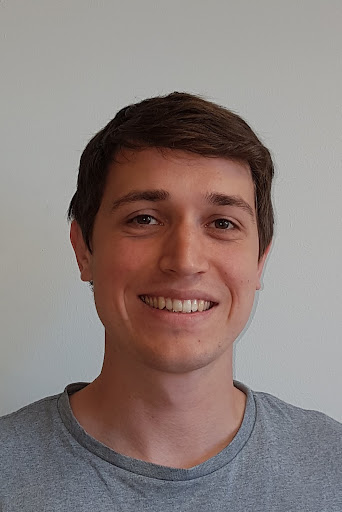
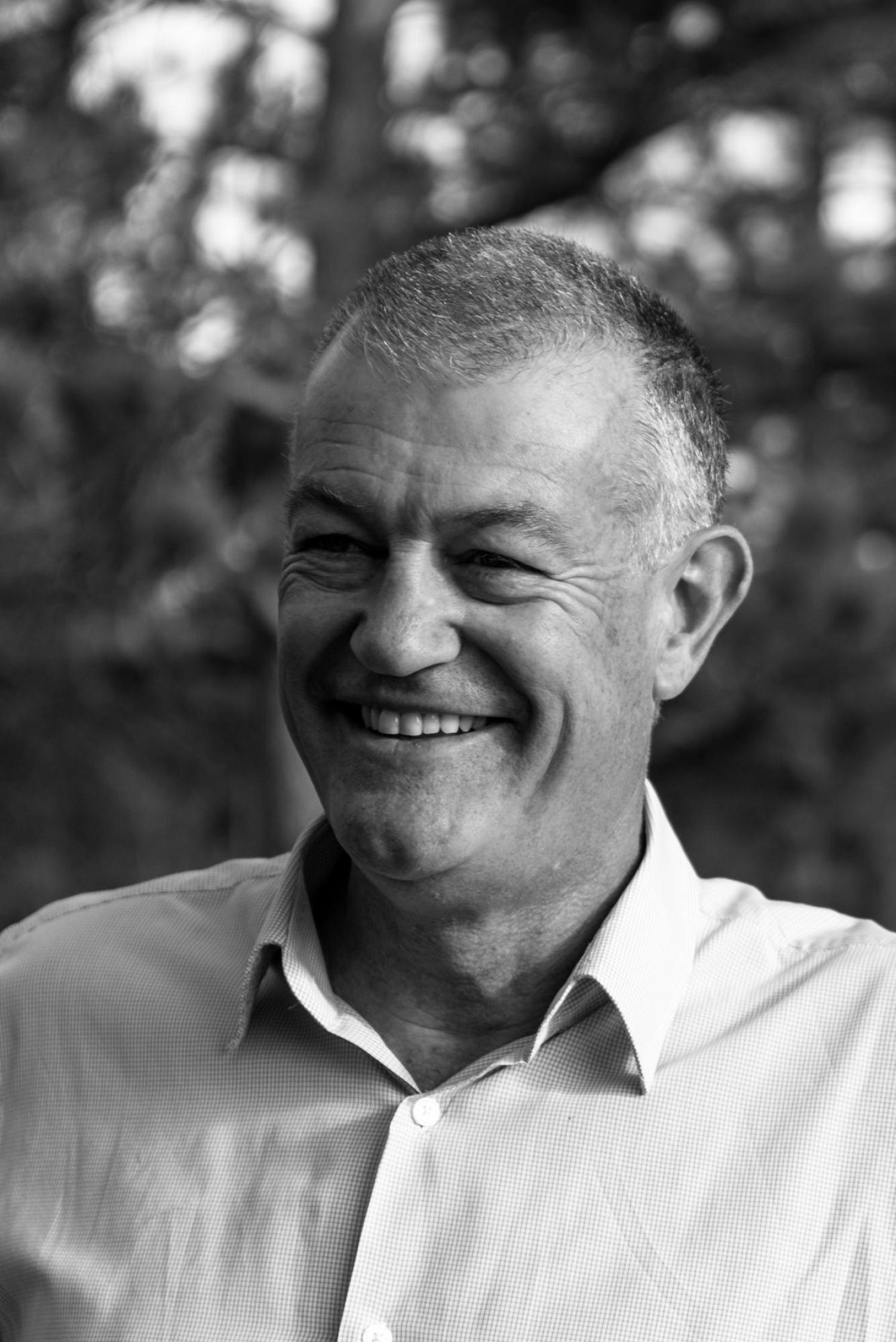
Tim Schneider is a Ph.D. student at the Intelligent Autonomous Systems lab of Technische Universität Darmstadt , working in collaboration with École Centrale de Lyon under the Aristotle project. His research focuses on robotics , particularly at the intersection of active perception , tactile sensing , and robotic manipulation . His work investigates how robots can develop environmental understanding through physical interaction , drawing parallels to children's exploratory behavior . Key projects include tactile reinforcement learning , active inference for manipulation , and visuo-tactile sensor fusion in dynamic tasks. Recent publications emphasize foundation models for tactile learning , sensor simulation (TacEx), and multi-modal control systems (AllmAN). He supervises theses on topics ranging from teleoperation feedback to haptic MNIST benchmarks , with a focus on reinforcement learning applications in robotic systems.
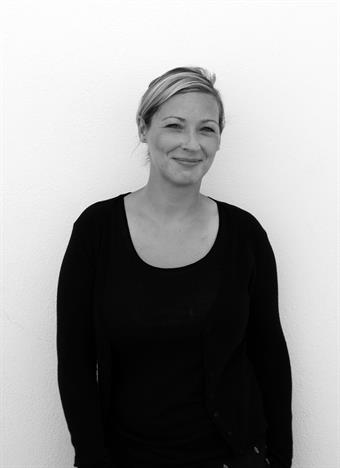
Judith Reitz is a full-time Professor at the Peter Behrens School of Arts , part of Hochschule Düsseldorf (University of Applied Sciences) . She has served as Dean of the Architecture department since 2019 and leads the PBSA Design.Build. - Studio for Social Impact since 2011. Previously, she held academic positions at Texas A&M University (2007-2016) and RWTH Aachen (2006-2011). Academic Education: Meisterklasse (Masterclass) under Zaha Hadid at University of Applied Arts Vienna (2001-2003). Academic background in Architecture at RWTH Aachen (1997-2001), graduating with honors. Research Interests include Interior Architecture, Social Impact Design, Vernacular Architecture , and Sustainable Construction . Her work focuses on material reuse, energy-efficient methods, and integrating cultural contexts into architectural solutions. Publications emphasize community-driven projects in South Africa, blending traditional techniques with modern computational design. Scientific Awards include multiple Architizer A+ Awards (2017), STO Förderpreis for sustainability (2016), and recognition in media like AIT and DOMUS . Her 15 most recent articles (2002-2016) explore topics from neovernacular structures to mobile refugee facilities , reflecting interdisciplinary collaboration with institutions such as ACSA and CAADRIA . Grants include the Springorum Preis (RWTH Aachen, 2003) and Stipendium Deutsche Akademie Villa Massimo Rom (2007). She has advised research teams like Thomas Georg Schaplik and co-founded the BFR lab (2006), a Cologne-based architecture and research firm. Judith Reitz is a member of Bund Deutscher Architekten (BDA) since 2011.
Oscar Rene Cornejo is an Assistant Professor in the Department of Art at Cornell University’s College of Architecture, Art, and Planning. He is an artist, educator, and activist whose work bridges personal history, cultural memory, and political critique, particularly focusing on the Central American diaspora and post-conflict reconciliation. His artistic practice integrates fresco, sculpture, print media, and installation, often using construction materials as metaphors for displacement and resilience. Born in Houston, Texas Based between New York and western Massachusetts Faculty at Cornell University since recent appointment Teaching and artistic roles at Yale, Cooper Union, Hunter College, and Skowhegan Cornejo earned his M.F.A. from the Yale School of Art and B.F.A. from The Cooper Union, and was a Fulbright Scholar in El Salvador. His interdisciplinary research explores citizenship, power, and historical forgetting, especially in relation to civil war and diaspora. He co-founded the Latin American Community Art Project and is a founding member of Junte Adjuntas in Puerto Rico, emphasizing community-based and collaborative art practices. His recent artistic output reflects a deep engagement with materiality, memory, and political symbolism. Works such as To look at the sea is to become what one is and State of Exception explore themes of migration, border violence, and historical trauma through sculptural installations and modular prints. His exhibitions at institutions like the Queens Museum and Radiator Gallery demonstrate a consistent focus on social justice and historical reckoning. Selected awards include the Watts Prize for Faculty Excellence (2023), Fulbright Fellowship (2007–08), and Schoelkopf Travel Prize. He has been supported by residencies at Skowhegan, LMCC Workspace, and Yvonne Residency in Guatemala. Watts Prize for Faculty Excellence (2023) Schoelkopf Travel Prize, Yale School of Art (2009–11) IIE Fulbright Fellowship, El Salvador (2007–08) Menschel Fellowship / Randolph Hearst Scholarship, The Cooper Union (2000–05) Balfour Minority Scholarship, RISD Pre-College (1998) Cornejo’s teaching and community work reflect a strong commitment to pedagogy and intercultural dialogue. He has served as a museum educator at the Studio Museum of Harlem, program coordinator at Skowhegan, and educator through Fulbright. His grants and fellowships support both artistic creation and educational outreach. He is involved in initiatives that promote community art education and intercultural awareness, particularly through LA CAPacidad and Junte Adjuntas. Cornejo’s artistic and academic work is centered around collaborative spaces and community-driven projects. He is actively involved with Junte Adjuntas in Puerto Rico and has directed artist residencies focused on intercultural exchange. His practice often blurs the boundaries between studio, classroom, and public space, emphasizing art as a form of collective healing and historical reclamation.
Jon Brundan is a Professor in the Mathematics Department at the University of Oregon, part of the College of Arts and Sciences. His research spans representation theory, categorification, and quantum algebra, with significant contributions to the understanding of Heisenberg categories, Kac-Moody 2-categories, and quantum groups. Brundan's research interests primarily focus on representation theory and categorification. His work bridges abstract algebra with mathematical physics, particularly through the study of quantum groups, Heisenberg categories, and Kac-Moody 2-categories. He has made significant contributions to understanding the connections between diagrammatic categories, representation theory of algebraic structures, and geometric representation theory. His research often involves developing new categorical frameworks to understand deep algebraic structures and their representations. Analysis of Brundan's recent publications reveals a strong focus on categorification techniques applied to quantum groups and related algebraic structures. His work often centers on developing diagrammatic approaches to representation theory, with particular attention to Heisenberg categories, nil-Brauer categories, and their connections to quantum symmetric pairs. There's a clear progression in his research toward increasingly sophisticated categorical frameworks that provide new insights into classical representation-theoretic problems. Brundan has collaborated extensively with leading researchers in representation theory, including A. Savage, B. Webster, C. Stroppel, and A. Kleshchev. His work has appeared in top mathematics journals including the Pacific Journal of Mathematics, Advances in Mathematics, and Selecta Mathematica. His research has helped establish important connections between different areas of representation theory and has provided new categorical perspectives on classical algebraic structures.
Garry Rumbles is an Adjunct Professor at the University of Colorado Boulder and a Research Fellow at the National Renewable Energy Laboratory (NREL) , where he has worked since 2001. His research focuses on the fundamental science of solar energy conversion in organic and hybrid systems, particularly charge generation and electron transfer processes in conjugated polymers and nanostructured materials. He leads the development of time-resolved microwave conductivity (TRMC) as a key spectroscopic tool for studying charge dynamics. His work spans collaborations with institutions like Imperial College London and NIST , with a focus on nanoscale photophysics and interfacial charge transfer . Recent publications highlight his expertise in hybrid perovskites , carbon nanotube heterojunctions , and microstructure-dependent charge transport . He has supervised numerous graduate students and postdoctoral researchers, including Justin Earley , Josh Carr , and Leo Romanetz . Scientific Awards : Fellow of the Royal Society of Chemistry (CSci, CChem, FRSC) . Notable Techniques : TRMC, femtosecond transient absorption, terahertz spectroscopy, and time-resolved X-ray absorption.
Dr Gatheeshgar Perampalam is a Senior Lecturer in Civil Engineering at Teesside University's School of Computing, Engineering and Digital Technologies. He holds a PhD in Structural Engineering (2021) from Northumbria University and a BEng (Hons) in Civil Engineering (2017) from the University of Peradeniya, Sri Lanka. His research focuses on advanced structural analysis of cold-formed steel systems, modular construction optimization, and fire/thermal performance of building materials. PhD: Structural Engineering, Northumbria University (2021) BEng: Civil Engineering (First Class), University of Peradeniya (2017) Key research areas include steel structures, numerical modeling, sustainable construction practices, and energy-efficient building designs. His recent work explores machine learning applications in structural performance prediction and thermal efficiency improvements in light-gauge steel panels. He has contributed 68 research outputs and collaborated with industry partners like Intelligent Steel Solutions. Current affiliations include Teesside University and active participation in research networks related to structural engineering and sustainability.
Philip Neil Garner is a Researcher at the Idiap Research Institute (LIDIAP), affiliated with École Polytechnique Fédérale de Lausanne (EPFL). His current position is listed as "EPFL member Current" with email philip.garner@epfl.ch. He maintains an active research profile with publications spanning from 2013 to 2025. Garner's research focuses on the intersection of physiological auditory modeling and machine learning for speech processing. His work bridges cochlear physiology with automatic speech recognition systems, investigating how biological principles of hearing can inform and improve computational models. Key areas include modeling the cochlea as an active amplifier using Hopf oscillators, exploring neural oscillations in speech perception via spiking neural networks, and developing interpretable affective speech synthesis systems. His research demonstrates consistent interest in creating biologically plausible models that maintain compatibility with modern deep learning frameworks. Analysis of his recent publications reveals a clear trajectory toward integrating physiological auditory models with state-of-the-art speech recognition systems. His work increasingly focuses on creating hybrid models that maintain physiological plausibility while leveraging pre-trained acoustic models. The research shows particular attention to modular approaches that allow different components (cochlear models, neural networks) to interact meaningfully, with emphasis on understanding how end-to-end learning affects physiological interpretations of speech processing. Garner has supervised multiple doctoral students including Louise Coppieters De Gibson, Bastian Schnell, and Sibo Tong, whose theses address cochlear modeling, affective speech synthesis, and multilingual speech recognition respectively. His research has received funding from the Swiss National Science Foundation as indicated in two publications. While specific grants aren't detailed, his work demonstrates consistent collaboration with Hervé Bourlard and Alexandre Bittar across multiple projects. As a core researcher at Idiap Research Institute, Garner works within a multidisciplinary team focused on speech processing and artificial intelligence. His publications indicate collaboration across units including LIDIAP, EDEE, STI, IEL, and LCAV at EPFL, suggesting integration within both the Idiap institute and broader EPFL research ecosystem. His work connects computational neuroscience with practical speech technology applications, positioning him at the intersection of theoretical auditory modeling and applied speech processing.
Laure Gonnord is a Full Professor in Computer Science at Grenoble INP , affiliated with the Esisar Engineer School in Valence, France, since September 2021. She is a member of the CTSYS research team at the LCIS laboratory and an external member of the CASH team at the University of Lyon / CNRS / LIP / Inria. Her research focuses on compilation , static analysis , and applications to safety , security in high-performance and embedded systems . Fields of Interest : Compiler Design Static Analysis for Safety & Security Abstract Interpretation Embedded Systems High-Performance Programming Hardware Security Engineering Research Trends (from recent publications): Her work explores modular verification through monadic abstract interpreters, complexity bounds in term rewriting , and educational tools for theorem proving . Notable contributions include compiler hardening schemes for hardware security and memory layout optimizations for algebraic data types. Academic Leadership : Scientific Director of the Summer School EJCP (École Jeune Compilation et Programmation) Board Member of the French national research group GDR GPL Teaching Responsibilities at Grenoble INP include courses in architecture , compilation , programming languages , algorithms , and databases . She has also taught at University of Lyon, ENS Lyon, Polytech'Lille, and INSA.
Michael Eichberg is a Professor at Technische Universität Darmstadt, Germany, where his work centers on software engineering, static analysis, programming languages, and secure software development tools. He is the principal architect of the OPAL framework for Java bytecode analysis and has an extensive publication record spanning PLDI, ICSE, ESEC/FSE, ISSTA, ASE, FSE, SOAP, and other premier venues. Research Interests: Static program analysis and its scalability to real-world code bases Software security, particularly cryptographic API misuse and Android app repackaging detection Concurrent and parallel programming models, including deterministic concurrency in Scala Software architecture conformance, drift and erosion detection, and rule reuse Development of open extensible tools and frameworks (OPAL, LectureDoc, QScope, Sextant, XIRC, IRC) Publication Trends: His recent work (2015-2022) demonstrates a strong focus on empirical evaluation of static analysis techniques, modular composition of analyses, and security-related program understanding. Key themes include unsoundness in call graph construction, purity and immutability analyses, parallelization of static analyses, and large-scale studies of cryptographic API misuse. Tools & Frameworks: OPAL – A flexible Java bytecode analysis and manipulation framework (core developer until 2019) LectureDoc 2 – Web-based lecture material authoring and presentation system QScope – Open extensible metrics framework for modern software projects Sextant – Eclipse-integrated software exploration tool XIRC/IRC – Frameworks for enforcing system-wide properties and architectural constraints
Dr. Pushpitha Kalutara serves as Head of Course for Built Environment at Central Queensland University's School of Engineering and Technology, holding a PhD in Civil Engineering from RMIT University. With over 17 years of post-graduate experience spanning academia and industry, he maintains active roles as Principal Supervisor for multiple PhD candidates and reviewer for the Journal of Engineering, Construction and Architectural Management. Education: BEng (Civil Engineering) - University of Moratuwa, Sri Lanka PhD (Civil Engineering) - RMIT University, Melbourne, Australia His research focuses on integrating digital solutions with sustainable practices in construction, particularly advancing Building Information Modelling (BIM) for facility management, developing lean procurement frameworks, and pioneering suicide prevention through architectural design. Recent publications demonstrate a shift toward mental health applications in built environments, with significant work on social-spatial design interventions for suicide prevention alongside traditional expertise in asset management and structural health monitoring. Key research trends: Analysis of 15 most recent publications reveals dual trajectories - ongoing development of decision-making frameworks for sustainable community building management (using AHP and neuro-fuzzy systems), and emerging focus on mental health applications in construction (suicide prevention design, industry mental health interventions). His work consistently bridges Australian industry needs with academic research, particularly for councils and infrastructure operators. Awards: Post Graduate Research Award by Engineers Australia and National Asset Management Council (2013) Australian Postgraduate Award Industry (APAI) by ARC Industry Linkage Scheme (2010) Dr. Kalutara actively supervises multiple PhD candidates including projects on construction industry suicide prevention frameworks, AI impacts on road construction project management, and counterterrorism design for critical infrastructure. His industry collaborations span Victorian local councils, Municipal Association of Victoria, and major construction firms. Professional software expertise includes SAP, Revit, AutoCAD, and statistical tools like SPSS and MATLAB for construction analytics.
Professor Stuart Green (University of Reading) is a leading scholar in construction management with over £7.5M research income as Principal Investigator. His work focuses on construction sector policy analysis, project organizing, and identity work in projects. Currently chairing the University of Reading Environment and Sustainability Committee, he contributes to policy development through roles like Commission for Sustainable London 2012 (2007-2013) and EPSRC Peer Review College (2000-present). Guest Professor, Chongqing University (China) Visiting Professor, Hong Kong Polytechnic University (2014) Co-Editor, Construction Management and Economics (2009-2012) His research employs narrative and sensemaking methods to analyze policy unintended consequences and project risk management. Recent publications include the second edition of Making Sense of Construction Improvement (2023) and work on Turkish international contracting through historical narratives. With a 1996 PhD from Reading, he holds professional qualifications including CEng, MICE, FCIOB, and FRICS. Scientific recognition includes: Top 1.5% Global Scholar (Elsevier/Stanford, 2021) QE II Silver Scholarship (1988-1990) He supervises postgraduates on topics including: Professionalism in built environment Strategic briefing practices Chinese construction market dynamics Construction claims management Turkish contractor identity work Construction innovation narratives
Alain Cournier is a University Professor at the University of Picardy Jules Verne (UPJV), France, affiliated with the ALCO research unit (UR 4290) focusing on Algorithmic and Complexity. His office is located in room 401 with contact phone 5913. He maintains an active research profile with continuous publications from 1992 through 2024, primarily in distributed computing and theoretical computer science. Professor Cournier's research centers on fault-tolerant distributed algorithms, specializing in self-stabilizing systems for networked environments. His core contributions span leader election protocols, synchronous unison mechanisms, and message forwarding algorithms in directed and undirected topologies. He pioneered work in snap-stabilization and polynomial-time convergence guarantees, with recent focus on directed network challenges. Earlier career phases included modular graph decomposition algorithms (1990s), while 2018-2019 saw exploration of autoencoder neural networks for anomaly detection in connected buildings. Analysis of his 15 most recent publications reveals strong continuity in distributed algorithms research (12/15 papers), with 2023-2024 works exclusively addressing self-stabilization in directed networks using innovative metaphors like Roman infrastructure. The 2018-2019 neural network studies represent a brief interdisciplinary expansion before returning to core theoretical work. His publications consistently appear in premier venues including PODC, ICDCN, and Theoretical Computer Science, often collaborating with Altisen, Defalque, and Devismes. He operates within the ALCO research unit (UR 4290) at UPJV, which serves as the institutional home for his algorithmic complexity research. This unit facilitates collaboration across the French distributed computing community, evidenced by regular AlgoTel conference participation. While specific lab structures aren't documented, his publication patterns indicate sustained theoretical work with periodic applied explorations in cybersecurity contexts.
Fernando Lledo Macau is a Full Professor at the Department of Mathematics at University Carlos III of Madrid (UC3M) . His research focuses on Operator Algebras , Quantum Mechanics , and Spectral Theory , with applications to Graph Theory and Mathematical Physics . Recent publications highlight his work on spectral bracketing , magnetic graphs , and Følner sequences in operator algebras. He investigates discrete weighted graphs , quantum symmetries , and amenability in inverse semigroups. His 2025 article on Isospectral graphs and 2024 work on weighted digraphs reflect trends in geometric and spectral analysis. He supervises theses on topics like coarse geometry and magnetic Laplacian matrices , contributing to grants such as QUITEMAD-CM and 6G-INTEGRATION-3 . His collaborations span institutions in Barcelona , Durham , Münster , and ICMAT .
Dr. Chun-Long Chen is a senior research scientist at Pacific Northwest National Laboratory (PNNL) with over 80 publications and three U.S. patents. His work bridges synthetic chemistry and materials science to develop sequence-defined synthetic polymers that mimic natural proteins, focusing on biomimetic mineralization and porous materials for clean energy . Education: PhD in Physical Inorganic Chemistry, Sun Yat-Sen University (2005) BS in Chemistry, Nanchang University (2000) Affiliations: Materials Research Society American Chemical Society His research interests include peptoid synthesis and self-assembly , biomimetic mineralization , in situ AFM imaging , and chemical biology . The 15 most recent articles highlight trends in nanoparticle assembly , 2D nanomaterials , and biomimetic design for energy and biomedical applications. Scientific Awards: DARPA Fold F(x) Program Award (2014, Co-PI) LDRD Award (2013, PI) Young Investigator Award (2010, ICCBMT) Best Poster Award (2010, ACCGE-West) Nanyue Award (2005, Guangdong Province) Kaisi Fellowship (2004, Sun Yat-Sen University) Samsung Award (2003, Sun Yat-Sen University) Dupont Award (2002, Sun Yat-Sen University) Dr. Chen's work involves collaborations with institutions like University of Washington and Sun Yat-Sen University , with grants from programs such as the LDRD and DARPA . His publications emphasize nanostructure control via peptoid engineering and interdisciplinary approaches to materials design.
Michael Grobbauer is a Professor and Senior Researcher at the Center for Alpine Construction within the Design and Green Engineering framework at Salzburg University of Applied Sciences. He has been active since 2012, with a focus on sustainable building practices and energy-efficient urban development. Key research areas: Sustainable Construction, Building Energy Modeling, Timber Engineering, Renewable Energy Integration His recent work explores parametric timber solutions and energy performance certificate-based urban modeling , contributing to climate-resilient building systems. He has published 42 works, including 2023 Energy journal articles and 2022 conference papers on modular construction. Salzburg State Architecture Prize (2006) Inventor of Graz University of Technology (2013) Salzburg Timber Construction Award (2007) IOC/IAKS Special Distinction (2007) Active in projects like ScaleUp_ZAB (2023–2025), Grobbauer leads initiatives in solid timber construction and photovoltaic integration . He has reviewed 14 publications and presented at events including the 2024 Austrian PV Conference.