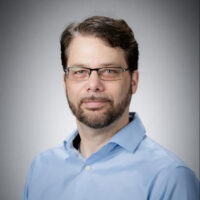
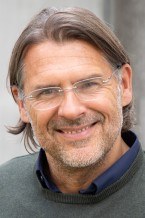
Dr. Ryan Leduc is an Associate Professor at the Department of Computing and Software within McMaster University's Faculty of Engineering . He holds degrees of B.Eng (Victoria) , M.A.Sc. (Toronto) , and Ph.D. (Toronto) . His research focuses on Discrete-Event Systems (DES) , particularly in Supervisory Control , Hierarchical Structures , Concurrency , and Formal Verification of software and hardware. He has developed the DESpot software tool for hierarchical DES research.
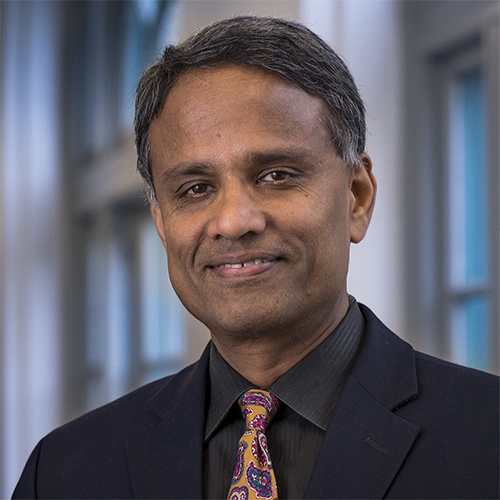
Ramayya Krishnan is the W. W. Cooper and Ruth F. Cooper Professor of Management Science and Information Systems at Carnegie Mellon University, jointly appointed in Heinz College and the Department of Engineering and Public Policy. He served as Dean of Heinz College from 2009 to 2025 and has been a faculty member since 1988. He is a leading expert in digital transformation, data analytics, and AI policy, with extensive collaborations in government and industry. His education includes: B.Tech. in Mechanical Engineering, Indian Institute of Technology Madras (1981) M.S. in Industrial Engineering and Operations Research, University of Texas at Austin (1983) Ph.D. in Management Science and Information Systems, University of Texas at Austin (1987) Krishnan's research focuses on the responsible use of AI, data-driven workforce development, risk management in information systems, and the intersection of technology and public policy. His work bridges operations research, information systems, and policy design, with a strong emphasis on real-world impact. He has pioneered academic programs and research centers that integrate analytics with societal challenges. His recent publications reflect a strong trend in AI measurement science, policy design for emerging technologies, and the ethical deployment of data analytics in public and private sectors. These works emphasize safety, fairness, transparency, and accountability in AI systems, aligning with national priorities and global challenges. His scientific awards and honors include: INFORMS Fellow AAAS Fellow Elected Member, National Academy of Public Administration Commissioner, Geotech Center of the Atlantic Council IIT Madras Distinguished Alumnus Award (2017) Y. Nayudamma Award (2015) GM Outstanding Distance Learning Faculty Award Martcia Wade Teaching Award Two-time recipient of Heinz College IT Teaching Award UPS George D. Smith Prize (awarded to Heinz College under his leadership) Appointed to the National AI Advisory Committee (NAIAC), 2022 Krishnan has been a serial academic entrepreneur, founding the Master of Information Systems and Management program and the Decision Analytics and Systems (DAS) undergraduate minor. He has founded four externally funded research centers, raising nearly $100 million, including the Block Center for Technology and Society. He advises policymakers at the highest levels, including the U.S. President, the Commonwealth of Pennsylvania, the U.S. Government Accountability Office, and international bodies like the Asian Development Bank and the World Economic Forum. His leadership in the CMU/NIST AI Measurement Science & Engineering Cooperative Research Center (AIMSEC) underscores his role in shaping national AI standards. He leads or is affiliated with several key labs and teams: Block Center for Technology and Society (Director) CMU/NIST AI Measurement Science & Engineering Cooperative Research Center (AIMSEC) (Lead Research Coordinator) NIST AI Innovation Lab (NAIIL) (Contributing Leader) Global Agenda Council on Data Driven Development, World Economic Forum (Former Member)
Elizabeth Leisy Stosich serves as Associate Professor and Associate Chair of the Division of Educational Leadership, Administration, and Policy at Fordham University's Graduate School of Education. Since joining the faculty in 2017, her research examines collaborative leadership practices that strengthen educational equity and student learning opportunities across district, school, and teacher levels, with particular focus on high-poverty urban contexts and ambitious academic standards implementation. Her educational background includes advanced degrees from Harvard University: Ed.D. in Education Policy, Leadership, and Instructional Practice Ed.M. in Education Policy and Management M.A. in Teaching and Multiple Subjects (University of San Francisco) B.A. in Spanish and Portuguese (UC Berkeley) Stosich's research centers on education policy, school/district leadership, teacher professional development, and research-practice partnerships. She investigates how leaders create coherence among complex policies like Common Core standards and accountability systems, emphasizing collaborative structures that enable educators to improve instructional practices. Her work consistently addresses equity challenges in resource-constrained urban schools through frameworks like the Internal Coherence Framework. Analysis of her 15 most recent publications reveals persistent themes: leadership practices that bridge policy expectations with classroom realities, the critical role of social networks in policy implementation, and strategies for building sustainable improvement capacity. Her scholarship demonstrates methodological diversity including social network analysis, design-based implementation research, and qualitative case studies, predominantly focused on urban educational settings where equity considerations drive leadership decisions. Her significant scholarly recognition includes: 2022 AERA Division A Emerging Scholar Award 2016 AERA Leadership for School Improvement SIG Dissertation of the Year Award Stosich teaches courses including Community of Inquiry, Implementation Research, Leading Instructional Improvement, and Urban Education. Prior to Fordham, she served as a research fellow at Stanford's Center for Opportunity Policy in Education and taught elementary school in Oakland. Her co-authored book "The Internal Coherence Framework" is widely adopted in leadership programs, reflecting her commitment to bridging research and practice through ongoing partnerships with school districts. Her current work extends through research-practice partnerships where she collaborates with districts to implement leadership frameworks that foster organizational coherence, strengthen instructional systems, and develop sustainable capacity for continuous improvement in diverse educational settings.
Adam Hecht is a Professor in the Department of Nuclear Engineering at the University of New Mexico since 2008. He holds a Ph.D. in Physics (Yale University, 2004) and has led multidisciplinary research in radiation detection, nuclear nonproliferation, and detector development. His educational background includes Ph.D., M.Phil., and M.S. in Physics from Yale University (2001-2004) and a B.S. in Physics from the University of California, Irvine (1997). Ph.D. in Physics (Yale, 2004) M.Phil. in Physics (Yale, 2001) M.S. in Physics (Yale, 1999) B.S. in Physics (UC Irvine, 1997) His research focuses on Radiation Detection for nuclear nonproliferation, Fission Fragment Measurement via spectrometers at LANSCE, Muon Imaging for spent fuel casks, and Novel Detector Development (perovskites, AlSb semiconductors). He directs the Radiation Research and Detector Development (R2D2) Laboratory , collaborates with LANL/INL, and advises UNM's Institute of Nuclear Materials Management (INMM) student group. Key article trends show expertise in Muon Tomography (2025), Neuromorphic Computing for radiation detection (2024), AlSb Semiconductor Detectors (2016), and Fission Data Analysis (2015-2022). His work spans Physics of Atomic Nuclei , Nuclear Instruments and Methods , and Environmental Geochemistry . Awards include the J.W. Gibbs Fellowship (Yale, 1997-1998). Students advised include Daniel Poulson (Muon Imaging), Richard Blakeley (Fission Spectrometer), Erin Vaughan (AlSb Detectors), and Joseph Morris (Refractive Index Analysis). Collaborations with electrical engineering, Portland State University, and LANL/INL are frequent.
Sebastian Angel is an Associate Professor and Chair of Undergraduate Curriculum in the Department of Computer and Information Science at the University of Pennsylvania . He leads research in systems, security, privacy, and networking, with a focus on privacy-preserving systems, accountability in online services, consistency in distributed systems, and next-generation operating systems. Research Areas: Systems, Security, Privacy, Networking, Distributed Systems, Operating Systems Labs & Teams: Distributed Systems Laboratory, Security and Privacy Laboratory, Warren Center for Network and Data Sciences Education: Ph.D. in Computer Science from the University of Texas at Austin (2018), ACM SIGOPS Dennis M. Ritchie Dissertation Award, Bert Kay Best Dissertation Award Recent Publications (2025–2022) span serverless computing, zero-knowledge proofs, distributed transactions, privacy-preserving ad tech, and verifiable execution. His 2025 work includes serverless workflow optimization and structural logic verification, while 2024 focuses on caching frameworks and stateful serverless. Earlier 2023–2022 projects include secure federated learning, confidential cloud services, and private information retrieval. Scientific Awards: NSF CAREER Award (2021) JPMorgan Faculty Award (2021) ACM SIGOPS Dennis M. Ritchie Dissertation Award (2018) Bert Kay Best Dissertation Award (2018) ACM SIGMOD Research Highlights Award (2024) VLDB 2024 Best Paper Award Nominee Advising: Current PhD Students: Elizabeth Margolin, Jess Woods, Yuxuan Zhang Current Masters Students: Felix Adena, Sydnie Shea Cohen Alumni: Eleftherios Ioannidis (2025), Yiping Ma (2025), Haoran Zhang (2024), Ke Zhong (2024), Selin Butun (2025), Martin Sander (2025), Seungmin Han (2024), Andrew Beams (2022), Yifeng Mao (2021), Varad Deshpande (2020) Current Courses: CIS 4510/5510: Computer and Network Security (Fall 2025). He also organizes conferences like S&P, OSDI, SOSP, PETS, and EuroSys.
Pedro Orvalho is a Research Associate in the Department of Computer Science at the University of Oxford, working with Professor Marta Kwiatkowska on the FUN2MODEL ERC project. His research bridges theoretical computer science with practical applications in software engineering and programming education. His educational background includes: PhD in Computer Science and Engineering (2025) from Instituto Superior Técnico, Universidade de Lisboa MSc in Information Systems and Computer Engineering (2019) from Instituto Superior Técnico BSc in Information Systems and Computer Engineering (2017) from Instituto Superior Técnico Orvalho's research spans Artificial Intelligence, Automated Reasoning, Formal Methods, and Program Repair, with significant contributions to programming education tools. His work integrates formal methods with machine learning techniques to develop novel approaches for program verification and repair, particularly focused on introductory programming assignments. His scientific achievements have been recognized with prestigious awards: Vencer o Adamastor (VoA) - 3rd Edition (2025) ELISE Mobility Grant (2024) COST Travel Grant (2022) Excellence in Teaching IST Awards (2021 and 2024) ACM SIGSOFT Distinguished Paper Award (ESEC/FSE 2021) FCT PhD Scholarship (2020-2024) With five years of teaching experience at Instituto Superior Técnico, Orvalho has developed educational tools like GitSEED and MENTOR that bridge his research with practical classroom applications. His research has been supported by multiple grants including the ERC FUN2MODEL project and FCT PhD Scholarship, demonstrating both academic and practical impact. He maintains active collaborations with researchers from Czech Technical University in Prague, Carnegie Mellon University, and industry partners like OutSystems, contributing to an international research network focused on software reliability and educational technology.
Eunsuk Kang is an Assistant Professor at Carnegie Mellon University's Software and Societal Systems Department within the School of Computer Science. His research focuses on enhancing software system safety, security, and reliability through formal methods and rigorous modeling. Ph.D. in Computer Science, MIT Software Engineering, University of Waterloo Research spans cyber-physical systems , software security , formal verification , and ML resilience . Key areas include robust system design against evolving environments, specification engineering, and scalable automated reasoning. Recent publications highlight advancements in CPS safety , formal verification , and ML-based error mitigation . Collaborative projects span conferences like ICSE , CAV , and FMCAD . Scientific Awards CyLab 2025 Seed Funding CyLab 2023 Seed Funding Carnegie Bosch Institute Grant Advises doctoral students in software engineering and formal methods, with affiliations to the Software Design and Analysis (SoDA) Group and CyLab Security and Privacy Institute.
Marko Šarac is a Professor at Singidunum University in the Faculty of Informatics and Computer Science . He holds a Master's degree in Contemporary Information Technologies (2008) and a PhD in Advanced Protection Systems (2013) from the same institution. His research spans Cybersecurity, Artificial Intelligence, Blockchain, Internet of Things (IoT), Machine Learning, and Data Privacy . Education: Master: Contemporary Information Technologies, Singidunum University, 2008 PhD: Advanced Protection Systems, Singidunum University, 2013 Research Focus: SSL Traffic Security, Virtual Datacenters, Biometric Cryptography, and IoT Healthcare Systems Developed frameworks for Explainable AI in Metaverse Security , Blockchain-based IoT Security Gateways , and Machine Learning for Medical Diagnostics Notable Publications: 2025: CNN-enhanced attack detection for IoT-based Metaverse 2024: Modified Firefly Algorithm for medical dataset classification 2023: Space weather prediction using metaheuristics Projects: Co-author on 9+ books including Internet Marketing (2020) and Computer Network Security (2014) Contributed to 50+ peer-reviewed journals and conference papers on cybersecurity and AI Grants & Collaborations: Active in IEEE , ZINC , and Sinteza conference series Collaborated with researchers across Europe and Asia on IoT, Blockchain, and Cloud Security Contact: msarac@singidunum.ac.rs
Associate Professor Joe Gattas is affiliated with the University of Queensland's School of Civil Engineering , where he leads the Folded Structures research group. His work bridges origami-inspired engineering , computational building design , and advanced manufacturing , with a focus on lightweight/modular structures and timber engineering . Education: BEng (2009) and PhD (2013) from the University of Queensland and University of Oxford, respectively. Research interests emphasize digital fabrication , hybrid materials , and structural innovation . His recent publications highlight trends in timber-CFRP composites , self-shaping structures , and value chain optimization for sustainable timber use. Scientific awards include the prestigious John Monash Scholarship . He actively supervises PhD and Master’s students in projects related to timber composites , structural optimization , and low-cost housing . Joe contributes to ARC Research Hub initiatives , co-leading Manufacturing Innovation and Value Chain Innovation nodes, and develops open-source tools like TimberTracker to visualize timber supply-demand dynamics.
Manuel Wimmer is a Full Professor and Head of the Department of Business Informatics – Software Engineering at Johannes Kepler University Linz, Austria. He also serves as the Program Director for the Business Informatics master's program since 2019. His academic leadership extends to representing JKU Linz in the AutomationML society and leading significant research initiatives. Dr. Wimmer received his Ph.D. and Habilitation from TU Wien. His academic journey includes: Research associate at the University of Malaga, Spain Visiting professor at the University of Marburg, Germany Visiting professor at TU Munich, Germany Assistant professor at the Business Informatics Group (BIG), TU Wien, Austria Professor Wimmer's research focuses on Model-Driven Software Engineering and its applications, particularly in the emerging field of Digital Twins . His work bridges theoretical foundations with practical industrial applications, with special emphasis on model transformations, runtime modeling, and the integration of artificial intelligence techniques into model-driven approaches. More recently, he has been exploring the intersection of model-driven engineering with quantum computing, investigating how modeling principles can be applied to quantum software development. His recent publications reveal a strong trend toward Digital Twin engineering, with approximately 40% of his 2023-2025 publications focusing on various aspects of Digital Twin technology. Another significant strand of his work involves the application of AI and machine learning techniques to enhance model-driven engineering processes. The emergence of quantum software engineering as a research direction is also notable in his most recent publications, demonstrating his ability to identify and explore cutting-edge research frontiers. From 2017-2023, Professor Wimmer led the Christian Doppler Laboratory on Model-Integrated Smart Production (CDL-MINT), where he developed engineering approaches for digital twins. He is also the co-author of the influential book "Model-driven Software Engineering in Practice" (2nd edition, 2017). Professor Wimmer is actively involved in the organization of major scientific events including the IEEE International Conference on Quantum Software (QSW) and the International Conference on Engineering Digital Twins (EDTconf), demonstrating his leadership in these emerging research communities. His research has practical applications across various domains including smart cities, industrial automation, tunneling/construction, and quantum computing. The MATISSE project represents a significant multi-partner effort to develop a framework for federated digital twins of industrial systems.
Stefan Rass is a Professor at the Institute of Networks and Security within the Faculty of Engineering & Natural Sciences at Johannes Kepler University Linz (JKU), where he leads the LIT Secure and Correct Systems Lab. As Principal Investigator for FFG-funded projects including reSilienz (digital supply chain resilience, 2023–2025) and ITPUK (AI signature verification, 2022–2024), he bridges theoretical game theory with practical cybersecurity solutions for critical infrastructures and robotics systems. His research spans game-theoretic security models (patrolling games, defense-in-depth strategies), quantum cryptography (QKD network architectures), and cyber deception frameworks like Honeyquest for measuring honeypot effectiveness. Recent work addresses robotics security benchmarking (RobotPerf), cryptographic instruction chaining for control flow protection, and risk assessment methodologies for interdependent infrastructures. His mathematical decision-making approach integrates bounded rationality and stochastic modeling to solve real-world security challenges. Professor Rass actively shapes the field through program committee roles (ARES 2023), peer reviews, and invited talks on security transparency. His current projects focus on cost-benefit-aware monitoring for cyber-physical systems and quantum key distribution standardization, reflecting Austria’s strategic priorities in digital resilience. The LIT Secure and Correct Systems Lab under his direction develops foundational theories while deploying tools for industrial applications, particularly in critical infrastructure protection and secure robotics workflows.
Markus Knauff is a Professor at the Justus Liebig University Giessen in the Department of Experimental Psychology and Cognitive Science. His research focuses on high-level cognition, including reasoning, decision-making, and rationality, as well as spatial cognition and mental imagery in cognitive processes. Dipl.-Psych., University of Bochum, 1991 Dr. phil., University of Freiburg, 1996 Habilitation, University of Freiburg, 2002 His work integrates cognitive science, psychology, and artificial intelligence, emphasizing mental models and belief revision. He explores how counterexamples, probabilities, and spatial reasoning influence human cognition, with applications in navigation and decision-making. While his publications span deductive reasoning, belief dynamics, and spatial mental models, his recent studies highlight probabilistic reasoning in the brain and rationality frameworks. Markus leads the Giessen virtual environment laboratory, focusing on human wayfinding and landmark salience. He contributes to interdisciplinary projects like the SPP1516 "New Frameworks of Rationality" and has mentored researchers in cognitive systems, though specific student names are not listed in the provided texts.
Marc Frappier is a full professor at Université de Sherbrooke with over 25 years of academic experience. His research focuses on formal methods , security , and software synthesis . He holds a PhD from the University of Ottawa (1995), a Master's (1990) and Bachelor's (1986) from Université de Sherbrooke. Research Areas: Formal specification/verification, intrusion detection, access control, ASTD/TASTD modeling, automotive systems Grants: NSERC, MITACS, PSEPC, CSE Canada, Natural Resources Canada (total over $2.5M) Selected Publications highlight formal methods in automotive systems, security policy verification, and real-time modeling. His work spans cross-domain collaborations including healthcare, industrial systems, and cybersecurity. Scientific Awards: Distinguished Service Award 2019 (Cs-Can | Info-Can) Committee Roles : Program Committee member for 15+ conferences (2012-2021), including ABZ, ICFEM, HASE, and RAMiCS.
Michał Turek is a Professor at the Department of Applied Informatics within the Faculty of Electrical Engineering, Automatics, Computer Science and Biomedical Engineering at AGH University of Science and Technology in Kraków, Poland. His primary workplace is located in room 303a of building C-2, and he maintains active contact through email (mitu@agh.edu.pl) and phone (+48 12 617 52 03), indicating current academic engagement. His research spans Software Engineering with particular emphasis on Workflow Management Systems integration with industrial applications, Image Analysis for 3D surface inspection, and Agile Methodologies implementation. Turek has pioneered innovations in Scrum adaptation for multi-project environments and software product lines, while developing formal verification frameworks for business processes and service-oriented architectures. His work bridges theoretical computer science with practical industrial solutions, especially in automated damage identification systems and workflow optimization. Analysis of his 15 most recent publications reveals consistent focus on workflow system intelligence (2020-2022), with significant contributions to automatic correction mechanisms and smart procedure integration. Earlier works (2010-2016) demonstrate deep expertise in formal verification methods, Scrum economics, and 3D surface analysis techniques. The publications show interdisciplinary convergence between software engineering, computer vision, and industrial automation, with recurring themes of system resilience and process optimization across both English and Polish scholarly outputs.
Andrej Bogdanov is a Professor at the University of Ottawa in the School of Electrical Engineering and Computer Science . He earned his B.S. and M.Eng. from MIT and Ph.D. from UC Berkeley . Before joining Ottawa, he held positions at the Chinese University of Hong Kong , ITCS (Tsinghua) , DIMACS (Rutgers) , and the Institute for Advanced Study . He has served as a Visiting Professor at the Tokyo Institute of Technology (2013) and the Simons Institute (2017, 2021). Research Interests : Computational complexity, cryptography foundations, pseudorandomness, one-way functions, property testing, quantum algorithms, and sublinear-time algorithms. Teaching : Courses on Discrete Mathematics, Great Algorithms, Computational Complexity, and Cryptography at University of Ottawa, Chinese University of Hong Kong, and Rutgers University. Publications : 15+ recent works in TCC , CRYPTO , ICALP , RANDOM , and journals like Journal of Cryptology and Theory of Computing . Service : Program co-chair for SAC 2026 , and committee member for major conferences including CRYPTO , TCC , Eurocrypt , and FOCS . Advising : 12 current and former Ph.D./M.Phil. students, with postdoctoral advisees at institutions like IIT Palakkad and Academia Sinica . His work bridges theoretical computer science with applications in cryptography, quantum computing, and network security.