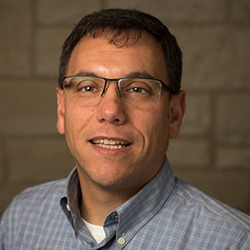
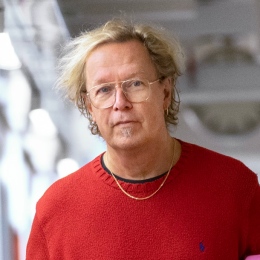
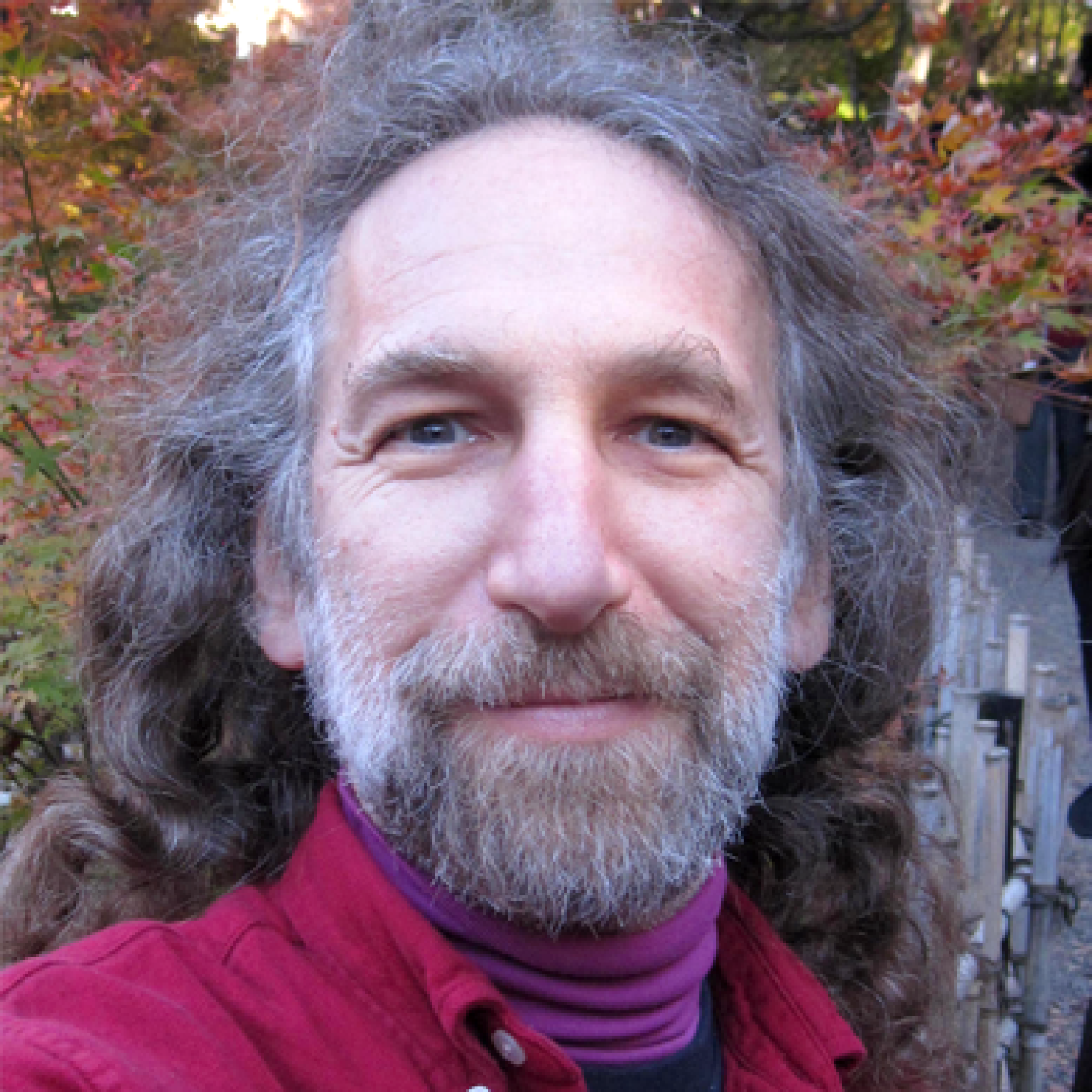
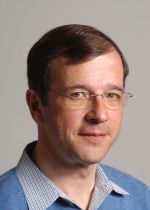
Associate Professor Sunghoon Kim holds a position at the University of Sydney Business School's Discipline of Work and Organisational Studies. He previously taught at UNSW Business School, Cornell University, and Peking University. His PhD is from Cornell University, with MBA and BBA degrees from Seoul National University. His research focuses on strategic HRM, employment relations, and the impact of technological changes like AI on workplaces. He has edited major works including the Routledge Handbook of Human Resource Management in Asia and contributes to the APRU project on 21st-century work transformations. Kim serves as Associate Editor for journals like Human Resource Management and Asia Pacific Journal of Human Resources . His recent work addresses algorithmic management, employee well-being in AI contexts, and cross-border labor dynamics. He has advised students researching migrant worker choices and voice processes in organizations. Media engagements include commentary on workplace perks and work-life balance in South Korea. Teaching responsibilities include courses on performance management, strategic HRM, and international HR practices. His research highlights the intersection of technology, culture, and organizational sustainability.
Pablo Durango-Cohen is an Associate Professor of Civil and Environmental Engineering at Northwestern University, located in Evanston, IL. He holds a Ph.D. in Industrial Engineering and Operations Research from UC Berkeley, following an M.S. from the same program and a B.S. in Industrial and Systems Engineering from the University of Southern California. His research focuses on developing and analyzing optimization and econometric models for transportation infrastructure systems, integrating environmental design, life-cycle assessment, and policy analysis to address decarbonization challenges in freight systems. He also explores dynamic segmentation models for nonprofit fundraising strategies. Education: Ph.D. Industrial Engineering and Operations Research, University of California, Berkeley (2006) M.S. Industrial Engineering and Operations Research, University of California, Berkeley B.S. Industrial and Systems Engineering, University of Southern California Research Interests: Prof. Durango-Cohen’s work bridges transportation engineering, environmental science, and operations research. He emphasizes infrastructure management through data-driven frameworks, including statistical process control for condition monitoring and predictive maintenance. His recent projects address decarbonization of freight rail systems, electric vehicle impacts on road infrastructure, and optimal auction designs for road concessions. He also applies mathematical models to analyze donor behavior and fundraising efficiency in universities, aiming to improve nonprofit resource allocation strategies. Awards: NSF Faculty Early CAREER Development Award (2006) Young Author Prize, 2007 World Congress on Transport Research Matthew G. Karlaftis Best Paper Awards (2020–2025) Advising & Grants: He advises current PhD candidates including Jing Yu, Adrian Hernandez, and Callahan Skiles, while mentoring former students across sustainability, infrastructure, and fundraising analytics. His research is supported by agencies like the National Science Foundation, Department of Energy (through ARPA-E), and Department of Transportation. He co-leads the LOCOMOTIVES project with ANL researchers, focusing on decarbonizing rail networks, and founded the Virtual Inter-university Symposium on Infrastructure Management (VISIM) to foster academic collaboration. Labs & Teams: As Principal Investigator (PI) on major initiatives like LOCOMOTIVES and VISIM, he collaborates with multidisciplinary teams at Northwestern and Argonne National Laboratory. His group develops tools such as the Locomotives interactive dashboard and a computational framework for input-output lifecycle assessments, accessible via repositories like CivEnv304 .
Brett Smith is an Associate Professor in the UWA Business School at the University of Western Australia, affiliated with the School of Social Sciences and the Planning and Transport Research Centre (PATREC). His research focuses on transport planning, land use analysis, and choice modeling, with emphasis on autonomous vehicles, public transport policy, and gig economy workers' rights. He holds roles including UWA Research Representative on PATREC's Research Committee and Centre of Business Data Analytics Research Fellow. Education details are not explicitly listed in the text, but his professional roles and research output demonstrate advanced expertise. His research interests span micro-economic analysis, experimental design, and policy evaluation, with notable contributions to Perth's transport modeling and strategic planning. He has led over AU$2 million in industry-funded grants, including projects on e-rideables, working-from-home impacts, and land use-transport integration. His research has influenced state policies, such as public transport fare restructuring and strategic transport modeling updates. Awards include the Lyndsay Oxlad Best Paper Award and Eric Pas Dissertation Prize. He supervises students in areas like blockchain in food transparency and AV adoption, and teaches courses in business analytics and data-driven decision-making. Key Projects: Transport Mode Choice Development (PATREC, $80k) Impacts of e-Rideables (PATREC, $92k) Working from Home Transport Demand Modeling (i-Move CRC, $260k) Labs/Teams: PATREC, Centre of Business Data Analytics, and collaborations with global institutions like Leeds University and Czech Republic’s Transport Research Centre.
Professor Martial Staub holds the position of Professor of Medieval History at the University of Sheffield, serving as Internationalisation Officer and SRDS Director within the School of History, Philosophy and Digital Humanities. He joined the university in 2004 after a research fellowship at the Max Planck Institute of History in Göttingen, Germany. His academic training includes degrees from the University of Paris I Panthéon-Sorbonne, Paris X Nanterre, and the Ecole des Hautes Etudes en Sciences Sociales, alongside studies at the Ecole Normale Supérieure de Fontenay/St Cloud. Staub’s research focuses on late medieval European history, particularly South German and Italian cities, with expertise in medieval philanthropy, historiography, and spatial mobility. He co-directs the Centre for the Study of Abrupt, Violent and Traumatic Change and leads projects on medieval global citizenship. His teaching spans undergraduate courses like 'Pagans, Christians and Heretics in Medieval Europe' and postgraduate programs such as 'Approaching the Middle Ages.' Professional roles include editorial board memberships for journals like Zeitschrift für Ideengeschichte and German History , alongside affiliations with institutions such as the Görres-Gesellschaft. His work bridges interdisciplinary collaborations, addressing themes of exile, urban history, and the interplay between medieval and modern contexts.
Gunnar Andersson is a Professor of Demography at Stockholm University's Department of Sociology and Head of the Stockholm University Demography Unit (SUDA). He leads research on fertility, migration, mortality, and family dynamics in Nordic contexts, with a focus on register-based methodologies. His work explores socio-demographic shifts, including fertility decline, migrant health outcomes, and the intersection of welfare policies with family formation. University: Stockholm University Department: Department of Sociology Research Group: Stockholm University Demography Unit (SUDA) Research Interests: Gunnar’s work addresses fertility trends in Sweden and the Nordic region, migration’s impact on population health, and the role of socio-economic factors in family dynamics. Key projects include studies on fertility intentions post-2010, mortality disparities among migrants, and the societal implications of declining birth rates. His studies utilize advanced demographic techniques and longitudinal register data for policy-relevant insights. Recent Research Trends: Publications highlight analyses of Nordic fertility decline, socio-demographic risk factors for COVID-19 mortality, and cross-national comparisons of family policies. Collaborative projects with SUDA emphasize multi-generational and spatial demographic shifts, including residential segregation and commuter mobility in urban Sweden. Grants and Collaborations: Lead researcher in projects funded by Swedish Research Council and EU programs. Oversees the Swedish Generations and Gender Survey (GGS), a key infrastructure for demographic research. Directs the SUNDEM node, leveraging Sweden’s administrative registers for demographic innovation. Labs/Teams: Leads SUDA, a multidisciplinary group analyzing population dynamics. Collaborates with international partners in Denmark, Norway, and Germany for comparative studies.
Stephen R. Platt is a Professor of History at the University of Massachusetts Amherst, specializing in modern Chinese history and Sino-Western relations. He holds a PhD in Chinese History from Yale University, where his dissertation won the Theron Rockwell Field Prize. His research focuses on 19th-20th century China, including the Taiping Rebellion, Opium Wars, and U.S.-China military and diplomatic interactions. Teaches courses on modern Chinese history, U.S.-China relations, and historiography. Recipient of the Cundill History Prize and Baillie Gifford Prize nominations. Active in public scholarship through New York Times op-eds, Atlantic articles, and media interviews. Research emphasizes transnational dynamics, analyzing how China's interactions with Western powers shaped its modern trajectory. His most recent work, *The Raider*, explores Marine Corps officer Evans Carlson's engagement with Chinese communist tactics during WWII. Platt's earlier works include groundbreaking studies of the Taiping Rebellion and Qing Dynasty decline. Awards highlight his contributions to both academic and popular history, blending rigorous scholarship with accessible narrative storytelling. His work has been featured in major publications globally and translated into multiple languages.
Ian Hawkins is an Assistant Professor at the University of Alabama at Birmingham , focusing on Media Psychology , Intergroup Conflict , and Collective Action . He holds a Ph.D. in Communication and Media from the University of Michigan, with prior M.S. and B.S. in Psychology from Central Michigan University. His research employs social scientific methods to analyze how media representations of marginalized groups shape societal attitudes and policy preferences. Current work explores cross-device news consumption dynamics using eye-tracking to assess attention patterns in headline processing. He publishes in New Media and Society , Journal of Communication , and Psychology of Popular Media . Teaching responsibilities include Mass Communication History and Effects and Social Media Use courses. Contact: ihawkins@uab.edu
Francisco Camara Pereira is a Professor and Head of Section at the Department of Technology, Management and Economics at the Technical University of Denmark (DTU). His research focuses on Intelligent Transportation Systems, Machine Learning, and Data-Driven Decision-Making in transportation contexts. He actively contributes to advancing transportation science through interdisciplinary approaches combining simulation, optimization, and AI techniques. His work addresses challenges in public transport analysis, charging infrastructure planning, and multimodal demand prediction. Recent projects include developing graph-based optimization methods for electric vehicle networks and causal discovery frameworks for transportation systems. He supervises multiple PhD students in areas like federated learning for cyclist safety, causal graph neural networks, and socially aware AI models. Key contributions include publications on smart card data analysis for travel surveys, stochastic infrastructure expansion models, and transfer learning for bike-share systems. His research aligns with UN Sustainable Development Goals related to sustainable cities and innovation. Dr. Pereira collaborates internationally on transportation policy and infrastructure projects. His lab focuses on translating theoretical advancements into practical solutions for urban mobility challenges.
Lisa M. Lynch is the Maurice B. Hexter Professor of Social and Economic Policy at Brandeis University’s Heller School for Social Policy and Management. She currently serves as the Stone Visiting Scholar/Visiting Professor of Public Policy at Harvard Kennedy School’s Malcom Wiener Center for Social Policy (2025-2026). Lynch has held leadership roles including Provost and Executive Vice President of Academic Affairs at Brandeis (2014-2020), Interim President of Brandeis (2015-2016), and Dean of the Heller School (2008-2014). She leads the Institute for Economic and Racial Equity and directs the Heller School’s PhD program. Her education includes a BA in Economics and Political Science from Wellesley College, and an MSc and PhD in Economics from the London School of Economics. She has taught at Tufts University, MIT, Ohio State University, and the University of Bristol. Lynch’s research focuses on labor economics, organizational innovation’s impact on productivity and wages, racial and gender disparities in labor markets, youth unemployment, and school-to-work transitions. Her work often bridges academic research with policy-making, particularly in training, workplace practices, and economic equity. Her articles highlight trends in labor market adaptations to technological changes, pandemic effects on employment, and historical shifts in women’s roles in economics. She has received numerous awards, including MIT’s Teaching Award (1988), Tufts’ Outstanding Faculty Award (2000), and the Susan C. Eaton Scholar Practitioner Award (2007). Notably, she was elected to the National Academy of Social Insurance in 2023. Lynch advises through institutional roles like Director of the Retirement and Disability Research Center (UMBC, 2023-2025). She collaborates with labs/teams such as the National Bureau of Economic Research (NBER) and IZA (Institute for Labor Economics), contributing to interdisciplinary policy research.
Mark D. Gross is a Professor of Computer Science and Director of the ATLAS Institute at the University of Colorado Boulder, where he leads an interdisciplinary hub for creativity and invention. His academic journey began at MIT with BS and PhD degrees, followed by faculty roles at Carnegie Mellon University (2004-2013), University of Washington Seattle (1999-2004), and CU-Boulder (1990-1999, 2014-present). As co-founder of Modular Robotics Incorporated and Blank Slate Systems LLC, he bridges academia and entrepreneurship. Education: BS and PhD in Computer Science from MIT Gross’ research spans design methods, modular robotics, computational design tools, and tangible interaction. He pioneered sketch recognition software like 'The Electronic Cocktail Napkin' and explores physical computing through projects such as shape-changing interfaces, interactive construction kits, and augmented reality systems. His work integrates IoT, digital fabrication, and educational technology. Recent publications highlight innovations in AR/VR collaboration, shape-changing robotics, and interactive fabrication. Key themes include climate communication through data physicalization, AI-driven creative systems, and soft robotics for dynamic interfaces. Despite no explicit awards listed, his career demonstrates sustained impact through ACM conference leadership (Creativity and Cognition 2009, TEI 2011) and industry partnerships. Gross’ prior industry experience includes positions at Atari Cambridge Research and Logo Computer Systems. His lab at ATLAS fosters radical creativity through projects like PaperMech, DynaBlock, and WearAir, emphasizing hands-on learning and cross-disciplinary experimentation.
Dr. Jeffrey Morgan is a Researcher at Cardiff University's School of Social Sciences, specializing in multidisciplinary research at the intersection of computer science, social science, and geography. His work emphasizes human-computer interaction, visualization, and big data analytics. He holds a Research Software Engineer role, combining technical expertise with academic inquiry. Key research interests include AI-driven patent analysis, IoT applications in rural citizen science, and geospatial Twitter demographics. He has contributed to studies on Hadoop infrastructure optimization and social media conflict detection, often collaborating with institutions like Xiamen University and the University of Bremen. His publications span topics like energy-efficient big data processing, digital geography of Welsh identity, and scalable social media analysis frameworks. Notable projects include COSMOS (a cloud-based social media analysis platform) and studies on post-devolution cultural narratives in Wales. Award-winning work includes computational Twitter analysis for detecting online community tensions and geotagging behavior patterns. His research often bridges technical innovation with societal impact, addressing challenges in rural technology deployment and digital sociology.
Hui Luan is an Assistant Professor in the Department of Public Health at the Peter O’Donnell Jr. School of Public Health, UT Southwestern Medical Center. He joined UT Southwestern in 2024 after serving as an Associate Professor (tenured) at the University of Oregon (2018–2024). His research focuses on spatial epidemiology, Bayesian spatiotemporal statistics, and GIS applications to address health disparities and environmental determinants of disease. Education: Ph.D. in Planning, University of Waterloo, 2017 M.S. in Cartography and GIS, Wuhan University, 2011 B.S. in GIS, Wuhan University, 2009 Research Interests: Dr. Luan investigates spatial and temporal variations in health outcomes, particularly HIV incidence, and the role of social, physical, and built environments. He develops Bayesian models and spatial analytics to inform geographically tailored interventions. Current projects include optimizing PrEP accessibility, analyzing food environment equity, and leveraging spatial data science for public health policy. Key Achievements: Lead investigator of an NIH-funded R01 project on reducing HIV incidence via spatial data science Editorial board member of Spatial and Spatiotemporal Epidemiology Recipient of the Vu Fellowship (2021–22) Teaching: Teaches courses on GIS in Public Health, Spatial Analysis, and Big Data applications in geography. Recent courses include GIS and Public Health and Spatial and Spatiotemporal Analysis at the University of Oregon. Labs/Teams: Leads the Spatial Data Science Lab focused on advancing Bayesian methods for health data analysis and promoting GIS applications in public health practice.
Professor Gabriel Kuperminc is a faculty member at Georgia State University’s College of Arts & Sciences, Department of Psychology, with a secondary appointment in the School of Public Health. He serves as Chair of the Community Psychology Program and a member of the Developmental Psychology Program. His research focuses on resilience in adolescence, community-based prevention programs, and cultural factors influencing health and development. He collaborates with non-profits to evaluate youth programs and has expertise in mentoring interventions, substance abuse prevention, and immigrant youth studies. Education: Ph.D., University of Virginia, 1994. Research interests include understanding how cultural contexts shape youth development and health behaviors. His work emphasizes collaboration with marginalized communities, including immigrant families and organizations addressing systemic inequities. Notable projects include studies on group mentoring effectiveness (funded by DOJ), photovoice methodologies for trauma recovery, and interventions targeting acculturative stress among Latino youth. Key affiliations include the Center for Latin American and Latino Studies, Center for Human Rights and Democracy, and Center for Research on School Safety. Since 2009, he leads a Maymester Study Abroad Program on Human Rights in Argentina. Grants and collaborations include DOJ-funded research on juvenile justice system interventions and CDC evaluations of public health programs. He directs the Social Ecology and Adolescent Development Lab, focusing on youth resilience and community health interventions.
Jean Walrand is a Professor in the Department of Electrical Engineering and Computer Sciences (EECS) at the University of California, Berkeley. His research focuses on communication networks, performance evaluation, game theory, and stochastic networks. He has authored several influential books, including Communication Networks: A Concise Introduction and Probability in Electrical Engineering and Computer Science , and holds numerous patents in network resource management. Ph.D. in EECS from UC Berkeley IEEE Fellow and recipient of the Stephen O. Rice Prize INFORMS Lanchester Prize for operations research contributions His research interests span communication networks, queueing theory, congestion control, wireless network scheduling, and economic models for network resource allocation. Walrand's work has significantly impacted network design and optimization, particularly in distributed algorithms and game-theoretic approaches. His recent publications emphasize network architecture, delay variability reduction, and distributed optimization algorithms. Walrand has mentored over 20 Ph.D. students, including notable contributors to wireless networks and network economics. IEEE Koji Kobayashi Award (2012) ACM Sigmetrics Achievement Award (2013) INFORMS Lanchester Prize for Communication Networks book As advisor to students like Libin Jiang and Hoi-Sheung Wilson So, Walrand has shaped research in wireless MAC protocols, bandwidth trading, and network security. His technical reports and patents address practical challenges in switch fabric design, bandwidth allocation, and power management.
Ke Wu is a Professor in the Department of Computer Science and Engineering at the University of Michigan. Their research focuses on the intersection of machine learning, biostatistics, and healthcare technology, with an emphasis on mobile health interventions, causal inference, and Bayesian methods. They lead a small, hands-on research group mentoring PhD students and postdocs. Key interests include developing predictive models for health outcomes, improving treatment effect estimation, and leveraging mobile technology for caregiver support. Their work has addressed critical challenges in clinical decision-making, public health surveillance, and healthcare innovation. Research projects span synthetic data generation for electronic health records, mHealth app development for care partners of traumatic brain injury patients, and algorithmic fairness in reinforcement learning. Ke Wu emphasizes interdisciplinary collaboration and has contributed to global health studies, including analyses of pneumonia etiology in low-resource settings and the PERCH study. Their group's methodologies often integrate wearable sensor data and machine learning to address real-world health challenges. Advising priorities include fostering student independence while maintaining close mentorship, with expectations for consistent research productivity and professional development. Students are encouraged to pursue teaching roles (e.g., GSI positions) and internships aligned with career goals. Funding support for conference participation is available through institutional and external grants. Ke Wu's contributions extend to statistical methodology, including Bayesian latent class models and dynamic risk prediction frameworks. They actively engage in translational research, bridging computational methods with clinical and public health applications, and prioritize open-source software development to advance reproducible research practices.