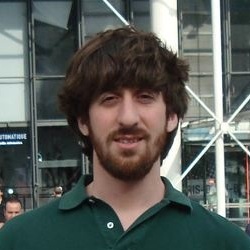
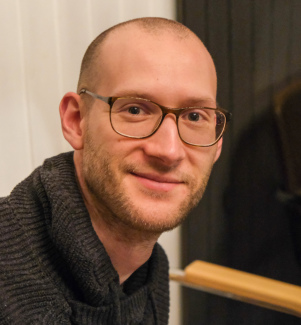
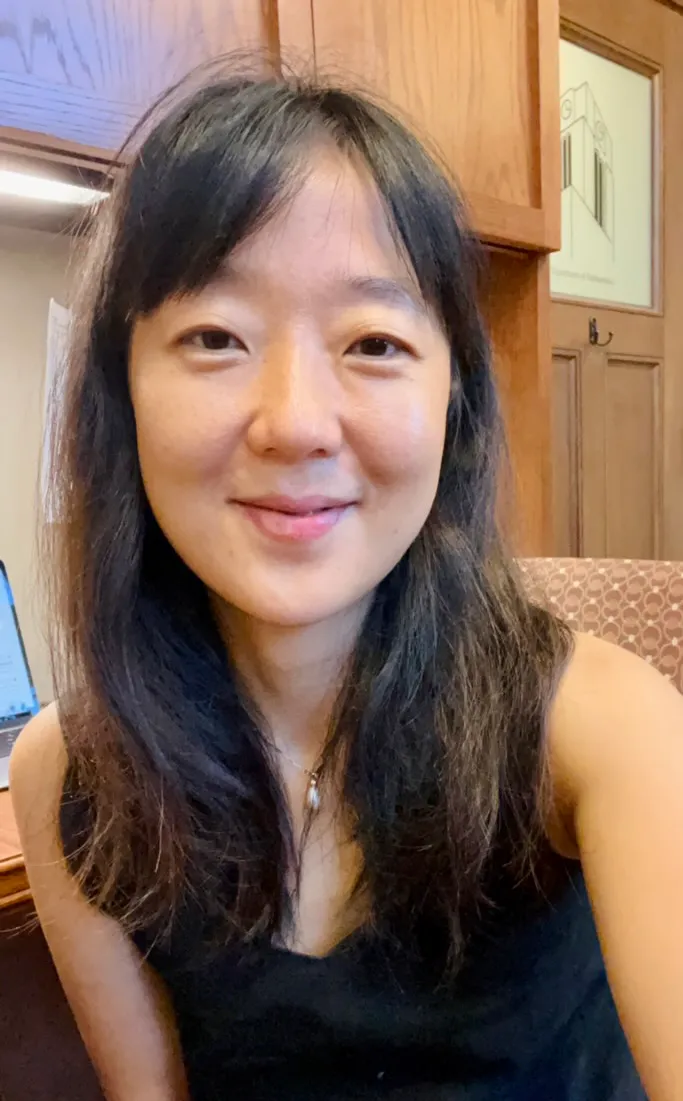
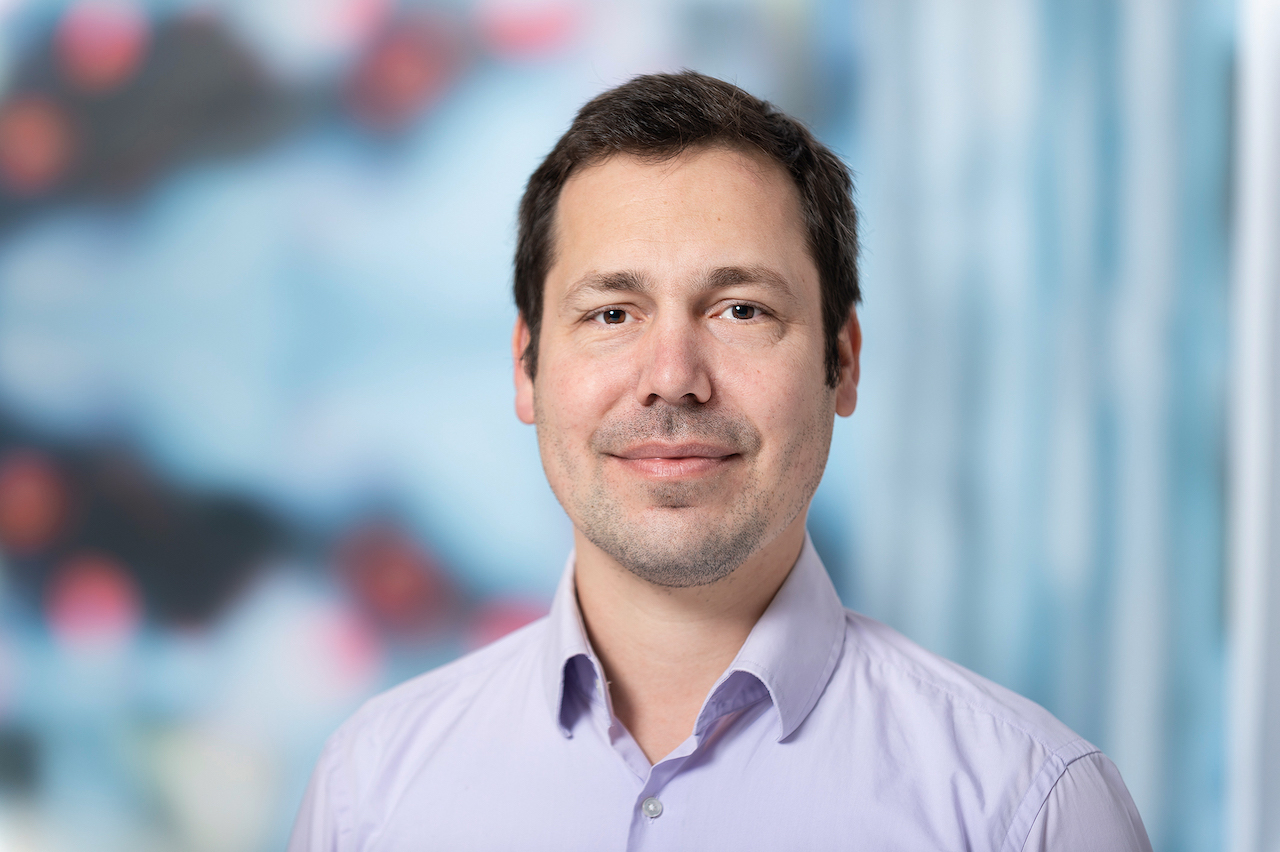
Steven Sivek is a Reader in Pure Mathematics at Imperial College London, affiliated with the Geometry group within the Department of Mathematics. His research focuses on contact and symplectic geometry, knot theory, gauge theory, and low-dimensional topology. He has taught courses on contact geometry, symplectic geometry, mapping class groups, and Morse theory at institutions including Imperial College London, Harvard University, and the University of Bonn. His work includes advanced topics such as Floer homology, Legendrian knots, and the interplay between contact structures and 3-manifolds. Sivek's contributions bridge geometric topology with algebraic structures, addressing questions about knot invariants, representation varieties, and topological field theories. His courses emphasize foundational texts and advanced research topics, such as the classification of tight contact structures, Morse theory applications, and symplectic fiber bundles. He has organized seminars on mapping class groups and taught graduate-level material on advanced geometry and topology. Sivek's research has been published in numerous high-impact papers, exploring themes like Khovanov homology, instanton Floer homology, and the geometry of 3- and 4-manifolds. His academic profile reflects a commitment to both teaching and cutting-edge research, with a focus on geometric and topological questions that intersect algebraic and differential structures.
Markus Land is a Tenure Track Professor at the Department for Mathematics, Ludwig Maximilian University of Munich, affiliated with the Algebraic Geometry Working Group. His research bridges algebraic topology, homotopy theory, and K-theory, focusing on their interplay with L-theory and manifold topology. He has held postdoctoral positions at the University of Copenhagen (supported by an EU Marie Curie Fellowship and DFG Grant) and the University of Regensburg, and earned his PhD at the University of Bonn under Wolfgang Lück. Education : PhD in Mathematics (University of Bonn, 2016) Positions : Postdoctoral (University of Copenhagen, 2019–2022; University of Regensburg, 2016–2019) Research Interests : Markus Land explores algebraic topology and homotopy theory , particularly algebraic K-theory , hermitian K-theory , and their connections to L-theory and manifold topology . His work often applies infinity-categories to foundational problems in operator K-theory and geometric topology. Recent Publications : His research includes groundbreaking studies on chromatic localization in K-theory, Grothendieck-Witt groups in ring theory, and additivity in cobordism categories . Collaborations with leading mathematicians like Georg Tamme and Ulrich Bunke highlight interdisciplinary approaches to algebraic and geometric problems. Awards & Grants : EU Marie Curie Individual Fellowship (2020–2022) DFG Individual Research Grant (2019–2020) Teaching & Academic Leadership : He has designed advanced courses including Topology I–V , Algebraic K-Theory , and Condensed Mathematics , emphasizing homotopy theory and infinity-categories . Future initiatives include student seminars on arithmetic and algebraic geometry to foster academic collaboration. Working Group : As part of the Algebraic Geometry Working Group at LMU Munich, he contributes to seminars and research projects on arithmetic geometry , manifold classification , and spectral algebra .
Ares J. Rosakis is the Theodore von Kármán Professor of Aeronautics and Mechanical Engineering at the California Institute of Technology (Caltech), where he served as Chair of the Division of Engineering and Applied Science from 2009-2015 and previously as Director of the Graduate Aerospace Laboratories (GALCIT). He has held numerous prestigious visiting professorships including at Nanyang Technological University, Northwestern University, Columbia University, Oxford University, and École Normale Supérieure in Paris. Rosakis earned his B.A. and M.A. in Engineering Science from Oxford University in 1978, followed by his Sc.M. (1980) and Ph.D. (1982) in Engineering (Solid Mechanics) from Brown University. He joined Caltech as an Assistant Professor in 1982, was promoted to Associate Professor in 1988, and to full Professor in 1993. In 2004, he was named the Theodore von Kármán Professor, one of Caltech's most distinguished named chairs. Rosakis is globally recognized as the foremost expert in dynamic failure mechanics of solid materials. His pioneering contributions span the dynamic failure of metals, composites, and interfaces. He invented Coherent Gradient Sensing (CGS) interferometry, a novel optical method sensitive to gradients of optical path differences that has been widely adopted in fracture mechanics and thin film stress measurements. His research encompasses dynamic shear-dominated rupture of heterogeneous materials, rupture mechanics of crustal earthquakes (where he experimentally discovered 'intersonic' or 'supershear' ruptures), and reliability of thin films and in-situ wafer level metrology. His work bridges engineering science, materials mechanics, and geophysics with remarkable interdisciplinary impact. His recent publications demonstrate a strong focus on earthquake mechanics and laboratory simulations of seismic events, particularly supershear earthquake ruptures. The research connects fundamental fracture mechanics with real-world geophysical phenomena, revealing how laboratory-scale experiments can illuminate the physics of large-scale earthquakes. His work has established critical links between theoretical models, experimental observations, and geological field evidence. Rosakis has received numerous prestigious awards including: 2024 Foreign Member of the Royal Society, UK 2023 Honorary PhD from National Technical University of Athens 2023 Honorary Degree of Doctor of Engineering from University of Illinois 2021 Zdeněk P. Bažant Medal for Failure and Damage Prevention 2018 Timoshenko Medal from ASME 2016 Elected to the National Academy of Sciences 2011 Elected to the National Academy of Engineering Throughout his distinguished career at Caltech, Rosakis has mentored numerous graduate students and postdoctoral researchers, many of whom have become leaders in their fields. His research has been continuously supported by major grants from the National Science Foundation, Department of Energy, and other federal agencies, focusing on dynamic fracture, earthquake mechanics, and advanced optical measurement techniques. He has served on numerous editorial boards and advisory committees for major scientific organizations. At Caltech, Rosakis leads research in the Graduate Aerospace Laboratories (GALCIT), where he has established world-class experimental facilities for studying dynamic fracture and earthquake mechanics. His laboratory features high-speed imaging systems capable of millions of frames per second, infrared diagnostics for temperature field measurements, and specialized equipment for simulating earthquake ruptures at laboratory scale. His research group combines experimental, theoretical, and computational approaches to address fundamental questions in solid mechanics and their applications to geophysics and materials engineering.
Anna Grigolon is an Assistant Professor at the University of Twente , Netherlands, affiliated with the Transport Engineering and Management Research Group . Her research focuses on sustainable urban mobility , user-centric transport solutions , and travel behavior analysis using tools like discrete choice modeling , spatial analysis , and social psychology theories . Research Interests : Sustainable Urban Mobility Accessibility Modeling Travel Behavior Discrete Choice and Latent Class Modeling Spatial Analysis and GIS Shared Micromobility and Mobility Hubs Equity in Transport Planning Article Trends : Anna’s recent work (2025–2024) emphasizes mobility justice , 15-minute city transitions, and equity in transport access , particularly for marginalized communities like São Paulo favelas. She integrates digital tools (e.g., serious games, kiosks) and space-time metrics to evaluate mobility solutions. Projects : She currently leads the SmartHubs project and contributes to DREAMS and R-map , focusing on smart, equitable mobility systems in Europe and Saudi Arabia.
Dana Pe'er is a Professor and Chair of the Computational and Systems Biology Program at the Sloan Kettering Institute (SKI) of Memorial Sloan Kettering Cancer Center. She is also an Investigator of the Howard Hughes Medical Institute and holds the Alan and Sandra Gerry Endowed Chair. Dr. Pe'er leads an interdisciplinary research group that combines advanced genomics approaches with machine learning to address fundamental questions in biomedical science, with particular focus on cancer biology, developmental biology, and immunology. Dr. Pe'er earned her PhD from Hebrew University in Jerusalem, Israel. Her academic journey includes a postdoctoral fellowship with George Church at Harvard Medical School. Before joining Memorial Sloan Kettering Cancer Center in 2016, she held faculty positions at Columbia University. Dr. Pe'er's research focuses on understanding cellular plasticity, the consequences of intra-tumor heterogeneity, cancer evolution and metastasis, and the mechanisms by which regulatory circuits go awry in disease. Her lab combines single-cell and spatial profiling technologies with machine learning approaches to investigate gene regulation, cellular plasticity, and cell-cell communication in the contexts of cancer, immunity, and development. They are particularly interested in how organisms develop from a single cell to generate diverse cell types, how epigenetic control rewires during development, and how cells communicate to execute multicellular responses. Analysis of Dr. Pe'er's recent publications reveals a strong focus on developing computational methods for single-cell and spatial genomics data analysis. Her work spans cancer types including pancreatic, prostate, colorectal, and breast cancer, with emphasis on tumor heterogeneity, metastasis mechanisms, and cellular plasticity. A significant portion of her research involves creating novel algorithms and tools like CellRank, REUNION, and SEACells that enable researchers to extract meaningful biological insights from complex genomic datasets. 2023 Class of 2023 Inductee - American Academy of Cancer Research (AACR) Academy 2023 Innovator Award - International Society for Computational Biology (ISCB) 2021 Fellow - International Society for Computational Biology (ISCB) Howard Hughes Medical Institute Investigator (2021) 2019 Ernst W. Bertner Memorial Award - University of Texas MD Anderson Cancer Center 2016 Lenfest Distinguished Faculty Award - Columbia University 2014 Director's Pioneer Award - National Institutes of Health 2014 Overton Prize - International Society for Computational Biology (ISCB) Dr. Pe'er is known for her dedicated mentorship approach, describing herself as "a mama bear" who cares deeply about her trainees while expecting independence, innovation, and hard work. She mentors numerous PhD students and postdocs in her lab. Her HHMI Investigator award provides approximately $9 million over seven years, enabling ambitious research directions. She also collaborates extensively with the Single-cell Analytics and Innovation Lab (SAIL) at MSK to generate new data from emerging technologies, working closely with wet-lab collaborators at MSK and beyond to apply computational methods to cutting-edge datasets across multiple disease areas. The Pe'er Lab is an interdisciplinary group of computational biologists with diverse backgrounds ranging from pure mathematics to clinical medicine. They work closely with wet-lab collaborators to apply their computational methods to cutting-edge datasets across cancer, immunology, and developmental biology. The lab is described as open, supportive, collaborative, and fun, with access to world-class facilities at the Sloan Kettering Institute. Dr. Pe'er's work continues to push the boundaries of computational biology and cancer research, with the ultimate goal of developing more effective, personalized therapies for cancer patients.
Yulan Qing is an Assistant Professor in the Department of Mathematics at the University of Tennessee, Knoxville (UTK), part of the College of Arts and Sciences. She holds a Ph.D. in Mathematics from Tufts University. Her research focuses on low-dimensional topology, geometric group theory, asymptotic properties of groups, and big mapping class groups. Notable projects include studies on Gromov boundaries, genericity in groups, and curve graphs. She has published extensively in journals like Geometry & Topology and the Journal of the London Mathematical Society. Dr. Qing has organized conferences such as the 53rd Barrett Memorial Lectures and the GGTea Webinar, fostering collaboration in geometric group theory. She has taught courses like Honors Topology at UTK and supervised graduate students including Sagnik Jana and Alex Squires. Her work bridges theoretical foundations with applications in topology and geometry. Recent invited talks include presentations at the University of Virginia, Caltech, and the 2nd China-Russia Conference on Topology. She actively mentors undergraduate and graduate students, contributing to initiatives like the Math Circle programs at Tufts and MIT's RSI Summer Program.
Jens Behley is a Lecturer (Privatdozent) and postdoctoral researcher at the Department of Photogrammetry, University of Bonn. He completed his habilitation in 2023 with a thesis on LiDAR-based spatio-temporal scene understanding for autonomous vehicles and earned his PhD in 2014 under Prof. Armin Cremers. His research focuses on LiDAR perception, agricultural robotics, and 3D scene understanding. Behley is an Associate Editor at IEEE Robotics and Automation Letters (RA-L) and has authored influential datasets like SemanticKITTI and BonnBeetClouds3D. Education: PhD in Computer Science, University of Bonn, 2014 Habilitation in Photogrammetry, University of Bonn, 2023 Research Interests: LiDAR-based perception in urban and agricultural environments, machine learning for robotics, semantic mapping, SLAM algorithms, and 3D reconstruction. His work bridges computer vision and robotics, with applications in autonomous vehicles and precision agriculture. Awards: Best Agri-Robotics Paper Award (IROS 2024) Outstanding Reviewer Awards (ECCV, CVPR, ICRA) Faculty Award for Geodesy (2021) Advisees & Grants: Behley collaborates extensively with the PRBonn lab and researchers like Cyrill Stachniss, focusing on projects funded by EU Horizon and industry partners. His team develops open-source tools for LiDAR processing (e.g., KISS-ICP, VDBFusion). Labs/Teams: Part of the Photogrammetry and Robotics Institute (IGG) at the University of Bonn, contributing to the PRBonn research group.
Jan Dirk Wegner is an Associate Professor at the University of Zurich, holding the chair in 'Data Science for Sciences' and leading the EcoVision Lab. He previously served as a Postdoc (2012–2016) and senior scientist (2017–2020) at ETH Zurich's Photogrammetry and Remote Sensing Group, following his PhD (with distinction) from Leibniz University Hannover (2011). His research bridges machine learning, computer vision, and remote sensing to address environmental and geoscience challenges, focusing on large-scale environmental data analysis, vegetation monitoring, and climate change mitigation. Education: PhD (with distinction) in Geodesy, Leibniz University Hannover (2011) Postdoc, ETH Zurich (2012–2016) Senior Scientist, ETH Zurich (2017–2020) Research Interests: Machine Learning, Computer Vision, Remote Sensing, Environmental Science, Climate Science, Geosciences, Explainable AI, Uncertainty Quantification, and Applications in Sustainability. The EcoVision Lab develops data-driven methods for global-scale environmental monitoring, including vegetation parameter mapping, flood prediction, forest degradation detection, and AI-driven ecological modeling. Awards: ETH Postdoctoral Fellowship (2012–2016) Science Prize of the German Geodetic Commission WEF Young Scientist Class 2020 (Top 25 globally under 40) Advising & Leadership: Director of the University of Zurich's Doctoral School in Data Science, leading the EcoVision Lab, and coordinating the CVPR EarthVision Workshops. His roles include Vice President of ISPRS Technical Commission II, member of the ETH AI Center, ELLIS, and UN-ETH Partnership. Labs/Teams: EcoVision Lab focuses on interdisciplinary AI applications for environmental challenges, collaborating with NGOs, governments, and industry to translate research into societal impact.
Kord Eickmeyer is a Lecturer at Technische Universität Darmstadt in the Department of Mathematics, specializing in the mathematical logic group. He holds a PhD in mathematics from Humboldt University Berlin and has held postdoctoral positions at TU Darmstadt (2011–2017) and the National Institute of Informatics in Tokyo (2011–2013). His research focuses on finite model theory, graph structure theory, and computational complexity, particularly in descriptive and parameterized complexity, as well as randomization and derandomization techniques. Research interests include exploring the boundaries of computational complexity through logical frameworks, analyzing graph structures for efficient algorithm design, and investigating the role of randomness in computation. His work bridges theoretical computer science and mathematical logic, with applications in algorithm design and formal methods. Publications span topics from model-checking on ordered structures to gap-planar graphs and randomized logics. Collaborations include prominent institutions like the National Institute of Informatics and Humboldt University Berlin. No scientific awards are explicitly listed, but his extensive academic contributions reflect a strong research trajectory. Advising and grants are not detailed in the provided text, though his academic career includes supervision roles during his PhD and postdoctoral phases. His involvement with the mathematical logic group at TU Darmstadt highlights collaborative research efforts in foundational areas of computer science and mathematics.
Bryon Aragam is an Associate Professor of Econometrics and Statistics and Robert H. Topel Faculty Scholar at the University of Chicago Booth School of Business. His research focuses on the intersection of causality, statistical machine learning, and probabilistic modeling, with particular emphasis on applications to artificial intelligence systems including large language models like ChatGPT and generative models like DALL-E. Dr. Aragam completed his PhD in Statistics and a Masters in Applied Mathematics at UCLA, where he was an NSF graduate research fellow. Prior to joining the University of Chicago, he was a project scientist and postdoctoral researcher in the Machine Learning Department at Carnegie Mellon University. Research Focus: Causal structure learning in probabilistic generative models Key Areas: Causal machine learning, deep generative models, latent variable models, statistical learning theory Applications: AI interpretability, ethics, and fairness in artificial intelligence systems Teaching: Business Statistics, Econometrics and Statistics Colloquium His recent publications demonstrate a strong theoretical foundation combined with practical applications, particularly in understanding and improving AI systems. His work spans causal discovery, graphical models, deep learning, and latent variable modeling, with particular attention to the theoretical properties of these methods and their applications to real-world AI challenges. The research shows a progression toward increasingly complex problems in causal representation learning and AI interpretability. Scientific Awards: Robert H. Topel Faculty Scholar NSF Graduate Research Fellow Dr. Aragam's work has been published in top statistics and machine learning venues including the Annals of Statistics, Neural Information Processing Systems (NeurIPS), the International Conference on Machine Learning (ICML), and the Journal of Machine Learning Research (JMLR). His research group publishes broadly across both statistical and machine learning communities, demonstrating the interdisciplinary nature of his work at the intersection of statistics, machine learning, and causal inference. As a data science consultant for technology and marketing firms, Dr. Aragam has applied his expertise to problems in survey design, customer retention, logistics, and ranking, bridging the gap between theoretical research and practical applications.
Tara Brendle is Professor of Mathematics at the University of Glasgow within the School of Mathematics and Statistics, specializing in the interplay between algebra and topology. Her research centers on mapping class groups of surfaces and their profound connections to braid groups, Coxeter groups, arithmetic groups, and automorphism groups of free groups. Her primary research explores how these algebraic structures determine the topology of 3- and 4-manifolds through constructions like Heegaard splittings and Lefschetz fibrations. She investigates cohomological properties, subgroup structures, and representation-theoretic aspects of mapping class groups, with significant contributions to understanding the Johnson kernel and hyperelliptic Torelli groups. Over the past two decades, Brendle's publications reveal a consistent focus on geometric and algebraic properties of surface automorphism groups, evolving from foundational work on generators and relations to cutting-edge research on high-dimensional cohomology of moduli spaces and stability phenomena. Her collaborations with leading mathematicians like Dan Margalit and Andrew Putman have produced influential results across geometric group theory. She actively supervises doctoral research on mapping class groups, braid groups, and low-dimensional topology, guiding students including Bader, Philipp; Corrigan, Gabriel; Giannini, Riccardo; and Pietrzak, Alicja on advanced topics at the intersection of algebra and geometry.
Mehdi Yazdi is a Lecturer in Pure Mathematics at King's College London, part of the Department of Mathematics within the Faculty of Natural, Mathematical & Engineering Sciences. His research focuses on low-dimensional topology, geometry, and dynamics, with particular emphasis on 3-dimensional manifolds, foliations, mapping class groups, and algorithmic aspects of topology. He holds a PhD from Princeton University (2017) and has held postdoctoral fellowships at the University of Oxford, including the Glasstone Research Fellowship in Science, Titchmarsh Research Fellowship, and a UKRI Postdoctoral Research Fellowship. Education: PhD in Pure Mathematics from Princeton University (2017). Prior to King's College, he was at Oxford from 2017–2021. Research interests include the study of geometric structures on manifolds, algorithmic problems in topology, and the interplay between dynamics and geometry. His work has contributed to understanding foliations, knot theory, and computational aspects of topological invariants. Publications span topics like the stability of foliations, Thurston norms, and computational complexity of knot genus, reflecting his expertise in both theoretical and algorithmic dimensions of geometry and topology. He is a member of the Geometry Group at King's, which explores areas such as algebraic geometry, cohomology theories, and symplectic geometry. His research also engages with broader questions in geometric analysis and low-dimensional dynamics.
Sergii Strelchuk is an Associate Professor of Computer Science at the University of Oxford, specializing in quantum computing and its applications. His research sits at the intersection of quantum information theory, computer science, and bioinformatics, with a focus on developing quantum algorithms for practical problems in genomics and beyond. Professor Strelchuk's primary research interests include quantum algorithms and their applications (particularly in bioinformatics), classical simulation methods for quantum computation, quantum complexity theory, and quantum learning theory. His work bridges theoretical quantum computing with practical applications, especially in the emerging field of quantum genomics and pangenomics, with significant implications for understanding human and pathogen genomes. His recent publications demonstrate a strong focus on applying quantum computing techniques to genomic data analysis, developing efficient fermion-qubit mappings for quantum simulation, and exploring fundamental aspects of quantum complexity theory. His research shows a clear trajectory toward making quantum computing practically applicable to biological data analysis and advancing our theoretical understanding of quantum computational models. Among his notable scientific achievements are: Royal Society University Research Fellow Leverhulme Early Career Fellow John and Delia Agar Research Fellow Professor Strelchuk leads several significant research projects including the Wellcome Leap "Human and Pathogen Quantum Pangenomics" project (2023-2026), which recently entered Phase 3 in April 2025, the EPSRC "Structure and symmetry in quantum verification" grant (2023-2025), and the "Quantum Algorithms for Quantum Field Theory" project (2022-2025). His research has attracted substantial funding for quantum computing applications in genomics. His work has received significant attention in both academic and popular science media, including coverage in Quanta Magazine and collaborations with institutions like the Sanger Institute to tackle complex genomic challenges using quantum computing approaches, with recent publicity about his leadership in the final phase of the Wellcome Leap-funded quantum pangenomics project.
Tom Coates is a Professor of Pure Mathematics in the Department of Mathematics at Imperial College London's Faculty of Natural Sciences. He holds affiliations with the Artificial Intelligence Network, the CNRS-Imperial Abraham de Moivre UMI, and the Pure Mathematics research group. His office is located in the Huxley Building (662) on the South Kensington Campus, London SW7 2AZ, and he can be contacted via email at t.coates@imperial.ac.uk or phone at +44 (0)207 594 3607. Professor Coates' research spans pure mathematics with emphasis on algebraic geometry, mirror symmetry, and Gromov-Witten theory. He investigates quantum cohomology and Fano variety classification to construct a 'Periodic Table for shapes' through computational algebra, data mining, and machine learning. His work integrates geometric methods with cluster-scale computing to identify structural patterns in algebraic varieties, focusing on quantum periods, toric degenerations, and Laurent polynomial applications. His recent publications (2021-2024) demonstrate a strong trend toward computational classification of Fano varieties and polytopes, leveraging machine learning for dimension prediction and database construction. Key themes include mirror symmetry via Laurent inversion, toric geometry applications, and connections between Gromov-Witten invariants and modular forms. These works often utilize custom tools like PCAS and Fanosearch for large-scale algebraic computations. While specific student names are not listed, Professor Coates mentors PhD and Master's students in algebraic geometry and computational mathematics. His research is supported by the Simons Foundation, member institutions, and contributors, enabling international collaborations through networks like the CNRS-Imperial Abraham de Moivre UMI. He leads a research team developing the Periodic Table for shapes framework, utilizing high-performance computing resources. The team maintains open-source tools including PCAS (Periodic Table for Algebraic Shapes) and Fanosearch for Fano variety exploration, with code repositories hosted on Bitbucket and quantum period databases published in Scientific Data.
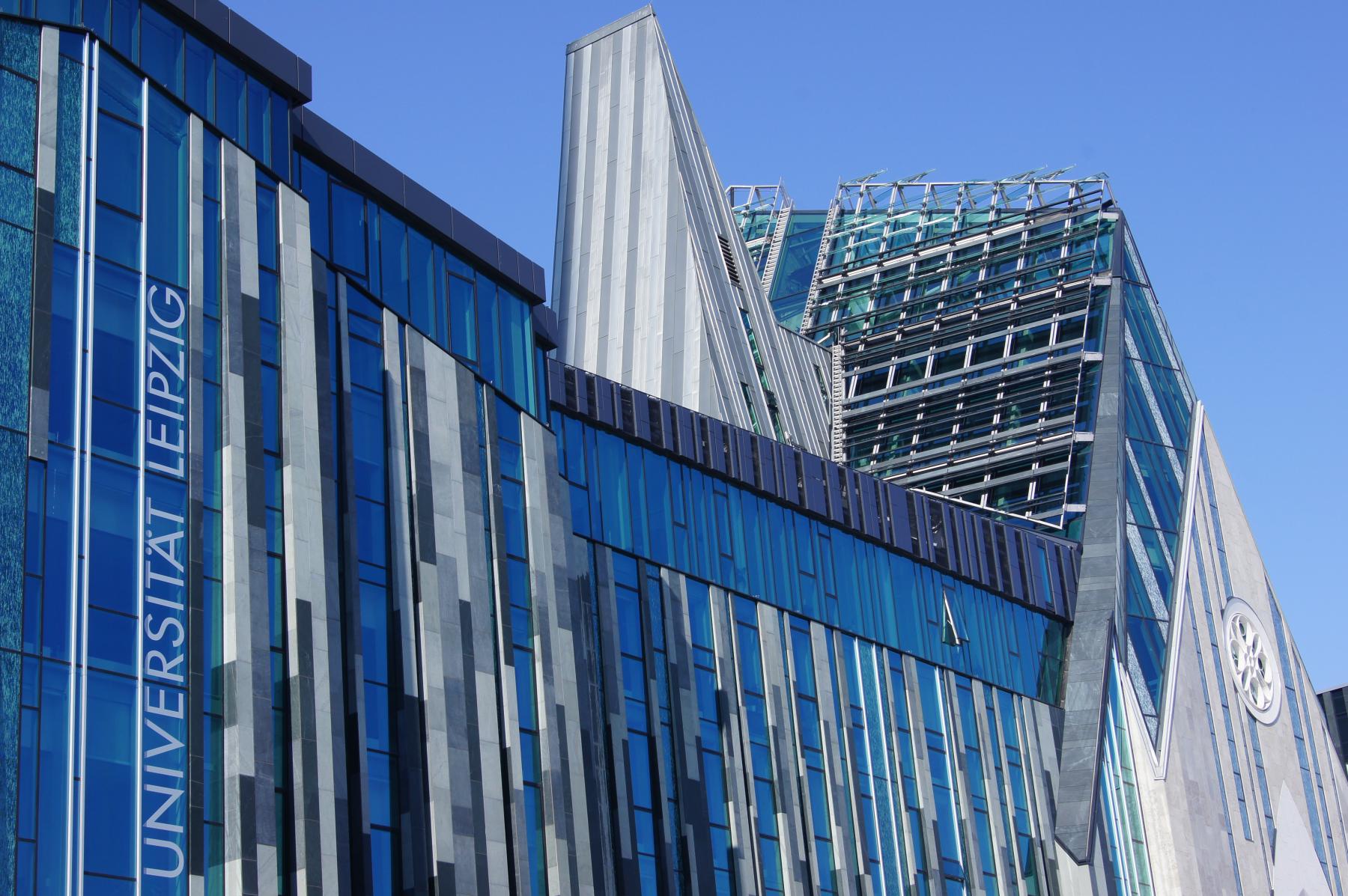
Hans-Bert Rademacher is a Professor of Differential Geometry at the University of Leipzig's Faculty of Mathematics and Computer Science, where he has held the chair since 1995. He completed his Habilitation in 1991 and earned his PhD (Dr.rer.nat., summa cum laude) in 1986 from Universität Bonn, following a Diploma in Mathematics (1983) from the same institution. Research Interests: His work focuses on differential geometry, including pseudo-Riemannian geometry, Finsler geometry, conformal geometry, Dirac operators and twistor spinors, Morse theory and closed geodesics, topology of free loop spaces, and discrete curve shortening. His research bridges geometric analysis and topology, particularly in the study of geodesic systems and curvature properties. Publication Trends: Recent articles center on closed geodesics in various geometric settings (spheres, Finsler manifolds, 3-manifolds), solitons in geometric flows, homology of loop spaces, and conformal geometry. His work frequently applies Morse theory to solve problems in global analysis and topology. Awards and Honors: University Medal (2021) Full Member, Saxon Academy of Sciences and Humanities (since 2010) Heisenberg Fellowship (1992-1995) Felix Hausdorff Memorial Prize (1985) National Mathematics Competition Winner (1978) Academic Service: He has supervised 12 PhD students and served as Dean (2011-2014) and Vice-Dean (2005-2008) of his faculty. He coordinated the Research Training Group "Analysis, Geometry and their interaction with the sciences" (2000-2010) and serves on editorial boards for several mathematics journals.