Andrew J. Baker is a Distinguished Professor in the Astrophysics group within the Department of Physics and Astronomy at Rutgers, The State University of New Jersey. He also holds an extraordinary professorship at the University of the Western Cape since 2022. His research focuses on galaxy evolution using radio, millimeter, and submillimeter observations of interstellar matter, with a particular emphasis on dusty star-forming galaxies and the growth of supermassive black holes. He leads the LADUMA HI survey with MeerKAT and has contributed to major projects like the Atacama Cosmology Telescope (ACT) and ALMA studies. Key roles include advising undergraduate astrophysics majors and serving as a faculty member in Rutgers' graduate program. He has advised numerous PhD and Master’s students, including Cristian Garcia-Vanegas, Christopher Henry, and Derek Zapata. Baker’s awards include the 2024 American Astronomical Society Fellowship, Radcliffe Institute Fellowship, and SAS Award for Distinguished Contributions to Undergraduate Education. His work spans gravitational lensing studies, molecular gas dynamics, and HI surveys, with recent publications on Einstein Cross systems and megamaser discoveries.
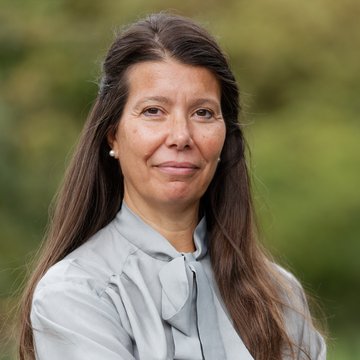
Prof. Maria-Rosa Cioni is a joint professor at the University of Potsdam and the Leibniz Institute for Astrophysics Potsdam (AIP). As a leading observational astronomer, her research focuses on the formation and evolution of dwarf galaxies, particularly the Magellanic Clouds. She leads major surveys including the VISTA Magellanic Cloud Survey (VMC) and the 1001MC survey within the 4MOST consortium. Her academic journey includes a PhD from Leiden Observatory (2001), postdoctoral positions at ESO and the University of Edinburgh, and prestigious fellowships like the Humboldt and DAAD awards. She currently holds the position of Section Head at AIP and has secured significant funding through an ERC Consolidator Grant (2016). Education: BSc in Astronomy, University of Bologna (1996) PhD in Astronomy, Leiden Observatory (2001) Professional History: ESO Fellow (2001–2005) Lecturer, University of Edinburgh (2005–2007) Senior Lecturer/Reader, University of Hertfordshire (2007–2010) Humboldt Fellowship (2010), DAAD Visiting Professorship (2010–2016) Her research emphasizes stellar populations and the interplay between dwarf galaxies and the Milky Way's halo. Recent work uses machine learning for source classification and Gaia data for dynamical modeling. She collaborates widely on projects like Euclid and SDSS-V, advancing survey techniques and galactic archaeology. Awards: ERC Consolidator Grant (2016), Humboldt Fellowship (2010), DAAD Visiting Professorship Grants & Funding: ERC Consolidator Grant supporting her research group since 2016 Prof. Cioni's lab contributes to cutting-edge facilities like the VISTA telescope and the upcoming Euclid mission. She actively mentors students and leads international collaborations to unravel the cosmic history of dwarf galaxies and their role in galaxy evolution.
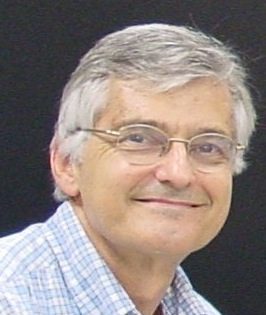
Jan Lub is an Associate Professor at Leiden Observatory within the Faculty of Science at Leiden University. He is actively involved in astronomical research focusing on the interstellar medium and galactic structures. His work contributes to understanding star formation processes and the dynamics of dwarf galaxies, particularly in the context of the Magellanic Clouds. His primary research interests include: Molecular Interstellar Medium Galaxy Centers Star Formation Dwarf Galaxies & Magellanic Clouds While specific publications are listed under his STRW page, no individual articles were detailed in the provided texts. However, the thematic focus of his research suggests consistent contributions to observational and theoretical astrophysics, especially in low-metallicity environments and galactic evolution. There are no listed scientific awards or honors in the available information. Dr. Lub advises students in astronomy and astrophysics, though no named advisees are provided in the current data. There is no mention of specific research grants or funding projects associated with him in the provided content. He is affiliated with the Leiden Observatory, a prominent research institute within the university dedicated to cutting-edge astronomical research, instrumentation development, and academic training in astrophysics.
Susan Clark is an Assistant Professor of Physics at Stanford University and a Senior Member of KIPAC (Kavli Institute for Particle Astrophysics and Cosmology). She leads the Cosmic Magnetism & Interstellar Physics research group and serves as co-director of the Center for Decoding the Universe at Stanford. Her research focuses on understanding astrophysical magnetism and the physics of the interstellar medium across multiple scales, from diffuse gas to dense star-forming regions. Clark received her Ph.D. in 2017 from Columbia University as an NSF Graduate Fellow, following undergraduate studies at the University of North Carolina at Chapel Hill on a Morehead-Cain scholarship. Prior to joining Stanford in September 2021, she was a NASA Hubble Fellow at the Institute for Advanced Study in Princeton. Her research tackles fundamental questions about the structure of the Milky Way's magnetic field, the nature of interstellar turbulence, and the role of magnetism in star formation. Clark and her group decipher the magnetic interstellar medium using multiwavelength observations and innovative data analysis techniques, employing tracers including gas line emission and absorption, polarized dust and synchrotron emission, starlight polarization, Zeeman splitting, and Faraday rotation. Her work has significant implications for cosmic microwave background research, particularly in understanding and removing galactic foregrounds. Clark collaborates on numerous major telescope projects including the Atacama Cosmology Telescope (ACT), Simons Observatory (SO), CMB-S4, CCAT-Prime, LiteBIRD, and the Galactic Australian SKA Pathfinder (GASKAP). She co-founded the Pan-Experiment Galactic Science Group to facilitate Milky Way science with CMB experiment data. 2025 AAS Warner Prize 2024 Sloan Research Fellowship Unsung Hero Award (2019) for prison teaching work Clark mentors a large research group comprising postdoctoral fellows, graduate students, and undergraduate researchers. Her group's work is funded by grants from the NSF and NASA. Beyond research, Clark is committed to teaching and outreach, having previously taught through the Princeton Prison Teaching Initiative and expressing enthusiasm for making STEM more inclusive. She particularly enjoys teaching courses related to radiative processes, fluid dynamics, and the interstellar medium. The Cosmic Magnetism & Interstellar Physics group maintains active collaborations across multiple institutions and telescope facilities worldwide, with particular emphasis on developing new data analysis techniques for studying magnetic fields in both galactic and extragalactic contexts.
Robin T. Garrod is a Professor in the Department of Astronomy and Department of Chemistry at the University of Virginia. His research focuses on computational astrochemistry, particularly chemical kinetics in interstellar, cometary, and protostellar environments. Developed the MAGICKAL code for grain-surface and ice-mantle chemistry Lead studies on comet Hale-Bopp's chemical evolution (Willis et al. 2024) Co-investigator in JWST and ALMA-based astrochemical investigations Garrod's work emphasizes solid-phase processes over astronomical timescales, combining chemical modeling with observational data from facilities like ALMA and JWST. His research explores complex organic molecule (COM) formation in comets, hot cores, and molecular clouds, revealing connections between interstellar and solar system chemistry. Recent publications examine COM inheritance in comets, ice chemistry in prestellar cores, and JWST-driven ice mapping. The Garrod group collaborates with astronomical observers to interpret molecular abundances and emission spectra, particularly in chemically-rich environments like Orion KL and Sgr B2.
Laura Lopez is an Associate Professor in the Department of Astronomy at Ohio State University, where she has been a faculty member since 2015. Her research focuses on supernovae (SNe), gamma-ray bursts, and the interstellar medium (ISM), with an emphasis on bridging observational data and theoretical models. She employs multiwavelength observations (radio to gamma-ray) to study stellar birth and death processes, particularly how supernova remnants reveal explosion geometries and how stellar feedback impacts star-forming regions. Education: Ph.D. in Astronomy & Astrophysics (2011), University of California, Santa Cruz M.S. in Astronomy & Astrophysics (2007), University of California, Santa Cruz B.S. in Physics (2004), Massachusetts Institute of Technology Research Interests: Lopez investigates supernova remnants' morphological signatures to distinguish between core-collapse and Type Ia explosions, and maps pressures from stellar feedback (radiation, winds, shocks) in regions like 30 Doradus. Her work also addresses galactic winds in starburst galaxies (e.g., M82) using X-ray and infrared observations. She leads the PHANGS multiwavelength galaxy survey, emphasizing star formation and feedback across the electromagnetic spectrum. Awards & Honors: 2022 AAS High-Energy Astrophysics Division Early Career Prize 2016 Annie Jump Cannon Award Cottrell Scholar (2019), NASA Group Achievement Award (2019) Multiple fellowships (Hubble, Einstein, Kavli) Advocacy & Outreach: Lopez co-chairs the AAS Committee on the Status of Minorities in Astronomy and co-leads the OSU Astronomy Diversity Committee. She expanded the Physics Masters-to-PhD Bridge Program to astronomy and advocates for STEM diversity through initiatives like BlackinAstro. Key Projects: PHANGS (Panchromatic Hubble Andromeda Treasury Survey) Advanced X-ray Imaging Satellite (AXIS) mission concept JWST observations of starburst galaxies
Charles Telesco is a Professor in the Department of Astronomy at the University of Florida, where he established the Astronomical Instrumentation Program in 1995. He holds a PhD in Astronomy and Astrophysics from the University of Chicago (1977), with prior NASA affiliations at Ames and Marshall Space Flight Centers. His research focuses on cosmic magnetic fields and astrobiology, leveraging instruments like CanariCam (a GTC facility instrument developed by his team) and the IMPS polarimeter for exoplanet studies. Key scientific contributions include mid-IR polarimetry of magnetic fields in star-forming regions and the development of compact polarimeters for biosignature detection. His work is supported by the NSF and involves collaborations with SETI, NASA, and NIST. Telesco's technical expertise spans infrared instrumentation, interstellar dust dynamics, and high-resolution observational techniques. Recent publications emphasize ultra-late-time spectroscopy of Type Ia supernovae (e.g., SN 2021aefx) using JWST, alongside advancements in polarimetry for both astrophysical and astrobiological applications. Active projects include refining IMPS for extraterrestrial biosignature detection and mid-IR surveys of nearby stars with CanariCam.
Dr. Ramesh Bhat is a Senior Research Fellow at Curtin University's School of Electrical Engineering, Computing and Mathematical Sciences (EECMS), affiliated with the Curtin Research Institute and Curtin Institute of Radio Astronomy (CIRA). His primary affiliation is with the Faculty of Science and Engineering. He is based at Curtin Perth Campus in Brodie Hall, Room 161. His research focuses on astrophysics and radio astronomy, particularly pulsar timing, gravitational wave detection using pulsar timing arrays, and the study of transient phenomena such as fast radio bursts (FRBs). He contributes to major projects like the High Time Resolution Universe (HTRU) survey, MeerTime, and the Murchison Widefield Array (MWA). Key research interests include pulsar population studies, interstellar medium interactions, signal processing for radio astronomy, and instrumentation development for next-generation telescopes like the Square Kilometre Array (SKA). His work spans theoretical models of pulsar emission mechanisms to observational studies of pulsar nulling, subpulse drifting, and gravitational wave backgrounds. Recent publications highlight advancements in pulsar survey techniques (e.g., GPU-accelerated analysis), discovery of new pulsars and FRBs, and constraints on cosmological models via pulsar timing arrays. His research often involves international collaborations, leveraging facilities like the Parkes radio telescope and the MWA. He actively contributes to radio interferometry, transient detection algorithms, and pulsar timing array data analysis. His work bridges observational astronomy with computational methods, aiming to advance understanding of compact objects and gravitational physics.
Sam McSweeney is a Researcher at Curtin University's School of Electrical Engineering, Computer and Mathematical Sciences (EECMS), part of the Faculty of Science and Engineering. His work focuses on pulsar astrophysics, subpulse drifting phenomena, and radio transient detection using instruments like the Murchison Widefield Array (MWA). Key research areas include magnetar-like radio transients, nulling pulsars, and multiwavelength studies of neutron stars. He has contributed to major surveys like the SMART pulsar survey and developed advanced data processing pipelines for transient detection. Publications since 2023 highlight discoveries of long-period radio transients, emission state-switching phenomena, and multi-instrument follow-up strategies. His work bridges observational astronomy with computational techniques, emphasizing high-time resolution observations and GPU-based imaging for FRB searches.
Professor Iver Cairns is a renowned academic in Space Physics at the University of Sydney's Faculty of Science, affiliated with the Sydney Nano Institute. He holds a PhD from the University of Sydney (1987) and has held prestigious positions including a Senior Research Fellowship and Australian Professorial Fellowship. His research focuses on solar radio emissions, plasma physics, and space weather, with notable contributions to understanding solar wind dynamics and ionospheric interactions. He leads projects like the CUAVA training center and developed the RedEye-1 SWIR imager for atmospheric monitoring. Awards include the 2023 Australian Space Awards Scientist of the Year. Key research areas include radio emission mechanisms in space plasmas, spacecraft charging effects, and nanosatellite technology. His work spans interdisciplinary collaborations in astrophysics, engineering, and environmental science. Major grants include projects on GPS-R technology and space photovoltaics. Current initiatives include the Waratah Seed-1 satellite and the TOLIMAN space telescope. He has pioneered open-source hyperspectral imaging tools and contributed to missions like the Parker Solar Probe and STEREO. Education: PhD in Physics, University of Sydney (1987) Grants: 2023 JORN Enhancement Project; 2022 Space Photovoltaics Roadmap Key Projects: CUAVA CubeSats, TRICE-2 Sounding Rockets, PUNCH Solar Mission Awards: Australian Space Awards Scientist of the Year (2023) Advises on satellite engineering, plasma diagnostics, and space policy. Active in Sydney Nano's multidisciplinary research, addressing challenges in nanoscience and space technology.
Professor Elaine Sadler is a Professor of Astrophysics at the University of Sydney's Faculty of Science. She has served as Director of CAASTRO (2014–2018), overseeing a network of over 100 scientists and 40 research students across seven universities and international partners. Her research focuses on extragalactic astronomy, utilizing radio and optical telescopes to study cosmic phenomena. She has held leadership roles, including President of the International Astronomical Union's Division VIII (Galaxies and the Universe) and Chair of Australia's National Committee for Astronomy. Recent research highlights include studies on radio spectral energy distributions, circumgalactic medium gas dynamics, and fast radio bursts. Her work bridges observational techniques with theoretical models, contributing to our understanding of galaxy evolution and cosmology. Elaine has received prestigious recognitions such as the AO (Australian Officer) and FAA (Fellow of the Australian Academy of Science). She has secured major grants, including the ARC Centre of Excellence for Gravitational Wave Discovery (OzGrav) and infrastructure funding for advanced radio astronomy receivers. Her collaborations span global institutions, reflecting her influential role in astrophysical research networks.
Kerstin Bunte is a Professor of Machine Learning for interdisciplinary data analysis at the University of Groningen, affiliated with the Faculty of Science and Engineering and the Bernoulli Institute's Intelligent Systems Group. She holds an Honorary Fellowship at the University of Birmingham and leads the Intelligent Systems Group. Her research focuses on interpretable machine learning, interdisciplinary applications (e.g., astrophysics and biomedical data), and visualization techniques. Research Interests: - Machine Learning - Artificial Intelligence - Explainable AI (XAI) - Interpretable Models - Dimensionality Reduction - Data Visualization - Astrophysical Data Analysis - Medical Imaging Awards & Grants: - DSSC XS funding (2023) - NWO VIDI grant (2020) - Rosalind Franklin Fellowship (2016–present) Advising & Students: Supervised PhD students include Elisa Oostwal, Janis Norden, Matteo Marcantoni, and Petra Awad. Research spans topics like tumor segmentation in medical imaging, astrophysical structure detection, and autonomous navigation systems. Labs & Collaborations: Leads the Intelligent Systems Group, collaborating with institutions like the University of Birmingham and the University of Warwick. Work involves interdisciplinary projects combining machine learning with astronomy, biomedical sciences, and robotics.
David A. Neufeld is a Professor in the William H. Miller III Department of Physics & Astronomy at Johns Hopkins University (JHU), part of the Krieger School of Arts & Sciences. He holds a PhD from Harvard University and specializes in theoretical astrophysics, molecular astrophysics, and interstellar medium (ISM) studies. His research utilizes advanced observatories like the Herschel Space Observatory and SOFIA (Stratospheric Observatory for Infrared Astronomy), focusing on molecular line emission, cosmic ray ionization rates, and hydride molecules in diffuse clouds. Key projects include leading the HyGAL SOFIA Legacy Program to study hydrides in the Galactic ISM and participating in Herschel’s HEXOS, PRISMAS, and WISH Guaranteed Time programs. Neufeld has developed experimental methods to constrain sexaquark dark matter and contributed to the discovery of the helium hydride ion (HeH+) in planetary nebulae. He is also involved in GUSTO, a terahertz spectroscopic mission mapping [CII] and [NII] emissions. His research integrates observational astronomy with theoretical models, exploring topics like protostellar outflows, water ice chemistry, and shock dynamics. He has published extensively on infrared/submillimeter spectroscopy, molecular ion abundances, and the role of cosmic rays in interstellar chemistry. Neufeld’s work bridges laboratory experiments (e.g., dissociative recombination studies) with astrophysical observations, advancing understanding of the ISM and star formation processes.
Lucy Ziurys is a Regents' Professor of Chemistry and Biochemistry & Astronomy at the University of Arizona, affiliated with Steward Observatory and the Arizona Radio Observatory. Her research focuses on astrochemistry, particularly phosphorus and iron chemistry in the interstellar medium (ISM), molecular life cycles in evolved stars, and prebiotic chemistry. She combines high-resolution laboratory spectroscopy with observational studies of red supergiants like VY Canis Majoris and planetary nebulae. Dr. Ziurys leads instrumentation projects at the Arizona Radio Observatory and has received the prestigious LAD Career Prize for her work bridging laboratory and astrophysical spectroscopy. Her studies employ cutting-edge techniques such as millimeter-wave spectroscopy and ALMA imaging to explore molecular complexity in stellar outflows, isotopic ratios, and the origins of biogenic elements. Key contributions include detecting novel interstellar molecules like FeC and elucidating phosphorus pathways in cosmic environments. The Ziurys Group designs custom instruments to measure unstable astrophysical species, advancing our understanding of Galactic chemical evolution and the chemistry of life's building blocks. Awards: LAD Career Prize (2019) Labs/Teams: Ziurys Research Group, Arizona Radio Observatory Instrumentation: Millimeter-wave spectroscopy, ALMA receivers
Dr. Joanne Dawson is an Associate Professor at Macquarie University's School of Mathematical and Physical Sciences and a Research Scientist at CSIRO Space & Astronomy. She holds a BSc (First Class Honours) from University College London and a PhD from Nagoya University. Previously, she was an ARC DECRA Fellow, Bolton Fellow at CASS, and ARC Super Science Fellow at the University of Tasmania, joining Macquarie in 2014. Her research focuses on radio astronomical studies of the interstellar medium (ISM), including: Evolution of ISM in Milky Way/nearby galaxies Molecular cloud formation mechanisms 'Dark ISM' bridging atomic/molecular regimes SPLASH and GASKAP survey leadership Radio spectral line tracers correlated with IR/optical data Her recent publications (2023-2025) predominantly explore observational astrophysics, characterized by: High-energy transients and radio emissions Galactic-scale molecular spectroscopy Interstellar turbulence and cloud dynamics Innovative radio telescope methodologies Awards include: Vice-Chancellor’s Educational Leader Award (2022, team) She currently supervises 2 PhD and 3 MRes students, having completed supervision of 6 MRes and 3 PhD students. Key grants include ARC Discovery and CSIRO projects studying star formation, galactic structure, and radio astronomy instrumentation. She directs HDR for the Astrophysics and Space Technologies Research Centre, serves as MAPS MRes Programme Director, and leads research teams for SPLASH and GASKAP surveys utilizing Australia Telescope National Facility resources.