Sven De Rijcke is a Full Professor at the Faculty of Sciences , Ghent University , affiliated with the Department of Physics and Astronomy (WE05). His research focuses on galaxy formation and evolution , particularly dwarf galaxies , disc galaxies , and numerical simulations involving dark matter, star formation, and gravitational lensing. Key research themes: dwarf galaxy dynamics, spiral structure in discs, cosmological simulations, and interstellar medium analysis. Recent publications (2020–2025) highlight work on primordial black holes , spiral eigenmodes , and ultra-diffuse galaxies , with affiliations to European framework programs (e.g., PRODEX-13, SUrvey Network) and regional grants. His supervised doctorates include Michele Mastropietro (2021), Eric Muires (2026), and Shivangee Rathi (2021), among others. Funding sources include the Research Foundation - Flanders (FWO) and the Special Research Fund . No explicit scientific awards are listed, but his roles as promotor and administrative supervisor underscore his academic mentorship.
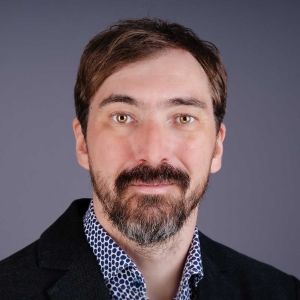
Kyle Dawson is a Professor of Physics and Astronomy at the University of Utah, where he has been employed since 2009. He currently serves as both a full Professor and Director of Graduate Studies in the Department of Physics and Astronomy, having progressed from Assistant Professor (2008-2015) to Associate Professor (2015-2019) before achieving his current position in 2019. His institutional affiliation places him within the College of Science at the University of Utah, a major research university in the western United States. Dawson earned his BA in Physics from Cornell University in 1998, followed by a PhD in Physics from the University of California, Berkeley in 2004. After completing his doctoral studies, he served as a postdoctoral researcher at the Lawrence Berkeley National Laboratory before joining the University of Utah faculty. His educational background in physics provided the foundation for his transition into observational cosmology, where he has made significant contributions through large-scale spectroscopic surveys. Professor Dawson's research focuses on observational cosmology through large spectroscopic surveys designed to measure the fundamental properties of the universe. He is currently the co-Spokesperson for the Dark Energy Spectroscopic Instrument (DESI), a major cosmological survey that has produced numerous high-impact publications in 2024-2025. Previously, he served as Principal Investigator for the Extended Baryon Oscillation Spectroscopic Survey (eBOSS), which concluded in 2020 with final cosmological measurements. His work centers on measuring baryon acoustic oscillations to constrain cosmic expansion history, dark energy properties, neutrino masses, and to test General Relativity. His research group employs techniques including galaxy clustering analysis, quasar astrophysics, and large-scale structure mapping to address fundamental questions in cosmology. The analysis of Dawson's recent publications reveals a strong focus on extracting cosmological constraints from the DESI survey data. His work spans multiple aspects of cosmological analysis, including baryon acoustic oscillation measurements, full-shape power spectrum analysis, imaging systematics mitigation, and cross-correlation studies with cosmic microwave background data. The publications demonstrate collaborative work with large international teams and contribute to increasingly precise measurements of cosmological parameters, with particular attention to dark energy equation of state, neutrino masses, and potential deviations from General Relativity. Professor Dawson has secured significant research funding throughout his career, including multiple grants from the Department of Energy (DOE), NASA, and the National Science Foundation. His grant portfolio includes leadership roles in major cosmological surveys like DESI and eBOSS, as well as support for postdoctoral researchers and graduate students. His research group has mentored numerous students who have gone on to successful careers in academia, industry, and data science fields. Dawson leads a vibrant research group at the University of Utah focused on cosmological data analysis from large spectroscopic surveys. His current team includes two postdoctoral researchers (Angela Berti and Sarah Eftekharzadeh) and a graduate student (Allyson Brodzeller). The group specializes in galaxy clustering analysis, quasar astrophysics, and machine learning applications to spectroscopic data. The research environment fosters collaboration with international teams working on DESI and related cosmological surveys, providing students with opportunities to engage with cutting-edge cosmological research and large-scale data analysis techniques.
Ingrid Mann is a Professor in Space Physics at the UiT The Arctic University of Norway , Department of Physics and Technology. She leads and participates in multiple externally funded research initiatives including the Cosmic dust injection into the upper Earth atmosphere , MXD 2 rocket project to study the mesosphere , and EISCAT Research infrastructure project . ORCID: 0000-0002-2805-3265 Member of research group Space Physics Member of projects: Intermittent fluctuations in physical systems , Maxidusty-2 , CASCADE , Codia , Boosting Space Business , and Forskningsparken 1 A216 Her research spans space and atmospheric physics , focusing on dusty plasmas , cosmic dust dynamics , and polar atmosphere interactions . She employs spacecraft observations , EISCAT radar , rocket experiments , and machine learning for data analysis. Recent publications highlight cosmic dust detection with Parker Solar Probe and Solar Orbiter , PMSE multilayer properties , and dust impact signal modeling . Her work integrates radar , optical , and spacecraft data to understand polar atmospheric systems. She teaches FYS-2000 Kvantemekanikk , FYS-2019 Sun, Planets, and Space , and supervises G-Chaser student rocket projects . Her research group contributes to EISCAT_3D infrastructure and interplanetary dust modeling . Co-edited books: Nanodust in the Solar System (2012) Small Bodies in Planetary Systems (2008) Modern Meteor Science (2005)
Jennifer Roberts is the Drew Gilpin Faust Professor of the Humanities at Harvard University, specializing in American and contemporary art. She serves as Director of Undergraduate Studies and has held the Slade Professorship at Cambridge University (2019) and delivered the 2021 Mellon Lectures at the National Gallery of Art. Her research bridges the arts, natural sciences, and material culture studies. Her scholarly work investigates the material intelligence of art and its creators, with a focus on the challenges of transmitting meaning across time and space. Current projects include a book co-authored with artist Dario Robleto (forthcoming 2026) analyzing the Voyager Golden Record's life-signature engravings, supported by the Sloan Foundation. She has also pioneered interdisciplinary courses integrating printmaking theory with studio practice alongside Matt Saunders. Roberts' research has shaped key themes in art history, including the intersections of printmaking, telegraphy, and visual communication. Her work explores how physical operations like reversal and transfer in printing influence artistic logic, as seen in her curated exhibition Jasper Johns/In Press and her forthcoming Contact book. She actively produces photography for scholarly contexts, including Harvard's astronomical glass plate collection. Her publications demonstrate a consistent focus on materiality, from 18th-19th century American visual communication in Transporting Visions (2014) to early conceptualizations of time in Robert Smithson's work ( Mirror-Travels , 2004). The Minding Making Project at Harvard further underscores her commitment to artisanal knowledge as academic research methodology.
Harald Kucharek is a Research Professor in the Physics & Astronomy Department at the University of New Hampshire (UNH), part of the College of Engineering and Physical Sciences. He is affiliated with the Space Science Center and holds a dual Ph.D. in Physics from the Technical University of Munich and an M.S. in Physics from the University of Regensburg. His research focuses on heliospheric physics, interstellar medium interactions, and space plasma dynamics, leveraging data from missions like IBEX and Solar Orbiter. Dr. Kucharek's work centers on understanding the global structure of the heliosphere, interstellar neutral gas flow, and particle acceleration at shocks. He has contributed to studies of pickup ions, energetic neutral atoms (ENAs), and magnetic reconnection processes. His teaching includes courses on Space Plasma Physics and Magnetohydrodynamics of the Heliosphere. He has been involved in over 22 grants (2005–2024), including mission-related research for IMAP and interstellar probe concepts. Key research trends include analyzing IBEX observations of interstellar helium and oxygen, investigating shock dynamics and ion acceleration, and modeling the heliospheric boundary. His recent work explores the implications of hybrid simulations and multi-spacecraft data for understanding plasma behavior in extreme environments. Collaborations with institutions like NASA and ESA highlight his role in advancing space physics through both observational and theoretical contributions.
Benjamin Stappers is a Professor of Astrophysics at the University of Manchester's Jodrell Bank Centre for Astrophysics within the School of Physics and Astronomy. His research focuses on radio pulsars, neutron stars, and rapid radio transients. He is part of the European Pulsar Timing Array (EPTA) and International Pulsar Timing Array (IPTA), which aim to detect nanohertz gravitational waves from early universe processes. He co-leads the transients project for LOFAR and heads the pulsar science group for the Square Kilometre Array (SKA). Research interests include using pulsars as probes of gravity and the interstellar medium, and expanding pulsar population studies via LOFAR surveys. His work involves hardware/software development for radio astronomy data analysis. Publications focus on pulsar timing, transients, and gravitational wave detection, with recent work exploring millisecond pulsars and radio transients. Awards include contributions to the Square Kilometre Array's development.
Cristiano Porciani is Professor of Astrophysics at the University of Bonn's Argelander Institute for Astronomy, specializing in cosmological structure formation and galaxy evolution. He leads a research group working on numerical simulations of large-scale structure and theoretical cosmology. His research focuses on dark matter distribution, galaxy bias, and cosmological parameter estimation using perturbation theory and high-performance computing. Recent work examines relativistic effects in large-scale structure and intensity mapping techniques. Publications show strong emphasis on Euclid mission science, including instrument characterization, survey simulations, and cosmological tests. Article trends reveal consistent development of statistical methods for analyzing next-generation sky surveys. Supervises 9 graduate students working on cosmological simulations, galaxy clustering statistics, and radiative transfer modeling. Leads research projects within the Euclid Consortium and Transregional Collaborative Research Centre.
Prof. Adam Deller is a Professor at Swinburne University of Technology, affiliated with the School of Science, Computing and Emerging Technologies. His academic journey includes a BSc, BE (1st class honours), and PhD in Astrophysics from Swinburne. He specializes in radio interferometry, neutron star physics, fast radio bursts (FRBs), and space domain awareness. His research focuses on compact objects like pulsars and black holes, using radio telescopes for high-resolution imaging. He co-founded Fourier Space Pty Ltd, developing signal processing solutions for radio astronomy and space industries. **Research Interests**: Radio interferometry instrumentation, neutron star magnetospheres, FRB localization and cosmological applications, and space domain awareness through radio observations. **Awards**: Includes the Pawsey Medal (2020), Newcombe Cleveland Prize (2022), and multiple grants from ARC and industry partners. His grants focus on SKA pulsar timing, FRB studies, and gravitational wave astronomy collaborations. **Teaching**: Teaches Computational Astrophysics, emphasizing numerical simulations for astrophysical problems. **Grants & Collaborations**: Key roles in ARC Centre of Excellence for Gravitational Wave Discovery, SKA pulsar timing projects, and international telescope collaborations like ASKAP and VLBI networks.
Martin Rey is a Lecturer in the Department of Physics at the University of Bath, specializing in theoretical astrophysics with a focus on galaxy formation and evolution. His research employs advanced computational methods to investigate fundamental questions about dark matter, star formation, and cosmic structure. His primary research interests include: Modeling the formation and co-evolution of stars, galaxies, and cosmic structures Using supercomputers for detailed fluid dynamics models of galaxies Investigating the nature of dark matter and its distribution Exploring the formation of the first stars and early universe processes Understanding how chemical elements permeate the Universe Dr. Rey's research portfolio reveals a strong concentration in Dark Matter Physics (100%), Dwarf Galaxy Physics (80%), Galactic Evolution Physics (74%), and Stellar Mass Physics (63%). His recent publications demonstrate expertise in radiation-hydrodynamics simulations, particularly through the EDGE project framework, which examines various aspects of dwarf galaxy physics and dark matter distribution. His notable scientific achievements include: Christopher Skinner Prize for outstanding PhD research (2020) Fellow of the Royal Astronomical Society (awarded December 7, 2024) Beecroft Fellowship (awarded September 1, 2021) Dr. Rey is actively engaged in research leadership as Co-Principal Investigator on the MEGATRON project (2023-2028) and Engineering Dwarf Galaxy project (2019-2027), and as Co-Investigator on the Vintergatan project (2020-2025). He serves as a peer reviewer for prestigious journals including Monthly Notices of the Royal Astronomical Society, Astronomy & Astrophysics, and The Open Journal of Astrophysics, and regularly presents at international conferences such as his Maynooth University seminar (November 2024) and First Galaxies conference (April 2025).
James McKee is an Assistant Professor of Physics and Astronomy at Union College in Schenectady, NY, specializing in radio astronomy of neutron stars and pulsar timing for gravitational wave detection since 2024. His work leverages international telescope networks to study extreme cosmic phenomena. Education: B.Sc. in Physics with Astrophysics, University of Hull (2010-2013) Ph.D. in Astronomy and Astrophysics, University of Manchester (2013-2017) Dr. McKee's research centers on pulsar timing arrays to detect nanohertz gravitational waves from supermassive black hole binaries, using pulsars as cosmic clocks. He investigates interstellar medium turbulence through radio signal dispersion and scattering, and explores connections between giant pulses in pulsars and fast radio bursts . His methodology combines decades-long observational data with advanced scintillometry techniques. His 2022 study on pulsar B1133+16 demonstrates his innovative approach, using 34 years of Arecibo data to map six discrete interstellar scattering screens within 372 parsecs, achieving sub-parsec precision for structures as close as 5.46 parsecs from Earth. Dr. McKee actively engages in public outreach through talks at events like WOMAD Music Festival 2024 and media appearances including BBC Radio Humberside. He secured University of Manchester Library funding to digitize 50 years of Jodrell Bank Observatory logbooks and consulted for the award-winning Moscow Planetarium documentary Colorful Universe . He collaborates with major international consortia: North American Nanohertz Observatory for Gravitational Waves (NANOGrav), Canadian Hydrogen Intensity Mapping Experiment (CHIME), New Extension in Nançay Upgrading LOFAR (NenuFAR), European Pulsar Timing Array (EPTA), and International Pulsar Timing Array (IPTA).
Dr. Sarah Burke-Spolaor is an Associate Professor in the Department of Physics and Astronomy at West Virginia University and a member of the Center for Gravitational Waves and Cosmology (GWAC) . Her research focuses on dynamic astrophysical phenomena , including binary supermass of mass black holes , pulsar timing arrays for gravitational wave detection , and Fast Radio Bursts (FRBs) . Key Research Areas : Gravitational wave detection via pulsar timing Observational studies of binary supermassive black holes Fast Radio Burst detection and classification Galaxy formation and merger dynamics Dr. Burke-Spolaor mentors a team of students and postdocs including Gregory Walsh, Jessica Sydnor, Reshma Thomas , and Kshitij Aggarwal , whose work includes projects like the BHBinary/Galaxy Evolution Survey and The Petabyte Project for Radio Transients . Her awards include the Alfred P. Sloan Fellowship and recognition as a CIFAR Azrieli Global Scholar . Selected Article Trends : Leading gravitational wave research through NANOGrav's 15-year data set Multi-messenger astronomy targeting binary black hole systems FRB host galaxy characterization across telescopes Exploring unconventional astrophysical transients in the Galactic bulge Advancing pulsar timing array methodologies Developing next-generation radio interferometry techniques Scientific Awards : Alfred P. Sloan Fellow CIFAR Azrieli Global Scholar
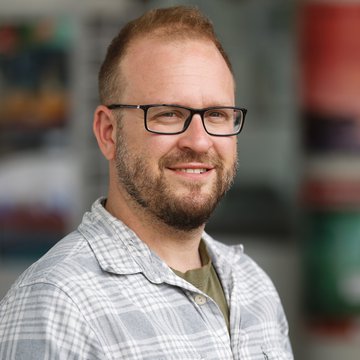
Jason E. Ybarra serves as a Teaching Assistant Professor and Director of the WVU Planetarium and Observatory at West Virginia University. His academic home resides within the Astronomy and Astrophysics department, where he integrates observational astronomy with innovative educational practices. As coordinator for the Sloan Digital Sky Survey (SDSS-V) Faculty and Student Team (FAST) program, he bridges research infrastructure with undergraduate development. Dr. Ybarra's educational background includes: Ph.D. in Astronomy from University of Florida (NASA GSRP Fellow) M.S. in Physics from San Francisco State University (co-discoverer of precessing jet evidence) His research spans galactic star formation in regions like the Rosette Molecular Cloud, protostellar outflow dynamics , and physics education with special focus on neurodiversity inclusion . Historical astronomy investigations feature prominently, particularly in rediscovering early variable star observations. His educational philosophy emphasizes neurodivergent accessibility, reflected in publications on inclusive STEM pedagogy. Recent publications reveal interdisciplinary trends merging astronomical research with computational methods (CNN analysis of historical records) and social sciences (neurodiversity studies). The Sloan Digital Sky Survey serves as a unifying thread across observational, educational, and historical investigations. Scientific recognition includes: NASA Graduate Student Researchers Program (GSRP) fellowship NASA Florida Space Grant Consortium fellowship As an educator, Dr. Ybarra has taught across diverse settings from Davidson College to Drepung Loseling Monastery in India through the Emory-Tibet Science Initiative. His FAST program coordination creates sustained undergraduate research pathways within SDSS-V. Current projects integrate planetarium outreach with neurodiversity-aware instructional design. The WVU Planetarium and Observatory serves as his primary research and educational hub, while SDSS-V provides large-scale collaborative infrastructure. His work uniquely connects historical astronomical practices with modern neuroinclusive education frameworks.
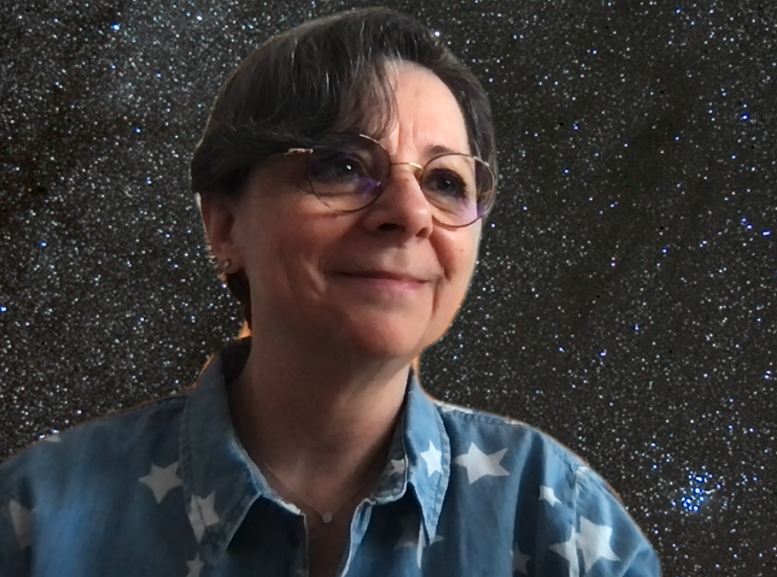
Cecilia Ceccarelli is a world-leading Professor at Université Grenoble Alpes , affiliated with the Institut de Planétologie et Astrophysique de Grenoble (IPAG) . She has held prestigious positions since 1986, including at NASA Ames Research Center and CNR Istituto di Fisica dello Spazio Interplanetario. Key Roles : ERC Advanced Grant Recipient (2017-2022), Coordinator of EU-funded ITN ACO (2019-2024), Associated Editor of Monthly Notices of the Royal Astronomical Society (since 2023). Research Focus : Astrochemistry, star formation, and organic chemistry in solar-type protostars. Her work bridges astrophysics and chemistry to decode molecular processes during planetary system formation. Article Trends : Recent publications (2017-2023) emphasize astrochemical modeling , organic molecule diversity , and high-resolution studies of star-forming regions, with collaborations across quantum chemistry and astrophysical simulations. Scientific Awards : 2023 Spiers Memorial Medal (Royal Society of Chemistry) 2006 Prize Irène Joliot-Curie (Femme Scientifique de l'année) 1981 Academia dei Lincei Best Student Award Advising & Grants : Mentored multiple PhD students and Post-Docs (e.g., Tinacci, Pantaleone, Enrique-Romero). Led EU-funded ITN ACO (2019-2024) and ERC Advanced Grant project 'the Dawn of Organic Chemistry' (2017-2022).
Dr. Noam Libeskind is a faculty member and group head of the Cosmography and Large-Scale Structure group at the Leibniz-Institut für Astrophysik Potsdam (AIP). He specializes in mapping the Universe's large-scale structure and using these maps to simulate the local environment. His work bridges observational and theoretical astrophysics, focusing on galaxy formation, the Local Group dynamics, and cosmographic reconstructions. He has held professorial positions, including at the Institute of Two Infinities (Université de Lyon-1) until 2021. Current projects include leading trans-national initiatives on cosmic web impacts (with Purple Mountain Observatory) and gravity tests via Local Group simulations (with Polish Academy of Sciences). Libeskind’s research interests include satellite galaxies, matter distribution reconstructions, and alignments of galaxies relative to their environments. His work has been featured in Scientific American and Sky & Telescope , highlighting contributions such as cosmography of the Local Universe and dark matter studies. Key collaborations span institutions like Hebrew University, Shanghai Astronomical Observatory, and Durham University. He leads projects like CLUES (Constrained Local UniversE Simulation) and HESTIA (High-resolution Environmental Simulations) to model the Local Universe. His team’s efforts have been recognized, including a 2024 municipal award for organizing impactful scientific meetings. Publications span cosmological simulations, galactic dynamics, and observational cosmology, with a focus on advancing understanding of the Milky Way, Andromeda, and their surrounding structures.
Prof. Dr. Paola Caselli serves as Director of the Center for Astrochemical Studies at the Max Planck Institute for Extraterrestrial Physics (MPE) in Garching, Germany, holding the academic rank of Professor within the institute's research structure. Her research focuses on astrochemistry and molecular astrophysics , specifically investigating chemical processes in the interstellar medium and star-forming regions. This work bridges observational astronomy, theoretical modeling, and laboratory astrophysics to understand molecular cloud evolution and prebiotic chemistry in space. Contact details include telephone numbers +49 89 30000-3400 and +49 89 30000-3399, with email listed as caselli@.... Her physical location is at Gießenbachstraße 1, 85748 Garching, Bayern.