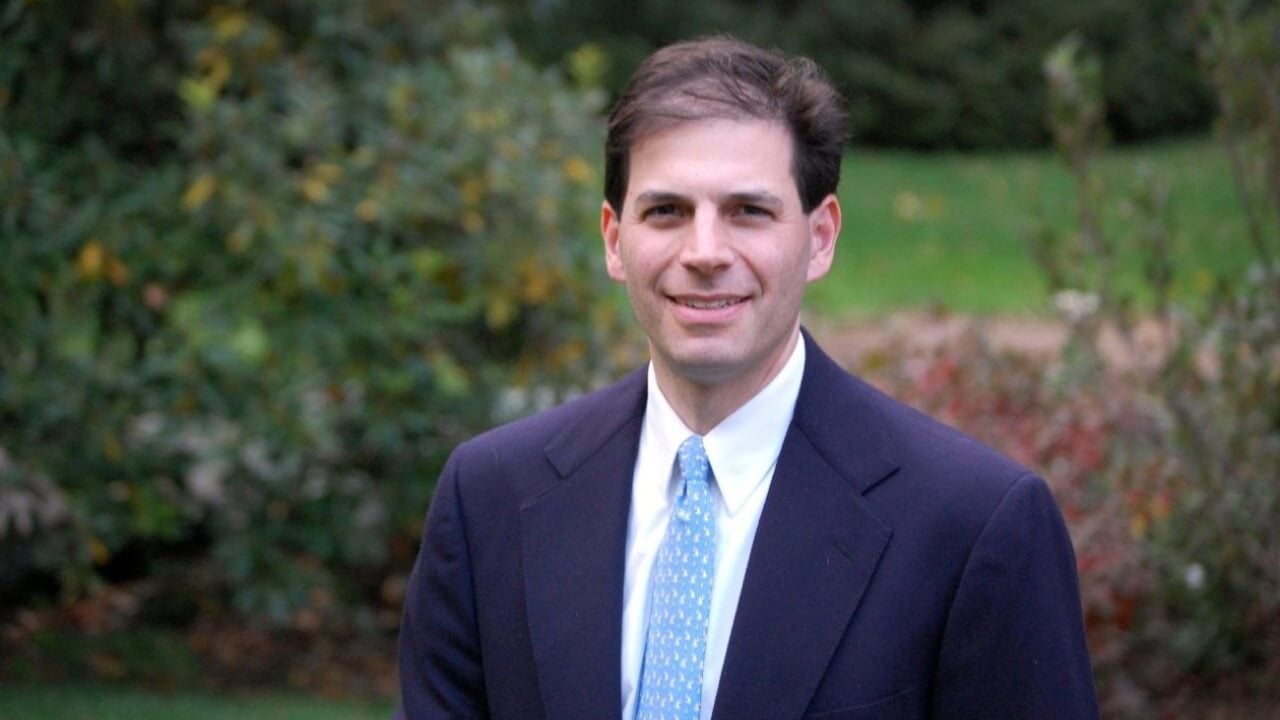
Jeffrey A. Cooper is a Professor of Law at Quinnipiac University School of Law , where he teaches courses in estate planning, wills and trusts, and taxation. He previously served as Associate Dean for Research and Faculty Development and is currently faculty adviser to the Quinnipiac Probate Law Journal . Education: AB from Harvard University, JD from Yale University, LLM from New York University Research Interests: His work focuses on tax policy , estate and gift taxation , and the intersection of federal tax law with state probate systems . He specializes in trust enforceability , uniform trust code , and historical analysis of tax legislation. Publications: Recent articles address perpetual trusts , state death tax decline , and curriculum reforms in estate planning education. His scholarship is widely published in national law journals and cited in casebooks. Scientific Awards: Academic Fellow, American College of Trust and Estate Counsel (ACTEC) Faculty Scholar, Quinnipiac University Professional Background: Before academia, Cooper practiced law for over a decade as a principal at Cummings & Lockwood, senior officer at United States Trust Company, and special counsel to Shipman & Goodwin. He also served as a senior adviser to Fiduciary Trust Company International.
Dr. Gavin Morris is a Lecturer in Education at Charles Darwin University's College of Education, with over two decades of teaching experience in Australian schools. His academic qualifications include a PhD from Charles Darwin University (2019), Master of Education from University of Sydney (2016), and Bachelor of Education from James Cook University (2000). Morris specializes in Indigenous research methodologies, Health & Physical Education, and Sport Science. His qualitative work focuses on trauma healing, truth-telling, and decolonization practices in Aboriginal communities, particularly using Dadirri (deep listening) methodologies. Recent research explores digital platforms for cultural preservation and community resilience. As a registered postgraduate research supervisor, Morris contributes to undergraduate and postgraduate programs while maintaining active fieldwork in remote Northern Territory communities like Nauiyu at Daly River.
Elaine Chun is an Associate Professor in the Department of English Language and Literature at the McCausland College of Arts and Sciences, University of South Carolina. She holds a Ph.D. in Linguistics from the University of Texas at Austin (2007) and an A.B. in Linguistics from Stanford University (1995). Education: Ph.D. in Linguistics, University of Texas at Austin (2007); A.B. in Linguistics, Stanford University (1995). Research Interests Dr. Chun specializes in sociolinguistics and linguistic anthropology, with a focus on language, race, gender, and sexuality. Her work examines how language practices traverse racial and national boundaries, particularly in contexts like Asian American YouTube commentary, K-pop fandom, and U.S. public spaces. She investigates ideologies of race and gender, collaborative interpretation in social media, and anti-racist strategies. Publication Trends Her recent publications emphasize language in digital media, racial ideologies, and sociocultural identity. Topics include racism in public discourse, transnational social media analysis, racial parody, and the intersection of language with race and gender. Her work spans journals like American Speech , Language in Society , and Discourse & Society .
Andrew Postlewaite is the Harry P. Kamen Professor of Economics and Professor of Finance at the University of Pennsylvania's School of Arts and Sciences. He holds dual roles in the Department of Economics and the Ronald O. Perelman Center for Political Science and Economics. As a distinguished academic, he is a member of the American Academy of Arts and Sciences and serves as a director at the National Bureau of Economic Research (NBER). Additionally, he is the founding editor of the American Economic Journal: Microeconomics and a research associate at Penn's Population Studies Center and Institute for Law and Economics. Postlewaite's research focuses on game theory, behavioral economics, and social norms, with contributions to mechanism design, repeated games, and intergenerational transmission of preferences. His work bridges theoretical foundations with applied economic analysis, particularly in areas like consumer behavior, decision-making, and institutional design. He has held visiting positions at institutions including Caltech, Harvard, and Stanford, reflecting his academic prominence. His scholarly contributions include pioneering studies on future-oriented decision-making, interdependent valuations in markets, and equilibrium concepts in repeated games. Recent publications explore topics such as the impact of local media accessibility in the digital age and the welfare implications of consumption fluctuations. His editorial leadership at journals like Econometrica and International Economic Review underscores his influence in shaping economic discourse. Awarded prestigious fellowships and editorial roles, Postlewaite's career exemplifies a blend of rigorous theoretical research and practical applications in economics. His current research trends emphasize behavioral insights and the methodological underpinnings of economic models, reflecting a commitment to advancing both theory and real-world relevance.
Rodney Harrison is a Reader in Archaeology, Heritage and Museum Studies at the UCL Institute of Archaeology, University College London. He serves as the founding editor of the Journal of Contemporary Archaeology and has been Vice President of the Association of Critical Heritage Studies since 2012. His research focuses on critical heritage studies, contemporary archaeology, and future-making practices in heritage contexts. Harrison's work challenges traditional boundaries between past, present, and future in heritage discourse, emphasizing how heritage functions as a future-oriented practice. His research spans cultural and natural heritage, exploring connections between heritage conservation and other material legacy management systems, including nuclear waste disposal. Harrison leads the major international 'Heritage Futures' research program funded by the UK Arts and Humanities Research Council. This project represents one of the largest critical, comparative ethnographic studies of heritage practices, examining how different forms of heritage function as distinctive future-making practices across diverse contexts. His scholarly contributions include more than a dozen books and over 60 peer-reviewed articles. Notable publications include Collecting, Ordering, Governing: Museums, Anthropology and Liberal Government (2016), Heritage: Critical Approaches (2013), Reassembling the Collection (2013), Understanding the Politics of Heritage (2011), and The Heritage Reader (2008). Harrison's work consistently engages with critical theory, challenging conventional heritage frameworks and exploring innovative approaches to understanding how material and cultural legacies shape future possibilities. His research has significant implications for heritage policy, conservation practice, and theoretical developments in critical heritage studies.
Gerald L. Neuman is the J. Sinclair Armstrong Professor of International, Foreign, and Comparative Law at Harvard Law School (HLS), where he serves as Director of the Human Rights Program. His expertise spans human rights, constitutional law, immigration law, and international legal frameworks. Previously, he taught at the University of Pennsylvania Law School (1984-1992) and Columbia Law School (1992-2006). Research Interests: Neuman's work focuses on: Human rights in populist and pandemic contexts Transnational constitutionalism Immigration law and extraterritorial constitutional rights Age discrimination as a human rights violation Impeachment's role in human rights protection Indirect discrimination analysis Selected Trends: His recent articles examine pandemic-era immigration policies ( Title 42 ), impeachment mechanisms for human rights violations, and age discrimination frameworks. Publications show consistent engagement with: Constitutional law intersections Comparative legal analysis Administrative law critiques Human rights treaty body applications Scientific Contributions: Neuman's work appears in leading journals like Harvard International Law Journal and Harvard Human Rights Journal . He has organized workshops on indirect discrimination related to: Sexual orientation/gender identity Chronological age Religious practice Disability rights Pandemic policy impacts He has served as a UN expert workshop organizer and contributed to international human rights literature through edited volumes and treaty analysis.
Harry Nelson is an Associate Professor at the University of British Columbia (UBC) within the Faculty of Forestry , specifically the Department of Forest Resources Management . His work focuses on natural resource policy, climate change adaptation, and sustainable forest management in Canada. Research Themes : Ecosystems and Climate Change, Sustainable Forest Management, Indigenous Governance Key Interests : Climate change impacts on forestry, ecosystem services, policy development Nelson’s research explores the structural transformation of the forest sector under changing markets and public expectations. He investigates ecosystem services as a business model for Indigenous forest management in BC and analyzes global climate adaptation strategies. Recent publications highlight cross-border forestry challenges, wildfire risks, and socio-economic dynamics in forest enterprises. His 15 most recent articles (2019–2025) span interdisciplinary topics such as climate change adaptation, Indigenous governance, bioeconomy, and global forest policy. These works emphasize the integration of ecological and economic frameworks to address sustainability. Scientific awards and recognitions: No awards explicitly mentioned in the provided texts. Nelson’s email address ( harry.nelson@ubc.ca ) and research areas are publicly available. No student advisement details or grant information is provided in the scraped data.
Professor Tamsin Bradley is a leading academic in International Development Studies at the University of Portsmouth, affiliated with the School of Area Studies, Sociology, History, Politics and Literature. Her research focuses on ending violence against women and girls, social inclusion, and harmful cultural practices. She holds a PhD from SOAS, University of London, and has held roles at institutions like the University of East Anglia and London Metropolitan University before joining Portsmouth in 2011. She was promoted to Professor in 2017. Her work is supported by grants from the British Academy, ESRC, and AHRC. Bradley is also a Fellow of the Royal Anthropological Institute. She currently supervises two PhD students on ESRC-funded projects and collaborates with organizations like Plan International and Stop Domestic Abuse. Her research integrates applied social anthropology with policy-relevant outcomes, addressing issues such as FGM, breast ironing, and gender-based violence in South Asia and Africa. Education: Bachelor's in Politics and Study of Religion (SOAS, 1996) MA in Social Anthropology of Development (SOAS, 1997) PGCE (University of Cambridge) PhD (SOAS, 2006) Research Focus: Ending violence against women and girls, harmful cultural practices, gender and social inclusion in South Asia/Africa, humanitarianism in conflict zones. Key Grants: £300k from British Academy (2018) for the 'Art Heritage, Resilience and Humanitarianism in South Sudan' project. External Roles: Council member of British Association of South Asian Studies (2014–2016), Editorial Board member of African Identities . Media Availability: Actively engages with media on gender-based violence and development topics. Bradley’s work bridges academic research and practical solutions, emphasizing community-led approaches. Her recent publications highlight intersections between culture, conflict, and gendered violence, with a focus on marginalized communities in South Sudan, Sudan, and South Asia.
Dr. Ray Bobrownicki is a Lecturer in Sport Psychology and Co-Programme Director of the BSc (Hons) Applied Sport Science at the University of Edinburgh's Moray House School of Education and Sport. He holds affiliations with the Institute for Sport, Physical Education and Health Sciences (ISPEHS) and the Human Performance Science Research Group. As a chartered psychologist (BPS) and licensed athletics coach, his work bridges academic research and real-world sport practice. Educations: PhD (Sport Psychology and Coaching), University of Edinburgh MSc (Performance Psychology), University of Edinburgh AB (Psychology), Brown University PGCert (Academic Practice), University of the West of Scotland His research focuses on optimizing coaching instruction, motor learning, and performance under pressure. He explores how verbal instructions, analogies, and technology (e.g., VR) influence skill acquisition and athlete motivation. Secondary interests include the societal impacts of sporting policies on athlete welfare and identity. Recent work critiques traditional sport science methodologies and advocates for interdisciplinary, applied research. His publications span 2015–2025, emphasizing critical analysis of coaching practices, motor learning mechanisms, and systemic issues in sport. Key themes include instructional design, constraints-led approaches, and translational research validity. Awards: Fellow of the Higher Education Academy Chartered Psychologist (British Psychological Society) Associate Fellow (British Psychological Society) Teaching responsibilities include programme leadership for BSc Applied Sport Science and contributions to MSc Performance Psychology modules. He currently supervises PhD student Tongyu Liu on esports support taxonomies and welcomes inquiries on coaching instruction, performance psychology, and athlete policy impacts. Dr. Bobrownicki’s career integrates athletic experience (Commonwealth Games finalist, high jumper) with coaching expertise (e.g., mentoring record-breaking athletes) to inform evidence-based practice in sport science.
Dr Haitao Shi is a Researcher affiliated with the School of Social and Political Science at the University of Edinburgh. His research focuses on criminal justice systems, drug policing in China, and the intersection of technology with crime. He employs advanced research methods including quantitative tools (R, Python, SPSS), qualitative software (Nvivo, MAXQDA), and data visualization techniques (Gephi, QGIS). His current projects include studying Chinese students' experiences at the University of Edinburgh and analyzing rhizomatic networks in online drug trade funded by the Polish Ministry of Science. Haitao's work emphasizes cross-cultural comparisons, particularly in drug trade dynamics across Finnish, Polish, and English-speaking contexts. He explores topics like police professionalization in China, guanxi networks, and quota-driven policing strategies. His methodologies span cloud computing (Azure, AWS), database systems (MySQL), and version control (Git), reflecting a technologically adept approach to criminology research. Notable research themes include the role of marketing in darknet drug trade, generational conflicts in police culture, and community-based drug rehabilitation policies. He collaborates with international teams and utilizes platforms like Microsoft Azure for large-scale data analysis.
Monica Trieu is an Associate Professor in the School of Interdisciplinary Studies at Purdue University, where she focuses on the intersection of race, ethnicity, and immigration with particular emphasis on children of immigrants. Her scholarly work bridges sociology and Asian American studies through critical examination of identity formation and systemic inequalities. Education: Ph.D. in Sociology, University of California, Irvine (Asian American Studies emphasis) Master's in Sociology, University of California, Irvine Research Focus: Professor Trieu's expertise spans International Migration, Post-1960s Immigrants and Refugees, 1.5 and Second-Generation Identity, Transnational Ties, and Historical/Contemporary Asian American Experiences. Her scholarship critically analyzes internalized racism, regional identity formation (particularly in the Midwest), and the psychological impacts of anti-Asian violence during the pandemic. She employs intersectional frameworks to explore how refugee experiences, cultural adaptation, and transnational connections shape ethnic identity among Southeast Asian Americans and other immigrant communities. Publication Trends: Her 2013-2024 publications reveal evolving engagement with contemporary crises—from pandemic-induced mental health challenges and anti-Asian violence to structural invisibility of Midwest Asian American communities. While maintaining core focus on identity negotiation among second-generation immigrants, her recent work expands into comparative analyses of Asian American/Latina/o transnational patterns and refugee resettlement experiences, demonstrating methodological versatility across ethnographic, survey, and media analysis approaches. Professional Impact: As author of Identity Construction among Chinese-Vietnamese Americans: Being, Becoming, and Belonging (2009) and publications in Journal of Ethnic and Migration Studies and Journal of Asian American Studies , Trieu has established herself as a key voice in Midwest Asian American scholarship. Her research directly informs institutional responses to rising anti-Asian sentiment and contributes foundational frameworks for understanding regional ethnic identity formation beyond coastal enclaves.
Stephen Billings is an Associate Professor of Finance at the Leeds School of Business, University of Colorado Boulder, where he holds the Global Real Estate Capital Markets Chair position. He serves as the faculty director of the MS in Real Estate program and research director for the CU Real Estate Center. His work spans multiple research centers including the Center for Research on Consumer Financial Decision Making and the Michael A. Klump Center for Real Estate. Billings received his PhD in Economics from the University of Colorado, a MS in urban planning from the University of North Carolina, and a BS in economics from Georgetown University. Prior to joining CU Boulder in 2016, he was faculty at the University of North Carolina Charlotte with appointments in both economics and public policy, where he also served as faculty director for the real estate center. His research focuses on the intersection of housing, schools, neighborhoods and crime, addressing critical policy issues including the impact of public investment in light-rail transit on neighborhoods, school segregation's influence on academic achievement and crime, neighborhood gentrification causes, lead-based paint in low-income housing, and the effects of sea level rise and natural disasters on neighborhood sorting and household finances. Billings employs sophisticated analysis of large micro-datasets with studies based on data and policies in Charlotte, NC and Denver, CO. His work connects urban economics with public policy, demonstrating how neighborhood environments shape individual outcomes across multiple dimensions. Billings' recent publication record demonstrates a consistent focus on neighborhood effects, school choice impacts, crime economics, and housing market dynamics. His work frequently examines the intersection of race, housing, and economic outcomes, with particular attention to policy implications. He has developed innovative methodological approaches to studying residential amenities and neighborhood spillovers, with increasing attention to climate change impacts on housing markets. His research appears in top journals including The Quarterly Journal of Economics, American Economic Review: Insights, and Journal of Urban Economics. As an educator, Billings teaches undergraduate and masters classes in real estate finance and economics, as well as doctoral and masters level courses on cost-benefit analysis and statistical methods. He has extensive consulting experience conducting economic impact studies, including assessments of North Carolina's public higher education system, affordable housing needs in Colorado communities, and the economic effects of marijuana legalization on property markets. His practical policy work complements his academic research, creating a bridge between theoretical insights and real-world applications. Billings leads significant research initiatives through the CU Real Estate Center, where he directs studies examining the impact of business improvement districts and other urban development policies. His work bridges academic research with practical policy applications, making substantial contributions to our understanding of how housing, education, and neighborhood environments shape individual outcomes and community development. His December 2023 memo on the HUD Officer Next Door Program exemplifies his engagement with current housing policy issues.
Angelika Sjöstedt serves as Professor and Chair of Gender Studies within the Department of Humanities and Social Sciences at Mid Sweden University. Her academic leadership spans teaching across Bachelor's, Master's, and PhD programs in Gender Studies and Sociology, while actively contributing to institutional discourse through roles such as delivering the 2024 academic celebration lecture. She maintains significant engagement with contemporary academic freedom debates, notably co-organizing the 2024 seminar series addressing responsible internationalization amid the Gaza conflict. Her research profile reveals deep expertise in intersectional analysis of gender, settler colonialism, and labor precarity, particularly examining how chronic crises manifest in peripheralized regions. Recent work demonstrates acute responsiveness to geopolitical emergencies, with 2024 publications directly confronting academic complicity in genocide. Her methodological approach bridges ethnographic rigor with activist scholarship, evident in long-term collaborations like the Båskoes Sámi research network and Forum for Gender Research. Sjöstedt's scholarly trajectory shows consistent thematic development from early work on flexible knowledge-work subjectivity (2012) through nuanced examinations of rural resilience (2017-2020) to current urgent interventions in academic freedom. Her publications reveal distinctive geographic focus on Norrland's inland regions while maintaining transnational theoretical relevance, particularly regarding mining resistance movements and crisis management frameworks. The 2021-2024 output demonstrates accelerated engagement with acute political emergencies, signaling scholarly adaptation to escalating global crises. Professional networks constitute a critical dimension of her work, with sustained involvement in the Forum for Gender Research since at least 2015 and leadership in the Båskoes network advancing Indigenous research methodologies. Her editorial work on critical anthologies like Aktivism: En antologi om arbete för social och politisk förändring (2022) demonstrates commitment to bridging academic and activist knowledge production.
Peter Werner is a Full Professor of Behavioral Economics and Policy Design at Maastricht University's School of Business and Economics, where he leads research in the Department of Economics (Microeconomics & Public Economics section). He progressed from Assistant Professor (2016-2017) to Associate Professor (2018-2023) before attaining his current full professorship, demonstrating sustained academic contribution within the institution. His educational foundation includes: Ph.D. in Economics, University of Cologne (2005-2009), thesis: 'Behavioral Economics and Agency Problems: Empirical Studies' Diplom-Volkswirt in Economics, University of Cologne and Stockholm School of Economics (1999-2005) Werner's research centers on applying behavioral insights to real-world systems , with dual focus on fundamental social preference mechanisms and practical policy design. His work bridges laboratory experiments with field applications, particularly in wage transparency , pension decision architecture , and organizational incentive structures . Recent methodological innovations integrate population-level surveys with experimental economics to measure preference stability during crises like the COVID-19 pandemic. Analysis of his 2022-2025 publications reveals expanding scope from traditional labor economics into climate behavior and intergenerational solidarity, while maintaining core expertise in experimental methodology. Key trends include increased focus on Dutch pension systems, risk communication frameworks, and cross-generational discrimination patterns using nationally representative samples. His primary recognition includes: Marie Skłodowska-Curie Individual Fellowship (2017-2019) for 'Wage transparency in companies' (Horizon 2020 Grant 745894) Werner actively secures competitive funding through major initiatives: Current: Netspar Theme Project on risk preference measurement (Instituut Gak) Recent: Netspar pension savings project (2019-2023) Past: Marie Curie Fellowship (2017-2019) He coordinates the UM Behavioral Insights Center and co-organizes the M-BEES/M-BEPS symposia series, fostering research-practice integration. As co-director of the UM Behavioral Insights Center—one of the university's research spearheads—Werner leads interdisciplinary teams applying experimental economics to public policy challenges, with particular emphasis on pension communication and labor market transparency through partnerships with Dutch governmental and financial institutions.
Donald R. Davis, Jr. is Professor and Chair of the Department of Asian Studies at the University of Texas at Austin's College of Liberal Arts. With a PhD from the same institution, he has established himself as a leading scholar in Hindu law and Dharmaśāstra studies. His work bridges religious studies, legal history, and South Asian studies, making significant contributions to our understanding of law and religion in medieval India. Davis earned his PhD from the University of Texas at Austin, where he has built his academic career. His scholarly journey has been deeply rooted in the study of Sanskrit legal traditions and their intersection with religious practice. Professor Davis's primary research concerns the interaction of law and religion in medieval India. He examines both historical evidence for law and legal practice through inscriptions and regional language documents, as well as the Dharmaśāstra tradition as a system of religious law and jurisprudence. His work situates Sanskrit normative texts within historical contexts while exploring their conceptual frameworks. He maintains the Resource Library for Dharmaśāstra Studies and has published extensively on Hindu law, including books such as The Spirit of Hindu Law (2010) and The Dharma of Business (2017). Davis's recent publications demonstrate a continued focus on the intersection of law, religion, and ethics in Hindu tradition. His work explores caste, conservatism, marital ethics, and the historical development of legal thought in India. He frequently draws comparative connections between Hindu legal traditions and other religious legal systems, contributing to broader conversations in legal anthropology and comparative religious law. Professor Davis actively supervises graduate students interested in Dharmaśāstra traditions and their relevance to law, religion, history, politics, and economics in India. He encourages students with broader interests in comparative religious law (Jewish law, Islamic law, Roman law, etc.) and works with those studying various aspects of Hinduism and classical religions in India, particularly in normative and "mainstream" areas such as Vedānta, Pūrva-Mīmāṃsā, Epics, and Purāṇas.