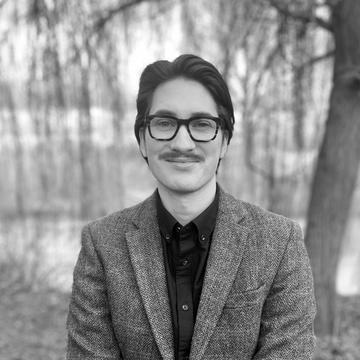
Clemens Jarnach is a Tutor in Sociology and Politics at the University of Oxford , affiliated with Green Templeton College . His work bridges computational social science and political sociology , focusing on public opinion formation , electoral behavior , and media effects in contexts like political polarization , Brexit , and climate politics . PhD in Sociology (University of Oxford) BSc in Business Studies (City, University of London) MSc in Sociology (University of Oxford) His research employs quantitative methods such as network analysis , machine learning , and causal inference via quasi-experimental designs . Recent projects analyze how digital trace data and social networks shape political identities and voting behavior , including studies on echo chambers and media consumption during elections. Key blog articles (2023-2025) highlight interdisciplinary explorations, from AI watermarks to Markdown styling , reflecting his technical expertise. Collaborations with Giving Evidence and Caroline Fiennes include high-profile analyses of Royal patronage effects and charity revenue dynamics . Teaching : Sociological Theory, Radical Social Theory, Political Sociology for undergraduates in PPE, History, and Politics Technical Skills : R programming, statistical modeling, digital trace data analysis
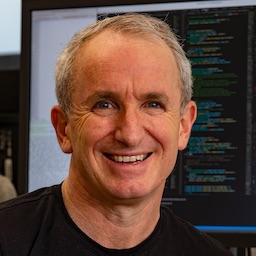
Steve Blackburn is a Professor of Computer Science at the Australian National University (ANU), affiliated with the ANU College of Systems & Society. His research focuses on programming language implementation, garbage collection algorithms, performance analysis, and high-performance runtime systems. He leads key projects like the DaCapo benchmark suite and the MMTk memory management framework. **Education & Background**: No specific education details provided, but his career spans decades with extensive contributions to computer science research. **Research Interests**: Blackburn prioritizes garbage collection innovation, memory management optimization, and empirical performance evaluation. His work bridges theory and practice, addressing challenges in managed runtimes, just-in-time compilation, and hardware-software co-design. He emphasizes reproducible research through shared infrastructure. **Recent Article Trends**: His 2020–2025 publications emphasize low-latency garbage collection, memory management in distributed systems (e.g., Mako collector for datacenters), and novel approaches to Java/JVM performance analysis. He also explores hardware features like transactional memory and their impact on runtime systems. **Awards**: ACM Fellow (2020+). **Grants & Leadership**: Served as Associate Dean for Diversity & Inclusion in ANU’s College of Engineering and Computer Science (2014–2019). Editorial roles include ACM TOPLAS Associate Editor (2017–2020) and program chairs for top conferences like PLDI (2015) and ISMM (2008). **Labs & Projects**: Leads the MMTk and DaCapo initiatives, foundational tools for memory management and benchmarking in academia and industry.
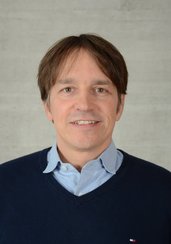
Prof. Dr.-Ing. Berndt Zeitler is a Professor of Building and Room Acoustics, and Technical Acoustics at HFT Stuttgart, serving as Deputy Director of the Institute for Applied Research (IAF) and head of the Acoustics Laboratory since 2015. He leads the Competence Center for Acoustic and Thermal Building Physics (ZFB) and chairs research initiatives on sustainable construction and urban acoustics. His expertise spans building acoustics, noise control in structures, and innovative materials like CFRP-reinforced concrete. He holds a Magna Cum Laude doctorate in Acoustics from TU Berlin and has held roles at NRC Canada and Rolls-Royce. His research focuses on acoustic insulation, vibration analysis, and smart city infrastructure. Academic Roles: Professor (HFT Stuttgart), Deputy IAF Director, Acoustics Lab Head Educational Background: TU Berlin (PhD Acoustics, 2005; Diplom Elektrotechnik, 1999) Research Focus: Prioritizes noise reduction in buildings, sustainable construction acoustics, and interdisciplinary projects like IMIAD (hemp acoustics) and Eco Box (multi-story sustainable construction). His work integrates acoustic modeling with materials science and urban planning, addressing challenges in low-frequency sound transmission and flanking noise. Projects: Leads initiatives such as Streetmoves4iCity (smart urban logistics) and InDeckLe (clay composite ceilings). Collaborates on acoustic sensor networks for urban noise mapping and UAV-based wildlife monitoring. His research bridges theoretical acoustics with practical applications in building physics. Academic Contributions: Serves as a reviewer for Acta Acoustica , Journal of the Acoustical Society of America , and others. Active in HFT Senate (2019–present) and policy formulation for building codes, particularly in Canada and Germany.
Dr Chris Mackintosh is a Senior Lecturer at Manchester Metropolitan University specialising in sport policy analysis, physical activity promotion, and qualitative research methodologies. He serves as an External Examiner for multiple UK institutions, including Leeds Beckett University and Southampton Solent University. His research focuses on the societal impacts of sport and outdoor recreation policies, with notable contributions to the House of Lords Inquiry into the National Plan for Sport, Health and Wellbeing (2021). Mackintosh has advised international bodies like the Canadian government and UK agencies such as Sport England and DCMS on policy design and evaluation. He has secured over £950,000 in research grants, leading projects on military veteran transition programs, golf club volunteer retention, and LGBTQ+ inclusion in sport. Mackintosh currently supervises five PhD students and has completed over 120 evaluation projects. His media engagements include BBC Radio 4, Sunday Telegraph, and Big Issue North. He actively promotes community health initiatives through academic-industry collaborations and chairs the Active Communities Network charity. Key professional roles include National Advisor for England Golf and Sport and Recreation Alliance (2013–2019), plus consultancy for the Lawn Tennis Association’s EDI initiatives. His teaching emphasizes global sport policy and qualitative methods, with a focus on translating research into practical policy solutions.
Matúš Sulír is an Assistant Professor at the Department of Computer Science and Engineering, Faculty of Electrical Engineering and Informatics, Technical University of Košice. He specializes in software engineering, program comprehension, and educational methodologies in programming. He teaches courses like Základy softvérového inžinierstva (Foundations of Software Engineering) and actively contributes to research in software build systems, domain-specific languages, and usability evaluation. His research interests include Java build processes, educational tools for programming, and empirical studies on software quality and testing. He has published extensively on topics such as automated test case identification, voice command APIs, and large-scale software build analysis. His work often integrates empirical methods with practical software development challenges. No awards or advisory roles are listed, and there are no explicitly mentioned research grants or projects. His academic contributions focus on advancing software engineering practices through empirical research and tool development.
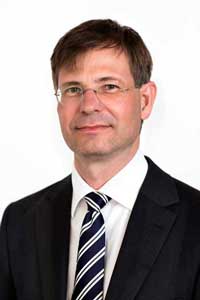
Prof. Dr. Mark von Wietersheim is an Honorary Professor of Construction and Procurement Law at the Faculty of Agricultural Sciences and Landscape Architecture, Osnabrück University of Applied Sciences. His expertise spans private construction law (BGB/VOB/B contracts), public procurement law (Vergaberecht), and VOB/A frameworks. He holds a law degree from Freiburg, Edinburgh, and Munich, and has served as a legal advisor at Deutsche Bahn AG and managing director of forum vergabe e.V., a leading procurement organization. Key roles include legal practice at Luther & Partner, leadership in professional organizations, and extensive contributions to legal publications. He focuses on contractual standards, regulatory compliance, and legal commentary in construction and procurement sectors. His work prioritizes practical legal guidance and interdisciplinary collaboration in infrastructure projects. Managing Director of forum vergabe e.V. Legal advisor to major institutions like Deutsche Bahn Author of over 300 articles and multiple legal reference works
Meghan Roberts serves as Associate Professor of History and Chair of the History Department at Bowdoin College in Brunswick, Maine. Her scholarship centers on eighteenth-century France, specializing in cultural history, the history of science and medicine, and women and gender studies. Roberts has established herself as a leading scholar in Enlightenment studies through her monograph and interdisciplinary research. Her academic credentials include: PhD in History from Northwestern University (2011) MA in History from Northwestern University (2006) BA in History from the College of William and Mary (2004) Roberts' research explores how family structures, gender dynamics, and medical authority shaped Enlightenment intellectual culture. Her acclaimed book Sentimental Savants (2016) demonstrated how philosophical families served as knowledge-producing units while cultivating public virtue. Current work investigates medical practitioners' strategies for establishing authority amid media revolutions and colonial exploitation, revealing connections between scientific credibility and imperial power structures. Her publication trajectory (2012-2024) shows deepening engagement with Enlightenment France's intersections of gender, science, and colonialism. Early work examined philosophical families and women astronomers, while recent scholarship analyzes race construction, spontaneous combustion controversies, and revolutionary marriage politics. This evolution reflects growing attention to how marginalized bodies and colonial contexts challenged Enlightenment universalism. No scientific awards were documented in the source materials. While specific advising details and grant histories aren't provided, Roberts' active publication record and departmental leadership suggest robust mentorship of undergraduate researchers at Bowdoin. Her collaborative projects, like the 2017 comparative marriage study with European scholars, indicate international academic partnerships. No dedicated laboratories or large research teams are mentioned, consistent with humanities scholarship practices. Roberts' work appears primarily individual though occasionally collaborative, leveraging archival research and interdisciplinary frameworks without institutional lab infrastructure.
Prof. Markus Wenzel is an Associate Professor of Medical Cognitive Computing at the School of Computer Science & Engineering, Constructor University Bremen. His research focuses on interpretable deep learning and computer-aided diagnosis systems for healthcare applications, particularly in medical imaging. He holds a PhD in 'Complexity Reduction in Image-Based Breast Care' (2014) from University Bremen and a BSc in Computer Science (With Distinction) from the Distance Learning University, Hagen. Wenzel has extensive industry experience, including roles at Fraunhofer MEVIS as a Key Scientist in Computational Breast Care (since 2021) and Senior Scientist (2005–2021). His work emphasizes clinical practicality, such as breast MRI segmentation and AI-driven diagnostic tools. Research highlights include developing the QuantMed platform for translational research and exploring generative adversarial networks (GANs) for medical data synthesis. He has authored over 50 peer-reviewed publications, with recent work focusing on CNN-based lesion detection, swarm learning, and uncertainty quantification in medical imaging. Awards include a prestigious scholarship from the Studienstiftung des Deutschen Volkes and certification as a Scientific Trainer (2022). Wenzel collaborates with clinicians to bridge AI research and clinical practice, addressing challenges like model interpretability and data scarcity in healthcare. His contributions span medical imaging analysis, AI-driven decision support systems, and robust deep learning frameworks for heterogeneous medical data.
Dr Jessica K. Mountford serves as an Adjunct Research Fellow at the University of Western Australia Medical School within the Centre for Ophthalmology and Visual Science, which is affiliated with the Lions Eye Institute. She also holds an Adjunct Appointment at La Trobe University. Currently, she is the 6th Brian King Fellow at the Lions Eye Institute in Perth, a position held from February 2021 to February 2024. Dr Mountford earned her PhD in Clinical Haematology from Monash University in Melbourne in 2012, with her dissertation titled 'Defining the role of class II Phosphoinositide 3-Kinases in platelet function.' Prior to her current positions, she worked as a Research Officer at Monash University's Australian Centre for Blood Diseases (May 2012-December 2013) and as a Post-doctoral Researcher with the Neuroecology Group at the University of Western Australia (January 2013-July 2017). Her primary research focuses on investigating the genetic and environmental causes of early-onset myopia (short-sightedness), with particular attention to how COVID-19 lockdowns have influenced the growing prevalence of myopia in children. She utilizes zebrafish models to study complex gene-environment interactions responsible for myopia development. Additional research interests include evolutionary genetics, visual and non-visual opsin and light detection, and platelet biology. Her work contributes to UN Sustainable Development Goals related to health and well-being. Analysis of her 15 most recent publications reveals a strong focus on vision science, particularly myopia genetics, opsin research, and refractive error mechanisms. Her work spans evolutionary biology, molecular genetics, and clinical ophthalmology, with significant contributions to understanding visual adaptation in diverse species from deep-sea fish to reptiles and primates. Her research demonstrates interdisciplinary connections between genetics, environmental factors, and visual system development. Western Australian Near-miss Award Brian King Fellowship (2021-2024) Telethon 7 funding Lions Save Sight Foundation W.A. support Australian Vision Research funding Perpetual Philanthropy Program support Dr Mountford serves as a Primary Honours supervisor for the UWA School of Biomedical Sciences (2022). Her research is funded by multiple sources including the Department of Health (Western Australia) for the project 'Genetic and environmental influences on the development of myopia: addressing a rising global prevalence post-pandemic' (2023-2024), and the Ophthalmic Research Institute of Australia for 'Establishing zebrafish morpholino as a model to study early-onset myopia' (2022). She has received significant media attention with her work picked up by 104 news outlets and referenced in 7 Wikipedia pages. Her research is conducted through the Lions Eye Institute in Perth, where she holds her Brian King Fellowship position. The institute provides the primary infrastructure for her work on myopia and vision research. She collaborates extensively with researchers across multiple institutions as evidenced by her co-authorship on high-impact publications in journals like Science, with one paper receiving over 150 Scopus citations and significant social media attention (2,522 shares/comments).
Alireza Rezaei is an Assistant Professor (Teaching Focused) in the Department of Civil and Environmental Engineering at the School of Engineering, University of Warwick. He joined the university in 2018 after serving as a Senior Teaching Fellow. His teaching spans Construction Management modules for Civil Engineering students and the Civil and Infrastructure Engineering Degree Apprenticeship (CEDA) program. He has also taught Project Management workshops globally, including in South Africa, Malaysia, Cyprus, and Iran. Rezaei holds a BSc from the University of Tabriz (1997), an MSc from Mazandaran University of Science and Technology (2000), a PhD in Construction Management from Eastern Mediterranean University (2011), and an MSc in Real Estate Management from Birmingham City University (2018). His research focuses on construction management subfields like time/cost management, sustainability, occupational safety, and BIM implementation. He has designed reinforced concrete structures and managed mass-housing projects. His academic contributions include over 30 peer-reviewed journal articles and conference papers addressing topics such as urban vulnerability assessment, BIM adoption in education, and construction waste management. His work frequently bridges theoretical frameworks with practical applications in developing countries. Office hours are Tuesdays 10am-12pm during term time.
Mark L. Adams is a Professor and Godbold Professor in the Department of Electrical and Computer Engineering at Auburn University's Samuel Ginn College of Engineering. He serves as Director of the Alabama Micro/Nano Science and Technology Center (AMSTC) and leads the STORM Lab (Sensors, Transducers, Optics, RF and MEMS). His affiliations include the Auburn University Applied Research Institute (AUARI), where he contributes to defense-related projects like the $1.1M U.S. Army Redstone Test Center initiative. Adams holds a Ph.D. and M.S. in Electrical Engineering from Caltech and a B.S. from Auburn University. His research spans MEMS, quantum cryptography, RF devices, and wireless sensor networks, with recent work focusing on quantum encryption systems and atmospheric sensing platforms. Laboratory facilities include AMSTC's quantum fabrication capabilities and the STORM Lab's micro/nano fabrication resources. His publication trends reveal a strong emphasis on MEMS-based sensors (40% of recent work), quantum applications (25%), and aerospace instrumentation (20%). Key themes include microfabrication for cryogenic environments, vibration isolation techniques, and satellite communication systems. Notable projects include the Globalsense atmospheric monitoring network and quantum key distribution research explaining satellite-based encryption over 700-mile distances. As a mentor, Adams actively recruits undergraduate and graduate researchers through the STORM Lab, focusing on hands-on projects in sensor development. His lab collaborates with defense agencies via AUARI and participates in quantum infrastructure expansion through AMSTC. Current initiatives include enhancing quantum capabilities for the Alabama Micro/Nano Science and Technology Center and developing wireless head impact monitoring systems.
Rui Alexandre Pereira is an External Research Collaborator at INESC TEC's Centre High-Assurance Software since July 2013, holding a PhD in Computer Science from the University of Minho and an MSc in Informatics Engineering. His educational background includes: PhD in Computer Science, University of Minho (MAP-i programme), thesis: \"Energyware Engineering: Techniques and Tools for Green Software Development\" MSc in Informatics Engineering, University of Minho (2013), thesis: \"Querying for Model-Driven Spreadsheets\" Dr. Pereira's research centers on green computing , focusing on energy efficiency in software systems through source code analysis, human-computer interaction for developer tools, and sustainable engineering practices. His work bridges theoretical software engineering with environmental responsibility, targeting measurable reductions in software carbon footprints. His 2022-2023 publications reveal a cohesive research trajectory examining energy efficiency across data structures, web technologies (WebAssembly vs. JavaScript), CI/CD pipelines, and computing education. These studies provide empirical evidence for optimizing energy consumption in diverse software contexts, emphasizing practical developer guidelines. His recognition includes: FCT grant for PhD research As a founding member of the Green Software Lab (GSL), GreenSSCM project, and Software Repositories for Green Computing initiative, Dr. Pereira drives collaborative infrastructure for green software engineering. His ongoing work integrates research with educational outreach to advance sustainability in software development practices.
Noreen Robertson, DMD, is an Assistant Professor in the Department of Biochemistry & Molecular Biology at Drexel University College of Medicine and serves as the Associate Vice Dean for Research. Her roles include fostering interdisciplinary research collaborations and overseeing research infrastructure to enhance translational science and medical education. Education: DMD from Temple University School of Dentistry (1990), BA from West Chester University (1980), and a Postdoctoral Fellowship at the Kimmel Cancer Center, Thomas Jefferson University (1995). Research Interests: Cancer biology, inflammatory diseases, apoptosis regulation, and molecular mechanisms of hormone receptors. Her work focuses on glucocorticoid/mineralocorticoid signaling, airway inflammation, and embryo implantation biomechanics. Her publications span over three decades, emphasizing apoptosis modulation, cytokine interactions, and translational research in oncology and immunology. Notable contributions include studies on TRAIL signaling in cancer cells and L-selectin-mediated embryo implantation mechanics. Awards: Lifetime Achievement Award (2024) from the Sidney Kimmel Cancer Center Research Consortium for her leadership in collaborative research. She oversees research initiatives that bridge clinical practice and basic science, including core facilities and grant development. Her administrative leadership supports Drexel’s bid for National Cancer Institute comprehensive cancer center designation. Labs/Teams: Integral to the Sidney Kimmel Cancer Center Research Consortium, collaborating across institutions and disciplines to reduce cancer burden in Philadelphia and surrounding regions.
Dr. Sherry Bell Surrette serves as an Associate Extension Professor at Mississippi State University's College of Agriculture and Life Sciences, based at the Central Mississippi Research and Extension Center. Her work focuses on community-based sustainability education and waste management outreach across Mississippi. Her academic foundation includes: Doctor of Philosophy (PhD) in Biological Sciences from the University of Mississippi Master of Science (MS) in Agronomy from Mississippi State University Bachelor of Science (BS) in General Agriculture from the University of Tennessee at Martin Dr. Surrette's research centers on practical sustainability implementation and waste stream management , with particular expertise in zero-waste initiatives, recycling education, and household resource conservation. Her work bridges academic research with community application through extension programming and behavioral change strategies , emphasizing actionable solutions for everyday environmental challenges. Her publication portfolio reveals consistent focus on translating complex sustainability concepts into accessible community resources, with recurring themes in seasonal waste reduction, plastic management, and energy conservation across residential contexts. Recognition includes: Keep Mississippi Beautiful 2022 Distinguished Leading Business Women award Elementary Youth Organization 1st Place award for GS Troop 4409 Mississippi Business Journal honors As an extension specialist, Dr. Surrette prioritizes direct community engagement over traditional academic advising, collaborating with municipal programs and organizations like Keep Mississippi Beautiful to implement waste reduction initiatives. Her work integrates grant-funded outreach with membership in professional societies including the Mississippi Association of County Agents, Mississippi Native Plant Society, and The Wildlife Society.
Dr. Alireza Esfahani is a Senior Lecturer in Cyber Security at the School of Computing and Engineering (SCE) at the University of West London, where he also serves as the Course Leader for the BSc (Hons) Cyber Security and BSc (Hons) Cyber Security with Foundation Year programs. Previously, he held a lecturing position at the University of Greenwich from 2021 to 2023. He earned his PhD in Telecommunications from the University of Porto, Portugal, through the MAP-TELE doctoral program in 2017, followed by postdoctoral research at the Instituto de Telecomunicações in Portugal (2017–2019). Education: PhD in Telecommunications (University of Porto, 2017) Experience: Research Associate at SnT-CritiX (University of Luxembourg), contributing to EU cybersecurity projects SPARTA and CyberSec4Eu Affiliations: European Cyber Security Organisation (ECSO) and IEEE member Research Interests: Dr. Esfahani focuses on cybersecurity in IoT, connected vehicles, intrusion detection, machine learning applications, and semiconductor supply chain security. His work emphasizes secure authentication mechanisms, network coding security, and resilient systems design. Teaching: He teaches courses in BSc and MSc programs, including Cyber Security, Computer Science, and specialized modules in network security and secure communication protocols. Grants & Projects: Instrumental in EU-funded initiatives like SPARTA and CyberSec4Eu, focusing on cybersecurity frameworks and distributed systems. Labs/Teams: Collaborated with SnT-CritiX at the University of Luxembourg, developing cybersecurity solutions for critical infrastructure.