Prof. Gjalt de Graaf is a Full Professor in the Department of Political Science and Public Administration at Vrije Universiteit Amsterdam, leading the New Public Governance (NPG) research group. He holds dual appointments in the Faculty of Social Sciences and Humanities, specializing in public governance quality, integrity, and value conflicts. His work addresses how social media, academic education, and whistleblowing impact governance practices. Research focuses on resolving public value conflicts, particularly in academia and public institutions. He explores governance through lenses like art’s role in policy-making and administrative traditions’ influence on professional ethics. Notable contributions include studies on Dutch justice policy under pressure and cross-national comparisons of academic integrity. Awarded the Best Article Award 2017 Public Integrity and the VU Faculty of Social Sciences Research Prize (2008) , his work aligns with UN SDGs on peace, justice, and strong institutions. He advises 4 PhD theses and leads projects like Veerkrachtige en zinvolle samenlevingen , addressing societal resilience and youth participation. Teaching includes courses on good governance, public administration ethics, and leadership in dynamic environments. He actively engages in media commentary on integrity issues and organizes conferences on anti-corruption and ethical leadership.
Charles A. O'Reilly is The Frank E. Buck Professor of Management in the Organizational Behavior area at Stanford Graduate School of Business, where he has been on faculty since 1993. Previously, he served as Professor at University of California, Berkeley (1980-92) and Assistant Professor at University of California, Los Angeles (1976-80). His educational background includes a PhD in Organizational Behavior from University of California Berkeley (1975), MBA from University of California, Berkeley (1971), and BS in Chemistry from University of Texas El Paso (1965). O'Reilly's research focuses on leadership, organizational culture, innovation and change, organizational demography and diversity, and executive compensation. His work has increasingly concentrated on narcissistic leadership and its organizational consequences, ambidextrous organizations that can simultaneously exploit existing capabilities while exploring new opportunities, and the relationship between organizational culture and performance. His influential papers on person-organization fit, organizational ambidexterity, and leadership have shaped contemporary organizational theory. His publications reveal a strong trend toward examining the dark side of leadership, particularly narcissism in executives, and how CEO personality shapes organizational culture. His recent work explores the connection between narcissistic leadership and organizational outcomes including unethical behavior, legal vulnerabilities, and cultural toxicity. Distinguished Scholar Award by the Academy of Management Organizational Behavior Division Lifetime Achievement Award (2010) Distinguished Teaching Award for MBA teaching at Stanford Graduate School of Business (2001) California Management Review Best Paper Award (1996, 2009, 2019, 2020) Administrative Science Quarterly Scholarly Contribution Award (1995, 1998) Hank McKinnell-Pfizer Inc. Faculty Fellow (2022-23) O'Reilly has developed and directed executive education programs including Culture as a Competitive Advantage and Leading Change and Organizational Renewal. He has consulted for numerous public and private firms globally and has taught at UC Berkeley, UCLA, Columbia, and Harvard Business School. His research has been supported by various academic and corporate funding sources that enable his extensive studies of organizational dynamics and leadership. As Co-Director of Culture as a Competitive Advantage and Leading Change and Organizational Renewal programs, O'Reilly works with executive teams to transform organizational culture and implement strategic change. His research on organizational ambidexterity has influenced how companies approach innovation within established organizations, particularly through his work with Michael Tushman on the concept of 'corporate explorers' who drive innovation from within.
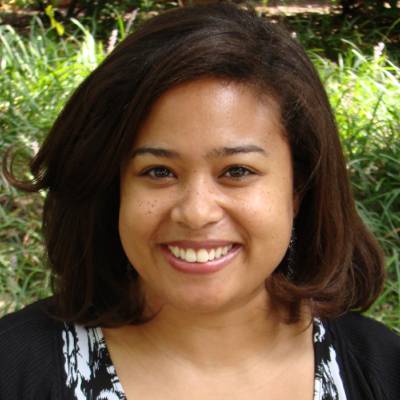
Heather A. Jones, Ph.D., serves as Associate Professor in the Department of Psychology within Virginia Commonwealth University's College of Humanities and Sciences, holding joint appointments with the Department of African American Studies, Department of Pediatrics, and Institute for Women's Health. As a licensed clinical psychologist in Virginia, she maintains an active research program focused on reducing mental health disparities through culturally responsive interventions. Ph.D. in Psychology, University of Maryland at College Park (2006) Dr. Jones' research centers on three interconnected pillars: Black children and families' mental health, maternal mental health across the perinatal spectrum, and training culturally competent clinical psychologists. Her work specifically examines ADHD manifestations in Black youth, impacts of racial discrimination on adolescent mental health, and integration of behavioral health services within primary care settings. She employs mixed-methods approaches to address systemic barriers in mental healthcare access for underserved communities. Analysis of her 2023-2025 publications reveals consistent emphasis on health equity through studies of cultural competence in cancer survivorship, ADHD treatment representation gaps, and digital interventions for perinatal depression. Her methodological approaches span latent class analyses of service utilization, content analyses of historical research biases, and clinical trials of integrated care models, all contextualized within structural determinants of health. Dr. Jones has received significant recognition for her contributions: VCU College of Humanities and Sciences Distinguished Teaching Award (2023) VCU Department of Psychology Outstanding Mentoring Award (2023) Elizabeth Fries Young Investigator Award (2016) Clinical and Translational Research Award (2016) She actively mentors students, particularly supporting Black graduate trainees in pediatric psychology as evidenced by numerous student co-authorships. As Principal Investigator, she directs the $1.4M HRSA-funded Primary Care Psychology Training Collaborative providing pro bono services to urban Richmond and rural Virginia communities, recently expanded through an additional $1.1M grant serving Latinx immigrants and refugees. Her federally funded work consistently bridges research, clinical service, and community engagement. Dr. Jones co-directs the Families and Mental Health Research Lab and Primary Care Psychology Training Collaborative, leading interdisciplinary teams comprising psychology graduate students, pediatric residents, and community health workers. These initiatives operate within VCU's integrated primary care clinics, focusing on implementation science to scale evidence-based practices for underserved populations while training the next generation of healthcare providers.
Joseph Sifakis is a CNRS Research Director and founder of Verimag Laboratory in Grenoble, France. He holds the INRIA-Schneider endowed industrial chair since 2008 and has been instrumental in advancing concurrent systems specification and verification. Education: Electrical Engineering (Technical University of Athens), Computer Science (University of Grenoble) Research interests focus on component-based design , real-time systems , and correct-by-construction techniques . He pioneered the development of the BIP framework and contributed to model checking, a cornerstone of industrial system verification. Recent publications emphasize component-based modeling, formal verification, and distributed system design, reflecting his work's impact on embedded systems and critical applications like aerospace and telecommunications. Scientific awards include: Turing Award (2007) CNRS Silver Medal (2001) Test-of-Time Award (2012) Multiple honorary doctorates (2008-2011) Member of prestigious academies Industry collaborations span Airbus, ST Microelectronics, and the European Space Agency, with applications in aeronautics, telecommunications, and industrial software standards. He leads the ARTIST2 Network of Excellence and directs the CARNOT Institute 'Intelligent Software and Systems'.
Laia Becares is a Professor of Social Science and Health at King's College London, part of the School of Global Affairs and the Department of Global Health & Social Medicine. She previously held roles at the University of Sussex (2018-2022) and the University of Manchester (2010-2018), where she maintains an Honorary position. She serves as an Editor of Sociology of Health and Illness and on the Academic Reference Group of the NHS Race and Health Observatory. Her work is funded by organizations such as the Nuffield Foundation and the Health Foundation. Laia holds a PhD in Social Epidemiology from University College London (UCL) and a Master's in Public Health from Boston University School of Public Health. Her research employs an interdisciplinary approach, collaborating with sociologists, psychiatrists, geographers, and demographers to understand how discrimination and marginalization perpetuate social and health inequities. Key areas include racism, homophobia/heterosexism, LGBTQ+ inequalities, and the impact of systemic oppression across life stages. She co-developed the Queerantine Study on pandemic impacts on LGBTQ+ communities and leads the ESRC Centre for Society and Mental Health, fostering student mentorship in health inequality topics. Her scientific awards include ESRC/MRC Postdoctoral Research Fellowship (2010-2012), Hallsworth Research Fellowship (2012-2016), and ESRC Future Research Leader Fellowship (2012-2015). Recent work focuses on ethnic healthcare disparities in multimorbidity and longitudinal studies of racism's effects on health outcomes. Ongoing projects include LGBTQ+ policymaking networks and the GHSM Anti Racism Steering Group, addressing structural inequities in academia and healthcare. Laia’s grants include Nuffield Foundation funding for ethnic inequalities in later life and Health Foundation support for healthcare equity studies. She advocates for integrating lived experiences into research design, particularly through the Evidence for Equality National Survey (EVENS). Her lab affiliations include Queer@King’s and the ESRC Centre for Society and Mental Health, emphasizing collaborative, community-driven approaches.
Nashwa Masnoon is a Postdoctoral Research Fellow in Geriatric Pharmacotherapy at the Kolling Institute, part of the Faculty of Medicine and Health at the University of Sydney. She is also a hospital pharmacist at the Royal North Shore Hospital. Her academic background includes a BPharm(Hons) and a PhD from the University of South Australia, where her doctoral work focused on identifying risks of adverse outcomes from polypharmacy in older adults with multimorbidity. Dr Masnoon’s research interests span geriatric pharmacology, deprescribing practices, pharmacoepidemiology, and quality use of medicines. Her current projects include developing stewardship programs for anticholinergic/sedative deprescribing, optimizing medication use in hospitals for older patients, and educating hospital pharmacists using the Drug Burden Index intervention bundle. She has co-supervised Honours students in 2022 and 2023, focusing on deprescribing in hospital settings and patient-reported experiences post-intervention. Research Themes: Healthy Ageing Key Approaches: Systematic reviews, clinical interventions, pharmacoepidemiological analysis Dr Masnoon has received notable awards including the 2023 FMH Showcase Travel Award, Royal North Shore Hospital Travel Fellowship (2023), and a 2017 People’s Choice Award for her 3 Minute Thesis presentation. Her work emphasizes improving medication outcomes through evidence-based deprescribing and precision medicine approaches. She is affiliated with the Australasian Pharmaceutical Science Association (APSA), International Pharmaceutical Federation (FIP), and Australian Deprescribing Network (ADeN). Her grants include the 2024 electronic frailty index project and a 2022 travel award-funded initiative.
Roxane de la Sablonnière is a Full Professor in the Department of Psychology at the University of Montreal, affiliated with the Faculty of Arts and Sciences. She directs the CSI—Laboratory on Social Change and Identity and is a member of the CÉCD—Centre for the Study of Democratic Citizenship and the CIRCA—Interdisciplinary Research Centre on the Brain and Learning. Her research focuses on social change, cultural identities, intercultural relations, and the psychological impacts of crises like the COVID-19 pandemic. She has advised over 20 graduate students and led numerous research projects funded by agencies such as the Fonds de recherche du Québec (FRQ) and the Social Sciences and Humanities Research Council (SSHRC). Education & Research Focus : Her work examines how rapid societal changes affect individuals, particularly in contexts of immigration, policy shifts (e.g., multiculturalism, secularism), and Indigenous communities. Recent studies include longitudinal analyses of pandemic-related behaviors, identity integration processes, and the role of cognitive strategies in managing conflicting identities. Grants & Collaborations : She leads projects like "S'engager pour mieux aller!" (FRQS-funded) and contributes to strategic networks such as the Centre pour l'Étude de la Citoyenneté Démocratique (CÉCD). Her research integrates psychology with sociology, leveraging mixed methods (e.g., text mining, longitudinal tracking) to address societal challenges. Labs & Teams : As CSI director, she oversees projects on social change dynamics and identity reconstruction. Her work bridges academic and applied domains, influencing policy debates on integration, public health, and community resilience.
David Basin is a Full Professor at the Department of Computer Science, ETH Zurich, and heads the Information Security Group. He has held academic positions since 2003, including roles at the University of Freiburg (1997–2002) and the Max-Planck-Institut für Informatik (1992–1997). His research focuses on Information Security, including methods and tools for secure systems, formal verification, and cryptographic protocols. He is Editor-in-Chief of the ACM Transactions on Privacy and Security and Springer's Information Security and Cryptography book series. Basin founded the Zurich Information Security Center (ZISC) in 2003 and led it until 2011. Education: B.Sc. in Mathematics (Reed College, 1984), Ph.D. (Cornell University, 1989), and Habilitation (University of Saarbrücken, 1996). Research interests span formal methods for security protocol verification, privacy-preserving systems, and cryptographic implementations. He has contributed to foundational work on security protocols, including the Tamarin verification framework. His work addresses real-world systems like payment protocols (EMV), DNS security, and database isolation guarantees. Awards: ACM Fellow (2018) for contributions to Information Security and Formal Methods, IEEE Fellow. He has organized numerous conferences, including IEEE S&P, Euro S&P, and ACM CCS. Labs/Teams: Leads the Information Security Group at ETH Zurich and co-founded Anapaya Systems, a startup focused on network security solutions. His team develops tools like VeriMon (formally verified monitoring) and Tamarin for protocol analysis.
Christophe Viavattene is an Associate Professor of Environmental Sustainability at Middlesex University , specializing in flood risk management and urban resilience. He has spent 17 years at the Flood Hazard Research Centre , leading interdisciplinary research across economic and physical sciences in water and flood risk. Research Focus: Flood vulnerability (coastal, urban, fluvial), GIS tools (INDRA model), Multi-Coloured Manual (MCM) methodology, mental health impacts of flooding, groundwater flood risk in arid regions, and air quality risk assessment. Teaching: Programme Leader for the MSc Sustainability and Environmental Management , teaching problem-based sustainability, GIS, and environmental monitoring. Key Collaborations: EU FP7 RISC-KIT, EU CONHAZ, Environment Agency UK projects. Recent Publications: Bayesian flood models, coastal hotspots analysis, and groundwater flood damage methodologies. His work bridges academic research with practical applications, including flood storage compensation frameworks and vulnerability indicator libraries.
Stephen Boyd is a Professor in the Department of Electrical Engineering within Stanford University's College of Engineering. His current research focuses on convex optimization applications across multiple domains. His primary research interests include: Convex Optimization as a foundational methodology Control systems theory and implementation Signal processing algorithms and architectures Machine learning model optimization Analog/digital circuit design techniques Professor Boyd teaches core courses including EE 364A (Convex Optimization I) and ENGR 108 (Introduction to Matrix Methods), alongside extensive independent study supervision across 21 graduate/undergraduate research categories spanning Electrical Engineering, Computer Science, and Computational Mathematics.
Sarah Pink is a leading Professor at Monash University , holding a joint appointment across the Faculty of Art, Design and Architecture and the Faculty of Information Technology . She serves as Director of the FUTURES Hub and Emerging Technologies Research Lab , focusing on human futures in digital and net zero transitions. PhD in Social Anthropology, University of Kent Honorary Doctorates from Malmö and Halmstad Universities Fellow, Academy of the Social Sciences in Australia Her research spans design anthropology, emerging technologies, automated decision making, and future mobilities . Recent work examines: AI ethics in clean energy Smart homes for seniors Automated mobility futures Selected 2025 article trends show focus on technological ethics, urban data systems, and human-machine interaction across 6 subfields including automated decision making and sensory design. Major awards: CIOB Award for Best International Paper (2016) Asia Pacific Eldercare Innovation Gold (2021) Good Design Awards (2023) As research director for Monash Grid Innovation Hub and Human-Centred Computing , she leads projects funded by Australian Research Council, EU, and national research councils across five countries. Her lab engages 20 active projects and 20+ industry partners globally.
Jesse Hoey is a Professor in the David R. Cheriton School of Computer Science at the University of Waterloo and leader of the Computational Health Informatics Lab (CHIL). He serves as a Faculty Affiliate at the Vector Institute and is Editor-in-Chief of the IEEE Transactions on Affective Computing. His research spans affective computing, health informatics, and socially assistive robotics, with a particular focus on developing technologies for elderly care and cognitive assistive applications. Hoey's research interests center around affective intelligence, Bayesian affect control theory (BayesACT), and decision-theoretic planning in uncertain domains. His work integrates social psychology with artificial intelligence to create emotionally aware systems that can interact naturally with humans, particularly those with cognitive impairments such as Alzheimer's disease. He has developed models for social interaction, emotion recognition, and uncertainty management in human-robot collaboration. His recent publications demonstrate a strong trend toward medical applications of AI, particularly in ultrasound analysis and healthcare technology. Many of his papers focus on self-supervised learning techniques for medical imaging and the application of affective computing principles to assistive technologies for dementia care. His work bridges theoretical AI with practical healthcare applications, showing increasing emphasis on real-world implementation. Editor-in-Chief of IEEE Transactions on Affective Computing Hoey has supervised numerous PhD and Master's students through the Computational Health Informatics Lab, with research spanning socially assistive robotics, affective computing, and health informatics. His lab has received funding for projects related to AI for dementia care, smart home technologies, and emotion-aware systems. The CHIL lab collaborates with healthcare institutions including the Toronto Rehabilitation Institute. The Computational Health Informatics Lab (CHIL) focuses on developing intelligent systems that understand and respond to human emotions and social contexts. Current projects include emotionally aligned social robots for dementia care, self-supervised learning for medical ultrasound, and models of social organization as uncertainty management. The lab combines theoretical work in Bayesian modeling with practical applications in healthcare technology.
Peihan Miao is an Assistant Professor in the Department of Computer Science at Brown University, where she is a member of the Theory Group. Her academic journey began with a BS from the ACM Honors Class at Shanghai Jiao Tong University, followed by a PhD from UC Berkeley in 2019 under the supervision of Sanjam Garg. BS: ACM Honors Class at Shanghai Jiao Tong University PhD: University of California, Berkeley (2019) Dr. Miao's research focuses on cryptography and security, with particular emphasis on bridging the gap between theoretical cryptography and practical applications, especially in the realm of secure multi-party computation. Her work spans both foundational theoretical aspects and applied systems, demonstrating a strong commitment to developing cryptographic techniques that can be implemented in real-world scenarios. She has made significant contributions to private set intersection protocols, secure computation frameworks, and cryptographic primitives that enable privacy-preserving data analysis across various domains including genomics and machine learning. Her publication record reveals a consistent focus on advancing secure computation techniques, with recent work exploring structure-aware private set intersection, updatable cryptographic protocols, and applications of cryptography to emerging domains like federated genomics. Her research demonstrates a progression from theoretical foundations toward practical implementations that address real-world privacy challenges. NSF CAREER Award Meta Research Award Google Research Scholar Award Amazon Research Award Dr. Miao actively mentors PhD students including Xinyi Shi, Phuoc Van Long Pham, and Jifeng Wang, as well as postdoc Gayathri Garimella. She serves on program committees for major cryptography conferences including Crypto, TCC, and Asiacrypt. Her teaching portfolio includes courses on applied cryptography, introduction to cryptography and computer security, and special topics in secure computation, demonstrating her commitment to educating the next generation of cryptographers. She also runs a crypto reading group at Brown University for students interested in cryptography research. As part of Brown's Theory Group, Dr. Miao collaborates with colleagues on advancing the theoretical foundations of computer science while maintaining a strong focus on practical applications of cryptographic techniques.
Pratyush Mishra is an Assistant Professor in the Department of Computer and Information Science at the University of Pennsylvania's School of Engineering and Applied Science, where he is a member of the Security and Privacy Laboratory. His academic career bridges theoretical cryptography with practical implementations in secure computation systems. University of Pennsylvania (Current) UC Berkeley (Alma Mater) Dr. Mishra's research focuses on cryptography and computer security, particularly zkSNARKs, secure computation, and cryptographic proof systems. His work enables efficient privacy-preserving systems through innovations in zero-knowledge proofs and verifiable computation. He is a co-author and co-maintainer of the arkworks ecosystem, which provides foundational libraries for zkSNARK implementations used across industry and academia. His recent publications demonstrate significant contributions to proof accumulation, delegation-friendly zkSNARKs, and scalable zero-knowledge systems. These works appear consistently in top-tier security and cryptography venues including CRYPTO, IEEE S&P, and USENIX Security. ACM SIGSAC Doctoral Dissertation Award Runner-Up (2022) Dr. Mishra serves on prestigious program committees including IEEE S&P (2023-2026), CRYPTO (2023, 2025), and FC (2025). He currently advises five PhD students and teaches advanced cryptography courses covering both theoretical foundations and practical implementations of cryptographic systems. His research has practical impact through his role as founding scientist at Aleo, a startup based on his Zexe research project.
Goran Avlijas serves as an Assistant Professor at Singidunum University's Faculty of Business in Belgrade, Serbia. His academic profile spans project management, operational research, and retail logistics with significant industry experience at Delta Holding, Strabag AG, and Efektus Consulting Group. His research interests focus on project management methodologies including Agile and Earned Value Management, retail operations optimization through automatic replenishment systems, and sustainable project control . Current work examines gig economy impacts on well-being and pandemic business resilience. Recent publications demonstrate strong emphasis on Quantitative project risk analysis using Monte Carlo simulation Retail inventory management and stock-out reduction Agile methodology implementation in Serbian business context Sustainable infrastructure project valuation Professional recognitions include: Project Management Professional (PMP) Professional in Business Analysis (PMI-PBA) Agile Certified Practitioner (PMI-ACP) He actively participates in Erasmus+ programs as both teacher and mentor, notably guiding Serbia's championship-winning team at the 2020 International Project Management Championships. His academic contributions include two textbooks on Project Management and Entrepreneurship, along with numerous international conference participations as scientific committee member and reviewer. Avlijas maintains strong industry-academia connections through PMI membership and consulting engagements, while contributing to higher education accreditation processes as a National Accreditation Body delegate.