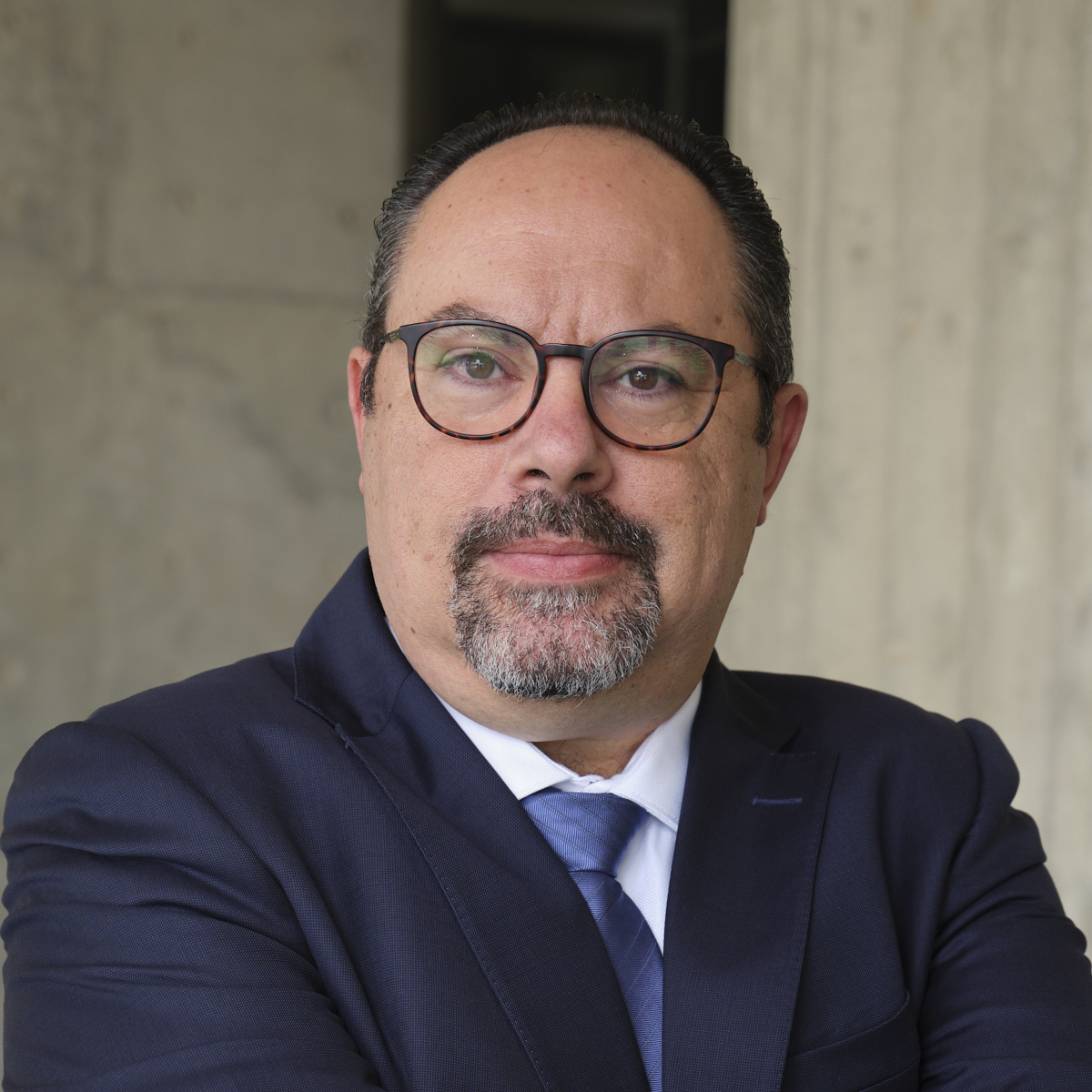
Assoc. Prof. Dr. Yıltan Bitirim is a faculty member at the Computer Engineering Department of Eastern Mediterranean University in North Cyprus. With over two decades of academic experience, he has served in various roles including Vice Chair (2014-2022), Academic Affairs Coordinator (2025-), and committee member for ABET assessment, curriculum development, and faculty recruitment. Current academic rank: Associate Professor Active administrative roles: Senate Member (2023-), Information Technology Commission Member (2023-) Professional memberships: ACM, IEEE Senior Member, Cyprus Turkish Chamber of Computer Engineers Research Interests focus on four primary areas: Information Retrieval Systems – evaluating search engine effectiveness and reverse image search performance Machine Learning – applied to emotion classification, gender recognition, and medical diagnosis Data Mining – used in Turkish word-stemming analysis and user behavior studies Biometrics – specializing in hand/wrist/palm vein recognition systems and voice-based identification Publications demonstrate consistent contributions across disciplines, with recent works (2023-2025) emphasizing: Deep learning applications in biometric authentication Advanced emotion recognition systems Medical AI for diabetes management and retinopathy diagnosis Biometric spoof detection mechanisms Turkish language processing challenges Recommendation system innovations Awards & Recognition : Research Incentive Awards (2020, 2021) Best Paper Award at ICIW 2007 IEEE Senior Member status As an educator, he has supervised numerous thesis committees and taught foundational courses in computer engineering, including CMPE 112 and CMPE 342. His certifications (MCTS, MCITP) reflect technical expertise in Microsoft technologies.
Christodoulou Chris is a Professor at the Department of Computer Science, University of Cyprus. He joined in 2005 and holds a Visiting Research Fellowship at Birkbeck College, University of London. His educational background includes a BEng in Electronic Engineering from Queen Mary and Westfield College (1991), a PhD in Neural Networks from King's College London (1997), and a BA in German from Birkbeck College (2008). His research focuses on Computational Neuroscience, Neural Networks, and Machine Learning, with specific interests in neural coding, self-control modeling, computational neuronal modeling, multi-agent reinforcement learning, and practical machine learning applications. Recent publications (2013-2025) demonstrate interdisciplinary approaches combining neuroscience, computer science, and optimization techniques, with emerging emphasis on protein structure prediction and biomedical applications. Scientific awards include: Best Paper Award, ICSR 2015 Best Paper Award, MODELS 2008 Doctoral Symposium He leads the Computational Intelligence and Neuroscience (CIN) research group and has secured funding from European projects (SocioCoast, CYberSafety, TAMIT). He mentors students through Google Summer of Code and collaborates internationally.
Valeria Filippou is a Researcher at the Computation-based Science & Technology Research Center (CaSToRC) within The Cyprus Institute. She holds an MEng in Medical Engineering, an MSc in Tissue Engineering and Regenerative Medicine, and a PhD in Medical Engineering with a focus on Machine Learning, Signal Processing, and Wearable Technologies from the University of Leeds. Her research spans interdisciplinary applications of AI in healthcare, financial services, and environmental monitoring. Key areas include developing credit risk models, medical diagnostics algorithms, AI-driven data privacy solutions, and consulting on large language models (LLMs) and retrieval-augmented generation (RAG) systems. Her recent publications focus on wearable sensor data analysis for activity recognition, multimodal prediction of psychological conditions like alexithymia, and advancements in medical imaging phantoms via 3D printing. These works bridge computational methods with practical healthcare and environmental monitoring challenges. No scientific awards or grant details are explicitly stated in the provided information.
Eleni Andreou is a Professor and Associate Professor at the University of Nicosia within the School of Life and Health Sciences , teaching and coordinating Nutrition/Dietetics programs since 1992. She practices as a private clinical dietitian in Cyprus since 1991 and holds a Doctorate in Professional Studies from Middlesex University (2006-2011), focusing on behavioral modification, diabetes, obesity, and cognition-sleep relationships. B.Sc. (Summa Cum Laude) in Dietetics from Youngstown State University (1990) Postgraduate clinical training at Youngstown State University and Southside & Northside Memorial Hospital (1992) Doctorate in Professional Studies (Clinical Dietetics, Nutrition Sciences, Health Education) from Middlesex University (2011) Her research spans behavioral nutrition , chronic disease management , and cognition-sleep interactions , with recent work including chrono-nutrition effects on cognitive function, carbohydrate periodization for physical fitness, and pandemic-induced lifestyle changes . She contributes to public health policy through her roles in Cyprus Diabetes Association , CySPEN , and as a Scientific Advisor for health organizations. She authored the textbook Antioxidants in Health and Disease (2015) and over 75 research outputs. Key scientific contributions include h-index of 13 with 640 citations (Scopus) and fellowship in the United Kingdom Higher Education Academy. She leads nutrition research projects and consults food/pharmaceutical companies , while serving as President of Cyprus Dietetic and Nutrition Association , CySPEN , and Cyprus Atherosclerosis Association . Her work aligns with UN Sustainable Development Goals (SDGs 2,3,4) and has active collaborations across Europe and Cyprus .
Assoc. Prof. Dr. Adnan Acan is a faculty member in the Department of Computer Engineering at Eastern Mediterranean University (EMU). He holds a PhD from Middle East Technical University, specializing in Electrical Engineering. His academic roles include teaching and supervising numerous graduate students in areas such as optimization algorithms, computer vision, and biomedical signal processing. Education: PhD, Electrical Engineering, Middle East Technical University (1992) MS, Electrical Engineering, Middle East Technical University (1985) BS, Electrical Engineering, Middle East Technical University (1983) Research Interests: His research focuses on optimization algorithms, machine learning, pattern recognition, and biomedical applications. Notable areas include metaheuristic algorithms (e.g., particle filters, great deluge), multi-agent systems, and ECG/heartbeat classification. He has contributed to advancements in computational intelligence, evolutionary algorithms, and medical diagnostics. Advising & Students: He has supervised over 30 graduate students, including PhDs such as JAMSHID TAMOUK (2021) and ZAHRA GOLRIZ KHATAMI (2019), and master’s students like MILAD ROSTAMPOUR (2023). His work spans applications in robotics, face recognition, and numerical optimization. Labs & Collaboration: His teaching and research involve courses in artificial intelligence, algorithms, and computer engineering. He actively contributes to academic service, including roles as a session chair and reviewer in conferences. His lab focuses on developing innovative solutions to complex computational and biomedical challenges.
Assoc. Prof. Dr. Rasime Uyguroğlu is an academic at Eastern Mediterranean University, specializing in antenna engineering and biomedical applications. She holds the rank of Associate Professor and has contributed to research in electromagnetic systems, medical imaging, and health monitoring technologies. Her work focuses on antenna design for cancer detection, wireless body channel communication, and advanced microwave systems. Her research interests include the development of antennas for biomedical diagnostics, optimization of antenna arrays, and application of metamaterials in antenna systems. She has served as an associate editor and reviewer for academic journals, demonstrating her active role in the scientific community. Prof. Uyguroğlu's publications span topics such as breast cancer detection using patch antennas, fracture healing monitoring via implanted antennas, and millimeter-wave massive MIMO systems. Her work bridges engineering and medicine, with a focus on practical solutions for healthcare challenges. She actively supervises master's and PhD students in thesis projects related to antenna design and biomedical applications. Her contributions reflect a commitment to advancing both theoretical and applied aspects of electromagnetic engineering in health-related contexts.
Constantinos S. Pattichis is a Professor of Computer Science and Director of the Biomedical Engineering Research Centre at the University of Cyprus. He also leads the HealthXR Group at CYENS Centre of Excellence and serves as a technical leader on high-impact EU-funded projects, including the EU Digital Covid Certificate Platform and the national eHealth4U initiative. His research focuses on eHealth, mHealth, medical imaging, and AI-driven healthcare solutions. **Education**: Ph.D., Electronic Engineering, University of London (1992) MSc, Neurology, University of Newcastle Upon Tyne (1991) MSc, Biomedical Engineering, University of Texas at Austin (1984) BSc, Electrical Engineering, University of New Brunswick (1983) Technician Engineer, Higher Technical Institute, Cyprus (1979) **Research Interests**: eHealth systems, mHealth interventions using Extended Reality (XR), medical image analysis (MRI, ultrasound), biosignal analysis, and explainable AI for clinical decision support. His work addresses challenges in stroke risk assessment, multiple sclerosis progression, and telemedicine accessibility. **Awards & Roles**: Fellow of IEEE, IET, IAMBE, and EAMBES. He has managed over €20M in EU grants, edited multiple books on mHealth and biomedical imaging, and serves on editorial boards of journals like IEEE Journal of Biomedical and Health Informatics. He has published ~409 peer-reviewed works (150 journals, 259 conferences) with an h-index of 54. **Grants & Projects**: Led projects such as the EU Digital Covid Certificate Platform, eHealth4U (national eHealth ecosystem), and the IPMT Excellence Centre. Active in standardizing cross-border eHealth services via EU CEF programs. **Labs & Teams**: Directs the eHealth Lab at the University of Cyprus and collaborates with CYENS on HealthXR innovations. His work includes developing VR tools for dementia care, teleconsultation apps, and AI-driven diagnostic systems.
Mian Pan is an Associate Professor at Hangzhou Dianzi University. He holds a B.S. in Electronic Engineering (2007) and a Ph.D. in Signal Processing (2013) from Xi'dian University, Xi’an, China. His research focuses on machine learning, radar signal processing, pattern recognition, and audio/video/image processing algorithms. Education: Ph.D. in Engineering Sciences, 2013, Xi'dian University B.S. in Electronic Engineering, 2007, Xidian University Research Interests: Mian Pan explores advanced machine learning techniques for radar signal analysis, develops algorithms for pattern recognition in complex systems, and investigates efficient processing methods for audio, video, and image data. His work bridges theoretical foundations with practical applications in signal processing domains. Publications & Awards: No specific articles, grants, or awards are listed in the provided information. Advising & Labs: No student advisees, lab affiliations, or grant details are mentioned.
Vasos Vassiliou is an Associate Professor in the Department of Computer Science at the University of Cyprus and Founding Academic Member & Research Group Leader at the Smart Networked Systems (SNS) Multidisciplinary Research Group within the CYENS Research Center. His work focuses on systems and protocols for improving network performance, reliability, and security in next-generation communication systems (5G/6G), with a strong emphasis on distributed AI/ML techniques, device-to-device (D2D) networking, IoT security, programmable metasurfaces, and intelligent network resource management. Department of Computer Science, University of Cyprus CYENS Research Center, Cyprus His research spans multiple subfields including D2D communication (interference management, device discovery), IoT security (blockchain solutions, intrusion detection), network optimization (traffic prediction, power management), and programmable metasurfaces for advanced beam steering. Recent projects like ERMIS (3D Indoor Positioning), ADROIT-6G (DAI-driven architecture), and METACITIES (digital twins/metaverse) demonstrate his leadership in cutting-edge research. His publications reveal a strong focus on distributed intelligence , machine learning applications , and security protocols across wireless systems. He has supervised multiple PhD students to completion and actively contributes to IEEE/ACM as Senior Member. IEEE Senior Member ACM Senior Member Teaching responsibilities include core courses like Computer Networks and specialized postgraduate modules on IoT Networks .
Prof. Dr. Osman Kukrer is a full-time faculty member at Eastern Mediterranean University (EMU), Faculty of Engineering, Department of Electrical and Electronics Engineering. He has been actively supervising graduate students in power electronics, control systems, and renewable energy integration since the 1990s. His research spans advanced power conversion topologies, including quasi-Z-source inverters multilevel converters active power filters grid-connected systems adaptive beamforming algorithms electric vehicle grid integration Notable contributions include the EMU Publication Citation Award (2017) and extensive supervision of 41 graduate theses, with research interests aligning with modern energy systems and signal processing techniques.
Prof. Dr. Hadi Işık Aybay is a distinguished Professor of Computer Engineering at Eastern Mediterranean University (EMU), North Cyprus. He has held academic roles including Department Chairman of Computer Engineering (1994–2004 and 2013–present) and Director of EMU's Distance Education Institute (2000–2013). He earned his PhD in Electrical and Electronic Engineering from METU (1989) and served as an Assistant/Associate Professor before becoming a full Professor in 2013. His research spans neural networks, distributed systems, and e-learning technologies. Education: PhD, Electrical and Electronic Engineering, Middle East Technical University (1989) M.Sc., Electrical and Electronic Engineering, METU B.Sc., Electrical and Electronic Engineering, METU Research Interests: Prof. Aybay's work focuses on computer engineering innovations, including neural network hardware, distributed multimedia systems, and wireless communication protocols. He pioneered EMUOnline, a blended learning platform, and contributed to science park development in North Cyprus. His research also addresses challenges in video streaming optimization and adaptive resource allocation in cellular networks. Key Achievements: He led over 15 projects, including EU-funded initiatives like 'Deep Farm' (2024–2025). His publications (80+ papers) span IEEE journals and conferences, with 281 Google Scholar citations. Awards include the 1973 National Project Contest First Prize and the 1990 Best Thesis Award (supervised). Grants and advising: Supervised 3 PhD and 28 MSc students. Current projects include AI-driven agriculture (Erasmus+). Grants include EU funding (€1M) and Turkish Republic of Northern Cyprus initiatives. Labs/Teams: Active in the EMU Computer Engineering Department's research groups, focusing on distributed systems and e-learning infrastructure.
Antonis Savva serves as a Researcher at the KIOS Research and Innovation Center of Excellence, University of Cyprus, a role he has held since March 2020 focusing on computer vision applications for drone systems. His academic background includes: MEng in Electronics and Systems from the School of Electrical and Computer Engineering, National Technical University of Athens (2014) MSc in Management of Organizations and Entrepreneurship from the same institution (2018) PhD in medical data analysis from the School of Electrical and Computer Engineering, National Technical University of Athens (2019) Dr. Savva specializes in signal processing and computer vision with dual applications in medical imaging and autonomous systems. His doctoral work pioneered algorithms for aligning pre/post-operative CT scans in bone augmentation procedures, reconstructing panoramic jaw views, and quantifying dynamic brain region associations via fMRI analysis in both healthy and pathological states. Current research extends these methodologies to drone technology, emphasizing real-time visual data processing and pattern recognition for aerial applications. He operates within the KIOS Research and Innovation Center of Excellence, a specialized hub for intelligent systems and networks at the University of Cyprus driving cross-disciplinary innovation in computational methodologies.
Assist. Prof. Polyvios Eleftheriou holds a position at the Department of Mechanical Engineering and Materials Science and Engineering at Cyprus University of Technology since 2008. Previously, he served as Assistant Professor at Tennessee Tech University (1987-88) and lecturer at HTI-Nicosia (1988-2005). His academic journey includes roles in the Ministry of Interior (2005-2008). He holds a PhD (1987), MS (1984), and BSME (1982) from Tennessee Tech University, alongside a Diploma from HTI (1979). His research focuses on renewable energy systems, particularly solar technology, materials science, and nanotechnology applications. He pioneered work on perovskite solar cells, surface engineering for energy devices, and energy-efficient building design. His work also extends to biomedical engineering, including stent material analysis and inflammatory response studies. Prof. Eleftheriou has extensively contributed to educational technology, developing remote solar energy laboratories for e-learning. Notable projects include the Solar E-Lab platform enabling real-world experimentation over the internet. His publications span over three decades, addressing topics from HVAC fan optimization (1987) to cutting-edge nanomaterials (2021). His work emphasizes interdisciplinary approaches, blending engineering with environmental and biomedical applications. Current research trends include improving solar cell efficiency through novel materials and advancing sustainable building design in Mediterranean climates.
Mihalis Nicolaou is Associate Professor at The Cyprus Institute's Computation-based Science and Technology Research Center. His research develops robust machine learning algorithms with applications in computer vision and interdisciplinary domains. Research focuses on: Interpretable representation learning Tensor-based machine learning Generative model interpretation Multimodal data fusion Recent publications explore semantic grounding in vision-language models and interpretability of satellite image generative networks. His work emphasizes algorithmic robustness and cross-domain applications.
Athanasios Metaxas is an Assistant Professor in the Department of Life Sciences at the School of Sciences, European University Cyprus. He holds a Ph.D. in Biosciences and Medicine (University of Surrey, U.K.), an M.Sc. in Biosciences and Medicine (University of Surrey, U.K.), and a B.Sc. in Pharmacy (Aristotle University of Thessaloniki, Greece). His research focuses on neuroinflammation, synaptic pathology, and molecular mechanisms underlying Alzheimer’s disease, particularly using transgenic mouse models and advanced imaging techniques like PET. Metaxas has received travel awards from the Lundbeck Foundation and the University of Southern Denmark, and his work emphasizes serotonin signaling, tau protein alterations, and the development of diagnostic tools for neurodegenerative conditions. Educations: Ph.D., Biosciences and Medicine, University of Surrey, U.K. (2010) M.Sc., Biosciences and Medicine, University of Surrey, U.K. (2005) B.Sc., Pharmacy, Aristotle University of Thessaloniki, Greece (2004) Research Interests: His studies investigate the interplay between neuroinflammation and synaptic dysfunction in Alzheimer’s disease. Metaxas employs transgenic mouse models to study amyloidosis, tau pathologies, and the role of serotonin transporters (SERT) in disease progression. He is also dedicated to developing PET imaging ligands targeting NMDA receptors and exploring antioxidant therapies that modulate the NRF2 pathway. Recent work highlights the protective roles of cytokines like TNF in cognitive processes under physiological conditions, while his studies on 5-HT2B receptors in microglia cells reveal behavioral impacts of conditional receptor inactivation. Metaxas’ research bridges molecular proteomics with translational neuroscience, aiming to identify novel therapeutic targets and biomarkers. Publications Trends: His articles emphasize Alzheimer’s disease pathogenesis, focusing on synaptic plasticity, neuroinflammation, and age-related biomarkers. He frequently publishes in journals like Cells , Scientific Reports , and Alzheimer’s Research & Therapy , with contributions to both basic science and clinical neuroimaging. Recent work extends to canine models of early Alzheimer’s, suggesting cross-species relevance of microglial activation patterns and perivascular macrophage infiltration. Awards & Recognition: 2018: IMM Travel Award (University of Southern Denmark) 2017: Lundbeckfonden Travel Award (Lundbeck Foundation) 2016: IMM Travel Award (University of Southern Denmark) 2006-2010: Ph.D. Studentship (European Commission) Advising & Grants: Metaxas has served as Principal Investigator for projects on neurofibrillary tangles (2016), SSRIs and amyloid pathology (2015), and Co-Investigator in studies on serotonergic signaling in microglia (2018-2020). He collaborated on LeARN (2010-2014) for Alzheimer’s diagnosis tools and CoPING AD (2015-2018) exploring neuron-glia interactions. As a supervisor, he guided undergraduate and postgraduate theses in multiple institutions (SDU, VUmc, University of Surrey). His leadership roles include Erasmus+ Coordinator at SDU (2016-2017) and Professional Training Year Coordinator at VUmc (2012-2013), emphasizing international collaboration and training program development. Labs & Teams: While specific lab names are not provided, his research is embedded within collaborative projects such as LeARN (Center for Translational Molecular Medicine) and CoPING AD (University of Southern Denmark). These projects involve multidisciplinary teams focusing on neuropharmacology, imaging, and molecular biology, with contributions to preclinical drug evaluation and diagnostic tool development.