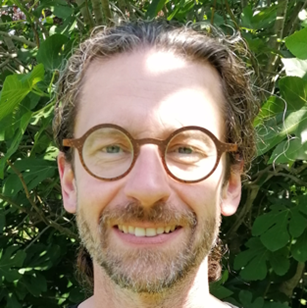
Zhanwei Wang is an Unpaid employee at the Department of Applied Mechanics and the Federated labs AI and Robotics at Vrije Universiteit Brussel. His research focuses on soft robotics, self-healing materials, fluid dynamics, and vacuum technology. He holds a PhD in Mechanical Engineering from VUB (2024), focusing on encoding physical intelligence into soft robotics via smart materials and continuum mechanics. Prior degrees include a Master's in Chemical Process Equipment (Northeastern University, China, 2020) and a Bachelor's in Process Equipment and Control Engineering (Northeastern University, China, 2017). His work emphasizes interdisciplinary innovation in robotics, sustainability, and material science. Key Research Areas: Self-healing robots, 3D printing for robotics, fluid dynamics in soft systems. Recent Collaborations: Peer reviews for Sensors Journal, IEEE Robotics & Automation Letters, and the 2025 IEEE/RSJ IROS conference. His publications explore adaptive robotic systems, sensor integration, and sustainable material solutions. He participated in the IMEC ITF World 2024 conference and contributed to media discussions on self-locking suction cups for robots.
Wim Gevers is a faculty member at the Université libre de Bruxelles (ULB) and leads the CS4S – Cognitive Control & Sleep laboratory within the CRCN research centre. His work bridges cognitive psychology, neuroscience and sleep research to understand how the brain exerts control over thoughts and actions and how sleep contributes to these processes. Research Interests Cognitive Control & Metacognition: Investigating how subjective experiences such as confidence and the "urge-to-err" guide strategic adjustments in behaviour. Working Memory & Ordinal Cognition: Examining how order information is maintained and manipulated, and how these processes relate to mathematical competence. Sleep, Memory & Decision Making: Exploring how sleep-dependent consolidation influences motor learning and decision strategies. Across his 2022–2025 publications a clear trend emerges: a focus on metacognitive monitoring —how humans evaluate their own cognitive states—and the role of emotional and temporal context in shaping those evaluations. Studies range from reaction-time introspection and confidence judgements in perceptual tasks to the impact of aging and depression on metacognitive accuracy. Doctoral Supervision & Mentoring Whitney Stee (PhD 2024) – Sleep-dependent structural brain reorganization & motor learning Gaia Corlazzoli (PhD 2024) – Subjective experience in decision-making Myrtille Dewulf (PhD 2023) – Ordinal coding mechanisms in working memory Rebeca Sifuentes-Ortega (PhD 2023) – REM sleep and memory reactivation All dissertations were defended at ULB, Faculté des Sciences psychologiques et de l’éducation, with Wim Gevers formally listed as Promotor . Laboratory & Collaborative Networks As head of CS4S, Gevers coordinates a multidisciplinary team that combines behavioural experimentation, EEG/MEG, computational modelling and sleep polysomnography. The lab is embedded in the larger CRCN ecosystem, fostering collaborations with groups such as CO3 (consciousness), LCLD (language & deafness), and UR2NF (neurofunctional imaging).
Prof. dr. Nico Van de Weghe is a full Professor of GIScience at the University of Ghent (UGent), affiliated with the CartoGIS research unit. His work bridges computer science, social science, and natural science through geospatial information studies, focusing on enabling machines to reason spatially (GeoAI). Since 2004, he has specialized in knowledge-based AI, particularly spatiotemporal reasoning and moving object analysis, with applications in animal behavior, criminology, healthcare, mobility, and sports. Van de Weghe's research emphasizes hybrid GeoAI systems combining knowledge-driven and data-driven approaches. Keywords include GeoAI, GIScience, Spatiotemporal Analysis, Moving Objects, and Data Mining. Recent publications highlight urban road network analysis, hybrid trajectory modeling, BIM semantic enrichment, and cycling safety studies using virtual reality.
David Martens is a Professor of Data Science at the University of Antwerp , where he directs the Applied Data Mining Research Group within the Faculty of Business and Economics . He also serves as Chair of the Department of Engineering Management and Director of the Antwerp Center on Responsible AI . His academic work spans data mining , interpretable machine learning , and the societal impact of AI . PhD in Applied Economic Sciences (KU Leuven, 2008) Director, Antwerp Center on Responsible AI Chair, Department of Engineering Management Martens' research focuses on responsible AI and data ethics , with applications in finance, public policy, and behavioral analysis. His recent publications emphasize counterfactual explanations , LLM interpretability , and privacy implications in AI systems. His articles reveal trends in Explainable AI (XAI) , including narrative-driven explanations , graph neural networks , and ethical challenges like monetization risks and algorithmic bias. Keywords span Computer Science , Artificial Intelligence , and Behavioral Data . Martens is a leading voice in data science ethics , authoring the book Data Science Ethics: Concepts, Techniques, and Cautionary Tales (Oxford University Press, 2022). He combines academic rigor with industry experience, having consulted for banks, telecom firms, and startups in fraud detection and digital advertising .
Matthew B. Blaschko is a Professor in the Department of Electrical Engineering at KU Leuven, Belgium. He serves as director of the KU Leuven ELLIS unit and is a fellow in the ELLIS Health program. He is a Core PI in the Flanders AI Research Program, working as a workpackage lead for Decision Support Systems and Medical Imaging. Blaschko is also a member of the KU Leuven Institute for Artificial Intelligence and one of the leaders of the working group on Machine Learning and Data Science. Professor Blaschko received his B.S. from Columbia University, M.S. from the University of Massachusetts Amherst, and Dr. rer. nat. from Technische Universität Berlin (awarded for work at Max Planck Institutes Tübingen). He was a Newton International Fellow at the University of Oxford and received his Habilitation (HDR) from École Normale Supérieure de Cachan. Prior to joining KU Leuven, he was a Permanent Research Scientist in the INRIA Saclay Research Center and a Faculty Member at Ecole Centrale Paris. His research focuses on machine learning techniques applied to visual data, with particular emphasis on calibration in deep learning, medical image analysis, and federated learning. Blaschko's work bridges theoretical foundations with practical applications, as evidenced by technology developed in his research being incorporated into MONA, software for ophthalmic image analysis. His research group has made significant contributions to the fields of model calibration, uncertainty estimation, and medical imaging analysis, with recent publications showing strong trends toward improving reliability of AI systems in medical contexts and advancing theoretical understanding of calibration metrics. Professor Blaschko has been recognized with several awards including the Université Paris-Saclay STIC Doctoral School Best Scientific Contribution Award, Best Paper Award at CVPR 2008, Main Award at DAGM 2008, and Best Student Paper Award at ECCV 2008. Professor Blaschko has supervised numerous PhD and Master's students, with current and former students including Deniz Soysal, Claire Marchal, Dongli Xu, Sebastian Gruber, Jiameng Li, Marco Mezzina, and many others working on diverse topics from Alzheimer's disease analysis to surgical phase recognition. His research has been supported by various funding sources including the Flanders AI Research Program. He has co-organized several influential workshops including the "Another Brick in the AI Wall: Building Practical Solutions from Theoretical Foundations" at CVPR 2025, Commands 4 Autonomous Vehicles workshop at ECCV 2020, and the Learning from Limited Labeled Data workshop series at NIPS 2017 and ICLR 2019. His laboratory focuses on machine learning for medical image analysis, with applications in ophthalmology, neurology, and surgical robotics. The group maintains active collaborations with medical institutions and participates in international challenges such as the KNee OsteoArthritis Prediction (KNOAP2020) challenge.
Daan Christiaens is a tenure track lecturer at KU Leuven's Faculty of Medicine and Faculty of Engineering Sciences. He is affiliated with the Department of Electrical Engineering (ESAT) and Department of Imaging & Pathology, serving as a member of the Medical Imaging Division and the KU Leuven Brain Institute (LBI). His academic responsibilities include membership in the Faculty Councils of Engineering Sciences and Medicine. His research focuses on: Inverse problems in medical imaging reconstruction Neuroimaging techniques for brain analysis Advanced quantitative MRI methodologies Diffusion-weighted imaging for microstructural assessment Dr. Christiaens' recent publications (2023-2025) demonstrate a consistent focus on diffusion MRI innovations, including novel reconstruction algorithms, neonatal brain development mapping, and clinical applications for neurodegenerative disorders. Key technical themes include motion correction, multi-shell modeling, and AI-enhanced image processing, while clinical applications span Alzheimer's disease, cerebral palsy, and autism research. He leads significant research projects including: MRI reconstruction with dynamic field monitoring (2024-2028) Compressed sensing for microstructure imaging (2022-2026) Neonatal diffusion MRI network connectivity analysis (2024-2028) As a core developer of the MRtrix3 software framework for medical image processing, he contributes to essential tools in neuroimaging research.
Tim Van de Cruys is a Senior Lecturer at the Faculty of Arts, KU Leuven, serving as Head of the Centre for Computational Linguistics (CCL). He maintains significant affiliations with LECTIO (KU Leuven Institute for the Study of the Transmission of Texts, Ideas and Images), Leuven.AI (KU Leuven Institute for Artificial Intelligence), and LILI (KU Leuven Interdisciplinary Language Institute). His work bridges computational linguistics, artificial intelligence, and humanities research with practical applications across multiple disciplines. Dr. Van de Cruys specializes in computational semantics and creative language generation, with particular expertise in applying NLP techniques to historical and classical texts. His research spans multiple domains including: Natural Language Processing for ancient languages (Latin, Ancient Greek) Computational approaches to lexical and compositional semantics Large language models and their applications in humanities research Creative language generation and human-AI collaboration Named entity recognition and disambiguation in historical contexts Non-autoregressive modeling for sequential generation tasks His recent publications demonstrate a strong focus on applying cutting-edge NLP techniques to humanities challenges, particularly in processing ancient languages. He frequently employs transformer models to address named entity recognition, word sense discrimination, and semantic analysis in low-resource language contexts. His work consistently bridges formal linguistic theory with practical computational applications, creating valuable tools for digital humanities scholars. As promotor and co-promotor on numerous research projects extending through 2029, Dr. Van de Cruys supervises PhD students working at the AI-humanities intersection. His current major projects include "Living Corpora" (exploring human-AI collaboration in digital humanities), "Stochastic processes and non-autoregressive models for sequential generation," and "NIKAW" (exploring knowledge networks from classical antiquity). These projects demonstrate his commitment to advancing both theoretical understanding and practical applications of computational linguistics. He teaches various courses including Computational Linguistics, Scripting Languages, Programming for Humanities, Computational Creativity, and AI for Humanities, training students to work at this critical interdisciplinary crossroads. His leadership of the Centre for Computational Linguistics positions him at the forefront of computational linguistics research in Belgium, where he continues to expand the boundaries of what's possible at the intersection of language, computation, and humanistic inquiry.
Bruno Tiago da Silva Gomes is a Researcher in the Department of Electronics and Informatics at Vrije Universiteit Brussel (VUB), Belgium. His work focuses on FPGA-based hardware acceleration, biomedical signal processing, and embedded systems. He leads several high-impact projects, including ENACT (environmental health interventions) and Tech4Health (future health technologies). His research spans FPGA design, machine learning acceleration, and real-time signal processing. Education: PhD in Electronics and Informatics (2019, VUB), supervised by Professors Touhafi and Braeken. His thesis addressed streaming application acceleration on FPGAs. Research interests include Field-Programmable Gate Arrays (FPGA), biomedical sensors (e.g., photoplethysmography), beamforming, and high-level synthesis. He has co-authored over 60 publications and holds an h-index of 439. Key projects include OZR4103 (power-efficient AI for biomedical applications) and NSIS3 (decarbonisation technologies). His work integrates hardware-software co-design for edge computing and secure TinyML systems. Advising includes a Master’s thesis on PPG signal analysis. He contributes to datasets like the AMIVU Acoustic Map Imaging Dataset.
Maarten De Vos is a Professor at the Department of Electrical Engineering (ESAT) , KU Leuven , with dual appointments in the Faculty of Medicine and Faculty of Engineering Science . He leads interdisciplinary research at the intersection of artificial intelligence and biomedical signal processing.
Vincent Bonin is a Senior Lecturer in the Department of Biology at KU Leuven's Faculty of Sciences. He is affiliated with the VIB-KU Leuven Center for Neuro Electronics Research Flanders (NERF) and the KU Leuven Brain Institute (LBI). His research focuses on neural circuits and visual neuroscience, with an emphasis on cortical and subcortical mechanisms of perception and plasticity. Research Interests: Vincent investigates visual coding, cortical connectivity, and brain circuit dynamics. His work spans topics like: Role of non-hierarchical visual pathways in perception Dendritic processing in the superior colliculus Cell type-specific connectivity in layer 2/3 visual cortex Astrocyte-mediated cortical plasticity Development of high-resolution intracortical visual prosthetics Recent Projects: • The contributions of non-hierarchical visual pathways to visual coding and perceptual behavior (2025-2028) • An investigation into cell type-specific connectivity rules in visual cortex (2024-2027) • Short- and long-term circuit mechanisms of motor rehabilitation after spinal cord injury (2024-2027)
Nico Buls is a Researcher in the Department of Radiology at Universitair Ziekenhuis Brussel (UZ Brussel). His work focuses on translational projects in medical imaging physics, radiation dosimetry, and engineering, with an emphasis on advanced imaging technologies for diagnostic and interventional radiology. Key research areas include imaging physics, spectral CT techniques, iterative reconstruction in CT, radiation dosimetry, neuro MRI applications, and applied statistics in medical imaging. He leads projects such as the PAD flow study (quantitative blood flow assessment via 4D CT) and the evaluation of lung ventilation using Xenon gas-enhanced CT. Buls collaborates internationally, with active research in Belgium and beyond. Affiliations: UZ Brussel, Research Centre for Digital Medicine. Grants/Projects: 12 active projects including OZR4357 (PhD stipend), PAD flow, and Xenon gas imaging studies. Scientific Awards: Editor's Recognition Award (2014, 2016) Radiological Society of North America (RSNA) Fellowship (2011) Young Physicist Grant (2001) Advising/Grants: Supervises 20+ research projects and students, with notable contributions to 4D CT applications and radiation safety protocols. His lab, the Research Centre for Digital Medicine, drives innovation in clinical imaging technologies.
Friedl De Groote is a Senior Lecturer at KU Leuven's Faculty of Human Movement and Rehabilitation Sciences, Department of Human Movement Sciences, specializing in the biomechanics of human movement. She leads the Biomechanics of Human Movement Research Group and is a member of the iSi Health - KU Leuven Institute for Physics-based Modeling for In Silico Health. Her research focuses on understanding neuromusculoskeletal control of human movement, particularly through computational modeling approaches. She investigates gait disorders in children with cerebral palsy and Duchenne muscular dystrophy, examining how muscle impairments, contractures, and neural control mechanisms contribute to altered movement patterns. Her work combines experimental biomechanics with predictive computer simulations to uncover the underlying mechanisms of movement disorders and develop new rehabilitation approaches. She also studies fundamental aspects of human locomotion, balance control, and energy expenditure during walking. Her recent publications demonstrate a strong emphasis on predictive simulations to understand the relationship between neuromusculoskeletal impairments and movement pathology. Her research spans multiple domains including cerebral palsy, Duchenne muscular dystrophy, gait analysis, balance control, and musculoskeletal modeling. She frequently collaborates with clinical researchers to bridge the gap between computational models and clinical applications. Dr. De Groote is actively involved in various academic councils including the Faculty Council FaBeR, POC Rehabilitation Sciences and Physiotherapy, POC Physical Education and Movement Sciences, and multiple departmental councils within Human Movement Sciences. Her ORCID identifier is 0000-0002-4255-8673 . She currently leads or co-leads numerous research projects funded through KU Leuven and external grants, with a focus on understanding walking control mechanisms, energy expenditure during locomotion, and developing computational models to inform rehabilitation strategies for children with movement disorders. Her research portfolio demonstrates a commitment to translating biomechanical insights into clinically relevant applications.
Margherita Fantoli is a tenure track lecturer at the Faculty of Arts at KU Leuven, affiliated with the Cultural Studies Research Group. She is an active member of multiple research institutes including DigiSoc – KU Leuven Institute for Digital Society and LECTIO – KU Leuven Institute for the Study of the Transmission of Texts, Ideas and Images in Antiquity, the Middle Ages and the Renaissance. Her institutional involvement extends to the Faculty Council of Arts and the POC Digital Humanities. Dr. Fantoli's research spans Digital Humanities with a focus on historical linguistics, classical studies, and book history. Her work integrates computational methods with traditional humanities scholarship, particularly in analyzing ancient Greek and Latin texts, knowledge transmission networks, and multilingualism in historical contexts. She specializes in using digital tools to explore cultural transmission from antiquity through the Renaissance, with particular attention to network analysis of historical texts and academic communities. Her recent publications demonstrate a strong trend toward computational approaches to historical scholarship, particularly through the STUDIUM.AI project which maps knowledge networks around the premodern University of Leuven (1425-1797). Her work bridges classical philology with digital methods, examining topics such as canon formation in antiquity, multilingualism in early modern book catalogues, and the presence of classical texts in later periods. She frequently collaborates across disciplines, working with computer scientists, historians, and linguists. Dr. Fantoli serves as promoter or co-promoter on multiple significant research projects including CLARIAH-VL+ (toward the 'SSH Open Science Cloud' in Flanders), studies on the coherence of scientific language in ancient technical texts, and investigations into canon formation in Greco-Roman antiquity. Her teaching portfolio includes courses on data processing, linked data scholarship, and introduction to Digital Humanities, reflecting her commitment to training the next generation of digitally literate humanities scholars. She is actively involved with the Cultural Studies Research Group in Leuven, contributing to their mission of exploring cultural transmission across historical periods. Through her leadership in the STUDIUM.AI project and other digital initiatives, she helps build infrastructure for connecting historical knowledge networks and making premodern scholarship more accessible through digital means.
Lucca Geurts is a Senior Lecturer at the Faculty of Industrial Engineering Sciences at KU Leuven, where he is affiliated with the Department of Computer Science. He serves as chairman of the Leuven Centre for Accessible Health Technology, subdivision head of Subdivision 3, Campus Group T Leuven, and Head of Education of the OC Innovative Health Technology. Additionally, he is an active member of DigiSoc – KU Leuven Institute for Digital Society. His research focuses on Technology for Tangible and Playful Interactions, particularly in healthcare applications. Dr. Geurts leads numerous research projects including therapeutic games for children with visual disorders, flexible activity measurement systems, intimate interactive systems, and early-stage glaucoma screening platforms. His work bridges human-computer interaction with accessible health technology, emphasizing user-centered design principles and practical healthcare solutions. Dr. Geurts' publication record demonstrates a consistent trajectory from fundamental interaction techniques to applied healthcare contexts. His recent work shows increasing sophistication in squeeze interactions, emotion regulation through tangible interfaces, and medical applications of interactive technology. The research trends indicate a growing focus on accessible medical diagnostics, therapeutic applications, and user experience in healthcare technology. As an educator, Dr. Geurts teaches across multiple domains including Electronics, Computer Architectures, Health Entrepreneurship, Sensors and Circuits for Healthcare Applications, and Extended Reality. His educational leadership extends to Master's theses and internships in health engineering, reflecting his commitment to training the next generation of healthcare technologists. Committee for Culture, Art and Heritage Faculty Council of Industrial Engineering Sciences Evaluation Committee of the Faculty of Industrial Engineering Sciences POC Advanced Education Faculty of Industrial Engineering Sciences Secretary of the OC Innovative Health Technology Departmental Council for Computer Science Interfaculty Council for Global Development (as substitute member) Dr. Geurts maintains an active research profile with numerous publications in top-tier human-computer interaction conferences and journals. His work shows a clear progression toward increasingly impactful healthcare applications, with strong emphasis on accessibility and user experience in medical technology development.
Heidi Ottevaere is a Professor at the Faculty of Engineering of the Vrije Universiteit Brussel (VUB) since October 1, 2009. She serves as the head of the Instrumentation and Metrology platform at the Photonics Innovation Center and leads the 'biophotonics' research unit of the Brussels Photonics Team (B-PHOT), which is chaired by Prof. Hugo Thienpont. Her work focuses on the design, fabrication, and characterization of photonic components and systems for diverse applications in medical diagnostics, environmental monitoring, and industrial processes. Dr. Ottevaere earned her Electrotechnical Engineering degree with majors in Photonics from Vrije Universiteit Brussel in 1997 and completed her PhD in Applied Sciences at the same institution in 2003. Her doctoral research focused on 'Refractive microlenses and micro-optical structures for multi-parameter sensing: a touch of micro-photonics.' Professor Ottevaere's research spans multiple cutting-edge areas of photonics with particular emphasis on biophotonics, micro-optics, and optical metrology . Her work bridges fundamental science with practical applications, developing novel photonic components and systems that address real-world challenges. She has pioneered research in miniaturized optical systems for medical diagnostics, environmental monitoring, and industrial applications. Her current research focuses on advancing lab-on-a-chip technologies, microfluidic optical sensors, and novel optical fiber systems for biomedical applications. She has developed microminiaturized, integrated plastic detection units for absorbance and laser-induced fluorescence measurements in microfluidic channels, enabling portable, robust, and disposable diagnostic systems. Her recent publications demonstrate a strong trend toward integrated optical sensing systems with applications in medical diagnostics and environmental monitoring. There's a clear progression from fundamental optical component design to complete system integration, with increasing emphasis on artificial intelligence for data analysis and computational imaging techniques. Her work bridges photonics with biomedical engineering, materials science, and data science, reflecting the interdisciplinary nature of modern photonics research. Dr. Ottevaere has been recognized with several prestigious awards: Best Application award (2008) Educational award - Bronze (2019) MOC09 Contribution Award Winners (2009) As an educator and mentor, Professor Ottevaere has promoted 9 PhD students and supervised numerous master's theses. She has secured substantial research funding from diverse sources including the Fund for Scientific Research Flanders (FWO), the Institute for the Promotion of Innovation by Science and Technology in Flanders (IWT), and multiple European Framework Programs. Her current portfolio includes projects on miniaturized biosensors for drinking water screening, precision manufacturing, and photonics education initiatives in Uzbekistan. She has coordinated multiple strategic research and networking projects with regional, national, and international funding bodies. Professor Ottevaere leads the biophotonics research unit within the Brussels Photonics Team (B-PHOT), one of Europe's leading photonics research groups. Her team includes researchers working on optical metrology, micro-optics fabrication, and biophotonic applications. She collaborates extensively with industry partners including Melexis, Umicore, and Anteryon, as well as academic institutions across Europe through various EU-funded projects. She has been instrumental in developing the interuniversity engineering curriculum 'Master in Photonics' which received the EC Erasmus Mundus quality label in 2006, and continues to be the driving force behind photonics education at VUB.