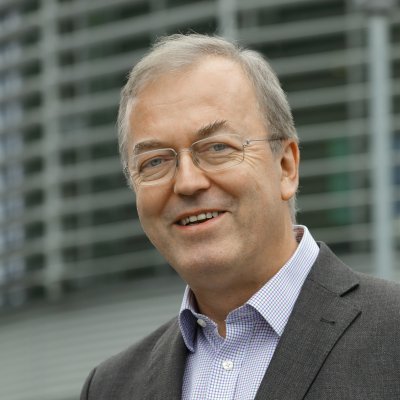
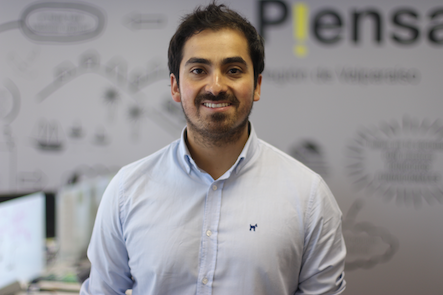
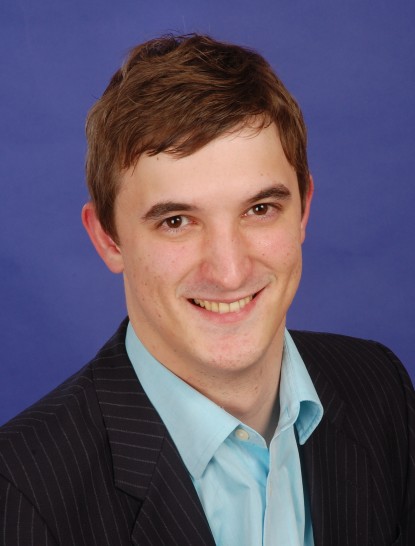
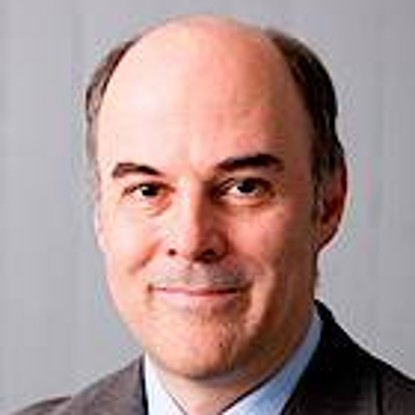
Claudia Comito is a researcher at the Jülich Supercomputing Centre (JSC) , affiliated with Forschungszentrum Jülich GmbH. Her work focuses on high-performance computing, parallel computing, and data analysis within computational science. She is based in Building 16.3 / Room 224, Jülich, Germany.
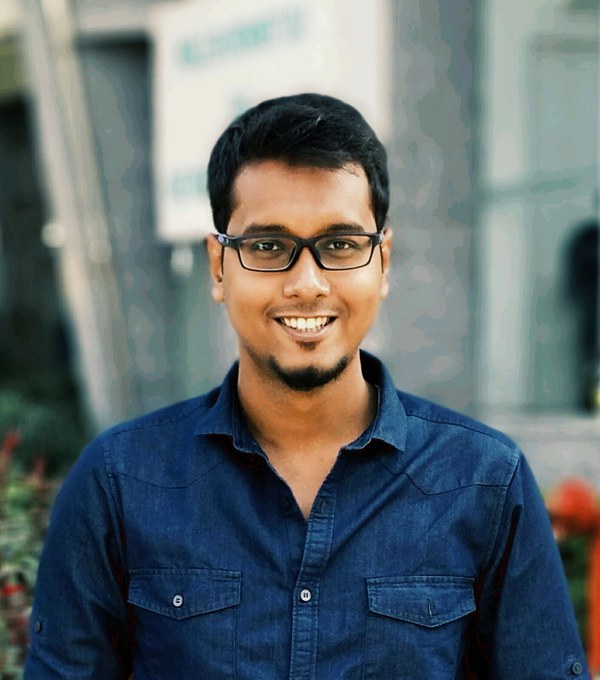
Sayan Mandal is a Researcher at the Jülich Supercomputing Center (JSC), Forschungszentrum Jülich, Germany, and is pursuing his Ph.D. in Electrical and Computer Engineering from the University of Iceland in collaboration with the 'AI and ML for Remote Sensing' Simulation and Data Lab at JSC. B.Tech. in Computer Science from University of Petroleum and Energy Studies, India (2017) M.Sc. in Computer Science (major: Machine Learning, minor: Visual Computing) with distinction from Technical University of Graz, Austria (2024) Prior to his master's, he worked for over 4 years in computer vision at two leading Indian startups. His master's thesis involved a Student Project Assistant role in the FutureWoods Project at ICG, TU Graz, Austria, funded by FFG - Austrian Research Promotion Agency and the Vienna Scientific Cluster supercomputer. His research focuses on robust deep learning models for remote sensing applications, foundation models, and AI efficiency using HPC systems. He also serves as a reviewer for IEEE Access .
Prof. Dr. Kurt Kremer is the Director and Scientific Member of the Max Planck Institute for Polymer Research. He previously held a professorship at the University of Mainz (until 1996). Born in 1956, he studied physics and earned his doctorate from the University of Cologne (1983) and the University of Mainz (1984-1988). He completed his habilitation in theoretical physics at the University of Mainz in 1988 while working at Exxon Research and Engineering. Education: Physics studies (1974) Doctorate: Jülich Nuclear Research Center, Universities of Cologne (1983) and Mainz (1984-1988) Habilitation in theoretical physics (1988) Research Interests: Focuses on soft matter physics, computational physics, multiscale modeling, and high-performance computing applications. His work bridges fundamental polymer science and advanced computational methodologies. No scientific awards or grants are explicitly listed in the provided materials. He currently leads research at the Max Planck Institute for Polymer Research, a world-leading institution in polymer research.
Dr. Philipp Bach is a Researcher at the University of Hamburg Business School's Department of Statistics with Application in Business Administration. He holds a PhD in Economics from Hamburg University (2021) and a Postdoc in Statistics (since 2021). His research focuses on causal inference using machine learning methods, high-dimensional econometrics, and applications in labor, health, and financial economics. Key areas include hyperparameter tuning for causal estimation, sensitivity analysis, and difference-in-difference models. His work emphasizes practical implementations, such as the DoubleML package for R and Python, which facilitates double machine learning techniques. He has published in top journals like the Journal of the Royal Statistical Society and Journal of Statistical Software. Current projects explore multimodal data causal estimation and pandemic shielding strategies using SEIR models. No formal awards are listed, but his contributions are widely recognized in computational econometrics. Bach advises no listed students but collaborates with institutions like Booking.com on sensitivity analysis applications. His lab focuses on bridging machine learning and traditional econometric methods for real-world policy analysis.
Prof. Dr. Hendrik Ranocha is a Professor of Numerical Mathematics at Johannes Gutenberg University Mainz, Germany. Previously, he held an Assistant Professor position at the University of Hamburg (2022–2023) and postdoctoral roles at institutions including KAUST and TU Braunschweig. His research focuses on structure-preserving numerical methods for partial differential equations, emphasizing stability, entropy conservation, and high-performance computing. Ranocha leads a research group developing open-source software such as Trixi.jl and SummationByPartsOperators.jl for adaptive simulations and numerical analysis. Education BSc Mathematics & Physics, TU Braunschweig (2011–2014) MSc Mathematics, TU Braunschweig (2014–2016) PhD Mathematics, TU Braunschweig (2016–2018) Research Interests Numerical Analysis: Stability, Runge-Kutta methods, entropy stability Scientific Computing: Discontinuous Galerkin methods, HPC in Julia Applications: Compressible flows, astrophysical simulations, magnetohydrodynamics Recent Contributions Recent work includes entropy-preserving schemes for dispersive equations, positivity-preserving time integrators, and high-performance computing tools. Collaborations span software development with SciML and open-source projects like Trixi.jl. Advising & Grants PhD students: Louis Petri, Marco Artiano, Sebastian Bleecke Postdoctoral researchers: Saurav Samantaray, Arpit Babbar Labs & Teams Runs a research group focused on numerical methods and software development, contributing to Julia-based open-source ecosystems for computational science.
Prof. Thomas Lippert is a Professor and Senior Fellow at the Frankfurt Institute for Advanced Studies (FIAS) and holds the chair for Modular Supercomputing and Quantum Computing at Goethe University Frankfurt. He serves as director of the Jülich Supercomputing Centre and holds leadership roles in the John von Neumann Institute for Computing (NIC) and Gauss Centre for Supercomputing (GCS). His research focuses on hybrid quantum-HPC systems, modular supercomputing architectures, and energy-efficient computing. Education: He earned his diploma in Theoretical Physics from the University of Würzburg (1987), followed by PhDs in theoretical physics from Wuppertal University (lattice quantum chromodynamics simulations) and Groningen University (parallel computing with systolic algorithms). Research emphasizes three pillars: energy efficiency, scalable modularity, and AI integration with HPC. Collaborations include Jülich Supercomputing Centre and FIAS. The group recently relocated to Bockenheim campus with a focus on modular datacenter design and non-von-Neumann architectures.
Prof. Dr. Katharina Kormann is a Professor in Numerical Mathematics at the Department of Mathematics, Ruhr University Bochum. She leads the Numerics and Scientific Computing research group, focusing on developing structure-preserving numerical methods and high-performance computing techniques for partial differential equations. Her work has applications in plasma physics and quantum dynamics. Research interests include numerics of high-dimensional problems, efficient algorithms for supercomputers, and low-rank tensor approximations. She coordinates projects like the PDExa initiative and the SNuBIC Research Unit, involving dynamical low-rank approximations for two-particle systems. Team members: Dr. Ivo Dravins (PostDoc), Omar Malik, Tileuzhan Mukhamet, and Lukas Hensel (PhD students), and Victoria Grieß (student assistant). Labs/Teams: Kormann Group within the Numerics division of the Floer Center of Geometry. No specific grants or awards are listed, but her research is supported through collaborative projects and institutional resources.
Dirk Pflüger is a Professor at the University of Stuttgart's Institute of Parallel and Distributed Systems, within the Faculty of Computer Science, Electrical Engineering and Information Technology. His research focuses on high-performance computing (HPC), parallel and distributed systems, and sparse grids. He has led projects in astrophysical simulations, machine learning applications, and uncertainty quantification. Notable contributions include developing scalable algorithms for exascale computing using HPX, Kokkos, and SYCL frameworks. His expertise spans distributed computing architectures, task-based parallel programming, and interdisciplinary applications in astrophysics and medical AI. Recent work includes optimizing hyperparameter tuning, simulating stellar mergers, and enhancing blood glucose prediction models using deep reinforcement learning. Pflüger's research emphasizes performance portability, fault tolerance, and cross-platform collaboration. He has contributed to open-source tools like PLSSVM and hws, which address hardware monitoring and GPU acceleration challenges. His work bridges theoretical advancements with practical implementations for real-world computational problems.
Prof. Dr. Raimund Vogl is a Professor at the University of Münster's School of Business and Economics, leading the Department of Information Systems. He concurrently serves as Chief Information Officer (CIO) of the University since 2017 and Director of its Center for Information Technology (CIT). His interdisciplinary career spans physics, medical informatics, and academic IT management. Vogl holds a PhD in High Energy Physics from the University of Innsbruck (1995) and a Diploma in Physics with a focus on Quantum Field Theory (1991). His research focuses on complex information systems management, cloud computing, research data infrastructure, and quantum computing applications. Notable contributions include the development of the 'sciebo' cloud storage service for universities and leadership in projects like Sync & Share North Rhine-Westphalia. He actively participates in committees such as the European University Information Systems Organisation (EUNIS) and DINI. Education: PhD in High Energy Physics (University of Innsbruck), Diploma in Physics Key Roles: CIO of University of Münster, EUNIS Board President (2017–2023) Research Themes: Cybersecurity, Quantum Algorithms, Academic Cloud Solutions Awards include the GMDS Certificate in Medical Informatics (2004). He teaches courses on Project Management and Digital Work in English and German.
Dr. Jens Keim is a Research Fellow at the Institute of Applied Analysis and Numerical Simulation at the University of Stuttgart. His research focuses on advanced computational methods for fluid dynamics, particularly entropy-stable schemes and high-order discontinuous Galerkin methods for compressible turbulent flows. His expertise spans multiphase flow simulation, shock capturing techniques, and dynamic mesh adaptation. Recent work integrates machine learning approaches with traditional CFD methodologies, including reinforcement learning for slope limiting and neural networks for particle dynamics modeling. Dr. Keim's publications demonstrate consistent innovation in high-performance computing applications for fluid dynamics, with emphasis on parallel algorithms and accelerator-based systems. His research advances numerical stability in complex flow simulations through novel relaxation models and adaptive methods. Current projects focus on turbulence modeling, multiphase flows, and computational efficiency improvements for large-scale simulations using modern data structures and GPU architectures.
Raili Hilden is a full professor in language didactics (foreign languages) at the University of Helsinki's Department of Education, Faculty of Educational Sciences. Her core activities include research, teaching, and societal impact with a focus on language assessment, particularly in high-stakes testing contexts. She leads research projects like AASIS (Automatic assessment of spoken interaction in second language) and DigiTala, exploring automated assessment tools for speaking proficiency. She chairs the Finnish National Matriculation Examination Board's Swedish section and contributes to national curriculum development. Research Interests : Language assessment methodologies, teacher assessment literacy, educational equity in language education, and the integration of technology in language testing. Current projects emphasize automated scoring systems and multimodal assessment formats. Key Contributions : Directed national evaluations of language learning outcomes (2012-2014), developed grading criteria for Finnish national curricula, and pioneered computer-based language testing innovations. Her work bridges educational policy, technology, and pedagogical practice. Awards : Recipient of top honors including Vuoden kieltenopettaja 2003, Kulturfonden Språkpriset 2004, and The FIPLV International Award 2005. Active in international conferences and serves on boards like the Finnish Matriculation Examination Board. Grants/Projects : Multiple Academy of Finland grants (AASIS: 2023-2027; DigiTala: 2025-2026), DD-LANG (2022-2026) focusing on diagnostic language assessment innovations. Labs/Teams : Leads multidisciplinary teams combining linguistics, computer science, and educational research to advance automated assessment technologies. Collaborates with Scandinavian institutions on teacher assessment literacy initiatives.
Richard Membarth is an academic researcher at the Friedrich-Alexander-Universität Erlangen-Nürnberg, Department of Computer Science. His work focuses on high-performance computing, domain-specific compilers, and GPU acceleration. He has contributed to projects like FLOWER (dataflow compiler), Hipacc (image processing DSL), and XEngine (neural network optimization). Membarth's research bridges compiler design, parallel algorithms, and heterogeneous hardware, with applications in medical imaging, bioinformatics, and autonomous systems. Co-developer of AnyDSL framework for partial evaluation Lead in GPU acceleration for molecular dynamics (tinyMD) Specialized in compiler techniques for FPGAs and GPUs Key areas include: - Domain-specific languages (DSLs) - Parallel algorithm optimization - Medical computing pipelines - Real-time graphics rendering
Albert Gilg is a Professor at the Technical University of Munich (TUM), affiliated with the Department of Mathematics and the TUM School of Computation, Information and Technology . His work focuses on numerical analysis and computational methods for real-world applications in science and engineering. Research Interests: Modelling and Analysis of complex systems Numerical methodologies for partial differential equations High Performance Computing (HPC) and parallel algorithms Uncertainty quantification and surrogate models Applications in fluid dynamics, biomedical engineering, and geophysics He contributes to interdisciplinary projects such as simulating cerebral aneurysms, seismic impacts on structures, and methane gas hydrate reservoirs. His team collaborates on third-party funded initiatives by the DFG, EU, and Gauss Centre for Supercomputing. Advising and Grants: Focus on numerical methods for fractional differential equations Development of energy-corrected finite elements Leadership in the Numerical Analysis research group at TUM
Dr. Mathis Fricke is a researcher in the Department of Mathematics at TU Darmstadt, affiliated with the Mathematical Modeling and Analysis (MMA) Institute. His work focuses on computational fluid dynamics, wetting processes, and mathematical modeling of multiphase systems. He specializes in numerical methods such as the Volume-of-Fluid (VOF) technique and Level-Set approaches, with applications to capillary dynamics, surfactant transport, and interface tracking in complex geometries. His research bridges experimental validation with numerical simulation, addressing challenges in fluid mechanics, energy systems, and biomedical engineering. Key areas of expertise include dynamic contact angle modeling, multiphase flow simulations using OpenFOAM modules, and optimization of fluid transport in microfluidic systems. He has contributed to advancing numerical frameworks for unstructured meshes and has collaborated on projects involving Bayesian model calibration and error quantification for energy economy systems. Dr. Fricke's work is characterized by interdisciplinary collaboration, combining analytical mathematics with high-performance computing. His publications span topics such as capillary rise dynamics, tribology measurements, and eigenmode analysis of slip-induced flows. Despite no explicitly listed awards, his contributions to computational methodologies have been recognized through his active role in the MMA Institute and academic collaborations. He maintains a lab/office in L2|06 411, Peter-Grünberg-Straße 10, Darmstadt, and is accessible via fricke@mma.tu-darmstadt.de.
Stefan Ulbrich is a Professor of Nonlinear Optimization at the Department of Mathematics, Technische Universität Darmstadt. His research focuses on optimization theory, algorithms, and applications, particularly in PDE-constrained optimization, optimal control, and numerical methods. He co-authored influential textbooks on nonlinear and PDE-constrained optimization. His work bridges theoretical foundations with practical engineering solutions, addressing challenges in fluid dynamics, electromechanical systems, and energy processes. Key contributions include robust optimization frameworks, sensitivity analysis for complex systems, and model reduction techniques. His research emphasizes interdisciplinary applications, such as electric machine design, industrial robotics, and sustainable energy systems. Research Interests: Nonlinear Optimization and Numerical Methods PDE-Constrained Optimization and Optimal Control Robust Design and Uncertainty Quantification Applications in Engineering and Energy Systems Publications: Ulbrich's work spans over 100 peer-reviewed articles and books. Notable contributions include the textbook *Nichtlineare Optimierung* (with Michael Ulbrich) and research on optimal control of fluid flows, robust optimization of electromechanical systems, and Bayesian model calibration. His recent focus includes parallel-in-time optimization, topology optimization under uncertainty, and exergy-based process optimization in green energy systems. Awards and Recognition: While specific awards are not explicitly listed, his leadership in optimization theory and impactful contributions to applied mathematics and engineering reflect sustained academic excellence.