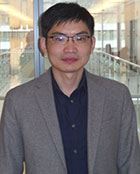
Zhaozheng Yin is an Associate Professor in the Department of Biomedical Informatics and Department of Computer Science at Stony Brook University, affiliated with the College of Engineering and Applied Sciences. His research focuses on biomedical image analysis, computer vision, machine learning, and human-robot collaboration in smart manufacturing contexts. Ph.D. in Computer Science and Engineering from Pennsylvania State University (2009) M.S. in Electrical and Computer Engineering from University of Wisconsin-Madison B.S. in Automation from Tsinghua University Active in advancing microscopy image analysis through novel algorithmic approaches, Dr. Yin's work bridges theoretical computer science with practical applications in healthcare and industrial automation. His research emphasizes: Intelligent human-robot collaboration systems Cyber-physical sensing and augmented reality for manufacturing Medical image segmentation and classification techniques Temporal action localization and counting algorithms His publications demonstrate expertise in domain adaptation, vision-language integration, and graph-based modeling. Grant-funded projects include NSF CAREER support for microscopy analysis and NRI/CPS grants for collaborative robotics research. Best Doctoral Spotlight Award, CVPR 2009 Young Scientist Awards at MICCAI (2010-2015) NSF CAREER Award recipient (2014) Best Paper Awards at CVPR workshop (2015) and IISE (2018)
Teresa Cristina de Freitas Gonçalves is an Associate Professor at the Department of Informatics, School of Sciences and Technology, University of Évora, where she has been employed since 1999. She serves as an integrated researcher at the ALGORITMI research centre and is the Director of the VISTA Lab (Video, Image, Speech and text Analysis Lab), the unit of the ALGORITMI research centre at University of Évora. Her leadership roles include Director of the Master programme in Informatics Engineering and deputy Director of both the Master programme in Artificial Intelligence and Data Science and the Doctoral program in Computer Science. She earned her PhD in Computer Science from University of Évora and a MSc degree in Informatics Engineering from New University of Lisbon. Her academic journey at University of Évora has included significant leadership positions including Head of the Computer Science Department (2011-2015), Director of the Bachelor programme in Informatics Engineering (2016-2021), and Deputy Director roles for various undergraduate and graduate programs. Dr. Gonçalves' research focuses on intelligent systems, particularly Machine Learning approaches, with substantial contributions in evolutionary algorithms, information extraction and retrieval, and supervised learning across multiple data modalities including tabular data, text (in both Portuguese and English), and images (medical and satellite). Her work bridges theoretical advances with practical applications in healthcare, remote sensing, and natural language processing. She has successfully supervised 6 doctoral theses, 19 master theses, and 3 postdocs, and currently mentors 5 doctoral and 6 master students from diverse international backgrounds including Bangladesh, Cabo Verde, Nepal, Philippines, India, Sri Lanka, China, Mongolia, and Portugal. Her publication record includes over 100 scientific articles indexed by Scopus with 640 citations and an h-index of 12, demonstrating significant international impact with 56% of her work involving international collaboration. Her recent research shows a strong trend toward applying advanced machine learning techniques to healthcare applications, information retrieval systems, and remote sensing analysis, with particular emphasis on transformer networks, learning-to-rank methodologies, and multimodal data analysis. Dr. Gonçalves has made substantial contributions to the academic community through her service as a reviewer for over 50 articles in prestigious international journals and conferences, and as chair for major international conferences including IDEAL 2023, PROPOR 2020, SKIMA 2017 and 2018, and CLEF 2016. She serves on the board of APRP (Associação Portuguesa de reconhecimento de Padrões) and as a jury member for APRP prizes for best MSc and PhD theses. Her current research portfolio includes coordination of the Horizon Europe MSCA Staff Exchange HarmonicAI project and local coordination of WP6 in the NewSpace Portugal mobilising agenda. She is also actively involved in numerous other international research initiatives including Interreg VI-B Sudoe SenforFire, PRR CANTE, La Caixa INCOME, Erasmus+ KA220-HED REDINEST, Interreg POCTEP TID4AGRO, and ATTRACT DIH projects. Previously, she led the FCT AI in the Public Administration SNS24.Scout.IA project and coordinated the FEDER R&D NIIAA project. As Director of the VISTA Lab, Dr. Gonçalves leads a dynamic research team focused on video, image, speech, and text analysis. The lab serves as the Évora hub of the ALGORITMI research centre and has established strong international collaborations. Under her leadership, the VISTA Lab has developed innovative approaches in medical image analysis, natural language processing for Portuguese, and satellite image classification, with applications spanning healthcare, environmental monitoring, and public administration.
Filipe Rodrigues is an Associate Professor in the Department of Technology, Management and Economics at the Technical University of Denmark (DTU), where he conducts research in intelligent transportation systems and transportation science. His work integrates machine learning, artificial intelligence, and behavioral modeling to improve urban mobility and public transport systems. His research interests lie at the intersection of machine learning , transportation science , and behavioral modeling . He specializes in discrete choice modeling , reinforcement learning , graph neural networks , and smart card data analytics . His work contributes to sustainable urban mobility, leveraging big data and AI for proactive traffic control and public transport optimization. The recent publications highlight a strong trend toward integrating AI and behavioral science in transportation. Key themes include ride-sourcing driver behavior , public transport trip validation , autonomous fleet control , and causal machine learning . These works predominantly employ deep learning , Bayesian modeling , and offline reinforcement learning techniques, often applied to real-world datasets from Denmark and beyond. Scientific Contributions: Active contributor to journals like Transportation Research Part C and Journal of Choice Modelling . Supervises multiple PhD projects on AI in transportation and causal modeling. Regular presenter at major transportation and AI conferences. Advising and Grants: Filipe Rodrigues is the main or co-supervisor of several PhD students including O. B. Lassen, F. M. F. Santos, A. Nguyen, and X. Wu. He leads and participates in funded research projects such as 'Proactive traffic control through AI and Big Data' and 'Causal Graph Neural Networks for machine learning meta-modelling', indicating sustained grant support. His collaborative network spans institutions in Europe and beyond. Labs and Teams: He is part of the Intelligent Transportation Systems research group at DTU, collaborating closely with researchers like F. C. Pereira and C. M. L. Azevedo. The team focuses on data-driven mobility solutions, combining simulation, machine learning, and behavioral insights.
Oliver Karras is a researcher, data scientist, and lecturer at the Data Science and Digital Libraries research group at TIB – Leibniz Information Centre for Science and Technology. He holds a BSc, MSc, and PhD in Computer Science from Leibniz University Hannover. His research focuses on FAIR scientific knowledge, Open Research Knowledge Graph (ORKG), and national research infrastructure projects like NFDI-4Ing and FAIR-DS. He is a member of the German Informatics Society (GI) and spokesperson of the Requirements Engineering (RE) group, contributing to conferences and journals as a reviewer. Previously, he was a research associate and PhD student in the Software Engineering group at Leibniz University, leading the DFG project ViViReq on video integration in requirements engineering. His research interests include Data Science, AI, Knowledge Representation, Software Engineering, Requirements Engineering, Empirical Research, and Open Science. He has published over 60 papers in these areas, with notable contributions to knowledge graphs, FAIR data, and reproducibility frameworks. His work emphasizes organizing scientific knowledge for accessibility and collaboration across disciplines. He is actively involved in initiatives like the ORKG, promoting sustainable literature reviews and open science practices. His professional contributions extend to tool development, such as OntoAligner for ontology alignment and SciKGTeX for semantic annotation in LaTeX. Oliver Karras collaborates with institutions like Leibniz University, contributing to the NFDI consortium and energy research projects. His expertise bridges technical innovation and academic rigor, addressing challenges in knowledge management and reproducibility. His current roles include advancing TIB’s research infrastructure and fostering interdisciplinary collaboration through knowledge graph applications.
Professor Kewen Wang is a faculty member in the School of Information and Communication Technology at Griffith University , where he has been actively working in computational logic, knowledge representation, and their applications in artificial intelligence for over 30 years. His research has led to the development of novel logics, computer languages, and systems for knowledge representation and reasoning. Broad research areas: Computational Logic, Knowledge Representation, Artificial Intelligence, Programming, Knowledge Graphs, Explainable AI, Ontology Reasoning, Rule Learning Key contributions: RLvLR (scalable rule learner for KGs), TyRuLe (typed rule learning), Drewer (Datalog+- query engine), ALBERT+CCR (CommonsenseQA model), auction design algorithms His research has been widely cited in top venues like Artificial Intelligence , JAIR , ACM Transactions on Computational Logic , and conferences AAAI (Area Chair 2022-2025), IJCAI , KR . He has secured six ARC Grants (five Discovery, one Linkage) and smaller grants from NICTA, CSIRO, and Griffith University. Editorial roles: Area Chair for AAAI (2022-2025), Associate Editor for Journal of Web Semantics , TGDK Supervision: Has supervised over 15 PhD students including Hong Wu, Peng Xiao, and Pouya Omran Teaching: Courses in Intelligent Systems, Data Structures, Discrete Mathematics, and Robotics
Sebastián Ferrada is an Assistant Professor at the Data & Artificial Intelligence Initiative of Universidad de Chile. He also serves as Young Researcher at the Institute for Foundational Research on Data (IMFD) and Collaborating Researcher at the National Center for Artificial Intelligence Research (CENIA). His research focuses on Knowledge Graphs, with special emphasis on extraction, management, and applications for querying, browsing, and AI systems. His academic background includes: PhD in Computer Science (2021), Universidad de Chile MSc in Computer Science (2017), Universidad de Chile BEng in Computer Science (2017), Universidad de Chile Sebastián's research explores several key areas: Multimedia Databases with applications to Wikimedia Commons images Graph Databases and Knowledge Graphs construction Federated Data Management across heterogeneous RDF sources SPARQL query extensions for similarity-based operations Graph data management and compression techniques His recent publications demonstrate strong trends in knowledge graph construction, similarity-based querying, and efficient graph data management. These works combine theoretical advancements with practical implementations in real-world systems like IMGpedia and MillenniumDB. Scientific achievements include: Best Paper Award at CoopIS 2023 Best Demonstration Award runner-up at SIGMOD/PODS 2024 Best Student Paper (Resources Track) and Best Poster at ISWC 2017 First prize in CLEI 2017 for his Master's thesis Sebastián currently leads the Fondecyt project on graph data management and contributes to the U-Inicia project on AI processes in graph databases. He serves on the editorial board of Transactions on Graph Data and Knowledge.
Reza Zadeh is a Computational Mathematics professor at Stanford University's School of Engineering and Founder & CEO of Matroid . He previously served as a Technical Advisory Board member for Databricks and leads the Spark Tutorial at Stanford. Research Interests: Specializing in Machine Learning and Distributed Computing , his work bridges theoretical mathematics with practical implementations in big data systems. Key focus areas include Optimization of Apache Spark 3D Convolutional Neural Networks Discrete Mathematics and Graph Theory Medical Imaging Applications Academic Contributions: His publications reveal trends across multiple disciplines: Adapting machine learning for medical diagnostics (2019-2022) Advancing distributed computing frameworks (2014-2016) Developing mathematical foundations for social networks (2009-2013) Creating scalable optimization algorithms (2014-2016) Scientific Awards: Best Paper Award runner-up at KDD 2016 Academic Leadership: He has taught SMACC Consulting and designed courses including CME 323: Distributed Algorithms and Optimization (2015-2024) and CME 305: Discrete Mathematics and Algorithms (2010-2017). His lectures cover graph theory, approximation algorithms, and spectral sparsification. Labs & Teams: Organized Spark Summit workshops and leads Scaled Machine Learning Conference . Collaborates with Stanford's ICME computational consulting services.
Dr. Evert van Nieuwenburg is an Assistant Professor at Leiden University, affiliated with both the Leiden Institute of Advanced Computer Science (LIACS) and the Leiden Institute of Physics (LION). His research bridges the fields of Quantum Physics , Machine Learning , and Condensed Matter Physics , with a focus on quantum algorithms, reinforcement learning, and quantum game development (e.g., Quantum TiqTaqToe ). He actively contributes to the Applied Quantum Algorithms (aQa) initiative and leads the QuantumPlayed subgroup for quantum games and education. Research Interests: AI-driven quantum experiment control, quantum machine learning, variational quantum circuits, and quantum games for education and intuition-building. Publications: 15+ peer-reviewed works spanning quantum error correction, phase transitions, reinforcement learning in quantum systems, and quantum dot array simulations. Community Engagement: Developer of educational quantum games, open science advocate, and active participant in interdisciplinary initiatives. Selected Trends: His work demonstrates AI's transformative role in quantum physics, from decoding error-correcting codes with graph neural networks to merging reinforcement learning with quantum control systems. Labs & Initiatives: Affiliated with the Applied Quantum Algorithms (aQa) initiative and co-founder of QuantumPlayed , where quantum mechanics meets game theory to engage diverse audiences.
Sebastian Angel is an Associate Professor and Chair of Undergraduate Curriculum in the Department of Computer and Information Science at the University of Pennsylvania . He leads research in systems, security, privacy, and networking, with a focus on privacy-preserving systems, accountability in online services, consistency in distributed systems, and next-generation operating systems. Research Areas: Systems, Security, Privacy, Networking, Distributed Systems, Operating Systems Labs & Teams: Distributed Systems Laboratory, Security and Privacy Laboratory, Warren Center for Network and Data Sciences Education: Ph.D. in Computer Science from the University of Texas at Austin (2018), ACM SIGOPS Dennis M. Ritchie Dissertation Award, Bert Kay Best Dissertation Award Recent Publications (2025–2022) span serverless computing, zero-knowledge proofs, distributed transactions, privacy-preserving ad tech, and verifiable execution. His 2025 work includes serverless workflow optimization and structural logic verification, while 2024 focuses on caching frameworks and stateful serverless. Earlier 2023–2022 projects include secure federated learning, confidential cloud services, and private information retrieval. Scientific Awards: NSF CAREER Award (2021) JPMorgan Faculty Award (2021) ACM SIGOPS Dennis M. Ritchie Dissertation Award (2018) Bert Kay Best Dissertation Award (2018) ACM SIGMOD Research Highlights Award (2024) VLDB 2024 Best Paper Award Nominee Advising: Current PhD Students: Elizabeth Margolin, Jess Woods, Yuxuan Zhang Current Masters Students: Felix Adena, Sydnie Shea Cohen Alumni: Eleftherios Ioannidis (2025), Yiping Ma (2025), Haoran Zhang (2024), Ke Zhong (2024), Selin Butun (2025), Martin Sander (2025), Seungmin Han (2024), Andrew Beams (2022), Yifeng Mao (2021), Varad Deshpande (2020) Current Courses: CIS 4510/5510: Computer and Network Security (Fall 2025). He also organizes conferences like S&P, OSDI, SOSP, PETS, and EuroSys.
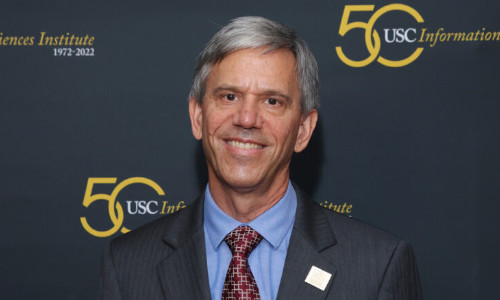
Craig Knoblock serves as the Keston Executive Director of the Information Sciences Institute (ISI) at the University of Southern California, Vice Dean of Engineering for the Viterbi School of Engineering, and Research Professor of both Computer Science and Spatial Sciences. He also directs USC's Data Science Program and leads the Center on Knowledge Graphs as Research Director. Dr. Knoblock's research focuses on techniques for describing, acquiring, and exploiting the semantics of data. His extensive work spans source modeling, schema and ontology alignment, entity and record linkage, data cleaning and normalization, extracting data from the Web, and building comprehensive knowledge graphs. With over 300 published works in these areas, his research has significantly advanced the field of semantic data integration. His work demonstrates strong trends toward practical applications of knowledge graphs across diverse domains including cultural heritage, geospatial information systems, human trafficking detection, and sensor networks. The evolution of his publications shows a progression from foundational ontology alignment techniques to sophisticated knowledge graph applications addressing real-world challenges. Fellow of the Association for the Advancement of Artificial Intelligence (AAAI) Fellow of the Association of Computing Machinery (ACM) Past President and Trustee of the International Joint Conference on Artificial Intelligence (IJCAI) Recipient of the 2014 Robert S. Engelmore Award Seven best paper awards for his research contributions As Executive Director of USC's Information Sciences Institute, Dr. Knoblock leads one of the world's premier research centers in computer science and information technology. His leadership extends to directing the Center on Knowledge Graphs and serving as Associate Director of the Informatics Program at USC. His educational background includes a Bachelor of Science from Syracuse University and Master's and Ph.D. degrees in Computer Science from Carnegie Mellon University.
Gagan Agrawal is the UGA Foundation Professorship in Computing and a Professor at the School of Computing, University of Georgia. He serves as Director of the School and is affiliated with the Franklin College of Arts & Sciences. Agrawal holds a PhD and MS in Computer Science from the University of Maryland (1994-1996). His research focuses on high-performance computing, parallel algorithms, compiler optimization for deep learning, GPU acceleration, and interdisciplinary applications in health informatics. Notable contributions include frameworks like ForensiBlock (blockchain for data forensics) and DELITE (tensorized instruction compilation). Agrawal has secured over $2.5M in NSF grants for projects addressing extreme-scale computing challenges. Recent grants include: SHF: Small: Memory Hierarchy Optimizations Meet Transformers (MITTEN) ($600K, 2024-2027) DELITE compilation system for deep learning models ($600K, 2023-2026) Publications span parallel computing methodologies, cybersecurity frameworks, and health outcomes analysis. His work on social determinants of health in cancer survival has been systematically reviewed in top-tier medical journals. Agrawal leads UGA's computing initiatives, emphasizing interdisciplinary research and student mentorship in HPC and AI domains.
Michalis Mountantonakis is a Postdoctoral Researcher at FORTH and Laboratory Teaching Staff in the Department of Computer Science at the University of Crete, Greece. He holds a PhD (2020), MSc (2016), and BSc (2014) in Computer Science from the University of Crete, all with top grades. His research focuses on Large-Scale Semantic Data Integration, Linked Open Data, and Semantic Web technologies, with over 45 publications in top venues like ACM VLDB, ISWC, and ECML. He has been awarded the prestigious SWSA Distinguished Dissertation Award (2020) and the Maria Michael Manasaki Fellowship (2020). His work includes tools like LODsyndesis and LODChain, addressing challenges in knowledge graph connectivity and validation of AI-generated content. Education: PhD in Computer Science (2016-2020), University of Crete (Excellent GPA 9.74/10) MSc in Computer Science (2014-2016), University of Crete (Excellent GPA 9.87/10) BSc in Computer Science (2010-2014), University of Crete (2nd in class with GPA 8.42/10) Research Interests: His work bridges semantic web technologies with modern AI challenges, emphasizing large-scale data integration, knowledge graph applications, and validation frameworks. He has contributed to cultural heritage informatics, machine learning-augmented semantic systems, and cross-lingual NLP solutions. Recent trends include leveraging LLMs for query generation and semantic enrichment while ensuring factual accuracy through knowledge graph-driven validation. Key Achievements: Developed LODsyndesis, a global-scale semantic integration service Pioneered real-time validation of ChatGPT responses using RDF knowledge graphs Won Best Paper Award (ISWC 2022) for entity enrichment techniques Recipient of Stelios Orphanoudakis Undergraduate Fellowship (2013-2014) Participated in Roche Continents 2019 (top 100 European science students) Grants & Labs: His research has been supported by GSRT/HFRI. He collaborates with FORTH-ICS and leads projects in EU-funded initiatives like iMarine and BlueBridge. Current work focuses on governance models for ontologies, interoperable thesaurus creation (e.g., FoodEx2), and semantic analytics for cultural heritage datasets.
Xiaoli Fern is an Associate Professor in the School of Electrical Engineering and Computer Science at Oregon State University. She holds a Ph.D. in Computer Engineering from Purdue University (2005) and dual degrees (B.S. and M.S.) in Automation and Computer Science from Shanghai Jiao Tong University (2000). Her research focuses on applied machine learning , graph learning , and explainability in AI systems , with applications in microbiome analysis , ecological monitoring , and human-computer interaction . Research Expertise: Unsupervised learning, clustering, correlation analysis, outlier detection, and scientific data mining. Collaborations: Active involvement in the IGERT Ecosystem Informatics program and interdisciplinary projects with ecologists, roboticists, and biologists. Awards: 2011 NSF CAREER Award for early-career excellence in research. Her recent work includes applying deep learning to microbiome data and developing interactive systems that bridge theory with real-world applications in biology and materials science. She mentors students across all academic levels and emphasizes the importance of collaborative, real-world problem-solving in her research lab.
Zihao Fu is a Research Assistant Professor at The Chinese University of Hong Kong (CUHK), specializing in Large Language Models (LLMs) and Natural Language Processing (NLP) . His work bridges computational methods with social sciences, focusing on model instability, repetition, hallucination, and algorithmic fairness. He has held research positions at the Oxford Internet Institute and the Language Technology Lab at the University of Cambridge. Education Ph.D. in Systems Engineering and Engineering Management (2017–2021), CUHK M.Eng. in Aeronautics and Astronautics (2012–2015), Beihang University B.Eng. in Automation Science (2008–2012), Beihang University His research explores the theoretical foundations of LLMs, addressing challenges like repetition , instability , and hallucination . He integrates linguistics , cognitive science , and fairness frameworks to enhance both foundational understanding and real-world applications of language technologies. Recent work includes biomedical NLP applications ( BAND dataset ), parameter-efficient model adaptation, and fairness toolkits ( OxonFair ). Zihao leads projects like BioCaster (disease outbreak monitoring) and CAM-Tool (cloud task distribution). He is actively mentoring postdoctoral researchers at CUHK and CUHK (Shenzhen), with expertise in machine learning , knowledge base integration , and parallel computing systems . His industry experience includes developing distributed algorithms at Alibaba Cloud’s PAI platform.
Professor Boris Konev is a faculty member at the University of Liverpool, affiliated with the School of Electrical Engineering, Electronics and Computer Science. He holds the academic rank of Professor in Computer Science. Description Logics Ontologies Automated Reasoning Temporal Logic Formal Verification Encrypted Database Applications His recent research focuses on temporal queries mediated by ontologies, knowledge evaluation agents using large language models, and semantic modularity in description logics. Key sub-fields include LLM applications, encrypted databases, and formal verification techniques. He has contributed to software development projects and industry partnerships, including design of equine simulators and online services with Racewood Limited. Current teaching includes the Foundations of Computer Science module (COMP109). Professional roles include guest editorships for AI Communications and program committee membership for the European Conference on Logics for Artificial Intelligence (JELIA).