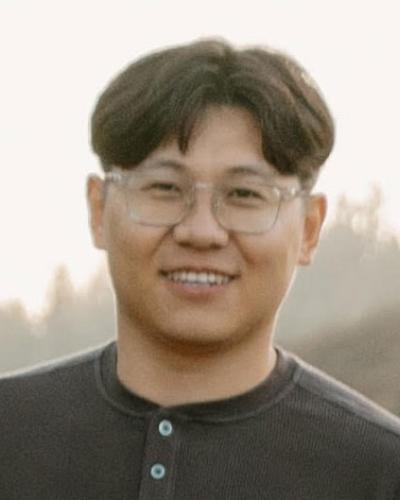
Camelia D. Brumar is a PhD Candidate in Computer Science at Tufts University and a Visiting PhD Student at Harvard University's Visual Computing Group. She co-founded Boston Vis , a collaborative network for visualization researchers in the Greater Boston Area. Education: B.S. in Theoretical Mathematics from University of Maryland, College Park Research Focus: Systematic visualization design for decision-making processes, bridging gaps between problem spaces and design spaces through qualitative methods Her work intersects Visual Analytics , Human-Computer Interaction , and Machine Learning , with recent publications on decision-making taxonomies, dimensionality reduction explanations, and knowledge graph visualization. Key trends include: Interactive predicate logic for pattern explanation Domain expert challenges in automated data science Anomaly reasoning frameworks Medical AI applications for embryo grading Scientific Achievements: Organizer of Boston Vis (2024) Tutorial presenter on LLMs for research paper interaction (2024) IEEE Visualization 2024 Doctoral Colloquium participant Contributor to Dagstuhl Seminar on provenance in automated data science (2023) Industry experience includes roles at Tableau Research , Alife Health , and Bose Corporation , with collaborations spanning MIT Lincoln Laboratory, National Renewable Energy Laboratory, and Worcester Polytechnic Institute.
Dr. Liang (Leon) Dong is an Associate Professor in the Department of Electrical and Computer Engineering at Baylor University, where he conducts research and teaches in the areas of signal processing, wireless communications, and artificial intelligence. He leads the Laboratory of Signal Processing, Communications, and Artificial Intelligence, fostering innovation in next-generation communication systems, IoT, and AI-driven applications. PhD, Electrical & Computer Engineering, The University of Texas at Austin (2002) MS, Electrical & Computer Engineering, The University of Texas at Austin (1998) BS, Applied Physics with Minor in Computer Engineering, Shanghai Jiao Tong University (1996) Dr. Dong's research focuses on advancing digital signal processing and wireless communications, with strong emphasis on artificial intelligence applications. His work spans NextG wireless systems , IoT and smart cities , cyber-physical system security , and AI in healthcare and industrial automation . He applies deep learning to domains such as autonomous driving and drug discovery, and investigates energy-efficient, secure, and reliable communication protocols. The recent publications highlight a strong trend toward integrating AI into traditional signal processing and communications. Topics include mRNA vaccine stability prediction , smart city infrastructures , secure cyber-physical systems , and deep learning for biomedical and industrial applications . His work bridges theoretical innovation with real-world impact in defense, transportation, and public health. Dr. Dong has earned recognition as a Senior Member of IEEE and a Member of the American Physical Society. He has also served as Faculty Advisor for Baylor University's InterVarsity chapter. Senior Member, Institute of Electrical and Electronics Engineers (IEEE) Member, American Physical Society (APS) He has successfully advised numerous graduate and undergraduate students, many of whom now hold academic and industry positions at institutions like Stanford, Intel, NASA, L3Harris, and Cummins. His research is generously supported by Baylor's VP for Research, the National Science Foundation, NASA, the Department of Defense (TARDEC), the Michigan Department of Transportation, and industry leaders including Intel, L3Harris, ExxonMobil, and Denso. He actively mentors students through research assistantships and senior design projects. Dr. Dong leads the Laboratory of Signal Processing, Communications, and Artificial Intelligence, which provides a collaborative environment for advancing research in signal processing, communications, and AI. The lab supports graduate and post-doctoral researchers and offers opportunities for undergraduate involvement in AI programming, circuit design, and embedded systems.
Anantaa Kotal is an Assistant Professor of Computer Science at The University of Texas at El Paso (UTEP), commencing her position in Fall 2024. Previously, she completed her PhD at the University of Maryland, Baltimore County (UMBC) and gained industry experience at Amazon and IBM. Her academic credentials include: PhD in Computer Science, University of Maryland Baltimore County (UMBC), 2024 B.E. in Computer Science and Engineering, Jadavpur University, 2017 Dr. Kotal's research centers on Generative AI applications for privacy and security, with emphasis on privacy-preserving data sharing, synthetic data generation, and policy compliance verification. She integrates knowledge graphs, reinforcement learning, and neurosymbolic approaches to develop frameworks for secure data synthesis in healthcare, agriculture, and cybersecurity domains. Her work addresses critical challenges like policy ambiguity resolution and trustworthy AI code generation. Analysis of her 15 most recent publications (2021-2025) reveals a strong trajectory toward knowledge-infused generative models for privacy preservation, with increasing focus on large language models (LLMs) and real-world applications in distributed systems. Key thematic clusters include policy-aware data synthesis (12 publications), healthcare data security (7 publications), and knowledge-graph-enhanced cybersecurity (5 publications). Dr. Kotal is actively recruiting graduate students for her research lab at UTEP and currently teaches Data Mining (CS 5362/6362) in Fall 2024. She maintains active research collaborations with her doctoral advisor Dr. Anupam Joshi at UMBC and industry partners including IBM. She leads a research laboratory at UTEP focused on developing next-generation privacy-preserving AI systems, with current projects spanning healthcare data anonymization, agricultural data sharing frameworks, and policy-compliant synthetic data generation for cybersecurity applications.
Shueng-Han Gary Chan is a faculty member in the Department of Computer Science and Engineering at the Hong Kong University of Science and Technology (HKUST), within the College of Engineering. He is actively engaged in research and mentoring, with a strong publication record in mobile computing, indoor localization, and AI for pervasive systems. His research focuses on indoor localization using Wi-Fi, geomagnetic, and inertial signals , sensor fusion , crowd counting with deep learning , domain adaptation , and efficient mobile AI systems . His work bridges theoretical innovation with real-world deployment, as seen in systems for missing person search and indoor navigation. Recent publications (2023–2025) show a consistent trend toward self-supervised and domain-agnostic learning , efficient model design for mobile devices , and robust signal fusion in noisy environments . His team leverages transformer architectures, graph neural networks, and novel optimization techniques to solve real-world challenges in urban and indoor spaces. He has advised numerous graduate students, including Jierun Chen, Zhuoxuan Peng, and Tianlang He, who have contributed as first authors to joint publications. His collaborations span institutions and include work on large-scale system deployments and mobile AI. He leads a research group focused on mobile and pervasive computing , with projects involving IoT-based contact tracing, indoor navigation (e.g., DeepNavi, SiFu), and real-time localization systems. The team emphasizes practical deployment and system robustness.
Raphaël Troncy is an Assistant Professor at EURECOM's Data Science Department, specializing in Semantic Web technologies, Knowledge Graphs, and Natural Language Understanding. He teaches courses like 'Human-computer interaction for the Web' and 'Semantic Web technologies.' His research focuses on semantic data integration, knowledge graph applications, and recommender systems. Notable projects include DOREMUS (musical work graph), entity2rec (knowledge graph-based recommendations), and 3cixty (city exploration knowledge bases). He actively contributes to semantic web challenges and conferences, winning multiple awards including the 2018 Best Poster Award at ESWC and 2015 First Prize in the Semantic Web Challenge. Troncy's work spans cultural heritage digitization (e.g., Odeuropa olfactory data modeling), cybersecurity anomaly detection (NORIA-O ontology), and interdisciplinary projects like SILKNOW's silk textile knowledge graph. He leads development of tools like DAGOBAH for semantic table interpretation and KG Explorer for knowledge graph exploration. Education: Not explicitly stated in text Labs/Teams: Active in EURECOM's Data Science group, collaborating on projects involving knowledge graphs, AI, and semantic technologies
Marc Hanheide is a Professor of Intelligent Robotics and Interactive Systems at the University of Lincoln 's School of Computer Science. With a career spanning EU projects like VAMPIRE, COGNIRON, CogX, and STRANDS, his work focuses on long-term robotic behavior, human-robot spatial interaction, and cognitive system architectures. He has secured over 12 major grants from organizations including EPSRC, BBSRC, and the European Commission. Key Research Areas : Autonomous robotics, HRI, AI, cognitive systems, agricultural robotics Current Projects : STRANDS (long-term behavior), AgriFoRwArdS (robotics training), NCNR (nuclear robotics) Major Contributions : Human-aware navigation modules, topology optimization for robot fleets, causal analysis frameworks Scientific Awards: While no specific awards are listed, his numerous EPSRC grants and leadership in multi-institutional projects highlight his impact. He has over 172 publications and collaborates with institutions like CoR-Lab and CITEC.
Joanna Cecilia da Silva Santos is an Assistant Professor in the Department of Computer Science and Engineering at the University of Notre Dame , where she leads the Security and Software Engineering research lab (S 2 E) . She earned her Ph.D. and M.Sc. in Computing and Information Sciences from Rochester Institute of Technology (RIT) and a B.Sc. in Computer Engineering from Federal University of Sergipe (UFS) . Research Interests: Her work focuses on the intersection of Software Engineering and Software Security , with specific emphasis on Code Generation , Program Analysis , Software Architecture , and Quantum Software Engineering . Recent projects include evaluating large language models for code generation, detecting regular expression denial-of-service vulnerabilities, and creating taint-based analysis tools for Java security. 2025: Code generation benchmarks, LLM performance in programming assignments 2024: Frameworks for secure code generation, ReDoS analysis, static analysis of deserialization 2023: GitHub Copilot complexity prediction, vulnerability characterization 2022: Transformer-based code smell detection, security evaluation datasets Scientific Awards: 2017 Best Paper Award at ICSA 2020 JOBS Workshop Research Pitch Competition Winner 2023 Distinguished Reviewer at ESEC/FSE 2014 CAPES Scholarship for Masters at RIT 2013 3rd Place Paper at XIII ERBASE Her research group engages in empirical studies of code vulnerabilities, automated security tools, and educational applications of language models, with funding reflected in multiple peer-reviewed publications.
Maurizio Marco Bocconcino is an Associate Professor in the Department of Structural, Building and Geotechnical Engineering (DISEG) at Politecnico di Torino. He is a member of the Interdepartmental Center R3C (Responsible Risk Resilience Center) and serves as Coordinator of basic subjects for the 2nd year of Engineering. His academic work bridges civil engineering and architectural design, with a strong focus on representation and digital modeling. His research interests include engineering drawing, territorial and urban surveying, geographic information systems (GIS), Building Information Modeling (BIM), data representation, and tools for urban and social regeneration. He investigates methods for surveying historic buildings, urban resilience, and the integration of digital technologies in heritage and urban planning. His work is aligned with UN Sustainable Development Goals 11 and 17, emphasizing sustainable cities and collaborative research. Bocconcino's recent publications explore digital archives for academic heritage, analog artifacts in engineering education, urban form, LEAN-BIM integration, and the visualization of social impact. His research outputs span journals such as DISEGNO , International Archives of the Photogrammetry, Remote Sensing and Spatial Information Sciences , and AGATHÓN , as well as conference proceedings in representation and urban planning disciplines. He is actively involved in research projects, including the EU-funded MAINCODE project on urban climate shelters and multiple commercial consulting contracts as Scientific Manager, focusing on urban and social regeneration. His teaching responsibilities include courses in engineering drawing, digital modeling, and graphic language across Civil, Environmental, and Building Engineering programs. Bocconcino collaborates with researchers such as Mariapaola Vozzola, Giorgio Garzino, Martino Pavignano, and Fabio Manzone. His affiliations with ERC sectors highlight expertise in civil engineering, computational modeling in culture, computer graphics, design, and information systems.
Gloria Milena Fernandez Nieto is a Research Fellow in the Faculty of Information Technology at Monash University. She holds a master's in Systems and Computer Engineering from Universidad de Los Andes (Colombia) and a PhD in Learning Analytics from the University of Technology Sydney. Her research focuses on Teamwork Analytics, learning feedback mechanisms, and educational technology, particularly in designing tools to support teacher and student reflection. She contributed to the UN Sustainable Development Goals through her work in education technology. Her collaborations span institutions globally, including the Connected Intelligence Centre. Notable outputs include co-designing knowledge management tools for educators and developing learning analytics dashboards. She received the Best Paper Award (2020) for collaborative research. Her articles emphasize multimodal learning analytics, dashboard design, and data storytelling. Projects like the 'Data Storytelling Editor' and 'Evidence-based Multimodal Learning Analytics' highlight her focus on bridging educational theory and practical tool development.
Xin (Eric) Wang is an Assistant Professor in the Computer Science Department at the University of California, Santa Barbara (UCSB) , and serves as Head of Research at Simular AI. His research focuses on Multimodal and Embodied AI Agents , blending methodologies from machine learning, computer vision, natural language processing, and robotics. Education: Ph.D. in Computer Science, UC Santa Barbara B.Eng. in Computer Science, Zhejiang University Research Interests: Natural Language Processing Computer Vision Multimodal AI Embodied AI Trustworthy AI Systems His work emphasizes agents that collaborate with humans in complex environments, addressing ethical design and generalizable reasoning. Awards: Best Paper Awards at CVPR 2019 and ICLR 2025 Google Faculty Research Award, 2022 eBay & Cisco Faculty Awards (2022–2024) Amazon Alexa Prize Awards (multiple years) Advising & Grants: Supervised students Dr. Xuehai He and Dr. Jing Gu. Secured grants from Microsoft, Adobe, eBay, and Snap. Organized workshops on vision-language research and embodied AI. Labs/Teams: Leads the ERIC Lab at UCSB, focusing on multimodal agent systems and ethical AI design.
Professor Miguel A. Carreira-Perpiñán is a faculty member in the Department of Computer Science & Engineering at the University of California, Merced's School of Engineering. His current research focuses on the intersection of optimization and machine learning, particularly algorithms for deep neural networks and nonlinear embeddings. He has advised multiple PhD students in areas spanning decision trees, clustering, and robotics applications. PhD in Computer Science (2001), University of Sheffield Licenciado en Informática (1995), Technical University of Madrid Research interests include: Machine learning algorithms and representations Optimization for deep learning and nested systems Dimensionality reduction and unsupervised learning Applications in computer vision, speech processing, and robotics His recent publications demonstrate trends in tree-based optimization (TAO algorithm), neural network compression techniques, and interpretable machine learning models. Papers from 2022-2015 highlight extensions of the method of auxiliary coordinates (MAC) to distributed systems, binary autoencoders, and nonlinear embeddings. Scientific awards and grants include: NSF Career Awards (2006-2011) Google Faculty Research Award (2013-2014) NSF Grant IIS #2007147 (2020-2023) for tree alternating optimization Notable Paper Award at AISTATS 2014 Current professional service includes area chair positions at NeurIPS 2025, ICML 2025, and AAAI 2025. He leads the Learning-Compression (LC) algorithm development for neural network optimization and collaborates with researchers at institutions including Meta AI, Google DeepMind, and the University of Iowa.
Soukaina Filali Boubrahimi serves as an Assistant Professor in the Computer Science Department within the College of Engineering at Utah State University. Her academic appointment is based in the SER 332 building located at 4205 Old Main Hill, Logan, UT 84322-0001. She maintains a research-active position with a focus on computational methods for complex temporal data analysis. Dr. Filali Boubrahimi's research program centers on time series analysis , machine learning , and space weather prediction , with particular emphasis on solar flare forecasting and counterfactual explanation systems. Her work bridges theoretical machine learning advancements with practical applications in heliophysics, hydrology, and social media analysis. The research portfolio demonstrates significant expertise in handling imbalanced temporal datasets, developing novel data augmentation techniques, and creating interpretable AI systems for critical prediction tasks. Analysis of her recent publication trajectory reveals consistent contributions to counterfactual explanation frameworks for time series data (Info-CELS, M-cels, ACTS), space weather prediction systems (solar flare and energetic particle event forecasting), and generative modeling approaches (AVATAR, ChronoGAN). Her work frequently addresses the challenges of severely imbalanced datasets through contrastive learning and sophisticated preprocessing techniques, demonstrating methodological innovation in handling rare but critical space weather events. While no specific awards are documented in the available information, her research program appears substantial based on the volume and quality of recent publications spanning multiple high-impact domains. The research demonstrates strong interdisciplinary connections between computer science, space physics, and environmental science. Her laboratory activities focus on developing machine learning frameworks for temporal data analysis, with particular attention to space weather prediction systems. The research group appears to specialize in creating robust models for rare event prediction, explainable AI systems for time series classification, and novel data augmentation techniques for imbalanced temporal datasets. Current projects likely include the development of multimodal fusion approaches for solar energetic particle prediction and spatio-temporal modeling for hydrological applications.
Xiusi Chen is a Postdoctoral Research Fellow in the Blender Lab at the University of Illinois Urbana-Champaign (UIUC), working under Prof. Heng Ji. His research focuses on improving reasoning, alignment, and decision-making capabilities of Large Language Models (LLMs). Previously, he completed his Ph.D. in Computer Science at UCLA under Prof. Wei Wang, and earned M.S. and B.S. degrees in Computer Science from Peking University under Prof. Jun Gao. His educational background includes: Ph.D. in Computer Science, University of California, Los Angeles (UCLA), advised by Prof. Wei Wang M.S. in Computer Science, Peking University, advised by Prof. Jun Gao B.S. in Computer Science, Peking University, advised by Prof. Jun Gao Dr. Chen's research program targets three interconnected areas: advancing Large Language Models (particularly in low-resource reasoning and alignment), developing NLP applications for AI in Science and recommendation systems, and modeling complex decision-making processes in sports domains. His work bridges theoretical foundations with practical implementations, resulting in numerous publications in top-tier conferences including ACL, ICML, ICLR, and KDD. Analysis of his recent publications reveals a strong focus on making LLMs more efficient, reliable, and capable of complex reasoning tasks across diverse domains. His significant academic contributions include: 2023 Best Poster Award (Honorable Mention) at SDM 2023 2023 SIAM Student Travel Award 2021 and 2022 SIGIR Student Travel Grants from ACM SIGIR Multiple academic scholarships from Peking University Co-creation of the widely adopted Amazon Reviews'23 dataset (500k+ HuggingFace downloads) Dr. Chen actively serves the research community as Workshop Organizer for KDD 2025, Program Committee member for major conferences (KDD, WSDM, ICML, NeurIPS, ICLR, AAAI), and journal reviewer. He maintains a strong commitment to mentoring, offering dedicated time for students (especially from underrepresented groups) to discuss research and career development. Starting Fall 2025, he will be seeking academic positions to continue his research on language agents and decision-making systems. Currently based in the Siebel Center for Computer Science, Dr. Chen collaborates with the Blender Lab team on advancing NLP and LLM capabilities. His work has practical impact through widely adopted resources like the Amazon Reviews'23 dataset and theoretical contributions through his publications on reasoning frameworks and alignment techniques.
Susana Araújo serves as Associate Researcher at CICPSI Research Unit within the University of Lisbon's Faculty of Psychology. She coordinates the Cognition in Context Group (CO2) since 2023 and holds Senior Investigator status in the Memory & Language team, specializing in neurocognitive mechanisms of reading acquisition and disorders using EEG-ERPs and eye-tracking methodologies. Education: PhD in Experimental and Cognitive Psychology (University of Algarve, Portugal; Donders Institute, Netherlands) Postdoctoral Fellowships (2012-2017) Her research critically examines literacy's impact on cognitive systems through investigations of visual word recognition , reading disorders , and rapid automatized naming . Current work explores how handwriting training influences graph recognition and identifies neurophysiological markers of dyslexia using multimodal assessment tools. Publication trends reveal sustained focus on cross-population comparisons (literate/illiterate adults) and meta-analytic approaches to naming-speed deficits. Her work bridges cognitive neuroscience with educational interventions, particularly in developmental dyslexia contexts. Scientific Recognition: FCT Postdoctoral Fellowship (2012-2017) FCT-Investigator Starting Grant (2017-2021) with highest Career Development score FCT CEEC-Ind Individual Contract She directs multiple FCT-funded projects including LEMON (2020-2024; €158,684) as Principal Investigator and VOrtEx (2018-2021; €183,590) as Co-PI. Her grant portfolio spans developmental dyslexia characterization, orthographic processing, and statistical learning deficits across eight funded projects since 2007. As CO2 Group Coordinator, she integrates multiple research teams under CICPSI while maintaining collaboration with the Max Planck Institute for Psycholinguistics where she served as Visiting Researcher in 2015.
Zhongxin Liu is an Assistant Professor at the College of Computer Science and Technology , Zhejiang University , China. He earned his Ph.D. from the same institution in 2021. His research focuses on Intelligent Software Engineering (AI4SE) , leveraging software "big data" to improve code understanding, generation, and security through machine learning techniques. Published in top-tier venues: TSE, TOSEM, ICSE, FSE, ASE, ISSTA Active in academic service: Reviewer for TSE, TOSEM, ASEJ, etc. Visiting Professor at University of Stuttgart (2024-2025) His recent work explores Large Language Models (LLMs) for code intelligence, security hardening, and vulnerability detection. Papers emphasize cross-domain applications, zero-shot learning, and API/code dependency analysis. Scientific awards include: ACM SIGSOFT Distinguished Paper Awards (ASE 2018, 2019, 2020; ISSTA 2025) Zhejiang University Qizhen Scholar (2021) CCF TCSE Doctoral Dissertation Award (2023) Recruiting undergraduate interns, graduate students (MS/Ph.D.), and postdocs for code intelligence research. Contact: liu_zx@zju.edu.cn .