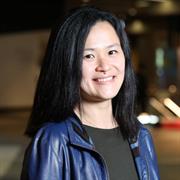
Joel Dyer is a Senior Research Fellow at the Oxford Institute for New Economic Thinking and a Senior Research Associate at the University of Oxford's Department of Computer Science. He holds a DPhil in computational statistics and machine learning from the University of Oxford’s Mathematical Institute. His research focuses on agent-based simulation models, likelihood-free parameter inference, and simulation-based planning under uncertainty. Affiliations: University of Oxford (Department of Computer Science), Oxford Institute for New Economic Thinking Education: DPhil in Computational Statistics and Machine Learning, Mathematical Institute, University of Oxford Research Interests: Agent-based modelling Bayesian inference and likelihood-free methods Monte Carlo simulation Simulation-based optimization and planning Research Contributions: His work bridges computational statistics and economic modeling, emphasizing scalable inference techniques for complex systems. Recent efforts include surrogate modeling for simulation optimization and path signatures for time-series analysis. Labs/Teams: Part of the Complexity Economics Programme at Oxford INET and collaborates with institutions like the Alan Turing Institute and Improbable.
Francesca Spezzano is an Associate Professor in the Computer Science Department at Boise State University, part of the College of Engineering. She holds a Ph.D. in Computer Science Engineering from the University of Calabria, Italy (2012), with postdoctoral research at the University of California Santa Cruz and the University of Maryland Institute for Advanced Computer Studies. Her research focuses on social network analysis, misinformation detection, information diffusion, and national security, with emphasis on applying machine learning and graph-based methods to combat online deception. Education: Ph.D. in Computer Science Engineering, University of Calabria, Italy (2012) Visiting Scholar, UC Santa Cruz Database Group (2010–2011) Postdoctoral Research Associate, University of Maryland (2013–2015) Research Interests: Misinformation detection and mitigation Social network analysis and mining Graph databases and link prediction National security applications Awards & Grants: NSF CAREER Award (2020) for studying misinformation diffusion Funding from the National Science Foundation, U.S. Army Research Office, and National Security Agency Service & Leadership: General Chair of WSDM 2026, CIKM 2024, and MISDOOM 2022 PC Co-Chair of ASONAM 2019 and FOSINT-SI 2020 Recipient of the Best Paper Award at FOSINT-SI 2018
Robert Peharz is an Assistant Professor at Graz University of Technology, where he leads research at the Institute of Machine Learning and Neural Computation. His work focuses on probabilistic machine learning, with particular emphasis on tractable probabilistic models, causality, and neurosymbolic AI. Education and Career PhD from TU Graz (Austria) in 2015 Postdoc at Medical University of Graz Postdoc and Marie-Curie Individual Fellow at University of Cambridge (2017-2019) Assistant Professor at Eindhoven University of Technology (2019-2021) Current: Assistant Professor at Graz University of Technology Research Interests Peharz's research spans multiple areas of artificial intelligence with a focus on making probabilistic reasoning both theoretically sound and practically efficient. His work addresses fundamental challenges in tractable probabilistic inference and learning, probabilistic circuits as a unified framework for deep generative models, Bayesian causal inference, and neurosymbolic AI combining sub-symbolic and symbolic approaches. His research has applications in cybersecurity, healthcare, and energy systems. Research Projects VENTUS (2024-present): Physics-informed, probabilistic and causal machine learning for wind energy systems NEO DNA (2023-present): DNA-based data storage systems using computer vision and probabilistic ML VanillaFlow (2023-present): AI-guided development of novel vanillin-based molecules for redox flow batteries Bilateral AI : Cluster of Excellence focused on Broad AI combining sub-symbolic and symbolic AI approaches Awards and Recognition Finalist for TUG's Excellent Teaching Award (2023) for all 3 of his courses Marie-Curie Individual Fellow at University of Cambridge Academic Service Peharz is actively involved in the academic community through conference organization and reviewing: Area Chair: UAI (2022), ECML/PKDD (2022) Senior Committee Member: UAI (2021), IJCAI (2019, 2020) Reviewer for major conferences including ICML, NeurIPS, AAAI, IJCAI-ECAI Teaching and Mentorship Peharz supervises multiple PhD students working on diverse projects at the intersection of machine learning, causality, and neurosymbolic AI. His current advisees include Sepideh Adamiat, Irina Dobrianski, Johannes Exenberger, Giacomo Di Gobbi, Tim d'Hondt, Christian Toth, and Thomas Wedenig. Previous students include Alvaro Correia, Martin Trapp, and David Montalvan.
Dr. Ernesto Jiménez-Ruiz is a Senior Lecturer in Artificial Intelligence and Director of Research at City, University of London. He holds a PhD from Jaume I University, Spain (2010), and has held academic positions since 2010. His research focuses on knowledge graphs, ontology alignment, semantic web technologies, and neuro-symbolic AI. Currently, he teaches modules on semantic web technologies and research methods. He leads the Research Center affiliated with City St George's, University of London. Administrative Roles: Director of Research (2024–present), Senior Tutor for Research (2023–2024) Research Interests: AI, knowledge representation, ontology alignment, semantic integration, and biomedical informatics. His work bridges machine learning and symbolic reasoning, with contributions to ontology matching and knowledge graph embeddings. He supervises PhD students in areas like knowledge graph alignment and neuro-symbolic systems. Awards: SWSA Ten-Year Award (2021) for influential ontology alignment work. He is a Fellow of AdvanceHE (FHEA). Grants & Collaborations: Leads projects on semantic industrial data modeling and collaborates with Samsung Research UK, Bosch, and Statoil. Active in initiatives like the Turing Institute's Knowledge Graph Interest Group.
Yashar Hezaveh is an Associate Professor at the University of Montreal's Faculty of Arts and Sciences, Department of Physics. He holds the Canada Research Chair in Astrophysical Data Analysis and Machine Learning. His work focuses on using gravitational lensing and machine learning to map dark matter distributions in galaxy halos, advancing our understanding of dark matter's nature. He completed his PhD at McGill University in 2013, earning recognition for groundbreaking research on high-redshift dusty star-forming galaxies. Education: PhD in Physics (McGill University, 2013) Affiliations: Kavli Institute for Theoretical Physics, Flatiron Institute's Center for Computational Astrophysics Research interests include applying deep learning to analyze gravitational lensing data, Bayesian neural networks for dark matter mapping, and cosmological simulations. Notable projects include the CASTOR mission and advances in radio interferometry image reconstruction. His work bridges astrophysics and machine learning, addressing challenges in cosmic structure analysis. Awards: Hubble Fellowship (2015), Top 10 Quebec Science Discoveries (2013). Grants: Leads multiple projects on dark matter, AI-driven stellar mass measurement, and astrophysical data analysis funded by NSERC, FQRNT, and the Simons Foundation. Students: Supervised four Master's theses on topics like Bayesian lensing inversion and machine learning for galactic archaeology. He contributes to collaborative initiatives like the Centre de recherche en astrophysique du Québec (CRAQ), fostering interdisciplinary astrophysics research.
Jeff Heflin is an Associate Professor in the Department of Computer Science and Engineering at Lehigh University, and Director of the Cognitive Science Program. He holds a PhD from the University of Maryland, College Park, and a B.S. from The College of William and Mary. His research focuses on AI for Data Management, Scalable Reasoning, and Data Exploration, with significant contributions to Semantic Web technologies like SHOE, DAML+OIL, and OWL. Education: Ph.D. in Computer Science, University of Maryland, 2001 M.S. in Computer Science, University of Maryland, 1999 B.S. in Computer Science, The College of William and Mary, 1992 Research Interests: Heflin’s work advances Semantic Web infrastructure, including ontology development, scalable reasoning systems, and data integration. His contributions include foundational benchmarks like LUBM and innovations in entity matching (DAME), table search (StruBERT), and neural-augmented logical reasoning. Awards: Winner of the Billion Triple Challenge (ISWC 2012) Best Paper Award, ISWC 2004 Ruth and Joel Spira Award for Excellence in Teaching (2017) Service & Leadership: Served as Vice-President of the Semantic Web Science Association (SWSA), Editorial Board member of the Artificial Intelligence Journal , and General Chair of ISWC 2017. Active in conference organization (CIKM 2020, COLING 2022) and journal special issues on Semantic Web evaluation. Labs & Collaborations: Leads the Semantic Web and Agent Technologies (SWAT) Lab at Lehigh, focusing on AI-driven data management and scalable reasoning systems. Collaborates on NSF-funded projects like CRISPS (cell-centric image similarity search) and Domain-Agnostic Dataset Search.
Defang Chen is a Researcher and Postdoctoral Associate in the Department of Computer Science and Engineering at the University at Buffalo, working under the supervision of Siwei Lyu. He is affiliated with the School of Engineering and Applied Sciences and is based at 301A Davis Hall in Buffalo, NY. His research focuses on advanced machine learning techniques, including knowledge distillation, diffusion models, graph neural networks, and domain generalization. Defang's work emphasizes improving model efficiency through distillation methods, exploring generative models like diffusion processes, and enhancing cross-domain adaptability. His contributions span both theoretical advancements and practical applications, such as accelerating diffusion sampling and optimizing neural network architectures. His publications between 2023–2025 highlight trends in model compression, generative AI, and graph-based learning. Notable themes include refining knowledge transfer between models, improving adversarial robustness, and developing scalable sampling techniques. Defang’s research has implications for computer vision, natural language processing, and semantic segmentation. No academic awards or grants are explicitly listed in the provided information. While no formal advisees are noted, his role as a postdoctoral researcher suggests collaborative involvement in academic projects and teams. Defang’s work is accessible via his Google Scholar profile .
Alex Kontorovich is a Distinguished Professor of Mathematics at Rutgers University, where he holds the academic rank of Professor. His primary affiliation is with the Department of Mathematics, School of Arts and Sciences. He currently serves as Managing Editor of the Journal of the Association for Mathematical Research and is Executive Director of Rutgers MathCorps . During the 2024-2025 academic year, he is on leave, visiting Princeton University and the Institute for Advanced Study (IAS). Kontorovich's research focuses on automorphic forms, homogeneous dynamics, harmonic analysis, and number theory, with interdisciplinary connections to data science and machine learning. His work bridges pure mathematics with computational aspects, including sphere packing geometry and arithmetic dynamics. He has held distinguished visiting roles, such as the 2020-21 Distinguished Visiting Professor for the Public Dissemination of Mathematics at the National Museum of Mathematics (MoMath), where he contributed to academic content and exhibits. His academic career includes teaching advanced courses like Graduate Complex Analysis, Automorphic Representations, and History of Mathematics. Notable awards include the Simons Foundation Fellowship, von Neumann Fellowship at IAS, and Alfred P. Sloan Research Fellowship. Grants include multiple NSF awards (regular, CAREER, FRG) and a Binational Science Foundation grant. His research explores topics like spectral gaps, thin groups, and applications of modular forms to equidistribution problems. Kontorovich’s scholarly contributions extend beyond academia: he serves on the Scientific Board of Quanta Magazine , advises the Lean Focused Research Organization , and participates in editorial and strategic roles across institutions. His work emphasizes the interplay between theoretical mathematics and computational methods, shaping modern research in number theory and dynamics.
Mahsa Salehi is a Senior Lecturer in the Department of Data Science & AI at Monash University’s Faculty of Information Technology. She holds a PhD in Computer Science from the University of Melbourne and previously served as a postdoctoral researcher at IBM Research Australia. Her research focuses on data mining, machine learning, and time series analysis, with applications in healthcare, cybersecurity, and smart grids. Education: PhD in Computer Science, University of Melbourne (2016) MSc in Software Engineering, Amirkabir University of Technology (2009) BSc in Information Technology & Computer Engineering, Amirkabir University of Technology (2008/2006) Her key research interests include multi-dimensional time series analysis, anomaly detection, brain-inspired machine learning, and non-stationary data learning. She has led or contributed to over 40 research outputs, including high-impact papers on anomaly detection frameworks (e.g., CARLA) and EEG representation learning (EEG2Rep). Her work bridges theoretical advancements with practical applications, such as detecting urinary anomalies in seniors and securing smart grid systems against cyberattacks. Dr. Salehi has secured significant grants, including AU$246K from ARENA (2019–2021) and AU$30K from Emotiv Research (2022–2024). She is an Associate Editor of the ACM Transactions on Knowledge Discovery from Data and has been recognized with awards like the ICDM 2022 Best Paper Runner-Up and IBM’s Manager’s Choice Award (2016). Grants & Projects: Privacy-Preserving Machine Learning (CSIRO Next Gen, 2023–2027) AI for Clean Energy & Sustainability (Monash, 2023–2027) Deep Learning for Brain EEG Analysis (PhD Top-Up, 2022–2025) Her contributions extend to editorial and patent activities, including roles at IBM Research and collaborative projects with industry partners like Emotiv.
Jennifer Tang is a Postdoctoral Associate at the Massachusetts Institute of Technology (MIT), holding dual appointments in the Institute for Data, Systems, and Society (IDSS) and the Laboratory for Information and Decision Systems (LIDS). She conducts her research under Professor Ali Jadbabaie, focusing on interdisciplinary problems at the intersection of information theory, network science, and social dynamics. Her position is temporary as she actively seeks a permanent academic role through the 2025 job market. Her academic credentials include: Ph.D. in Electrical Engineering and Computer Science from MIT, advised by Professor Yury Polyanskiy Bachelor of Science in Engineering (B.S.E.) in Electrical Engineering from Princeton University, with independent work supervised by Paul Cuff Dr. Tang's research program centers on theoretical and applied aspects of information theory, including channel capacity, quantization, and data compression. She investigates prediction and estimation in high-dimensional settings, data analytics for complex systems, and mathematical modeling of social dynamics and inference in multi-agent networks. Her work employs tools from statistics, optimization, and network theory to address challenges in communication, decision-making, and societal systems, with particular emphasis on opinion dynamics under social pressure and efficient representation of probability distributions. Analysis of her publication record reveals consistent contributions to information-theoretic limits, social network modeling, and compression techniques. Her works frequently appear in top venues like IEEE Transactions on Information Theory and major conferences (ISIT, CDC, ACC), demonstrating expertise in bridging theoretical foundations with real-world applications in networked systems and societal challenges. Her scientific achievements have been recognized with: Best Student Paper Award at IEEE International Symposium on Information Theory (ISIT) 2022 Best Student Paper Award at IEEE Machine Learning for Signal Processing (MLSP) 2022 Student Competition Winner at the Shannon Centennial Celebration Dr. Tang maintains an active teaching portfolio, having served as instructor for MIT 1.022: Introduction to Network Models (Spring 2025) and teaching assistant for multiple core courses including 6.008 (Introduction to Inference), 6.041/6.431 (Probabilistic Systems Analysis), 6.437 (Inference and Information), and 6.439 (Statistics, Computation and Applications). She also contributed to the MIT Women's Technology Program as a Mathematics Instructor during summer 2017. Her research is embedded within MIT's Laboratory for Information and Decision Systems (LIDS) and Institute for Data, Systems, and Society (IDSS), two premier interdisciplinary laboratories fostering collaboration on data-driven decision-making, societal challenges, and foundational theory in information and systems.
Kasper Green Larsen is a Professor in the Department of Computer Science at Aarhus University. His research focuses on theoretical computer science, machine learning, algorithms, and data structures. He has made significant contributions to boosting algorithms, PAC learning theory, and computational geometry. His work often bridges algorithm design with complexity theory, addressing challenges in optimization, memory efficiency, and lower bounds analysis. Key research areas include: Algorithmic Learning Theory (e.g., boosting, bagging, and PAC learners) Data Structure Design (e.g., invertible Bloom tables, succinct representations) Computational Complexity (e.g., lower bounds for dynamic and oblivious algorithms) Geometric Algorithms (e.g., hierarchical searching, range queries) Recent publications emphasize foundational advancements in learning theory (e.g., optimal weak-to-strong learning) and data efficiency (e.g., memory-reduced Bloom filters). His work frequently appears in top conferences like IJCAI, ICALP, and SODA, reflecting rigorous theoretical contributions with practical implications.
David Kempe is a Professor in the Thomas Lord Department of Computer Science at the University of Southern California (USC), part of the Viterbi School of Engineering. His research focuses on algorithms, theoretical computer science, and their applications to networks, auctions, mechanism design, and information flow. He has advised numerous Ph.D., M.S., and undergraduate students, many of whom now hold prominent roles in academia and industry. His research has been supported by grants including NSF CAREER, Sloan Fellowship, and ONR Young Investigator awards. Kempe organizes conferences such as STOC 2018 and co-founded the USC Theory Group, fostering collaboration through regular meetings and seminars. His work bridges algorithmic foundations with real-world applications, addressing challenges in fairness, network dynamics, and machine learning. Key achievements include developing voting rules with optimal metric distortion and algorithms for fair matching under uncertainty. His publications span influential topics in social networks, game theory, and data science. Collaborations with industry (e.g., Facebook, Snapchat) highlight applied contributions to recommendation systems and media matching.
Dr Tianning Li is a Lecturer in Computing at the University of Southern Queensland's School of Mathematics, Physics and Computing. Affiliated with the School of Agriculture and Environmental Science, their research focuses on biomedical engineering, signal processing, and machine learning applications in clinical settings. Dr Li holds a PhD from USQ, an MAccFin from Adelaide, and a BISM from Nanjing. Core research interests include EEG signal analysis for anesthesia monitoring and epilepsy detection, with emphasis on developing novel signal processing techniques like spectral entropy analysis, synchroextracting transforms, and federated learning approaches. Their work bridges machine learning innovations with clinical diagnostics, addressing challenges in real-time medical signal interpretation and healthcare data efficiency. Recent publications (2021-2025) emphasize advancements in anesthesia depth assessment algorithms, seizure prediction methodologies, and lossless signal compression. Research trends reflect a strong focus on integrating neural networks (CNN-LSTM, 1D CNN) with traditional signal analysis frameworks to enhance clinical decision-making accuracy. No scientific awards are listed, but Dr Li maintains active research collaborations through affiliations with multiple departments. Supervision activities are not detailed in available records, though their work likely involves student contributions to biomedical computing projects. ORCID: 0000-0001-5142-8654 .
Pablo Calleja is a Research Fellow at the Faculty of Computer Science, Polytechnic University of Madrid (UPM), where he has been a member of the Ontology Engineering Group (OEG) since March 2014. His research focuses on Natural Language Processing (NLP), medical terminology mapping, and legal domain applications. He holds a degree in Computer Engineering from San Pablo CEU University (2013) and has prior industry experience as a software developer at IECISA (2008–2011) and a collaboration grant at the Open Access Classroom, San Pablo CEU University (2011–2013). Key contributions include projects like Drugs4covid for pandemic drug discovery, TermitUp for terminological enrichment, and esT5s , a Spanish text summarization model. His work spans legal knowledge graphs, multilingual compliance systems, and NER techniques for academic content analysis. He has also explored accessibility multimedia services and semantic graph applications in tourism ( DBtravel ). Professional roles include collaboration grants at UPM and active participation in interdisciplinary projects such as SNOMED-CT annotation for medical technical sheets. Research trends emphasize cross-domain adaptation (e.g., K-Flares), data augmentation (Widaug), and multilingual NLP solutions. Advising and grants: His current position is supported by a collaboration grant at OEG. Earlier grants include work at San Pablo CEU University. No formal advisees are listed, but he contributes to collaborative research teams. Labs and teams: Core member of the Ontology Engineering Group (OEG), focusing on knowledge representation, NLP, and applied informatics in healthcare and law domains.
Flora Salim is a Professor in the School of Computing Technologies at RMIT University. She serves as co-Deputy Director of the RMIT Centre for Information Discovery and Data Analytics (CIDDA) and an Associate Investigator of the ARC Centre of Excellence in Automated Decision Making and Society. Her research focuses on human behavior modeling, machine learning with time-series and spatio-temporal data, and edge AI applications in IoT and wearables. Flora has secured over $10M in research funding from ARC, industry partners, and government bodies. Notable awards include the 2021 PACM IMWUT Distinguished Paper Award, 2019 Humboldt-Bayer Fellowship, and RMIT's 2018 Research Impact Award. She leads the CRUISE research group and has held visiting professorships at the University of Kassel and University of Cambridge. Editorial roles: Associate Editor of PACM on IMWUT, Area Editor of Pervasive and Mobile Computing Steering Committee member of ACM UbiComp Her work bridges ubiquitous computing and machine learning, with applications in urban analytics, mobility, and health monitoring. Recent projects include self-supervised learning for multimodal data and forecasting with heterogeneous time-series. Supervision areas: Deep learning for sensor data, explainable AI, and wearable-based emotion sensing Teaching programs: Master of Artificial Intelligence and Master of Data Science