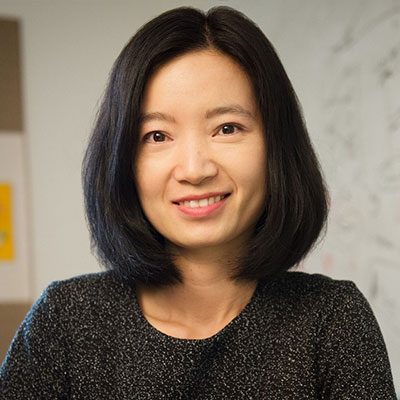
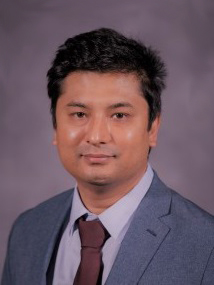
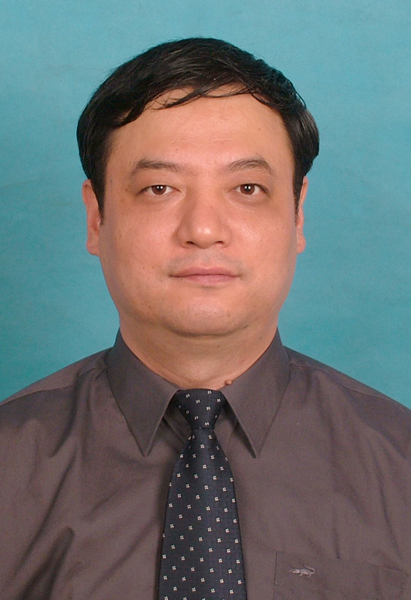
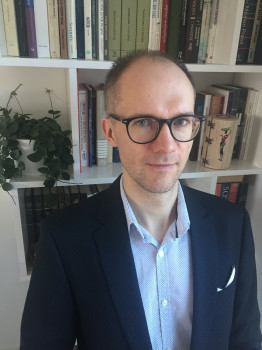
Wenhao Ding is a Research Scientist at NVIDIA's Autonomous Vehicle Group, focusing on enhancing the safety and robustness of physical autonomous systems, particularly autonomous vehicles. His research integrates multi-modal large language models, reinforcement learning, and causal discovery to improve model reasoning capabilities. He holds a Ph.D. from Tsinghua University's Department of Electronic Engineering, with a thesis on 'Generative AI for Critical Digital Twins.' Key research interests include safety-critical scenario generation, causal representation learning, and offline reinforcement learning. His work emphasizes closed-loop simulation for autonomous systems and has led to contributions like the SafeBench benchmarking platform and the RealGen scenario generation framework. He has received the 2022 Qualcomm Innovation Fellowship. Notable collaborations include projects with Prof. Marco Pavone at Stanford and internships at Amazon Lab126 (Astro team) and Bosch Center for AI. He actively reviews for top conferences (ICML, NeurIPS, CVPR) and journals (IEEE T-ITS, RA-L). His recent focus on privacy risks in robotics and causal-aware driving models underscores his commitment to trustworthy AI systems. He organizes conferences like the 2024 IEEE International Automated Vehicle Validation Conference and co-hosted the Secure and Safe Autonomous Driving (SSAD) Workshop at CVPR 2023. His interdisciplinary work bridges theory and practice, addressing critical challenges in autonomous systems' safety and generalization.
Guodong Shi is Associate Professor at the University of Sydney's Australian Centre for Robotics, heading the Centre for Robotics and Intelligent Systems. His research develops theoretical frameworks for multi-agent coordination, distributed optimization, and networked control systems. Current projects investigate collective decision-making under information constraints, privacy-preserving optimization, and game-theoretic formulations for social and robotic networks. His group develops algorithms for distributed solution of linear equations, Boolean networks, and equilibrium seeking. Doctoral supervision includes projects on acrobatic legged robots, reinforcement learning for robotic stability, and safe control under dynamic environments. Laboratory capabilities support theoretical and experimental validation. Research has applications in autonomous swarm robotics, smart grid optimization, and social network analysis. Teaching includes graduate courses on networked systems and optimization.
Professor Yizhou Sun is affiliated with the University of California Los Angeles (UCLA) and the Henry Samueli School of Engineering and Applied Science . Her academic work focuses on Machine Learning , Artificial Intelligence , and Graph Neural Networks within the Computer Science department. Her research spans High-Level Synthesis , Causal Inference , and Computational Biology , with recent publications addressing neural network compression, language model safety, and dynamical system modeling. The trends in her recent 2025 and 2024 publications emphasize Deep Learning , Graph Theory , and Language Model Optimization , reflecting interdisciplinary applications in Biomedical Data , Hardware Design , and Physical Simulation .
Dr. Arpan Man Sainju is an Assistant Professor and Internship Coordinator in the Department of Computer Science at Middle Tennessee State University (MTSU). He holds a PhD (2021) and MS (2020) from the University of Alabama, and a B.E. (2011) from Tribhuvan University. His research focuses on spatial big data analytics, spatiotemporal data mining, and GIS applications in environmental modeling, disaster management, and geospatial science. He develops innovative algorithms for Earth imagery segmentation, flood inundation mapping, and physics-aware machine learning models. Education: PhD in Computer Science, University of Alabama (2021) MS in Computer Science, University of Alabama (2020) B.E. in Computer Science, Tribhuvan University (2011) Key research interests include deep learning for geospatial tasks, semi-supervised learning with limited labels, and parallel computing for big spatial data. His work bridges computer science and environmental science, addressing challenges in hydrology, urban safety, and disaster response. He has published extensively in top journals like ACM TIST, IEEE TKDE, and Environmental Modelling & Software, focusing on applications like flood modeling, road safety analysis, and 3D shape analysis. Dr. Sainju collaborates on interdisciplinary projects involving physics-guided models, hidden Markov structures, and GPU-accelerated algorithms. His research has been applied to real-world scenarios such as hurricane flood analysis and malware detection through Windows log analysis.
Prof. Maosong Sun is a Professor at the Department of Computer Science and Technology, Tsinghua University, China. He holds additional leadership roles including Executive Vice Dean of the Institute for Artificial Intelligence and Deputy Director of the National Engineering Laboratory for Cyberlearning and Intelligent Technology. His research focuses on natural language processing (NLP), artificial intelligence, machine learning, and computational education. He leads interdisciplinary projects in computational humanities, knowledge graphs, and MOOC platforms like XuetangX, which has over 58.8 million registered learners. Key contributions include pioneering work in Chinese NLP tools, poetry generation systems like Jiuge, and large-scale research initiatives funded by Chinese and Singaporean programs. Awards include the Tsinghua University Education Award (2019) and the National Outstanding Practitioner Award (2007). Established NLP and Computational Humanities & Social Sciences Lab (2008) Co-director of the Joint Research Center for Extreme Search (2011-present) Over 200 publications with 11,000+ citations (h-index 47)
Dr. Teresa Wang is a Senior Lecturer in Data Science at Monash University's Faculty of Information Technology, specializing in entity/user modeling, relational/structural machine learning, and graph/network analysis. She holds a Ph.D. from the University of Queensland and degrees from Nanjing University. Currently, she directs the Master of Data Science Program and teaches courses like FIT5201 Machine Learning. Her research focuses on social, e-commerce, and health data modeling, with notable projects including the Knowledge Enriched Approach for Effective Personalization (2025–2027) and collaborations on AI in Mental Health and Site Safety. Dr. Wang has co-authored over 59 publications, emphasizing areas like ontology matching and multimodal data analysis. She actively supervises PhD students and contributes to initiatives like the CSIRO Next Generation Graduates Program for clean energy and sustainability. Education: Ph.D. in Computer Science (2017), University of Queensland Master of Computer Science (2013), Nanjing University Bachelor of Software Engineering (2010), Nanjing University Research Interests: Entity modeling, spatio-temporal data analysis, graph mining, recommender systems, and health/medical records mining. She explores applications in social media, e-commerce, and healthcare sectors. Projects: "Knowledge Enriched Approach for Effective Personalization" (2025–2027) "AI for Clean Energy and Sustainability" (2023–2027) "CSIRO Next Generation Graduates Program: AI in Mental Health" (2023–2027) "Large-scale multimodal knowledge management" (2022–2025) Grants & Collaborations: Engaged with CSIRO, Crank Group, and Pola Practice Pty Ltd. Her work aligns with UN SDGs in education and sustainable energy systems. Labs/Teams: Part of the Monash Energy Institute and Monash Data Futures Institute, contributing to interdisciplinary AI and energy research.
Elena Grigorescu is a Professor at the University of Waterloo, Department of Computer Science. She holds a Ph.D. from the Massachusetts Institute of Technology (2010), an M.S. from MIT (2006), and a B.A. from Bard College (2004). Her research focuses on sublinear-time algorithms, error-correcting codes, computational complexity, and learning theory. She explores foundational aspects of algorithms with constraints on time/space, privacy-preserving computation, and applications in graph theory and optimization. Her work includes advancements in spanner algorithms for network design, differential privacy in sublinear-time settings, and learning-augmented approaches for online optimization. Recent publications address trace reconstruction, privacy-utility trade-offs, and combinatorial optimization techniques. Grigorescu is actively involved in conferences like APPROX/RANDOM and IEEE Foundations of Computer Science, contributing to algorithmic theory and practical implementations. Her research emphasizes theoretical rigor while addressing real-world challenges in data analysis and distributed systems. No awards or formal advisees are explicitly listed in the provided information.
Dr Valdas Noreika is a Senior Lecturer in Psychology at the School of Biological and Behavioural Sciences, Queen Mary University of London. He serves as Head of The Centre for Brain and Behaviour and leads the Sleep and Cognition Lab. His work bridges cognitive neuroscience, psychology, and clinical applications, with a focus on understanding consciousness and its disorders. Dr Noreika's educational background includes: BA in Philosophy from Vilnius University, Lithuania MSc in Neurobiology from Vilnius University, Lithuania PhD in Psychology from the University of Turku, Finland, focusing on altered states of consciousness and temporal distortions Dr Noreika's research explores the cognitive and neural mechanisms underlying sleep, dreaming, and consciousness. Using techniques including electroencephalography (EEG), transcranial magnetic stimulation (TMS), and psychophysics, his work investigates both basic mechanisms of consciousness and their applications to neurodevelopmental and mental health conditions. His research spans multiple domains including time processing, inter-brain synchronization across species, and environmental decision-making. A key aspect of his work involves translational research focusing on sleep, subjective experiences, and well-being in conditions such as learning disabilities, ADHD, autism, and depression. Analysis of Dr Noreika's recent publications reveals a strong focus on consciousness studies, neural mechanisms of sleep and dreaming, and applications to neurodevelopmental conditions. His work frequently employs EEG and other neuroimaging techniques to study brain activity during various states of consciousness. Recent trends show increasing emphasis on inter-brain synchronization, particularly in infant-parent interactions and cross-species communication, as well as growing interest in environmental psychology and climate change-related decision making. Dr Noreika has secured significant research funding including: The neural basis of inter-species communication - £155,098 from the Biotechnology and Biological Sciences Research Council (2024-2026) Sleep and circadian interactions with sensory sensitivity in adults with intellectual disabilities - £103,229 from the Baily Thomas Charitable Fund (2023-2025) As a supervisor, Dr Noreika advises multiple PhD students working on diverse topics including Alzheimer's disease diagnosis using information theory, emotion recognition, thermal sensation in Parkinson's disease, cultural differences in cognitive processes, and time processing. His Sleep and Cognition Lab serves as a hub for interdisciplinary research bridging neuroscience, psychology, and clinical applications. Dr Noreika leads the Sleep and Cognition Lab at Queen Mary University of London, which focuses on investigating the neural mechanisms of sleep, dreaming, and consciousness. The lab brings together researchers from diverse backgrounds to study both fundamental aspects of consciousness and their applications to clinical populations. Current projects include investigations of sleep and sensory sensitivity in adults with learning disabilities and human-dog interaction studies.
Dr. Michael Gubanov is an Assistant Professor in Computer Science at Florida State University and founder of BigLab!, specializing in scalable data systems for scientific knowledge discovery. Research: Develops hybrid polystore/LLM systems for cancer research (CancerKG.ORG), COVID-19 knowledge graphs (COVIDKG.ORG), and aging studies (AgingGraph.ORG). Focuses on metadata classification, tabular embeddings, and web-scale knowledge extraction. Funding: Secured $1.8M+ from NSF, Florida Department of Health, and AWS for projects bridging data management and AI. Awards: IEEE ICDE Best Paper (2017), ACM SIGMOD Research Highlight (2018), CACM Research Highlight (2020). Elected to Sigma Xi. Education: PhD in Computer Science (University of Washington); Postdoc at MIT CSAIL.
Fattane Zarrinkalam is an Assistant Professor in the School of Engineering at the University of Guelph. She holds a PhD from Ferdowsi University of Mashhad, Iran, and completed a Postdoctoral Research Fellowship at Ryerson University (2018–2020). Her research focuses on social media mining, semantic technologies, and user modeling, with applications in healthcare, legal tech, and e-commerce. She is a Vector Institute Postgraduate Affiliate and serves on editorial boards for journals like Information Processing & Management and IEEE Transactions on Network Science and Engineering . Her work emphasizes actionable insights from social data, including sarcasm detection, user interest prediction, and fairness in social media analytics. Zarrinkalam has contributed to over 30 peer-reviewed publications and holds multiple patents in data analysis and social media sentiment modeling. Education: PhD, Ferdowsi University of Mashhad, Iran Postdoctoral Fellowship, Ryerson University Research Scientist, Thomson Reuters Labs Research Interests: Semantic interpretation of social content User modeling via temporal analysis Social good applications (e.g., mental health, telecommunication) Fairness in social media mining Recent Work Trends: Her articles span network representation learning, dynamic user interest prediction, and interdisciplinary applications. Notable themes include neural networks for sarcasm detection, heterogeneous graph embeddings, and leveraging Twitter data for psychological insights. Awards & Service: Co-chair, International Workshop on Mining Actionable Insights from Social Networks (MAISoN) Editorial board roles for top journals Labs & Teams: Involved in interdisciplinary collaborations at the Vector Institute and partnerships with industry on legal tech and social analytics projects.
Guido Montúfar is a Professor in the Departments of Mathematics and Statistics & Data Science at the University of California, Los Angeles (UCLA), effective since 2024. He also leads the Mathematical Machine Learning Group at the Max Planck Institute for Mathematics in the Sciences (MPI MIS) in Leipzig, Germany since 2018. His academic journey includes a PhD in Mathematics from Leipzig University (2012), and Diplom degrees in Physics and Mathematics from TU Berlin (2009 and 2007). Montúfar's research focuses on the theoretical foundations of deep learning, mathematical machine learning, and the interplay between geometry and learning. Key areas include neural network architecture theory, optimization landscapes, and information geometry. His work bridges algebraic statistics, graphical models, and topological data analysis. His grants and awards include an ERC Starting Grant (2018-2023), a Sloan Research Fellowship (2022), and an NSF CAREER Award. He has advised numerous PhD students and postdocs, contributing to significant advancements in machine learning theory and applications. Montúfar teaches courses on applied mathematics, optimization, and machine learning at UCLA. His research also explores topics like oversquashing in graph neural networks and the geometry of policy gradients in reinforcement learning.
John Voight is a Professor of Mathematics at the University of Sydney, affiliated with the School of Mathematics and Statistics. He holds a Ph.D. from UC Berkeley (2005) and has held academic positions at the University of Sydney, University of Minnesota, University of Vermont, and Dartmouth College. His research focuses on arithmetic algebraic geometry, number theory, and computational aspects of these fields, including modular forms, elliptic curves, and quaternion algebras. Education: Ph.D. in Mathematics, UC Berkeley (2005); earlier studies include a focus on classical piano and liberal arts at Gonzaga University. Professional trajectory includes postdoctoral roles at the University of Sydney and University of Minnesota, followed by faculty appointments at the University of Vermont (2006–2013) and Dartmouth College (2013–present). Research Interests: Arithmetic algebraic geometry: modular curves, Shimura varieties, moduli spaces, and algorithmic methods Number theory: algebraic number theory, quadratic forms, cryptography, and coding theory Computational mathematics: modular forms, quaternion algebras, and database construction (e.g., LMFDB) Publications and Recognition: Over 90 peer-reviewed articles, including contributions to Contemp. Math. , Math. Comp. , and Res. Number Theory . Recipient of the Selfridge Prize in Number Theory and recognized for teaching excellence at Dartmouth. Leads projects on Hilbert modular forms and paramodular abelian surfaces. Teaching and Mentorship: Emphasizes student-centered learning and the integration of liberal arts with STEM. Advises students on topics ranging from elliptic curves to cryptography. Active in curriculum design and promoting computational tools in mathematics education. Labs/Teams: Collaborates with the L-Functions and Modular Forms Database (LMFDB) project, contributing to computational frameworks for algebraic geometry and number theory.
Vijini Mallawaarachchi is a Research Fellow in Bioinformatics at Flinders University's Flinders Accelerator for Microbiome Exploration (FAME). His research focuses on developing computational methods for metagenomic analysis, particularly viral genome recovery from metagenomes. He holds a PhD in Computer Science from the Australian National University (2022) and a BSc in Computer Science and Engineering (Honours) from the University of Moratuwa, Sri Lanka (2018). Education: Doctor of Philosophy (Computer Science), Australian National University, 2018–2022 Bachelor of Science (Computer Science & Engineering, Honours), University of Moratuwa, 2014–2018 Research Interests: Metagenomics, algorithms for genome recovery, bacteriophage discovery, machine learning applications in bioinformatics, and software engineering for computational biology. His work emphasizes leveraging assembly graphs and computational models to analyze microbial communities and viral genomes. Grants & Awards: 2025: National Computational Merit Allocation Scheme Grant (Co-CI) - A$412,000 2025: ARC Discovery Projects Grant (Co-CI) - A$685,781 2024: Outstanding PhD Thesis Award (ABACBS) 2023: Australian Society for Microbiology Early Career Award Professional Engagement: Active member of ISMB, ISVM, ACM, IEEE, ABACBS, ASM, and RSE AU/NZ. Supervises HDR and Honours students in bioinformatics and computational biology. Labs & Tools: Leads projects at FAME, developed tools like GraphBin, Phables, and ConDiGA for metagenomic analysis. Collaborates on open-source initiatives like the cogent3 Python APIs.
Habeeb Olufowobi is an Assistant Professor in the Department of Computer Science and Engineering at the University of Texas at Arlington (UTA), where he leads the Cyber-Physical System Security Lab. He holds a PhD in Computer Science from Howard University (2019) and previously served as a Lecturer at Howard before joining UTA in 2020. His research is centered on the security and trustworthiness of embedded and distributed systems, particularly in the domains of autonomous vehicles, IoT, and healthcare AI. He investigates cybersecurity challenges at the hardware-software interface in real-time systems and develops AI/ML models that are transparent, explainable, and equitable. His interdisciplinary work integrates principles from cybersecurity, real-time systems, and machine learning. The recent publications reflect a strong trend in securing cyber-physical systems using advanced AI techniques, with emphasis on intrusion detection, secure communication (e.g., named data networking), and robustness of autonomous systems. His work frequently appears in top-tier venues such as IEEE Transactions, VehicleSec, and ICMLA. Project Management Professional (PMP), PMI (2012–Present) Member, Institute of Electrical and Electronics Engineers (IEEE) (2020–Present) Habeeb has secured significant research funding, including an NIH grant on ethical AI for Chagas disease prediction and an AIM-AHEAD grant focused on health equity. He mentors several graduate students, including Paul Agbaje and Afia Anjum, who have received awards and internships at prestigious institutions like Los Alamos National Laboratory. He teaches courses in cloud computing, embedded systems, and information security, and serves as a faculty advisor for the National Society of Black Engineers (NSBE) at UTA. His lab, the Cyber-Physical System Security Lab, focuses on developing scalable and reliable security solutions for critical infrastructure, with growing emphasis on healthcare applications and fairness in algorithmic decision-making.
Yen-Chi Chen is an Associate Professor in the Department of Statistics at the University of Washington. He also holds positions as a Data Science Fellow at the UW eScience Institute and as a co-investigator and statistician at the National Alzheimer's Coordinating Center. His academic career spans multiple interdisciplinary fields including statistics, data science, and astrostatistics. Chen's educational background includes a Ph.D. from Carnegie Mellon University, where he received prestigious awards including the Umesh K. Gavasakar Thesis Award (2017) and the William S. Dietrich II Presidential Ph.D. Fellowship Award (2015). His research focuses on nonparametric statistics, topological data analysis, missing data methodologies, cluster analysis, manifold learning, and applications in large-scale structure analysis and astrostatistics. Chen has made significant contributions to the development of statistical methods for analyzing cosmic web structures, GPS data, and causal inference with continuous treatments. His work bridges theoretical statistics with practical applications in astronomy, neuroscience, and public health. Analysis of his recent publications reveals a strong emphasis on developing novel statistical frameworks for complex data structures, particularly focusing on density-based methods, manifold learning, and approaches that address challenges in missing data and causal inference without standard assumptions. ASA Noether Early Career Scholar Award, American Statistical Association (2022) CAREER Award, National Science Foundation (2022-2027) Umesh K. Gavasakar Thesis Award, Carnegie Mellon University (2017) William S. Dietrich II Presidential Ph.D. Fellowship Award, Carnegie Mellon University (2015) Chen has advised numerous graduate students across multiple publications, with a focus on developing new statistical methodologies. His research has been supported by major funding agencies including the National Science Foundation and the National Institutes of Health. He is actively involved in several research groups including the UW Geometric Data Analysis Group, the UW Center for Statistics and the Social Sciences, and the National Alzheimer's Coordinating Center.