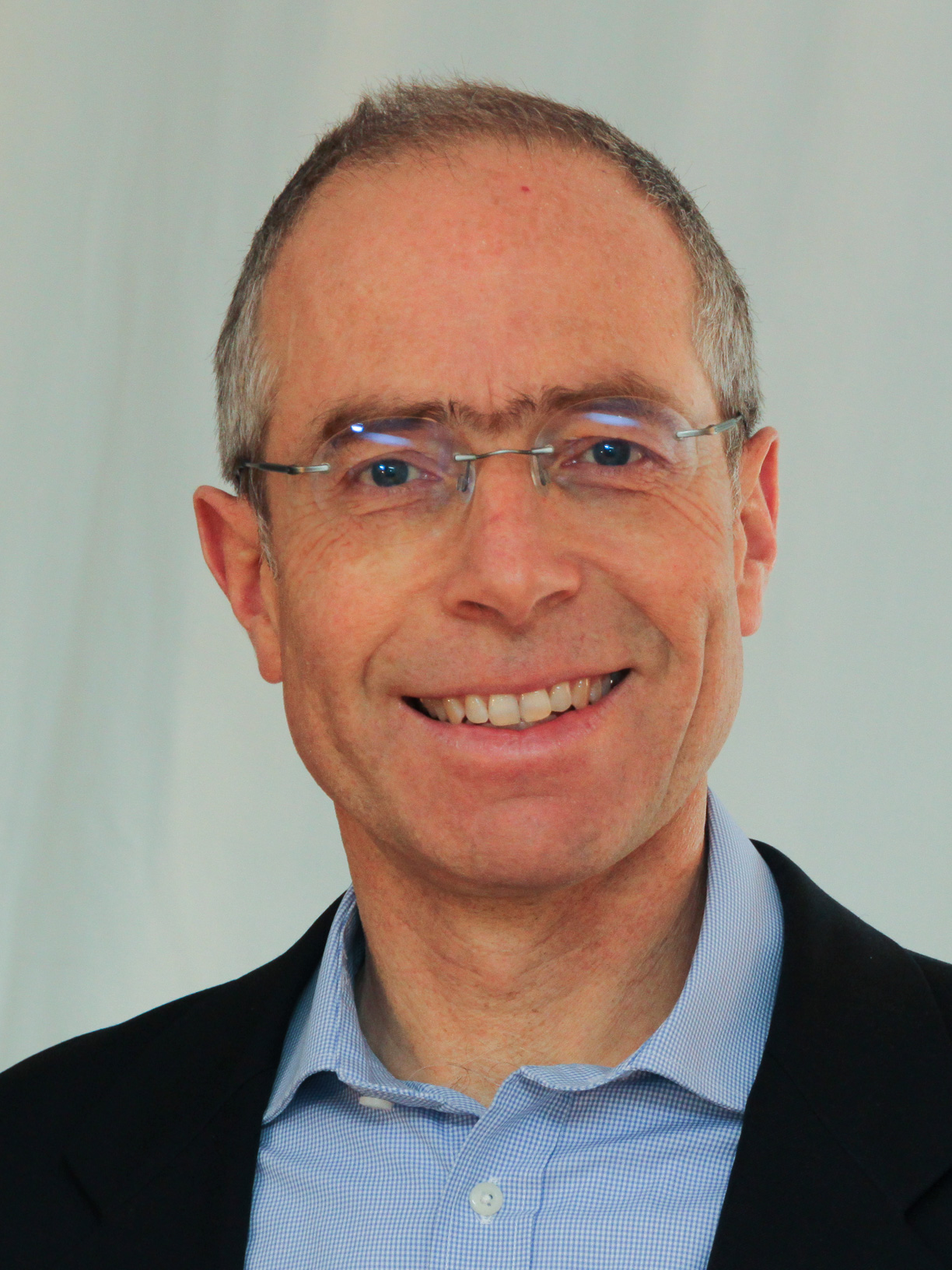
Volkmar Wirth is a full Professor of Theoretical Meteorology and Atmospheric Physics at the Institute for Atmospheric Physics, Johannes Gutenberg-University Mainz. His research focuses on Rossby wave packets, forecast error dynamics, tropopause behavior, mountain meteorology, and tropical cyclone processes. Full Professor since 2000 Specialist in midlatitude waveguidability and extreme weather predictability Active in mountain meteorology (banner clouds) and hurricane dynamics Teaching includes graduate courses on atmospheric hydrodynamics, predictability, and potential vorticity applications. He supervises project assignments involving numerical modeling in FORTRAN-90 and leads meteorology practicals with time series analysis experiments. Recent publications analyze Rossby wave propagation in changing climates, temperature extremes, and waveguide limitations. His group collaborates extensively on "Waves to Weather" predictability research. Current affiliations: Johannes Gutenberg-University Mainz , Institute for Atmospheric Physics.
Jochen Merker serves as Professor for Analysis and Optimization at the Faculty of Computer Science and Media, Leipzig University of Applied Sciences (HTWK Leipzig). His academic profile demonstrates deep expertise in mathematical analysis, numerical methods, and computational mathematics with applications across various scientific domains. Institution: Leipzig University of Applied Sciences (HTWK Leipzig) Faculty: Computer Science and Media Position: Professor for Analysis and Optimization Contact: Available by appointment via email Professor Merker's research spans multiple mathematical disciplines with particular emphasis on partial differential equations, numerical analysis, and mathematical modeling. His work bridges theoretical mathematics with practical applications in fluid mechanics, epidemiology, and machine learning. He has made significant contributions to the understanding of doubly nonlinear evolution equations, positivity preservation in numerical methods, and rate-induced tipping phenomena. His research demonstrates how advanced mathematical techniques can solve complex problems in physical systems and data science. Analysis of his publication trends reveals a consistent focus on mathematical rigor combined with practical applicability. His recent work shows increasing integration of mathematical theory with computational approaches, particularly in digital learning environments and e-assessment systems for STEM education. The interdisciplinary nature of his publications demonstrates how mathematical analysis serves as a foundation for solving problems across physics, engineering, epidemiology, and computer science. Primary research areas: Mathematical Analysis, Numerical Methods, Partial Differential Equations Application domains: Fluid Mechanics, Epidemiology, Machine Learning Methodological focus: Positivity preservation, Maximum principles, Numerical stability Educational contributions: Digital teaching in STEM fields, E-assessment systems Professor Merker actively contributes to the academic community through his research publications and educational initiatives. His work on digital teaching methods for STEM disciplines reflects his commitment to modernizing mathematical education. While specific grant information isn't available in the provided materials, his extensive publication record suggests sustained research activity across multiple projects. His laboratory or research team likely focuses on computational mathematics and numerical analysis, though specific details aren't provided in the source material.
Karthik Sastry is an Assistant Professor of Economics and Public Affairs at Princeton University, affiliated with the Department of Economics and the School for Public and International Affairs. He holds a PhD in Economics from MIT (2022) and was a Prize Fellow in Economics, History, and Politics at Harvard University (2022-23). His research focuses on macroeconomics, particularly the role of bounded rationality, social dynamics, and climate policy in shaping economic fluctuations. He is a Faculty Research Fellow at the National Bureau of Economic Research, contributing to studies on economic fluctuations and environmental economics. His work explores how narratives influence economic behavior and policy, as highlighted in his collaboration with Joel P. Flynn on 'The Macroeconomics of Narratives,' published in the IMF’s Finance & Development. Key publications include analyses of climate adaptation, monetary policy disagreements, and technological adoption in global agriculture. His research has been featured in outlets like the Harvard Gazette and Nature Climate Change. Scientific recognition includes his NBER affiliation and Harvard fellowship. Advising and grants are not explicitly listed, but his collaborative work suggests active engagement with graduate students and interdisciplinary projects. His research lab likely focuses on behavioral and narrative-driven macroeconomic modeling.
Bing Qin is a Researcher specializing in computational linguistics, artificial intelligence, and multimodal learning. Their work focuses on enhancing large language models' capabilities in temporal knowledge graph forecasting, cross-lingual alignment, and safety mechanisms. Core Research Areas: Knowledge graphs, multimodal systems, reasoning frameworks Technical Innovations: Analogical replay, gain signal estimation, cross-modal attention intervention Recent Trends: 2025 publications emphasize training-free methods and preference alignment in LLMs
Dr. Fabian Wunderlich is a Researcher at the German Sport University Cologne, working within the Institute for Training Science and Sports Informatics in the Department of Sports Informatics and Sports Game Research. His office is located in IG II, Room 115, and he can be contacted via email at f.wunderlich@dshs-koeln.de or by phone at +49 221 4982-4845. Previously, he completed his doctoral studies at the same institution. Wunderlich's research focuses on the intersection of sports science and data analytics, with particular emphasis on football/soccer analysis. His work spans several key areas including sports forecasting, machine learning applications in sports, artificial data generation, and the analysis of gambling markets in sports contexts. His research fingerprint shows strong concentrations in forecasting (100%), sport (90%), gambling (44%), and artificial data (44%), reflecting his methodological approach to sports analytics. Analysis of his recent publications reveals a consistent trend toward applying advanced data science techniques to sports performance analysis, particularly in football. His work frequently examines patterns in game events, player movements, and scoring opportunities using machine learning and statistical methods. A significant portion of his research investigates data sparsity issues in sports forecasting and develops methods to handle incomplete datasets through imputation and artificial data generation. Wunderlich has been actively involved in multiple research projects, including 'Datenbasierte Ansätze zur Analyse von Fußballspielen aus der e-science Perspektive' (ongoing since 2020), 'How does spectator presence affect football?' (a funded project examining home advantage during the COVID-19 pandemic), and 'Nutzung von Big Data Analysen in Vorhersagemodellen im Sport' (2017-2022). His primary collaborator appears to be Daniel Memmert, with whom he has 29 joint publications and 4 joint projects. His work has gained attention in academic circles with 12 readers on Mendeley for some publications and pickup by news outlets, particularly for research on Twitter data analysis during football matches and the effects of spectator presence on performance. Wunderlich's research demonstrates strong connections between theoretical data science approaches and practical applications in sports performance analysis.
Anna-Carolina Haensch is a Lecturer at the University of Munich in the Chair of Statistics and Data Science in Social Sciences and the Humanities and an Assistant Professor at the University of Maryland in the International Program in Survey and Data Science. Her interdisciplinary work bridges statistics, computational social science, and natural language processing, with a focus on methodological innovation in social research. Education: PhD in Sociology, University of Mannheim (2017-2021) M.Sc. in Survey Statistics, University of Bamberg (2014-2017) B.A. in Political Science/Sociology, Ludwig-Maximilians-Universität München (2011-2014) Dr. Haensch's research centers on missing data, synthetic data, and big data applications in social sciences. She develops advanced statistical methods for survey data harmonization, multiple imputation techniques, and leverages natural language processing to analyze complex social phenomena. Her work consistently addresses methodological challenges in social research with practical applications for data collection and analysis. Her recent publications reveal a significant trend toward integrating large language models with traditional survey methodology, exploring how AI can enhance data collection, analysis, and interpretation in social science research. She has made substantial contributions to understanding missing data patterns, developing synthetic data approaches, and examining the societal implications of AI tools across multiple domains including mental health, political science, and housing policy. Scientific Awards: 2022 AAPOR Burns "Bud" Roper Fellow Award 2022 AAPOR Warren J. Mitofsky Innovators Award (as part of CTIS team) 2022 AAPOR Policy Impact Award (as part of CTIS team) 2011-2017 Max-Weber-Programm (undergraduate and graduate stipend) Dr. Haensch actively mentors the next generation of researchers, currently supervising 3 PhD theses on statistical education, machine learning applications in social sciences, and synthetic data generation with LLMs. She has guided approximately 6 master's theses and 15 bachelor's theses at the University of Munich since 2022, with topics primarily related to synthetic data, multiple imputation, and LLM applications. Her teaching spans statistical methods, data science techniques for survey researchers, and specialized topics in big data analysis. She has secured teaching grants including a €20,000 promotion for the RAINER project (R Assistant IN Error Resolution) for 2024-2025 and a €10,000 LMU-NYU Scholarship in 2023. She serves on several important boards including the Eurostat EMOS Board (2024-2026), the Ethics Commission of Faculty 16 at LMU (2023-2025), and as Women's Representative at the Institute for Statistics, LMU (2024-2026). Her collaborative work with the University of Maryland Social Data Science Center and involvement in the Global COVID-19 Trends and Impact Survey demonstrates her commitment to large-scale data collection initiatives and real-time social research.
Karsten Schweikert is a Professor at the Computational Science Hub (CSH) and an affiliate scientist at the Institute for Economics at Stuttgart University of Applied Sciences. He leads the Data and Statistical Consulting module and teaches the Financial Econometrics Seminar . Academic Rank: Professor Department: Institute for Economics Key Affiliation: Computational Science Hub (CSH) His research focuses on econometrics , financial economics , and time series analysis . He specializes in structural breaks, dynamic factor models, cointegration, and market microstructure. Recent work includes studies on integrated variance estimation, price discovery mechanisms, and urban crime forecasting. The 15 most recent publications highlight his expertise in econometric modeling for financial markets, macroeconomic nowcasting, and applied statistics. Key subfields include structural break detection, mixed-frequency data analysis, and market information share estimation. He leads statistical consulting initiatives and teaches advanced econometrics topics. No scientific awards or student advisement information were explicitly mentioned in the provided texts.
Maria Angeles Aragon Angel is a Professor at the Universitat Politècnica de Catalunya (UPC), affiliated with the Departament de Matemàtiques and the gAGE - Grup d'Astronomia i Geomàtica research group. Her work focuses on ionospheric physics, satellite navigation systems, and geodetic applications. She holds a PhD in Aerospace Science and Technology and has contributed extensively to GNSS technology, ionospheric modeling, and educational initiatives in science. University: Universitat Politècnica de Catalunya Key Roles: Researcher, Educator Research Group: gAGE (Astronomy and Geomatics) Her research interests include real-time ionospheric monitoring, GNSS error correction, and the application of machine learning in space weather analysis. She has led projects like IONO-DeCo and contributed to the development of ionospheric correction algorithms for Galileo systems. Publications span domains like ionospheric scintillation detection, neural network-based forecasting, and high-precision positioning techniques. Awards include the Best Presentation Award at an international GNSS conference.
Motagh M. is a Researcher at the Deutsches GeoForschungsZentrum (GFZ) in Potsdam, Germany. With expertise in Remote Sensing and Geodesy , their work focuses on geohazard assessment through satellite-based interferometric techniques. Current research explores land subsidence in Afghanistan and Iran using Sentinel-1 data Developing hybrid machine learning models for landslide susceptibility assessment Pioneering quantum machine learning applications in deformation detection Investigating mining-induced subsidence in Germany's Hambach region Contributing to multi-sensor InSAR integration for complex geological analysis Publications since 2011 demonstrate sustained contributions to: Earthquake source modeling (e.g., Christchurch 2011, Maule Chile 2010) Volcanic deformation studies in Iceland Environmental geoscience applications across three continents Collaborations span institutions in: New Zealand (University of Canterbury, GNS Science) Iran (University of Tehran, K. N. Toosi University) Germany (GFZ Potsdam, Technical University Munich) USA (University of Miami)
Prof. Dr. Andreas Knabe holds the Chair of Public Economics at the Faculty of Economics and Management, Otto von Guericke University Magdeburg. His research focuses on labor market policies, well-being analysis, and social policy economics. Research Interests: Economic and social policy Labor market policy effects Subjective well-being determinants Employment protection economics Minimum wage impacts Household economic behavior Recent Trends: His 15 most recent articles (2025-2018) analyze parental unemployment effects on children, telework well-being, minimum wage policy, gender labor dynamics, and equivalence scale methodologies. Scientific Awards: Teaching Award (2021) Otto von Guericke Teaching Award (2016) Schmölders Award (2013) Best PhD Thesis Award (2008) German Study Award (2007) Best Paper Award (2007) Editorial Roles: Applied Research in Quality of Life (2012-) Review of Economics (2013-) Finanzarchiv/Public Finance Analysis (2013-)
Laure Zanna is the Joseph B. Keller and Herbert B. Keller Professor in Applied Mathematics at New York University, with joint appointments in the Department of Mathematics at the Courant Institute and the Center for Data Science. Her research bridges physical oceanography, climate physics, and machine learning. PhD (2009), Harvard University MSc (2003), Weizmann Institute of Science BSc (2001), Tel Aviv University Her work focuses on understanding the ocean's role in climate systems, combining numerical simulations , turbulence modeling , machine learning , and data-driven approaches to study processes like ocean heat uptake , carbon cycling , and sea level rise . She leads M²LInES, an international collaboration applying scientific machine learning to improve climate models. The 15 most recent publications highlight trends in deep learning for climate emulation , stochastic parameterization , and causal inference in spatiotemporal climate fields . Key areas include mesoscale eddy modeling , air-sea flux uncertainty , and multi-scale climate interactions . Nicholas P. Fofonoff Award (2020), American Meteorological Society Zanna’s leadership in M²LInES and her interdisciplinary approach to climate modeling emphasize the integration of data science and geophysical fluid dynamics . She collaborates with institutions like GFDL and WHOI, advancing methodologies for climate prediction and ocean reanalysis .
Dr. Goratz Beobide Arsuaga is a Research Scientist in Climate Modelling at the University of Hamburg's Faculty of Mathematics, Informatics and Natural Sciences. His research focuses on climate variability, extreme weather events, and predictive modeling, particularly concerning European heatwaves and Atlantic climate systems. Research Interests: Specializes in climate dynamics with emphasis on heatwave mechanisms, ocean-atmosphere interactions, and climate model development. Current investigations include precursor signals for extreme events and decadal climate predictability. Publication Trends: Research demonstrates strong focus on atmospheric dynamics and climate extremes, with recent work advancing heatwave prediction through sea surface temperature analysis and model ensemble techniques. Articles show consistent methodological innovation in statistical climate analysis.
Prof. Dr. Susanne Hohmann is a Professor of Logistics at the Westphalian University of Applied Sciences and holds a professorship in General Business Administration, especially Logistics and Project Management at the FOM University of Applied Sciences for Economics and Management . She serves as Vice Dean in her department and focuses on logistics, supply chain management, and operations research. Professor of Logistics, Westphalian University of Applied Sciences Professor of General Business Administration - Logistics and Project Management, FOM University Vice Dean, Department of Economics GE (FB 4) Research Interests include: Supply Chain Resilience through transparent and rational stakeholder behavior Bullwhip Effect Mitigation using vendor-managed inventory systems Green Logistics and sustainable transportation Operations Research applications in logistics networks IT Integration in supply chain processes Automotive Logistics and global container management Scientific Awards : Fifth Annual InfoSci®-Journals Excellence in Research Awards (2012) Stinnes Logistics Award (2004) Essen Savings Bank Prize (2005) Innovation Award of the FAG Kugelfischer Foundation (2004) Supply Chain University Award (2005) of the AKJ Automotive working group
Prof. Dr. Yuanhua Feng leads the Chair of Econometrics and Quantitative Methods at the University of Paderborn 's Faculty of Business Administration and Economics , focusing on Financial and Economic Data Science . His research includes semiparametric modeling of seasonal time series, long memory processes, spatial time series, and machine learning hybrids. Doctoral supervision for Sebastian Letmathe (2023), Bastian Schäfer (2022), Xuehai Zhang (2018), and others Teaching courses: Econometrics, Financial Econometrics & Quantitative Risk Management Research areas emphasize: Semiparametric GARCH/ACD models for risk management Non-negative financial process forecasting Spatial time series with long memory Hybrid time series/machine learning models Recent publications focus on: Risk measurement with long-memory GARCH Spatial volatility modeling Box-Cox transformed models DeSeaTS seasonal decomposition Notable collaborations include DFG projects and joint PhD supervision with Chinese institutions. Teaching materials integrate R packages like smoots , rugarch , and custom tools for VaR/ES applications.
Dominik Liebl is a Professor of Statistics at the University of Bonn's Department of Economics and a member of the Hausdorff Center for Mathematics (HCM), a Cluster of Excellence funded by the German Science Foundation (DFG). He also holds a visiting associate position at Colorado State University's Department of Statistics. His research spans Functional Data Analysis , Nonparametric Statistics , and Longitudinal Data Analysis , with applications in energy economics, finance, e-commerce, emotion psychology, and biomechanics. Recent methodological work focuses on simultaneous inference and statistical fairness . The articles in his profile demonstrate a strong emphasis on functional data methodologies applied to diverse domains like COVID-19 seroprevalence , electricity markets , and human movement science . Key subfields include confidence band design , biomechanical hypothesis testing , and high-dimensional econometric modeling . He actively contributes to open science through R-packages at CRAN/GitHub and serves as Associate Editor for the Journal of the Royal Statistical Society: Series C.