Richard Lopezمشاهده پروفایل
استادیار
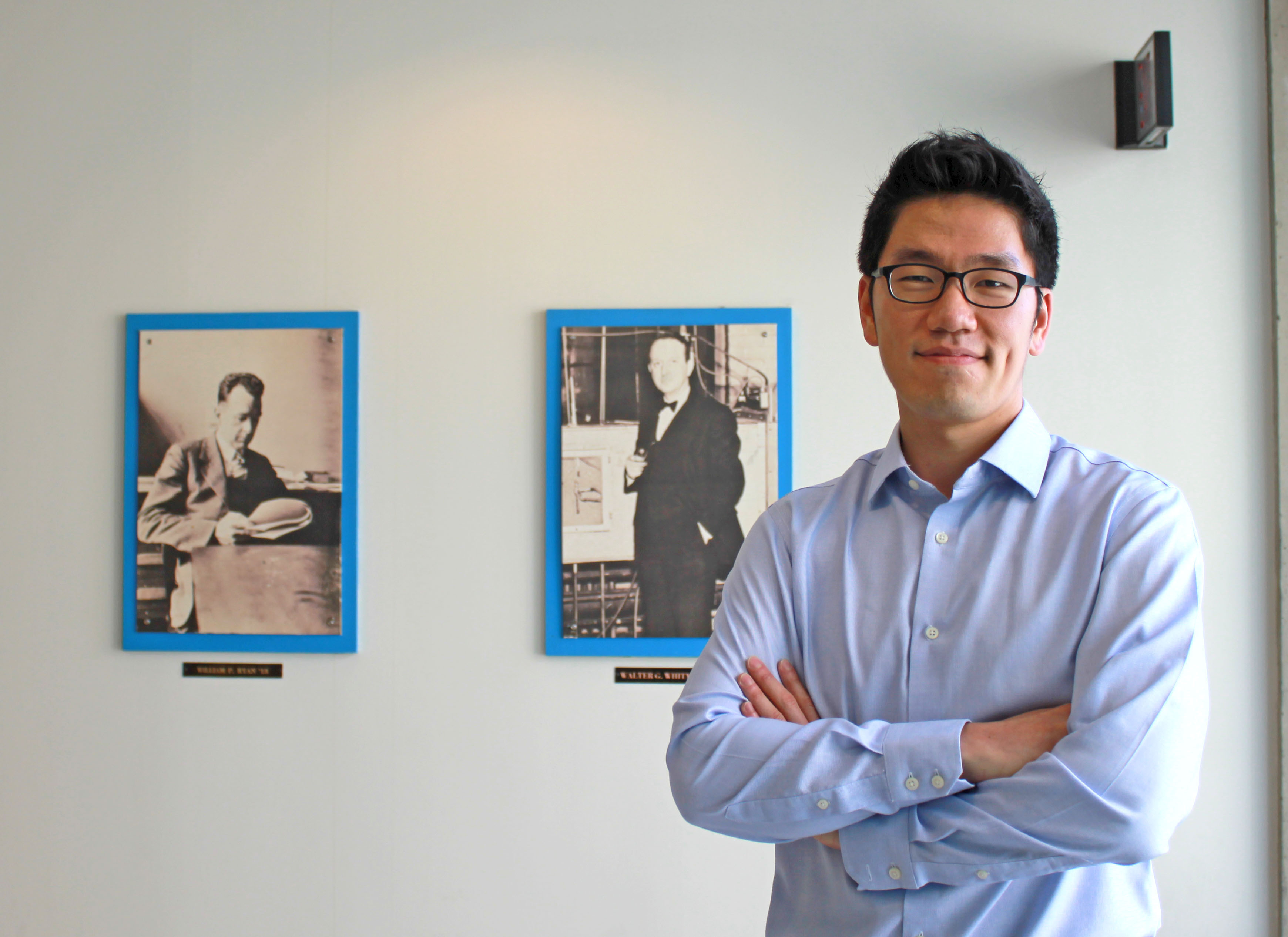
Richard Lopez is an Assistant Professor of Neuroscience and Psychology in the Department of Social Science and Policy Studies at Worcester Polytechnic Institute (WPI). He also holds affiliate status with the Psychological Science and Neuroscience programs and directs the Social Neuroscience of Affective Processes (SNAP) Lab. Education B.A. in Psychology, Princeton University, 2009 Ph.D. in Cognitive Neuroscience, Dartmouth College, 2017 Postdoctoral Fellowship in Translational Social Cognitive and Affective Neuroscience, Rice University, 2019 Research Interests Lopez’s work lies at the intersection of social neuroscience, emotion regulation, and health. Using multimodal neuroimaging (EEG, fNIRS, fMRI), longitudinal behavioral modeling, and digital phenotyping, his lab investigates how individuals align emotions and behaviors with personal values and long-term goals. Specific foci include: Digital-media effects on adolescent mental health Scalable emotion-regulation interventions for borderline personality disorder and stress-related conditions Self-continuity and its influence on health behaviors such as eating and smoking Translational health neuroscience that bridges basic affective science and real-world intervention design Recent Scholarly Trends Across his fifteen most recent publications (2020-2025), a clear trajectory emerges: early mechanistic neuroimaging studies on food-cue reactivity and emotion-regulation circuitry have evolved into applied, ecologically-valid investigations that use mobile sensing and longitudinal modeling to test scalable mental-health and behavior-change interventions in daily life. The work increasingly integrates computational linguistics, digital phenotyping, and large-scale consensus efforts to inform public-health guidelines on screen time and social-media use. Awards & Honors CAPES Emerging Scholar, 2025 WPI President’s Research Catalyst Grant, 2024 Funding & Mentorship Lopez currently leads an interdisciplinary team of graduate and undergraduate researchers in the SNAP Lab. His President’s Research Catalyst Grant funds collaborative projects that translate neuroscience findings into digital interventions aimed at improving wellbeing. While specific student names are not listed, he is actively involved in mentoring across WPI’s Psychological Science and Neuroscience programs. Laboratory & Affiliations He directs the Social Neuroscience of Affective Processes (SNAP) Lab located in Salisbury Labs 317C. The lab is equipped with state-of-the-art EEG, fNIRS, and access to fMRI facilities, and it serves as a hub for cross-disciplinary projects spanning psychology, neuroscience, data science, and digital health.