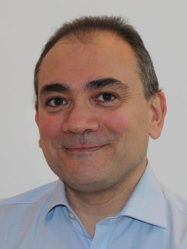
Robert West is an Associate Professor at EPFL (École polytechnique fédérale de Lausanne) in the School of Computer and Communication Sciences , leading the Data Science Lab (dlab) . His research focuses on Natural Language Processing , Machine Learning , and Computational Social Science , analyzing human-generated data from the web, social media, and online platforms. Education : PhD in Computer Science (2016) - Stanford University MSc in Computer Science (2010) - McGill University BSc in Computer Science (2007) - Technische Universität München Research Interests : West develops algorithms for analyzing large-scale web data, with emphasis on multilingual NLP , social network analysis , and AI ethics . His work bridges machine learning with social science to understand digital human behavior. Scientific Awards : ICWSM’22 Adamic–Glance Distinguished Young Researcher Award Google Faculty Research Award Facebook Research Award Multiple Outstanding Paper Awards at ICWSM and WWW Advising & Grants : He advises 12 PhD students and has secured funding from the Swiss National Science Foundation , Swiss Data Science Center , and industry partners. His lab maintains collaborations with Microsoft Research and CROSS . Labs & Collaborations : West leads the Data Science Lab at EPFL, which focuses on web-scale data analysis , privacy-preserving machine learning , and AI for social good . The lab develops tools like Wikispeedia and Quotebank for public data exploration.
Adrian Weller is a prominent researcher and academic at the University of Cambridge, serving as a Director of Research in Machine Learning within the Department of Engineering. He holds multiple significant leadership roles including Programme Director for Trust and Society at the Leverhulme Centre for the Future of Intelligence (CFI), and previously served as Programme Director for AI at The Alan Turing Institute, the UK national institute for data science and AI. His work bridges theoretical machine learning research with practical applications and societal implications of artificial intelligence. Weller's research interests span a broad spectrum of AI and machine learning topics with a particular focus on ensuring beneficial societal outcomes. His work encompasses explainability, fairness, robustness, scalability, privacy, safety, and ethics in AI systems. He has made significant contributions to trustworthy machine learning, including developing frameworks for AI governance, certification, and human-AI collaboration. His research group actively investigates neuro-symbolic approaches, privacy-preserving techniques, and methods for improving the reliability and interpretability of AI systems. His recent publications demonstrate a strong trend toward addressing the practical challenges of deploying AI systems in real-world contexts, particularly focusing on certification frameworks, governance mechanisms, and human-centered approaches. His work spans theoretical advances in machine learning architectures while maintaining a strong connection to societal impact, with publications appearing in top venues across AI, machine learning, and interdisciplinary applications. Scientific Awards: MBE for services to digital innovation (2022 Queen's Birthday Honours) Turing AI Fellowship for Trustworthy Machine Learning Weller actively supervises a large group of PhD students and postdocs, with current students including Juyeon Heo, Yanzhi Chen, Katie Collins, Isaac Reid, Yichao Liang, Herbie Bradley, and Shoaib Siddiqui. His former students have gone on to positions at leading institutions including Google DeepMind, ETH Zurich, NYU, and MPI-IS Tübingen. He has served on numerous advisory boards including the Centre for Data Ethics and Innovation, UNESCO's expert group on AI ethics, and the World Economic Forum's Global Future Council on AI. His research has been supported through his Turing AI Fellowship and various collaborative projects focused on safe and ethical AI development. Weller leads a vibrant research group focused on trustworthy machine learning, which actively organizes workshops and conferences including ICML 2024 (where he served as Program Chair), multiple workshops on responsible AI, and events through the ELLIS network. His group collaborates extensively across disciplines, working with researchers in computer science, social sciences, law, and policy to address the multifaceted challenges of developing beneficial AI systems.
Alessio Lomuscio is a Professor of Safe Artificial Intelligence at Imperial College London, holding the prestigious Royal Academy of Engineering Chair in Emerging Technologies and recognized as an ACM Distinguished Member. He leads the Safe AI Lab, which focuses on developing methods and tools for the verification of AI systems to ensure their safe and secure deployment in applications of societal importance. His research spans verification and robust learning for neural networks and decision trees, robust machine learning in aviation and finance, monitoring of machine learning systems, assurance for autonomous systems and AI, and verification and validation of neuro-symbolic systems. Lomuscio has made significant contributions to formal verification methods for AI systems, particularly in the context of safety-critical applications. His recent publications demonstrate a strong focus on neural network verification techniques, with applications across multiple domains including finance, aviation, and autonomous systems. His work bridges theoretical advances in formal methods with practical applications in real-world AI systems, addressing critical challenges in AI safety and trustworthiness. Scientific Awards: Royal Academy of Engineering Chair in Emerging Technologies ACM Distinguished Member Lomuscio has served in numerous leadership roles, including as Co-Director (2023-present) and Deputy Director (2019-2023) of the UKRI Centre for Doctoral Training in Safe and Trusted Artificial Intelligence. He has also held positions as Director of Strategy and Planning (2017-2020), Member of Management Committee (2013-2020), and Deputy Head of Department (2016-2017). His editorial service includes roles as Associate Editor for Artificial Intelligence Journal and Editorial Board Member for Journal of Artificial Intelligence Research and Journal of Autonomous Agents and Multi-agent Systems. His research group actively mentors students and researchers, with current openings for PhD and postdoctoral positions focused on AI verification and safety. Lomuscio's work has established him as a leading figure in the field of safe and verifiable AI systems, with significant contributions to both theoretical foundations and practical applications.
Kamalika Chaudhuri is a Professor in the Department of Computer Science and Engineering at the University of California, San Diego (UCSD), and also serves as a Director and Research Scientist with the FAIR team at Meta AI. Her research focuses on the foundations of trustworthy machine learning, including robust machine learning, learning with privacy, and out-of-distribution generalization. Dr. Chaudhuri has earned her PhD from UC Berkeley in 2007 with a dissertation on "Learning Mixtures of Distributions." Her academic journey has led her to become a leading researcher in machine learning theory with a particular emphasis on privacy and robustness. Her research interests span machine learning foundations with a strong focus on trustworthy AI . She investigates problems at the intersection of differential privacy , adversarial robustness , and out-of-distribution generalization . Her work addresses critical challenges in developing machine learning systems that maintain privacy while preserving utility, resist adversarial attacks, and generalize effectively beyond training data distributions. She has pioneered approaches in privacy-preserving machine learning, robust learning theory, and methods for detecting and mitigating data memorization in models. An analysis of her recent publications (2024-2025) reveals a strong focus on the intersection of privacy, security, and machine learning. Her work spans differential privacy mechanisms, membership inference attacks, memorization detection, and fairness certification. She has been particularly active in developing methods for privacy-preserving foundation models, with several papers on differentially private computer vision and language models. Her research demonstrates a consistent thread of addressing fundamental challenges in trustworthy AI while developing practical solutions that balance privacy, accuracy, and utility. Best Award at the ICLR 2024 Workshop on Privacy Regulation and Protection in Machine Learning Distinguished Paper Award at IEEE Conference on Secure and Trustworthy Machine Learning (SaTML), 2024 Dr. Chaudhuri has advised numerous PhD students who have gone on to prominent positions at Google, DeepMind, Microsoft Research, and other leading AI institutions. Her group maintains an active research blog with guest posts from UCSD researchers. She has served in significant leadership roles including General Chair for ICML 2022 and Program Co-Chair for both ICML 2019 and AISTATS 2019, where she pioneered initiatives to improve reproducibility in machine learning research. Her research group at UCSD focuses on trustworthy machine learning, with current projects spanning privacy-preserving AI, robustness against adversarial attacks, and methods for ensuring reliable out-of-distribution generalization. The group collaborates closely with the FAIR team at Meta AI, where Dr. Chaudhuri serves as a Research Scientist.
Marlon Dumas is a Professor of Information Systems at the University of Tartu's Faculty of Science and Technology, with a 20-year academic career spanning Estonia and Australia. He holds a PhD in Computer Science from the University of Grenoble 1, France, and has served as Head of Chair and Programme Director in Software Engineering programs. Specializes in Business Process Management (BPM) and Process Mining Current research focuses on prescriptive process monitoring, simulation modeling, and data privacy Recipient of 25+ scientific awards, including multiple Test of Time Awards and the Estonian National Research Award in Technical Sciences Editorial leadership: Area Editor for Information Systems (Elsevier) and ERC Starting Grant Panel Chair His work bridges theoretical advancements in BPM with practical applications in financial services and anti-money laundering. He has developed tools like SIMOD, Kronos, and Kairos for process optimization and analysis. His research integrates AI/ML techniques (reinforcement learning, causal inference) with traditional process modeling. Key trends in his recent publications include: Prescriptive monitoring systems combining causal inference and machine learning Privacy-preserving process mining techniques (differential privacy, anonymization) Resource availability modeling and multi-objective process optimization LLM applications for process analysis and intervention policies Scientific honors include: 2024 BPM Best Paper & Prototype Awards 2023 ICPM Best Prototype Award 2019 ERC Advanced Grantee 2017 Estonian National Research Award in Technical Sciences 2019 MODELS Test of Time Award 2017 BPM Best Prototype Award He has mentored PhD candidates as thesis examiner and contributed to 30+ conference program committees, including General Co-Chair roles at ESEC-FSE 2019 and CAiSE 2018. His work has been supported by European Research Council grants and Estonian Science Foundation projects.
Andreas Vlachos is a Professor of Natural Language Processing and Machine Learning at the Department of Computer Science and Technology, University of Cambridge, and holds the Dinesh Dhamija Fellowship at Fitzwilliam College. His research spans dialogue modeling, automated fact-checking, imitation learning, semantic parsing, biomedical text mining, and trustworthiness in AI systems. PhD in Computer Science, University of Cambridge (supervised by Ted Briscoe and Zoubin Ghahramani) Lecturer at University of Sheffield Postdoctoral roles at UCL, University of Cambridge (NLIP group, Stephen Clark), and University of Wisconsin-Madison (Mark Craven) Current research focuses on evaluating and mitigating biases in language models, advancing fact-checking methodologies, and improving model robustness through interpolation, reinforcement learning, and causal reasoning. His work integrates natural logic, knowledge graphs, and multimodal evidence for verification tasks. Recent publications address uncertainty quantification, temporal planning benchmarks, and ethical framing of NLP artifacts. Grants from ERC, EPSRC, Facebook, Google, and the Alan Turing Institute fund his research team. Collaborations include Sebastian Riedel, Stephen Clark, and Mark Craven. Key projects explore disinformation detection, long-form generation, and confidence calibration in AI systems.
Eric Wong is an Assistant Professor in the Department of Computer and Information Science at the University of Pennsylvania, affiliated with the ASSET Center and leading the Brachio Lab. His research focuses on robust and reliable machine learning, including model debugging, adversarial robustness, and explainable AI. He holds a PhD from Carnegie Mellon University (CMU), advised by J. Zico Kolter, and completed a postdoc with Aleksander Madry. His work bridges theory and practice, addressing challenges in model interpretability, safety, and scalability. Teaching includes CIS 5200 (Machine Learning), CIS 3333 (Mathematics for Machine Learning), and a specialized course on debugging ML pipelines. Notable contributions include the FIX Benchmark for interpretable features and defenses against LLM jailbreaking attacks. He received an Amazon Research Award in 2024 and has published extensively in top conferences like ICML, NeurIPS, and ICLR. Affiliations: University of Pennsylvania (CIS), ASSET Center, Brachio Lab Education: PhD in Machine Learning (CMU), Postdoc at MIT Key Projects: FIX Benchmark, DOLPHIN framework, SmoothLLM defense Awards: Amazon Research Award (2024) Lab Focus: Safe AI, model debugging, neurosymbolic learning
Eytan Adar is a Professor of Information and Computer Science at the University of Michigan, holding dual appointments in the School of Information and the College of Engineering's Electrical Engineering and Computer Science department. His work sits at the intersection of human-computer interaction and artificial intelligence, focusing on large-scale systems analysis and novel interface design. Adar's research spans multiple domains including social media analysis (Twitter, Reddit), academic citation networks, meme propagation, information extraction, and political networks. His methodological expertise includes data mining, data visualization, and graph-based network analysis. His work often operates at internet scale, examining language, creativity, social network dynamics, and text production. His recent publications reveal a strong focus on AI-human collaboration, with particular attention to generative AI interfaces, visualization techniques for complex data, and ethical considerations in AI systems. His work shows a consistent pattern of bridging theoretical insights with practical system implementations. Best Paper Award at ProtoAI: Model-Informed Prototyping for AI-Powered Interfaces, IUI'21 Honorable Mention Award at CHI'24 for feminist interaction techniques research Best Paper Award at ICWSM'18 for Wikipedia language edition analysis Best Paper Award at ICML 2016 Workshop for neural language model visualization Best Student Paper at WSDM'09 for web dynamics research Best of CHI at CHI 2008 for web revisitation patterns analysis Adar has advised numerous PhD students who have gone on to prominent positions at organizations including Google, Apple, RAND, Northwestern University, and Stanford. His research is generously supported by the NSF, IARPA, NIH, the Education Department, and major technology companies including Adobe, Microsoft, Facebook, Google, and Yahoo. He is also a founder of the International Conference on Web and Social Media (ICWSM) and has served as Co-General Chair for WSDM and Co-Program Chair for UIST.
Dr. Oana Cocarascu is a Senior Lecturer in Artificial Intelligence at the Department of Informatics, Faculty of Natural, Mathematical & Engineering Sciences, King's College London. She holds a PhD and MEng in Computing (Artificial Intelligence) from Imperial College London and conducts applied research focusing on how artificial intelligence can be deployed to support real-world applications, with machine learning and natural language processing as core components of her work. Her research interests span argument mining, explainable AI, machine learning, natural language processing, and symbolic reasoning. She is particularly focused on developing AI systems that can provide transparent, accountable, and ethical decision-making processes. Her work addresses critical challenges in bias mitigation, fairness metrics, fact verification systems, and argumentation-based explanations for complex AI decisions. Analysis of her recent publications (2023-2025) reveals a strong focus on fairness in AI systems, with particular attention to individual fairness metrics and nuanced evaluation frameworks. She has made significant contributions to fact verification systems, especially in multimodal contexts involving charts and tabular data. Her work increasingly integrates argumentation theory with natural language processing to create explainable AI systems that can justify their decisions through structured reasoning. Dr. Cocarascu leads an EPSRC-funded project titled 'A framework for evaluating and explaining the robustness of NLP models' (2024-2027) and is actively involved in the Natural Language Processing Group at KCL. Her research fingerprint shows strong activity in argumentation (100%), decision-making (74%), artificial intelligence (50%), explainable AI (39%), and bias mitigation (35%). She has contributed to numerous high-impact publications in top venues including ACL, EMNLP, AAAI, and the Journal of Artificial Intelligence Research, with a particular focus on making AI systems more transparent, accountable, and aligned with human values. Her work intersects with UN Sustainable Development Goals, particularly those related to reducing inequality and building resilient infrastructure.
Amy Bruckman is a Regents’ Professor and Senior Associate Chair in the School of Interactive Computing at Georgia Institute of Technology. As a Fellow of The ACM and member of the SIGCHI Academy , she contributes to social computing research focusing on online collaboration, cross-cultural understanding, and content moderation. Her 2022 book "Should You Believe Wikipedia? Online Communities and the Construction of Knowledge" explores digital knowledge creation. Education: Ph.D. from MIT Media Lab (1997), B.A. in Physics from Harvard (1987) Research Affiliations: GVU Center, IRI People and Technology Her work addresses social computing challenges including: AI ethics in human-AI interaction Algorithmic bias in content moderation Epistemic justice in online communities Comparative platform analysis (Reddit, Discord, TikTok) Grassroots technology movements Recent publications examine: AI support tools for online counseling Community-driven research frameworks Racial bias mitigation in toxic language detection Designing teachable social media experiences Human trafficking intervention ethics Scientific recognition includes: ACM Fellowship SIGCHI Academy membership She has contributed to: Georgia Tech's Computing Education initiatives Research ethics frameworks for Human-Computer Interaction
Giovanni De Micheli is a Full Professor at École Polytechnique Fédérale de Lausanne (EPFL), holding appointments in both the School of Computer and Communication Sciences (IC) and the School of Engineering (STI). He is affiliated with the Integrated Systems Laboratory (LSI) and serves as Scientific Director of EcoCloud. His primary office is located in INF 341 building at EPFL's Lausanne campus where he conducts research and teaching activities. Professor De Micheli's research spans multiple domains in electronic design automation and integrated circuit design. His primary interests include: Integrated Circuit Design and Hardware Synthesis Logic Optimization and Boolean Methods Nanoelectronics and 2D Electronics Quantum Computing and Emerging Technologies Low-Power Electronics and Energy-Efficient Systems Electronic Design Automation for Novel Computing Paradigms His recent publications demonstrate a strong focus on advancing logic synthesis techniques for both conventional and emerging technologies. Professor De Micheli's work bridges theoretical foundations with practical applications, particularly in adapting traditional EDA methods to novel computing paradigms like quantum computing and superconducting electronics. His research group has made significant contributions to the development of efficient algorithms for circuit optimization across multiple technology domains, with particular emphasis on area, power, and delay optimization while maintaining functional correctness. Professor De Micheli has supervised numerous doctoral students throughout his career at EPFL, mentoring over 40 PhD candidates whose research spans various aspects of electronic design automation, circuit design, and emerging technologies. His students have gone on to make significant contributions in both academia and industry. As Scientific Director of EcoCloud, Professor De Micheli leads research initiatives focused on energy-efficient computing systems and sustainable cloud infrastructure. His laboratory, the Integrated Systems Laboratory, serves as a hub for interdisciplinary research connecting computer science, electrical engineering, and materials science, with particular focus on next-generation computing technologies.
Sheila McIlraith is a Professor in the Department of Computer Science at the University of Toronto, holding the Canada CIFAR AI Chair at the Vector Institute and serving as Associate Director and Research Lead at the Schwartz Reisman Institute for Technology and Society. Her research spans AI safety, ethics, reinforcement learning, and knowledge representation, with a focus on human-compatible AI and long-term societal impacts. Her career includes six years as a Research Scientist at Stanford University and a year at Xerox PARC. McIlraith’s work has been recognized through ACM and AAAI fellowships, as well as prestigious awards like the SWSA 10-Year Award (2011) and the CAIAC Lifetime Achievement Award (2024). Research Interests: AI Safety and Alignment Human-Compatible AI Reinforcement Learning with Ethical Constraints Semantic Web Services Cognitive Robotics and Diagnostic Systems Probabilistic and Logical Reasoning Recent Contributions: Her work emphasizes ethical AI integration, such as the Embedded Ethics Education Initiative (E3I), and addresses challenges in long-term AI risks, multi-agent systems, and interpretable decision-making frameworks. Awards and Honors: ACM Fellow AAAI Fellow 2023 IJCAI-JAIR Best Paper Prize 2024 CAIAC Lifetime Achievement Award Labs and Teams: McIlraith leads initiatives at the Schwartz Reisman Institute and contributes to the Vector Institute, focusing on societal and ethical dimensions of AI technology.
Najim Dehak is an Associate Professor in the Department of Electrical and Computer Engineering at Johns Hopkins University, part of the Whiting School of Engineering. His research focuses on machine learning applied to speech processing, audio classification, and health applications. He is renowned for developing the I-vector representation for speaker recognition, introduced in 2008 during a workshop at Johns Hopkins’ Center for Language and Speech Processing. Prior to this role, he was a research scientist at MIT’s Computer Science and Artificial Intelligence Laboratory. Dehak holds a PhD from the School of Advanced Technology in Montreal (2009). He is a Senior Member of IEEE and contributes to the IEEE Speech and Language Technical Committee. His work bridges AI, healthcare, and signal processing, with notable contributions to neurodegenerative disease detection via speech and handwriting analysis. Research interests include adversarial attacks on speech systems, multimodal biomarker discovery, and robust speech processing across demographics. His lab’s tools, like the Hermespeech Recorder, enable scalable data collection for clinical and research applications. Education: PhD in Advanced Technology (2009), Montreal Affiliations: Johns Hopkins University, IEEE Labs/Teams: Center for Language and Speech Processing (CLSP) His recent work explores AI’s role in aging research, including Alzheimer’s and Parkinson’s disease detection through speech, eye tracking, and handwriting analysis. Ongoing projects address fairness in speaker verification and robustness against adversarial attacks in ASR systems.
Andrew Head is an Assistant Professor at the University of Pennsylvania in the Computer and Information Science department. His research focuses on human-computer interaction, programming, and reading, particularly in developing technology for interactive reading and reasoning. He advises PhD students Alyssa Hwang, Hita Kambhamettu, Litao Yan, Jeffrey Tao, and Jessica Shi, and co-leads the Penn Human-Computer Interaction (Penn HCI) group with Danaé Metaxa. His work is published in top venues like ACM CHI, UIST, and ICSE. Research Interests: Andrew's work bridges interactive systems with programming environments, aiming to enhance how scientists and programmers interact with their tools. Key areas include AI-assisted code understanding, math notation accessibility, and medical note interpretation through interactivity. He employs user studies to identify needs and builds interactive systems to address them. Recent Article Trends: His publications emphasize systems-centric HCI approaches, integrating AI into code and document interfaces. Topics span code explanation (e.g., Ivie), property-based testing (e.g., Tyche), math notation augmentation (e.g., FreeForm), and medical informatics (e.g., Explainable Notes). Recent work also explores notebook environments (e.g., Bolt-on, Tyche) and literate programming (e.g., Colaroid). Scientific Awards: Distinguished Paper Award, ICSE 2024 Best Paper Awards at CHI (2024, 2023, 2022, 2019), UIST (2023, 2018), and others. Nominated for Best Paper at CHI 2023 and VL/HCC 2015. Advising & Grants: Andrew advises multiple PhD students and has secured significant grants, including a $1M NSF award for 'Property-based Testing for the People' (2024). His group collaborates with Penn’s MindCORE center and teams like PLClub and PennNLP. Labs & Teams: He co-leads the Penn HCI group, which works closely with other Penn research teams and labs. The group focuses on creating interactive tools that enhance scientific and programming workflows, supported by grants and cross-institutional partnerships.
Karthik R. Narasimhan is a Professor at Princeton University's School of Engineering and Applied Science in the Department of Computer Science. Previously, he earned his PhD from MIT under Regina Barzilay and served as a visiting research scientist at OpenAI during 2017-18. His research focuses on the intersection of language and decision-making, building autonomous agents that learn from both experience and human knowledge. His research spans multiple high-impact areas including language agents (Text-DQN, CALM, ReAct, Tree of Thoughts), reinforcement learning (h-DQN, Multi-Objective RL), and AI safety (Toxicity in ChatGPT, DataMUX). He has developed critical datasets and benchmarks such as WebShop, InterCode, SWE-bench, and SILG that have become standard evaluation tools in the field. Current work emphasizes agent capabilities, software engineering automation, and multimodal interaction. His publication trends show strong focus on practical agent deployment (SWE-agent, Tree of Thoughts), safety evaluation (Probing AI Safety), and efficiency improvements (DataMUX). Recent work increasingly addresses real-world challenges in software engineering, security, and human-AI collaboration through rigorous benchmarking. Co-author of foundational GPT (2018) paper Key developer of Text-DQN (2015), CALM (2020), ReAct (2022), Tree of Thoughts (2023) Creator of influential benchmarks: WebShop (2022), SWE-bench (2023), InterCode (2023) He actively advises students through Princeton's computer science program, with research supported by multiple grants focused on autonomous agent development and language-based decision systems. His GitHub repositories (nlp-datasets, text-world-player) demonstrate strong community engagement in open-source research tools. Current projects include advancing language agent capabilities through Reflexion (2023) and Tree of Thoughts (2023) frameworks while addressing critical safety and efficiency challenges.