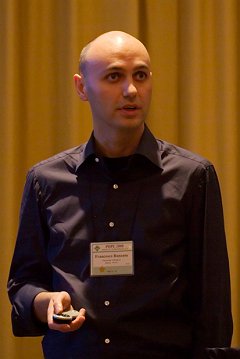
Francesco Ranzato is a Professor at the University of Padova , affiliated with the Department of Mathematics. His research spans abstract interpretation, static analysis, program verification, and formal methods in machine learning and concurrency theory. University: University of Padova Department: Department of Mathematics Research Interests: Abstract Interpretation, Static Analysis, Program Verification, Machine Learning Robustness Research Trends Francesco's recent work bridges abstract interpretation with machine learning verification, focusing on robustness certification for classifiers like decision trees, k-NN, and SVMs. He also advances algorithms for simulation and bisimulation in concurrent systems. Scientific Awards Distinguished POPL Paper Award (2019) Distinguished LICS Paper Award (2021) Facebook/WhatsApp Privacy-Aware Program Analysis Award (2022) Amazon Research Award (2023) Francesco has mentored research groups through open-source projects like SAVer , Meta Silvae , and ERC , and contributed to ACM, IEEE, and Springer publications.
Overview Rajeev Alur is the Zisman Family Professor and Director of the ASSET Center for Trustworthy AI at the University of Pennsylvania . His career spans groundbreaking work in formal methods, cyber-physical systems, and programming languages. PhD from Stanford University (1991) Bachelor's degree from IIT Kanpur (1987) Research Interests His research focuses on ensuring safety and trustworthiness in AI systems, particularly autonomous systems like self-driving cars and medical devices. Key areas include: Neurosymbolic integration Temporal logic in reinforcement learning Verification of neural network controllers Trustworthy machine learning Extending formal methods to modern AI Recent Publications Rajeev's recent work (2023-2025) emphasizes compositional verification, neurosymbolic learning, and secure microservice architectures. Notable trends include: Combining formal specifications with deep learning Scalable verification techniques for neural networks Relational query synthesis Application to autonomous systems with neural perception Chordal sparsity models for efficient analysis Scientific Recognition Alonzo Church Award (2016) Knuth Prize (2024) EATCS Award (2025) ACM/IEEE Fellow Advising & Grants He has advised 30+ PhD students now in academia (Georgia Tech, UCSD, etc.) and industry. As lead PI of the NSF Expeditions project ExCAPE , he drove program synthesis research. Currently serves as General Chair for FLoC 2026 . Labs & Teams Directs the ASSET Center and collaborates with Penn's PRECISE Center and PL Club . His work integrates with industry verification tools at Amazon, Microsoft, and Google.
Joaquín Arias is an Associate Professor at King Juan Carlos University since 2025. His career includes 2020-2025 as Assistant Professor at the same institution and prior pre-doctoral research at IMDEA Software Institute (2013-2020). He has collaborated with institutions like University of Texas at Dallas and Aalto University. Education: Ph.D. in Computer Science (2020, Universidad Politécnica de Madrid) M.Sc. in Computer Science (2015) B.Sc. in Computer Science (2014) M.Arch. in Architecture (2002) Research interests revolve around Constraint Logic Programming , Answer Set Programming , and their applications in Event Calculus , Stream Data Analysis , and Value-Aware Systems . He has developed frameworks like s(CASP) for non-grounded reasoning and Mod TCLP for tabled constraints. Recent articles demonstrate expertise in integrating Large Language Models with logic programming, automated legal reasoning , and real-time system verification . His work emphasizes explainability, constraint handling, and semantic coherence in AI systems. Scientific awards include the best paper prize at CAEPIA 2021 . He has contributed to proceedings as editor for ICLP workshops and authored numerous papers in TPLP , PADL , and AI & LAW .
Daniel M. Russell is a traveling, free-range scholar and practicing scientist specializing in human-computer interaction, search research, and information literacy. He has taught courses at Stanford University and the University of Zürich, including the "HCI & AI" class at both institutions. Russell is actively engaged in understanding how people search for information, evaluate credibility online, and make sense of complex information landscapes. His research interests span several interconnected domains: Human-Computer Interaction with a focus on search and information retrieval systems Online research behavior and sensemaking processes Digital literacy and information evaluation skills Human-AI interaction and the future of search technologies Teaching effective search and research skills to diverse audiences Russell's work examines why people query Google for specific terms, why some users ask only one query while others iterate extensively, and what drives effective online research behaviors. He has developed numerous educational resources including lesson plans for teaching search skills at various levels, MOOCs on power searching, and the book "The Joy of Search: A Google Insider's Guide to Going Beyond the Basics." His recent publications reveal a strong focus on sensemaking in the digital age, human-AI collaboration, and information evaluation practices, particularly among younger generations. Russell investigates how people learn to search, the cognitive processes behind information seeking, and the evolving relationship between humans and search technologies. He actively shares his expertise through speaking engagements, workshops, and his popular SearchResearch blog where he posts weekly search challenges and solutions. Russell also maintains a presence on social media platforms including Bluesky and Twitter/X to disseminate insights about search behavior and information literacy.
Marie Obidzinski is a Professor of Economics at the University of Paris Panthéon Assas and a Research Fellow at CRED (Paris Center for Law and Economics). She serves as Member of the Board (treasurer) of the European Association of Law and Economics (EALE) and General Secretary of the French Association of Law and Economics (AFED). Her academic leadership extends to being responsible for the Certificate of Economic Analysis of Law, co-responsible for the double degree course in law and economics and management, and co-responsible for the DU Digital Sciences for Economics and Management (opening September 2025). Professor Obidzinski's research analyzes the interactions between law and people's decisions, with specialization in the economic analysis of law enforcement policies. Her early work covered European asylum law and geographical distribution of courts, while her current research focuses on digital technologies as both tools and subjects of law. She investigates how AI in banking improves money laundering detection (changing cost structures and false positive risks), how blockchain affects real estate transactions, how online videos serve as evidence in criminal investigations (with associated error and privacy risks), and how AI in medical decisions creates new liability frameworks. Her work bridges traditional law and economics with emerging digital legal challenges. Her recent publications demonstrate a clear trend toward increasingly digital legal-economic intersections, with 8 of her 15 most recent articles directly addressing AI, blockchain, or digital evidence applications. Her research shows consistent theoretical rigor combined with practical policy relevance, particularly in financial regulation, evidence standards, and institutional design. The articles collectively form a cohesive research program examining how technological innovation challenges traditional legal frameworks and requires new economic analyses of legal efficiency. Professor Obidzinski actively contributes to the academic community through significant research leadership roles. She is a member of the ANR PRME MonFinTech research project (Coordinator: Mr. Verdier), member of both the Digital Finance and Explainable AI for Anti-Money Laundering chairs, and convenor (with Sarah Jamal) of the research project "The participation of individuals in international law investigations through digital social networks," funded by the Institut des Etudes et de la Recherche sur le Droit et la Justice (2022-2024).
Phil Blunsom is a Professor of Computer Science at the University of Oxford and a Senior Research Fellow at St Hugh's College. His research focuses on the intersection of machine learning and computational linguistics, particularly using deep learning for natural language analysis, understanding, and generation. He has led the Natural Language research group at DeepMind London from 2014 to 2021. University of Oxford St Hugh's College DeepMind London (2014-2021) Blunsom's research explores algorithms for grounding natural language in AI systems, emphasizing compositional semantics, syntax, and multilingual distributed representations. His work spans neural machine translation, semantic parsing, and explainable AI, with a focus on adversarial learning and verification of explanatory methods. Selected publications highlight trends in NLP, robotics, and wireless signal analysis. Key themes include neural inertial tracking, multilingual models, and coreference resolution. Awards include the BEST PAPER at EWSN'13 and the best application paper at ICML 2014. Scientific contributions include: 2020 : Advancing adversarial generation of NLP explanations 2019 : MotionTransformer for domain transfer in robotics 2014 : Multilingual compositional distributional semantics 2013 : NLOS signal mitigation techniques Blunsom has advised numerous students in NLP and ML, including Satwik Bhattamishra, Jan Botha, and Yishu Miao. His research has received recognition for technical innovation in grammar induction, translation models, and lexicon modeling.
Professor Henrik Leopold is a Professor for Data Science and Business Intelligence and Head of Department of Operations and Technology at Kühne Logistics University (KLU) in Hamburg, Germany. He joined KLU in February 2019 and has held progressive academic positions there, advancing from Assistant Professor (2018-2020) to Associate Professor (2020-2023) and ultimately to full Professor (since 2023). Prior to KLU, he served as Assistant Professor at Vrije Universiteit Amsterdam (2015-2019) and Vienna University of Economics and Business (2014-2015). Henrik Leopold received his PhD (Dr. rer. pol.) in Information Systems from Humboldt University of Berlin in 2013, where he also completed his M.Sc. (2010) and B.Sc. (2008) in Information Systems. His doctoral work earned him the prestigious TARGION Dissertation Award 2014 for the best doctoral thesis in Information Management and recognition as runner-up for the McKinsey Business Technology Award 2013. Leopold's research primarily focuses on the intersection of information systems and business processes, with particular emphasis on leveraging artificial intelligence technologies—including machine learning and natural language processing—to develop innovative techniques for process analysis, mining, and automation. His work bridges theoretical advancements with practical applications across various industries, particularly in logistics and healthcare. He has published over 100 peer-reviewed articles in top-tier journals such as IEEE Transactions on Knowledge and Data Engineering, IEEE Transactions on Software Engineering, ACM Transactions on Management Information Systems, Decision Support Systems, and Information Systems. His recent research demonstrates a clear trajectory toward increasingly sophisticated applications of AI in business process management, with growing emphasis on semantic analysis, explainability, and the integration of large language models. This evolution reflects both technological advancements in AI and the growing complexity of business process challenges in the digital era. Among his notable achievements are the TARGION Dissertation Award 2014 and being named runner-up for the McKinsey Business Technology Award 2013. His research has secured significant funding and has been implemented in practical settings through collaborations with industry partners. As an academic leader, Leopold has supervised numerous PhD and Master's students, contributing to the next generation of researchers in business process management and data science. He actively participates in major research projects focused on automated process weakness identification and semantic process discovery from user interaction logs. His leadership extends to heading the Department of Operations and Technology at KLU, where he shapes academic programs and research directions. Leopold maintains an active presence in the academic community through his personal website (www.henrikleopold.com), Google Scholar profile, and DBLP page, making his research widely accessible to scholars and practitioners worldwide.
Dr Xi Wang is a Lecturer in the School of Computer Science at the University of Sheffield, specializing in Natural Language Processing. His research focuses on conversational AI systems, personalization techniques, retrieval-augmented generation, and fairness in AI applications. He actively contributes to the school's Natural Language Processing research group and maintains strong industry connections through publications in top-tier conferences. Dr Wang earned his PhD from the University of Glasgow under Prof. Iadh Ounis and Prof. Craig Macdonald, where he developed review text-based recommender systems. He subsequently conducted postdoctoral research at University College London's web intelligence group with Prof. Emine Yilmaz, focusing on knowledge-augmented task-oriented dialogue systems. His research spans critical NLP domains with emphasis on: Conversational AI: Building dialogue systems that handle complex user interactions Retrieval-Augmented Generation: Integrating external knowledge into language models Personalization: Developing adaptive systems that respect user context Fairness: Addressing bias in recommendation and dialogue systems Machine Learning: Applying advanced techniques to information retrieval challenges Analysis of Dr Wang's 15 most recent publications (2021-2025) reveals a clear trajectory toward more sophisticated conversational systems. His work increasingly integrates retrieval methods with generative models, particularly in recommendation contexts. Key trends include cold-start problem solutions, bias mitigation in conversational agents, and novel approaches to clarification question handling. The research demonstrates growing emphasis on fairness and knowledge grounding in dialogue systems. Dr Wang received a Google research workshop grant ($20,000) in 2022 for developing knowledge-enriched task-oriented dialogue systems during his postdoctoral work at UCL with Prof. Emine Yilmaz. While no current advisees are listed, Dr Wang's grant activity demonstrates research leadership. His Google-funded project focused on action-oriented dialogue systems, showing capability in securing competitive research funding. The Natural Language Processing research group at Sheffield provides his primary academic home, where he contributes to the school's strengths in speech and language technologies. His recent publications indicate active collaboration with researchers across multiple institutions including UCL, University of Glasgow, and international partners.
Esra Erdem is a Professor in the Department of Computer Science and Engineering at Sabanci University, Faculty of Engineering and Natural Sciences. Her research focuses on the mathematical foundations of knowledge representation, automated reasoning, and answer set programming, with applications in bioinformatics, logistics, cognitive robotics, and economics. She has developed frameworks for hybrid planning, spatial-temporal reasoning, and multi-agent coordination using logic-based methods. She earned her Ph.D. in Computer Sciences (2002) at the University of Texas at Austin under Vladimir Lifschitz. Her academic genealogy traces back to Nikolai Shanin, Pavel Aleksandrov, and Karl Weierstrass. Her recent publications emphasize answer set programming for robotics, including collaborative assembly, path finding, and spatial reasoning. She applies these techniques to real-world challenges in cognitive factories and rehabilitation robotics. Erdem co-edited proceedings for KR 2021 and ICLP 2019 Technical Communications. She serves as an academic advisor and has contributed to educational tools like ReAct! for AI planning in robotics.
Jonathan May is a Research Associate Professor in the Department of Computer Science at the University of Southern California and a Principal Scientist at the Information Sciences Institute. He serves as Director of the Center for Useful Techniques Enhancing Language Applications Based on Natural And Meaningful Evidence (CUTELABNAME). Dr. May teaches courses including CSCI 544: Applied Natural Language Processing and CSCI 662: Advanced Natural Language Processing through Fall 2024. Dr. May's research spans natural language processing, machine translation, and computational linguistics with significant contributions to cross-lingual processing, dialogue systems, and language model development. His work bridges theoretical advances with practical applications in journalism, negotiation systems, and multimodal understanding. Recent research focuses on large language models, with particular emphasis on efficiency, personalization, grounded generation, and exploring the limits of what language models can understand about physical phenomena and human communication. Analysis of Dr. May's recent publications (2024-2025) reveals a strong focus on advancing large language models, with particular emphasis on efficiency (e.g., 'Megalodon: Efficient LLM Pretraining and Inference with Unlimited Context Length'), personalization (e.g., 'Tuning-Free Personalized Alignment via Trial-Error-Explain In-Context Learning'), and grounded generation (e.g., 'NewsInterview: a Dataset and a Playground to Evaluate LLMs' Ground Gap via Informational Interviews'). A notable trend is the integration of reflection and memory mechanisms into language models, as well as exploring multimodal understanding across domains from food science to negotiation. Outstanding Paper Award at EMNLP 2024 for 'Are Large Language Models Capable of Generating Human-Level Narratives?' Outstanding Paper Award at NAACL 2018 for 'Recurrent Neural Networks as Weighted Language Recognizers' Best Demo Award at ACL Demo Sessions 2018 for 'Out-of-the-box Universal Romanization Tool uroman' Dr. May leads CUTELABNAME, which has produced numerous software tools including uroman (Universal Romanizer), BotEval, and SPOLIN. The lab maintains an active research agenda with regular publications at top NLP conferences and collaborations across academia and industry. His work demonstrates both theoretical rigor and practical applicability, with many techniques being adopted in real-world NLP systems.
LiGuo Huang is an accomplished researcher and academic in the field of software engineering with a publication record spanning over two decades from 2003 to 2025. With 95 publications documented in the dblp database, Huang has established a significant presence in both traditional software engineering domains and emerging areas where machine learning intersects with software development practices. Huang's research has evolved from foundational work in value-based software engineering to cutting-edge applications of artificial intelligence in software analysis and maintenance. Huang's research interests encompass a broad spectrum of software engineering topics, with particular emphasis on value-based software engineering, software quality assurance, defect classification, and software process modeling. More recently, Huang has focused on applying machine learning and deep learning techniques to software engineering problems, including code summarization, vulnerability detection, and software maintenance. This evolution reflects the broader shift in the field toward data-driven approaches for software development and analysis. The publication trends reveal a consistent research trajectory with increasing publication rates in recent years, particularly in the application of machine learning to software engineering problems. Huang's work shows a strategic progression from theoretical foundations in software quality to practical applications of AI in software development. The research spans empirical studies, systematic literature reviews, and novel technical approaches to longstanding software engineering challenges, demonstrating both theoretical depth and practical relevance. Huang has collaborated extensively with researchers across multiple institutions, forming particularly strong partnerships with Jidong Ge, Bin Luo, Chuanyi Li, and Barry W. Boehm. The collaboration with Boehm in early career publications suggests mentorship that evolved into peer collaboration, while more recent work shows Huang mentoring newer researchers who now serve as primary authors on joint publications. Huang's research has practical implications for software development practices, particularly in improving software quality, enhancing developer productivity through AI-assisted tools, and providing empirical evidence for software engineering decision-making. The work bridges theoretical computer science with practical software engineering concerns, making significant contributions to both academic research and industry practice.
Jixiang Shen is affiliated with The University of Sydney , Australia, and contributed to the SOAP 2020 conference track at PLDI 2020. His research focuses on software engineering, particularly in the areas of debugging, program analysis, and automated reasoning for software verification. His participation includes authoring the paper Explaining Bug Provenance with Trace Witnesses , which explores techniques for isolating and explaining software bugs through trace witnesses. This work aligns with broader interests in programming languages and software reliability. No awards, students, or email addresses are explicitly listed in the provided information.
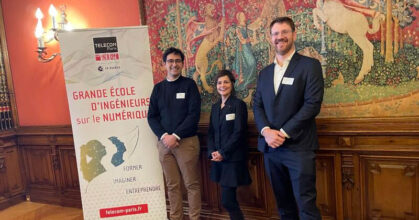
Ada Diaconescu is a Tenured Associate Professor at Télécom Paris (Institut Polytechnique de Paris) since October 2009. She is a member of the Autonomous Critical Embedded Systems (ACES) team within the Information Processing and Communication Laboratory (LTCI) , affiliated with the Computer Science and Networks (Infres) department. Research Focus: Autonomic Computing, Organic Computing, Complex Adaptive Systems, Self-Organising Systems, Smart Grids/Cities/Homes, Nature-Inspired Computing, Socio-Technical Systems Key Methodologies: Decentralised Control, Multi-Agent Systems, Component/Service-Oriented Architectures, Multi-Scale Feedback Loops Her recent publications (2021-2023) explore topics like holonic architectures for self-integration, multi-scale feedback systems in smart environments, and decentralised explanatory frameworks for AI transparency. She co-authored the textbook "Autonomic Computing: Principles, Design and Implementation" (Springer, 2013) and contributed chapters to books on Organic Computing (Springer, 2018) and Self-Aware Systems (Springer, 2017). Scientific Leadership: General Chair of IEEE SASO 2017 Steering Committee Co-Chair of IEEE ACSOS (2019-2021) Co-Organizer of Dagstuhl Seminars (2015, 2018) Doctoral Symposium Co-Chair at FAS* 2019 Teaching: Delivered courses on software engineering, autonomic systems, and complex system modeling at Télécom Paris and other institutions. Collaborations: Active in interdisciplinary research with institutions including Leibniz University, ETH Zurich, Arizona State University, and Lancaster University.
Luca Cagliero is an Associate Professor (L.240) at the Department of Control and Computer Science (DAUIN) at Politecnico di Torino . He serves as Coordinator of the Interdepartmental Center SmartData@PoliTO - Big Data and Data Science Laboratory and Scientific Advisor for the Partnership Agreement with TIERRA. His research spans Data Science , Machine Learning , and Natural Language Processing , with a focus on Financial Data Mining , Generalized Pattern Mining , and Legal AI . Scientific Branch: IINF-05/A - Information Processing Systems (Area 0009 - Industrial and Information Engineering) ERC Sectors: PE6_7 (Artificial Intelligence), PE6_9 (Human Computer Interaction), PE6_11 (Machine Learning), PE6_10 (Web and Information Systems) His scientific awards include the GiovedìScienza Award (2013), Working Capital PNI (2011), and Optime. Recognition of Merit in the Study (2008). He is a Fellow of ACM (2010-) and Effective Member of IEEE (2010-). As an Associate Editor for journals like Expert Systems with Applications and Machine Learning with Applications , he contributes to academic publishing. His conference roles include Program Committee memberships at ACM SIGMOD 2023, IEEE ICDM 2021, and ACM CIKM 2018. Luca supervises PhD students in areas such as AI-driven Cybersecurity , Conversational AI , and Neural Explainers , including Aurora Gensale, Giuseppe Gallipoli, and Irene Benedetto. His commercial research contracts involve projects like AI for Trend Analysis (Intesa Sanpaolo), Predictive Maintenance , and Legal Document Processing . Key research trends include Retrieval Augmented Generation for visually-rich documents, Bias Mitigation in speech models, and Shapley Value Estimation for model explainability. His work bridges Natural Language Processing with Cybersecurity in automotive systems.
Paul Burgess is a Senior Lecturer at Monash University's Faculty of Law and Deputy Director of the Digital Law Group (DLG). He specializes in the intersection of artificial intelligence and law, focusing on AI's impact on legal reasoning, decision-making, and education. His interdisciplinary work bridges Law and Information Technology, addressing challenges to the Rule of Law in AI-driven governance. Research interests: AI ethics, Rule of Law adaptation, digital governance, legal education innovation, and algorithmic accountability. Leadership: Co-organizes DLG initiatives, including seminars and industry partnerships on AI ethics and legal frameworks. Teaching: Develops AI-integrated curricula for Public Law and 'Technology, Design, and Innovation in Legal Services' to enhance digital literacy while emphasizing ethical implications. Collaboration: Engages in AI-driven legal research projects, particularly on LLM agents in legal citation prediction and cross-disciplinary PhD supervision. His 2024 book AI and the Rule of Law: The Necessary Evolution of a Concept redefines legal safeguards in the AI era, advocating for verifiable AI systems in judicial decisions and administrative processes. Recent articles explore AI's accuracy in legal argument analysis, rubric sensitivity in formal logic assessments, and ethical frameworks for AI in legal education. He actively participates in policy consultations on automated decision-making transparency and organizes digital law symposia to advance interdisciplinary dialogue.