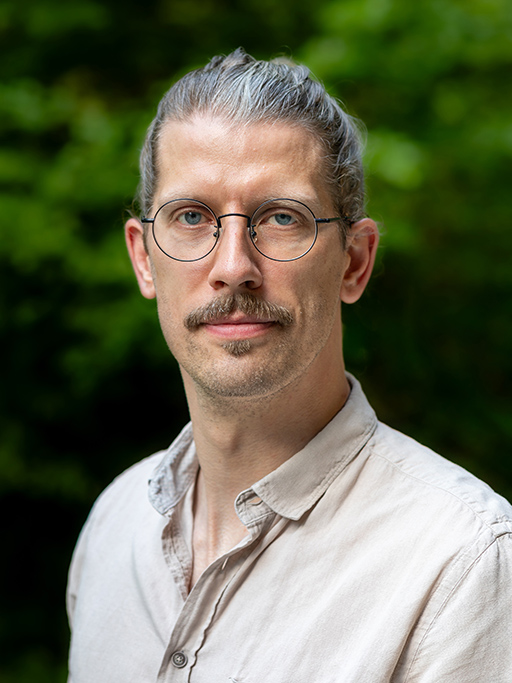
Devi Parikh is an Associate Professor at the School of Interactive Computing, Georgia Institute of Technology, and a Research Director at Meta’s FAIR lab. Her research focuses on generative models, AI for creativity, computer vision, and natural language processing. Education: B.S. in Electrical and Computer Engineering from Rowan University (2005), M.S. and Ph.D. in Electrical and Computer Engineering from Carnegie Mellon University (2007, 2009). Research interests include embodied AI, human-AI collaboration, and creative applications of AI. She has held visiting positions at Cornell, MIT, CMU, and others. Awards include NSF CAREER Award, IJCAI Computers and Thought Award, and multiple fellowships. Led development of Habitat , a platform for embodied AI research, and contributed to the Open Catalyst Project for renewable energy storage.
Kayvon Fatahalian is an Associate Professor in the Department of Computer Science at Stanford University. His research focuses on real-time graphics, high-efficiency simulation engines for entertainment and AI, and large-scale image/video analysis platforms. He explores intersections of computer graphics, machine learning, and high-performance computing to advance systems for interactive applications and AI-driven tasks. His work includes innovations in rendering pipelines, embodied AI simulations, and generative models for 3D content creation. Recent projects address challenges in multi-agent systems, motion synthesis, and scalable rendering architectures. Fatahalian’s contributions span technical systems, algorithmic frameworks, and foundational research in graphics and AI. Notable areas of exploration include: Real-time rendering optimizations for complex scenes AI-driven motion and style generation from sparse inputs Efficient simulation frameworks for deep reinforcement learning Weak supervision techniques for rare category detection His publications emphasize practical systems with theoretical grounding, often bridging hardware/software co-design principles with modern AI methodologies. Current work includes developing agile hardware accelerators and scalable architectures for next-generation interactive systems.
Hyosang Lee is an Assistant Professor in the Robotics Section of the Mechanical Engineering Department at Eindhoven University of Technology (TU/e). He holds a PhD from KAIST and has held research positions at the Max Planck Institute and University of Stuttgart. His work focuses on tactile sensing technologies, including artificial skin development, soft robotics, and integration of sensory systems with AI. Bachelor's: Mechanical Engineering, Korea University Master's: Robotics and Mechanical Engineering (double major) PhD: Mechanical Engineering, KAIST (2017) Research interests span tactile sensor design, electrical impedance tomography (EIT), and human-robot interaction. His group emphasizes creating scalable, flexible tactile systems for robots. Recent work includes air pressure sensing for force estimation and biomimetic skin materials. Publications highlight innovations in multi-directional force sensing, soft component technologies, and haptic interfaces for autism therapy. He teaches 'Dynamics and Control of Robotic Systems' and serves on the editorial board of npj Robotics . No formal student advisees are listed, though his lab, the Tactile Sensing and Robotic Skin Group , likely involves graduate researchers. His research contributes to UN Sustainable Development Goals related to health and technology.
Prof. Dr. sc. techn. ETH Oliver Staadt is Full Professor of Computer Science and Chair of Visual Computing at the University of Rostock , Germany. Since 2023 he also serves as Director of the Institute for Visual and Analytic Computing within the Faculty of Computer Science and Electrical Engineering . Previously he was Dean (2016–2018) and Vice Dean (2010–2016) of the same faculty. Education Ph.D. in Computer Science, ETH Zürich (2001) M.Sc. in Computer Science, TU Darmstadt (1994) Research Interests Prof. Staadt’s research spans virtual and augmented reality , computer graphics , visualization , telepresence , immersive analytics , and human–computer interaction . A particular focus lies on real-time rendering and display technologies for large high-resolution display systems, depth-image enhancement for RGB-D sensors, and interaction techniques that leverage spatial cognition and eye-tracking. His work is frequently applied to collaborative settings and microgravity environments, including experiments aboard parabolic flights and the International Space Station. Recent Publication Trends Between 2019 and 2021 his output centers on foveated rendering , AR viewpoint guidance , collaborative analytics on wall-sized displays , and embodied interaction metaphors . Earlier work addressed bandwidth-efficient telepresence, depth-image filtering, and physically-based animation. The corpus reveals a steady evolution from fundamental graphics algorithms toward applied immersive systems. Scientific Awards & Honors Fellow of the Eurographics Association Associate Editor, IEEE Transactions on Visualization and Computer Graphics (past) Associate Editor, Computers & Graphics (past) Associate Editor, Computer Animation and Virtual Worlds (past) Associate Editor, Frontiers in Virtual Reality (current) Chair, Expert Group on Virtual & Augmented Reality, German Informatics Society (2013–2020) Advising & Funding He has successfully supervised more than ten PhD graduates whose dissertations range from collision detection and physically-based animation to 3D interaction in microgravity and predictive user modeling. Current PhD researchers include Bipul Mohanto, Mana Takhsha, and Sven Kluge. His projects are supported by national and EU programs such as EVOCATION, SMOOTH, ARGuide, 3DPick, DIVA, and Telepresence. Labs & Teams Prof. Staadt leads the Visual Computing Group at Rostock, operating state-of-the-art facilities including large tiled display walls, VR/AR laboratories, and motion-capture systems. The institute hosts interdisciplinary collaborations with partners in visualization, computer vision, psychology, and aerospace engineering.
Thomas Yeh is an Assistant Professor of Teaching in the Department of Computer Science at the University of California, Irvine. His academic background includes a Ph.D. in Computer Science from UCLA and a BS in Electrical Engineering and Computer Science from UC Berkeley. Prior to academia, he gained industry experience across research, architecture, design, verification, marketing, and management roles. His educational credentials: Ph.D. in Computer Science, UCLA BS in Electrical Engineering and Computer Science, UC Berkeley Dr. Yeh's research spans computer architecture, accelerated machine learning, and computer science education. In architecture, he pioneers error-tolerant physics simulation and heterogeneous computing. His ML work focuses on adaptive precision techniques for energy-efficient acceleration. In education, he develops interactive tools for novice programmers and experiential learning frameworks for computer architecture. His cross-disciplinary approach bridges hardware-software co-design with pedagogical innovation. Publication trends reveal consistent focus on computational efficiency across physics simulation, ML acceleration, and educational technology. His work connects real-time systems optimization with emerging AI applications, particularly in interactive environments and physics-based animation. No scientific awards are documented in the provided materials. While advising details and grant funding specifics are absent from available information, his industry-academia transition informs practical research directions. Teaching responsibilities include core courses like Introduction to CS, Data Structures, and Efficient ML Computing. Research infrastructure details remain unspecified, though his publications suggest collaborations in physics simulation and heterogeneous computing environments.
Jungeun (Jenny) Won is an Assistant Professor of Research in the Department of Biomedical Engineering at the School of Engineering and Applied Sciences, University at Buffalo. Her research focuses on optical imaging , biomedical device development , medical image analysis , and artificial intelligence in OCT . She leads the Translational Biophotonics Laboratory , where she develops advanced OCT techniques for medical applications such as diabetic retinopathy , otitis media , and biofilm analysis . Contact: 215J Bonner Hall, Buffalo NY 14260, jungeunw@buffalo.edu Related Links: CV PDF , Google Scholar , Lab Website Her recent work involves high-resolution OCT for longitudinal studies on retinal degeneration, VISTA OCTA for blood flow analysis, and 3D motion correction algorithms to enhance image quality. She also explores multimodal imaging combining OCT with Raman spectroscopy for bacterial differentiation and microplasma-based therapies for ear infections.
Michele Gattullo serves as an Assistant Professor within the Department of Mechanics, Mathematics & Management at the Polytechnic University of Bari, Italy, specializing in design methods for industrial engineering (ING-IND/15). His research bridges cutting-edge extended reality technologies with practical industrial applications, focusing on human-centered solutions for manufacturing, maintenance, and workplace design. Dr. Gattullo's research portfolio centers on Augmented Reality, Virtual Reality, and Biophilic Design, with significant contributions to Human-Computer Interaction in industrial contexts. He investigates how nature-inspired elements in virtual workspaces enhance employee well-being and productivity, while simultaneously developing practical AR tools for assembly guidance, technical documentation, and maintenance support. His work uniquely integrates ergonomics, cognitive psychology, and industrial engineering to optimize human-technology interaction in complex production environments. Analysis of his 15 most recent publications reveals two dominant research trajectories: biophilic design frameworks for virtual/metaverse workspaces (2023-2025) and industrial AR authoring methodologies. The biophilic stream establishes evidence-based guidelines for digital nature integration, while the AR stream delivers validated tools like ADAM and minimal AR approaches that streamline technical documentation creation. Both trajectories emphasize user experience validation through rigorous industrial studies, demonstrating strong interdisciplinary impact across computer science, industrial engineering, and environmental psychology. Scientific Awards: No awards or honors were documented in the available sources. Advising and Grants: The provided materials contain no information regarding graduate student supervision, research grants, or funding sources. His academic profile emphasizes publication output over mentoring activities or project financing details. Laboratories and Teams: While Dr. Gattullo's research involves advanced XR technologies, the source text does not specify laboratory facilities, research groups, or collaborative teams associated with his work at Politecnico di Bari.
Karl T. Ulrich is the CIBC Endowed Professor at the Wharton School of the University of Pennsylvania, with dual appointments in the Department of Operations, Information and Decisions and the Department of Mechanical Engineering. A renowned scholar and practitioner in product design, innovation, and entrepreneurship, he has co-founded key institutions like Venture Lab, the Weiss Tech House, and the Integrated Product Design Program. His work bridges academic rigor with real-world impact, evidenced by 24 patents and ventures such as Terrapass Inc. and the Xootr scooter. Education : MIT (BS, MS, ScD in Mechanical Engineering) His research focuses on product design , innovation , and entrepreneurship , with recent articles exploring animal ethics in food supply chains and evidence-based housing standards . Earlier work investigates machine learning in idea generation and innovation tournaments . Awards include the Anvil Award, Miller-Sherrerd Award, and multiple Excellence in Teaching Awards at Wharton. He has taught courses like Product Design , Product Management , and Innovation , often incorporating studio and project-based learning. His executive education programs emphasize strategic technology leadership and global business challenges.
A.B. Osborne is an Associate Professor and Director of the Animation Program at Augusta University's Pamplin College of Arts, Humanities, and Social Sciences. Specializing in technical animation and visual storytelling, he focuses on 2D/3D hybrid rigging, real-time animation workflows, and non-photorealistic rendering techniques. Education: MFA in Animation, Interactive Technology, Video Graphics, and Special Effects from Savannah College of Art & Design (2013) BA in Radio and Television from Eastern Kentucky University (2010) His research bridges computer science , digital media , and creative technology , with applications in game development, social media visualization, and technical art. Osborne's scholarship includes innovative animation projects like Hay Day and Stylized Extinction , focusing on hybrid rendering and ecological storytelling. Osborne is actively engaged in academic service, chairing search committees and participating in university governance through roles like Lyceum Committee member and Pamplin Faculty Council representative. His teaching emphasizes: 3D Animation Look Development Game Development Animation History Technical Animation Notable awards include the Greater Augusta Arts Council Arts Educator Award (2025) , Silver Telly Award (2025) , and Boundless Teaching Award (2021) . These recognize his contributions to animation education and creative technology.
Adam Perer is an Associate Professor at Carnegie Mellon University, where he is a member of the Human-Computer Interaction Institute within the School of Computer Science. He serves as Co-Director of the Data Interaction Group and holds leadership positions as Area Papers Chair at IEEE VIS and Visualization Subcommittee Papers Chair at ACM CHI. Previously, he worked as a Research Scientist at IBM Research. Ph.D. in Computer Science from the University of Maryland, College Park Perer's research integrates data visualization and machine learning techniques to create visual interactive systems that help users make sense of big data. His work focuses on human-centered data science, extracting insights from clinical data to support data-driven medicine, and facilitating human-AI collaboration. He investigates how people engage with and make decisions using data, designing new interfaces to interact with complex information while assisting impactful domains drowning in data. His recent publications reveal a strong trend toward healthcare applications of AI and visualization, particularly in clinical decision support and overdose prevention. There's also a significant focus on explainable AI (XAI), with multiple papers examining how imperfect explanations affect human-AI collaboration and decision-making in critical contexts like healthcare. His work consistently bridges visualization theory with practical applications in high-stakes domains. Best Paper Honorable Mention for 'Dead or Alive: Continuous Data Profiling for Interactive Data Science' (VIS 2023) Best Paper for 'Neo: Generalizing Confusion Matrix Visualization' (CHI 2022) Most Reproducible Paper Award for 'SQLShare' (SIGMOD 2016) Perer actively mentors students across all levels, with PhD students focusing on human-AI collaboration in healthcare settings, visualization techniques, and clinical decision support systems. His lab receives funding for projects related to human-centered AI, data visualization in healthcare, and explainable machine learning systems. The Data Interaction Group, which he co-directs, focuses on empowering everyone to analyze and communicate data through interactive systems. His research has been supported by collaborations with medical institutions and appears in premier venues for visualization, human-computer interaction, and medical informatics. Current projects include Eye into AI (improving XAI interpretability), Predicting and Visualizing Overdose Risk, and AI applications in intensive care units.
Irina A. Chindea is a Senior Political Scientist at RAND Corporation and a Professor of Policy Analysis at the RAND School of Public Policy. Her work focuses on strategic competition, U.S. foreign policy, and security cooperation in global theaters including Europe, Latin America, and the Arctic. Ph.D. in International Relations, The Fletcher School M.A. in Law and Diplomacy, The Fletcher School Her research spans NATO alliance politics , Arctic security , irregular warfare , and military personnel retention . Recent publications explore China's Arctic activities, U.S. Space Force leadership challenges, and gender-inclusive disaster response frameworks. Key article trends include: geopolitical competition in secondary theaters (Latin America, Arctic), military readiness infrastructure, and civilian workforce integration. She has authored 28 research papers across military affairs, global security, and strategic competition domains.
Professor Ulrich Nikolaus serves as a Professor of Multimedia Publishing and Communication Design at the Faculty of Computer Science and Media at Leipzig University of Applied Sciences (HTWK Leipzig). He has held this position since his appointment in December 2002 and currently serves as Chairman of the Examination Board for technical degree programs within the faculty. His academic journey began with computer science studies at Saarland University in 1988, followed by a degree in computer science in 1996, and culminated in his doctorate on 'Multimedia Learning in Companies' in October 2001. Nikolaus's research spans multimedia publishing, interface design, electronic publishing, and digital accessibility. His work emphasizes creating inclusive digital experiences, particularly through his longstanding collaboration with the German Central Library for the Blind (since 2011). He has directed significant projects including the redesign of the Egyptian Museum website in collaboration with Leipzig University, where students under his supervision developed design, content, and technical concepts. His scholarly contributions focus on advancing accessible digital publications, voice user interfaces, eye-tracking analyses for media research, and cross-media publishing workflows. Nikolaus has been instrumental in developing digital teaching strategies at HTWK Leipzig, serving on the 'Steering Committee for Inclusion' since 2018 and as a founding member of the Institute for Digital Teaching and Learning since 2019. Among his notable recognitions are membership in the Accessibility in Education Working Group of the IAAP-DACH since 2022, and his role as co-organizer of Leipzig's first World Usability Day in 2017. He has also contributed to international standards through his participation in the DAISY 2009 International Technical Conference. Nikolaus teaches across multiple courses including Media Production, Interface Design, Electronic Publishing, and Media Management at the Master's level. His educational philosophy integrates theoretical knowledge with practical application, evident in his supervision of student projects that address real-world challenges in digital media and accessibility.
Jennifer Eileen Adair, PhD is a Professor in the Department of Genetic and Cellular Medicine at UMass Chan Medical School, with dual appointments in the T.H. Chan School of Medicine. Her research bridges basic science with translational applications in gene and cell therapy. Dr. Adair earned her BS in Chemistry from Youngstown State University and her PhD in Genetics and Cell Biology from Washington State University. Her academic journey has focused on developing innovative approaches to gene therapy with an increasing emphasis on global accessibility. Her research program centers on gene therapy development , particularly in hematopoietic stem cell engineering , CRISPR-based gene editing , and manufacturing optimization for cell and gene therapies. Recent work demonstrates a strong commitment to addressing global health disparities, with multiple publications on making gene therapies accessible in low- and middle-income countries through localized manufacturing solutions. Her laboratory investigates fundamental questions about stem cell biology while developing practical applications for genetic disorders including Fanconi anemia. Analysis of her recent publications (2020-2024) shows a strategic shift toward addressing implementation challenges of gene therapies, with approximately 40% of her work now focused on manufacturing, accessibility, and global health equity issues. Her research combines molecular biology, stem cell engineering, and health systems analysis to create practical solutions for bringing advanced therapies to diverse patient populations worldwide. Dr. Adair has established herself as a leader in both the technical development of gene therapies and the critical discourse around their global implementation. Her work spans from basic molecular mechanisms to health policy considerations, reflecting a comprehensive approach to advancing the field. She actively collaborates with international teams to address the translational gap in gene therapy, with recent projects spanning multiple continents and involving partnerships with researchers in India, Africa, and South America. Her laboratory focuses on developing point-of-care manufacturing solutions that could democratize access to these life-saving treatments.
Thomas Leimkuehler is a Senior Researcher at the Max Planck Institute for Informatics in Saarbrücken, Germany, holding dual appointments in the Department of Computer Graphics and the Department of Visual Computing and Artificial Intelligence. His work bridges computer graphics and machine learning, focusing on neural rendering techniques for image synthesis and manipulation within the Saarland Informatics Campus ecosystem. Education: PhD in Computer Science, Saarland University (2019) Leimkuehler's research centers on neural signal representations and generative models for visual computing. He develops data-driven approaches to physically-based rendering, inverse rendering, and high dynamic range imaging, emphasizing efficient parallel algorithms. His work frequently integrates deep learning with traditional graphics pipelines to solve longstanding challenges in image synthesis and 3D scene representation, with applications spanning cinematic effects, automotive visualization, and computational photography. Analysis of his publication record reveals dominant trends in neural radiance fields (particularly Gaussian splatting), diffusion-based HDR generation, and multi-scale image synthesis. His research consistently addresses the tension between physical accuracy and neural efficiency, with recent work focusing on uncertainty modeling in radiance fields and real-time cinematic effects. Award highlights: Best Paper Award at SIGGRAPH 2023 for pioneering 3D Gaussian Splatting Eurographics PhD Award and Otto Hahn Medal (2019) Multiple student paper awards at EGSR, Graphics Interface, and ACM SAP Leimkuehler actively mentors through his Image Synthesis and Machine Learning research group, serving as primary advisor for PhD candidates and postdocs. He holds editorial positions at IEEE TVCG and Computer Graphics Forum while reviewing for major conferences including SIGGRAPH, CVPR, and ECCV. His group maintains strong collaborations with Snap, Princeton University, and the Visual Geometry Group at Oxford. Based at the Saarland Informatics Campus, his research group operates within the Max Planck Institute for Informatics' Department 4 and Department 6 frameworks, leveraging infrastructure from the Saarbrücken Research Center for Visual Computing and the European Laboratory for Learning and Intelligent Systems.
Amy R. Reibman is the Elmore Family School of Electrical and Computer Engineering's Elmore Professor of Electrical and Computer Engineering at Purdue University. She holds a PhD (1987), MSEE (1984), and BSEE (1983) from Duke University. Her research focuses on image/video quality assessment, video transport over networks, and video analytics with applications in agriculture, healthcare, and surveillance. She is an IEEE Fellow and recipient of the 1998 Leonard G. Abraham Prize Paper Award. Reibman teaches ECE 302: Probabilistic Methods in ECE (undergraduate) and ECE 634: Digital Video Systems (graduate). Her work integrates quality estimation into real systems and explores video analytics for activities like animal behavior analysis, hand hygiene monitoring, and farming automation. She collaborates with industry (e.g., AT&T Labs) and publishes widely in IEEE journals and conferences. Research Highlights: Video quality for IoT, first-person video stability, and agricultural video analytics. Grants/Projects: Supported by NSF and industry partnerships (e.g., video transport optimization). Her lab develops tools for stress-testing quality estimators and has contributed foundational work on packet loss resilience in video coding. Current projects include cattle intake monitoring and honeybee hive detection.