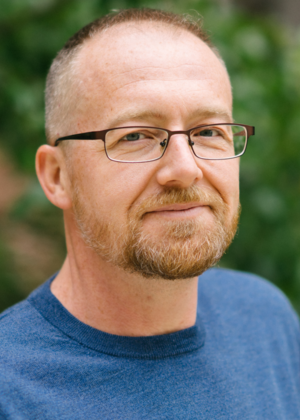
Giulia Toti is an Assistant Professor of Teaching in the Department of Computer Science at the University of British Columbia (UBC), part of the Faculty of Science. Her work focuses on computer science education, equity in curriculum design, and fostering inclusive learning environments. She teaches courses such as Applied Machine Learning (CPSC 330), Fairness, Accountability, Transparency, and Ethics (FATE) in Data Science (DSCI 430), and Computers and Society (CPSC 430). Her research explores diversity initiatives in CS education, mastery learning frameworks, and equitable grading practices. Notable contributions include studies on pandemic-era remote teaching impacts and the development of Agora, a tool for enhancing large-classroom engagement. Toti has received UBC Faculty Teaching Awards for her pedagogical innovations. Her interdisciplinary work spans machine learning applications in industry and healthcare, including semantic search systems for clinical data (SemEHR) and predictive analytics for energy production. She is affiliated with the ACE Lab and actively contributes to curriculum reforms addressing DEI (Diversity, Equity, Inclusion) challenges in STEM education. Grants/Awards: Faculty Teaching Awards Labs/Teams: ACE Lab (Advancing Computing Education) Advising: No explicit advisee listings found, but contributes to pedagogical research impacting teaching practices.
Kathleen L. Komar is a Distinguished Professor in the Department of Comparative Literature at the University of California, Los Angeles (UCLA), part of the UCLA College. She holds a Ph.D. in Comparative Literature from Princeton University (1977). Her primary language expertise includes German, reflecting her focus on German literary traditions. Professor Komar’s research spans feminist theory, modernist literature, and post-symbolist poetry, with significant contributions to the study of Rainer Maria Rilke, Hermann Broch, and Robert Musil. She has authored and edited works analyzing mythological reinterpretation, gender dynamics in literature, and the intersection of digital humanities with traditional literary studies. Her academic career includes leadership roles such as serving as ACLA President, where she championed interdisciplinary approaches and the evolution of comparative literature as a discipline. Komar’s scholarship bridges historical analysis and contemporary critical theory, addressing themes like utopianism, postcommunism, and the role of silence in postwar discourses. She has also explored pedagogical innovations in teaching world literature and the application of predictive analytics in educational technology. Notable research areas include: Reinterpretation of classical myths (e.g., Klytemnestra) Modernist aesthetic theory in German literature Electronic poetry and digital textuality Feminist explorations of literary space Comparative studies of European and American literary traditions Her publications reflect a commitment to interdisciplinary dialogue, spanning edited companions, critical essays, and theoretical interventions in both print and digital formats. Komar’s work frequently emphasizes the transformative potential of literature to interrogate cultural, political, and gendered structures.
Noga Alon is a Professor of Mathematics at Princeton University, affiliated with the Mathematics Department. He is renowned for his contributions to Combinatorics, Graph Theory, and Theoretical Computer Science. His research emphasizes algebraic and probabilistic methods, with applications in circuit complexity and combinatorial geometry. Education & Affiliations Current position: Professor at Princeton University. Active in the Princeton Discrete Mathematics Seminar and has led conferences like the Noga60 Birthday Conference. Research Interests Focus areas include Combinatorics (e.g., Ramsey Theory, Graph Coloring), Theoretical Computer Science (e.g., Algorithms, Complexity), and probabilistic and algebraic methods in discrete mathematics. His work bridges combinatorial structures and algorithmic applications, with contributions to expander graphs, randomized algorithms, and extremal graph theory. Publications Over 300 papers, including foundational work on the probabilistic method, expander graphs, and combinatorial algorithms. Notable recent topics include graph coloring, path-finding algorithms (e.g., Color-coding), and spectral techniques for graph problems. Grants & Awards No specific grants or awards listed in available texts, though his academic stature implies prestigious recognition in combinatorics and computer science. Labs & Collaborations Involved in collaborative research through Princeton’s Mathematics Department and international conferences. Leads seminars and co-authors work with prominent researchers like M. Naor, J. Spencer, and others.
Douglas H Fisher is an Associate Professor of Computer Science and Computer Engineering at Vanderbilt University's School of Engineering. His research focuses on artificial intelligence, particularly machine learning, and computational sustainability. He holds a Ph.D., M.S., and B.S. in Computer Science from the University of California - Irvine. His work bridges AI with societal challenges, emphasizing sustainability, education technology, and cognitive modeling. Notable areas include integrating sustainability into computing curricula, leveraging AI for peer review systems (pReview), and exploring bias mitigation in neural networks. He has contributed to foundational machine learning techniques, such as rule induction for medical data analysis and decision tree optimization. Fisher's research spans interdisciplinary applications: from geospatial water resource modeling to MOOCs' social incentives. His educational contributions include blended learning frameworks and open educational resources advocacy. He has authored over 100 publications across AI, sustainability, and education, reflecting a commitment to both technical innovation and societal impact.
Seth Frey is an Associate Professor in the Department of Communication at the University of California, Davis. His research focuses on computational social science, exploring governance institutions and complex human decision-making through computational methods, large datasets, and web-based experiments. He examines online communities as models of governance, with expertise in computational approaches to institutional design and strategic behavior analysis. Education: Ph.D. in Cognitive Science and Informatics, Indiana University, 2013 B.A. in Cognitive Science, UC Berkeley, 2004 Research Interests: Frey's work integrates data science, lab experiments, and computational modeling to study human organizations and communication. Key areas include governance technology, cognitive mechanisms of social outcomes, and institutional evolution. His projects span online games, sports, and open-source software communities, emphasizing topics like collective action, self-governance, and cooperative behavior. Publications & Funding: His work appears in journals like PNAS and Nature Scientific Reports, and has been funded by NSF, NASA, and the Ford Foundation. He contributes to the Ostrom Workshop at Indiana University and directs the Computational Communication Lab at UC Davis. Teaching: Frey teaches courses on data visualization, simulation methods, and online data analysis in the social sciences.
Christoph T. Koch is a Professor of Physics at Humboldt-Universität zu Berlin, where he has held the W3 Chair since 2015. Previously, he held a similar position at Ulm University (2011–2015), supported by the Carl Zeiss Foundation. His research focuses on advanced electron microscopy techniques, including quantitative transmission electron microscopy (TEM), electron holography, and strain mapping. He leads the AG Strukturforschung/Elektronenmikroskopie group, advancing materials science through innovations in imaging and spectroscopy. Education: B.Sc./M.Sc. in Physics at Heidelberg University (1996–1998), followed by an exchange at Arizona State University (1997–1998). PhD in Physics from Arizona State University (2002, advisor: Prof. John C.H. Spence). Postdoctoral research at the Max Planck Institute for Metals Research, Stuttgart (2002–2011). Research interests include: Electron diffraction and phase retrieval Nanometer-scale strain and defect analysis Electron energy-loss spectroscopy (EELS) for plasmonics and bandgap mapping Development of FAIR data infrastructure for materials science Leadership: Managed the Department of Physics at Humboldt University (2020–2024). Collaborates widely, with key co-authors including P.A. van Aken, W. Sigle, and C. Felser. His work bridges experimental microscopy and computational modeling, addressing challenges in semiconductors, ceramics, and 2D materials. Notable contributions include pioneering methods for 3D reconstruction via electron ptychography, dynamic electron diffraction analysis, and strain mapping in advanced CMOS technologies. Current efforts emphasize real-time imaging and AI-driven data analysis in materials research.
Stephen Lee is an Assistant Professor in the Department of Computer Science at the University of Pittsburgh, affiliated with Pitt Cyber. His research focuses on distributed systems, cyber-physical systems, and sustainability, emphasizing energy efficiency and cost optimization. Dr. Lee holds a PhD from the University of Massachusetts Amherst, a Master’s from Chennai Mathematical Institute, and a Bachelor’s from St. Stephen’s College, Delhi. He actively seeks students for his research group. Education: PhD, Computer Science, University of Massachusetts Amherst Master’s, Chennai Mathematical Institute Bachelor’s, St. Stephen’s College, Delhi Research Interests: Dr. Lee’s work integrates distributed systems, machine learning, and optimization to enhance sustainability. Key areas include IoT-enabled energy systems, emission-aware computing, and privacy-preserving frameworks. He leads projects like GreenWhisk (serverless emission reduction) and Sat2map (3D building modeling from satellite imagery). Recent Achievements: Best Paper Award in IEEE TPS 2024 DOE-funded Cyber Energy Center (2024) MCSI Seed Grant for Pitt building sustainability (2024) NSF Grant on sustainable distributed infrastructures (2023) Grants & Advising: Secured over $2M in grants, including NSF and DOE funding. Advises on energy-efficient systems and IoT security. Teaches CS 2510 (Operating Systems) and CS 1699 (Systems & Sustainability). Labs & Teams: Directs the Sustainable Systems Research Group, focusing on decarbonizing IT and optimizing renewable energy systems. Collaborates with industry partners on smart grid solutions and edge-cloud systems.
Horacio Saggion is the Chair in Computer Science and Artificial Intelligence at the Department of Information and Communication Technologies, Universitat Pompeu Fabra. He leads the TALN Group and the Large Scale Text Understanding Systems Lab. His research focuses on Computational Linguistics, with specialties in Text Summarization, Information Extraction, and Semantic Analysis. He coordinates the Horizon Europe iDEM project on inclusive democratic spaces and previously led the SignON project for Sign Language Translation. Key technologies include the SUMMA Summarization system and the Dr Inventor Text Mining Library. Education: PhD, MSc, and Licenciatura in Computer Science. Research Interests: Text simplification for accessibility, sign language translation, misinformation detection, and ethical AI applications. His work bridges natural language processing with societal needs such as clear communication in public administration. Grants & Projects: Coordinator of iDEM (Horizon Europe), PI of SignON, Simplext, and Able to Include. Involved in BEA shared tasks and CLEF labs. Active in organizing workshops like TSAR at EMNLP. Labs & Teams: Head of TALN Group and Text Understanding Lab. Collaborations include Universitat Pompeu Fabra's interdisciplinary initiatives and industry partnerships for technology commercialization.
Dr. Kanika Goel is a Lecturer in the School of Information Systems at Queensland University of Technology (QUT), specializing in Business Process Management (BPM), Data Governance, and Process Analytics. She holds a PhD from QUT and has over 9 years of teaching experience, coordinating programs such as BIT Honours (IN10) and Masters of Philosophy (IN80). Her research focuses on process-oriented data analytics, data quality, and process mining, with industry collaborations spanning health, retail, and asset management sectors. She is a Lean Six Sigma Green Belt certified trainer and a Fellow of the Higher Education Academy (FHEA). Dr. Goel has led several industry-funded projects, emphasizing applied research in data governance, process mining, and process improvement. Notably, she received the Vice-Chancellor's Award for Excellence (2019) for innovative BPM integration in research management systems. Her work bridges academic research and real-world applications, contributing to journals like Business and Information Systems Engineering and IEEE Access . She teaches courses on Business Process Technologies, Modern Data Management, and BPM units in QUT's continuing professional education programs. Her articles explore topics like data imperfections in healthcare systems, process standardization strategies, and privacy risks in NoSQL databases. She advocates for digital literacy and has published on initiatives to build tech-savvy communities. Dr. Goel is also involved in supervising research topics such as prescriptive process analytics and process-data governance patterns.
Chen Xu is an Associate Professor in the Department of Mathematics and Statistics at the University of Ottawa. He holds an M.A. from York University and a PhD from the University of British Columbia. His research focuses on sparse modeling, statistical learning, and big data processing, with an emphasis on both theoretical and computational advancements. Dr. Xu is affiliated with the Faculty of Science and contributes to editorial roles for journals such as the Journal of the American Statistical Association and Electronic Journal of Statistics. Education: M.A., York University PhD, University of British Columbia Research interests include feature selection, regularization methods, kernel methods, and high-dimensional regression. His work addresses computational challenges in big data, proposing efficient algorithms for tasks like singular value decomposition, clustering, and distributed feature screening. Recent publications highlight advancements in multiview PCA, low-tubal-rank tensor recovery, and model-free regression techniques. Publications span prestigious journals like the Journal of the American Statistical Association and IEEE Transactions series, focusing on statistical methodology, machine learning applications, and scalable computational solutions for complex data problems. Editorial Service: Associate Editor, Journal of American Statistical Association-T&M (2023–present) Associate Editor, Electronic Journal of Statistics (2023–present) Former Associate Editor, The Canadian Journal of Statistics (2019–2021) His research groups are Statistics and Biostatistics, and Data Science, Machine Learning, and Artificial Intelligence. He has no listed awards but maintains active editorial and academic collaborations in computational statistics and machine learning.
Dayna N Scott is a Professor at Osgoode Hall Law School and the Faculty of Environmental and Urban Change at York University, where she holds the York Research Chair in Environmental Law & Justice in the Green Economy (2018–2023). She is the Director of the Environmental Justice and Sustainability Clinic and Co-Coordinator of the joint MES/JD program. Her interdisciplinary work bridges law, environmental studies, and Indigenous governance. Education: PhD in Law, Osgoode Hall Law School LLB, Osgoode Hall Law School MES, York University BSc in Ecology (Honours), University of Guelph Her research centers on environmental justice, extractivism, Indigenous jurisdiction over lands and resources, gender and environmental health, and the justice dimensions of the green economy. She employs critical, community-based, and feminist methodologies to examine legal and regulatory frameworks around pollution, toxics, and resource extraction. Her recent publications explore themes such as sacrifice zones in the green economy, infrastructural dispossession on the critical minerals frontier, Indigenous-led impact assessment, and decolonizing legal geographies. The articles reflect a consistent focus on the intersection of law, colonialism, and environmental harm, particularly in the context of Canada’s Ring of Fire and Indigenous communities like Aamjiwnaang First Nation. Scientific Awards and Recognition: York Research Chair (Tier 2) Fulbright Fellowship York-Massey Fellowship Law Commission of Canada’s 'Audacity of Imagination' Award Canada–US Fulbright Scholarship Sir John A. Mactaggart Essay Prize in Environmental Law Professor Scott actively supervises PhD and LLM students in Environmental Studies, Socio-Legal Studies, and Law, with a focus on critical, community-engaged research. She has led major SSHRC-funded projects such as 'Jurisdiction Back: Infrastructure Beyond Extractivism' and 'Consent & Contract: Authorizing Extraction in Ontario’s Ring of Fire.' Her leadership extends to committee service, including academic governance and equity initiatives. She is also involved in environmental justice activism and policy engagement, including advisory roles with the Government of Canada and Indigenous communities. She is affiliated with research centers such as the Yellowhead Institute and has collaborated with scholars across Canada on decolonizing legal and environmental frameworks. Her work emphasizes relational accountability, Indigenous resurgence, and transformative legal change.
Ahmed M. Attia is a computational mathematician at the Mathematics and Computer Science Division, Argonne National Laboratory, Lemont, IL, USA. He is also a member of the Laboratory for Applied Mathematics and Numerical Software (LANS) at Argonne. Previously, he was a postdoctoral researcher at Argonne and a research fellow at SAMSI, with affiliation to the Department of Mathematics at North Carolina State University. Education: Ph.D. in Computer Science and Applications, Virginia Tech, 2016 M.S. in Statistics and Computer Science, Mansoura University, 2008 B.S. in Mathematics, Statistics and Computer Science, Mansoura University, 2004 His research spans computational science and engineering, focusing on data assimilation, uncertainty quantification, optimal experimental design, PDE-constrained optimization, Bayesian inference, and high-performance computing . He integrates machine learning and statistical methods into scientific computing frameworks. His work enables robust and scalable solutions for inverse problems in complex physical systems. The primary trend in his recent publications centers on the development of PyOED, an open-source framework that unifies variational and Bayesian data assimilation with optimal experimental design, featuring novel optimization and machine learning solvers. This work bridges applied mathematics, computational science, and software engineering. Scientific Awards: No awards explicitly mentioned. Advising and Grants: Ahmed has mentored and collaborated with researchers such as Abhijit Chowdhary and Shady E. Ahmed on the PyOED project. His research is supported by the U.S. Department of Energy (DOE), particularly through the Office of Science and the Advanced Scientific Computing Research (ASCR) program. Labs and Teams: He is an active member of the Laboratory for Applied Mathematics and Numerical Software (LANS) at Argonne National Laboratory, contributing to national efforts in applied mathematics and scientific computing.
Christopher Brooks is an Assistant Professor at the University of Michigan's School of Information, specializing in educational technologies and data science education. He directs the Educational Technology Collective (etc), a multidisciplinary research group focused on learning analytics, educational data mining, and collaborative learning systems. His work bridges computer science and education, with a focus on improving teaching methods through AI-driven tools and platforms. Research Interests: Development and impact assessment of educational technologies Predictive modeling for student success Data science pedagogy Privacy in smart home technologies Publications reflect a focus on learning analytics, MOOC design, and educational AI, with notable contributions to conferences like CHI, LAK, and AIED. Awards include multiple best paper recognitions. Teaching includes applied data science courses at UMich and Coursera. He leads the Master of Applied Data Science (MADS) program and collaborates with institutions like Microsoft to build AI-driven educational tools.
Eric Widera is a Professor of Clinical Medicine in the Division of Geriatrics at the University of California San Francisco (UCSF) School of Medicine. He serves as Director of the Hospice & Palliative Care Service at the San Francisco VA Medical Center, where he leads clinical, educational, and programmatic initiatives. He is a nationally recognized clinician-educator with leadership roles in the American Academy of Hospice and Palliative Medicine (AAHPM) and the Association of Directors of Geriatrics Academic Programs (ADGAP), where he served as past president. Dr. Widera completed his education with a B.S. in Biology from the University of California, Irvine, an M.D. from UCSF, followed by residency in Internal Medicine at Mount Sinai Hospital and fellowship in Geriatric Medicine at UCSF. He further enhanced his academic skills through the Teaching Scholars program and Diversity, Equity, and Inclusion Champion Training at UCSF. His research and academic focus centers on improving care for older adults with serious illness through educational innovation, prognostication, communication, and policy. He is deeply engaged in medical education, having directed the Geriatrics Fellowship at UCSF for over a decade and currently mentoring residents, fellows, and pharmacy trainees. A key interest is the role of digital media in medical education, exemplified by his co-founding of GeriPal, a leading podcast and blog, and ePrognosis, an online prognostic calculator tool. His recent publications span palliative care, Alzheimer’s disease, medical ethics, and health policy, often addressing critical issues in aging and end-of-life care. His scholarly output is extensive and impactful, with recent articles in JAMA , JAMA Internal Medicine , and The New England Journal of Medicine . The body of his work demonstrates a consistent focus on practical clinical challenges, ethical dilemmas, and system-level improvements in care for vulnerable older populations. Themes include prognostic communication, advance care planning, dementia care, and the integration of palliative services across specialties. Dr. Widera has received numerous scientific awards recognizing his excellence, including: Hastings Center Cunniff-Dixon Physician Award (2011) AAHPM Hospice and Palliative Medicine Leaders Under 40 (2015) PDIA Palliative Medicine National Leadership Award (2014) "Visionary in Hospice and Palliative Medicine" Award (2018) Excellence in Teaching Award, Academy of Medical Educators, UCSF (2022) Master Clinician, Council of Master Clinicians, UCSF (2024) He has been the recipient of multiple grants, including the Geriatric Academic Career Award (GACA), and his work has influenced national policy and clinical guidelines. He is an active advisor and educator, shaping the next generation of geriatrics and palliative care leaders. Through his clinical leadership, educational programs, digital platforms like GeriPal, and national advocacy, Dr. Widera plays a pivotal role in advancing the fields of geriatrics and palliative medicine. His work is supported by a robust interdisciplinary team at the San Francisco VA, and he collaborates widely with researchers across UCSF and nationally. His leadership in developing educational resources and digital tools has significantly expanded the reach and impact of geriatrics and palliative care knowledge.
Dr. Paul Ralph is a Professor in the Faculty of Computer Science at Dalhousie University , where he leads the Dalhousie Software Engineering Lab (DalSEL) . His work bridges software engineering, human-computer interaction, and project management, with a focus on empirical research and social sustainability in software development. Education: PhD in Computer Science, University of British Columbia BSc in Computer Science, Memorial University BComm in Business, Memorial University Dr. Ralph's research centers on the sociotechnical aspects of software engineering , particularly how team dynamics, ethics, and human factors influence software success. He rejects pseudoscientific models like Waterfall and SDLC, and avoids AI/ML/data science, instead emphasizing rigorous qualitative and quantitative human-participant studies. His lab is known for its work on socially sustainable software engineering and evidence standards in computing research. His recent publications reflect a strong trend toward methodological rigor, ethical computing, and human-centered practices . Themes include empirical standards, agile methods, requirements engineering, and the social impact of technology. He publishes in top venues like IEEE TSE and ICSE , and has authored over 80 scholarly works. Scientific Awards and Recognition: Award-winning scientist (multiple unspecified awards) Editor-in-Chief, SIGSOFT Empirical Standards for Software Engineering Research Dr. Ralph is actively involved in mentoring and funding graduate students , particularly through external scholarships like NSERC, Killam, and Banting. He prioritizes applicants from underrepresented groups and emphasizes original, non-AI-generated work. His lab offers strong industry connections, professional development, and support for tenure-track aspirations among postdocs. Labs and Research Groups: Dalhousie Software Engineering Lab (DalSEL) : Focuses on empirical, human-centered software engineering research, with active projects in social sustainability and evidence standards.