Christopher Norio Avery, the Roy E. Larsen Professor of Public Policy at Harvard Kennedy School, specializes in microeconomics, statistics, and rating/selection mechanisms with a focus on college admissions systems. His research spans health policy, education economics, and behavioral decision-making. Education: PhD in Economic Analysis, Stanford Business School Prior degrees from Harvard and Cambridge Universities Recent publications explore: 2024: Economic-epidemiological analysis of social distancing and vaccination subsidies. 2025: Impact of online learning modalities on community college student success. 2024: Rural education interventions for postsecondary readiness. Key affiliations include the Malcolm Wiener Center for Social Policy and Mossavar-Rahmani Center for Business and Government.
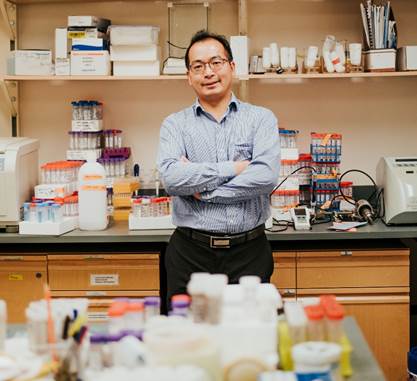
Dr. Jianbing Li is a Professor and Professional Engineer (P.Eng.) in the Environmental Engineering Program at the University of Northern British Columbia (UNBC), holding prestigious fellowships from CSCE, CSSE, EIC, and Engineers Canada. His research program addresses critical environmental challenges with significant real-world impact, particularly in northern and remote communities of British Columbia. Education: PhD in Environmental Systems Engineering, University of Regina Research Focus: Dr. Li's work centers on environmental pollution control , petroleum waste management , soil and groundwater remediation , environmental modeling , risk assessment , and oil spill response . His innovative approaches integrate machine learning, advanced materials, and sustainable engineering principles to develop practical solutions for complex environmental problems, with particular emphasis on resource recovery from waste streams. Publication Trends: Analysis of his 15 most recent publications (2023-2025) reveals a strategic focus on oil spill response technologies, wastewater treatment innovations, and waste valorization. Key advancements include nano/micro bubble flotation systems, chitosan-based adsorbents, and machine learning models for pyrolysis optimization, demonstrating his leadership in translating laboratory research to field applications. Scientific Recognition: 2024 Fellow of Engineers Canada and Engineering Institute of Canada 2023 CSCE Dr. Albert E. Berry Medal (Canada's top environmental engineering award) Multiple UNBC Research Excellence Awards (2010, 2014, 2019, 2023) 2013 Northern BC Business and Technology Award with Husky Energy Best paper awards from International Academy of Science and Environmental Geotechnology Society Research Leadership: Dr. Li has secured over $800,000 in 2023 and $1.9 million in 2020 for oil spill response research through NSERC, DFO, and NRCan. His current portfolio includes groundwater protection for Indigenous communities, next-generation decanting technologies, and water security for remote regions. He actively mentors PhD, MSc, and MASc students while serving on NSERC evaluation committees and co-directing the UNBC/UBC environmental engineering program (2013-2017). Collaborative Networks: Dr. Li leads multi-institutional partnerships with UBC, government agencies, industry (including Husky Energy), and Indigenous communities like Lheidli T'enneh First Nation. His work through the Multi-Partner Research Initiative addresses practical challenges in rural British Columbia while advancing fundamental knowledge in environmental systems engineering.
Murphy Yuezhen Niu is an Assistant Professor and Stansbury Chair in Computer Science at the University of California, Santa Barbara (UCSB), since 2024. She holds an adjunct role as Adjunct Assistant Professor at the University of Maryland, College Park, and the University of Maryland Institute for Advanced Computer Studies. Niu earned her Ph.D. in theoretical and mathematical physics from MIT (2018) and a B.A. in Physics from Peking University. Her research focuses on quantum computing paradigms, including quantum control optimization, quantum error correction, quantum machine learning, and scalable quantum architectures. Her work applies deep reinforcement learning and generative models to quantum systems, with contributions to superconducting qubit-based processors, ion traps, photonic systems, and neutral atom qubits. Niu's research emphasizes reducing the computational cost of quantum digitization while achieving real-world impacts. Notable achievements include the Claude E. Shannon Research Assistantship for her work in photonic quantum computation and quantum cryptography. Niu’s publications (2021–2025) span topics like quantum error correction thresholds, hybrid analog-digital quantum simulators, and machine learning-driven quantum decoding. Her research bridges theoretical physics and applied quantum computing, with a focus on fault-tolerant architectures and scalable quantum control protocols. Education: Ph.D., Physics, MIT (2018) B.A., Physics, Peking University Awards: Claude E. Shannon Research Assistantship Labs/Teams: Google Quantum AI Team (former role) UCSB Quantum Computing Research Group
Vallari Chandna is a Professor of Management and Associate Dean at the Austin E. Cofrin School of Business, University of Wisconsin-Green Bay. She holds a Ph.D. in Organizational Theory (2016) and MBA (2011) from the University of North Texas, along with a BA.LL.B. (Honors) from RSTMN University, India (2007). Her research focuses on strategy, entrepreneurship, and sustainability, with particular interests in digital entrepreneurship, temporary organizations, cybersecurity, degrowth, and inter-organizational relationships. Education: Ph.D. in Organizational Theory, University of North Texas (2016) MBA in Organizational Behavior and Human Resources, University of North Texas (2011) BA.LL.B. (Honors) from RSTMN University, India (2007) Her research has appeared in journals like Journal of Business Research , Technovation , and Business Horizons . She explores topics such as crowdfunding equity, digital ecosystems, and sustainable enterprise frameworks. Vallari actively collaborates with students on research, including co-authoring book chapters and conference papers. Her 2023-2025 publications examine: Gender disparities in crowdfunding Strategic control in organizations Value co-creation in platform ventures Regulatory compliance for crowdfunding Cybersecurity challenges for startups Temporal organization frameworks Notable award: Current Young Professionals of Green Bay Future 15 (2023) for professional and community impact. She contributes to academic governance as former Chair of the Marketing & Management Department (2019-2022), former Chair of the MS-Management program (2019-2022), and active participant in university committees including Faculty Senate. Vallari serves as Associate Editor for the International Journal of Project Management and Productivity Assessment and sits on editorial boards for journals on sustainable entrepreneurship and strategic decision sciences.
Professor Melanie Volkamer is a leading computer scientist at the Karlsruhe Institute of Technology (KIT), where she heads the SECUSO (Security, Usability, Society) research group within the Institute for Applied Informatics and Formal Description Methods at the Faculty of Business and Economics. She moved her research group from TU Darmstadt to KIT at the beginning of 2018 and has established herself as one of Germany's foremost experts on the human factor in security and privacy. Professor Volkamer's research focuses on human-centered security design, emphasizing that technical security solutions must be developed with user behavior and mental models in mind. She investigates why users often choose less secure passwords, fall for phishing emails, and how they react to security warnings. Her interdisciplinary team combines computer science, mathematics, and psychology to develop security solutions that better protect users against attacks while being usable in real-world contexts. Her publication record shows a strong focus on electronic voting security, email security, and cybersecurity awareness. Recent work includes analyzing the security challenges of online general meetings for listed companies, developing child-friendly authentication systems like KidzPass, and creating effective tools for detecting phishing emails. Her research demonstrates consistent attention to both technical security requirements and human factors in security design. Scientific Awards and Recognition: SECUSO tools recommended by the Federal Office for Information Security NoPhish concept materials included in the Federal Office for Information Security's CyberFibel since January 2021 Development of open source privacy-friendly apps available in the App Store Creation of educational tools like the Phishing Master Shooting Game Professor Volkamer actively advises on cybersecurity policy and regularly contributes to public discourse through media appearances and expert statements. She has supervised student projects that have resulted in practical security tools and has collaborated with government agencies including the Federal Ministry of Education and Research (BMBF) and the EU on security research projects. Her work with the Competence Center for Applied Security Technology (KASTEL) positions her at the forefront of Germany's cybersecurity research efforts. SECUSO, under Volkamer's leadership, develops practical security awareness measures including lectures, videos, flyers, and online tools that help citizens recognize fraudulent messages and better protect themselves online. The research group's work bridges academic research and practical application, making significant contributions to both theoretical understanding and real-world security solutions.
Jean-Christophe Burie is a Professor at the University of La Rochelle, serving as Vice-President for Digital Campus and Information Systems, Deputy Director of the L3i Laboratory (Informatics, Imaging, and Interaction), and Director of the joint research laboratory SAIL (Sequential Art Image Laboratory). His interdisciplinary work bridges computer science and humanities. His research focuses on image processing, pattern recognition, and artificial intelligence , with applications in historical manuscripts, comics indexing, and digital security. Key projects include enhancing palm-leaf manuscript analysis (AMADI/STIC ASIE), developing e-BDthèque for comics content extraction, and identity verification systems (MOBIDEM/IDECYS). He collaborates internationally with institutions like Leiden University and Vietnam's ICT Lab on medical imaging and cultural heritage preservation. He advises doctoral students in areas spanning ancient text analysis, document security, and manga character recognition. His recent publications demonstrate a strong emphasis on deep learning adaptations for document analysis, biometric security, and cross-modal recognition systems.
Dr. Paul Hill is a tenured Extension Professor at Utah State University's College of Agriculture and Applied Sciences, serving as the Washington County Director and founder of the Remote Online Initiative (ROI) established in 2018. His work focuses on connecting rural communities to remote work and e-commerce opportunities through innovative Extension programming that has expanded across all Utah counties and ten additional states. His educational background includes: PhD in Career and Technical Education (Distributed operations, leadership, diffusion of innovations) from Utah State University (2021) MBA in Leadership (Statistics, Marketing) from Southern Utah University (2011) BS in Business Administration (Leadership, Statistics, Marketing) from Utah Tech University (2009) Dr. Hill's research centers on remote work adoption as a modern workplace practice, with significant contributions to community, workforce, and economic development in rural areas. His work bridges leadership theory with practical applications for remote workforce development, creating measurable impacts on rural economic prosperity. His research demonstrates how technology adoption can transform traditional rural economies through remote work opportunities and e-commerce platforms. His publication record shows a clear progression from foundational work in STEM education and 4-H programming to increasingly sophisticated research on remote work adoption and its socioeconomic impacts. Recent publications focus on cutting-edge topics including generative AI applications in Extension, remote work satisfaction metrics, and evaluation frameworks for professional development events. His work consistently addresses practical challenges in rural community development through evidence-based approaches. Dr. Hill's scientific recognition includes: Utah Governor's Medal for Science and Technology (2015) Forty Under Forty Award from Utah Business Magazine (2021) Numerous national awards from seven different national associations totaling over 20 honors Multiple National Winners from the National Association of Community Development Extension Professionals As founder of the Rural Online Initiative, Dr. Hill has secured state and federal funding that has measurably increased incomes and improved quality of life for rural residents. His programming has received recognition for innovation, creativity, and community impact, with particular strength in developing practical solutions for rural workforce challenges. He has led numerous teams that have earned awards across multiple categories including educational technology, community development, and program innovation. Dr. Hill directs the Rural Online Initiative, which has become a model for rural workforce development across multiple states. His work integrates community asset mapping with technology adoption strategies to create sustainable economic pathways for rural communities. The initiative has evolved from local programming to a multi-state effort demonstrating significant impact on rural economic development through remote work opportunities.
Dr. Yusuf AKKOCA, currently a Lecturer at the Faculty of Economics and Administrative Sciences, Kırşehir Ahi Evran Üniversitesi, holds a PhD in Management and Organization from Ankara Yıldırım Beyazıt University (2014-2019) and an MSc from the University of Connecticut (2011-2013). His academic career at Kırşehir Ahi Evran Üniversitesi (2014-present) includes roles such as Research Assistant, Academic Advisor, and committee memberships in EFQM Model and Bologna Process initiatives. Education : PhD (Management and Organization, Ankara Yıldırım Beyazıt University), MSc (USA, University of Connecticut), BSc (Başkent University, Management Information Systems) His research focuses on Organizational Behavior , Strategic Leadership , and Human Resources , with publications analyzing talent management, organizational commitment, and the impact of job stress. His work spans interdisciplinary areas like defensive medicine in healthcare, organizational ethics, and digital transformation in Industry 4.0. Key publications include studies on competitive intelligence mediation (2025), personality traits and organizational commitment (2023), and Taylor's iron casting experiments (2021). Collaborations with scholars like Fatih Ferhat Çetinkaya and Musa Özata highlight his team-oriented research approach.
Andrei Hagiu is a Professor in the Information Systems department at Boston University's Questrom School of Business, with a focus on platform strategy and business models. He has previously taught platform strategy at Harvard Business School and MIT Sloan School of Management. Current Affiliation: Boston University (Questrom School of Business) Prior Affiliations: Harvard Business School, MIT Sloan School of Management His research explores the economics of two-sided platforms, marketplace dynamics, and the strategic use of data and generative AI in digital ecosystems. Recent work includes studies on AI regulation, platform discoverability, and antitrust implications for digital marketplaces. Key trends in his publications include: Platform economics and generative AI integration Data-driven competitive advantage Antitrust and regulatory challenges in digital markets Marketplace leakage and discoverability He serves as a Dean’s Research Scholar at BU and advises startups and corporations on platform-based business strategies. His collaborations include extensive co-authorships with researchers like Julian Wright and Catherine Dellarocas.
Dr Saif Dewan is a Senior Lecturer at the School of Law & Business , University of Notre Dame Australia. He holds a PhD in Business IT from the Australian National University and has taught Quantitative Methods for Business and Business Information Technology courses. Dr Dewan maintains honorary research affiliations with the University of New South Wales and the University of Twente, Netherlands. PhD in Business IT from Australian National University His research spans IT artefact design , business analytics , digital innovation , cybersecurity management , and AI . His work focuses on integrating technology with organizational effectiveness and consumer behavior. While the recent publications highlight his expertise in analytics knowledge management , neuro-IS studies , and mobile banking research , his broader contributions include conceptual frameworks for digital entrepreneurship, context-aware business processes, and information transparency in e-commerce. Dr Dewan actively collaborates with international institutions and has consulted for the United Nations, Samsung, and governments on IT and business analytics. He has supervised numerous PhD and Honours students and served on boards of technology startups, NGOs, and private schools globally.
Prof. Dr. Valentina Dagienė serves as a Professor and Senior Researcher at the Educational Systems Group within the Institute of Data Science and Digital Technologies at Vilnius University, Lithuania. Her academic career spans several decades with significant contributions to informatics education globally, particularly through her leadership in the international Bebras contest initiative. Her research focuses on computational thinking education through constructionist learning approaches, with particular emphasis on task design that promotes deep conceptual understanding in K-12 settings. Prof. Dagienė has pioneered methods for integrating computational thinking into primary education curricula while addressing cultural differences in learning approaches. Her work bridges theoretical frameworks with practical classroom implementations, making complex informatics concepts accessible to young learners through engaging short tasks. Analysis of her recent publications reveals a clear progression toward interdisciplinary integration of computational thinking with STEAM education and digital competence frameworks. Her research increasingly addresses assessment methodologies for computational thinking skills and explores the connections between computational and algebraic thinking. The Bebras contest serves as both a research platform and practical implementation vehicle for her educational theories. Prof. Dagienė has established herself as a key figure in international informatics education through her editorial work, conference organization, and cross-national collaborations. She has fostered partnerships between educators and researchers across Europe and beyond, creating sustainable communities around computational thinking education. Her leadership in the Bebras International Contest has engaged millions of students worldwide in computational problem-solving activities. Through her work with the Educational Systems Group, Prof. Dagienė has developed comprehensive teacher training programs that support educators in implementing computational thinking concepts in diverse classroom settings. Her research on student approaches to problem-solving has informed the design of learning environments that accommodate different learning styles and cultural backgrounds.
Ronan Gruenbaum serves as Dean of International Affairs & Program Development at Hult International Business School, leading global partnerships and academic innovation. Previously, he directed the award-winning Bachelor of Business Administration program as Global Director of Undergraduate Learning and Development, and served as Dean of Hult's London undergraduate campus (2016-2022) after joining the institution in 2011 as a full-time professor of marketing technology. His expertise centers on digital transformation in business education, with core research areas including: E-commerce strategy and implementation Social technologies for organizational innovation Hybrid and online learning methodologies Future of work competencies development Business school evolution in digital age Digital marketing ecosystems Analysis of his publications reveals consistent focus on technology's disruptive impact across educational and business landscapes, particularly examining how social media, AI, and Web 2.0 tools necessitate fundamental shifts in teaching methodologies and organizational structures. His work emphasizes practical frameworks for implementing digital solutions while addressing associated risks and measurement challenges. No scientific awards were documented in the source materials. Professional engagement includes extensive conference speaking on educational innovation topics, though specific student advisement records and research grants remain undisclosed. His leadership in developing Hult's undergraduate programs demonstrates applied focus on preparing students for technological disruption in global business environments. Current initiatives indicate strong emphasis on AI integration challenges for business education and strategies for maintaining institutional relevance amid rapid technological change.
Miklós Szócska is a Professor and Dean of the Faculty of Public Health at Semmelweis University, Budapest. He also serves as the Director of the Healthcare Management Training Center and Head of the Institute of Digital Health Sciences. His career bridges academic leadership with healthcare policy, including roles as Secretary of State for Health (2010–2014), where he focused on evidence-based health policy, public health taxes, and e-health systems. Education: General Practitioner, Semmelweis University (1989) Master of Public Administration, Harvard University's John F. Kennedy School of Government (1998–1999) PhD, Semmelweis University (2008) Research Interests: Szócska's work spans network analysis , leadership and change management , crisis communication , social innovation , and big data/AI applications in healthcare . His recent studies focus on reconstructing 3D histological structures via machine learning, global mortality linked to pathogens, and tobacco control policies. Article Trends: His publications emphasize global health metrics (e.g., mortality decomposition, colorectal cancer risk factors) and digital health innovations (AI, e-health). Systematic analyses from the Global Burden of Disease Study frequently inform his research. Academic Affiliations: He leads the Institute of Digital Health Sciences and chairs the Faculty of Public Health at Semmelweis University. His international roles include Board Membership at the European Health Forum Gastein and Supervisory Board positions at EIT Health.
Sergey Yuryevich Roshchin serves as Vice-Rector of the National Research University Higher School of Economics (HSE) and Head of the Laboratory of Labor Market Research within the Faculty of Economic Sciences. He holds the academic rank of Associate Professor in the Department of Applied Economics and is a member of HSE's Academic Council. With 34 years of scientific and teaching experience, he has been working at HSE since 2004. His academic background includes a Candidate of Economic Sciences degree (1995) from Moscow State University in Labor Economics and a Specialist degree in Economic Cybernetics (1985). Roshchin's research focuses on labor economics, personnel economics, and population economics, with particular attention to gender wage gaps, non-cognitive skills, and the relationship between education and labor market outcomes in Russia. His professional journey began at Moscow State University, where he served in various academic roles before joining HSE, where he previously headed the Department of Labor Economics and Population (2005-2015). Analysis of Roshchin's recent publications reveals a consistent focus on Russian labor market dynamics, particularly examining how educational choices translate into career outcomes. His work frequently investigates gender disparities in wages, the impact of non-cognitive skills on economic behavior, and the evolving relationship between higher education institutions and the labor market. His research methodology often combines econometric analysis with large-scale survey data, contributing significantly to policy discussions in Russia. Medal "For contribution to the development of university" HSE (June 2023) Order of Honor (February 2022) Gratitude of the Government of the Russian Federation (September 2017) Honorary sign of the 1st degree of the Higher School of Economics (March 2018) Best Teacher awards (2018, 2013, 2011) Multiple academic publication bonuses (2021-2025) As Vice-Rector, Roshchin oversees educational programs, accreditation processes, and e-learning initiatives at HSE. He has supervised numerous PhD students, many of whom have gone on to contribute to labor market research in Russia. His leadership extends to coordinating partnerships between HSE and leading Russian universities in economics and management fields. He also plays a key role in organizing major academic events, including conferences on labor market research and participation in the university's strategic development initiatives. Roshchin leads the Laboratory of Labor Market Research, which conducts extensive empirical work on Russian labor market dynamics. The laboratory's research informs both academic discourse and policy decisions, with regular publications in leading journals and presentations at major conferences. Under his guidance, the laboratory has become a significant center for labor economics research in Russia, collaborating with both domestic and international institutions.
Daria Dzyabura is a Professor at the New Economic School (Russia) and Skolkovo Moscow School of Management. She holds a PhD in Management from MIT (2012) and serves as Director of the Economics and Data Science Program and Associate Vice Provost for Academic Affairs. Previously, she was an Associate Professor at NYU Stern School of Business (2018–2020) and a Full Professor at NES since 2020. Research Interests : Artificial intelligence methods in marketing, consumer preference modeling, recommender systems, and visual data analysis. Her work on consumer visual associations in Marketing Science and Journal of Marketing was recognized with INFORMS Society of Marketing Science awards. She contributed to Image Analytics in Marketing (2021) and Machine Learning (2018) book chapters. Recent Publications (2021–2023) focus on visual data in brand perception, product returns, and consumer search behavior. Her studies leverage machine learning for social media analytics and retail strategy, with applications to omnichannel retail and AI-driven marketing. Awards include the John D.C. Little Award Finalist (2021) Frank M. Bass Award Finalist (2021) MSI Young Scholars Award (2019) She serves as Associate Editor for Management Science and Marketing Science , and on editorial boards of Journal of Marketing and Journal of Marketing Research . Recent presentations include the 2022 MSI conference and IDLab seminar.