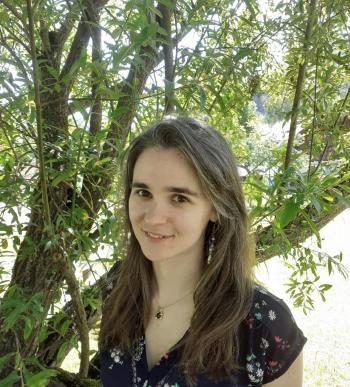
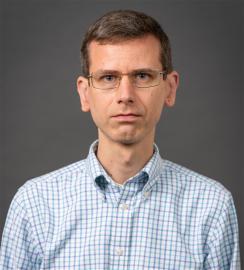
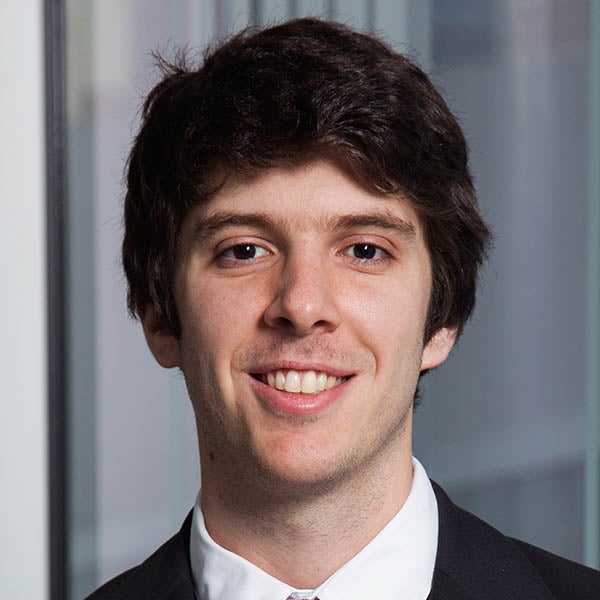
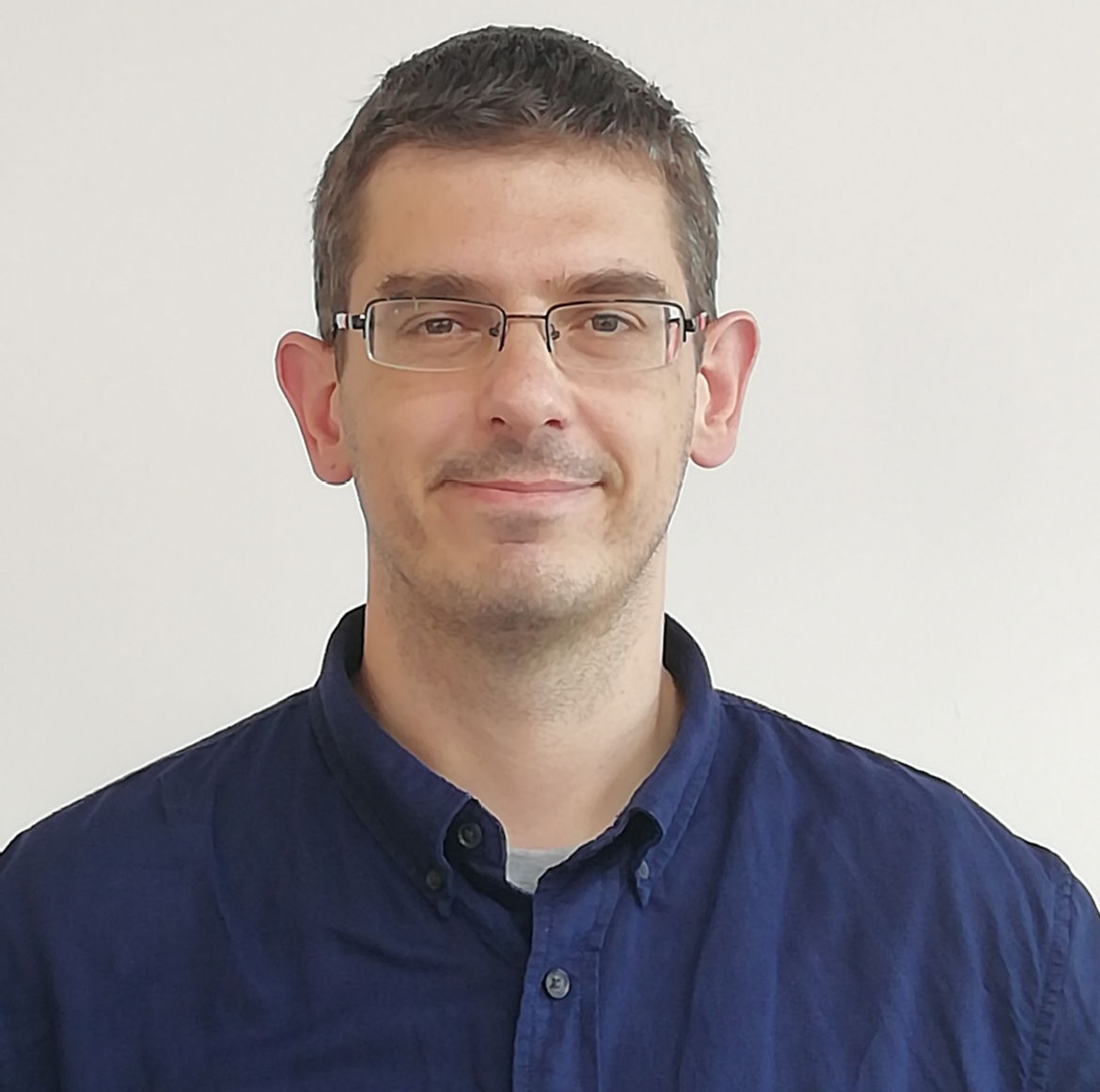
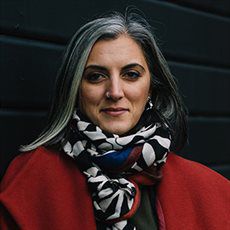
Dr. Pulin Gong is an Associate Professor in the School of Physics at the University of Sydney. His research focuses on understanding the self-organizing mechanisms of neural circuits' spatiotemporal dynamics and their computational principles. He investigates distributed dynamic computation via propagating neural waves, irregular neural activity variability, and coherent spatiotemporal patterns in large-scale neural data. His work combines experimental and computational approaches to unravel neural coding principles. Research interests include: Distributed dynamic computation (e.g., visual feature integration) Irregular neural dynamics and membrane potential fluctuations Coherent spatiotemporal wave patterns (e.g., spiral waves) Recent projects involve analyzing cortical wave patterns in mice and primates, fractional neural sampling, and Lévy walk dynamics in neural systems. Collaborators include institutions like Fudan University and Kyoto University. Current research student: Andrew LY, working on cortico-cortical loop dynamics and AI applications.
Susanna V. Haziot is an Assistant Professor in the Department of Mathematics at Princeton University. Her research focuses on fluid dynamics, partial differential equations, and geophysical fluid dynamics with applications to oceanographic phenomena. She investigates wave propagation, vortex dynamics, and nonlinear systems, particularly in contexts like Arctic and Antarctic ocean currents, Muskat problems, and water wave theory. Her work combines analytical techniques, such as bifurcation theory and stability analysis, with geophysical modeling to address challenges in climate science and coastal engineering. Notable contributions include studies on solitary waves with constant vorticity, critical layers in stratified fluids, and the application of stereographic projections to model ocean currents. Dr. Haziot’s publications span topics from mathematical analysis of free boundary problems to historical perspectives on traveling water waves, reflecting her interdisciplinary approach. While no awards or grants are explicitly listed in the provided materials, her extensive publication record highlights her active role in advancing theoretical and applied fluid dynamics research. Her affiliations include the mathematics department at Princeton, where she contributes to both teaching and research initiatives. No doctoral advisees are listed in the provided text, though her work likely involves collaboration with graduate students and research groups focused on environmental fluid dynamics.
Iro Laina is a Departmental Lecturer in Computer Vision at the University of Oxford's Visual Geometry Group. She holds a PhD (Dr. rer. nat.) from the Technical University of Munich (TUM), where her dissertation earned the ECVA PhD Award. Her research focuses on unsupervised and language-supervised learning for 3D scene understanding, image/video perception systems, and geometric reconstruction. Education: PhD in Computer Science (TUM), MSc in Biomedical Computing (TUM), Diploma in Electrical & Computer Engineering (NTUA). Research Interests: 3D Reconstruction and Generation Unsupervised Learning Multi-View and Video Analysis Generative Diffusion Models Geometry-Aware Networks Her recent work emphasizes scalable 3D scene synthesis, training-free methods, and cross-modal fusion with LLMs. Over 15+ publications since 2021 reflect her leadership in geometric deep learning. Awards: ECVA PhD Award (2020), Recognized in multiple international conferences. Advising: Mentors DPhil students in creative AI applications (e.g., gameplay design). Active in Oxford's Robotics and Biomedical Engineering networks. Labs/Tech: Core member of the Visual Geometry Group, collaborating on projects like IMAD2025 with the ZERO Institute.
Dr. Cheng Ouyang is a Departmental Lecturer at the University of Oxford's Institute of Biomedical Engineering, part of the Department of Engineering Science. Affiliated with St. Peter's College, his research focuses on developing data-efficient, robust machine learning approaches for medical imaging and signal analysis. Key interests include domain generalization, few-/zero-shot learning, uncertainty modeling, and multimodal learning applied to medical data such as ultrasound and MRI. Prior to Oxford, he conducted postdoctoral research in cardiac imaging at Imperial College London, where he also earned his PhD in Computing. His work emphasizes practical medical applications, such as accelerating MRI reconstruction and enhancing ECG classification through multimodal techniques. Recent contributions include the CMRxRecon2024 dataset for cardiac MRI and federated learning approaches for low-dose CT denoising. His methods address challenges in generalizability, stability, and user interaction in clinical AI systems. Awards and recognitions are pending explicit mentions in the text. Dr. Ouyang's research spans foundational machine learning theory and applied biomedical engineering, with a focus on bridging gaps between algorithmic innovation and clinical utility. His lab collaborates across disciplines to advance medical imaging analysis and decision support systems.
Jason Schweinsberg is a Professor in the Department of Mathematics at the University of California, San Diego (UCSD), where he has been a faculty member since Fall 2004. His academic journey began with a Ph.D. in Statistics from the University of California, Berkeley in 2001, followed by a three-year NSF Postdoctoral Fellowship at Cornell University. His research focuses on probability theory with applications to evolutionary biology and population genetics. Schweinsberg's work centers on stochastic processes involving coalescence, branching Brownian motion, and their connections to biological phenomena. He has made significant contributions to understanding population models undergoing selection, cancer evolution, and spatial mutation processes. Recent publications reveal a strong emphasis on coalescent theory (particularly Λ-coalescents and nested coalescents), branching processes with absorption, and spatial evolutionary models. His work often bridges rigorous mathematical analysis with biological applications, especially in population genetics and cancer modeling. The 15 most recent articles demonstrate consistent focus on asymptotic analysis of stochastic processes, genealogical structures, and mutation dynamics in evolving populations. Scientific Awards: Fellow of the Institute of Mathematical Statistics NSF Postdoctoral Research Fellowship While specific student names aren't listed in the source material, Schweinsberg has delivered numerous lecture series at international institutions including the Indian Institute of Science (Bangalore), Centre de Recherches Mathématiques (Montreal), and the Isaac Newton Institute (Cambridge), indicating active mentorship and academic leadership. His collaborations span multiple institutions, with frequent co-authorship with researchers like Julien Berestycki, Nathanaël Berestycki, and Rick Durrett. Though no formal lab structure is mentioned, Schweinsberg participates in interdisciplinary research communities through workshops at institutions like BIRS (Banff International Research Station), where he presented on mutation patterns in spatially structured populations in May 2025. His work connects probability theory with biological applications through sustained collaborations across mathematics, statistics, and computational biology fields.
Santiago Segarra is the W. M. Rice Trustee Associate Professor in the Department of Electrical and Computer Engineering at Rice University, with courtesy appointments in Computer Science and Statistics. He joined Rice in 2018 and collaborates with Microsoft Research since 2022. His expertise spans network theory, machine learning, graph signal processing, and optimization. Segarra earned his B.Sc. in Industrial Engineering from ITBA (2011), and M.S. and Ph.D. in Electrical and Systems Engineering from the University of Pennsylvania (2014-2016), followed by a postdoc at MIT (2016-2018). Research Focus: His work integrates algebraic topology, signal processing, and machine learning to analyze networked systems. Key areas include social/technological network clustering, graph-based data analysis, and applications in neuroscience and communication networks. Recent projects address fair graph learning, distributed GNN training, and network topology inference. Awards: Penn’s Wolf Award for Best Dissertation (2017), Argentine National Engineering Honors (2011), and ITBA’s Best Thesis Award (2011). Grants/Sponsors: Supported by NSF, ONR, and industry collaborations. Labs/Groups: Leads the Rice Wireless group and collaborates with Microsoft Research on applied network science. Advises students in interdisciplinary research combining theory and real-world applications.
Richard Taylor is Associate Professor in QUT's Faculty of Engineering, specializing in applied superconductivity and power engineering. His research focuses on high-temperature superconducting (HTS) materials characterization, MgB2 wire technology, and energy-efficient cryogenic systems. Experimental work includes developing testing facilities for HTS machine performance under dynamic electromagnetic conditions. Publications demonstrate consistent focus on superconducting materials optimization for industrial applications.
Andreas Markoulakis is a Lecturer in the Department of Economics at the University of Warwick. He teaches modules including EC134: Topics in Applied Economics, EC229: Economics of Strategy, and EC138: Introduction to Environmental Economics. His research spans Behavioral Economics, Experimental Economics, and Microeconometrics, with a focus on energy policy, environmental economics, and pedagogical innovations. He has conducted studies on the One-Minute Paper (OMP) teaching intervention, analyzing its impact on student engagement and comprehension across seminar sessions. This intervention, implemented in EC138, employs paper-based feedback to assess student understanding and has shown discrepancies in responses when framing questions differently (e.g., addressing hesitant students explicitly). Education: PhD in Economics from the University of Kent Key research areas: Energy security policy, creative production incentives, and the application of experimental methods in economics Teaching responsibilities include advising international students and assessing graduate teaching assistants His work on the OMP intervention highlights lower comprehension rates when questions explicitly acknowledge student hesitation, suggesting potential barriers for non-native English speakers or shy students. He also explores long-term learning retention and the correlation between OMP feedback and academic performance. Future research directions include expanding the OMP analysis to broader student demographics and integrating assessment with formal exam performance data. Contributions to educational practices include publishing findings on small-group teaching effectiveness and fostering transparent communication between instructors and students. Ongoing projects involve studying semiconductor economics' impact on labor markets and AI's role in creative industries.
Professor Annie Mahtani is a Professor of Electroacoustic Composition and Practice at the University of Birmingham's Department of Music. She holds a BMus (Hons), MA, MPhil, and PhD from the University of Birmingham and Birmingham City University. Her work focuses on electroacoustic music, acousmatic composition, multichannel audio, spatialisation, and field recordings, with significant contributions to site-specific installations and cross-disciplinary collaborations. She co-directs the SOUNDkitchen collective and serves on key boards such as the British ElectroAcoustic Network (BEAN) and the British Section of ISCM. Her research explores the sonic identity of environmental sounds, large-scale multichannel composition, and ambisonic audio techniques. As a performer with BEAST (Birmingham Electroacoustic Sound Theatre), she develops live acousmatic performances and soundwalks. Recent projects include Becoming Tree (an immersive audio retelling of a literary work) and Minimum Monument , performed at Birmingham Hippodrome. She actively collaborates with dance and theatre companies like Rosie Kay Dance Company. Professor Mahtani teaches undergraduate and postgraduate modules in electroacoustic composition and is involved in admissions and curriculum leadership. Her works have been performed globally in festivals like Klang! Électroacoustique and Sound + Environment, showcasing her innovative contributions to contemporary music and sound art.
Holger Straßheim is Professor of Political Sociology at Bielefeld University, affiliated with the Faculty of Sociology, Department 4 – Politics and Society. He also holds leadership roles as co-director of the Institute for Interdisciplinary Studies of Science (ISOS) and the Institute for World Society Studies, and is an elected member of the university’s Senate. He coordinates the MA program in Political Communication and serves on multiple examination and ethics committees. University: Bielefeld University School: Faculty of Sociology Department: Department 4 – Politics and Society Research Institutes: ISOS, Institute for World Society Studies Administrative Roles: Program Coordinator MA Political Communication, Member of BA/MA Examination Boards, Habilitation Committee His research centers on the interplay between science and politics, particularly the role of expertise and evidence in public policy. Key areas include behavioral public policy, climate and consumer policy, Arctic geopolitics, and the temporal dimensions of governance. He investigates how knowledge is produced, legitimized, and used in policy-making across transnational contexts. The most recent publications reflect a strong focus on evidence cultures, ethical expertise in crises, and the global spread of behavioral governance. These works analyze how expert advice functions under uncertainty, the paradoxes of evidence-based policy, and the institutionalization of ethical guidance during emergencies like the COVID-19 pandemic. The research often employs comparative and interdisciplinary methods, engaging with science and technology studies, political sociology, and policy analysis. Best Dissertation Award, University of Tübingen (2011) Visiting Fellow, Harvard Kennedy School (2014) Visiting Research Fellow, Collège d’études mondiales, Paris (2018) Visiting Research Fellow, University of Bologna (2022) Straßheim has supervised and advised in various research projects and PhD initiatives, particularly through his leadership in DFG and ESRC-funded programs. He has secured significant third-party funding, including projects on Arctic knowledge co-production and ethics in crisis governance. He is actively involved in academic service, reviewing for major journals and research councils, and shaping policy discourse through editorial roles in Critical Policy Studies and the Advances in Critical Policy Analysis book series. He leads the Straßheim Research Group, fostering interdisciplinary collaboration on science-policy interfaces. He is a key figure in research networks such as the Science and Democracy Network (Harvard) and the International Arctic Science Committee. His work bridges academic inquiry with real-world policy challenges, emphasizing democratic accountability, epistemic pluralism, and the ethical dimensions of expertise.
Prof. Dr.-Ing. Weihan Li is a Junior Professor at RWTH Aachen University, specializing in Artificial Intelligence and Digitalization for Batteries. He is affiliated with the Institute for Power Electronics and Electrical Drives (ISEA) and the Center for Ageing, Reliability, and Lifetime Prediction of Electrochemical and Power Electronic Systems (CARL). His research bridges informatics, electrochemistry, and power electronics to advance battery technology through AI. B.Sc. in Automotive Engineering (Tongji University, 2014) M.Sc. in Automotive Engineering and Transport (RWTH Aachen, 2017) Ph.D. in Electrical Engineering and Information Technology (RWTH Aachen, 2021, summa cum laude) Prof. Li’s research focuses on AI-driven battery modeling, diagnostics, and optimization. Key areas include digital twin technology, electrochemical parameterization, and lifetime prediction using field data. He explores multi-scale kinetic processes, thermal management, and mechanical-electrochemical coupling effects in battery systems. The articles listed reflect his leadership in AI-powered battery analytics, spanning degradation prediction, fast charging, failure mode analysis, and grid-scale storage. His work emphasizes both theoretical innovation (e.g., diffusion models, physics-informed neural networks) and practical applications (e.g., second-life battery screening, automotive integration). Clarivate Highly Cited Researcher 2024 BMBF BattFutur Research Group (€2M+) German Thesis Award (Körber Foundation) Reichart Prize vgbe Innovation Prize Battery Young Research Award Umbrella Award RWTH Innovation Award Prof. Li leads an interdisciplinary research group with over €6 million in grants from BMBF, BMWK, BMDV, European Commission, and industry partners. His teams focus on battery informatics, AI-driven diagnostics, and digitalization of testing processes at CARL and ISEA.
David R. Lee is an International Professor at the Charles H. Dyson School of Applied Economics and Management, Cornell University. He holds a BA from Amherst College (1972), MA and PhD from the University of Wisconsin-Madison (1980/1981). His research bridges economic development, agriculture, and environmental sustainability, focusing on food security, climate change impacts, and policy interventions. He has advised global institutions like the World Bank, FAO, and USAID, and received the World Bank Green Award twice (2007, 2011). Education: PhD in Applied Economics, University of Wisconsin-Madison (1981) MA in Economics, University of Wisconsin-Madison (1980) BA in Economics, Amherst College (1972) Research Interests: Dr. Lee explores how economic policies can enhance sustainable agriculture while mitigating environmental degradation. His work emphasizes climate-smart practices, technology diffusion among smallholders, and gender dynamics in resource use. Recent studies include analyzing religious networks' role in information sharing and bioenergy systems' climate mitigation potential. Awards: World Bank Green Award (2007, 2011) Teaching & Advising: Teaches International Trade and Finance and Natural Resources and Economic Development . Mentors graduate students in development economics. No specific grants listed, but extensive consultancy work with global institutions reflects applied research impact. Global Engagement: Conducted research in ~30 countries across Latin America, Sub-Saharan Africa, and beyond. Served as visiting scholar at FAO, USDA, and universities in Italy, Netherlands, Venezuela, and Honduras.
Yong Zhang is a Professor in the Department of Geological Sciences at the University of Alabama, serving as Undergraduate Program Director. His research focuses on stochastic hydrology, contaminant transport in soil/water/aquifers (including heavy metals, PFAS, microplastics, and antibiotics), and surface water-groundwater interaction. He has held postdoctoral positions at the University of California, Davis; Desert Research Institute; and Colorado School of Mines. Current research includes the 'Groundwater 2070' project in Baldwin County, Alabama, addressing climate change impacts and seawater intrusion. Education: BS in Hydrogeology and Geo-Engineering (Nanjing University, 1993), PhD in Hydrology and Water Resources (Nanjing University, 1998). He teaches courses like GEO 101, GEO 306, and specialized topics such as Fractional Calculus and Hydrogeophysics. His work integrates fractional calculus with hydrogeology, yielding models for non-Fickian transport and pollutant source identification. Students under his advisement include Jonathan Frame, Chaloemporn Ponprasit, and Hossein Gholizadeh. Research outputs emphasize environmental geochemistry, numerical modeling, and groundwater sustainability. Notable collaborations involve Dr. Geoff Tick on co-advised PhD students.
Zijian Shao is a Postdoctoral Research Associate at Princeton University's School of Engineering and Applied Science, affiliated with the Department of Electrical Engineering. His work focuses on advanced antenna design, electromagnetic modeling, and machine learning applications in RF/mmWave systems for 5G/6G telecommunications. Advisor: Kaushik Sengupta Email: zs9193@princeton.edu Office: Engineering Quadrangle Atrium Shao's research explores the intersection of machine learning and electromagnetic design , particularly for next-generation wireless communication. He specializes in antenna miniaturization , MIMO decoupling , and metasurface-enabled beamforming , with applications in sub-terahertz circuits and integrated sensing systems. His recent publications demonstrate expertise in deep learning-assisted inverse design of multi-port RF systems and spoof surface plasmon polariton-based antenna optimization . While no formal awards are listed, his work contributes to advancing compact, high-efficiency antenna arrays for 5G/6G networks.
Roy Johnsen is a Professor in the Department of Mechanical and Industrial Engineering at the Norwegian University of Science and Technology (NTNU), specializing in corrosion and surface technology. With a Dr.ing. degree from NTH (1984), he has extensive industry experience from Statoil Research Centre (1985-1991) and CorrOcean (1991-2004), where he expanded the company globally. His current research focuses on hydrogen embrittlement, corrosion protection, and integrity management in offshore systems, with collaborations across Europe, Asia, and the Americas.