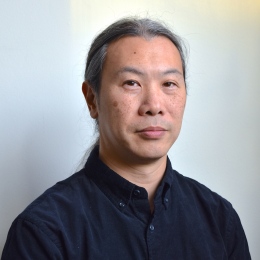
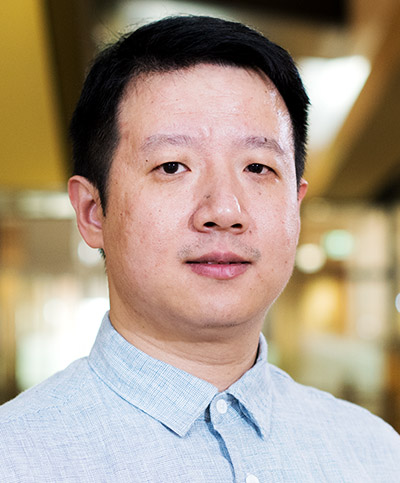
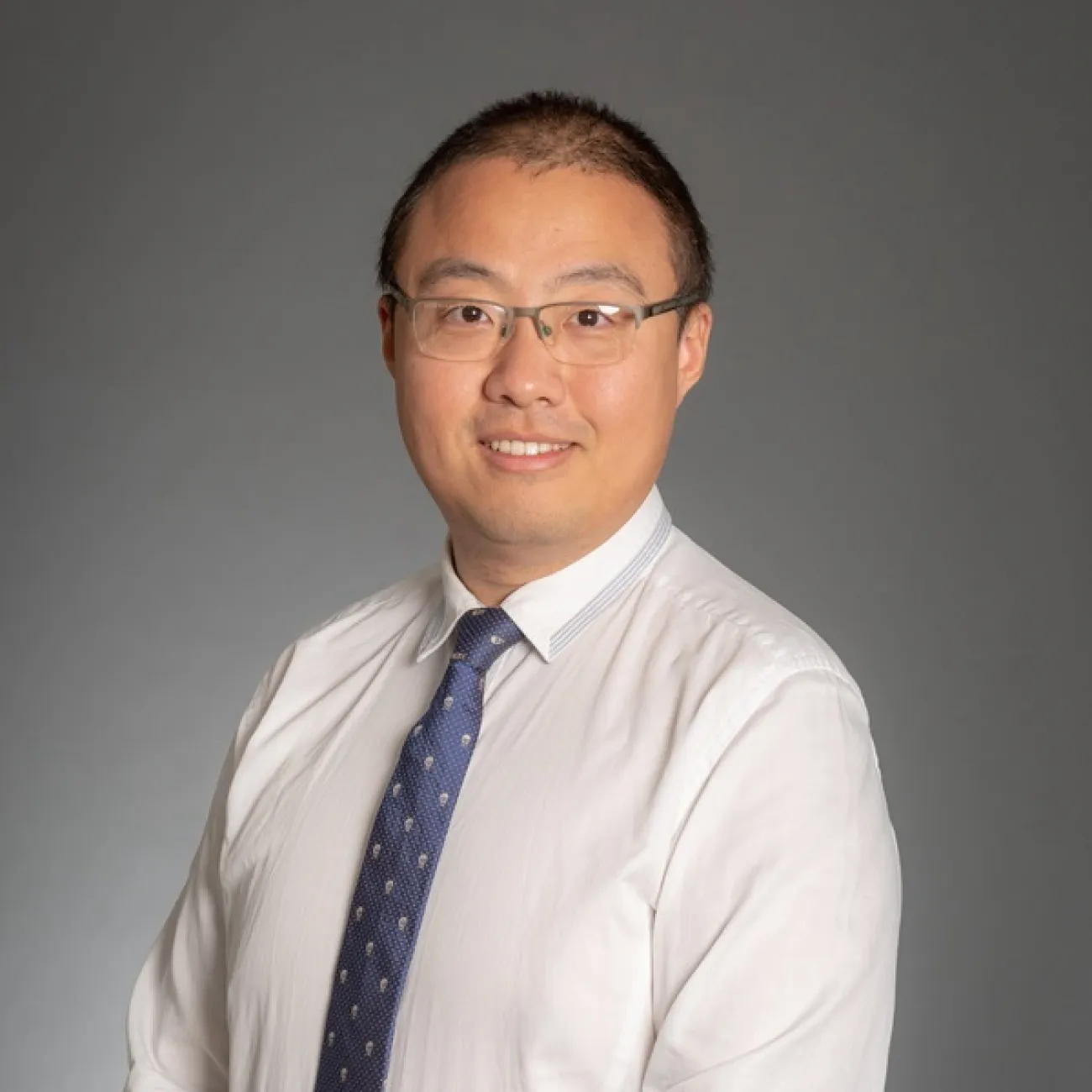
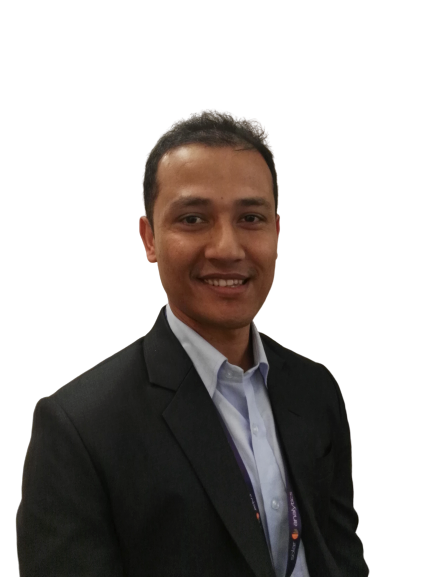
Gunnar Kusch is a Senior Research Associate at the Department of Materials Science & Metallurgy, University of Cambridge. His research focuses on defects in semiconductors, porous AlGaN materials, and advanced characterization techniques like cathodoluminescence (CL) and atom probe tomography (APT). He holds a PhD from the University of Strathclyde and leads projects on UV-B LED optimization, nanoscale defect behavior analysis, and semiconductor device design. His work bridges materials synthesis, characterization, and device performance, with applications in energy-efficient lighting and solar cell technology. Key research areas include: Defect engineering in III-nitride semiconductors Porous AlGaN templates for high-efficiency UV emitters Correlative microscopy techniques (CL, EBSD, APT) Composition-structure-property relationships in photovoltaic materials Notable contributions include developing CL-based methods for nanoscale defect analysis and demonstrating improved Cu(In,Ga)S₂ solar cell efficiencies through compositional engineering. His laboratory focuses on translating microscopic insights into macroscopic device improvements.
Niladri Banerjee is a Senior Lecturer in the Department of Physics at Imperial College London, serving as Research Representative of the Matter Community in Physics. His research focuses on atomic-precision growth of materials, advanced electronic and magnetic characterisation, and modelling to develop emergent quantum phases in low-dimensional systems including thin films and van der Waals materials. Education PhD, University of Cambridge Postdoctoral Research Associate, University of Cambridge Junior Research Fellow, Wolfson College, Cambridge Research Interests His work spans critical areas in quantum technology development: Quantum Materials: Engineering emergent quantum phases through atomic-precision synthesis of low-dimensional materials. Spintronics: Investigating spin-orbit coupling effects and triplet supercurrents in superconducting hybrid structures. Superconductivity: Developing superconducting switches, diodes, and proximity-effect devices for quantum computing. Nanomaterials: Characterising thin films and van der Waals heterostructures for next-generation electronic applications. Recent Publications His 2021-2025 publications demonstrate sustained leadership in superconducting spintronics and topological quantum materials. Key contributions include realising de Gennes' superconducting switch, roadmap development for quantum technologies, and flux-pinning mediated superconducting diodes. His work consistently bridges experimental synthesis with theoretical modelling to address challenges in quantum computing and neuromorphic technologies. Scientific Awards No scientific awards were mentioned in the provided materials. Advising and Grants Details regarding student advising and research grants were not specified in the available information. Labs and Teams As an active member of Imperial's Matter Community in Physics, Dr. Banerjee collaborates on advanced characterisation techniques and quantum device engineering, focusing on spin-orbit coupled materials and topological phenomena for quantum technology applications.
Cheuk Wai Tai is a Senior Staff Researcher at Stockholm University's Department of Environmental and Materials Chemistry since 2009. He manages the transmission electron microscopes and sample preparation equipment at the Electron Microscopy Center and serves as Section Editor for the Journal of Electronic Materials. His work focuses on quantitative structure characterization in functional materials research, particularly within nanoscience and nanotechnology contexts. Education: Ph.D. in Applied Physics, The Hong Kong Polytechnic University, 2004 M.Phil. in Applied Physics, The Hong Kong Polytechnic University, 2001 M.Sc. in Physics, The Chinese University of Hong Kong, 1998 B.Sc. (Hons) in Engineering Physics, The Hong Kong Polytechnic University, 1997 Dip. in Mechanical Engineering (Computer Aided Engineering), Institute of Vocational Education (formerly Haking Wong Technical Institute), Hong Kong, 1992 His research centers on structure-property relationships in functional materials through advanced electron microscopy techniques. Current specializations include Pair Distribution Function (ePDF) & Diffuse Scattering, Energy Materials characterization, and EM sample preparation methodology development. The group maintains strong focus on translating structural data into functional performance metrics for nanomaterials. Recent publications (2013-2019) demonstrate consistent emphasis on electron microscopy applications for energy storage materials (batteries, photocatalysts) and functional ceramics. Key trends include structural disorder analysis in piezoelectrics, development of quantitative TEM methods like SUePDF, and nanoscale characterization of electrocatalyst surface phases. His work bridges materials chemistry with advanced imaging techniques. Scientific recognition includes: Fellow of The Royal Microscopical Society (U.K.) Senior Member of IEEE Marie Curie Fellowship (2007-2009) from European Commission Sir Edward Youde Memorial Fellowship (2003/2004) from Hong Kong S.A.R. Government He teaches Solid State Chemistry (KZ7003) and leads Introduction to Analytical Electron Microscopy (KZ8009), having previously taught Advanced Transmission Electron Microscopy (KZ8010) before 2011. Major grants supporting his work include: "Quantitative structural characterisation using 3D electron-based pair distribution function" (Swedish Research Council) "A Multidimensional Toolkit for Modern Electron Microscopy" (Swedish Foundation for Strategic Research) "Mitigating Ni-rich Li-ion cathode side-reactions" (Swedish Energy Agency, Co-applicant) He leads the Cheuk-Wai Tai group within Stockholm University's chemistry department and oversees operations at the Electron Microscopy Center, where his team develops and applies advanced characterization techniques for functional materials research.
Martin Saunders is an Associate Professor and leader of the Physical Science Electron Microscopy Platform at the University of Western Australia's Centre for Microscopy, Characterisation & Analysis (CMCA). He holds leadership roles in national microscopy consortia, including Microscopy Australia and the National Imaging Facility. His academic career spans over 20 years, with roles as Deputy Director and Acting Director of CMCA, and President of the Australian Microscopy and Microanalysis Society (AMMS). Saunders earned a PhD in Physics from the University of Bath (UK) and postdoctoral experience at institutions including the University of Bristol and the US Naval Postgraduate School. His research focuses on advanced electron microscopy techniques, including TEM, STEM, EELS, and tomography, applied across physical, biological, and geo sciences. Education: PhD in Physics (University of Bath, 1994), BSc in Applied Physics (University of Bath, 1990). Research interests include structural and chemical analysis of nanomaterials, biominerals, and geological samples. He collaborates globally, contributing to high-impact journals like Nature and Advanced Materials . Saunders has secured over $25M in grants from ARC, NHMRC, and NCRIS, funding cutting-edge microscopy infrastructure. Awards: Inaugural AMMS Fellow (2025), Life Membership (AMMS), Fellow of the UK Institute of Physics (2012). Teaching: Coordinates materials characterization courses for biomedical engineering and nanotechnology programs. Provides training in electron microscopy for researchers and postgraduates. Labs/Infrastructure: Manages state-of-the-art facilities including FEI Titan G2 80-200 TEM/STEM and DualBeam FIB-SEM systems at CMCA.
Ed Pickering is a Senior Lecturer in Metallurgy and Materials Engineering at the University of Manchester. He has held roles since 2015, advancing to Reader in 2023. His affiliations include the Henry Royce Institute (Research Area Lead for Advanced Metals Processing), the Advanced Metallics System CDT and Fusion CDT Management Boards, and industrial technical advisory panels. Ed’s work bridges academic and industrial collaboration with Rolls-Royce, UKAEA, Airbus, EDF, and Sheffield Forgemasters. Ed completed his undergraduate studies (2011) and PhD (2014) in Materials Science at the University of Cambridge, followed by a Research Associate role in Cambridge’s Rolls-Royce UTC. His academic trajectory includes: Senior Lecturer (2019–present) Reader (2023–present) Ed’s research focuses on phase transformations, microstructural characterization, and alloy development for nuclear (fission/fusion) and aerospace applications. Key themes include optimizing processing routes to enhance material properties while minimizing waste and environmental impact. His studies frequently address steel, high-entropy alloys, and novel refractory alloys, emphasizing their service performance under extreme conditions. His scientific contributions span structural integrity assessment of welded joints, machine learning applications in metallurgy, and material flow uncertainties in forging. He has also advanced heat treatment optimization for reactor steels and explored cobalt-free hardfacing alloys. Frank Fitzgerald Medal (2017) Grunfeld Memorial Medal (2021) In advising and grants, Ed leads the Materials Performance Centre (MPC) and co-leads the NEWAM project on wire-additive manufacturing. He supervises research across these initiatives and collaborates with over 30 PGR students in interdisciplinary teams. His work also involves managing technical facilities like the Advanced Metal Processing platform. Ed’s laboratory affiliations include the MPC and WAAM-based Engineering and Process Metallurgy groups, where he explores sustainable materials solutions for energy and aerospace industries.
Tatyana Konkova is a Senior Lecturer in the Department of Design, Manufacturing and Engineering Management at the University of Strathclyde, Faculty of Engineering, Glasgow, UK. She is actively engaged in research, teaching, and professional leadership in the field of Materials Science and Engineering, with a focus on metallurgy and advanced manufacturing techniques. Education: Doctor of Science, Mechanisms of cryogenic plastic deformation and features of microstructure formation in technically pure copper, Institute for Metals Superplasticity Problems, Russian Academy of Sciences (awarded 2011) Master of Business Administration (MBA), Strathclyde Business School (awarded 2023) PG Certificate in Learning and Teaching in Higher Education, University of Strathclyde (awarded 2021) MSc (Hons) in Materials Science and Engineering, Ufa State Aviation Technical University (awarded 2005) BSc in Engineering, Ufa State Aviation Technical University (awarded 2004) Research Interests: Her research spans Severe Plastic Deformation (SPD), cryogenic deformation, additive manufacturing, microstructure evolution, and advanced characterization using EBSD, TEM, and SEM. She focuses on materials such as titanium alloys, copper, and nickel-based superalloys, aiming to bridge fundamental science with industrial applications. Her work emphasizes grain boundary engineering, abnormal grain growth, and deformation-induced boundaries. Publication Trends: Recent publications highlight her growing interdisciplinary work combining additive manufacturing with electric machine design, as well as continued deep microstructural investigations in aerospace and microelectronic materials. Her research integrates data-driven optimization and advanced characterization to improve material performance and manufacturing efficiency. Scientific Awards and Honors: Fellow of the Institute of Materials, Minerals and Mining (FIMMM) Chartered Engineer (CEng) by the Engineering Council Member of the Institution of Mechanical Engineers (MIMechE) Fellow of the Higher Education Academy (FHEA) PG Certificate in Learning and Teaching in Higher Education Advising and Grants: She has supervised undergraduate, postgraduate, and PhD students and serves as Principal Investigator on multiple research projects, including EPSRC-funded CDT in AI-enabled Digital High-Value Manufacturing and AFRC projects on titanium alloy forgeability. She has secured funding from national and international sources, including the Russian Foundation for Fundamental Research. Her leadership in industrial collaboration and knowledge exchange is evident through her roles in Catapult projects and industrial group supervision. Labs and Teams: She has led the Materials Characterisation Theme at AFRC and represented the center in Cross-Catapult forums on additive manufacturing. She is part of the Horizon Europe Working Group with the University of Waterloo and actively collaborates with national and international research teams.
Rachel Oliver is a Professor of Materials Science at the University of Cambridge and Director of the Cambridge Centre for Gallium Nitride. Her research focuses on characterisation techniques for gallium nitride materials used in LEDs and laser diodes, with an emphasis on nanostructure engineering and quantum technology. Awarded OBE (2025), Fellow of the Royal Academy of Engineering (FREng) (2021), and Fellow of the Institute of Materials, Minerals and Mining (FIMMM) (2019) Developed atom-probe tomography and scanning capacitance microscopy to study nitride devices Her work on quantum dots and single-photon emitters has advanced quantum crystallography and optoelectronics. Recent publications highlight trends in nitride semiconductors , solar cell efficiency , and quantum device fabrication . Scientific Awards Royal Society University Research Fellowship (2006-2011) Chair in Emerging Technologies (2023) Grants EPSRC grant for semi-polar nitride structures Oliver's lab at the Department of Materials Science and Metallurgy explores nanoscale nitride structures for future devices, while advocating for gender equality in STEM.
Dr. Jialiang Huang is a Senior Lecturer and Senior Research Fellow at the School of Photovoltaic and Renewable Energy Engineering, University of New South Wales. With over 15 years of expertise in thin-film solar cells, his work focuses on defect engineering , nanostructured materials , and advanced characterization techniques . His research spans emerging photovoltaic materials such as polycrystalline silicon, kesterite, chalcogenides, and perovskites. Research Interests include: Defect engineering in high-efficiency solar cells Advanced electron microscopy characterization Development of Cd-free and high-bandgap photovoltaic technologies His articles (e.g., on Cd-free Cu2ZnSnS4 solar cells and multifunctional coatings) highlight innovations in material synthesis and efficiency optimization. His work emphasizes nanoscale characterization and interface engineering , contributing to advancements in solar energy systems. Labs/Teams: Active in the UNSW Electron Microscope Unit and collaborative projects on solar-driven ammonia synthesis and photovoltaic materials.
Professor Bo Chen holds a position in the Department of Materials at the University of Southampton, where he focuses on high-temperature structural materials and additive manufacturing. Previously, he served as a Professor of Engineering Materials at the University of Leicester (2019–2024), Senior Lecturer at Coventry University (2017–2019), and held postdoctoral roles at the University of Bristol and Manchester. He earned his BSc in Materials Engineering from Beihang University (2003–2007) and a PhD in Engineering from the University of Bristol (2007–2011). His research interests include creep/fatigue behavior, oxidation resistance, residual stress analysis, and advanced manufacturing techniques like electron beam melting. He is actively exploring digital twins and sustainable metallurgy to enhance engineering component durability. He currently supervises PhD student Qianyu Yao and has received an EPSRC Early-Career Fellowship (2018) and HEA Fellowship (2017). Recent publications emphasize additive manufacturing of superalloys, microstructural characterization, and fatigue mechanisms in materials. He has organized major conferences (e.g., ICF15, ESIA17–ISSI2023) and served as an external PhD examiner at several universities. His work bridges fundamental material science with industrial applications in aerospace and energy sectors.
Theodosia Stratoudaki is a Senior Lecturer in the Department of Electronic & Electrical Engineering at the University of Strathclyde, Faculty of Engineering. She joined the university in 2017 as a Strathclyde Chancellor’s Fellow and has since become a leading researcher in laser ultrasonics and remote sensing. She holds a PhD from the University of Warwick and completed postdoctoral research at the University of Cambridge and the University of Nottingham. Her research interests lie at the intersection of optics, acoustics, and materials engineering, focusing on laser-induced phased arrays (LIPAs) for remote ultrasonic imaging, non-destructive evaluation (NDE), and in-process monitoring in extreme environments. She applies these techniques to advanced manufacturing, including additive manufacturing and nuclear applications, collaborating with industrial partners such as the UK Atomic Energy Authority, Sellafield, and Hitachi. The trends in her recent publications show a strong emphasis on improving the resolution, efficiency, and adaptability of laser ultrasound systems—particularly through innovations in array design, grating lobe suppression, signal processing, and machine learning integration. Her work increasingly incorporates robotics and deep learning for automated inspection and tomography. She has received multiple scientific awards, including: EPSRC DTA PhD studentship (2018) BINDT Annual Conference Paper Award (2018) Best Paper Award (2018) Best Paper Award (2015) Dr. Stratoudaki is actively involved in research leadership and mentoring. She is currently recruiting PhD students and supervising multiple funded projects, such as the Robotic Laser Ultrasonic Inspection System and Impact Enhancement for Adaptive Laser Induced Phased Arrays (ALIPA). She also contributes to professional service as co-chair of the departmental Equality, Diversity and Inclusion (EDI) committee, chair of the Institute of Physics’ Physical Acoustics group, and a member of the British Standards Institute’s ultrasonics committee (EPL/87). She leads a research team focused on laser ultrasonics and is part of collaborative networks involving the University of Strathclyde’s Centre for Ultrasonic Engineering and industrial partners. Her lab develops advanced optical systems for non-contact ultrasonic inspection, often integrating robotics and AI for real-time, in-process evaluation.
Dr. Ali Gholinia is a Research Fellow in the Department of Materials at The University of Manchester. He holds a PhD in Materials Science from the University of Manchester (1994), an MSc from the same institution (1992), and a BSc from Middle East Technical University (1988). His expertise spans over 20 years in electron microscopy, Focused Ion Beam (FIB), and Electron Backscatter Diffraction (EBSD), with a focus on 3D microstructure characterization, in-situ mechanical testing, and correlative imaging techniques. His work bridges X-ray tomography and serial sectioning in SEM, emphasizing material microstructure-property linkages. Education: PhD, Materials Science, The University of Manchester (1994) MSc, Materials Science, The University of Manchester (1992) BSc, Middle East Technical University (1988) Research Interests: EBSD and FIB-based 3D microstructure analysis In-situ tensile deformation in SEM Correlative tomography (XCT and FIB-SEM) Advanced materials characterization for energy and aerospace applications Articles Trends: Recent work emphasizes 3D microstructure reconstruction in polycrystalline solar cells, additive manufacturing microstructure analysis, and hydride characterization in Zr alloys. His publications frequently integrate advanced imaging techniques like fs-laser ablation and tri-beam microscopy. Awards: None explicitly stated. Advising & Grants: Currently accepting PhD students. His lab, 'Imaging and Characterisation Group,' focuses on cutting-edge materials analysis tools and methodologies. Labs/Teams: Lead the Imaging and Characterisation Group within the Department of Materials, specializing in correlative microscopy and 3D microstructure analysis.
Lisa Gillie is a Senior Lecturer in the Department of Physical and Life Sciences within the School of Applied Sciences at the University of Huddersfield. She is also a member of the Centre for Functional Materials, where she conducts research in solid-state inorganic chemistry and crystallography. She is actively involved in teaching Inorganic and Physical Chemistry and welcomes PhD students in her research area. Her research focuses on functional metal oxide materials, particularly those derived from the perovskite structure. Key interests include the synthesis and structural characterization of transition metal oxides, the evolution of crystal structure in layered perovskites, and the role of defects and composition in determining material properties. She applies advanced techniques such as neutron powder diffraction, Rietveld analysis, and density functional theory (DFT) to investigate these systems. Recent publications (2022–2025) highlight a strong focus on cerium oxide (ceria), including its defect structure, surface reactivity, and applications in environmental and biomedical contexts such as arsenate adsorption and reactive oxygen species scavenging. Her work increasingly involves computational modeling and high-throughput methods, reflecting a trend toward integrating simulation with experimental characterization. Lisa Gillie has an extensive publication record, with 41 research outputs and an h-index of 15 (Scopus), and she actively participates in academic conferences, delivering oral and poster presentations. She collaborates widely, particularly with researchers in computational materials science. PhD Supervision: Yes, accepting new students Major Collaborators: Marco Molinari, David Cooke, Khoa Ta She is a key contributor to research aligned with UN Sustainable Development Goals, particularly in clean energy and sustainable materials. Her lab and research team focus on functional materials with applications in catalysis, energy, and environmental remediation.
Rabin Basnet is a Research Fellow in the College of Engineering & Computer Science at The Australian National University (ANU). He holds a PhD from ANU (2020), a Master of Science in Renewable Energy Management from the University of Freiburg, and a Bachelor of Engineering from the Institute of Engineering, Pulchowk Campus, Nepal. His research focuses on silicon solar cell fabrication, defect characterization, and renewable energy policies. He has worked on developing low-cost silicon wafers with passivating-contact technology and mitigation strategies for bulk defects in Cz-Si wafers. Dr. Basnet’s research interests span advanced solar cell technologies, including photovoltaic materials characterization and energy storage solutions. His work combines experimental methods like time-resolved photoluminescence with materials science to enhance solar cell efficiency and stability. He has collaborated internationally, including a research stint at the Fraunhofer Institute for Solar Energy Systems ISE in Germany (2013–2016). His publications highlight innovations in polysilicon passivation, hydrogen activation, and defect mitigation in silicon wafers, with contributions to tandem solar cell designs and machine learning applications in materials research. While no specific awards are listed, his work has been published in high-impact journals and presented at international conferences. He is affiliated with ANU’s Energy cluster and actively contributes to interdisciplinary research in sustainable energy systems.
Malcolm Joyce is a Distinguished Professor of Nuclear Engineering and Interim Pro-Vice-Chancellor (Research and Enterprise) at Lancaster University. He previously served as Head of Engineering (2008–2015), leading the expansion of the department, including introducing Chemical Engineering. Prior to academia, he worked in industry as Technical Director of Hybrid Instruments Ltd. His research focuses on nuclear engineering, radiation detection, and isotopic monitoring, with over £25M in grants. Current projects include C-GANE, AIRS-NFM, ALACANDRA, and AMS-UK. He is Associate Editor of IEEE Transactions on Nuclear Science and serves on UK government advisory boards like NIRAB and CoRWM. Awards include the James Watt Medal (2014) and Royal Society Wolfson Award (2016). He authored Nuclear Engineering: A Conceptual Guide to Nuclear Power (2017). His group includes 4 postdocs, 1 Experimental Officer, and 4 PhD students. Research interests span nuclear fuel cycles, radiation localization, and environmental radiological assessment. Education & Background: No formal educational details provided in the text. Research Grants: Principal Investigator on multiple EPSRC-funded projects, including £1.6M (C-GANE), £1.9M (AIRS-NFM), £1.5M (ALACANDRA), and £2.8M (AMS-UK). Tracks over £25M in competitive grants from UKRI, industry, and government. Awards & Honors: James Watt Medal (ICE, 2014) Royal Society Wolfson Research Merit Award (2016) Professional Activities: Co-chair, National Nuclear User Facility (NNUF) UKAEA Programme Advisory Committee Editorial roles: European Journal of Physics N (EPJ-N) Labs & Teams: Leads a research group focused on nuclear fuel manufacturing, radiation detection, and robotic applications in nuclear environments. Collaborates on projects like Fukushima fuel debris localization and nuclear cogeneration of chemicals.
Dr. Vladislav Yakubov is a Postdoctoral Research Fellow at the University of Sydney, with a 50/50 appointment split between the School of Civil Engineering and the Australian Nuclear Science and Technology Organisation (ANSTO). He received his PhD in Mechanical Engineering from UNSW Sydney and holds a B.S. in Mechanical Engineering with Honours from the University of South Florida, Tampa Campus. PhD in Mechanical Engineering, UNSW Sydney B.S. in Mechanical Engineering with Honours, University of South Florida His research focuses on Additive Manufacturing techniques, particularly Laser Powder Bed Fusion and Additive Friction Stir Deposition , with emphasis on Sustainability , Materials Characterisation , and Neutron Diffraction . His work addresses defect analysis, process optimization, and material property enhancement. Recent publications highlight advancements in solid-state manufacturing, recycled aluminium feedstock, and machine learning-driven process-structure-property relationships. He explores strengthening phases in alloys, shape memory materials, and high-temperature intermetallic compounds. UNSW 3 Minute Thesis First Runner-Up (2022) Dean’s List, University of South Florida (2017) He co-supervises Master’s students in Professor Anna Paradowska’s research group. Contact details include his email vladislav.yakubov@sydney.edu.au and office at J05 Civil Engineering Building, University of Sydney.