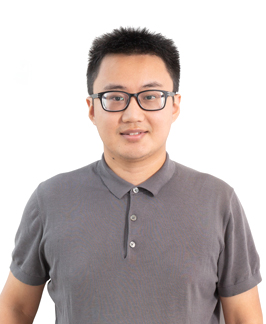
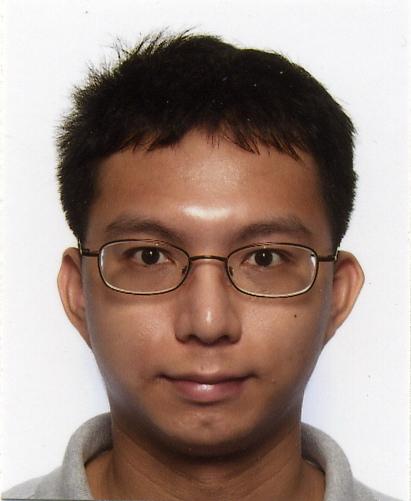
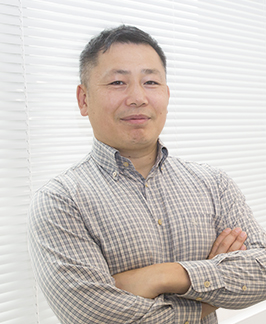
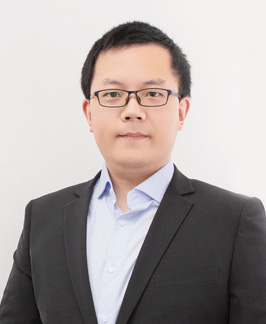
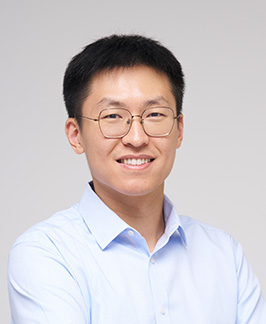
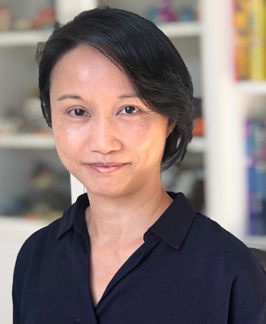
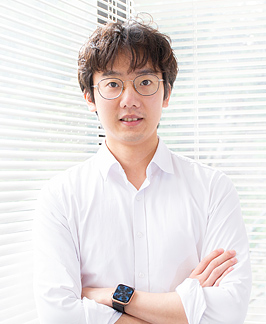
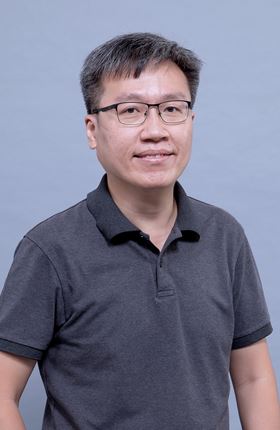
Qi Liu is an Assistant Professor at the Department of Computer Science, University of Hong Kong, and serves as Programme Director for the BASc(FinTech) Programme. He holds an MS from the National University of Singapore and a PhD from the University of Oxford. His research focuses on Natural Language Processing (NLP), Machine Learning (ML), and FinTech. He has contributed to leading conferences/journals such as NeurIPS, ICML, ICLR, ACL, and EMNLP, and actively serves on their program committees. His work includes advancements in relational memory models, causal inference, graph neural networks, and domain-specific representation learning. Key research areas include NLP applications in dialogue systems, counterfactual data augmentation for translation, and hyperbolic representations for knowledge graphs. Recent articles explore cutting-edge topics in photonics, spintronics, and memory device security, reflecting interdisciplinary interests. Education: MS (NUS), PhD (Oxford) Programme Role: BASc(FinTech) Director Email: liuqi@cs.hku.hk Homepage: leuchine.github.io No scientific awards are explicitly listed in the provided text. His research spans theoretical ML advancements and applied FinTech systems, with a focus on scalable NLP solutions and secure memory technologies.
Ken M. L. Yiu is a Professor in the Department of Computing at Hong Kong Polytechnic University , Faculty of Engineering. He received his PhD and Bachelor's degree from the University of Hong Kong in 2006 and 2002, respectively, and was previously affiliated with Aalborg University (2006–2009). He is a leading researcher in databases, with a focus on spatiotemporal data, query processing, and multidimensional data management. PhD, University of Hong Kong (2006) Bachelor of Computer Engineering, University of Hong Kong (2002) His research interests lie at the intersection of database systems and spatial analytics. He investigates efficient indexing, query optimization, and privacy-preserving techniques for large-scale spatial and temporal datasets. His recent work explores learned index structures, GPU-accelerated query processing, and high-dimensional data retrieval. He has made significant contributions to spatial query processing, trajectory analytics, and location-based services. The trends in his recent publications (2021–2025) reflect a strong focus on high-performance database systems, including GPU acceleration (GHive), perfect hashing on GPUs (GPH), and learned cardinality estimation. His work increasingly integrates machine learning with traditional database techniques, as seen in AlayaDB for LLM inference and learning-based query optimization. He also continues to advance core database problems such as spatial indexing, trajectory analysis, and similarity search. SSTD 2025 10-Year Impact Award Ken Yiu has successfully led multiple competitive research projects funded by the Hong Kong GRF, including grants on learned index structures (2024–2026), smart memory for vector data mining (2021–2023), and efficient spatial data management (2017–2019). He has supervised numerous PhD and MPhil students, many of whom now hold academic positions (e.g., Bo Tang at SUSTech, Yu Li at HDU) or work in top tech companies (e.g., Huawei, Alibaba). His professional service is extensive, including roles as PI for major grants, area chair (ICDE 2024), and program committee member for top conferences like SIGMOD, VLDB, and ICDE. He is actively involved in research groups and projects related to database systems, particularly in spatiotemporal data management and efficient query processing. His lab collaborates closely with students and co-supervisors like Bo Tang on topics such as trajectory mining, spatial indexing, and learned databases. The research group maintains strong ties with international institutions and contributes to major open problems in database performance and scalability.
Roles & Affiliations: Professor of Computer Graphics at the Department of Computer Science, University of Hong Kong (since 2020). Previously at University of Edinburgh (2006-2020), City University of Hong Kong (2002-2020), and RIKEN (2000-2002). Holds a BSc, MSc, and DSc in Information Science from the University of Tokyo. Research Interests: Focuses on physically-based animation, character animation, 3D modeling, cloth animation, and robotics. Recent work emphasizes machine learning integration into animation synthesis. Notable projects include MotionNet (3D motion reconstruction), neural state machines for character interactions, and fracture simulation with material points. Publications: Over 100 peer-reviewed papers spanning SIGGRAPH, Eurographics, and IEEE journals. Recent work emphasizes deep learning applications in animation, medical imaging analysis, and physics-based simulations. Key trends include neural networks for motion synthesis, transformer-based models for 3D gestures, and topology-aware shape reconstruction. Awards: Royal Society Industry Fellowship (2014), Google AR/VR Research Award (2017). Recognized for contributions to physically-based animation and medical imaging AI. Labs & Collaborations: Leads research groups in computer graphics and AI at HKU. Collaborates with institutions on robotics, VR/AR, and medical imaging projects. Active in organizing SIGGRAPH and Eurographics conferences.
Dr. Hengshuang Zhao is an Assistant Professor at the Department of Computer Science, University of Hong Kong. He holds a PhD from The Chinese University of Hong Kong and completed postdoctoral research at MIT CSAIL and the University of Oxford. His research focuses on computer vision, machine learning, and AI, emphasizing visual scene understanding, generative modeling, autonomous driving, and embodied AI. He leads a lab actively recruiting PhD students and researchers. Education: PhD in Computer Science, Chinese University of Hong Kong (2017) Bachelor's Degree, Huazhong University of Science and Technology Affiliations: Member of Hong Kong Robotics Institute Organizer of CVPR/ICML workshops on point clouds and embodied AI His research interests include: Scene Understanding (e.g., semantic segmentation, 3D reconstruction), Multimodal Learning (vision-language models), and Generative Modeling (image/video synthesis). Recent work includes Depth Anything (CVPR 2024 Best Demo), Point Transformer V3 (CVPR 2024), and DriveGPT4 series for autonomous driving. He has been recognized with awards including the Excellent Young Scientists Fund (2024), AI 2000 Influential Scholar in CV (2022-2024), and organized multiple top-tier conferences' workshops and tutorials.
Zhenqin Wu is an Assistant Professor at the Department of Computer Science, University of Hong Kong. He holds a PhD from Stanford University (2016–2022) under advisors Prof. James Zou and Dr. Vijay Pande, with research focused on applying AI/ML to computational biology and spatial omics. His work bridges machine learning and spatial biology, developing tools for analyzing spatial proteomics, transcriptomics, and histopathological imaging. Education: PhD in Computer Science, Stanford University (2016–2022) BSc in Chemistry, Peking University Research Interests: AI-driven spatial omics analysis Multimodal data integration in biology Machine learning for medical imaging Computational modeling of cellular microenvironments His recent work highlights include developing the ROSIE AI framework for immunofluorescence generation and the CORAL method for spatial multiomics integration. Articles focus on immunotherapy response prediction, disease biomarker discovery, and interpretable models for tissue structure analysis. Professional Affiliations: Scientific Advisor, Enable Medicine (biotechnology startup) AI Fellow, Genesis Therapeutics He actively mentors PhD/postdoc researchers and collaborates on AI-driven drug discovery projects. His lab focuses on translating spatial omics insights into clinical applications.
Dr. Yi-King Choi is a Senior Lecturer and Master Programme Associate Director at the School of Computing and Data Science (CDS), University of Hong Kong. She holds BSc, MPhil, and PhD degrees in Computer Science from HKU. Her research focuses on geometric computing, computer graphics, and medical visualization with notable contributions to collision detection algorithms for ellipsoids and quadric models. She leads the WATERMAN project developing water quality management systems and has received awards including the Li Ka Shing Prize for Best PhD Thesis (2009). Education BSc (First Class Honors), University of Hong Kong (1996) MPhil, University of Hong Kong (2000) PhD, University of Hong Kong (2008) Research Interests Geometric computing with emphasis on quadric surfaces and collision detection Medical visualization applications Computer graphics algorithms for real-time systems Awards Best Tutor Award (2005) Li Ka Shing Prize for Best PhD Thesis (2009) Her publications emphasize computational geometry solutions for complex geometric problems, with recent work advancing collision detection methodologies in robotics and computer-aided design contexts. Collaborative projects include the HKU Computer Graphics Group's work on quadric surface intersections and parametric modeling.
Prof. Miu Ling LAM is an Associate Professor at the School of Creative Media , City University of Hong Kong . Her research spans robotics , computational imaging , light field technologies , media arts , and machine learning , often integrating art-science collaboration. Current Research Focus : Computational photography, disentangled geometry in neural image generation, and near-infrared imaging technologies. Grants : Funded by General Research Fund (GRF), Innovation and Technology Commission (ITF), National Natural Science Foundation of China (NSFC), Croucher Foundation, and Hong Kong Jockey Club Charities Trust. Leadership : Programme Leader of the Bachelor of Arts and Science in New Media , Co-chair of SIGGRAPH Asia 2023 Emerging Technologies, and Art Advisor (Media Arts) at the Hong Kong Arts Development Council. Publication Trends emphasize generative AI for 3D animation and human-centric video synthesis , with subfields like light field synthesis , augmented reality , and cultural heritage digitization . Scientific Awards : CVPR 2022 Best Paper Finalist, SCM Distinguished Teaching Award, National-level Science and Technology Project Prize (2016), Best Conference Paper at Optofluidics (2016), Croucher Fellowship, World Cultural Council Special Recognition Award, and multiple IEEE conference best paper awards. PhD Students Advised include researchers in 3D morphable models , neural representations , and wearable sensors . She also leads projects like Jockey Club Project IDEA and TEDY for inclusive digital arts and elderly care technologies.
Tobias Klein is an Associate Professor at the School of Creative Media, City University of Hong Kong. He is an internationally recognized architect and interdisciplinary artist whose work bridges the fields of art, installation, experimental design, interactivity, and sculpture. His practice operates at the intersection of digital and physical creation, exploring new territories in narrated embodied space. Klein's research focuses on Digital Craft as an operational synthesis between digital and physical materials and tools as poetic (Poïesis) and technical (Technê) expressions. His work challenges the traditional dualistic separation of digital workflows and analog making, instead creating a confluence where techniques and concepts are symbiotically intertwined. Key research areas include 3D modeling and printing, augmented reality, installation art, and the application of advanced medical visualization techniques to explore the human body as a new ecology of densities. His recent artistic output reveals a strong trend toward environmental reactivity and material hybridization, with works like Common Datum exploring invisible forces and their physical manifestations. Klein's publications demonstrate an increasing focus on interdisciplinary approaches that combine traditional craftsmanship with digital fabrication, particularly in glass and ceramics, while also exploring blockchain applications for representing human values. SCM Research Award 2018 SIGGRAPH 2018 - Best Art Paper Award Klein actively supervises PhD students including Hin Nam FONG, Zidong HUANG, Hoi Ching MOK, Pierre Yat Siu SHUM, and Daniel STEMPFER. His current research projects include Hybrid Glass Craft, Science + Technology + Arts (START), and Material and Fabrication in and for the Ocean, demonstrating his commitment to interdisciplinary approaches that merge art, technology, and cultural heritage. His studio practice maintains a fascination with the construct of space while questioning modern understandings of embodiment, perception, and projection.
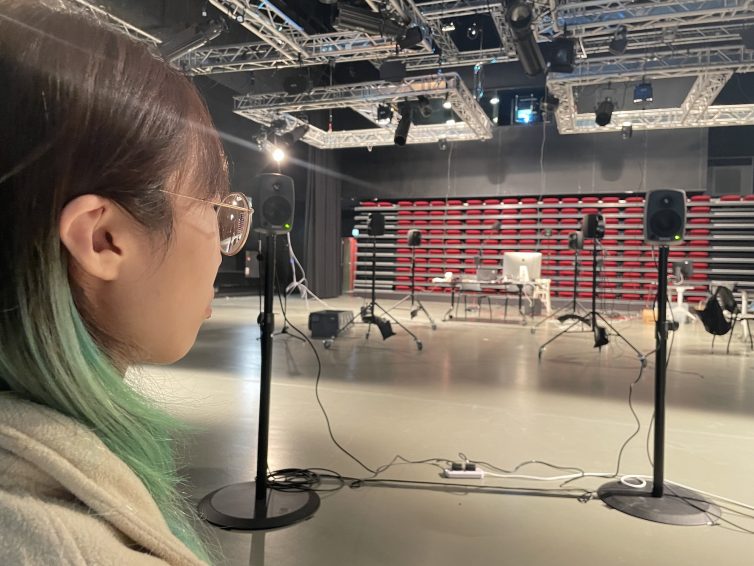
PerMagnus Lindborg is a composer, sound artist, and researcher in sound perception with over 150 scholarly publications, compositions, and media artworks. Currently serving as Associate Professor at City University of Hong Kong's School of Creative Media, he teaches sound, music, research skills, and perception while coordinating research degrees. PhD: KTH Stockholm (2015) DEA: Paris (2003) IRCAM: Paris (1999) BMus: Oslo His research focuses on sound perception , sonification , spatial audio , multi-sensory environments , and data-driven art . He pioneered low-cost spatial audio solutions through the Open Ambisonics Toolkit and explores sensory heritage documentation via soundscapes and smellscape analysis in Hong Kong. Recent publications demonstrate trends in climate data sonification , neural audio processing , and immersive sound design . His work intersects computer music , psychoacoustics , and environmental art . Scientific Awards : Best New Director (World Film Carnival, Cannes Short Film Festival, ISA Awards - 2020) First Prize (Stavanger Symphony Orchestra Prize - 2002) Fellowships: The Arctic Circle (2023), SCM Team Research (2020-25), TBA The Current (2016) As principal investigator for Multi-Modal Hong Kong (GRF 2023-25) and Data Art for Climate Action (2020-23), he supervises PhD students in areas like multi-sensory cultural heritage , deep learning audio processing , and virtual reality sound design . He co-founded the SoundLab and DACA Conference .
Dr. Paolo Mengoni is a Lecturer I at Hong Kong Baptist University (HKBU), specializing in Artificial Intelligence and Complex Network Analysis. Originally from Italy, he brings over 20 years of experience as an IT consultant and researcher. His work focuses on AI applications in education, natural language processing, emotion recognition, and autonomous agents. He holds a Ph.D. in Computer Science from the University of Florence and MSc/BSc degrees from the University of Perugia (Italy). Teaching responsibilities include courses like AI and Digital Communication , Basic Programming for Data Science , and Recommender Systems for Digital Media . His research explores topics such as learning analytics, sentiment analysis in social networks, and community detection in collaborative environments. He actively contributes to academic activities, including organizing international workshops like the 2020 Global Virtual Hack and Design Challenge and the HKBU-University of Perugia exchange program. His publications span journals and conferences including IEEE/WIC/ACM Web Intelligence, Future Generation Computer Systems, and IEEE International Symposia. He serves as a reviewer for venues such as IEEE Congress on Evolutionary Computation and the International Conference on Computational Science and Its Applications.
Yifan (Evan) Peng is an Assistant Professor at the University of Hong Kong, jointly affiliated with the Departments of Electrical & Electronic Engineering and Computer Science. He leads the WeLight Lab, focusing on interdisciplinary research at the intersection of Optics, Graphics, Vision, and Artificial Intelligence. His work emphasizes computational imaging systems, holography, and human-centered visual technologies. Education: PhD in Computer Science from the Imager Lab, University of British Columbia Postdoctoral Research Scholar at Stanford University's Computational Imaging Lab Visiting Student Researcher at KAUST's Visual Computing Center and Stanford MS & BS in Optical Science and Engineering from Zhejiang University Research Interests: His research explores computational optics, holographic displays, VR/AR/MR systems, and low-level vision techniques. Recent efforts include developing snapshot hyperspectral imaging systems, lighting-robust machine vision, and neural rendering frameworks for dynamic scenes. He investigates hardware-software co-design in imaging systems and explores applications in medical imaging and mixed reality. Publications: Recent work focuses on advancing holographic display technologies, neural rendering, and hybrid optical-computational imaging systems. Key contributions include metasurface-based AR displays, speckle reduction techniques, and learned optical systems for hyperspectral imaging. His research bridges physical optics with digital algorithms to achieve high-quality imaging and display solutions. Grants & Advising: Hosts visiting scholars and collaborates with industry partners like Ford, Sony, and Intel. Openings exist for PhD students, postdocs, and research assistants in computational imaging and optics. Labs & Teams: Leads the WeLight Lab at HKU, collaborating with global institutions on projects like neural holography and diffractive optics. Active in conferences like SIGGRAPH, CVPR, and ISMAR as program committee member.
Chao Huang is an Assistant Professor at the Department of Computer Science and Institute of Data Science at the University of Hong Kong (HKU). As the director of the Data Intelligence Lab@HKU, his research focuses on Large Language Models (LLMs), LLM Agents, Graph Learning, Recommender Systems, and AI for Smart Cities. He holds a PhD from the University of Notre Dame. Education: PhD in Computer Science from University of Notre Dame (USA). Research Interests: His work bridges machine learning with practical applications, including: Developing advanced LLM frameworks like GraphGPT and UrbanGPT Creating automated research tools (AutoAgent, AI-Researcher) Designing recommendation systems with LLM integration (RLMRec, LLMRec) Exploring spatio-temporal AI for urban challenges Notable Achievements: Over 11,000 Google Scholar citations (h-index 55), multiple top conference awards (WWW/SIGIR/KDD), and open-source projects with thousands of GitHub stars. His work has been recognized as most influential/pioneering in major AI conferences. Labs/Teams: Leads the Data Intelligence Lab, collaborating on projects like LightRAG, MiniRAG, and VideoRAG. The lab emphasizes open-source contributions with repositories on GitHub. Grants/Advising: Supervises PhD/MPhil students and offers research internships. Active in recruiting motivated researchers and students through HKU's programs.
Peter Hasdell is Professor at the School of Design, The Hong Kong Polytechnic University , where he serves as Design Social Research Leader, Environment and Interior Year-4 and Capstone Coordinator, and previously held roles as Associate Dean (Academic Programmes) and Discipline Leader for Environment & Interior Design. An architect and urbanist with 30 years of professional practice and 17+ years of academic leadership, he has taught and practiced across Australia, Europe, North America, Japan and China. Education B.Sc (Hons) Architecture – University of Sydney AA Dipl (M.Arch equivalent) – Architectural Association, London Research Focus Professor Hasdell’s research interrogates metabolic systems , adaptive and responsive architectures , and city-as-life-form paradigms. Through the In-situ Project he leads place-based, participatory design initiatives that merge sustainable rural development with circular material economies. Key themes include social design, urban ecology, cross-border territories, and game-boarding methodologies for regional planning across the Greater Bay Area, rural China, and the Middle East. Awards & Recognition Grand Prize, 3rd Human City Design Award, Seoul / UNESCO (2023) UIA 2030 Award & UN-Habitat First Prize for SDG #11 (2022) Taipei International Design Award – Gold (2021) Design Educates Award – Architectural Design (2022 & 2023) Architecture MasterPrize (2021), Azure Award (2018), A+Awards 2023 finalist, Ammodo Architecture Award 2025, and more than 40 other distinctions Advising & Grants He supervises PhD candidates and MDES students in Environmental Design studios focused on the Greater Bay Area. His work has received grants from the European Union, Kadoorie Charitable Foundation, PCD, and other bodies supporting rural revitalisation and social design research. Labs & Initiatives He founded and directs the In-situ Project research-by-design platform, co-founded the Architecture & Urban Research Lab (A+URL) in Stockholm, and established the Pneuma Open Source Platform . He has also been a core member of Chora Institute (London) and C.A.S.T. (Manitoba) , collaborating internationally on experimental architecture and urbanism.
Man Yee Sandy Ng is an Assistant Professor at the School of Design, The Hong Kong Polytechnic University. Her research focuses on art and design history, visual and material culture, and gender studies in modern China. Ph.D., School of Oriental and African Studies (SOAS), University of London M.A., University of Hawaii (Asian Pacific Scholarship) B.A., Hawaii Pacific University Her scholarly contributions include analyzing hybrid modernism in Chinese art, female identity in design, and cross-cultural design transfer. Recent projects explore poetic metaphors in product design and mental health apps for Chinese women. Selected Awards: Asian Pacific Scholarship She serves as a Field Editor for caa.reviews and is active in conferences like IASDR and the European Association for Chinese Studies. Collaborations with Dr. Sabrina Zhen Zhen Qin highlight her interdisciplinary approach.
Clifford Sze Tsan Choy is a Senior Lecturer at the School of Design, The Hong Kong Polytechnic University, specializing in interaction design, physical computing, and digital fabrication. Since 2000, he has contributed to design education and research while actively promoting maker culture through events like Maker Faire Hong Kong (2015, 2017, 2018). BEng (Hons) in Electronic Engineering, The Hong Kong Polytechnic University PhD, The Hong Kong Polytechnic University His research integrates digital fabrication with design knowledge management , focusing on creativity support systems and maker culture. Recent projects include thermal deformation analysis in 3D printing and sustainable molded pulp product fabrication. Dr. Choy's work spans design theory , applied technology , and interdisciplinary innovation , with publications addressing inclusive design for visually impaired users and fractal analysis in motor control studies. His research methodology emphasizes computational approaches to visual communication design. Professional engagements include membership in the CDC-HKEAA committee on Design and Applied Technology, and consultancy roles in robotics education programs. He leads initiatives on online collaborative design platforms and drink carton recycling education.