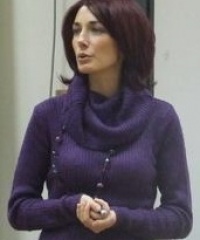
Sergiu Nisioi is an Associate Professor at the Faculty of Mathematics and Computer Science, University of Bucharest, with expertise in computational linguistics, machine translation, and text simplification. He bridges cognitive science with NLP through eye-tracking and EEG research, while also exploring sound art and digital autonomy via initiatives like HYPHA.ro. Current projects include PN-IV-P2-2.1-TE-2023-2007 (text complexity/readability), Legal Document Processing , and Europarl Dialectal Corpora Research spans computational psycholinguistics , LSTM-based translation models , and algorithmic composition for sound art His work integrates interdisciplinary methodologies, combining EEG signal processing for architecture data with the University of Architecture, and DSP for ecological projects at chlorophylla.live.
Andang Sunarto is an Associate Professor affiliated with the State Islamic Institute (IAIN) Bengkulu, Indonesia and the Lepage Research Institute, Slovakia . His work bridges Numerical Analysis , Computational Mathematics , and Algorithm Design with applications in Robotics , Image Processing , and Sharia-Compliant Systems . Research Focus: Fractional Calculus, Nonlinear PDEs, GPU-Accelerated Algorithms Collaborations: International institutions including Union of Czech Mathematicians and Physicists and University of Prešov His recent publications (2021–2025) emphasize Iterative Methods for solving Time-Fractional Diffusion Equations and Porous Medium Models . He also explores Digital Islamic Education and Halal Tourism Development . Despite no listed awards, his work spans diverse domains like Mobile Banking Evaluation , Environmental Pollution Analysis , and Ethnobotanical Applications . Andang actively designs EdTech tools (e.g., Wordwall-based modules) and contributes to computational methods in Climate Modeling and Nonlinear Diffusion .
Stavros Vologiannidis serves as an Assistant Professor in the Department of Informatics, Computer and Telecommunications Engineering at the International University of Greece. His academic career spans both teaching and research in control theory, robotics, and machine learning applications. Previously, he was associated with the Mathematics Department at Aristotle University of Thessaloniki where he completed his education and conducted postdoctoral research. Education: B.Sc. in Mathematics from Aristotle University of Thessaloniki (1997) Ph.D. in Control Theory from Aristotle University of Thessaloniki (2005) with dissertation titled 'ALGEBRAIC-POLYONYMICAL COMPUTING METHODS IN CONTROL THEORY' Dr. Vologiannidis' research focuses on Classical and Intelligent Control Theory, Robotics, and Machine Learning, with particular expertise in polynomial matrices and automatic control systems. His work bridges theoretical mathematics with practical engineering applications, especially in educational robotics and industrial control systems. He has developed several educational platforms including EUROPA, a ROS-based educational robot for teaching sensor integration and data acquisition. His publication record shows a clear evolution from theoretical control systems research toward applied machine learning and educational technology. Recent work demonstrates increasing focus on practical applications of AI in education, urban feature recognition, industrial monitoring, and robotics education across multiple educational levels from middle school through university. His research combines mathematical rigor with real-world implementation. Scientific Recognition: Excellence Scholarship in the 'Excellence Scholarships 2010' program of the Research Committee Total citations exceeding 250 with Scopus H-index of 9 Dr. Vologiannidis has secured numerous research grants and led multiple projects including 'Rapid Earthquake Damage Assessment Consortium – REDACt', 'Predictive Maintenance 4.0', and 'Development of computational methods for optimization of eigenvalue assignment problems'. He has collaborated extensively with institutions across Europe including UTIA Foundation in Prague and has participated in EU-funded projects like GALENOS and GN4-1 GÉANT Research and Education Networking. His laboratory work centers around the EUROPA educational robotics platform and the StreetScouting urban feature detection system, both of which integrate hardware, software, and educational applications. These projects demonstrate his commitment to translating theoretical research into practical educational and industrial tools.
Professor Andriy Volodymyrovych Karpenko is a Doctor of Economic Sciences and Professor at the Department of Economics and Customs within the Faculty of Business Technologies and Economics at National University 'Zaporizhzhia Polytechnic'. With over 14 years of academic experience since 2010, he has established himself as a prominent scholar in innovation economics, human capital development, and customs policy. Faculty of Business Technologies and Economics, National University 'Zaporizhzhia Polytechnic' Department of Economics and Customs Director of the Public Organization 'Zaporizhzhia Cluster Engineering - Automation - Mechanical Engineering' since 2020 Deputy Editor-in-Chief of the electronic periodical 'Management and Business' Member of multiple editorial boards of economic journals Professor Karpenko's research interests span innovations and innovation ecosystems, national and regional economy, economics and enterprise management, human capital and human development, and customs affairs. His work demonstrates a consistent focus on Ukraine's economic development through innovation, human capital investment, and cluster-based economic strategies, with particular emphasis on the impact of digital transformation and global challenges on Ukraine's economic landscape. His extensive publication record includes 354 scientific works, with 30 published internationally (7 in Scopus and Web of Science-indexed journals), 94 in Ukrainian professional periodicals, 27 in monographs (including one sole-authored monograph), and 203 conference theses. Recent publications (2020-2024) reveal a strong focus on Ukraine's economic resilience during wartime, cluster development strategies, human capital measurement, and innovation ecosystem management. Letter of thanks from Zaporizhzhia Regional State Administration (2012) Honorary certificates from Zaporizhzhia National Technical University (2013, 2015, 2018) Letter of thanks from Ministry of Education and Science of Ukraine (2020) Letters of thanks and Certificate of Honor from Zaporizhzhia Regional authorities and Ministry of Education (2023) Professor Karpenko actively participates in advising and grant activities, having led multiple research projects since 2014. He currently serves as the responsible executor of research topics at the Department of Economics and Customs at National University 'Zaporizhzhia Polytechnic', focusing on sustainable development of business ecosystems. His work with the Zaporizhzhia Cluster 'IAM' demonstrates strong engagement with practical applications of his research in regional economic development. His academic leadership extends to various councils and government structures, including the Coordination Council for SME Development of Zaporizhzhia City Council and the Council of Entrepreneurs of Zaporizhzhia Region, where he contributes expertise on economic policy and business development strategies.
Prof. Victor Grigoras is a faculty member at the Technical University of Iași, holding the rank of Professor. He specializes in electrical engineering and computer science, focusing on signal processing, parallel architectures, and nonlinear dynamics in power systems. His research interests include smart grid technologies, renewable energy integration, and data-driven methodologies for grid optimization. He teaches courses such as 'Semnale, Circuite și Sisteme' and 'Algoritmi și Structuri Paralele de Calcul.' His research spans over 15 recent articles (2021–2025), emphasizing advancements in smart grid automation, machine learning applications in voltage quality analysis, and optimal power flow solutions for renewable integration. Notable trends include SCADA system improvements, energy storage strategies for prosumer grids, and IoT-based energy management. His work addresses challenges in grid reliability, power quality, and future urban grid resilience under high EV adoption scenarios. Prof. Grigoras has contributed to frameworks for electric vehicle charging station placement, hydropower plant optimization via data mining, and demand response mechanisms using smart metering. His methodologies often combine clustering techniques with fuzzy logic or metaheuristic algorithms to solve complex grid problems.
Leonard Gabriel MITU is a Lecturer at the Department of Product Design, Mechatronics and Environment , part of the Faculty of Product Design and Environment at the Technical University of Brașov. His research focuses on biomaterials, mechatronic systems, and advanced manufacturing techniques. He is particularly active in developing biocomposite materials for orthopedic prosthetics and exploring applications in MEMS (Microelectromechanical Systems). His work integrates interdisciplinary approaches, combining materials science, mechanical engineering, and biomedical applications. Dr. MITU’s research interests include the characterization of biomaterials like hydroxyapatite and polymers (e.g., PLA), optimization of composite reinforcement using glass and carbon fibers, and the development of lightweight prosthetic solutions. He has contributed to studies on manufacturing processes such as photolithography for MEMS and microfabrication techniques. His recent work emphasizes nano and micro-scale manufacturing methods in mechanical engineering, alongside systemic analysis of material behavior in medical devices. His publications span over 20 years, with a focus on biomaterials, composite testing methods, and biomedical applications. Notable contributions include studies on hybrid biocomposites for orthopedics and vibration analysis in renewable energy systems. He has collaborated on projects funded by institutional grants and maintains an active research profile in biomaterials and mechatronics. His address is located at Building C, Room CI 14, 1 Universității Str, Brașov, Romania.
Dr. Onet-Marian Zsuzsanna is a Lecturer in the Department of Computer Science at Babes-Bolyai University in Cluj-Napoca, Romania. Her research focuses on applying machine learning techniques to software engineering challenges, particularly software defect prediction and restructuring. Academic Rank: Lecturer Affiliation: Babes-Bolyai University Department: Computer Science Email: zsuzsanna.onet@ubbcluj.ro Research Interests : Dr. Marian specializes in developing machine learning models (clustering, association rules, reinforcement learning) for software defect detection, package-level restructuring, and test order optimization. She also explores applications of Formal Concept Analysis in text summarization and music pattern discovery. Recent Publications highlight her work in source-code embeddings, unsupervised learning for software analysis, and comparative studies of online/traditional learning environments. Her methods often integrate domain-specific metrics and AI-driven optimization. Contact : zsuzsanna.onet@ubbcluj.ro | Office: Teodor Mihaly street, Room 440
Călin-Adrian POPA is a Full Professor at the Department of Computer and Software Engineering, Politehnica University of Timişoara. He holds a Ph.D. in Computer Science and Information Technology (2015) from Politehnica University Timişoara, and additional degrees in Mathematics from West University of Timişoara (B.Sc. 2013, M.Sc. 2015). His research focuses on artificial intelligence, machine learning, and neural networks, with specializations in complex-valued systems (octonion, quaternion, Clifford algebra), stability analysis, and synchronization of neural networks. He has been awarded the 'Profesor Bologna' Distinction (2017). Research interests include: Advanced neural network architectures Deep learning for computer vision Fractional-order systems Nonlinear dynamics and control Applications in robotics and astrophysics His publications span 2014–2025, emphasizing theoretical contributions to neural networks and practical applications in computer vision and robotics. He supervises a large cohort of PhD students in AI-related fields.
Assoc. Prof. Balázs Vass is an Associate Professor at University Babeș-Bolyai (Cluj-Napoca, Romania) and holds a Marie Skłodowska-Curie Postdoctoral Fellowship for his QoSeRM project. Previously, he conducted postdoctoral research at Budapest University of Technology and Economics (BME) under Gábor Rétvári and visited institutions in Vienna, Jerusalem, and Bucharest. His research focuses on network resiliency, programmable packet scheduling, and discrete optimization in backbone networks. Education: BSc/MSc in Mathematics/Applied Mathematics (ELTE University), PhD in Future Internet Research at BME under János Tapolcai. Postdoctoral work included collaborations with Stefan Schmid (TU Berlin), David Hay (Hebrew University), and Costin Raiciu (UPB). Research priorities include disaster-aware network design, SRLG-disjoint path algorithms, and compiling packet programs for reconfigurable switches. Recent grants include a Romanian Young Teams grant (2025) and a Marie Curie fellowship (2024-2026). Teaching responsibilities at UBB include courses on algorithms, data structures, and communication networks. Supervises PhD students Zoltán Tasnádi and Nándor Bándi, with student advisees winning multiple awards at national informatics competitions. Key projects: SMR-A-DRT (disaster-resilient routing), QoSeRM (QoS optimization), and contributions to frameworks like eFRADIR for network resilience. Active in conference organizing (INFOCOM TPC since 2023) and journal reviewing (ToN, TNSM).
Dr. Cristina BESLEAGA STAN is a Scientific Researcher II at the National Institute of Materials Physics (NIMP) since 2019, where she has been working since 2012. She leads research at the Laboratory of Complex Heterostructures and Multifunctional Materials, focusing on micro-electronics, opto-electronics, and solar cells development with significant contributions to semiconductor physics and device fabrication. Dr. Besleaga Stan earned her PhD in Solid-State Physics from the University of Bucharest in 2013, following a Master's degree in Solid-State Physics (2010) and undergraduate studies in Physics with specialization in Medical Physics (2007), all from the University of Bucharest. Her educational background established the foundation for her expertise in materials science and semiconductor physics. Her research spans micro-electronics, transport phenomena in semiconductors, and halide perovskite materials. She possesses extensive expertise in physical vapor deposition processes, particularly magnetron sputtering for thin film synthesis, and comprehensive characterization techniques including structural (XRD, XRR), morphological (AFM), optical (UV-Vis-IR), and electrical (resistivity, Hall effect) analysis. Her work bridges fundamental materials science with practical applications in energy harvesting and electronic devices. Dr. Besleaga Stan's publication record demonstrates consistent high-impact research across multiple domains including perovskite solar cells, thin film transistors, and self-cleaning surfaces. Her work shows a clear progression from fundamental semiconductor physics to applied device development, with recent publications emphasizing sustainable materials processing and advanced characterization techniques. Her scientific achievements have been recognized with numerous prestigious awards: "Ștefan Procopiu" prize from Romanian Academy (2018) Gold medal from EUROINVENT, Iași (2018) "Excellence" prize and gold medal from "Ștefan cel Mare" University (2018) Multiple "Excellence" prizes from ProInvent Exhibition Third prize "Young Researchers in Science and Engineering" (2019) Best poster presentation award at the "10th International Conference on Physics of Advanced Materials" (2014) Dr. Besleaga Stan has demonstrated exceptional leadership as principal investigator of multiple national research projects including PN-II-RU-TE-2014-4-1122, PN-III-P1-1.1-PD-2016-1546, PN-III-P1-1.1-TE-2019-0688, and PN-III-P2-2.1-PTE-2021-0150. She has secured substantial research funding and contributed to more than 16 national and international scientific projects, demonstrating strong grant-writing and project management capabilities. She leads a dynamic research team within the Laboratory of Complex Heterostructures and Multifunctional Materials at NIMP, collaborating extensively with international partners including University Nova de Lisboa (Portugal), University of Oslo (Norway), ARPES facility (Switzerland), and CVD/ALD AnnealSys company (France). Her laboratory specializes in clean room fabrication of electronic and optoelectronic devices and advanced materials characterization.
Olena Oleksandrivna Ostrohlyad serves as an Associate Professor at the Department of Transport Technologies, Zaporizhia National Technical University (also known as Zaporizhia Polytechnic University). She has been contributing to the university since 2020, specializing in transport logistics systems with a focus on metallurgical enterprises and international road transportation operations. Her academic background includes: Graduated with honors from Zaporizhia National Technical University, Faculty of Transport (2011) Specialty: "Organization of transportation and management in transport (automobile)" Qualification: "Master in organization of transportation and management in transport (automobile), transport engineer" Defended her Candidate's thesis (equivalent to Ph.D.) in 2019 at Dnipro National University of Railway Transport Dr. Ostrohlyad's research focuses on optimizing transport and warehouse logistics systems in industrial settings, particularly metallurgical enterprises. Her work addresses challenges such as cargo freezing in winter conditions, temperature control in rail transportation, and improving operational efficiency through simulation modeling. She has developed specialized approaches for handling bulk materials and analyzing freight flow patterns under variable external conditions. Analysis of her publication record reveals a consistent focus on practical applications of logistics principles in the metallurgical industry, with particular emphasis on integrated solutions that consider environmental factors. Her research spans multiple transportation modes including road and rail, demonstrating progression from theoretical models to practical implementations that enhance transport system resilience. Dr. Ostrohlyad teaches several key courses including Road transport companies, Organization and management of road freight transportation, Organization and management of railway transportation, and Teaching practice. Her practical experience complements her academic work, providing students with real-world insights into transportation management challenges in industrial contexts.
Ana-Sabina Uban is an Associate Professor at the Faculty of Mathematics and Computer Science, University of Bucharest . She earned her Ph.D. in Computer Science in 2020 under the supervision of Professor Liviu Dinu with a thesis on distributional and stylistic aspects of natural language. She teaches and coordinates courses in natural language processing, AI, and machine learning for both computer science and digital humanities students. Education: Ph.D. in Computer Science, University of Bucharest (2020) – Thesis: "Distributional aspects of natural language. Semantic and stylistic dimensions of text" Research Interests: Dr. Uban’s research is strongly interdisciplinary, bridging natural language processing , computational linguistics , psychology , and cognitive science . She explores historical computational linguistics , distributional semantics , and multilingualism , while also investigating explainability in AI models and mental health disorder detection using social media data. Research Trends & Publication Focus: Her recent publications span clinical NLP , mental health detection , historical linguistics , and multilingual cognate identification . A recurring theme is the application of advanced NLP techniques—such as transformer models, contrastive learning, and ensemble classification—to real-world problems in health, literature, and historical language study. Teaching & Student Supervision: Dr. Uban currently teaches and coordinates the following courses: Bio-medical NLP – Master’s level (English) Artificial Intelligence – Bachelor’s level for Mathematics students Practical Introduction to Machine Learning – Master’s level for Digital Humanities students Natural Language Processing 1 & 2 – Master’s labs and projects Contact: auban@fmi.unibuc.ro
Mihai-Bogdan Atanasiu is an Associate Professor at the Faculty of History, Alexandru Ioan Cuza University of Iași, and Director of the Department of Socio-Human Sciences, Institute for Interdisciplinary Research. He holds a Ph.D. in History (2012) and has led research projects funded by the Ministry of National Education (2008-2020). His research spans the political, social, and cultural history of Moldavia (17th-19th centuries), auxiliary sciences of history (genealogy, prosopography, heraldry), and historical source editing. He has published two monographs, edited source materials, and contributed to prestigious journals, including international collaborations. Doctor of History (2012) Postdoctoral Researcher (2014-2015) Director, Department of Socio-Human Sciences (2008-present) His academic work integrates prosopography, heraldry, and biographical analysis to study aristocratic elites, monastic networks, and cultural identity formation. Recent publications examine highwaymen in 19th-century Romanian principalities, cross-civilizational genealogical studies, and comparative analyses of power structures in France and Moldavia. He coordinates study volumes and serves on editorial boards of recognized journals. 2025: Highwaymen and social history in the Long Nineteenth Century 2024: Cross-civilizational genealogy and heraldry 2023: 18th-century Moldavian diptychs, coinage, and rulership propaganda Atanasiu earned the Nicolae Iorga Award (2017) from the Romanian Academy. His projects bridge archival research with interdisciplinary methodologies, focusing on elite social structures, monastic documentation, and transnational historical influences.
Szende Tonk is an Associate Professor at the Department of Environmental Science, Sapientia Hungarian University of Transylvania, Faculty of Sciences and Arts. She teaches courses including General Biochemistry, Organic Chemistry, Meteorology-Climatology, and Sustainable Waste Management at both undergraduate and master's levels. Research Focus: Environmental chemistry, biosorption, phytoextraction, chemical pollution analysis, and environmental remediation technologies. Recent Publications: 2024 study on tetracycline adsorption using waste biosorbents; 2023 work on drug residue toxicity; extensive 2022-2020 studies on dye adsorption mechanisms using brewery waste, mineral clay, and eggshell biosorbents; and PM10 pollution analysis in Eastern Carpathians. Collaborations: Regularly works with researchers like E. Rápó, K. Posta, and Á. Szabó on adsorption studies and environmental monitoring projects.
Dr. Lupu-Dima Lucian is an Associate Professor at the University of Petrosani's Faculty of Mining, Department of Mining Engineering, Surveying and Construction. His research focuses on GIS applications in risk management, educational technology, and mining safety. He has extensively studied e-learning systems during the pandemic and institutional reforms in higher education. Education: Ph.D. in relevant fields (university unspecified). His work integrates geospatial technologies with public health, disaster management, and organizational strategies. Over 20 years of academic contributions include pioneering studies on flood risk modeling, ERP systems in mining, and innovative training methods for workforce requalification. Research emphasizes interdisciplinary solutions for complex challenges: GIS-based disaster preparedness frameworks Educational resilience during crises Management systems for mining safety Articles highlight trends in: Hybrid educational models Geospatial policy applications Public administration efficiency Recent work explores post-pandemic educational systems and mining sector innovations. Labs/Teams: Involved in development of e-learning platforms at University of Petrosani and GIS-based solutions for Hunedoara County administration.