Silvia Miksch is a Full University Professor of Visual Analytics at TU Wien's Faculty of Informatics, leading the CVAST Center. She holds a PhD from the University of Vienna and has held roles including Head of the Department of Information and Knowledge Engineering at Danube University Krems. Her research focuses on Visual Analytics, Information Visualization, Temporal Data Analysis, and Medical Informatics. She has supervised numerous PhD and Master’s students, with notable advisees including Ignacio Baltazar Pérez Messina and Davide Ceneda. Her work bridges theory and practice, addressing challenges in Visual Analytics for healthcare, business intelligence, and digital humanities. Awards include the IEEE VGTC Technical Achievement Award (2023) and induction into the IEEE Visualization Academy (2020). She actively contributes to conferences like IEEE VIS and EuroVis as program chair and steering committee member. Her projects, such as 'VisuExplore' and 'DisCo', have received recognition for advancing visualization in medical and cultural domains. Key research areas include guidance-enriched systems, network visualization, and temporal reasoning. She explores applications in fraud detection, cultural heritage analysis, and pandemic data visualization. Her lab's tools, like 'Hermes' and 'COVIs', exemplify task-driven design for real-world data challenges.
Eliana Vasquez Osorio is a Senior Research Fellow in the Division of Cancer Sciences at the University of Manchester. Her research focuses on advancing radiation therapy through innovative dosimetry techniques, toxicity prediction models, and integration of artificial intelligence in treatment planning. She contributes to major initiatives like the Manchester Cancer Research Centre and the Reirradiation Collaborative Group (ReCOG). Her work addresses challenges in reirradiation protocols, dose mapping methodologies, and patient-centered outcomes. Key research areas include radiation dose-response relationships in critical organs (e.g., rectum, brainstem, heart), causal inference methods for toxicity analysis, and optimizing auto-contouring algorithms. She has pioneered methodologies like dose surface mapping to identify subregions at risk of toxicity, with applications in prostate, head-and-neck, and pediatric cancers. Her publications (105 total) emphasize translational research, including seminal studies on MR-guided SABR, reirradiation standards, and AI-driven image analysis. She actively collaborates internationally, presenting over 9 invited talks on topics like deformable image registration and adaptive radiotherapy. Eliana is also engaged in public-patient involvement initiatives for natural language processing in healthcare data.
Prof. Dr. Rüdiger von Eisenhart-Rothe is a full Professor and Chair of Orthopedics at the Technische Universität München (TUM), leading the Department of Orthopedics and Sports Orthopedics at the Klinikum rechts der Isar. His research focuses on regenerative medicine, osteo-oncology, endoprosthetics, and the application of machine learning in surgical planning. He completed his medical studies at LMU Munich and business administration at the University of Hagen, followed by a habilitation in orthopedics at Frankfurt’s Friedrichsheim Hospital. Notably, he received the Perthes Prize twice (2003, 2010) for contributions to shoulder and elbow surgery. His work integrates advanced imaging techniques, virtual planning, and biomaterial research to address challenges in joint replacement, infection control, and sarcoma management. Recent projects emphasize AI-driven diagnostic tools and personalized surgical approaches. Prof. von Eisenhart-Rothe collaborates with interdisciplinary teams to advance clinical outcomes in orthopedic surgery, particularly in knee and hip arthroplasty. Awarded the Perthes Prize twice, his contributions span academic leadership, clinical innovation, and translational research at TUM’s School of Medicine and Health. Current initiatives include optimizing prosthetic alignment via 3D modeling and evaluating synovial biomarkers for infection diagnosis.
Nicolai Kröger is a researcher at the Chair of Communication Networks (Prof. Kellerer) at the Technical University of Munich (TUM). He holds an M.Sc. in Electrical and Computer Engineering from TUM, where his thesis focused on P4 switch performance modeling using queuing theory. His current research centers on 6G networks for critical telemedicine applications, particularly within the 6G-Life project, emphasizing end-to-end communication for medical robotics and surgical systems. He contributes to projects like the 6G Future Lab Bavaria and collaborates with the MITI group at Rechts der Isar Hospital to develop medical testbeds requiring high availability and low latency. Kröger also supervises student theses on 5G/6G security, network optimization, and in-network computing. His technical expertise spans programmable networks (P4), SDN, and performance analysis of network devices. He serves as a supervisor for student projects and internships, including implementations of medical testbeds and security analyses of cellular broadcast messages. His work bridges academic research with practical applications, aiming to advance communication networks for healthcare and future 6G systems.
Dimosthenis Kyriazis is a Professor at the University of Piraeus, affiliated with the Research Center. He currently teaches courses such as C Programming, e-Business, and Information Systems. His research focuses on service-oriented architectures, cloud/edge computing, data management, and healthcare informatics. Kyriazis holds a PhD from the National Technical University of Athens (NTUA) and has contributed to EU-funded projects like BigDataStack and CrowdHEALTH, addressing quality of service, workflow management, and IoT applications. He leads research on data management in cloud/edge environments, socially-enhanced IoT management, and big data applications in sectors like finance and e-health. His expertise spans distributed systems, software engineering, and interdisciplinary collaborations with industries and academia. He has participated in EU working groups on Future Internet Architecture and Cloud QoS&SLAs. Kyriazis actively seeks interns and collaborates on initiatives like AI-driven healthcare platforms (iHELP) and sustainable computing practices. His work emphasizes human-centric AI, data interoperability, and ethical AI frameworks such as AI4Gov for transparent governance. Education: Diploma in Electrical and Computer Engineering (NTUA, 2001), MSc in Techno-economics (NTUA/University of Athens/University of Piraeus, 2004), PhD in Service-Oriented Architectures (NTUA, 2007). Key research areas include federated data marketplaces (FAME), healthcare data integration (holistic health records), and AI applications in finance (DeepVaR). His publications address topics like explainable AI (XAI), defect detection in manufacturing, and environmental risk correlation with health. Grants and collaborations involve coordinating EU projects targeting data governance frameworks, energy-efficient mobility data spaces (Mobispaces), and AI for policy-making (e.g., OECD AI policy analysis). His contributions bridge technical innovation with societal impact through sustainable computing and ethical AI practices.
Prof. Kim Jelfs is a Professor in Computational Materials Chemistry at Imperial College London's Department of Chemistry, part of the Faculty of Natural Sciences. Her research focuses on computational design of functional molecular materials, particularly porous organic cages, polymer membranes, and materials for energy storage. She leads the Jelfs Group, collaborating with synthetic teams to bridge theory and experiment. Key affiliations include the Institute for Digital Molecular Design and Fabrication (DigiFAB), the Artificial Intelligence Network, and the Thomas Young Centre. Her work is funded by the Royal Society, EPSRC, ERC, and industry partners. Research interests span materials engineering, theoretical chemistry, and AI-driven discovery. Notable projects involve developing porous liquids, ion-selective membranes for batteries, and computational workflows for material screening. She co-directs DigiFAB and contributes to Imperial's Data Science Institute. Her group emphasizes interdisciplinary approaches to accelerate material innovation.
Raska Soemantoro is a Research Assistant at the University of Manchester's College of Engineering, Department of Mechanical and Aerospace Engineering. He is currently pursuing a PhD through the EPSRC Fusion Energy CDT, focusing on automated de-featuring of CAD geometries for simulation of complex systems. His work involves NVIDIA’s Omniverse platform and collaboration with the UK Atomic Energy Authority. Education : BEng in Aerospace Engineering (University of Manchester, 2021) MSc in Computational & Software Techniques in Engineering (Cranfield University, 2022) Research Interests center on machine learning applications for spatial and geometric analysis. Key areas include digital twin technology, CAD geometry simplification, neutronics simulation, and point cloud processing. His work aligns with UN Sustainable Development Goals related to education and computational engineering. Research Output Trends highlight collaborations across engineering software platforms, fusion energy systems (e.g., MAST-U Tokamak), and AI-driven geometric analysis. His projects involve digital twin platforms for lithium-based reactors, robotics for medical imaging, and LiDAR-based geospatial algorithms. Scientific Awards include: Best BEng Research Project (2021) Best Project Award (2022) Best Overall Achievement in MSc Computational Intelligence for Data Analytics (2023) CIUK Best Poster Prize (2024)
Arsalan Heydarian is an Associate Professor in the Department of Civil and Environmental Engineering at the University of Virginia (UVA) , with affiliations to the UVA Link Lab and Omni Reality and Cognition Lab (ORCL Lab) . His work focuses on user-centered intelligent infrastructure through virtual/augmented reality and data-driven design . Education: Ph.D. in Civil Engineering (USC) M.Sc. in Systems Engineering (USC) M.Sc. in Civil Engineering (Virginia Tech) B.Sc. in Civil Engineering (Virginia Tech) Research Streams: Intelligent built environments Mobility infrastructure design User-centered autonomous vehicles Data-driven mixed reality Construction automation Recent Article Trends: Spanning smart buildings , VR/AR applications , and transportation systems , his publications emphasize human-environment interaction , adaptive infrastructure , and immersive technology in civil engineering. Awards: NSF $1M Grant for inclusive AI education initiatives Labs & Teams: Co-founder of the Omni Reality and Cognition Lab (ORCL) , a leading facility for VR/AR-based infrastructure research and human behavior studies in built environments.
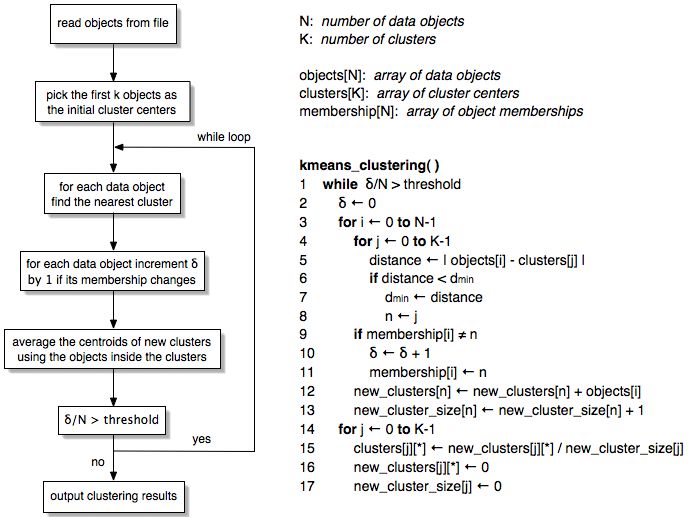
Wei-keng Liao is a Research Professor in the Department of Electrical Engineering and Computer Science at Northwestern University's McCormick School of Engineering. His research spans high-performance computing with a focus on parallel and distributed systems. Dr. Liao's research interests include parallel and distributed file I/O and storage system design, data mining algorithm design and their parallelization, data management for large-scale scientific applications, and computational model design for large-scale applications on parallel and distributed environments. He is a key contributor to the Parallel netCDF project, which provides parallel I/O capabilities for scientific applications. His recent work shows strong trends in high-performance computing infrastructure, particularly in optimizing I/O systems for scientific applications, parallel data clustering algorithms, and machine learning acceleration in distributed environments. His publications span computational science, parallel computing, and data-intensive applications across various scientific domains including materials science, astrophysics, and healthcare. Best Paper Award at IEEE International Conference on Cluster Computing (2016) for Parallel DTFE Surface Density Field Reconstruction Dr. Liao has supervised numerous research projects funded by DOE, NSF, NASA, and Argonne National Laboratory, with recent work focusing on data libraries for exascale science, machine learning-driven resilience for extreme-scale systems, and scalable data clustering for scientific computing. He leads research on the Parallel K-means Data Clustering software package and is a principal developer of Parallel netCDF. His work connects multiple research groups through the Center for Ultra-scale Computing and Information Security (CUCIS) at Northwestern University, where he collaborates with scientists across disciplines to develop scalable computing solutions for complex scientific problems.
Dilum Bandara is a Principal Research Scientist at CSIRO's Data61 in Australia and an Adjunct Senior Lecturer at the School of Computer Science and Engineering, Faculty of Engineering, University of New South Wales (UNSW). He has previously served as a Senior Lecturer at the University of Moratuwa, Sri Lanka, and has over two decades of experience in research, teaching, and consultancy in distributed systems, security, and software engineering. His academic qualifications include: PhD in Computer Science, Colorado State University, USA (2012) MS in Computer Science, Colorado State University, USA (2008) BSc Eng. (Hons) in Computer Science and Engineering, University of Moratuwa, Sri Lanka (2004) Dilum's research interests are centered on Distributed Systems (Blockchain, Cloud, P2P), Computer Security , Software Architecture , Data Engineering , Performance Engineering , and the Internet of Things (IoT) . He applies these technologies in multidisciplinary domains such as Supply Chains , Digital Finance , Environmental, Social, and Governance (ESG) , Fleet Management , and Weather Monitoring . His work emphasizes real-world impact through trusted data management in multi-party ecosystems. The analysis of his recent publications reveals a strong focus on blockchain for transparency and security, cloud-native performance engineering, IoT integration with edge and cloud, and data-driven solutions for smart cities and sustainability. His work consistently bridges theoretical innovation with practical deployment, particularly in national and international infrastructure projects. His scientific awards include: Best Paper Award at BPM 2024 Multiple CSIRO internal awards (Customer First, Engineering and Technology, Collaboration) from 2021–2023 Student Paper Award (Merit) at IEEE SOLI 2018 Award of Excellence for Outstanding Research at University of Moratuwa (2015–2018) Dilum has led and contributed to several research grants, particularly during his time at the University of Moratuwa, including projects on smart city integration, real-time data forecasting, and cloud platforms for scientific computing. He has also held leadership roles such as Director of the Engineering Research Unit and co-founder of VaticHub. He is actively involved in professional communities as a Senior Member of IEEE and a Chartered Engineer with IESL. At CSIRO, he serves as a Health and Safety Representative, reflecting his commitment to corporate citizenship. He has advised students and early-career researchers, though specific names are not listed in the provided text. His labs and research teams include the Architecture and Analytics Platforms (AAP) team at CSIRO Data61 and collaborations with academic institutions like UNSW and University of Moratuwa.
Dieter A. Fensel is a Full Professor at the Institute of Computer Science, Faculty of Computer Science, University of Innsbruck, Austria . He has held academic positions at the University of Karlsruhe, Vrije Universiteit Amsterdam, and the University of Amsterdam. He founded the Digital Enterprise Research Institute (DERI) in Galway and Innsbruck and co-founded the Semantic Technology Institute International (STI2). His work spans semantic technologies, knowledge engineering, and intelligent systems. PhD in Political Science, University of Karlsruhe (1993) Habilitation in Applied Computer Science, University of Karlsruhe (1998) Masters in Computer Science (TU Berlin) and Social Science (FU Berlin) His research interests focus on the Semantic Web, ontologies, knowledge representation, web services, and intelligent systems. He investigates how semantics can enhance data interoperability, service composition, and knowledge sharing in distributed environments. His work bridges formal methods with practical applications in e-commerce, tourism, and digital enterprises. He emphasizes the role of semantics in enabling machine-understandable content and automated reasoning across domains. The research trends in his publications and projects reveal a consistent focus on semantic technologies, from foundational work on knowledge representation (e.g., KARL language) to large-scale EU projects on data ecosystems (PlanetData, BYTE), travel (EuTravel), and energy (ENTROPY). His work evolved from theoretical AI and knowledge engineering to applied semantic web services, linked data, and digital innovation in societal domains. His scientific awards include: Carl-Adam-Petri-Award of the Faculty of Economic Sciences, University of Karlsruhe (2000) As an academic advisor, Dieter Fensel has supervised over 25 PhD students and served on numerous Master’s and PhD committees. He has led more than 100 national and international research projects with total funding in the hundreds of millions of euros, including major grants from the EU’s 7th Framework Program, Horizon 2020, and Science Foundation Ireland. These projects span domains such as big data, ambient assisted living, transportation, and digital services. He co-founded and led several research labs and teams , including: Digital Enterprise Research Institute (DERI), Galway and Innsbruck Semantic Technology Institute (STI) Innsbruck Semantic Technology Institute International (STI2) Co-founder of the European Semantic Web Conference (ESWC) and International Semantic Web Conference (ISWC) These organizations foster global collaboration in semantic technologies and have become central hubs for research, innovation, and community building in the field.
Andrea Ajmar is an Associate Professor at the Politecnico di Torino, affiliated with the Interuniversity Department of Territorial Sciences, Planning and Policies (DIST). He serves as the contact person for the University Language Centre (CLA) and leads research in geomatics, spatial data science, and emergency management. His work is aligned with UN SDG 11: Sustainable Cities and Communities, and he contributes to major EU-funded projects such as LEXIS (H2020). Scientific Disciplinary Sector: CEAR-04/A - Geomatics (Area 0008 - Civil Engineering and Architecture) Research Laboratory: SDG11Lab (DIST) ERC Sectors: PE10_14, SH2_10, PE10_4, SH2_9 Andrea Ajmar's research focuses on applying Spatial Data Science techniques to transportation, urban planning, and disaster response. His work leverages GIS, remote sensing, and spatial data infrastructures to analyze urban resilience, environmental change, and emergency workflows. He has published extensively on topics including climate adaptation in cities, glacier monitoring, flood modeling, and post-disaster assessment tools. The recent publications of Andrea Ajmar demonstrate a strong trend in integrating high-performance computing, AI, and big data with geospatial technologies for urban and environmental applications. His work spans climate resilience, disaster impact modeling, and satellite-based environmental monitoring, reflecting a multidisciplinary approach to sustainable development. Scientific Awards and Recognitions: BEST POSTER PAPER AWARD, ISPRS (2008) Teaching and Advising: Andrea Ajmar is actively involved in teaching and mentoring. He supervises multiple PhD students in the Urban and Regional Development and Architectural and Landscape Heritage programs. He teaches advanced courses such as "Advanced Geospatial Data Management" and "Geomatics for Urban and Regional Planning." He has also earned teaching certifications including Learning to Teach (L2T), Mentoring Polito Project (M2P), and Learning to Teach with Innovative Teaching Project (L2T_ITP). Research Projects: He served as the Scientific Manager for the EU H2020 LEXIS project, focusing on HPC and Big Data enabled large-scale test-beds and applications in disaster management and urban planning. Professional Service: Ajmar has held leadership roles in international organizations, including Vice-President of the International Working Group on Satellite Emergency Mapping (2013–2014), Secretary of ISPRS ICWG IV/VIII (2008–2012), and member of the ASITA Scientific Committee (2008–2012). He also served as Guest Editor for the journal Remote Sensing (2019–2021) and participated in conference program committees such as GISTAM 2019 and 2020.
Anna Sidorova is a Professor and Chair of the Department of Information Technology and Decision Sciences at the G. Brint Ryan College of Business, University of North Texas. She holds a Ph.D. in Information Systems from Washington State University and has extensive experience in both academia and industry. Ph.D., Information Systems, Washington State University MBA, Washington State University B.A., Washington State University Her research focuses on Artificial Intelligence in Business , AI Ethics and Governance , Business Intelligence and Analytics , Text Mining , and Digital Transformation . She explores how organizations adopt and benefit from advanced technologies, particularly in decision-making and process improvement. The analysis of her publications reveals a strong trajectory in AI and machine learning applications in business, with a growing emphasis on ethical and governance aspects. Her work spans technical implementation and strategic implications, often published in premier journals like MIS Quarterly and Decision Support Systems . Dr. Sidorova has held significant leadership roles, including Academic Associate Dean for Undergraduate Programs at RCOB. She previously served as an Assistant Professor at the University at Albany, SUNY, and worked as a business consultant at PricewaterhouseCoopers, advising on business strategy and IT systems. She teaches graduate courses in Artificial Intelligence in Business, Information System Development, and Information Systems Theory and Research, contributing to the development of future business and technology leaders.
Oscar Romero Moral is a Professor at the Polytechnic University of Catalonia (UPC), affiliated with the Department of Services and Information Systems Engineering at the Barcelona School of Informatics (FIB). He leads research in the inSSIDE, inLab FIB, and DTIM groups, focusing on data management, data science, and big data technologies. His work emphasizes knowledge graphs, data governance, and machine learning integration with data systems. Affiliations: UPC, inSSIDE, inLab FIB, DTIM Group Research Interests: Data Management, Data Engineering, Big Data, Knowledge Graphs, Data Governance, Machine Learning Integration He has authored over 276 academic contributions, including peer-reviewed articles on federated healthcare data systems, GPU-accelerated workflows, and graph-driven data integration. His recent work addresses challenges in heterogeneous computing, automated data governance, and scalable data architectures. Romero has served on the program committees of major conferences like VLDB, ICDE, and EDBT, and led competitive research projects in data systems and analytics. He collaborates extensively with industry partners and academic institutions, driving innovations in distributed data management and edge computing.
Dr. Anurag Purwar is an Associate Professor of Mechanical Engineering at Stony Brook University, directing the Computer-Aided Design and Innovation Lab and serving as PI for NSF I-Corps. He holds a Ph.D. from Stony Brook (2005) and a B.Tech. from IIT Kanpur (1995). His research merges rigid body kinematics with machine learning for mechanism and robot design, yielding 107+ peer-reviewed publications and patents licensed to industry. Key projects include the sit-to-stand walker assistive device (SAE Top 100 Award) and MotionGen software tools. Education: Ph.D., Stony Brook University (2005); B.Tech., IIT Kanpur (1995) Awards: A.T. Yang Award (2017), SAE Top 100 Award (2016), ASEE Distinguished Teaching Award (2021) Leadership: Program Chair (ASME 2014), Conference Co-Chair (IDETC 2016), NAI Senior Member Research focuses on machine learning-driven design of mechanisms, robotics, and assistive technologies. His labs develop algorithms for path synthesis, generative design, and kinematic analysis. He actively commercializes innovations through industry partnerships and has spun off startups like MotionGen.io.