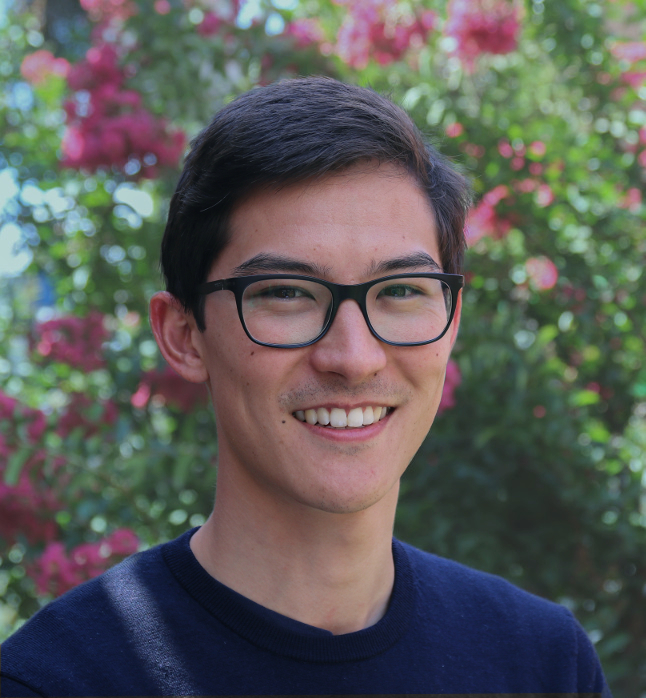
Matthew K. Tam is an Associate Professor at the School of Mathematics and Statistics, The University of Melbourne, specializing in Operations Research. He is also an investigator at the Melbourne Centre for Data Science and an associate investigator in the ARC Training Centre OPTIMA. PhD in Mathematics (2016) from University of Newcastle under Jonathan Borwein Postdoctoral research at University of Göttingen with RTG-2088 and Alexander von Humboldt Foundation Junior Professor at University of Göttingen (2017-2020) His research focuses on continuous optimization, monotone operator theory, and variational analysis, with applications in wavelet construction and inverse problems. Key trends include distributed algorithms, resolvent splitting, and convergence analysis for feasibility problems. Discovery Early Career Researcher Award (DECRA) Alexander von Humboldt Fellowship He collaborates with institutions like ANZIAM, Springer, and IEEE, with publications spanning mathematical optimization, harmonic analysis, and computational mathematics. His work emphasizes algorithmic design for complex data systems and real-world applications in imaging and industrial modeling.
Professor Anatoly Zhigljavsky serves as Chair in Statistics and Honorary Professor at Cardiff University's School of Mathematics. He holds multiple administrative positions including membership in the Senior Management Committee, School Research Committee, School Management Board, School Learning and Teaching Committee, Board of Studies, and Subject panel. University: Cardiff University School: School of Mathematics Position: Chair in Statistics, Honorary Professor Professor Zhigljavsky earned his MSc from the University of St.Petersburg, Russia in 1976, followed by his PhD in 1981 and Habilitation in 1987, all from the same institution. His academic credentials reflect a strong foundation in mathematical statistics and theoretical probability. His research spans several interconnected domains in statistics and optimization. He is particularly renowned for his contributions to Time Series Analysis, where he has advanced Singular Spectrum Analysis (SSA) into a powerful technique for time series analysis, forecasting, and change-point detection. His work in Statistical Modelling in Market Research has resulted in numerous industry collaborations, while his research in Stochastic Global Optimization has provided theoretical insights into random search algorithms, especially in high-dimensional spaces. His investigations into Probabilistic Methods in Search and Number Theory have yielded novel approaches to discrete search problems including group testing with lies. Professor Zhigljavsky has also pioneered Dynamical system approaches for studying convergence of search algorithms, bridging continuous and discrete optimization methodologies. Analysis of Professor Zhigljavsky's recent publications (2021-2025) reveals an evolving research trajectory with increasing focus on high-dimensional statistical challenges, quantization theory, and the intersection of optimization with time series analysis. His work consistently demonstrates mathematical rigor combined with practical relevance, addressing computational challenges in large-scale data analysis. His collaborations span multiple institutions with researchers including Luc Pronzato, Jack Noonan, and Anatoly Pepelyshev. Scientific recognition includes: Constantin Caratheodory Prize in France (2019) Professor Zhigljavsky has secured substantial external funding including projects with Procter and Gamble on statistical modelling in Market Research (totaling approximately £200,000), projects with AcNielsen/BASES on consumer behaviour modeling (£40,000), and projects with GlaxoSmithKline on biopharmaceutical studies (£15,000) and environmental science (£10,000). His research has consistently demonstrated practical applications across multiple industries. As an active member of Cardiff University's Statistics research group, Centre for Optimisation and Its Applications, and Statistical Modelling Unit, Professor Zhigljavsky continues to influence both theoretical developments and practical applications in statistics and optimization.
Eleftheria Sergaki is a permanent Laboratory Teaching Staff member (EDIP) at the Technical University of Crete , School of Electronic and Computer Engineering and the Electrical Power Systems Laboratory . She has served the university continuously since 1985 in roles ranging from Contract Lecturer-Researcher to her current academic post. Education PhD in Electronic & Computer Engineering, Technical University of Crete, 2011 MSc in Electronic & Computer Engineering, Technical University of Crete, 1997 BSc in Physics, Aristotle University of Thessaloniki, 1985 Research Interests Her research lies at the intersection of automatic control, energy efficiency and machine learning . Core themes include the design of fuzzy-logic-based control algorithms that minimise energy losses in electric motors—work that has yielded an individual 2008 patent—the application of machine-learning techniques for predictive modelling of physical processes, and the development of AI-assisted diagnostic algorithms for medical imaging. Across these areas she leverages techniques such as adaptive control, artificial neural networks, neuro-fuzzy systems, discrete wavelet transforms and convolutional neural networks, bridging power engineering, biomedical engineering and computer science. Publication Trends Her 27 peer-reviewed works (2000–2023) exhibit a clear trajectory: early contributions focused on laser instrumentation and physics education shifted after 2006 toward electric-motor efficiency optimisation and advanced motor-control algorithms , and since 2018 have expanded into deep-learning applications in medical imaging , particularly capsule endoscopy and brain-tumour detection. Scientific Awards & Distinctions Teaching Work Award (EDIP) – Senate of the Technical University of Crete, 2018 National distinction – Greek delegation leader, International Physics Teaching Conference, CERN Distinction – Panhellenic Physics Construction and Experiment Competition, National Research Foundation 2 nd eligible contractor – national educational textbook authoring programme Grants, Projects & Service Scientific Project Manager, EPEAEK Project (Greek National Research Council), 1998–2000 Evaluator, IEEE Transactions on Industrial Electronics, IEEE Transactions on Fuzzy Systems, Elsevier journals, etc. Co-author, Laser: Working Principles and Applications (Evgenidis Foundation, 2008) Laboratory & Team Affiliations She is a key member of the Electrical Power Systems Laboratory , where she co-supervises student projects and experimental work. Previously she co-founded and worked in the Laboratory of Matter Structure & Laser Physics (TUC) from 1985 to 2013, contributing to its establishment and instrumentation.
Konstantinos Vergidis is a Professor at the Department of Applied Informatics, School of Information Sciences, University of Macedonia. With a PhD in Business Process Optimisation from Cranfield University (2008), he has established himself as a leading expert in business process management, enterprise architecture, and process modeling. His academic career spans over a decade at the University of Macedonia, where he has held various administrative roles including Director of the Doctoral Studies Coordination Committee and member of the University's Research Committee. PhD in Business Process Optimisation (2008), Cranfield University MSc in IT for Product Realisation (2005), Cranfield University Degree in Applied Informatics (2003), University of Macedonia Professor Vergidis' research focuses on Business Process Intelligence (BPI), with particular expertise in BPMN modeling, process optimization, and decision modeling with DMN. His work bridges theoretical frameworks with practical applications in both public and private sectors, examining process quality metrics, resilience, and the integration of emerging technologies like low-code platforms and AI. He has pioneered research on process modeling in the public sector and the impact of Large Language Models on BPMN-based process modeling. His publication record includes 21 scientific journal articles, 22 conference papers, and 8 books, demonstrating consistent scholarly output across multiple venues. Recent work shows a clear trajectory toward integrating AI technologies with traditional business process management, particularly examining how LLMs can transform process modeling practices and exploring low-code development platforms for process-driven application development. Teaching Excellence Award (2022-2023) Research Award 2022 (14th cycle) Research Award 2021 (13th cycle) Teaching Excellence Award (2020-2021) Thatcher Bros Prize (2008/09) Professor Vergidis has secured multiple research grants, including projects with Expertise France/European Commission on digital public services and with the National Research Foundation on process modeling for public administration. He leads the Business Process Intelligence research group and has coordinated significant projects including MODA (Multi-Omics Data Analysis) and Science Data and Analytics Platform. His administrative contributions include directing doctoral studies and serving on numerous university committees related to research, curriculum development, and digital transformation initiatives. His work with the National Process Registry (mitos.gov.gr) demonstrates his commitment to applying academic research to real-world public sector challenges, developing tools and methodologies that enhance process transparency and service delivery for Greek citizens.
Alain Zemkoho is a Professor of Mathematical Optimization at the School of Mathematical Sciences, University of Southampton, where he is affiliated with the OR Group and CORMSIS (Centre for Operational Research, Management Science and Information Systems). Prior to joining Southampton, he was a Research Fellow at the University of Birmingham and a Research Associate at the Technical University of Freiberg. Professor Zemkoho's research centers on continuous optimization with special emphasis on bilevel optimization. His work spans theoretical developments in optimization theory as well as practical applications across multiple domains including transportation systems, medical technology, and cybersecurity. He has made significant contributions to optimality conditions, stability/sensitivity analysis, and numerical algorithms for bilevel optimization problems. His research bridges theoretical mathematics with real-world applications, particularly in developing algorithms that capture both optimistic and pessimistic features of complex optimization problems. His work has implications for transportation (toll setting, network design), data analysis, forecasting, trust topology, phase retrieval, and medical applications including cardiac device screening. Professor Zemkoho's publication record demonstrates a clear progression from theoretical optimization foundations to increasingly diverse applications. While maintaining a core focus on bilevel and hierarchical optimization, his recent work has expanded into medical applications (particularly cardiac device screening), cybersecurity (honeypot systems and cyber deception), and transportation optimization. This evolution shows his commitment to applying mathematical theory to solve complex real-world problems across disciplines. Professor Zemkoho has received significant recognition for his contributions to the field: Alexander von Humboldt Experienced Fellow (2024-2026) Fellow of the Alan Turing Institute for Data Science and Artificial Intelligence (2019-2023) Fellow of the Institute of Mathematics & Its Applications Fellow of the Higher Education Academy As an academic advisor, Professor Zemkoho currently supervises four PhD students: David Benfield, Samuel Jericho Ward, Rachel Shaw, and Marah-Lisanne Thormann. His research is supported by multiple grants including several EPSRC-funded projects: Approximation theory for two-level value functions with application Zemkoho - EPSRC First Grant The Mathematics Of Stackelberg Games In Machine Learning HEIF 2022/23 Carisbrooke Shipping – Optimisation of operations Professor Zemkoho is actively involved with the OR Group and CORMSIS at the University of Southampton, contributing to collaborative research efforts in operational research and management science. His work increasingly intersects with medical applications through the Institute for Life Sciences, demonstrating the interdisciplinary nature of modern mathematical optimization research.