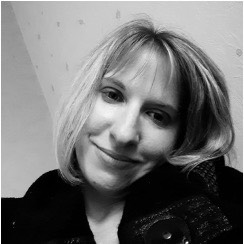
Maria Antoniak is an Assistant Professor in Computer Science at the University of Colorado Boulder, with affiliations to the Department of Information Science. Her research bridges natural language processing and cultural analytics, focusing on computational methods to analyze language-culture intersections in online communities and healthcare settings. Her recent work explores research cultures and LLM adaptations (ACL 2025), ethical human-LLM interactions (COLM 2024), and story detection in digital spaces (ACL 2024). Publications span maternal healthcare NLP (FAccT 2024), bias measurement (ACL 2021), and narrative power dynamics (CSCW 2019). She has served on editorial boards for the Journal of Cultural Analytics and Computational Humanities Research (CHR) Journal, and as Senior Area Chair for ACL 2025. Her outreach includes founding AI for Humanists workshops and developing cultural analytics tools like Little Mallet Wrapper and Riveter. Antoniak completed her PhD in Information Science at Cornell University, advised by David Mimno, and holds an MS in Computational Linguistics from the University of Washington. She is actively recruiting students for Fall 2026 and has taught NLP-related courses at multiple institutions globally.
Coralie Pressacco De La Luz is a Researcher affiliated with the CIRLEP research team at the University of Reims Champagne-Ardenne. Her primary roles include teaching LLCER (Foreign Languages and Cultures), Translation, Hispanic-American Literature, Spanish Grammar, Phonetics, and Linguistics across undergraduate and graduate levels. She also teaches in engineering programs (EiSINe and ESIREIMS) and manages DELE/CLES language certification exams as an accredited examiner. Her doctorate (2019) focused on Violence in Contemporary Mexican Literature under Prof. Silvia Pereyra-Palma, exploring literary, lexicological, and translational dimensions. Key research interests include contemporary Mexican literature’s portrayal of violence, Mexican Spanish lexicology, and challenges in translating socio-linguistic nuances. She holds certifications including the CAPES (2005) and passed the Spanish competitive examinations (2013). Her publications critically analyze narco-literature, lexical violence representation, and dialect translation strategies. Notable works include a 2022 monograph on drug-trafficking violence lexicology and articles dissecting translation challenges in Mexican dialects and cultural symbolism. Her research bridges literary analysis with socio-linguistic realities, emphasizing cross-cultural understanding through language. Teaching spans language pedagogy, pre-professional research training, and interdisciplinary connections between literature and socio-political contexts. She actively contributes to linguistic certification programs and maintains a strong focus on interdisciplinary academic engagement.
Océane Smith-Médion is a doctoral student and Temporary Teaching and Research Associate (ATER) at the University of Toulouse, affiliated with the Center for Anglophone Studies (CAS). She teaches English linguistics and language courses (LANSAD) for master's students at INSPE Toulouse and previously taught at Sorbonne Nouvelle University and Toulouse 1 Capitole University. Education: External Aggregation (2021) Doctoral candidate (2021–present) researching implicit communication in US presidential campaigns under Prof. Blandine Pennec Research Focus: Specializes in political discourse analysis, corpus linguistics, and implicit communication strategies. Her work examines how language shapes political perception, particularly through connotation, framing, and rhetorical devices in US presidential debates and speeches. Publication Trends: Her conference papers analyze linguistic strategies in political communication, focusing on US contexts. Key themes include power dynamics in terminology (e.g., 'government'), connotation manipulation, and reality representation through language. Methodologies blend corpus analysis with discourse frameworks. Academic Service: Actively organizes academic events including the 2025 SAES Congress and CAS study days. Currently serves as doctoral student representative for institutional committees. Contact: oceane.smith-medion@univ-tlse2.fr
Isabelle Johansson serves as a University Lecturer in Sociology with a criminology focus at Kristianstad University's Department of Social Sciences within the Faculty of Health Sciences. She actively contributes to the FIGS (Individual Group and Society) research environment, examining societal dynamics through empirical social science lenses. Her research centers on criminological analyses of sex work, human trafficking, and associated stigma, with particular emphasis on gendered perspectives and cross-national policy comparisons. Key investigations explore how religiosity, ethnicity, immigration status, and digital media shape public attitudes toward transactional sex, utilizing methodologies ranging from experimental surveys to qualitative interviews across Nordic countries, Italy, and the United States. Analysis of her 2021-2026 publications reveals a cohesive trajectory examining attitudinal determinants of sex work perceptions, with increasing attention to digital-age stigma mechanisms and Nordic policy evaluations. Her work consistently bridges theoretical frameworks with practical policy implications, especially regarding Sweden's client-criminalization model and anti-trafficking systems. Dr. Johansson's affiliation with FIGS facilitates interdisciplinary collaboration on societal structures, though no details about student supervision, grant funding, or scientific awards appear in available materials. Her research maintains strong regional relevance while contributing to global debates on sex work legislation and victim support systems.
Professor Björn Hansen is Chair of Slavic Linguistics at the Institute of Slavic Studies, University of Regensburg, where he has held a professorship since 2002. Previously, he served as Lecturer in Slavonic Linguistics at the University of Cambridge (2000-2002) and as a research assistant at the University of Hamburg. He is also Partnerschaftsbeauftragter for university cooperation with the University of Novi Sad (Serbia) and University of Łódź (Poland), and chairs the doctoral committee for the Faculty of Philosophy IV at Regensburg. Born: 1964 in Flensburg 1984-1991: Studies in East Slavic Studies and German Language and Literature at University of Hamburg 1995: PhD in Slavic Linguistics (University of Hamburg) 2001: Habilitation in Slavic Philology - Linguistics (University of Hamburg) Hansen's research spans multiple areas of Slavic linguistics, with particular focus on the structures of Polish, Russian, Serbian and Croatian languages. His work investigates language contact phenomena, areal typology, language change in Slavia, heritage linguistics, and corpus linguistics. He specializes in syntax and semantics, particularly examining modality, grammaticalization processes, contact-induced change, clitics (including clitic climbing), indefiniteness, subject encoding, frame semantics of public discourse, and the language of religion. His methodological approach often combines corpus-based analysis with theoretical linguistic frameworks. Analysis of Hansen's recent publications reveals consistent focus on microvariation in South Slavic languages, particularly Bosnian, Croatian, and Serbian. His work demonstrates expertise in clitic phenomena, modal constructions, and subject case marking. He frequently employs corpus-based methodologies to investigate rare linguistic phenomena, especially in underresourced languages. His research increasingly connects historical linguistics with contemporary language use, examining how grammaticalization processes evolve over time and across language contact situations. Member of DFG-Fachkollegium 104-02 (2009-2024) Official expert for Alexander von Humboldt Foundation (since 2011) Reviewer for multiple national research foundations including DFG, Swiss National Science Foundation, and Austrian Science Fund Member of editorial boards for several international linguistics journals Hansen has supervised numerous doctoral and master's students, with research spanning heritage language syntax, Slavic modality, language contact phenomena, and corpus-based linguistic analysis. He leads multiple externally funded research projects including 'seeFfield' (VolkswagenStiftung, 2022-2029), 'LangGener' (DFG-NCN, 2018-2022), and several DFG projects examining microvariation in Bosnian/Croatian/Serbian, Polish-German bilingualism, and historical semantics of corruption. As Principal Investigator of the Graduate School for East and Southeast European Studies (2012-2019), he has significantly contributed to interdisciplinary research in the region. Hansen directs the Binational Study Program 'German-Polish Studies' (funded by DAAD) and has organized numerous international conferences and workshops on Slavic linguistics, including the 'Clitic Climbing' workshop (2017) and 'Perspectives of German-Slavic Multilingualism' conference (2016).
Ludmila Pöppel is a Professor at Stockholm University , affiliated with the Department of Slavic and Baltic Languages, Finnish, Dutch and German . Her research focuses on discourse analysis , lexical semantics , phraseology , and corpus linguistics , often intersecting with political discourse and construction grammar . Research Themes: Analyzing near-synonyms in Russian (e.g., беспорядки vs. волнения), combinatorial properties of words, and semantic shifts in political terminology like революция (revolution) vs. переворот (coup). Key Projects: Leadership in the TELICORE collaboration between Stockholm University, Higher School of Economics (Russia), and Ilia State University (Georgia), and contributions to the Russian-Swedish dictionary database for discursive units. Publications: Her work spans corpus-driven studies of Russian constructions (e.g., дело в том, что, то-то и N), their cross-linguistic parallels, and the pragmatic functions of focus particles. She emphasizes empirical data from Sketch Engine and the Russian National Corpus to identify language-specific features. Advising: Supervises doctoral students and numerous undergraduate and master's theses, integrating her research on political discourse into teaching at all levels, including courses on corpus linguistics and lexical semantics . Labs/Networks: Member of the Language and Power Network , analyzing how language shapes political narratives in polarized climates.