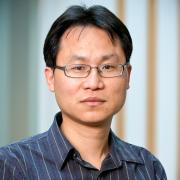
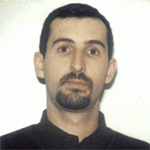
Dr. Xiaodong Lin is a Professor at the University of Guelph's School of Computer Science and an IEEE Fellow (2017) for contributions to secure vehicular communications. He leads the Blockchain Technology and Cybersecurity (BTC) lab, focusing on privacy-enhancing technologies, digital forensics, wireless network security, blockchain applications, and DeFi security. PhD, Beijing University of Posts and Telecommunications, China PhD, University of Waterloo, Canada His research bridges theoretical and applied domains in cybersecurity, particularly vehicular networks, smart grids, and decentralized systems. Recent work examines blockchain security, privacy-preserving protocols for IoT, and secure data aggregation in wireless networks. Key publication trends include secure fog computing for vehicular crowdsensing, privacy-preserving authentication in 5G, and cryptographic solutions for smart grids. Awards highlight multiple Best Paper recognitions at IEEE conferences. IEEE Fellow (2017) Best Paper Awards (IEEE INFOCOM 2018, GLOBECOM 2017, SECURECOMM 2016) Dr. Lin supervises graduate students in blockchain security, AI security, and digital forensics. His lab provides financial support to qualified students.
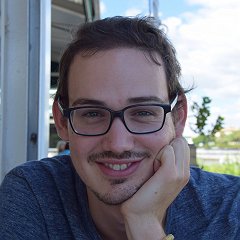
Arthur Gervais is a Professor of Information Security at University College London's Department of Computer Science. His work focuses on blockchain systems, smart contract security, and decentralized finance (DeFi) risk analysis. He has published extensively on topics ranging from privacy technologies to systemic vulnerabilities in financial cryptography. Research Interests: Gervais investigates security challenges in blockchain ecosystems, including censorship mechanisms, zero-knowledge proofs, and DeFi liquidation risks. His interdisciplinary approach bridges computer science, cryptography, and financial systems. Publications Trends: Recent articles emphasize empirical studies of DeFi attacks, hybrid fuzzing for smart contract verification, and privacy trade-offs in blockchain mixers. His work spans conferences like ACM SIGMETRICS, IEEE Security & Privacy, and World Wide Web Conference.
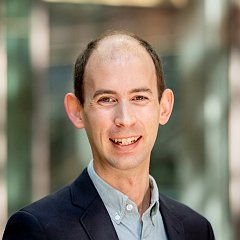
Juergen Dingel is a Professor in the School of Computing at Queen's University, Canada. He joined the faculty in 2000 and holds a PhD in Computer Science from Carnegie Mellon University (1999). His research focuses on software modeling, model-driven engineering, formal methods, and formal verification, with applications in real-time systems and embedded systems. He leads the Modeling and Analysis in Software Engineering (MASE) research group. Education: PhD in Computer Science, Carnegie Mellon University (1999) M.Sc. in Pure and Applied Logic, Berlin University of Technology (1994) M.Sc. in Computer Science, Berlin University of Technology (1992) Research Interests: Model-driven engineering and transformation Formal specification and verification Automated testing and debugging Real-time and embedded systems Service composition and distributed systems His work emphasizes practical tools like Papyrus-RT and MDebugger , integrating formal methods into software development. Grants & Collaborations: Funded by NSERC, OCE, and industry partners (IBM, GM, Ericsson) Focus on automotive systems, IoT, and safety-critical applications Service: Editorial board member for SoSyM , STTT , and JOT Former chair of the MODELS Steering Committee (2016–2018) PC co-chair for MODELS 2014 and FMOODS/FORTE 2011 Labs & Teams: Leads the MASE group, which develops open-source tools for model-driven engineering. Collaborates with industry on automotive and IoT projects.
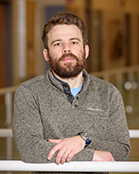
Yinzhi Cao is an Associate Professor at the Johns Hopkins University Department of Computer Science . He serves as Technical Director of the Johns Hopkins Information Security Institute and is affiliated with the Data Science and Artificial Intelligence Institute and the Institute for Assured Autonomy . Cao joined JHU in 2018 from Lehigh University, where he was an Assistant Professor. Doctor of Philosophy (PhD) in Computer Science, Northwestern University (2014) Bachelor of Engineering (BE) in Electronic Engineering, Tsinghua University (2008) Research Interests focus on security and privacy of web, mobile, and machine learning systems . Key projects include Vulnerability Analysis of Web Applications and Security, Privacy, and Fairness Analysis of ML Systems . His work addresses prototype pollution in JavaScript, node.js vulnerabilities, browser fingerprinting, federated learning privacy, and automated exploit generation. Scientific Recognition includes the NSF CAREER Award (2021) DARPA Young Faculty Award (2022) & Director's Fellowship (2024) Amazon Research Awards (2022, 2017) IEEE Security & Privacy Test of Time Award (2025) Distinguished Paper Awards at IEEE S&P 2025, CCS 2023, USENIX Security 2022 Advising & Grants highlight mentorship of 20+ PhD and Master’s students across institutions. Major grants include $1.2M collaborative CICI TCR grant (2024-2026) with Dr. John Aucott $750K DARPA YFA grant (2022-2025) $500K NSF SaTC grant (2022-2025) NSF EAGER grant (2016-2017) Labs & Teams : Affiliated with Johns Hopkins Information Security Institute , Data Science AI Institute , and Institute for Assured Autonomy . Collaborates with institutions like Columbia, UC Santa Barbara, and SRI International. His group investigates real-world vulnerabilities in over 2,500 websites and NPM packages, uncovering 80+ zero-day issues.
Yannic Noller is a Professor at the Faculty of Computer Science at Ruhr University Bochum (RUB), leading the Software Quality group. Previously, he held positions as Assistant Professor at Singapore University of Technology and Design (SUTD) and Research Assistant Professor at National University of Singapore (NUS). His research focuses on automated software engineering, including program repair, machine learning analysis, and software testing. He earned his Ph.D. from Humboldt-Universität zu Berlin under Prof. Lars Grunske, with a thesis on hybrid differential software testing. Education: Ph.D. in Computer Science (2016-2020, Humboldt-Universität), M.Sc. (2013-2016, University of Stuttgart), B.Sc. (2010-2013, University of Stuttgart). Research interests include automated program repair techniques, machine learning model analysis, and intelligent tutoring systems for programming education. Notable contributions include HyDiff (hybrid differential analysis tool) and CPR (concolic program repair). Awards include the Distinguished Artifact Reviewer at ISSTA'2021 and multiple scholarships for academic excellence. Teaching includes courses on software engineering, requirements engineering, and automated software engineering.
Stefan Kowalewski serves as Professor of Embedded Software at RWTH Aachen University, leading the Chair of Embedded Software (Informatik 11) within the Department of Computer Science. His research spans critical domains including medical cyber-physical systems, automotive software, and industrial automation, with over 150 publications demonstrating sustained scholarly impact. Professor Kowalewski's work focuses on three interconnected research pillars: Embedded Systems Verification: Pioneering model checking techniques for PLC code, particularly addressing state space challenges in GRAFCET-based specifications Medical Cyber-Physical Systems: Developing safety-critical software for mechanical ventilation, extracorporeal membrane oxygenation, and ARDS diagnosis systems with strong clinical collaborations Automotive Software: Creating verification frameworks and safety architectures for automated vehicles through projects like UNICARagil Recent publications reveal an increasing integration of AI techniques with traditional verification methods, particularly for medical applications involving neonatal care and critical respiratory support. His 2024-2025 work shows particular emphasis on timing isolation in vehicle communication systems, middleware performance evaluation, and robust AI models for medical diagnosis. Professor Kowalewski maintains active collaborations with RWTH Aachen University Hospital's medical departments and automotive industry partners. His laboratory operates specialized facilities including the Cyber-Physical Mobility Lab for vehicle research and in-vivo testing setups for medical device validation. He has supervised numerous doctoral candidates, with recent students focusing on topics like ARDS classification algorithms, GRAFCET verification techniques, and safety architectures for software-defined vehicles. His educational contributions include developing remote teaching platforms for cyber-physical systems education.
Kanad Basu is an Associate Professor in the Department of Electrical, Computer, and Systems Engineering at The University of Texas at Dallas, Jonsson School of Engineering and Computer Science. He leads the Trustworthy and Intelligent Embedded Systems (TIES) lab, focusing on hardware security, reliability, and emerging computing paradigms. His research spans AI hardware, quantum computing, functional safety, and hardware-based security validation. Research Interests: His work emphasizes improving the trustworthiness of modern hardware systems. Key areas include hardware security (e.g., side-channel analysis, hardware trojans), functional safety in AI accelerators, quantum computing security and verification, and post-silicon validation techniques. He combines formal methods, machine learning, and hardware design to address vulnerabilities in SoCs, DNN accelerators, and quantum systems. Publication Trends: Recent publications (2023–2025) show a strong focus on interdisciplinary research, integrating AI/ML with hardware security, quantum computing, and functional safety. There is a growing emphasis on using large language models for assertion generation, symbolic execution for hardware fuzzing, and graph neural networks for quantum circuit analysis. His work frequently appears in top venues like DAC, DATE, HOST, ISVLSI, and IEEE journals. Scientific Awards: NSF CAREER Award, 2025 IEEE Top Picks in Test and Reliability, 2024 and 2023 Multiple Hack@DAC Prizes (2nd and 3rd) Best Paper Award at VLSI Design 2011 Assistant Professor Award at UTD Jonsson School, 2024 Nominated for Blavatnik Awards for Young Scientists, 2019 Advising and Grants: Dr. Basu has mentored numerous PhD, MS, and undergraduate students, many of whom have published in top-tier venues. He leads the TIES lab, which has received significant recognition, including the NSF CAREER Award. He actively collaborates across disciplines, advising students on topics ranging from quantum computing to AI hardware and functional safety. His lab produces high-impact research with real-world applications in automotive, cloud, and embedded systems. Labs and Teams: He leads the Trustworthy and Intelligent Embedded Systems (TIES) lab at UT Dallas, which fosters innovation in hardware security and reliability. The lab has produced award-winning work, including second prize at HACK@DAC 2025. He also serves on technical committees for IEEE DATE and HOST, and acts as Hardware Hacking Chair for IEEE HOST, indicating strong leadership in the hardware security community.
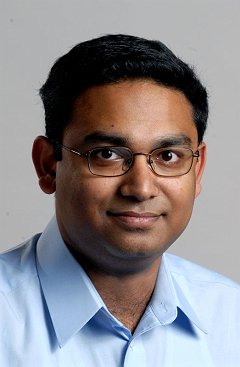
Koushik Sen is a Professor in the Department of Electrical Engineering and Computer Sciences at the University of California, Berkeley. His research focuses on developing software tools and methodologies to enhance programmer productivity and software quality, with expertise in Software Engineering, Programming Languages, and Formal Methods. Education: B.Tech from Indian Institute of Technology, Kanpur M.S. and Ph.D. in Computer Science from University of Illinois at Urbana-Champaign Research Focus: Professor Sen pioneers automated testing techniques including concolic testing and DART (Directed Automated Random Testing). His work bridges formal methods with practical software development, emphasizing bug detection, program synthesis, and AI-driven software analysis tools. Recent innovations include machine learning approaches for code recommendation and fuzzing. Publication Trends: His recent publications (2019-2023) demonstrate strong emphasis on fuzzing techniques, program synthesis, and AI/ML applications in software engineering. Notable domains include smart contract security, automated testing, and developer tooling, with frequent collaborations in top-tier conferences. Awards and Honors: NSF CAREER Award (2008) Sloan Foundation Fellowship (2011) IFIP TC2 Manfred Paul Award (2010) Okawa Foundation Research Grant (2015) Multiple ACM SIGSOFT Distinguished Paper Awards UIUC Distinguished Alumni Educator Award (2014) Leadership: Active program committee member for premier conferences (PLDI, ICSE, ISSTA) and keynote speaker. His research is supported by NSF, Okawa Foundation, and Sloan Foundation.
Koushik Sen is a Professor in the Department of Electrical Engineering and Computer Sciences at the University of California, Berkeley. He holds a B.Tech from IIT Kanpur and M.S./Ph.D. from UIUC. His research focuses on Software Engineering, Programming Languages, and Formal Methods, emphasizing tools like DART, CUTE, and Jalangi for improving software reliability. He leads projects such as CORVETTE and Sky Computing Lab, and collaborates with Samsung Research America on JavaScript analysis. Sen has received prestigious awards including the Sloan Fellowship and ACM SIGSOFT Impact Award. Education: B.Tech, Indian Institute of Technology, Kanpur M.S. and Ph.D., University of Illinois at Urbana-Champaign Research Interests: Software Testing, Verification, Symbolic Execution, Security, and Quantum Computing. His work bridges automated testing (e.g., concolic testing) with machine learning for bug detection and program synthesis. Projects include Hindsight Logging for ML reproducibility and quantum circuit optimization (QFAST). Awards: NSF CAREER, IFIP Manfred Paul, ACM SIGSOFT Distinguished Paper (multiple), and Sloan Fellowship. Advising: Supervised over 30 students/postdocs, leading to faculty roles at UBC, CMU, and industry positions at Google, Facebook, and Samsung. Labs/Teams: Berkeley Center for Responsible, Decentralized Intelligence (RDI), EPIC Data Lab, and Sky Computing Lab. Active in quantum computing and hardware fuzzing (RTL-FuzzLab).
Nikolaos Papaspyrou is a Professor at the School of Electrical and Computer Engineering of the National Technical University of Athens (NTUA) and a member of the Software Engineering Laboratory . His research focuses on the theory and implementation of programming languages, including semantics, type systems, compilers, static analysis, and formal verification. Since October 2021, he has been on leave from NTUA, working as a Software Engineer for Google in the memory management team for the V8 JavaScript and WebAssembly engine. He previously served as Director of the Division of Computer Science (2017-2019) and was on sabbatical with Google's compiler group in Munich (2015-2016). His work includes the RELEASE project (EU FP7 STREP) for reliable large-scale server software and uncertainty handling in distributed databases (European Social Fund). Ph.D. and Diploma in Electrical and Computer Engineering from NTUA M.Sc. in Computer Science from Cornell University His research interests span programming languages , software engineering , and formal verification , with recent publications on coinductive proofs in Liquid Haskell, concurrency semantics, and quantum compilation. He has supervised over 50 diploma projects and mentored numerous students now at institutions like MIT, Princeton, and UC Berkeley. Awards include conference organizing and program committee roles, though no formal scientific prizes are listed.
Quentin Stiévenart is a researcher at Université du Québec à Montréal, focusing on abstract interpretation, concurrency, and static analysis. His work spans programming language design, software verification, and tool development for WebAssembly and functional languages like Racket and Scheme. Active in organizing and reviewing for conferences including SPLASH, ICFP, ECOOP, and SAS Developed tools such as Wassail for WebAssembly static analysis and RacketLogger for educational purposes Contributions include theoretical work on effect-driven flow analysis and practical advancements in concolic execution abstraction His research addresses challenges in concurrency verification, cyclic reinforcement in incremental analysis, and security-focused taint tracking across multiple language paradigms.
Jonathan Bell is an Associate Professor in Software Engineering and Software Systems at Northeastern University's Khoury College of Computer Sciences. Previously, he was faculty at George Mason University where he received a university-wide Teacher of Distinction award. Bell directs research that makes it easier for developers to create reliable and secure software by improving software testing and program analysis. His research spans several key areas in software engineering: flaky tests, fuzzing, software supply chain analysis, and continuous integration. Bell's work on accelerating software testing earned an ACM SIGSOFT Distinguished Paper Award (ICSE '14), and his contributions to the object-oriented programming community were recognized with the 2020 Dahl-Nygaard Junior Researcher Prize. His program analysis research has resulted in widely adopted runtime systems including the Phosphor taint tracking system and CROCHET checkpoint/rollback tool. His recent publications reveal a consistent focus on practical software engineering problems with empirical validation. His work increasingly addresses the challenges of modern software supply chains and dependency management, building on his earlier foundational work in testing and program analysis. The trend shows progression from specific testing problems to broader software ecosystem challenges. ACM SIGSOFT Distinguished Paper Award (ICSE '14 - Unit Test Virtualization with VMVM) Dahl-Nygaard Junior Researcher Prize (2020) NSF CAREER award recipient Teacher of Distinction award from George Mason University Bell actively serves the software engineering community through program committee work for major conferences (ICSE, ASE, FSE, ISSTA), co-organizing mentoring workshops, and contributing to open source projects. He co-founded the Clowdr open source project during the pandemic to support virtual academic conferences and subsequently co-founded a startup around it. His research has been funded by the NSA and NSF, and he serves on the Computing Research Association's Education Board.
Nikolaos S. Papaspyrou is a Professor at the School of Electrical and Computer Engineering of the National Technical University of Athens (NTUA), affiliated with the Software Engineering Laboratory and the Division of Computer Science. His research focuses on programming languages, compilers, formal verification, and concurrency. Since October 2021, he has been on leave from NTUA while working as a Software Engineer at Google's V8 JavaScript and WebAssembly engine team. Previously, he served as Director of the Division of Computer Science (2017–2019) and held a sabbatical at Google's Munich compiler group (2015–2016). His academic contributions include pioneering work on Erlang/OTP scalability, concolic testing for functional languages, and static analysis techniques. He has authored numerous publications in top venues like ACM Transactions on Programming Languages and Systems and IEEE conferences. Papaspyrou has supervised over 50 diploma students and multiple PhD candidates, contributing to the education of future researchers and engineers. He actively participates in programming competitions, coaching Greek Olympiad teams, and volunteers in the Hellenic Informatics Society. He teaches advanced courses on programming languages, compilers, and software engineering at NTUA, emphasizing practical applications of theoretical concepts. His educational philosophy integrates problem-solving through programming, as highlighted in his FedCSIS 2013 paper on teaching methodologies.
Nick Nikiforakis is an Associate Professor in the Department of Computer Science at Stony Brook University, with an affiliation to the National Security Institute. His research focuses on web security, privacy, software security, and intrusion detection, with particular emphasis on analyzing online ecosystems, domain squatting, honeypot deployment, and client-side defense mechanisms. He completed his PhD in Computer Science at KU Leuven (Belgium), and holds an MSc in Parallel and Distributed Systems and a BSc in Computer Science from the University of Crete, Greece. His work has been funded by NSF and ONR grants, including projects addressing vulnerability scanning, social engineering defenses, and mobile browser security. Nikiforakis' awards include a Distinguished Paper Award at NDSS 2017 and a Best Paper Award at ISC 2014. He teaches courses CSE 508 (Computer Security), CSE 509 (Advanced Topics in Security), and CSE 361 (Data Structures and Algorithms). His research explores cutting-edge threats like blockchain naming system abuse, cryptocurrency scams, and adversarial AI-driven misinformation campaigns.
Kihong Heo is an Associate Professor at the School of Computing, Korea Advanced Institute of Science and Technology (KAIST), where he leads the Programming Systems Laboratory. He received his Ph.D. in Computer Science & Engineering from Seoul National University and previously served as an Assistant Professor at KAIST (2017-2019) and a Post-doctoral Researcher at the University of Pennsylvania (2009-2017). His research focuses on developing program reasoning systems for safe and reliable software, with three main thrusts: AI-based program analysis systems for detecting deep semantic software bugs, general-purpose program simplification systems for secure and efficient software, and scalable program synthesis systems for automatic software generation and repair. His work bridges formal methods, programming languages, and machine learning to address critical challenges in software reliability and security. Prof. Heo's recent publications demonstrate a strong trend toward integrating machine learning techniques with traditional program analysis and verification methods. His research spans compiler correctness (particularly for JavaScript engines), mobile security verification, and automated program transformation. The work on 'Safeguarding Mobile GUI Agent via Logic-based Action Verification' (MobiCom 2025) and 'Optimization-Directed Compiler Fuzzing for Continuous Translation Validation' (PLDI 2025) exemplifies his focus on practical verification techniques for real-world systems. ACM SIGSOFT Distinguished Paper Award (FSE 2025) Amazon Research Award (2024) The Soo-Young Lee Teaching Innovation Award, KAIST (2024) Prize for Excellence in Teaching, KAIST (2024) Best Artifact Award, ICSE (2022) ACM SIGPLAN Distinguished Paper Award, PLDI (2019) Prof. Heo actively mentors graduate students, currently advising three Ph.D. students (Yeonhee Ryou, Taeeun Kim, Sujin Jang) and four Master's students. He serves on program committees for major conferences including ICSE, PLDI, OOPSLA, and SAS, and is an Associate Editor for ACM Transactions on Software Engineering and Methodology (TOSEM). His Programming Systems Laboratory develops tools like Sparrow, a state-of-the-art static analyzer for C programs that applies abstract interpretation techniques to verify the absence of fatal bugs.