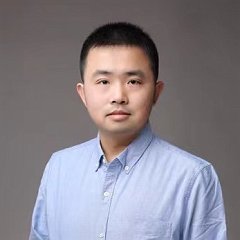
Dr. Fang Yu is an Associate Professor at the Department of Management Information Systems, National Chengchi University, specializing in software security, formal verification, and string analysis. They hold a Ph.D. in Computer Science from the University of California, Santa Barbara. Research Expertise: Dr. Yu focuses on cybersecurity, formal methods for software verification, and machine learning applications in data clustering and adversarial example detection. Their work bridges theoretical computer science with practical security solutions. Publication Trends: Recent articles address biomedical data clustering ( scGHSOM ), explainable AI ( XFlag ), and adversarial defense mechanisms. Topics span bioinformatics, security verification, and fairness testing in neural networks. Awards: 資深優良教師(10年) (2020, National Chengchi University) 國科會研究獎勵 (2019, National Science Council, Taiwan) Projects: Principal Investigator for 15+ grants from Taiwan's National Science and Technology Council and Ministry of Education, focusing on AI security, IoT verification, and financial technology.
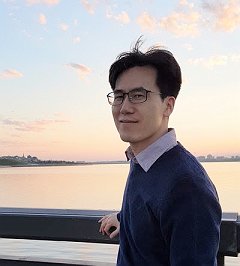
Chih-Duo Hong is an Assistant Professor at the Department of Management Information Systems , College of Business , National Chengchi University , holding this position since February 2023. He earned his Ph.D. in Computer Science from University of Oxford (2017-2022). Research Focus : Formal methods, automated reasoning, neural network testing, and software security Grants : Principal Investigator for multiple National Science and Technology Council projects on data transformation systems (2023-2026) His work spans parameterized verification , probabilistic systems , and neural network fairness , with publications in journals like IEEE Transactions on Software Engineering and ACM TOPLAS. He contributes to concolic testing , array systems abstraction , and constraint-based software optimization . Recent Topics : Formal verification of anonymity/uniformity in probabilistic systems Individual fairness testing for neural networks Regular abstractions for array constraints Collaborations include institutions like University of Oxford, National Chengchi University, and research partners Anthony Lin, Philipp Rümmer, Fang Yu.
Coen De Roover is a Professor at the Vrije Universiteit Brussel (VUB) since October 2015, affiliated with the Software Languages Lab (SOFT) where he leads the Code Analysis and ManiPulation (CAMP) subgroup. He serves as programme director for the bachelor's program in Computer Science since the 2019-2020 academic year. His research focuses on the design of program analyses and their application to software quality problems , with particular expertise in static and dynamic analysis techniques. Key research areas include: Soft verification of contracts and incremental abstract interpretation Fine-grained change analysis of individual commits Mining for change patterns across multiple commits Vulnerability detection in infrastructure code (particularly Ansible) Concolic testing and resilience analysis Recent publication trends show increasing focus on infrastructure as code security, WebAssembly analysis, and modular abstract interpretation frameworks. His work bridges theoretical program analysis with practical software engineering applications, often validated through empirical studies on open-source projects. As an active contributor to the software engineering community, he has served on program committees for major conferences including ASE, ECOOP, ICSE, and SPLASH. His leadership roles include steering committee positions for GPCE and SANER, and program co-chair roles for International Conference on Program Comprehension. De Roover directs the CAMP research subgroup which has published over 120 peer-reviewed articles. The group develops practical analysis tools while advancing theoretical foundations of program analysis, with recent work focusing on infrastructure code security and WebAssembly analysis.
Antonio Filieri is a Senior Applied Scientist at Amazon Web Services (AWS) and holds a Visiting Associate Professor position at the Department of Computing, Imperial College London. Previously, he was a tenured Associate Professor at Imperial College London (2022-2024) and Assistant Professor (2016-2022), and served as Assistant Professor at the University of Stuttgart between 2013 and 2015. His academic career spans over a decade with significant contributions to software engineering research. Dr. Filieri's research focuses on formal mathematical methods for software design, verification, self-adaptation, and security. His primary research areas include static analysis, privacy, and automated test generation for security; exact and approximate methods for probabilistic program analysis; control theory for adaptive software; quantitative verification and model checking; and runtime-efficient and incremental verification. His work bridges theoretical foundations with practical applications in industry settings, particularly in cloud computing and security domains. His recent publications demonstrate a strong focus on probabilistic methods for software analysis, security testing, and performance modeling. The research trends show increasing integration of formal methods with machine learning techniques, particularly in test oracle generation and neural network analysis. There's also a clear emphasis on scalability and practical applicability of verification techniques to real-world systems like serverless computing and microservices architectures. Dr. Filieri has received numerous prestigious awards for his contributions: Best Student Paper Award (2025) for 'Robust Probabilistic Model Checking with Continuous Reward Domains' ACM Distinguished Paper Award (2023) for 'Sibyl: Improving Software Engineering Tools with SMT Selection' Best Paper Award (2022) for 'Enhancing Performance Modeling of Serverless Functions via Static Analysis' Best Artifact Award (2017) for 'Self-adaptive video encoder: comparison of multiple adaptation strategies made simple' Most Influential Paper Award (awarded at SEAMS 2025) for 'Software Engineering Meets Control Theory' ACM SigSoft Distinguished Paper Award (2011) for 'Run-time Efficient Probabilistic Model Checking' Dr. Filieri has advised several PhD students including Donato Clun (2024), Runan Wang (2024), and Xiaotong Ji (expected 2025). His advising focuses on probabilistic program analysis, automated testing, and security verification. His research has been supported by significant grants from both academic and industry sources, enabling collaborations across multiple institutions and contributing to advancements in software engineering practices. While specific lab information isn't prominently featured in the provided materials, Dr. Filieri's work suggests strong connections with research groups focused on formal methods, software verification, and adaptive systems at both Imperial College London and AWS. His research often involves interdisciplinary collaboration between theoretical computer science and practical software engineering challenges.
Yun Lin is an Associate Professor and Deputy Head of the Department of Computer Science and Technology at Shanghai Jiao Tong University's School of Computer Science. Prior to joining SJTU, Lin served as a Research Assistant Professor at the National University of Singapore working with Prof. Dong Jin Song. Lin leads the CoPhi ("Code Philia") research group, which focuses on the intersection of Software Engineering, AI, and Security. Lin's research spans three major areas: Automatic Programming (including code editing, software testing, and debugging), Explainable AI (focusing on representation interpretation and training data attribution), and Web Misinformation (particularly phishing and scam detection). The research has resulted in numerous tools including CoEdPilot for code editing recommendation, DeepDebugger for interactive debugging of deep classifiers, and Phishpedia for phishing webpage detection. Lin's recent publications demonstrate a strong trend toward integrating AI techniques, particularly large language models and vision language models, with traditional software engineering and security tasks. The work shows increasing sophistication in understanding project context, handling interactive nature of programming tasks, and addressing security challenges in the age of generative AI. Key themes include consistency-based approaches for anomaly detection, agent-based frameworks for complex tasks, and hybrid models that combine symbolic reasoning with neural approaches. ACM Distinguished Paper Award in ICSE'18 for "Towards Optimal Concolic Testing" Distinguished Reviewer Award in FSE'25 2nd prize Research Prototype Award in ChinaSoft'24 Lin advises a large team of PhD, Master's, and undergraduate students, with several publications co-authored with students appearing in top venues. Current research is supported by collaborations with National University of Singapore, particularly with Prof. Dong Jin Song, and includes projects on code editing, GUI testing, and phishing detection. The CoPhi group maintains active development of multiple research tools and datasets. The CoPhi research group under Lin's leadership focuses on building practical tools that bridge the gap between theoretical advances and real-world programming and security challenges. The group's work spans from fundamental program analysis techniques to applied security solutions, with an increasing emphasis on leveraging AI capabilities while maintaining explainability and reliability.
Aymeric Fromherz is a researcher at Inria Paris, focusing on formal methods for secure systems. He leads projects in Rust verification, high-assurance cryptography, and formalization of computational legal texts. Education includes a PhD from Carnegie Mellon University (co-advised by Bryan Parno and Corina Păsăreanu) and degrees from École Normale Supérieure. His research spans Rust verification (via Aeneas toolchain), verified cryptographic primitives , and computational law (through the Catala language). Recent publications address memory allocators, borrow-checking, and legal ambiguity detection. Major Scientific Awards : Distinguished Artifact Award (CAV 2025) Best Tool Paper Award (ESOP 2024) ACM SIGSAC Dissertation Award (2021) A.G. Milnes Dissertation Award (2021) He contributes to conferences like POPL, ICFP, and CPP, and participates in the Everest Project. The Prosecco Team at Inria Paris supports his research on formal methods and security.
Gul Agha is a distinguished Professor of Computer Science at the University of Illinois at Urbana-Champaign and Director of the Open Systems Laboratory. His career spans over three decades of pioneering research in concurrent and distributed computing systems. Professor Agha's research focuses on the actor model of computation, formal methods, and statistical model checking. His work bridges theoretical foundations with practical applications in distributed systems, programming languages, and verification techniques. He has made seminal contributions to understanding concurrent computation through his development of the actor model framework. His publication record shows consistent contributions from the 1980s through the present, with recent work focusing on verification of safety-critical systems, serverless computing optimization, and advanced techniques for distributed actor systems. The trend in his research demonstrates a progression from theoretical foundations to practical applications in modern computing environments including cloud infrastructure and IoT systems. His scientific achievements have been recognized with numerous prestigious awards: Fellow of the IEEE (2002) IEEE Computer Society Meritorious Service Award Golden Core Member of the IEEE Computer Society International Lecturer for the ACM (1992-1997) ACM Fellow (2018) for research in concurrent programming and formal methods Professor Agha has supervised numerous graduate students and postdoctoral researchers through the Open Systems Laboratory. His laboratory has secured substantial research funding for projects in distributed systems, formal verification, and wireless sensor networks. His work on the actor model has influenced both academic research and industry practices in concurrent and distributed computing. As Director of the Open Systems Laboratory, Professor Agha leads a research group focused on advancing the state of the art in distributed and concurrent systems. The laboratory serves as an intellectual hub for theoretical and practical research in open distributed systems, with projects spanning from foundational theory to real-world implementations in areas like structural health monitoring and cloud computing.
Jooyong Yi is an Associate Professor in the Department of Computer Science and Engineering at UNIST (Ulsan National Institute of Science and Technology). He leads the LOFT (Lab of Software), focusing on autonomous techniques for software reliability in AI-generated code environments. Research Interests: His work spans program analysis, automated repair, testing/debugging, and verification. Core themes include developing scalable methods for bug detection (via static/dynamic analysis), AI-compatible repair systems, and verification frameworks for safety-critical systems. Recent emphasis integrates fuzzing techniques with repair validation. Publication Trends: His 15 most recent works (2015-2025) show progression from foundational program repair techniques (e.g., Angelix, DirectFix) toward AI-era innovations: greybox fuzzing for efficiency, memory-leak repair for web frameworks, and deep-learning library testing. Over 50% of publications focus on optimizing repair validation and scalability. Awards: ACM Distinguished Paper Award at ASE 2023 Students & Grants: Currently advises 5 PhD, 1 MS/PhD, and 2 MSc students. Secured ₩20B+ in funding for projects including: MSIT Binary Micro-Security Patch Technology (2024-2026) Patch Validation for Automated Repair (2023-2026) AI-Powered Low-Code Platform (2023-2025) Memory-Safe Language Integration (2024-2027) Lab: LOFT lab develops verified repair tools (e.g., LeakPair, Verifix) and benchmarks (BUGSC++), prioritizing human oversight in AI-generated software.
Zhenbang Chen is a Professor in the College of Computer at National University of Defense Technology (NUDT), China. His academic career spans over a decade with significant contributions to software engineering, particularly in program analysis and formal methods. He has served on program committees for major conferences including ASE, ICSE, and FSE, and has been actively involved in research that bridges theoretical formal methods with practical software engineering applications. Dr. Chen received his Ph.D. and Bachelor degrees in computer science from National University of Defense Technology (NUDT) in June 2009 and July 2002, respectively. His educational background from NUDT has provided a strong foundation for his research in software engineering and formal methods. Ph.D. in Computer Science, National University of Defense Technology (NUDT), 2009 Bachelor's Degree in Computer Science, National University of Defense Technology (NUDT), 2002 Zhenbang Chen's research primarily focuses on program analysis, with special emphasis on symbolic execution techniques. His work extends to formal methods and their practical applications in software engineering. He investigates constraint solving approaches to improve the efficiency of program analysis and explores program synthesis techniques to automate software development tasks. His research bridges theoretical foundations with practical software engineering challenges, particularly in the areas of software verification and testing. His recent work has increasingly focused on optimizing symbolic execution through novel constraint solving techniques and exploring multi-modal approaches to behavior tree synthesis. This demonstrates his commitment to advancing both the theoretical underpinnings and practical applications of software analysis techniques. Professor Chen's publication record shows a consistent focus on symbolic execution and constraint solving, with a clear progression toward more sophisticated optimization techniques. His recent work demonstrates a shift toward multi-objective optimization for floating-point constraints and multi-modal approaches to program synthesis. The research spans both theoretical foundations and practical implementations, with several tools developed from his research participating in international competitions. Dr. Chen's research excellence has been recognized through multiple prestigious awards: ACM SIGSOFT Distinguished Paper Award for FSE 2025 paper "QSF: Multi-Objective Optimization based Efficient Solving for Floating-Point Constraints" ACM SIGSOFT Distinguished Paper Award for ISSTA 2021 paper "Type and interval aware array constraint solving for symbolic execution" ACM SIGSOFT Distinguished Paper Award for ICSE 2018 paper "Towards optimal concolic testing" Bronze Medal (3rd place) in Cover-Branches category at Test-COMP 2025 for the FDSE tool Professor Chen is actively involved in mentoring the next generation of researchers, currently seeking Ph.D. and M.Sc. students to work with him on cutting-edge research in program analysis and formal methods. His research group has developed several tools that have gained recognition in international competitions, including AISE which ranked 1st in SV-COMP 2025's ReachSafety-Loops category and FDSE which won Bronze Medal in Test-COMP 2025. His research has been supported by grants that enable participation in major international conferences and competitions, fostering collaborations with researchers worldwide. Dr. Chen leads a research group focused on program analysis and formal methods at NUDT. His team has developed several notable tools including AISE for program verification and FDSE for software testing, which have achieved top rankings in international competitions like SV-COMP and Test-COMP. The research group maintains active collaborations with other institutions and participates regularly in major software engineering conferences, contributing to both theoretical advancements and practical tool development in the field.