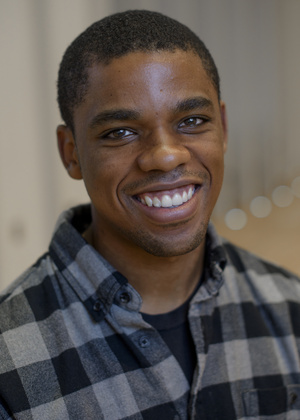
Shubham Atreja is an Assistant Professor at the University of San Francisco, focusing on data science, machine learning, and human-computer interaction. He emphasizes curiosity-driven learning and ethical innovation in data work. With over eight years of experience, his research explores online trust, social computing, and human-centered design, particularly in social media moderation and news curation. Education: PhD in Information (University of Michigan, expected 2025), BTech in Electrical Engineering (IIT Kanpur, 2016) His work includes designing tools like AppealMod for Reddit moderation and studying journalists' workflows. He has published in top venues like CHI and CSCW and holds two patents. Prior to academia, he worked as a Research Engineer at IBM Research India and a Research Assistant at Georgia Tech.
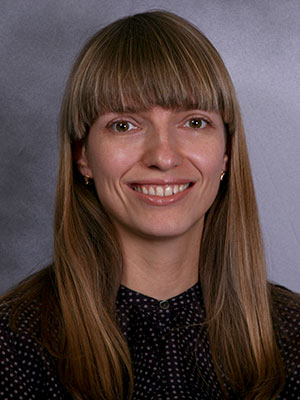
Lena Mamykina is an Associate Professor of Biomedical Informatics at Columbia University's Vagelos College of Physicians and Surgeons. As a member of the Data, Media and Society Committee and Health Analytics Co-Chair, she develops technologies to empower individuals and communities in health management. Georgia Institute of Technology: M.S. and Ph.D. in Human-Computer Interaction and Human-Centered Computing Columbia University: M.A. in Biomedical Informatics Ukrainian State University of Maritime Technology: B.S. in Computer Science Her research in the Action Research for Collective Health (ARCH) group focuses on: Biomedical Informatics and Human-Computer Interaction Ubiquitous/Pervasive Computing for health monitoring Computer-Supported Collaborative Work in clinical teams Personalized health coaching systems using AI Recent publications highlight trends in: AI-driven diabetes management and glucose forecasting Context-aware mobile health applications Conversational agents for behavioral interventions Data assimilation techniques with sparse patient data Equity-focused health informatics design Human-AI collaboration in clinical settings
James Stewart is a Professor at Queen's University's School of Computing. His research focuses on biomedical computing and surgical navigation systems. Education: Ph.D. in Computer Science from Cornell University (1992) Location: Office Goodwin 732 Contact: Phone 613 533-3156 Research Interests Professor Stewart's work bridges computer graphics, image processing, and medical applications. Key areas include: Computer-assisted surgical navigation 3D medical visualization Geospatial data representation Robust geometric computation Human-computer interaction in clinical settings Medical imaging uncertainty analysis Scientific Awards Best Poster Award (2013) for 'Image-guided Osteochondral Autologous Autografting of the Ankle' Publications His publications span multiple domains including: Computer graphics algorithms Medical imaging techniques Geospatial visualization Biomedical engineering applications Surgical navigation systems Robust geometric computation
Prof.dr. R. Arthur Bouwman is a Full Professor at the Electrical Engineering department of the Eindhoven University of Technology and affiliated with the Eindhoven MedTech Innovation Center . His work bridges biomedical engineering and clinical medicine , focusing on physiological monitoring , medical imaging , and biomarker validation for real-time patient care. Education : Not explicitly detailed in the text His research emphasizes non-invasive diagnostics and AI-driven health monitoring , including video-based cardiac arrhythmia detection , sweat-based renal function analysis , and Doppler ultrasound optimization . Recent work explores causal inference in observational studies and automated early warning systems in surgical wards. Key article trends highlight biomedical signal processing , medical device innovation , and integration of wearables in perioperative care . Collaborations span institutions like Catharina Hospital and research centers across cardiovascular and renal domains.
Jef Vandemeulebroucke is a researcher at the Department of Electronics and Informatics , Vrije Universiteit Brussel (VUB) , specializing in medical imaging, computer vision, and augmented reality applications in healthcare. His work bridges artificial intelligence with radiology and biomechanics , focusing on automated segmentation, predictive modeling, and real-time surgical navigation systems. Research interests include: Medical image analysis for disease prognosis (e.g., COVID-19 severity , neurosurgical drains ) Development of MedShapeNet , a 3D medical shape dataset for computer vision Augmented reality systems in orthopedic and neurosurgical interventions AI-driven fluorescence endoscopy and dynamic CT for joint kinematics Key trends in his 140+ publications emphasize deep learning , image registration , and 4D-CT applications . Supervised theses include brain age prediction and chest radiography automation. Active in 38 projects (e.g., AI-NIMO , TumorScope ), he collaborates with institutions like the Universitair Ziekenhuis Brussel (UZB) and FWO (Fund for Scientific Research-Flanders).
Dr. Mingfeng Wang is a Senior Lecturer in Robotics and Autonomous Systems at Brunel University London, affiliated with the Department of Mechanical and Aerospace Engineering within the College of Engineering, Design and Physical Sciences. His research focuses on specialized robotic systems including continuum, legged, soft, precision farming, and miniaturized robots. Chartered Engineer (CEng) with Engineering Council UK Fellow of the Higher Education Academy (FHEA) Member of IEEE, IEEE-RAS, IMechE, and IFToMM Editorial roles: Associate Editor of International Journal of Advanced Robotic Systems (JCR-Q3); Associate Editor of Frontiers in Robotics and AI (JCR-Q2); Editor of Information Processing in Agriculture (JCR-Q1), Biomimetic Intelligence and Robotics (JCR-Q1), and STEM Education Research expertise includes: Continuum Robotics : Design of extra-slender continuum robots (diameter-to-length ratio Legged Robotics : Parallel mechanism-based biped and hexapod robots for extreme environments Miniaturized Robotics : Active locomotion and drug delivery in capsule endoscopes Soft Robotics : Compliant end-effectors and bio-inspired designs Precision Farming : Laser weeding systems and agricultural automation Key scientific awards: BRIEF award (2022) TAROS Best Paper Post Nomination (2022) IFToMM Asian-MMS Best Paper Award (2014) Recent publications focus on: Cochlear implant surgery robotics Passive compliance in train fluid servicing Snake-biomimetic sealing surfaces Parallel kinematic manipulators Capsule endoscope image enhancement Professional services include conference organization (TAROS 2023/2024 Steering Committee; TAROS 2024 Programme Chair) and journal refereeing for IEEE-ASME Transactions on Mechatronics and Scientific Reports.
Christine Jeoffrion is a Professor of Occupational Psychology at Université Grenoble Alpes, where she directs the Doctoral School of Human Sciences and leads the "Risk and Change Accompaniment" axis at the Inter-university Psychology Laboratory. With extensive international engagement through organizations like EAOHP and IAAP, her work bridges occupational health, organizational psychology, and psychosocial risk prevention. Key affiliations: Université Grenoble Alpes, Université de Tours, INRS, CNAM Leadership roles: Doctoral School Director (2024+), CNU member (2024-2028), HCERES expert (2023+) Her research focuses on workplace psychological and physical health, examining organizational factors affecting well-being through 15+ funded projects like ANR PacBot (€670k) and CDP BOOT (€850k). Current PhD students explore virtual reality interventions, prison worker coping mechanisms, and organizational transformations for meaningful work. Recent publications analyze cobot impacts on work quality, telework dynamics, and bullying consequences. She has co-edited special issues for International Journal of Environmental Research and Public Health and Psychologie du travail et des Organisations . Her 2023 Légion d'honneur recognition underscores her field leadership. As a thesis advisor, she has directed 34+ doctoral candidates across France and Gabon, including works on intercultural competence, healthcare worker stress, and managerial innovation. She contributes to European research networks through symposium organization and journal editorial boards.
Lung-Pan Cheng is an Associate Professor in the Department of Computer Science and Information Engineering at National Taiwan University. His research focuses on creating innovative interfaces that bridge physical and virtual realities, with particular emphasis on virtual reality systems, haptic feedback mechanisms, and perceptual illusions. Dr. Cheng's work explores how to create more immersive and believable virtual experiences through: Novel haptic feedback systems that simulate physical interactions in virtual environments Real walking techniques that overcome physical space limitations in VR Perceptual illusions that enhance the sense of presence in virtual worlds Human actuation approaches that leverage people as part of the VR infrastructure Optical illusions applied to digital media and gaming experiences Advanced fabrication techniques for interactive physical objects His recent publications (2022-2024) demonstrate a continued trajectory of innovation in VR interaction techniques, with work focusing on directional force feedback, infinite vertical navigation, and the integration of optical illusions into virtual experiences. Dr. Cheng's research consistently combines hardware innovation with perceptual psychology to create compelling user experiences that push the boundaries of virtual environments. Dr. Cheng has received notable recognition for his work: Best Paper Award at CHI 2022 for 'AirRacket: Perceptual Design of Ungrounded, Directional Force Feedback to Improve Virtual Racket Sports Experiences' SIC People's Choice Award at UIST 2022 for 'Garnish into Thin Air' His research has been featured in media outlets including MIT News and New Scientist, indicating broader impact beyond academic circles. Dr. Cheng maintains active collaborations with researchers worldwide, as evidenced by his international co-authorship patterns across multiple disciplines including computer science, psychology, and engineering.
Samuel McDermott is an Associate Teaching Professor at the Department of Chemical Engineering and Biotechnology , University of Cambridge. He serves as the Sensor CDT Programme Manager , focusing on interdisciplinary research in healthcare, biotechnology, and open-source hardware. His research spans machine learning applications in medical imaging , laboratory automation , and web-of-things (WoT) integration for scientific equipment. Recent work emphasizes federated learning in healthcare, blood cell morphology classification, and low-cost diagnostic tools. Key article trends include: deep diffusion models for malaria detection , open-source microscopy platforms like OpenFlexure, and AI-driven clinical data generalization . His projects often combine 3D-printed hardware and IoT-enabled laboratory systems .
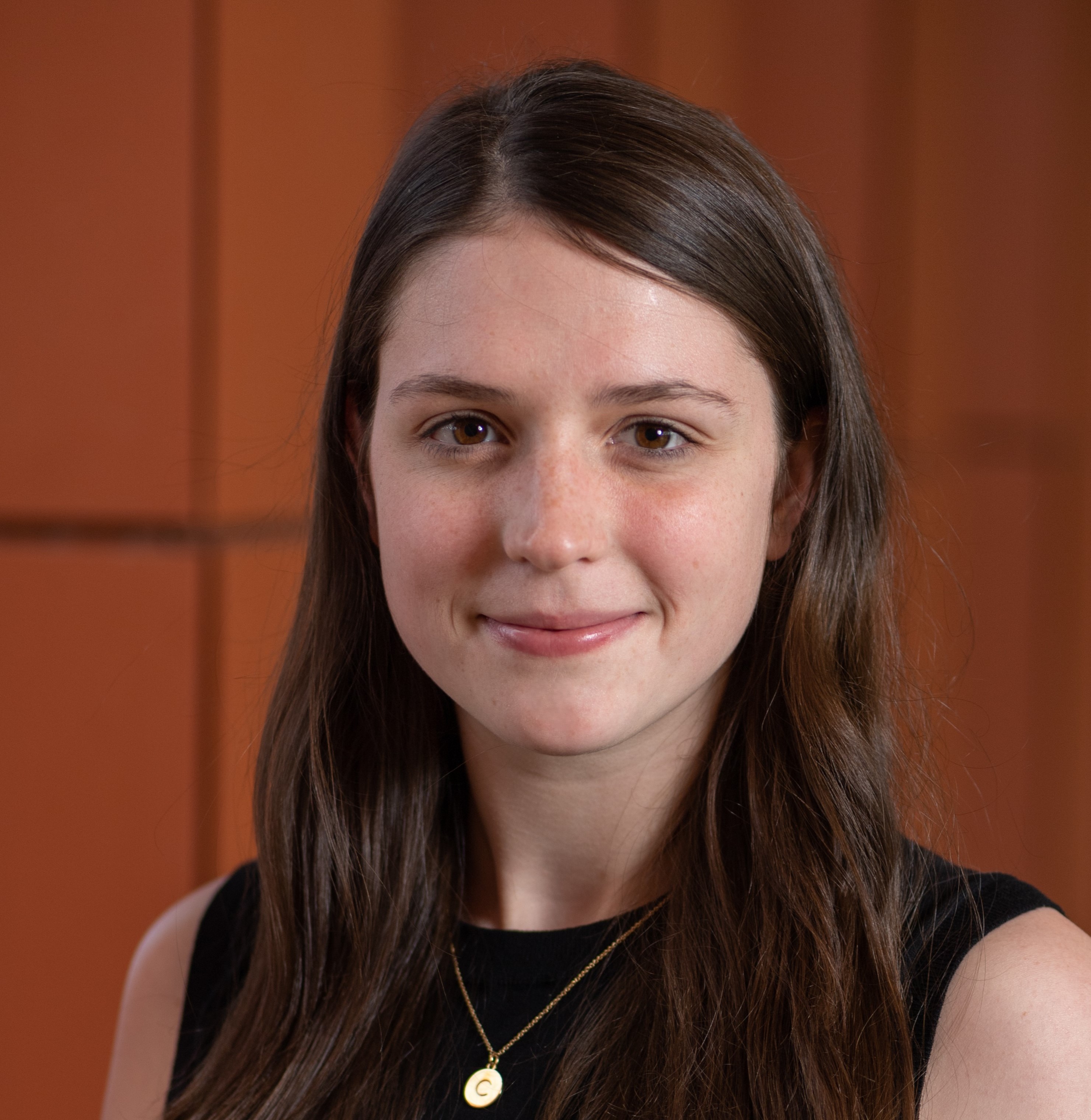
Clare Snyder is an Assistant Professor in the Department of Technology, Operations, and Statistics at the Stern School of Business, New York University. Her research examines human behavior within AI-enabled service systems, focusing on dynamic interactions between workers, customers, and algorithms in operational contexts. Dr. Snyder earned her PhD from the Ross School of Business at the University of Michigan under advisors Samantha Keppler and Stephen Leider. Her primary research interests include human-AI collaboration in service environments, behavioral responses to algorithmic decision aids, and generative AI integration in educational workflows. She investigates how system load and algorithm quality jointly influence worker reliance, how teachers adapt generative AI tools like ChatGPT for K-12 tasks, and why fairness outcomes degrade when humans mediate algorithmic decisions. Her methodological approach combines controlled laboratory experiments with longitudinal field studies in real-world settings. Recent publications reveal critical nuances in human-AI systems: algorithmic efficiency gains emerge only under high workload and superior algorithm quality; generative AI adoption in education splits teachers into distinct usage clusters with varying productivity outcomes; and human deviations from fairness-designed algorithms paradoxically reduce overall equity. These findings challenge assumptions about AI implementation in service operations. Dr. Snyder's scholarly contributions have been recognized through: 2024 Service Science Best Student Paper Finalist for "Algorithm Reliance, Fast and Slow" 2024 Thomas W. Leabo Fellowship for academic and teaching excellence While her teaching portfolio includes Operations Management (TO 313) at Michigan Ross with high student evaluations, public sources contain no details about doctoral advising, grant funding, or laboratory affiliations.
Dominik Huber is a Ph.D. candidate and researcher at the Technical University of Munich , affiliated with the Chair of Computer Architecture & Parallel Systems . His work focuses on Dynamic Resource Management in High-Performance Computing (HPC) , with expertise in Parallel & Distributed Programming Models and Hardware-aware programming . He has actively contributed to teaching courses like Parallel Programming Systems and Advanced Computer Architecture . His research emphasizes adaptive resource allocation in hybrid HPC clusters, leveraging technologies such as MPI Sessions , PMIx , and frameworks like LAIK and XBraid . Recent projects include the DynRes software suite for dynamic resource management and collaborations on quantum-HPC integration. Huber has advised students on topics ranging from Dynamic Resource Management in Charm++ to CI Systems for HPC Software , and his publications address challenges in malleability, scheduling, and power-constrained environments. Current affiliations include participation in the SEANERGYS (EuroHPC) and PlasmaPEPS projects.
Steve Oney is an Associate Professor at the University of Michigan School of Information and Computer Science and Engineering (by courtesy). His research focuses on enabling and encouraging more people to write and customize computer programs by creating new programming tools and exploring usability issues in programming environments. With a strong background in Human-Computer Interaction, he bridges the gap between theoretical research and practical applications in programming education, accessibility, and developer tool design. Dr. Oney completed his Ph.D in Human-Computer Interaction at Carnegie Mellon University's Human-Computer Interaction Institute under Professor Brad Myers and Dr. Joel Brandt. He also earned an M.Eng in Computer Science and SB degrees in Computer Science and Mathematics from MIT. His research spans multiple interconnected areas with a unifying theme of making programming more accessible and understandable. Key focus areas include programming education tools that help instructors understand student code at scale, web automation systems that simplify repetitive tasks, accessibility research addressing challenges faced by visually impaired programmers, and innovative VR programming environments. His work consistently emphasizes the human aspects of programming, exploring how tools can better support diverse programming needs and contexts. Dr. Oney's research output shows a strong trajectory toward increasingly sophisticated tools that integrate AI capabilities while maintaining a focus on human-centered design principles. Recent publications demonstrate growing emphasis on inclusive design, educational applications, and the integration of generative AI in programming environments. L@S 2024 Best Paper Award for CFlow CHI 2023 Honorable Mention for VizProg UIST 2024 Best Short Paper (EdCode) VL/HCC 2019 Best Short Paper Recognition for Contribution to Diversity and Inclusion (CSCW 2021) UMSI Excellence in Instruction Award (2021) University of Michigan President's Postdoctoral Fellowship (2015) As a mentor, Oney advises multiple Ph.D. students and postdoctoral researchers, with several successful graduates including Dr. Lei Zhang (June 2024). His research has secured over $1 million in funding from the National Science Foundation, Google, and Adobe, supporting projects that address critical challenges in programming education, accessibility, and developer tool design. He leads the Programming Tools Lab at the University of Michigan, where his team develops innovative tools that help programmers work more effectively. Current projects focus on AI-enhanced programming education, web automation, accessibility for diverse user groups, and next-generation programming environments for virtual and augmented reality.
Dr. Sönke Knoch is a researcher affiliated with the Ubiquitous Media Technology Lab (UMTL) at the Saarland Informatics Campus and the German Research Center for Artificial Intelligence (DFKI) GmbH . His work focuses on Human-Computer Interaction , Activity Recognition , Process Mining , and Industry 4.0 technologies. Current Affiliation: DFKI GmbH (Saarland Informatics Campus) Academic Role: Researcher Research Interests span digital twins, augmented reality in manufacturing, and safety-critical systems. He leads projects like RZzKI (AI and Digital Transformation) and BaSySafe (risk assessment via management shells). His work addresses zero-defect manufacturing and cognitive support for impaired workers . Recent Publications focus on digital twins for industrial safety, AR-based task adaptation , and AI quality management in smart factories. Key themes include human-centric AI , real-time process conformance , and context-aware systems . Leadership includes contributing to the WALL-ET project for autonomous logistics and co-developing the PARTAS system for cognitively impaired workers.
Dr. Tim Schwartz is an Associated Member at the German Research Center for Artificial Intelligence (DFKI) located at the Saarland Informatics Campus in Saarbrücken, Germany. He is affiliated with the Ubiquitous Media Technology Lab (UMTL) where he conducts research at the intersection of human-robot interaction, multimodal interfaces, and industrial applications. His work spans over two decades with significant contributions to the fields of robotics, augmented reality, and Industry 4.0 implementations. Dr. Schwartz's research interests focus primarily on Human-Robot Interaction , Multi-modal Interaction , and Industry 4.0 applications. His work explores how humans and robots can effectively collaborate in industrial settings, with particular attention to communication modalities, task division, and intuitive interfaces. Recent projects include human-robot collaboration in assembly cells, social cognitive robots for warehouse environments, and augmented reality applications for aircraft manufacturing. Analysis of his publication history reveals a clear trajectory from foundational work in multimodal interfaces and context-aware computing (2005-2015) toward increasingly applied research in industrial robotics and human-robot collaboration (2016-2024). His most recent publications demonstrate a strong emphasis on practical implementations in manufacturing and warehouse environments, with a particular focus on optimizing work dynamics between humans and robots. Dr. Schwartz actively engages in academic supervision, offering thesis opportunities such as the user-study on optimal work dynamics in human-robot collaboration at the Power4Production Hall in Saarbrücken. His collaborations extend to institutions including ZeMA (Zentrum für Mechatronik und Automatisierungstechnik gGmbH), indicating strong industry-academia partnerships. At DFKI, he works within a vibrant research community that includes numerous colleagues in the Ubiquitous Media Technology Lab, contributing to a collaborative environment focused on cutting-edge research in human-robot interaction, multimodal systems, and industrial applications of artificial intelligence.
Denny Yu is an Associate Professor at the Edwardson School of Industrial Engineering, Purdue University. His work bridges human factors, neuroergonomics, and healthcare safety through advanced sensor systems and AI. Primary Affiliation : Edwardson School of Industrial Engineering, Purdue University Research Themes : Surgical ergonomics, autonomous vehicle human factors, cognitive workload assessment, multimodal physiological sensing Dr. Yu's research focuses on neuroergonomics and human-robot interaction , particularly in surgical and transportation contexts. His team develops sensor-based systems for workload monitoring, including: EEG-eye tracking fusion for situation awareness Wearable exoskeletons for surgical posture support Computer vision tools for lifting task risk analysis Smart infusion pump usability frameworks AI-driven surgical coaching systems Recent publications emphasize deep learning applications in soft tissue deformation estimation and real-time adaptive systems for robotic surgery augmentation. His work spans both occupational health (veterinary surgeons, airport workers) and medical device innovation domains.