Dr. Mohammad Saidur Rahman is a Lecturer in Computing Technologies at RMIT University's School of Computing Technologies. His research focuses on Data Security and Privacy, Blockchain, IoT, and Machine Learning. He joined RMIT as a Lecturer in July 2023 and previously held a Postdoctoral Research Fellow position from January 2020 to August 2022. His academic work includes supervising projects such as Advanced Automotive Intrusion Detection and Prevention Systems and Privacy-Preserving Models in Edge-Cloud Interplay for Smart Systems . He teaches courses like Introduction to Cyber Security (INTE2625) and Computer and Internet Forensics (COSC 2301). His research emphasizes secure IoT integration, blockchain applications in supply chain and healthcare, and privacy-preserving machine learning frameworks. Rahman has published extensively on blockchain-based systems for smart cities, edge computing, and industrial IoT security. His contributions span technical innovations in consensus protocols, federated learning frameworks, and data integrity models. He is open to supervising Masters and PhD students in Cyber Security, IoT, and Blockchain domains.
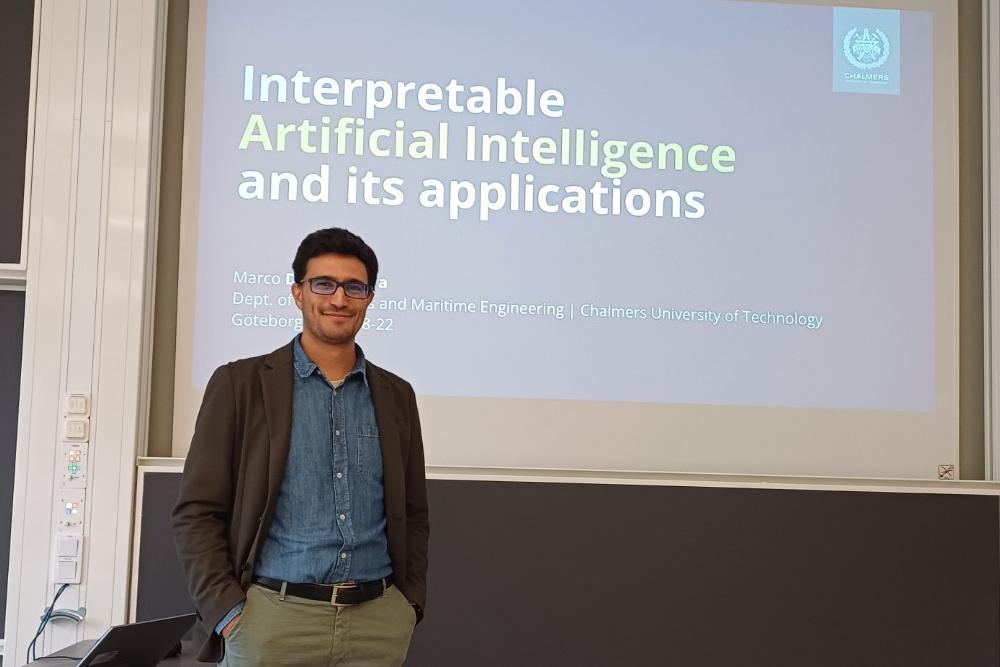
Marco L. Della Vedova is a Senior Lecturer in Applied Artificial Intelligence at Chalmers University of Technology, Sweden. He works in the Vehicle Engineering and Autonomous Systems division within the Department of Mechanics and Maritime Sciences, as part of Prof. Mattias Wahde's research group. Since 2025, he has served as Director of the Data Science and AI master's programme (MPDSC) at Chalmers, where he teaches courses including Introduction to Artificial Intelligence and Digitalization in Sports. Dr. Della Vedova earned his academic foundation at the University of Pavia, Italy, where he completed his BSc (2006), MSc (2009), and PhD (2013) in Computer Engineering. His doctoral research focused on "Real-Time Physical Systems and Electric Load Scheduling" under Prof. Tullio Facchinetti. During his PhD studies, he spent a year at U.C. Berkeley hosted by Prof. Francesco Borrelli at the Model Based Predictive and Distributed Control Lab. His research spans multiple AI domains with a strong emphasis on interpretability. Dr. Della Vedova develops interpretable methods for conversational AI, naturalness evaluation of forests using canopy height models, and geospatial applications. His work bridges theoretical AI with practical societal benefits, particularly in environmental monitoring, transportation systems, and orienteering. He has previously contributed to cloud computing, hate speech detection, and cyber-physical energy systems, demonstrating his interdisciplinary approach to AI research. Dr. Della Vedova's publication record reveals a consistent trajectory of impactful research across multiple domains of artificial intelligence. His recent work shows a strong focus on interpretability in AI systems, with significant contributions to natural language processing, geospatial analysis, and causal inference. The research demonstrates both theoretical depth and practical applications, particularly in environmental monitoring and social media analysis. His methodology often combines traditional machine learning approaches with novel interpretability techniques, creating bridges between complex AI systems and human understanding. Dr. Della Vedova has received several prestigious recognitions for his work: Best PhD thesis award from the Order of the Engineers of Bergamo (2013) Italian champion of Il Cervellone (2012) Top Italian performer in IEEEXtreme 6.0 programming competition (148th overall globally, 2012) Premio Arturo Schena award from Fondazione Credito Valtellinese (2010) With over 50 students supervised through bachelor's and master's theses, Dr. Della Vedova has established himself as a dedicated mentor in the AI community. His current PhD students include Minerva Suvanto working on interpretable NLP and Vivien Lacorre developing AI for railway infrastructure inspection. His supervision spans diverse topics from forest naturalness evaluation to hate speech detection and transportation optimization. Beyond formal supervision, he actively contributes to educational initiatives including serving as Director of Chalmers' Data Science and AI master's program and developing innovative teaching methods that connect theoretical concepts with real-world applications. Dr. Della Vedova is deeply embedded in both academic and professional communities. He leads the Applied Artificial Intelligence research group at Chalmers while maintaining strong connections with European research networks through projects like the ERASMUS+ EUrienteering initiative. His interdisciplinary approach is reflected in collaborations across computer science, environmental science, and social sciences. Notably, he applies his AI expertise to orienteering both as a researcher developing localization methods and as a licensed Event Advisor for the International Orienteering Federation, demonstrating how his professional and personal interests converge in innovative ways.
Assoc. Prof. Boyan Zhekov, PhD is an active faculty member at the University of Library Studies and Information Technologies (UNIBIT) in Sofia, Bulgaria, where he serves in the Department of Computer Science under the Faculty of Information Sciences. He teaches courses including Case Studies in Digital Transformation (SHEB609) and holds academic appointments at Sofia University "St. Kliment Ohridski" and New Bulgarian University as a visiting lecturer. MSc in Information Technologies from Technical University - Sofia Specialized in IT and Economics across UK, France, Netherlands, South Korea, Japan, and Taiwan His research focuses on the intersection of digital governance and emerging technologies, with significant contributions to Internet of Things applications in public administration, smart city ecosystems, and open data frameworks. His work demonstrates a consistent emphasis on practical implementations of ICT solutions for governmental modernization, particularly through EU-funded projects and national initiatives. Current projects examine IoT business models and startup ecosystems within smart city contexts. Prof. Zhekov actively contributes to European research policy as a Horizon 2020 National Contact Point for Future and Emerging Technologies, ICT, and Secure Societies, while serving on the Programme Committee for ICT. His professional engagement extends to leadership roles in Japanese-Bulgarian academic networks including JICA Alumni Bulgaria and Nihon Tomono Kai. Member of Horizon 2020 National Contact Network Board member of Union of Electronics, Electrical Engineering and Communications (SEES) President of JICA Alumni Bulgaria Vice President of JSPS Alumni Bulgaria His advisory work includes technical ICT audits for EU-funded projects under Operational Program RCBIS (2007-2013) and development of sectoral information strategies for regional governance (2014-2020). Recent projects for the Ministry of Education analyze national research infrastructure roadmaps and map Bulgaria's scientific infrastructure landscape.
Raffi Khatchadourian is an Associate Professor in the Department of Computer Science at Hunter College and the Graduate Center of the City University of New York (CUNY). His research focuses on techniques for automated software evolution, particularly automated refactoring and source code recommendation systems, with the goal of easing the burden associated with evolving large and complex software through automated tools. He also conducts research on the automated analysis of Object-Oriented programs. Ph.D., Computer Science & Engineering, Ohio State University (2011) MS, Computer Science & Engineering, Ohio State University (2010) BS, Computer Science, Monmouth University (2004) Khatchadourian's research spans multiple areas of software engineering and programming languages, with particular emphasis on automated software evolution techniques. His work addresses critical challenges in refactoring legacy systems to modern language constructs, optimizing parallel processing in Java 8 streams, and addressing technical debt in machine learning systems. His recent research has expanded into deep learning program transformation, where he develops techniques to convert imperative deep learning code to more efficient graph execution models while ensuring safety. His approach combines static analysis, program transformation, and empirical validation to create practical tools that developers can integrate into their workflows. Analysis of Khatchadourian's recent publications reveals a strong focus on bridging the gap between theoretical program analysis and practical software engineering challenges. His work increasingly intersects with machine learning systems, examining both how to improve ML code through refactoring and how to ensure safety in deep learning frameworks. The research demonstrates consistent evolution from foundational work on Java language features toward more complex systems involving concurrency, deep learning, and automated program transformation. Distinguished Paper Award at SCAM '18 for work on Java 8 stream optimization EAPLS Best Paper Award at FASE '20 for study on Java 8 stream usage EAPLS Distinguished Paper Award at FASE '25 for Deep Learning refactoring work Best Paper Award nominee at IJCAI '24 for AI safety framework Khatchadourian actively mentors graduate and undergraduate students, with several advisees going on to successful academic and industry positions. His former Ph.D. student Tatiana Castro Vélez accepted a tenure-track Assistant Professor position at the University of Puerto Rico. He has supervised numerous master's theses and undergraduate research projects, often resulting in co-authored publications at top software engineering venues. His research has been supported by various grants, though specific funding details are not prominently featured in the available information. Through his work on tools like Fraglight for aspect-oriented programming and Hybridize Functions for deep learning refactoring, Khatchadourian has established a research group focused on practical program analysis and transformation. His lab develops Eclipse plugins and other IDE-integrated tools that help developers with automated refactoring, bug detection, and code optimization. The group maintains active collaborations with researchers at other institutions and contributes to open-source projects on GitHub.
Wing Lam is an Assistant Professor at George Mason University specializing in software engineering with a focus on software testing methodologies. His academic service includes program committee membership for major conferences including ASE, ICSE, ISSTA, and ESEC/FSE, as well as session chair roles across multiple tracks. His research interests center on flaky tests , mobile application testing , and continuous development optimization . Lam's work addresses critical challenges in test reliability, particularly order-dependent flaky tests and resource-related flakiness. His research bridges theoretical foundations with practical applications in modern software development pipelines, with recent expansion into AI-assisted testing methodologies. Lam's publication record shows a clear trajectory focusing on flaky test detection and mitigation, with approximately 60% of his recent work dedicated to various aspects of this problem. His research increasingly incorporates machine learning techniques for UI testing and test optimization, reflecting broader trends in the field. The consistent publication venue pattern across top software engineering conferences indicates strong recognition within the academic community. Lam has served in multiple leadership roles including Program Co-Chair for MOBILESoft Research Track and Committee Member for ASE's New Ideas and Emerging Results (NIER) Track. His involvement in workshops focused on flaky testing demonstrates his specialization in this niche area of software testing.
Despina Kontos, PhD is the Herbert and Florence Irving Professor of Radiological Sciences at Columbia University Irving Medical Center (CUIMC), with appointments in the Department of Radiology and the Herbert Irving Comprehensive Cancer Center. She serves as the Chief Research Information Officer for CUIMC, Vice Chair of Artificial Intelligence and Data Science Research in the Department of Radiology, and Director of Biomarker Imaging at NewYork-Presbyterian Hospital. Additionally, she holds appointments in the Departments of Biomedical Informatics and Biomedical Engineering. Dr. Kontos received her educational training from prestigious institutions: BS in Engineering from the University of Patras, Greece MSc and PhD in Computer and Information Sciences from Temple University Postdoctoral training in Radiology at the University of Pennsylvania Certificates in Biostatistics and Epidemiology from UPenn, Cancer Biology from Harvard, and AI for Decision Making from Wharton As a computer scientist with expertise in artificial intelligence and machine learning, Dr. Kontos focuses on developing computational methodologies to leverage imaging as quantitative biomarkers for personalized disease prediction, particularly in cancer. Her research program investigates how imaging data can be mined to extract sophisticated phenotypic signatures with diagnostic, prognostic, and predictive value. While her primary focus has been on breast cancer, her lab also pursues related research in lung cancers, evaluating the integration of CT radiomic features with liquid biopsy data to characterize tumor heterogeneity. Dr. Kontos founded and directs Columbia University's Center for Innovation in Imaging Biomarkers and Integrated Diagnostics (CIMBID), a multidisciplinary center dedicated to developing and integrating quantitative imaging and non-imaging biomarkers for personalized disease prediction. Through CIMBID, she has built a vibrant scientific ecosystem that brings together expertise across Columbia's campuses, linking basic science, engineering, clinical medicine, public health, and health services research. Analysis of Dr. Kontos's publication record reveals a strong focus on applying AI and machine learning to biomedical imaging, particularly for cancer risk prediction and personalized treatment. Her work demonstrates a progression from foundational methodological development to clinical translation, with increasing emphasis on multi-modal biomarker integration. Recent publications show expansion into new disease areas including Alzheimer's disease prediction, while maintaining her strong focus on breast and lung cancer applications. Dr. Kontos has received significant recognition for her contributions to the field: Academy for Radiology and Biomedical Imaging Research Distinguished Investigator Award (2020) Eastern Cooperative Oncology Group - American College of Radiology Imaging Network ECOG-ACRIN Young Investigator Award of Distinction for Translational Research (2014) Dr. Kontos has been highly successful in securing research funding, with numerous grants from federal agencies including the National Institutes of Health (NIH) and the Department of Defense (DOD), as well as private foundations such as the American Cancer Society (ACS) and the Radiological Society of North America (RSNA). Her leadership extends to mentoring students and postdoctoral researchers through her roles at CIMBID and the Department of Radiology. As the founding director of CIMBID, Dr. Kontos leads a multidisciplinary team that includes the Computational Imaging Biomarker Group (CBIG), the Laboratory of AI and Biomedical Science (LABS), and several other affiliated research labs. The center leverages Columbia's institutional strengths in engineering, data science, and clinical medicine to advance personalized healthcare through AI and imaging technologies.
David Prendergast is a Professor in Science, Technology & Society at Maynooth University's Faculty of Social Sciences, where he also serves as Head of the Departments of Anthropology and International Development. With a PhD in Anthropology from the University of Cambridge (2002), his career spans academic roles at Maynooth and industry leadership at Intel, focusing on technology design for aging populations. Research interests: Ageing, Smart Cities, Digital Health, Visual Ethnography, East Asia, Human-Centred Design Key projects: Global Ageing Project, Urban Living Labs in London/Dublin/San Jose, Smart Stadium with Croke Park, Autonomous Vehicles for Older Adults (SFI-funded) His work bridges anthropology with digital innovation , particularly in East Asia contexts. Recent publications explore IoT applications in age-friendly cities , robotics in Japanese elder care , and visual ethnography for aging-in-place solutions. Scientific recognition includes: CHOICE Outstanding Academic Title (2016) Intel Involved Global Hero Award Fortune 500 Hero designation Intel Labs Gordon E. Moore Award As advisor to PhD graduates like Rebekah Maguire (2016) and Ciaran Walsh (2020), he leads Living Lab initiatives on air pollution monitoring and flood management systems . His Circuits of Care documentary (2021) examines human-robot interactions in Japan's aging society .
Fajar Juang Ekaputra is a Tenure Track Assistant Professor at the Institute of Data, Process, and Knowledge Management (DPKM), WU Vienna and a part-time Postdoctoral Researcher at the Data Science research unit, TU Wien . With a focus on Semantic Web , Knowledge Graphs , and their integration with Machine Learning in Neurosymbolic AI systems, his work spans domains like Cyber-Physical Systems and Materials Engineering . Education: Dr.techn. (2018), TU Wien M.T. (2010) and S.T. (2008), Institute Teknologi Bandung (ITB) Research Interests center on hybrid AI systems combining Semantic Web and Machine Learning , with applications in Cyber-Physical Systems (e.g., smart grids, smart buildings), data privacy in smart cities, and materials engineering . His 102+ publications include frameworks like SWeMLS-KG and SHACL4Protege . Recent Articles (2024) address explainable AI in cyber-physical systems, privacy trust in data infrastructures, and neurosymbolic frameworks . Earlier works (2023–2022) explore ontology-based data management , auditable AI , and hybrid system architectures . Scientific Awards: Best Paper Awards (ICoDSE 2023, ICoDSE 2016) Best Poster Nomination (SEMANTiCS 2019) PhD Scholarship (Austria’s Agency for Education and Internationalisation, 2012) Advising includes supervising PhD students (e.g., Majlinda Llugiqi, Katrin Schreiberhuber) and master’s theses on topics like knowledge graph characteristics and data quality assessment . He leads projects such as FAIR-AI (FFG-funded, 2024–2026) and SENSE (Horizon Europe, 2023–2025).
Teo Hock Hai is Provost's Chair Professor of Information Systems at the National University of Singapore's School of Computing, serving as Director for Humanities & Social Sciences Research in the NUS Office of the Deputy President. He previously headed the Department of Information Systems (2008-2015) and served as Vice-Dean for Corporate Communications. He holds PhD, MSc, and BSc degrees in Computer and Information Sciences from NUS. His research integrates Health Informatics , Digital Transformation , and Open Innovation , with current projects including multilingual dementia detection tools, AI-powered smoking cessation platforms, diabetes management apps, and crew fatigue prediction systems. His work emphasizes the design of IT artifacts to improve health outcomes, decision-making, and educational systems. His publications focus on AI applications in healthcare decision-making, behavioral responses to environmental data, digital platform architectures, and gamification strategies. Recent work examines AI's role in diagnostic workflows, pollution impact on exercise behavior, and emotion-driven information diffusion during health crises. Awards include the Information Management Research Award MIS Quarterly Reviewer of the Year (2004) Multiple best paper awards at international conferences He leads projects funded by national agencies and industry partners including Singapore Airlines, focusing on healthcare AI and digital resilience. He teaches doctoral courses on contemporary IS theories and mentors graduate researchers in health informatics and digital innovation.
Ayesha Ali is a Professor of Statistics and Director of the Master of Data Science program at the University of Guelph. She holds a PhD in Statistics from the University of Washington (2002) and has expertise in statistical methods for complex high-dimensional systems, including ecological networks, causal inference, and bioinformatics. Her research integrates graphical Markov models, machine learning, and statistical computing to address challenges in plant-pollinator networks, livestock genetics, and disease risk modeling. Education: B.Sc. Honours in Statistics and Actuarial Science, University of Western Ontario (1996) M.Sc. in Statistics, University of Toronto (1998) Ph.D. in Statistics, University of Washington (2002) Research Interests: Graphical Markov models and ecological networks Causal inference and longitudinal data analysis Machine learning and high-dimensional predictive modeling Statistical methods for livestock genetics and animal health Computational statistics and bioinformatics Articles Trends: Her recent work spans interdisciplinary applications, including veterinary oncology biomarker discovery, remote sensing for agricultural suitability, and pipeline development for cross-species transcriptomics. She emphasizes graphical structure exploitation in regression and predictive modeling, with contributions to both theoretical and applied statistical methodologies. Awards: Canadian Journal of Statistics Award (2020) for groundbreaking work on doubly sparse regression NSERC Discovery Grant (2018) NSERC Collaborative Research and Development Grant (2015) Advising & Grants: She has supervised numerous graduate and undergraduate students on projects ranging from plant-pollinator network analysis to bioinformatics. Her grants include NSERC-funded research on milk fatty acid genetics and statistical methods for clustered data. Labs/Teams: Involved in the Bioinformatics program at the University of Guelph, contributing to interdisciplinary research collaborations in ecology and animal science.
Val Tannen is a Professor at the University of Pennsylvania, specializing in database systems, provenance analysis, and programming languages. His research focuses on data management, query languages, and systems like DBSP and ORCHESTRA. Collaborations include work with co-authors such as Zachary Ives, Susan Davidson, and Todd Green. Key research interests include provenance for databases, incremental view maintenance, and data integration. His work bridges theoretical foundations and practical applications in systems like DBSP for stream processing and ORCHESTRA for collaborative data sharing. Publications span provenance frameworks, query optimization, and distributed systems. While no awards are explicitly listed, his contributions to database theory and systems are widely recognized.
Michael Johnson is an Adjunct Assistant Professor in the Department of Otolaryngology Surgery at Yale School of Medicine. He serves as Program Director for the Oral and Maxillofacial Surgery Residency Training Program and Associate Chief of Dental Services at Yale-New Haven Hospital. His clinical expertise spans the full scope of oral and maxillofacial surgery, including reconstructive jaw surgery, dental implants, and trauma management. Dr. Johnson holds a DMD from the University of Pittsburgh School of Dental Medicine and a BS in Biology from Eastern Connecticut State University. He is a Diplomate of the American Board of Oral and Maxillofacial Surgery and holds multiple certifications in advanced life support. His research focuses on surgical patient safety, sleep apnea in anesthesia patients, and drug interactions with dental treatments. He has mentored residents in research leading to peer-reviewed publications. Dr. Johnson is a Fellow of the American Association of Oral and Maxillofacial Surgeons and the American College of Surgeons. He has received the Bernard Levine Teacher of the Year Award for his contributions to education, including teaching surgical anatomy and emergency management courses. Professional affiliations include the Connecticut Society of Oral and Maxillofacial Surgeons, American Dental Association, and Shoreline Dental Association. He actively contributes to national lectures on topics such as surgical anatomy, anesthesia safety, and office-based emergency preparedness.
Syrielle Montariol is a Researcher and Course Lecturer at the École Polytechnique Fédérale de Lausanne (EPFL), affiliated with the Natural Language Processing Lab (NLP) under the School of Computer and Communication Sciences (IC). She holds a postdoctoral position and teaches courses related to computational linguistics and AI applications. Her research focuses on advancing NLP, medical language models, multimodal learning, and AI ethics. She works in the INR 240 office and maintains collaborations across EPFL's academic divisions. Research Interests: Her work spans interpretability of AI systems, cross-modal reasoning, medical domain adaptation, sustainability text analysis, and the societal impact of AI. Recent projects include developing explainable models (e.g., global mixture-of-experts frameworks) and benchmarking tools like Vinabench for visual narratives. Publications: Her recent work addresses critical challenges in AI, including vulnerability of higher education to LLMs, medical language model adaptation (Meditron), and robust geo-localization systems. Key themes include ethical AI, multimodal learning, and domain-specific NLP applications. Labs & Teams: She contributes to the NLP lab's initiatives on visual-language models and collaborates with interdisciplinary teams on projects like PAN-RSVQA for remote sensing and PICLe for low-resource NER systems.
Mattias Roupé is an Associate Professor, Head of Department, and Research Area Leader at the Department of Construction Management and Engineering at Chalmers University of Technology. His research focuses on digital construction processes, including Building Information Modelling (BIM), Total BIM, Virtual Reality (VR), and digital twins. He holds a Ph.D. in Virtual Reality for decision-making in urban planning and building design. His work combines technical advancements in visualization and computational methods with human-centric aspects like perception and decision-making in design collaboration. Education: Ph.D. in Virtual Reality applications for urban planning and building design. Research interests span model-based construction processes, data-driven design, and immersive technologies for user involvement in healthcare and infrastructure projects. Notable projects include the Total BIM initiative, exploring integrated digital workflows, and the Digital Twin Cities Centre, advancing smart city technologies. His publications emphasize VR integration, BIM adoption challenges, and collaborative design tools. He leads several research grants funded by organizations like SBUF and Formas, focusing on construction innovation. Key contributions include frameworks for BIM-based scheduling, VR in healthcare facility design, and BIM-GIS integration for railway infrastructure. His work bridges technical and human factors to enhance construction efficiency and sustainability.
Chad G. Rose is an Assistant Professor of Mechanical Engineering at Auburn University's College of Engineering. He holds a Ph.D. and M.S. from Rice University and a B.S. from Auburn University. His research focuses on robotics, particularly in human-robot interaction, rehabilitation robotics, and wearable devices. He actively collaborates on projects like robotic rehabilitation systems and virtual reality empathy training for healthcare professionals. Dr. Rose has received internal research funding from Auburn University and contributes to multidisciplinary initiatives with Toyota and European institutions. Education : Ph.D. Mechanical Engineering, Rice University M.S. Mechanical Engineering, Rice University B.S. Mechanical Engineering, Auburn University His research interests emphasize robotic rehabilitation , including exoskeleton design for functional tasks and neuromechanical modeling of injuries. He also explores virtual reality applications to enhance empathy in medical training and collaborative assembly frameworks for industrial robotics. His work bridges biomechanics, control systems, and human-centered design. Recent publications span topics like soft hand exoskeleton control, human-robot collaborative assembly, and predictive haptic feedback for autonomous systems. His research has been highlighted in interdisciplinary collaborations and competitions like the NASA Robotic Mining Challenge. Awards : Recipient of Auburn University's internal research funding (2023) Dr. Rose advises projects in robotic systems development and has contributed to Auburn's Robotic Mining Team. His lab focuses on wearable robotics, sensorimotor interfaces, and human-centered automation. He collaborates with industry partners like Toyota and international institutions to advance safety and accessibility in robotics.