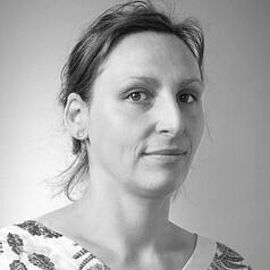
Adrot Anouck is a Lecturer in Management Research at PSL University, focusing on crisis management, organizational improvisation, and disaster risk reduction. Her work bridges information systems with emergency response, emphasizing cross-border resilience and digital transformation in extreme situations. Key Research Themes: Crisis management, organizational resilience, information systems in disaster contexts, cross-border cooperation, and digital decision-making under uncertainty. Her publications span journals like Expert Systems with Applications and Information Systems Journal , with recent studies on portfolio management under uncertainties and data sharing barriers in disaster risk reduction. She has contributed to book chapters and conference proceedings at venues such as the Academy of Management and EGOS Colloquium, exploring topics like measurement practices during the COVID-19 pandemic and the role of technology in crisis response. Adrot collaborates extensively with researchers across disciplines, including Moriceau, Karanasios, and Friedrich. While no explicit awards or student advising details are provided in the text, her work highlights the interplay between structure, action, and digital tools in enhancing organizational resilience.
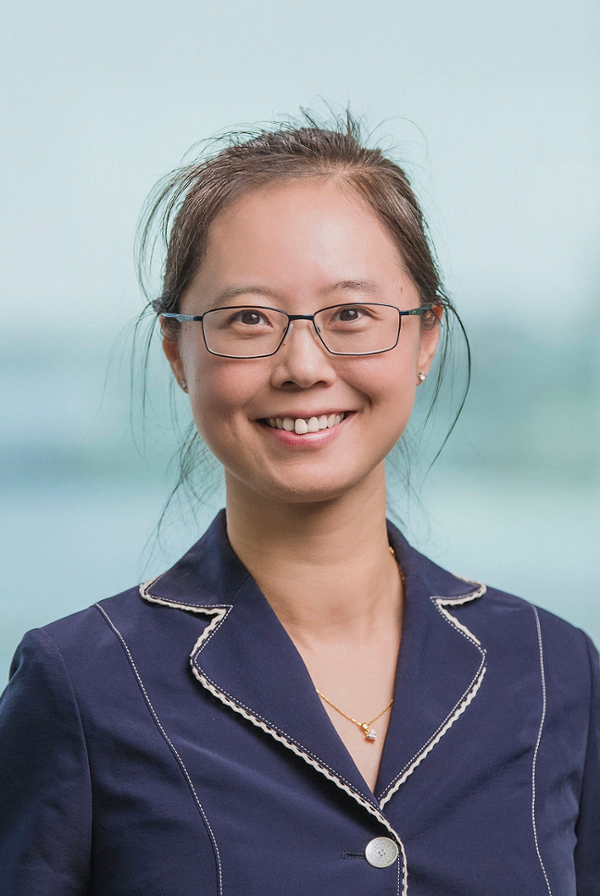
Tanya Gupta is a Lecturer in the Department of Chemistry and Biochemistry at the University of Oregon , College of Arts and Sciences. With a PhD in Chemical/Science Education from Iowa State University, she specializes in student-centered inquiry-based teaching and technology integration in chemistry education. Education : PhD (2012) and MEd (2007) in Science Education from Iowa State University; MSc (2000) in Inorganic Chemistry and BSc (1998) in Chemistry Honors from Indian institutions Tanya’s research focuses on enhancing student retention through inquiry-based pedagogy , simulations , and collaborative learning . Her work addresses Diversity, Equity, Inclusion & Access (DEIA) in STEM education, with expertise in instructional design models like ADDIE, SAM, and Kirkpatrick. She has taught at multiple institutions, including Iowa State University and Grand Valley State University, delivering both large-enrollment and graduate-level courses through face-to-face, hybrid, and distance education platforms. Tanya’s publications and book chapters highlight her contributions to technology integration in chemistry education, game-based learning , and social media applications for student engagement. Her work spans curriculum development, educational research, and professional development for science educators.
Dr. Dandolo Flumini is a Researcher at the Zurich University of Applied Sciences (ZHAW), School of Engineering, specializing in Applied Complex Systems Science. His research focuses on artificial life, morphological computation, blockchain applications, and computational modeling. He serves as team member or project lead in multiple interdisciplinary initiatives including Bio-HhOST (bio-hybrid tissues), Agroforestry Carbon Token System, and blockchain-based voting solutions. His primary research interests include: Complex Systems Science : Emergent behaviors in biological and artificial systems Morphological Computation : Physical systems performing computational tasks Artificial Chemistry : Programmable chemical systems using droplet networks Blockchain Applications : Decentralized finance and voting systems Computational Ethics : Responsible implementation of AI and modeling Flumini's recent publications (2019-2023) demonstrate strong focus on microfluidic systems, droplet agglomeration physics, programmable chemistry, and ethical AI. His work frequently appears in artificial life and computational modeling venues, with increasing emphasis on real-world applications in sustainability and decentralized systems. He maintains active collaborations through the Applied Complex Systems Science research group at ZHAW, contributing to projects involving microfluidic device design, blockchain architectures, and bio-hybrid tissue engineering.
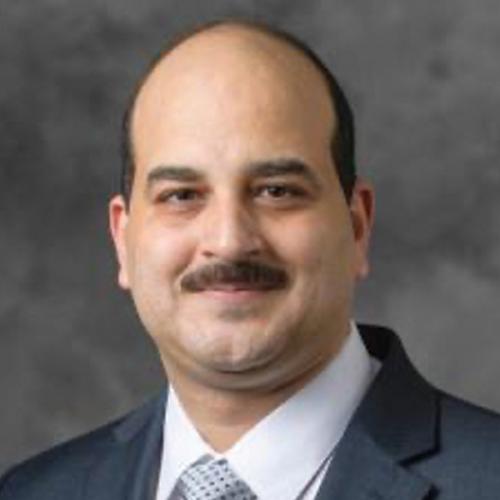
Dr. Shuangshuang Jin is an Associate Professor in the School of Computing with a joint appointment in the Department of Electrical and Computer Engineering at Clemson University's College of Engineering, Computing and Applied Sciences. Previously, she served as a Senior Research Scientist at Pacific Northwest National Laboratory. Her educational background includes a Ph.D. in Computer Science (2007), M.S. in Computer Science (2003) from Washington State University, and a B.S. in Computer Science (2001) from Wuhan University. Ph.D., 2007 - Washington State University, Computer Science M.S., 2003 - Washington State University, Computer Science B.S., 2001 - Wuhan University, Computer Science Dr. Jin specializes in high-performance computing (HPC), distributed and parallel computing, general-purpose computation on graphical processing units (GPGPU), and HPC-based big data analysis, machine learning, scientific computation, and visualization. Her research focuses on applying these technologies to electrical engineering (power and energy systems, power electronics), automotive engineering, systems biology, and computer graphics. She leads the High-Performance Computing Enabled Science and Engineering (HPCeSE) Lab, where she supervises six PhD students working on HPC implementations for power system dynamic simulation, GridPACK application development, data-driven model-based smart control of power electronics converters, and other cutting-edge projects. Her recent publications demonstrate expertise in accelerating power system simulations, PV inverter reliability assessment, edge computing for power systems, and virtual prototyping of vehicle powertrain systems. The research trends show increasing focus on GPU acceleration, real-time simulation capabilities, and integration of HPC with emerging power system challenges. Junior Faculty Excellence in Teaching award (2021) Churchill Carter Fellowship (2022-2023) Zucker Graduate Education Center PhD Grant (2023) Doctoral Dissertation Completion Award (2023-2024) Outstanding Masters Student in Computer Science award (2022) Dr. Jin has successfully secured multiple grants from DOE, DOD, and other agencies for projects including 'Vehicle Propulsion Digital Twins', 'GridPACK-Wind', and 'Tool for Reliability Assessment of Critical Electronics in PV (TRACE-PV)'. She has advised numerous PhD and Master's students who have gone on to positions at national laboratories and industry. Her HPCeSE Lab maintains strong connections with Pacific Northwest National Laboratory, Fermi National Accelerator Laboratory, and other research institutions, providing students with valuable internship opportunities. Dr. Jin leads the High-Performance Computing Enabled Science and Engineering (HPCeSE) Lab at Clemson University, which focuses on developing optimized HPC-based parallel programming algorithms and architectures to solve complex scientific and engineering domain problems. The lab works on smart grid modeling and simulation, power electronics reliability assessment, ground vehicle systems prototyping, and advanced grid analytics, utilizing OpenMP, MPI, Pthreads, and CUDA/OpenCL on various computing platforms.
Lorenz Dörschel is an Adjunct Professor (Lehrbeauftragter) at the Institute of Automatic Control at RWTH Aachen University. He holds the academic title PD Dr.-Ing. habil, signifying post-doctoral research qualifications. His position is part-time, focusing on advanced control theory and applications. His primary research interests include: Control of distributed parameter systems (e.g., fluid dynamics, thermal processes) Model predictive control for industrial and automotive systems Parameter space methods for robust controller design Model reduction techniques for complex nonlinear systems Dörschel's recent publications (2018-2024) demonstrate broad applications across biomedical engineering, renewable energy, automotive systems, and industrial automation. His work consistently integrates mathematical rigor with practical implementations, emphasizing advanced control methodologies like nonlinear MPC, Lyapunov-based design, and Bayesian optimization. A recurring theme is the development of computationally efficient control strategies for distributed parameter systems. No scientific awards, student advising relationships, or research grants are documented in the available information.
Dr Sean Anderson is a Senior Lecturer at the Department of Automatic Control and Systems Engineering , University of Sheffield , with over 15 years of experience in interdisciplinary research spanning robotics, control systems, and computational biology. He earned his MEng and PhD from the University of Sheffield, focusing on control systems and chemical engineering. Education: MEng in Control Systems Engineering, University of Sheffield (2001) PhD in Chemical and Process Engineering, University of Sheffield (2005) Research Interests include: Bioinspired robotics Adaptive and optimal control in biological systems Nonlinear system identification Computational neuroscience Acoustic and visual sensor fusion for localization His recent publications highlight innovations in robotic localization in hazardous environments, interpretable deep learning for control systems, acoustic sensing technologies, and data-driven modeling of complex systems. Key projects involve autonomous navigation in pipe networks, turbulence modeling, and biomedical signal processing. Grants and Funding: He has secured major grants from EU H2020 (£4M), EU FP7 (£2.9M), and EPSRC (£5.7M), focusing on bioinspired control algorithms, robotic safety, and infrastructure assessment. Teaching: He leads the ACS61011 Deep Learning module, emphasizing practical applications in robotics and signal processing.
Dr. Charles Hoke serves as a Senior Lecturer in the School of Engineering and Technology at UNSW Canberra, specializing in computational aerodynamics and energy harvesting systems. His academic foundation includes a Bachelor's in Engineering Mechanics from UC San Diego (2000) and a Master's in Aeronautics and Astronautics from Stanford University (2001), with ongoing PhD studies at UNSW Canberra. His educational background comprises: Bachelor of Science in Engineering Mechanics, University of California, San Diego (2000) Master of Science in Aeronautics and Astronautics, Stanford University (2001) PhD candidate in Engineering, University of New South Wales, Canberra (present) Dr. Hoke's research centers on unsteady fluid-structure interactions, with primary focus areas: Computational investigation of flapping foil power generation systems Active flexibility mechanisms and near-wall flow effects Hypersonic shock-structure interaction phenomena Energy harvesting applications from oscillating foils Analysis of his publication history (2004-2024) reveals a progressive research trajectory from missile aerodynamics (2004) to advanced computational studies of bio-inspired propulsion systems. Recent works (2023-2024) demonstrate significant innovations in active morphing techniques for power extraction efficiency and high-fidelity modeling of hypersonic fluid-thermal-structural interactions, reflecting his dual expertise in defense applications and renewable energy solutions. His professional experience includes eight years as a US Air Force officer (2000-2008), serving as Aeronautical Engineer at the Air Force Research Laboratory and Assistant Professor at the Air Force Academy where he directed courses in aerodynamics and computational fluid dynamics, followed by four years as Lead Aerodynamicist at Raytheon Missile Systems (2008-2012).
Tobias Neckel is an Associate Professor at the Institute for Informatics at the Technical University of Munich (TUM), where he leads research projects and coordinates academic programs. He has been the project team leader of the IGGSE Project ExaNIML since 2018, main coordinator of the Ferienakademie since 2014, and Program Coordinator of the Bavarian Graduate School of Computational Engineering (BGCE) since 2009. Diploma in Technomathematik from TU München (2005) Dr. rer. nat. in Informatics from TU München (2009) Neckel's research focuses on Uncertainty Quantification, Random Differential Equations, and High Performance Computing. His work develops efficient numerical algorithms using hierarchic and adaptive methods such as octrees/spacetrees and sparse grids, with applications in fluid-structure interactions and incompressible fluid flow simulation. His research bridges theoretical mathematics with practical computational science, emphasizing robust and efficient implementations. His recent publications demonstrate a strong trajectory in multi-fidelity modeling, uncertainty quantification, and high-performance computing. Neckel has made significant contributions to scalable hierarchical approximation methods, dynamic resource management in HPC, and the application of machine learning techniques to computational science problems. His work spans diverse application domains including plasma physics, hydrology, and computational engineering. Lehrfonds prize of the TUM (2014) Ernst Otto Fischer prize of the TUM (2011) Promotionspreis des Bunds der Freunde der TU München (2009) Neckel has supervised numerous graduate students and has been actively involved in curriculum development and teaching innovation. His book "Bits and Bugs: A Scientific and Historical Review of Software Failures in Computational Science" (2019) represents a significant contribution to understanding software reliability in scientific computing. He has organized minisymposia at major conferences including SIAM CSE and SIAM UQ, and serves on program committees for various computational science conferences. As coordinator of the Ferienakademie and the BGCE, Neckel plays a central role in advanced computational engineering education in Bavaria. His research group develops software for exascale computing and contributes to the Transregional Collaborative Research Centre 89 on Invasive Computing. Neckel also maintains international collaborations, with research stays at institutions including the Australian National University and Tokyo Institute of Technology.
Panagiotis Christofides is a Distinguished Professor in the Department of Chemical and Biomolecular Engineering at the University of California, Los Angeles (UCLA), with a secondary affiliation in Electrical and Computer Engineering. He serves as Department Chair and holds the William D. Van Vorst Chair in Chemical Engineering Education. Education: Diploma in Chemical Engineering (1992), University of Patras M.S. in Electrical Engineering (1995), University of Minnesota M.S. in Mathematics (1996), University of Minnesota Ph.D. in Chemical Engineering (1996), University of Minnesota Research Focus: Christofides specializes in control systems engineering for complex industrial processes, including nonlinear/hybrid systems, economic model predictive control, fault-tolerant control, and multiscale modeling. His work bridges chemical engineering with advanced computational methods, particularly in water/energy systems and solar-cell technologies. Scientific Leadership: He has authored over a dozen influential books and special issues on control theory and its industrial applications. Awards include AIChE Fellow, IEEE/IFAC/AAAS Fellowships, the Donald P. Eckman Award, and multiple Schuck Best Paper Awards. His research has been recognized through the NSF CAREER Award and ONR Young Investigator Award.
Dr. Emad Elwakil is a Professor and Associate Head for Graduate Programs and Research at the Purdue Polytechnic Institute, Purdue University. He is a certified Professional Engineer (PE), Certified Cost Professional (CCP), and Project Management Professional (PMP) with extensive experience in infrastructure management, construction management, and organizational performance assessment. Education: Ph.D. in Construction Engineering and Management/Building Engineering, Concordia University, Montreal, Canada M.Sc. in Construction Engineering and Management/Civil Engineering B.Sc. in Civil Engineering Dr. Elwakil's research focuses on Infrastructure/Asset Management, Simulation and Modeling, Risk Management, Construction Management, Disaster Restoration & Reconstruction Management, and Water Infrastructure Management. His work integrates advanced computational methods like fuzzy logic, machine learning, and stochastic modeling to address complex challenges in construction and infrastructure systems. He has made significant contributions to understanding organizational performance in construction, water infrastructure management, and post-disaster recovery processes. His publications reveal a strong trend toward applying artificial intelligence and advanced modeling techniques to infrastructure management problems, particularly in water distribution systems, bridge and tunnel condition assessment, and disaster recovery housing. There's a clear progression from theoretical models to practical applications that address real-world infrastructure challenges with increasing sophistication in methodology. Scientific Awards: 2021 Purdue University Faculty Scholar 2019 Purdue University Seed of Success Award 2018 Purdue University ProSTAR's Featured Faculty Member 2018 Purdue Polytechnic Institute Exceptional Early Career for Outstanding Undergraduate Teaching Award 2018 The School of Construction Management Outstanding Faculty Awards (Discovery and Learning) 2017 The School of Construction Management Exceptional Early Career Teaching Award 2014 The School of Construction Management Outstanding Faculty in Discovery Award Dr. Elwakil has demonstrated exceptional mentorship, having chaired or co-chaired 7 PhD students and 28 thesis and non-thesis MSc students while serving on 11 additional graduate committees. His grant success is substantial, with nearly $1 million secured as sole principal investigator and $14.7 million as principal investigator with collaborators, demonstrating his ability to secure significant research funding for complex infrastructure projects. As Associate Editor for two ASCE journals and active reviewer for multiple prominent engineering journals, Dr. Elwakil plays a significant role in advancing scholarship in civil engineering and construction management. His industry experience with USAID projects, Caltrans, and Infrastructure Canada provides valuable practical context for his academic work.
Franziska Klügl is a Professor in Computer Science at Örebro University's Faculty of Business, Science and Engineering, affiliated with the Center for Applied Autonomous Sensor Systems (AASS). She currently leads the KKS-funded TeamRob project on Human-Robot Teamwork and serves as Deputy Dean of the faculty since January 2023, chairing the academic appointment committee. Previously, she headed the Computer Science department (2020-2022) and served on the faculty board (2019-2022). Her research focuses on: Multi-agent systems : Development of languages, processes, and tools for agent-based simulation Interdisciplinary applications : Transportation, economics, epidemics, production, and mining simulations Simulation engineering : Integrating AI, machine learning, and formal methods to create accessible modeling tools for domain experts She created SeSAm , a visual programming tool for agent-based simulation that enables rapid prototyping of complex models. Analysis of her recent publications reveals three dominant themes: Human-robot collaboration frameworks and intention recognition systems Economic impacts of automation on labor markets and engineering services Advanced simulation methodologies using affordance theory and reinforcement learning She teaches software engineering, multi-agent systems, and agent-based modeling across multiple programs, including the WASP AI&ML PhD course. She leads research groups at the Machine Perception and Interaction Lab and oversees the TeamRob human-robot teamwork project.
Mohamed Ezzeldin is an Associate Professor in the Department of Civil Engineering at McMaster University. His work integrates structural engineering, seismic resilience, and machine learning for infrastructure risk management. Research Interests: Seismic behavior of reinforced concrete and masonry structures, blast mitigation systems, urban resilience modeling, and AI applications in construction risk prediction. Teaching: Instructor for courses including Structural Mechanics (CIVENG 2C04), Modern Methods of Structural Analysis (CIVENG 4K04), and Seismic Behavior and Design of Reinforced Concrete Systems (CIVENG 716). His publications focus on hybrid simulation testing, data-driven risk assessment, and bio-inspired structural designs. Recent work (2025) includes advancements in seismic analysis of nuclear facilities and urban resilience frameworks.
David F. Anderson is the Vilas Distinguished Achievement Professor of Mathematics at the Department of Mathematics, University of Wisconsin-Madison. He has maintained an active research and teaching career spanning over two decades with significant contributions to mathematical biology and stochastic modeling. Dr. Anderson's research focuses on the interface of mathematics and biology, specifically in mathematical systems biology and algorithm design for stochastic models in biological systems. His work has fundamentally advanced chemical reaction network theory, stochastic processes in biochemical systems, and computational methods for analyzing complex biological phenomena. He has developed numerous numerical techniques for simulating and analyzing reaction networks with applications across systems biology. An analysis of his recent publications reveals a sustained focus on mathematical properties of stochastic reaction networks, with increasing emphasis on connections between chemical systems and computational frameworks. His later work explores reaction networks as computing devices, implementing arithmetic operations and neural network functionalities through biochemical processes, while maintaining rigorous mathematical analysis of network properties like ergodicity, mixing times, and solution structures. Simons Fellow (2022) Vilas Associates Award (2016) IMA Prize in Mathematics (2014) Dr. Anderson has successfully guided nine PhD students to completion, with recent graduates including Aidan Howells (2024), Tung Nguyen (2021), Chaojie Yuan (2020), Kurt Ehlert (2019), and Jinsu Kim (2018). His current graduate student is Jingyi Ma. His research has been supported by prestigious fellowships including the Simons Fellowship, indicating substantial research funding, though specific grant details aren't provided in the source material. While specific laboratory facilities aren't described in the text, Dr. Anderson maintains an active research group evidenced by continuous publications, regular PhD student completions, and collaborations with numerous researchers including Daniele Cappelletti, Jinsu Kim, and Tung Nguyen. His research program demonstrates sustained productivity with publications spanning from 2005 to the present.
Jens Carlsson is a Professor at Uppsala University, affiliated with the Department of Cell and Molecular Biology and the Science for Life Laboratory (SciLifeLab) . His research focuses on computational biochemistry , particularly G protein-coupled receptors (GPCRs) , using physics-based modeling to advance structure-based drug design . Academic rank: Full Professor (since 2022) Key methodologies: Molecular dynamics simulations, docking, free energy calculations Research themes: GPCR ligand interactions, virtual chemical space screening, allosteric modulators Recent work (2025) highlights AI-driven discovery of brain disease therapeutics and DNA repair inhibitors , while 2024 projects explore AlphaFold applications in TAAR1 agonist design . His group has received Swedish Research Council grants (3.6M SEK, 6M SEK) and industry collaborations . Scientific awards include the Göran Gustafsson Prize (2016), Excellence Prize in Molecular Design (2022), and Ingvar Carlsson Award (2012). Key students include PhD candidates Mariama Jaiteh and Pierre Matricon , with postdocs like Nicolas Panel and Duy Duc Vo .
Eduard Kamburjan is a Researcher at the University of Oslo , affiliated with the Reliable Systems (PSY) and Data and Knowledge Systems (DKM) research groups. His work bridges formal methods , digital twin engineering , and knowledge graph applications . Research interests include: Formal verification of hybrid systems using deductive methods Digital twin architecture with compositional correctness guarantees Semantic lifting and ontology-driven modeling for complex systems Concurrency analysis and non-determinism in program verification Interactive visualization as serious games for formal methods His 2024-2023 publications demonstrate expertise in digital twin reconfiguration , semantic interoperability , and knowledge-based runtime enforcement . Key contributions include Crowbar for active object verification and ABS simulator toolchain for model-driven engineering. Collaborations span institutions like Springer , ACM , and IEEE , with work featured in Lecture Notes in Computer Science (LNCS) , Software and Systems Modeling (SoSyM) , and Science of Computer Programming . His research integrates RDF data management , behavioral contracts , and modular analysis for distributed systems.