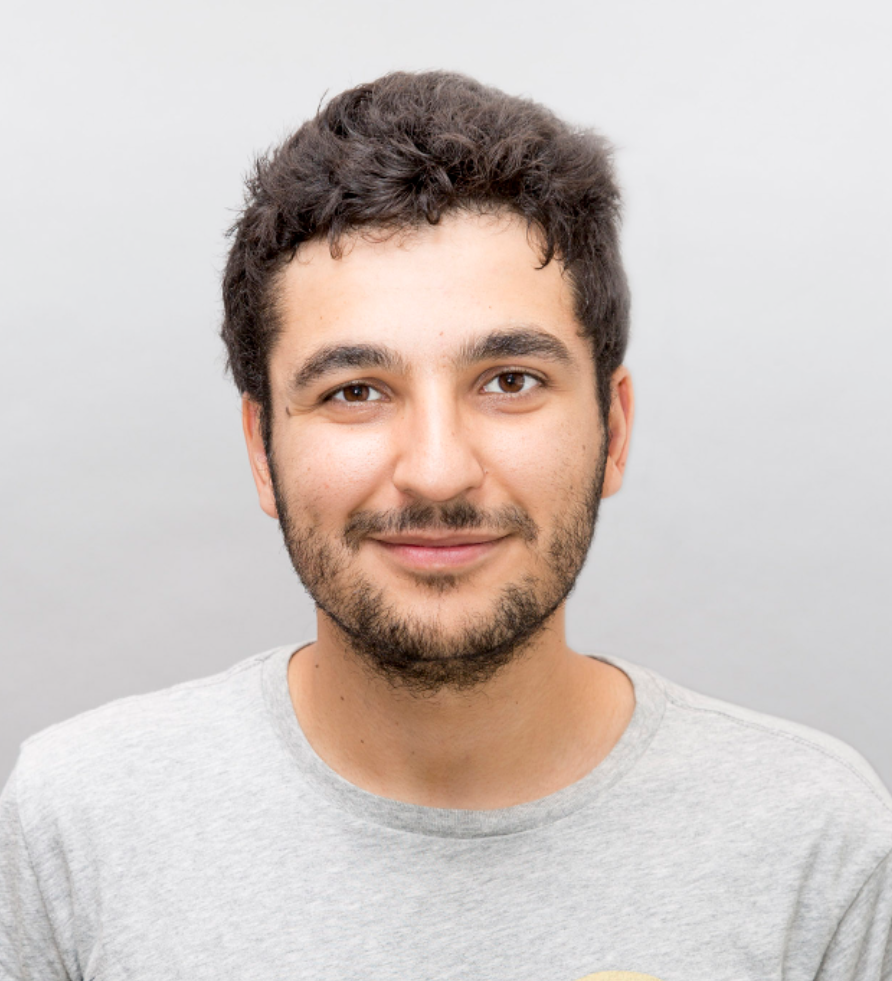
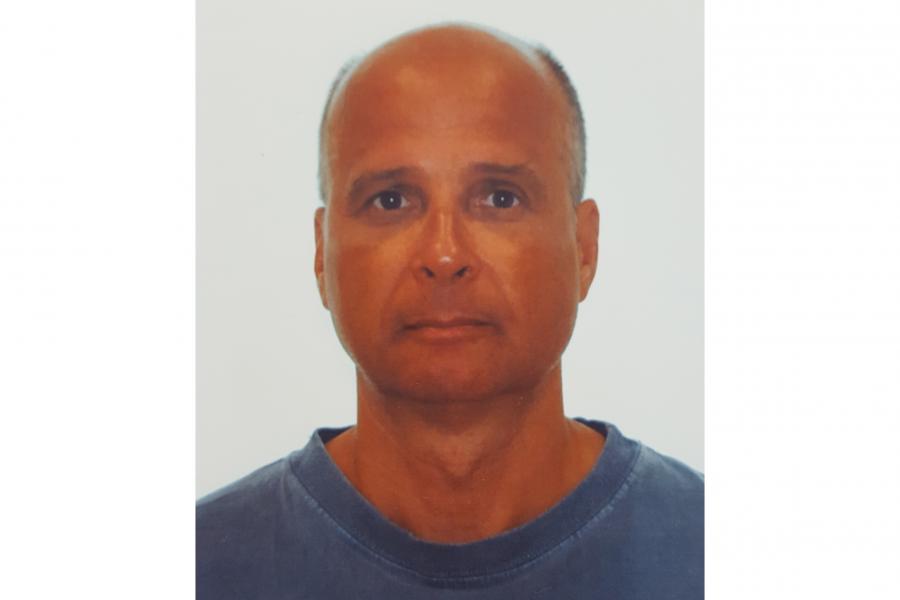
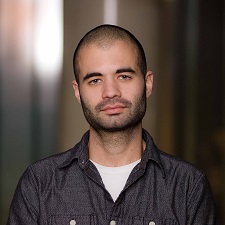
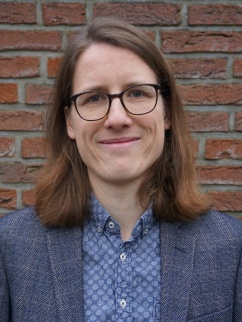
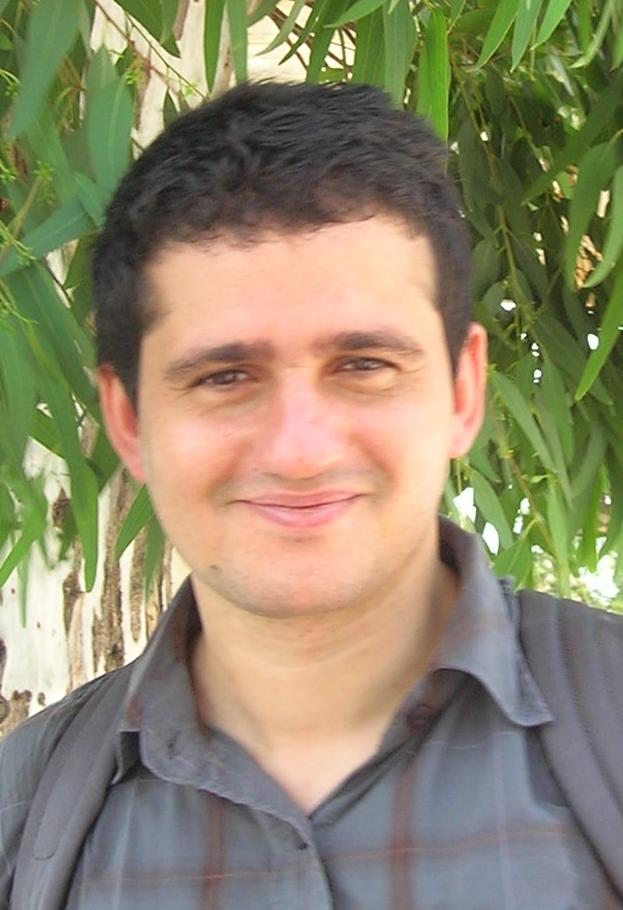
Salem Lahlou is an Assistant Professor in the Machine Learning Department at the Mohamed bin Zayed University of Artificial Intelligence (MBZUAI), having joined in September 2024. He previously served as a Senior Researcher at the Technology Innovation Institute (TII) in 2024. His academic background includes a PhD from Mila and Université de Montréal (UdeM) under Yoshua Bengio (2023), with prior studies in applied mathematics at École Polytechnique and statistical learning at École Normale Supérieure Paris-Saclay. His research focuses on developing more capable and reliable AI systems through three interconnected pillars: Novel Method Development : Core contributions to Generative Flow Networks (GFlowNets), uncertainty estimation techniques (DEUP), and curriculum learning frameworks Large Language Model Advancement : Enhancing reasoning capabilities and alignment through preference optimization and trace-based learning Community Tooling : Creation of torchgfn library for GFlowNets and benchmarks including BabyAI, FinChain, and LLM-BabyBench Core research areas span Machine Learning, GFlowNets, Uncertainty Estimation, LLM Reasoning, Reinforcement Learning, and AI for Science. Recent publications (2023-2025) demonstrate strong emphasis on GFlowNet theory/improvements (8+ papers), LLM reasoning evaluation (FinChain, LLM-BabyBench), uncertainty quantification, and societal AI impacts. Key application domains include mathematical reasoning, financial systems, privacy preservation, and cognitive science. He currently advises graduate students including Junyi (privacy risks in SNNs) and Abhijith (LLM reasoning). His group collaborates with MBZUAI faculty (Nils Lukas, Alham Fikri, Mingming Gong, Martin Takac) and industry partners on projects involving Conversational AI, Personalization, and Affective AI.
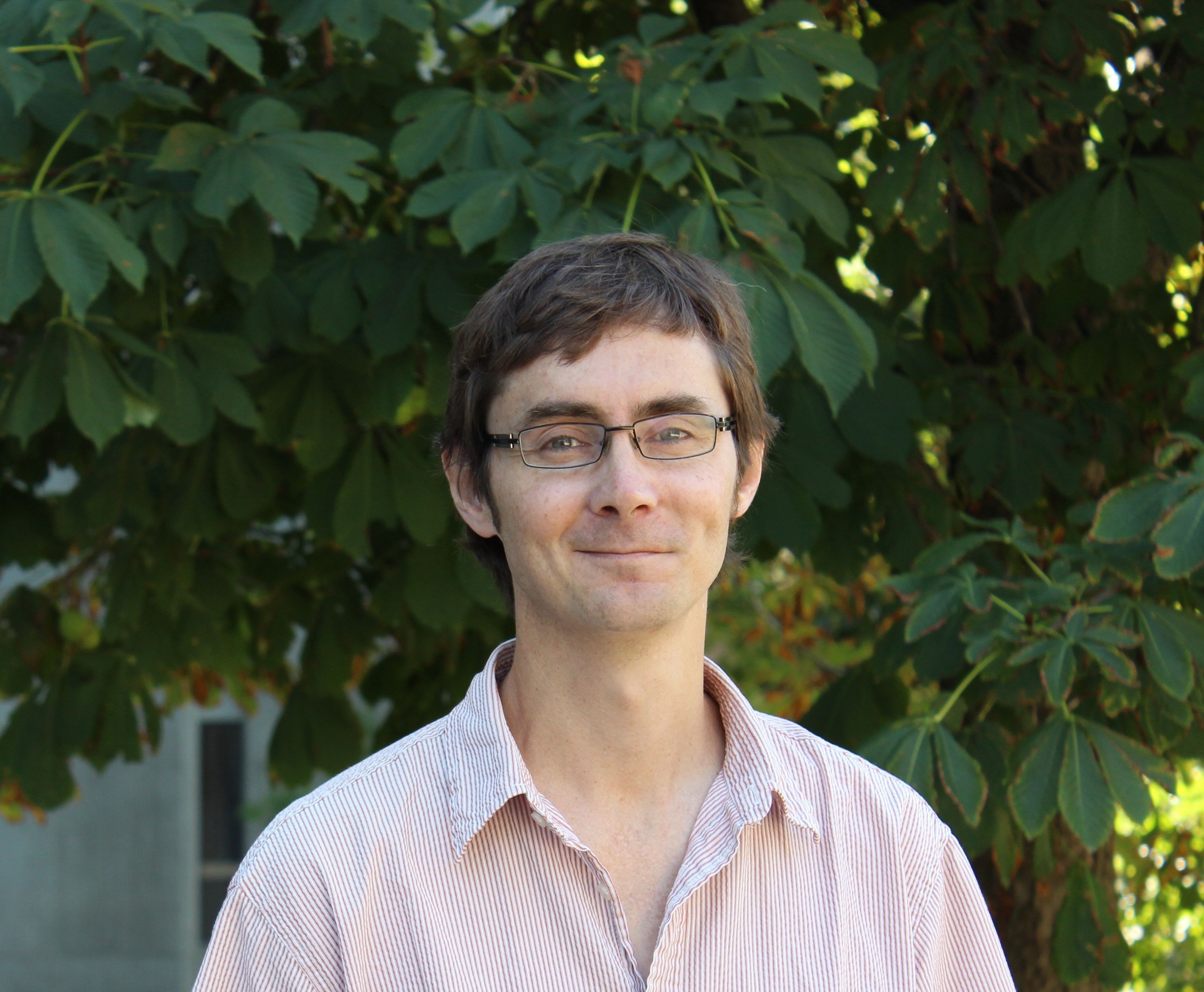
Jim Geelen is a Professor in the Department of Combinatorics and Optimization at the University of Waterloo, Faculty of Mathematics. His research focuses on matroid theory, particularly the Matroid Minors Project, which extends the Graph Minors Theory of Robertson and Seymour to matroids. Notably, he, Bert Gerards, and Geoff Whittle proved Rota's Conjecture, characterizing matroids representable over finite fields. His work also addresses extremal matroid theory, growth rates of minor-closed classes, and algorithmic applications. He has advised doctoral students including Kerri Webb, Tony Huynh, Peter Nelson, Rohan Kapadia, and Benson Joeris. Geelen teaches advanced courses like CO749 on Graph Minors, offering video lectures. His research collaborations span matroid minors, excluded minors, and representation theory, with contributions to fields like combinatorics, Ramsey theory, and geometric density theorems. His recent work explores the Erdős-Posa property in matroids, density Hales-Jewett theorems, and the structure of exponentially dense matroid classes. Geelen's publications include foundational papers on matroid connectivity, branch-width, and inequivalent representations, reflecting his deep engagement with foundational and applied aspects of combinatorial mathematics.
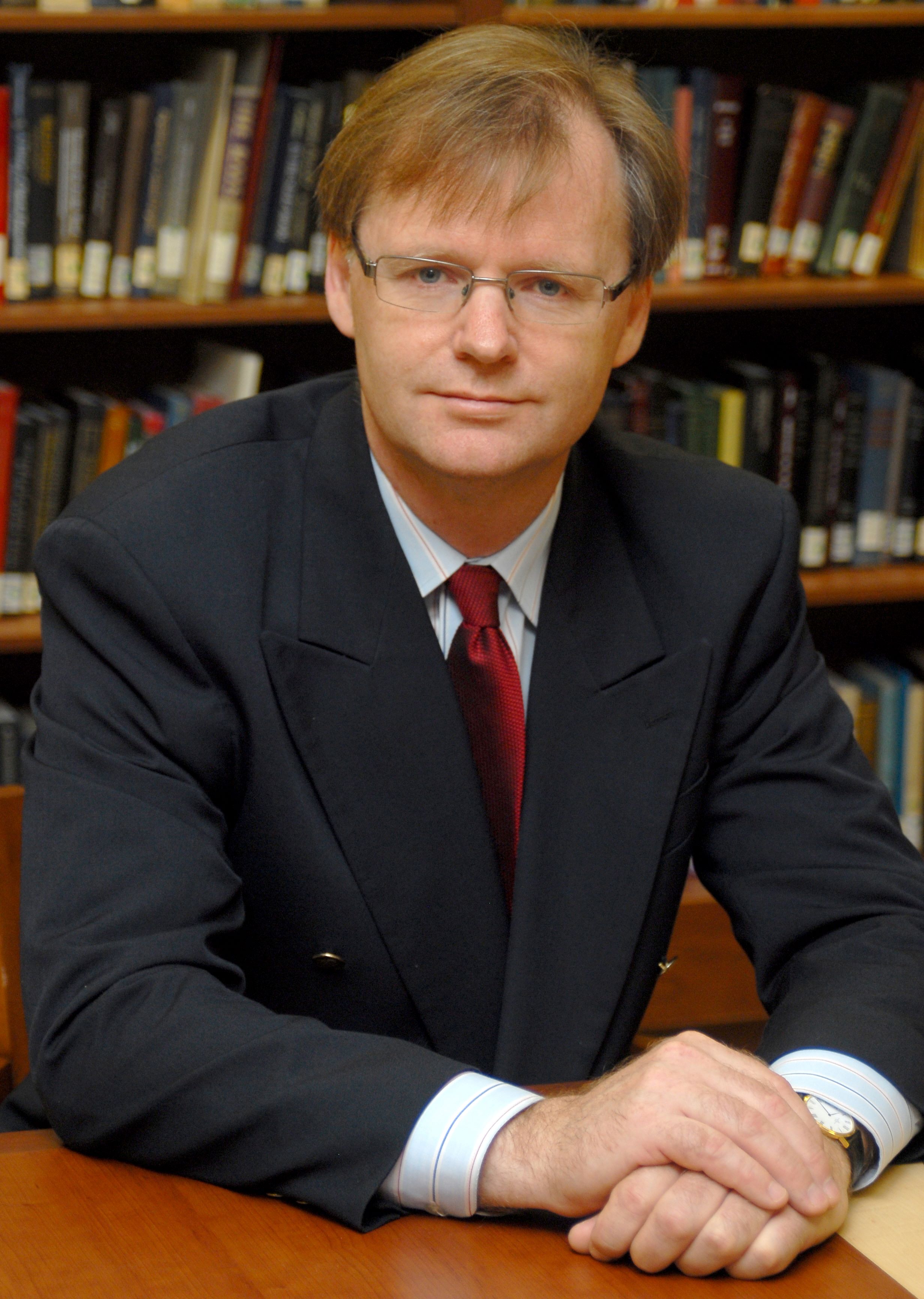
Martin Müller is a Professor in the Department of Computing Science at the University of Alberta, where he conducts research in artificial intelligence, game theory, and heuristic search. He holds the Canada CIFAR AI Chair at Amii and is an Amii Fellow, underscoring his leadership in AI. His research group focuses on Monte Carlo tree search, reinforcement learning, combinatorial game theory, and automated planning, with applications in games such as Go, Hex, and NoGo. His research interests span Monte Carlo and exact methods in game-tree search , exploration in heuristic search and machine learning , and algorithms in combinatorial game theory . He has developed open-source software like MCGS (Minimax-based Combinatorial Game Solver) and contributes to game-playing systems such as Fuego for Go. His work bridges theoretical foundations with practical implementations in AI-driven game solvers. Recent publications show a strong trend in reinforcement learning , particularly in deep Q-learning, policy gradient methods, and anomaly detection in deep RL. His team also explores combinatorial game solving , sparse reward environments , and imperfect information games . The research integrates machine learning with classical AI techniques, emphasizing empirical validation and algorithmic innovation. Canada CIFAR AI Chair Amii Fellow Best student paper award at IEEE Conference on Games 2024 Best paper award at IEEE COG 2021 Outstanding paper award at AAAI-18 Faculty of Science Dissertation Award (2016) Dissertation Award from the Canadian Artificial Intelligence Association (2013) Müller has supervised numerous PhD and MSc students, including Hongming Zhang, Henry Du, and Timo Bertram, many of whose theses focus on game AI, reinforcement learning, and combinatorial optimization. He is funded by NSERC, Mitacs, and Compute Canada. His group collaborates on projects involving neural networks for game playing, SAT solving, and planning algorithms. He is currently on sabbatical but remains academically active, teaching a graduate course on combinatorial games in 2025 and hosting visiting researchers. His lab is involved in the development of MCGS, a solver for sum games, and contributes to open-source AI software. The team publishes regularly in top venues such as NeurIPS, ICML, AAAI, and IEEE Transactions on Games. Future work includes advancing combinatorial game solvers, improving deep RL robustness, and exploring generalization in game representations.
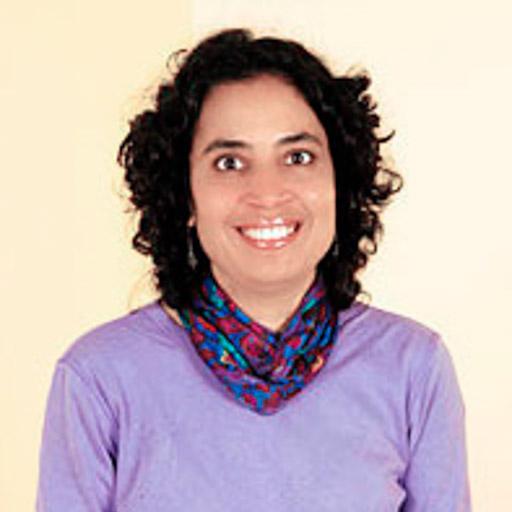
Dr. Lata Narayanan is a Professor in the Department of Computer Science and Software Engineering at Concordia University, Montreal, Canada. Her research spans theoretical and applied aspects of distributed systems, with a focus on algorithms for mobile agents, communication networks, and sensor networks. Department: Computer Science and Software Engineering University: Concordia University Research Interests Lata Narayanan specializes in algorithms for mobile robots and ad hoc networks , with expertise in routing on distributed networks , parallel algorithms , and social network analysis . Her work addresses challenges in sensor network optimization, barrier coverage, and time-energy tradeoffs for evacuation systems. Article Trends Her recent publications (2021-2025) emphasize game theory for network dynamics, cloud resource allocation , and temporal graph exploration . Key themes include strategic diversity, truck-drone delivery logistics, and energy-sharing protocols for mobile agents.
Michael Organ is a Full Professor at the University of Ottawa's Department of Chemistry and Biomolecular Sciences, affiliated with the Faculty of Science. He also serves as Director of the Centre for Research and Innovation in Catalysis. His research focuses on catalysis, flow chemistry, and medicinal chemistry, emphasizing sustainable and efficient synthesis methods. Organ has held adjunct roles at the University of Toronto and has extensive industry collaborations, including with GlaxoSmithKline and Abbvie. Education: PhD (University of Guelph, 1992), MSc (University of Guelph, 1988), Hons. BSc (University of Guelph, 1986). Research Interests: Catalysis, microwave-assisted continuous synthesis, reactive intermediates in flow systems, and drug discovery methodologies. His work bridges organic chemistry with engineering, developing scalable and green processes. Publications & Impact: Over 200 publications, including seminal works in Journal of the American Chemical Society and Chemistry – A European Journal . Key contributions include the Pd-PEPPSI-IPent catalyst and the MACOS flow chemistry platform. Awards: NSERC John C. Polanyi Award (2018), Encyclopedia of Reagents Best Reagent Award (2017), Raymond Lemieux Award (2016). Recognized internationally for catalytic innovations. Grants & Funding: Over $45M in research funding, including NSERC Discovery Grants and industry partnerships. Notable projects include CFI JELF grants for sustainable manufacturing and pandemic-related flow chemistry for SARS-CoV-2 diagnostics. Labs & Teams: Leads the Organ Group, collaborating with chemical engineers and industry partners. Specializes in reactor design, catalyst development, and continuous processing systems.
Elena Grigorescu is a Professor at the University of Waterloo, Department of Computer Science. She holds a Ph.D. from the Massachusetts Institute of Technology (2010), an M.S. from MIT (2006), and a B.A. from Bard College (2004). Her research focuses on sublinear-time algorithms, error-correcting codes, computational complexity, and learning theory. She explores foundational aspects of algorithms with constraints on time/space, privacy-preserving computation, and applications in graph theory and optimization. Her work includes advancements in spanner algorithms for network design, differential privacy in sublinear-time settings, and learning-augmented approaches for online optimization. Recent publications address trace reconstruction, privacy-utility trade-offs, and combinatorial optimization techniques. Grigorescu is actively involved in conferences like APPROX/RANDOM and IEEE Foundations of Computer Science, contributing to algorithmic theory and practical implementations. Her research emphasizes theoretical rigor while addressing real-world challenges in data analysis and distributed systems. No awards or formal advisees are explicitly listed in the provided information.
Gauthier Gidel is an Associate Professor at the Department of Computer Science and Operations Research (DIRO) within the Faculty of Arts and Science at Université de Montréal, where he also holds the prestigious Canada CIFAR AI Chair position. He is a core faculty member of Mila, Quebec's AI research institute, and maintains active research collaborations with leading institutions. His academic journey includes a PhD in Computer Science under the supervision of Simon Lacoste-Julien, with internships at Sierra, ElementAI, and DeepMind during his doctoral studies. Dr. Gidel's research spans multiple critical areas in machine learning, with particular emphasis on generative modeling , adversarial machine learning , and variational inequalities for machine learning. His work explores the intersection of optimization theory and practical AI systems, focusing on challenges like LLM safety alignment, multi-agent cooperation, and robustness against adversarial attacks. He is particularly known for his contributions to understanding the theoretical foundations of generative adversarial networks through variational inequality frameworks. His recent publications reveal a strong trend toward addressing critical challenges in large language model safety and alignment, with numerous 2024-2025 papers focusing on adversarial robustness, safety evaluation methodologies, and alignment techniques for LLMs. Simultaneously, his foundational work continues in optimization theory, particularly in variational inequalities and performative prediction, demonstrating his dual focus on practical AI safety concerns and theoretical machine learning foundations. Canada CIFAR AI Chair Core member of Mila Organizer of popular NeurIPS workshops on smooth games Co-founder of the ICLR blog post track Dr. Gidel actively supervises an extensive research group with approximately 10 current graduate students and numerous alumni who have secured positions at leading institutions including Inria Lyon, Oxford, and industry research labs. His research is supported by multiple substantial grants from CRSNG, MITACS, and IVADO, including the prestigious CRSNG Discovery Grant program and MITACS Acceleration Québec projects focused on fraud detection in music streaming and conditional generation. His laboratory maintains strong connections with both academic and industry partners, fostering a collaborative environment focused on advancing AI safety and theoretical understanding.
Gregory G. Smith is a Professor in the Department of Mathematics and Statistics at Queen's University, affiliated with the Faculty of Arts and Science. His research focuses on algebraic geometry, commutative algebra, and symbolic computation, with a particular interest in the interplay between positivity, convexity, and combinatorial structures. He holds a B.ScH from Queen's University, an MA from Brandeis University, and a PhD from the University of California, Berkeley. His research contributions include work on Hilbert schemes, toric varieties, and computational algebra, with publications in top-tier journals such as the Journal of the American Mathematical Society and Compositio Mathematica . He has received prestigious awards, including the Coxeter-James Prize (2012) and the André-Aisenstadt Prize (2007). Smith is also an editor of the Journal of Software for Algebra and Geometry . He has advised multiple graduate students, including Sasha Zotine (PhD 2024) and Benjamin Hersey (PhD 2021). His teaching spans undergraduate and graduate courses in algebra, geometry, and combinatorics, emphasizing rigorous mathematical reasoning and computational tools.
Dr. Ken Ferens is an Assistant Professor in the Department of Electrical and Computer Engineering at the Price Faculty of Engineering, University of Manitoba. He serves as the Computer Engineering Champion in the Centre for Engineering Professional Practice and Engineering Education and directs the Applied Cognitive Intelligence (ACI) Research Group. Dr. Ferens is a senior member of the Institute of Electrical & Electronics Engineers (IEEE), Chair of the EduManCom Chapter of the IEEE, Vice-Chair of the Computer and Computational Intelligence Chapter of the IEEE, and Chair of the Industry, Teaching Assistants, and Student Forums for Engineering Curriculum Review and Improvement. Ph.D. (Computer Engineering), University of Manitoba, 1996 M.Sc. (Computer Engineering), University of Manitoba, 1991 B.Sc. (Electrical Engineering), University of Manitoba, 1989 Dr. Ferens has over 33 years of research experience in computational intelligence, focusing on cognitive machine learning, artificial intelligence, cognitive computational intelligence, chaos theory applications, agent-based models, and various optimization algorithms including simulated annealing, genetic algorithms, artificial neural networks, and particle swarm optimization. His research applies these techniques to develop software and hardware intrusion detection systems for cybersecurity applications. He teaches graduate-level courses on Computer Network Security and Applied Computational Intelligence, providing students with theoretical background and hands-on experience in state-of-the-art security methods. Analysis of Dr. Ferens' recent publications reveals a strong focus on applying cognitive and chaotic computational techniques to cybersecurity challenges, particularly malware detection and network intrusion detection. His work increasingly integrates complexity theory, fractal analysis, and hybrid optimization approaches to enhance security systems' effectiveness. There's a clear progression toward more sophisticated machine learning architectures applied to increasingly complex security scenarios, with growing emphasis on real-world IoT and network security applications. Best Paper Award at IEEE International Conference on Cognitive Informatics and Cognitive Computing (ICCI*CC 2022) Best Paper Award at IEEE International Conference on Cognitive Informatics and Cognitive Computing (ICCI*CC 2015) Best Journal Paper Award for 2013 (Journal of ICT Research and Applications) Best Poster Award at 12th International Conference on e-Health Networking, Application & Services (2010) Best Paper Award at IASTED International Conference on Computer, Electronics, Control, and Communication (1991) Dr. Ferens collaborates with national and international industry partners including the Department of Advanced Information Management, Content Technology Canadian Tire Corporation (CTC), and Magellan Aerospace. His research group has received funding supporting the Cyber-security Research Program, developing practical applications of computational intelligence for security systems. He has supervised numerous graduate students in the Electrical and Computer Engineering department, focusing on research at the intersection of machine learning and cybersecurity. Dr. Ferens leads the Applied Cognitive Intelligence (ACI) Research Group within the Department of Electrical and Computer Engineering, which focuses on applying cognitive, chaotic, and computationally intelligent algorithms to build intrusion detection systems. The group collaborates with industry partners to develop practical security solutions while providing students with hands-on research experience in cutting-edge security technologies. Their work spans both theoretical algorithm development and practical hardware implementation for real-world security applications.
Eldan Cohen serves as an Assistant Professor of Industrial Engineering within the Department of Mechanical & Industrial Engineering at the University of Toronto's Faculty of Applied Science and Engineering. His academic journey includes a PhD from the same department followed by a postdoctoral fellowship in Computer Science at the University of Toronto and the Vector Institute for Artificial Intelligence. His educational background is detailed as follows: PhD in Mechanical & Industrial Engineering, University of Toronto Postdoctoral Fellowship in Computer Science, University of Toronto and Vector Institute for Artificial Intelligence Dr. Cohen's research centers on machine learning, deep learning, heuristic search, and optimization with strong emphasis on interpretable and human-compatible AI systems. His work bridges theoretical advancements with practical applications in healthcare (e.g., patient-physician interaction analysis, surgical safety diagnostics), automated planning, natural language processing, and software engineering. Recent projects develop interpretable clustering methods for medical data and optimization techniques for constrained sequence generation. Analysis of his 2023-2025 publications reveals a concentrated focus on healthcare AI applications, particularly using large language models for clinical text analysis and diagnostic support systems. Significant work also addresses interpretable machine learning for medical imaging, diverse plan selection in optimization, and constrained sequence generation in domains like vehicle routing. No major scientific awards or fellowships are documented in the available information. As an academic advisor, Dr. Cohen mentors graduate students in mechanical and industrial engineering, guiding research in optimization and machine learning. His OptiMaL research group fosters collaboration between computer science and industrial engineering to solve real-world decision-making challenges through human-centered AI approaches. The Optimization and Machine Learning (OptiMaL) research group, led by Dr. Cohen, serves as the primary hub for developing scalable, interpretable AI solutions for complex healthcare, planning, and engineering problems, with active projects in medical diagnostics and automated planning systems.
Kevin Leyton-Brown is a Professor of Computer Science at the University of British Columbia (UBC), holding a Canada CIFAR AI Chair at the Alberta Machine Intelligence Institute (Amii). He is also an Associate Member of the Vancouver School of Economics and a Fellow of the Royal Society of Canada, ACM, and AAAI. His research focuses on AI, machine learning, computational economics, and game theory, with notable contributions to algorithmic market design, heuristic algorithms, and large language models. He co-authored influential textbooks on multiagent systems and game theory, and his work has been recognized with prestigious awards including the INFORMS Franz Edelman Award and the Killam Teaching Prize. Education: PhD (Computer Science), Stanford University; MSc (Computer Science), Stanford University; BSc (Computer Science), McMaster University. Research Interests: Artificial Intelligence, Machine Learning, Game Theory, Computational Economics, Algorithmic Game Theory, Market Design, and Large Language Models. He has developed impactful tools like SATzilla, AutoWEKA, and Mechanical TA, and contributed to high-stakes projects such as spectrum auction design and Ugandan agricultural market platforms. Awards & Recognition: Royal Society of Canada Fellow (2023), ACM SIG-KDD Research Track Test of Time Award (2023), INFORMS Franz Edelman Award (2018), ACM Fellow (2020), AAAI Fellow (2018), Killam Teaching Prize (UBC), and numerous paper awards from top conferences like AAAI, ICML, and ACM-EC. Leadership & Affiliations: Director of UBC’s CAIDA and AIM-SI research clusters, former Chair of ACM SIG-Ecom, and advisor to companies like AI21 Labs and Auctionomics. He has held visiting roles at institutions including MIT, Harvard, and the Simons Institute.
Nils Wilde is an Assistant Professor in the Faculty of Computer Science at Dalhousie University, Halifax, Canada. He specializes in robotics, AI, and human-computer interaction, with a focus on cognitive robotics, multi-robot systems, and human-robot interaction. His research integrates planning, optimization, control, and machine learning to develop interactive and adaptive robotic systems. His educational background includes: BSc and MSc in Computer Science or related field from Technical University Berlin (2012, 2016) PhD in Electrical and Computer Engineering from the University of Waterloo (2016–2020), co-supervised by Dana Kulić and Stephen L. Smith Postdoctoral Fellow at TU Delft (2021–2024) in the Autonomous Multi-Robots Lab with Javier Alonso-Mora Postdoctoral Fellow at the University of Waterloo’s Autonomous Systems Lab (until August 2021) Nils Wilde's research centers on enabling robots to learn from human feedback and adapt to user preferences in dynamic environments. His work spans preference learning , multi-objective planning , motion planning , task assignment in multi-robot systems , and human-robot interaction . He develops algorithms that allow robotic systems to balance competing objectives such as efficiency, safety, and user comfort, particularly in service robotics applications like hospitals and industrial facilities. His recent publications (2020–2024) demonstrate a strong trajectory in top robotics venues (T-RO, RA-L, ICRA, IROS, CoRL, CDC, WAFR), with a focus on multi-objective optimization, dynamic vehicle routing, sensor scheduling, and learning user preferences. A key theme is improving the quality of service in robotic systems by optimizing metrics like waiting times, statistical distinctness of plans, and user satisfaction, often through novel cost functions and learning frameworks. Nils is actively building a new robotics lab at Dalhousie University, with funded PhD positions and an interdisciplinary research environment. He is involved in organizing academic workshops, such as the upcoming 2025 RSS workshop on Multi-Objective Optimization and Planning in Robotics. He mentors prospective students and encourages applications from diverse backgrounds.
Ismail Ben Ayed is an Associate Professor at École de technologie supérieure (ETS) in Montreal, Canada, holding the ETS Research Chair on Artificial Intelligence in Medical Imaging. His research bridges computer vision, optimization, and medical image analysis to develop advanced algorithms for clinical applications, with particular focus on cardiac and neurological imaging. His research program centers on medical image segmentation using novel optimization techniques, graph-based methods, and deep learning models. He pioneers approaches for handling volumetric bias, shape compactness, and distribution matching in MRI and cardiac imaging, directly addressing clinical challenges in spine labeling, ventricle segmentation, and tumor detection. His work emphasizes mathematical rigor combined with practical medical relevance. Analysis of his 15 most recent publications (2014-2017) reveals dominant themes in medical image segmentation (80% of works), particularly for cardiac MRI (35%) and neurological applications (25%). Key methodological contributions include distributed optimization frameworks (20%), advanced graph cut techniques (30%), and deep learning architectures (25%), published consistently in top-tier venues including CVPR, MICCAI, and TPAMI. His scientific recognition includes: MICCAI travel award (2017) Outstanding Reviewer Award at CVPR (2015) GE innovation award (2010) He actively mentors researchers as evidenced by his recruitment of PhD students and postdocs, with research supported by the ETS Research Chair and multiple patents. His service includes chairing MICCAI 2017/2015 and IPTA 2017, plus continuous program committee roles at CVPR, ICCV, and MICCAI since 2011. Leading the ETS Research Chair on AI in Medical Imaging, he directs a collaborative team working on clinical translation of computer vision techniques. Current projects focus on cardiac motion analysis, brain tumor segmentation, and spine labeling systems with direct applications in radiology workflows.
Ben Li is an Associate Professor in the Department of Computer Science at the University of Manitoba, Faculty of Science. His research focuses on combinatorics and theoretical computer science, including combinatorial design theory (e.g., Steiner triple systems, BIBDs, difference sets), graph theory, and algorithm design for combinatorial optimization problems. He also explores approximation algorithms for NP-Hard problems and subclasses of such problems with polynomial solutions. Dr. Li teaches a wide range of courses, including COMP 1010 (Introduction to Computer Science), COMP 2080 (Analysis of Algorithms), and advanced graduate courses like COMP 7720 on approximation algorithms and combinatorial optimization. His academic contributions span both theoretical computer science and interdisciplinary archaeological studies, as reflected in his publications. His recent work includes studies on ostrich eggshell beads' role in prehistoric social networks, archaeological site analysis in southern Africa, and medical education reforms in Canada. While his primary research aligns with computer science theory, his published articles also highlight interdisciplinary interests in anthropology, archaeology, and healthcare policy.
Michel Gendreau is a Full Professor in the Department of Mathematics and Industrial Engineering at Polytechnique Montréal . His research focuses on the application of Operations Research to Transportation , Telecommunications , and Energy Systems , with an emphasis on Stochastic Optimization and Real-time Planning . He co-directs the Intelligent Transportation Systems Laboratory and is affiliated with the CIRRELT , IVADO , and Trottier Energy Institute . Education : Ph.D. in Computer Science (1984), Université de Montréal His work includes developing metaheuristics for complex optimization problems and dynamic transportation systems . Recent projects address smart supply chains and real-time logistics . He has supervised over 40 doctoral and master's students, including notable graduates like Sanchez-Martinez, Guillen Reyes, and Parada Pradenas. Dr. Gendreau has been recognized with prestigious fellowships from IFORS (2022) and INFORMS (2010). His academic contributions span 420 publications, with recent studies appearing in Reliability Engineering and System Safety and Networks , focusing on stochastic programming , multiperiod routing , and UAV network design . He collaborates extensively with industry partners and has secured grants from organizations like FRQNT and CIRRELT . His research integrates machine learning with operations research to solve real-world challenges in transportation , energy , and logistics .