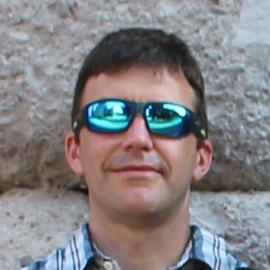
Minghao Qi is a Professor in the Department of Electrical and Computer Engineering at Purdue University's College of Engineering, West Lafayette. His research focuses on integrated photonics systems for optical communications, quantum information, and precision metrology applications. Professor Qi's work spans several critical photonics domains: Design and application of microresonator-based optical frequency combs (Kerr combs) Silicon and silicon nitride integrated photonic circuits Thin-film lithium niobate devices for nonlinear optics Quantum information processing using frequency-bin entangled photons Photonic neuromorphic computing with machine learning co-design Optical sensors and time-of-flight ranging systems Analysis of his 2022-2025 publications reveals three dominant research vectors: (1) Vernier microcombs for optical atomic clocks and RF stabilization, (2) Trident edge coupler architectures for octave-spanning nonlinear processes on lithium niobate, and (3) Physics-informed neural networks applied to photonic device design and signal processing. His recent work demonstrates strong convergence between integrated photonics, quantum technologies, and machine learning.
Dr. Penina Axelrad is a University of Colorado Distinguished Professor and Joseph T. Negler Professor of Aerospace Engineering Sciences at the University of Colorado Boulder. She has held academic roles since 1992, serving as Department Chair from 2012–2017. A member of the National Academy of Engineering since 2019, her research focuses on GNSS technology, satellite navigation, and remote sensing applications. She has authored over 223 publications and secured $17.5M in research grants. Education: Ph.D., Aeronautics and Astronautics, Stanford University, 1991 S.M., Aeronautical and Astronautical Engineering, MIT, 1986 S.B., Aeronautical Engineering (Avionics Option), MIT, 1985 Research Interests: Global Navigation Satellite Systems (GNSS), multipath mitigation, GNSS reflectometry, orbital dynamics, and quantum sensing for Earth science. Her work bridges astrodynamics, satellite navigation, and environmental monitoring. Awards: Member, National Academy of Engineering (2019) Women In Aerospace Educator Award (2016) Institute of Navigation Samuel Burka Award (2012) AIAA Summerfield Book Award (2011) Advising & Grants: Advised numerous students (no names listed) and led major grants including NASA Quantum Pathways Institute and Sentinel-6 orbit determination projects. Active in Institute of Navigation leadership roles. Labs/Teams: Colorado Center for Astrodynamics Research (CCAR), Quantum Pathways Institute, and collaborative efforts on CubeSat atomic clock experiments.
Victor Torres Company is an Assistant Professor at Chalmers University of Technology, leading the Ultrafast Photonics group in the Department of Microtechnology and Nanoscience. His research focuses on photonic integration, nonlinear physics, and laser frequency combs for next-generation fiber optic communication systems. European Research Council Consolidator Grant (2018) VR Consolidator Grant (2020) Marie Curie Fellowship His recent work includes wafer-scale manufacturing of photonic molecule microcombs, ultralow-loss waveguide development, and noise reduction techniques in parametric oscillators. He also co-founded Iloomina AB (2021) to commercialize chip-scale frequency comb technology.
Dennis Akos is a Professor in the Department of Aerospace Engineering Sciences at the University of Colorado Boulder. He is affiliated with the Research and Engineering Center for Unmanned Vehicles (RECUV) and the Colorado Center for Astrodynamics Research (CCAR). His research focuses on RF signal processing, RF interference mitigation, integrated navigation systems, and VHF modulation. He holds a Ph.D. in Electrical and Computer Engineering from Ohio University (1997), with earlier degrees from the same institution. His professional experience includes roles at Stanford University’s GPS Laboratory and the Lulea Institute of Technology. He has received notable awards such as the Institute of Navigation Fellow (2022), Thurlow Award (2009), and multiple best paper awards. His work emphasizes GNSS security, spoofing detection, and low-cost receiver solutions. Recent articles highlight advancements in GNSS RFI localization, Android device navigation, and software-defined radio applications. His lab explores innovations in space situational awareness, multi-sensor PVT solutions, and interference-resistant systems. Collaborative projects leverage crowdsourced smartphone data to enhance GNSS reliability. Awards: Fellow of the Institute of Navigation, Thurlow Award, Samuel M. Burka Award, and FAA Excellence in Aviation Research. Grants/Advising: Advising on GNSS security and Android-based navigation systems; involved in federally funded research on interference mitigation and satellite clock stability. Labs/Teams: Leads research at RECUV and CCAR, focusing on unmanned systems and astrodynamics challenges.
Dana Weinstein is a Professor in the Department of Electrical and Computer Engineering at Purdue University, West Lafayette campus. Her research focuses on cutting-edge MEMS resonators, RF device integration, and acoustoelectronic systems. Academic Rank: Professor Department: Electrical and Computer Engineering University: Purdue University Email: danaw@purdue.edu Research Interests: Microelectronics and MEMS Resonators Radio Frequency (RF) Devices and 2D Materials Silicon Photonics and Ferroelectric Transducers Acoustoelectronics and GaN/SiC Heterostructures Integrated Nonreciprocal RF MEMS Devices Scientific Awards: NSF CAREER Award (2017) NSF CAREER Award (2012) Editorial Leadership in IEEE Nanotechnology Express (2015) Key Article Trends: Her recent publications explore advanced MEMS resonators, high-frequency RF devices, acoustoelectric interactions, and integration of 2D materials into CMOS-compatible platforms. Topics include Sezawa wave SAW devices, GaN/SiC heterostructures, BEOL-compatible transistors, and ferroelectric-based transducers.
Clark T.-C. Nguyen is a Professor in the Department of Electrical Engineering and Computer Sciences at the University of California, Berkeley, and co-Director of the Berkeley Sensor & Actuator Center (BSAC). He holds a B.S., M.S., and Ph.D. from UC Berkeley (1988–1994). Before joining UC Berkeley in 2006, he was a Professor at the University of Michigan (1995–2006). His research focuses on MEMS, integrated micromechanical systems, and RF communication technologies. He founded Discera, Inc. (2001), commercializing MEMS-based timing products, and served as a DARPA Program Manager (2002–2005) overseeing MEMS-related initiatives. Prof. Nguyen has received numerous awards, including the IEEE Robert Bosch MEMS Award (2017), and is a Fellow of the IEEE. He currently teaches EECS 16B and advises over 15 graduate students. His leadership roles include past IEEE UFFC Society President and founder of the IEEE MEMS Technical Community. Education: Ph.D., Electrical Engineering & Computer Sciences, UC Berkeley (1994) M.S., Electrical Engineering & Computer Sciences, UC Berkeley (1991) B.S., Electrical Engineering & Computer Sciences, UC Berkeley (1989) His research interests span MEMS fabrication and integration , RF MEMS filters and oscillators , and chip-scale timing devices . Recent work includes high-Q micromechanical resonators and capacitive-piezoelectric transducers. Over 30+ years, he has authored/edited 100+ papers, 10+ patents, and organized 37 IEEE/DARPA workshops. His students have won 10+ best-paper awards. Awards: 2017 IEEE Robert Bosch MEMS Award 2013 UC Berkeley Outstanding Teaching Award 2007 IEEE Fellow 2006 Cady Award (IEEE UFFC Society) 2000 Ruth and Joel Spira Teaching Award Advising & Grants: Prof. Nguyen has advised over 20 graduate students and secured funding from DARPA, NASA, and industry partners. His lab focuses on translating MEMS research into commercial products through collaborations with industry members of BSAC. Labs/Teams: Co-director of the Berkeley Sensor & Actuator Center (BSAC), which fosters industry-academia partnerships in MEMS. His research group includes 15+ students actively working on micromechanical systems, RF MEMS, and timing devices.
Shuangyou Zhang is a Senior Scientist at the Max Planck Institute for the Science of Light, specializing in optical frequency combs, integrated photonics, and quantum optics. His work focuses on chip-scale atomic clocks, two-photon transitions for optical frequency standards, and dispersion engineering in microresonators. Education Bachelors in Electronics, Jilin University PhD in Electronics, Peking University Research Trends Analysis of his publications reveals expertise in soliton microcombs, Kerr symmetry breaking, Brillouin scattering, and silicon nitride-based photonic devices. His work spans nonlinear optics, photonic integrated circuits (PICs), and applications in sensing and optical computing. Labs & Collaborations He is affiliated with the Max Planck Institute for the Science of Light, which explores quantum optics, nanophotonics, and light-matter interaction.
David Nadlinger is a Junior Research Fellow in Physics at the University of Oxford and a quantum physicist specializing in trapped-ion quantum computing. His research integrates quantum physics, programming, and engineering to advance quantum network technologies. His work focuses on quantum computing architectures, optical addressing of trapped ions, quantum error correction, and distributed quantum systems. Recent publications explore photon-mediated entanglement, microwave-driven quantum logic, and open-source control systems for quantum experiments. He contributes to quantum networking projects including multi-node entanglement, quantum gate teleportation, and entanglement-enhanced optical clocks.
Peter T. Rakich is the Donna L. Dubinsky Professor of Applied Physics at Yale University with an additional appointment in the Department of Physics. He serves as Faculty Director of the Yale Cleanroom and leads the RakichLab, which focuses on experimental nonlinear optics, quantum optomechanics, and integrated photonics for next-generation quantum technologies. Dr. Rakich's research spans four interconnected areas: Cavity Optomechanics, where his group develops acoustic resonators for quantum information storage; Integrated Photonics, focusing on engineerable photon-phonon interactions for quantum applications; Quantum Acoustics, investigating ultra-coherent mechanical oscillators; and Ultra-low Noise Oscillators, creating compact systems with laboratory-scale performance. His work combines theoretical modeling, materials spectroscopy, and nanofabrication to push technological boundaries. His publications reveal a strong trajectory in quantum optomechanics and integrated photonics, with recent breakthroughs in non-magnetic optical isolators, silicon Brillouin lasers, and quantum acoustics. The 2025 publications particularly emphasize practical quantum technologies with applications in sensing, communications, and computing, showing increasing focus on device integration and real-world implementation of quantum principles. Scientific Awards: Roberts Innovation Fund (2025) for developing technologies for sensing and communication based on ultra-low-noise oscillators As an advisor, Dr. Rakich mentors five graduate students working across quantum acoustics, integrated photonics, and low-noise oscillator technologies. His lab has secured significant funding for quantum information science, with research directions including portable atomic clocks, quantum memories based on long-lived phonons, and integrated systems for quantum transduction between microwave and optical domains. The RakichLab maintains state-of-the-art nanofabrication and optical characterization facilities, collaborating extensively with other Yale research groups and international partners. Current work focuses on engineering photonic platforms that enable strong light-matter interactions in compact formats for quantum optics, atomic sensing, and laser stabilization applications.
Aidan Arnold is a Reader in the Department of Physics at the University of Strathclyde , where he contributes to the Scottish Universities Physics Alliance (SUPA). His academic career focuses on Quantum Technology , particularly in Atomic Clocks , Atom Interferometry , and Four-Wave Mixing in hot vapors. Research Interests : Arnold's work bridges Cold Atom Systems Laser Cooling and Trapping Quantum Metrology Optical Lattices Chiroptical Tools Atomtronics His projects often involve developing chip-scale quantum devices and scalable atomic sensors for precision measurements. Recent Publications highlight advancements in Rayleigh optical activity for chiral molecules, grating-chip cold atom sources , and integrated photonic circuits . These works span 2025–2016 , with consistent output in Physical Review Letters , Optics Express , and AVS Quantum Science . Arnold collaborates extensively, as seen in his contributions to Terrestrial Very-Long-Baseline Atom Interferometry and UK National Quantum Technologies Hub . His research has led to patents and innovations in vacuum cells and micro-fabricated components for quantum platforms.
Professor Paul Griffin is a faculty member in the Department of Physics at the University of Strathclyde, Faculty of Science. He is an active researcher in atomic physics and quantum technologies, contributing significantly to the development of next-generation quantum devices. His affiliations include the Experimental Quantum Optics & Photonics (EQOP) research group, where he leads and participates in multiple funded projects focused on translating laboratory research into application-ready systems. Chancellor's Fellowship, University of Strathclyde (2015–present) Royal Society of Edinburgh Personal Research Fellow (2009–2014) Guest Researcher, National Institute of Standards and Technology (NIST), 2010–2011 Postdoctoral Fellow, Georgia Institute of Technology (2005–2007) Paul Griffin earned his BSc in Physics from the University of Limerick and his PhD in Atomic Physics from Durham University in 2005. BSc Physics, University of Limerick PhD Atomic Physics, Durham University His research focuses on atomic physics and quantum technologies, particularly using lasers and atoms for precision measurement and atom-light interaction studies. Key research strands include atomic clocks, atom interferometry, optically-pumped magnetometry, ultra-cold atoms, Bose-Einstein condensates, and space applications of quantum technology. He is actively involved in developing compact, chip-scale components for quantum devices, bridging the gap between fundamental research and real-world applications. His recent publications (2025) demonstrate a strong trend in miniaturized quantum systems, such as chip-scale atomic spectrometers, grating-based cold atom sources, and optical lattices. These works emphasize integration, scalability, and practical deployment of quantum sensors for navigation, timing, and space-based platforms. The research combines atomic physics with photonics and engineering to enable portable, high-precision instruments. Paul Griffin has received competitive fellowships recognizing his research excellence: Chancellor's Fellowship (2015) Royal Society of Edinburgh Personal Research Fellowship (2009) Marie Curie CO-FUND Fellowship (2009) He is actively involved in advising and mentoring, welcoming research project interns and PhD students. He serves as Principal or Co-investigator on multiple projects funded by Innovate UK, AWE plc, and ESA, including HARLEQUIN-ST, QEPNT, and the UK Quantum Technology Hub in Sensing, Imaging and Timing (QuSIT). These projects focus on quantum-enabled navigation, timing, and compact cold atom systems. His collaborative network spans national and international institutions, including NIST and the Institute of Physics. Griffin is a key member of the Experimental Quantum Optics & Photonics (EQOP) group at Strathclyde, which advances quantum sensing, imaging, and timing technologies. The group develops integrated quantum systems, including vacuum cells, laser systems, and control electronics for field-deployable quantum devices. Their work supports applications in navigation, geophysics, and space exploration.
James Patrick McGilligan is a Chancellor's Fellow and Assistant Professor in the Department of Physics at the University of Strathclyde's Faculty of Science. He leads research in quantum sensing and atomic physics with a focus on microfabricated technologies. His research interests center on Cold Atom Physics and Quantum Sensors, specializing in MEMS-based atomic systems. Key areas include chip-scale atomic clocks, optical lattices using microfabricated gratings, and miniaturized quantum sensors for navigation and timing applications. His work bridges fundamental atomic physics with practical engineering solutions for quantum technologies. McGilligan's publications demonstrate consistent advancement in integrated quantum systems, with recent work focusing on optical phased arrays for atomic spectroscopy, MEMS vapor cell frequency standards, and spin relaxation optimization in magnetometers. His research shows strong progression toward practical quantum devices with industrial applications. Bates Prize Recipient (2025) Chancellors Fellowship Recipient (2022) Royal Academy of Engineering Research Fellowship Recipient (2021) Lindemann Fellowship Recipient (2017) As Principal Investigator, McGilligan leads multiple significant projects including the £4,000 Rank Prize-funded development of Chip Scale Atomic Clocks and the International Network for Microfabricated Atomic Quantum Sensors. His current major project "Advancing the state-of-the-art of microfabricated atomic sensors" (2025-2029) involves collaboration with Kelvin Nanotechnology Limited. He also serves as Co-investigator on the EPSRC-funded QEPNT Hub for Quantum Positioning, Navigation and Timing (2024-2029). McGilligan actively organizes the International Network for Microfabricated Atomic Quantum Sensors workshop series and contributes to professional development in quantum sensing technologies through conference organization and collaboration networks.
Victor Torres is an Associate Professor in Photonics at Chalmers University of Technology, where he leads the Ultrafast Photonics research group. His primary research focuses on developing laser technology for next-generation fiber optic communication systems. He maintains strong affiliations with both the Department of Microtechnology and Nanoscience and the Department of Physics. Torres' research spans photonic integration, nonlinear physics, and laser frequency combs, with publications in prestigious journals including Nature Photonics, Nature Communications, Science Advances, and Physical Review Letters. In 2021, he co-founded the startup company Iloomina AB with two PhD students to commercialize chip-scale frequency comb technology. His recent work demonstrates significant advancements in microcomb technology, nonlinear integrated photonics, and wafer-scale manufacturing of photonic devices. Torres' research shows a clear trajectory from fundamental physics to practical applications with commercial potential, particularly in optical communications, precision metrology, and RF-to-optical conversion systems. Scientific Awards: European Research Council Consolidator Grant (2018) VR Consolidator Grant (2020) Marie Curie Fellowship Torres serves as Director of the VR Research Excellence Center on Integrated Metaphotonics, a joint initiative bridging inverse design techniques and heterogeneous integration. His teaching contributions include the Wireless, Photonics and Space Engineering program. His research group has established Chalmers as a leader in integrated photonics and frequency comb technology, with strong industry connections through the Iloomina AB startup.
Asbjørn Arvad Jørgensen is a Postdoctoral Researcher at the Niels Bohr Institute within the Faculty of Science at the University of Copenhagen. His research focuses on Quantum Optics and Photonics, specifically working with micro ring resonators and optical frequency combs for high-speed data transmission applications. He maintains an active research profile with publications in high-impact journals including Nature Photonics and Physical Review series. His research interests span Quantum Optics, Photonics, Optical Frequency Combs, Micro Ring Resonators, High-Speed Data Transmission, and Optical Lattice Clocks. His work bridges theoretical modeling with experimental implementation in integrated photonic systems, particularly focusing on chip-scale solutions for next-generation optical communications and precision measurement systems. Jørgensen's publication record shows a strong trajectory in photonics research with significant citations, particularly for his Nature Photonics paper on petabit-per-second data transmission which has garnered over 110 citations. His research demonstrates consistent collaboration with leading groups in quantum optics and photonics across Europe. His academic service includes peer-reviewed contributions to major optics conferences including the Conference on Lasers and Electro-Optics (CLEO). His research has received attention across multiple platforms with coverage in news outlets, social media, and academic networks.
Minhao Pu is a Senior Researcher at the Department of Electrical and Photonics Engineering, Technical University of Denmark (DTU), affiliated with the Nanophotonic Devices Centre of Excellence for Silicon Photonics for Optical Communications. His work contributes to UN Sustainable Development Goals in clean energy and technological innovation, focusing on advanced photonic integrated circuits for next-generation optical systems. His research spans Integrated Photonics, Nonlinear Optics, and Quantum Information Processing, with expertise in microresonators, waveguide technologies, and nonlinear phenomena like four-wave mixing. Recent work emphasizes chip-scale platforms using AlGaAs-on-insulator and silicon carbide for applications in optical communications and quantum technologies, addressing critical challenges in efficiency and scalability. Publications from 2025 demonstrate leadership in wavelength conversion, supercontinuum generation, and soliton dynamics, highlighting trends toward integrated solutions that eliminate data rate limitations while enabling novel functionalities in compact photonic devices. Pu actively mentors PhD students and leads major research initiatives, including projects on silicon carbide microcombs and on-chip second-harmonic generation for optical atomic clocks. His collaborative network includes key DTU researchers like K. Yvind and L. K. Oxenlowe, driving innovation in nonlinear photonic circuits. As part of DTU's Nanophotonic Devices Centre of Excellence, he develops cutting-edge silicon photonics platforms for optical communications, with future work targeting quantum information processing and ultra-efficient optical signal conversion.