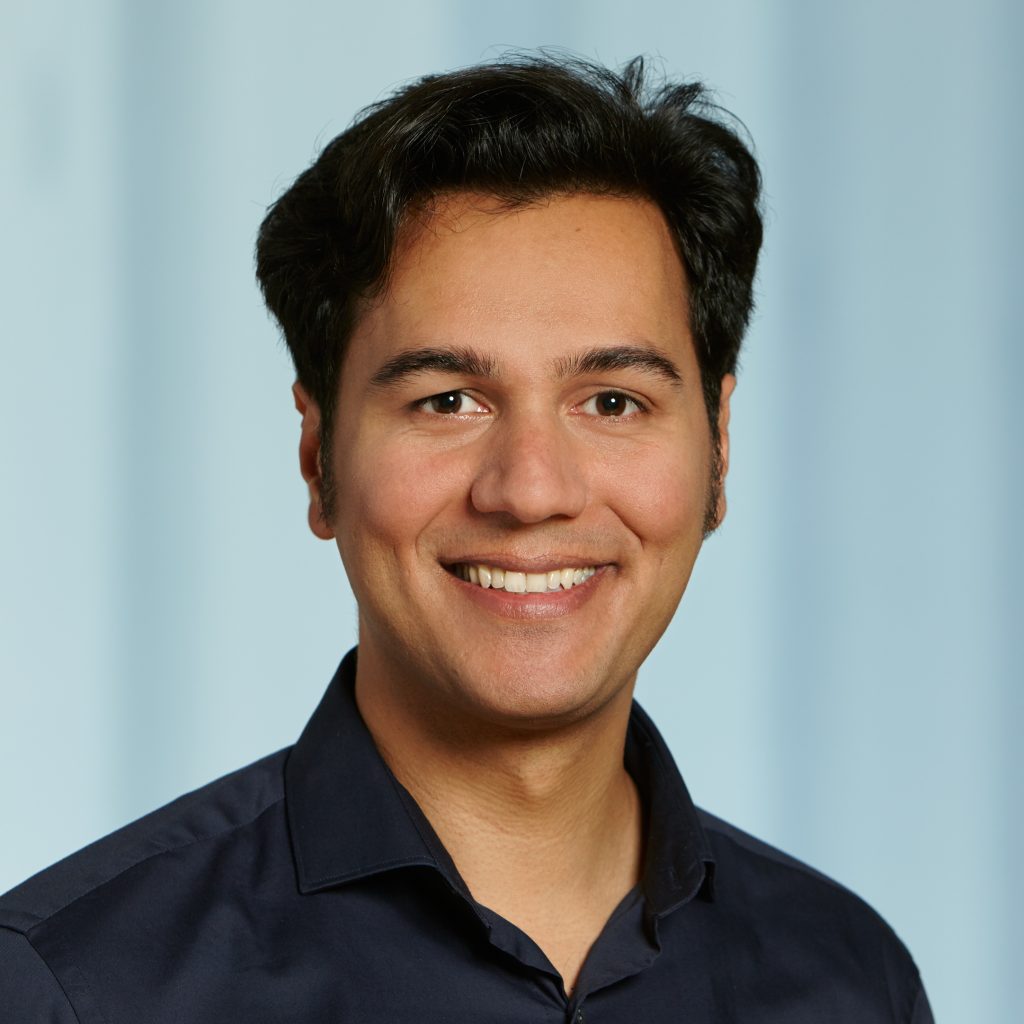
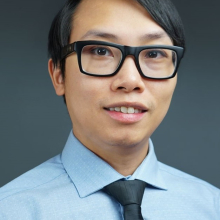
Kaveh Razavi is an Assistant Professor at ETH Zurich in the Department of Information Technology and Electrical Engineering, supervising the Computer Security Group. He is also affiliated with the Department of Computer Science. Research focuses on commodity hardware and operating systems security Teaching: Computer Engineering (BSc 2022–2025), Hardware Security (MSc 2016–2025), Advanced Operating Systems (MSc 2016–2019) Research Interests: Razavi's work bridges computer systems and security, emphasizing microarchitectural vulnerabilities, hardware exploitation, and security verification. His group develops tools for analyzing hardware-software interactions and mitigating memory attacks like Rowhammer. Scientific Awards: Distinguished/Best Paper Awards at IEEE S&P, USENIX Security, MICRO Five Pwnies Awards for innovative research Dutch Veni Grant, ERC Starting Grant Jochen Liedtke Young Researcher Award Golden Owl Teaching Award (2022) ETH Medal, Intel Bounty Reward, BlackHat USA Recognition
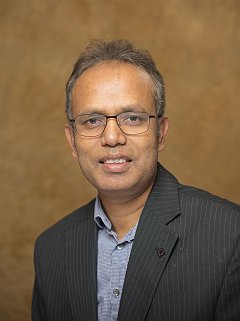
Mariano Scazzariello is a Lecturer at KTH Royal Institute of Technology, Sweden, affiliated with the School of Electrical Engineering and Computer Science and the Department of Network and Systems Engineering. He teaches the course 'Network Systems with Edge or Cloud Datacenters (IK2227)'. His research focuses on advanced networking topics including machine learning in networks, high-speed packet processing, network emulation, and software-defined networking innovations. His work spans contributions to network emulation tools like Kathará and Megalos, stateful packet processing at terabit scales, and leveraging large language models (LLMs) for network configuration and vulnerability detection. Recent research emphasizes low-latency protocols (e.g., SRv6/DetNet integration) and GPU-centric networking on commodity hardware. Mariano’s publications (2020–2025) highlight expertise in network function virtualization, ASIC-based switching, and optimizing network configurations through AI-driven approaches. He has pioneered frameworks for evaluating routing protocols and virtualizing large network scenarios at scale.
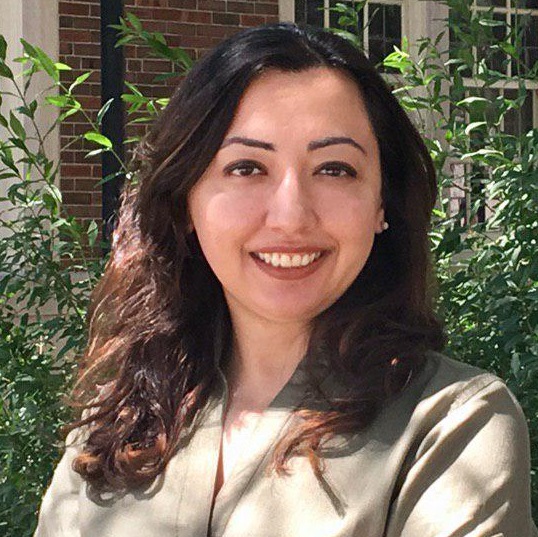
Sishuai Gong is an Assistant Professor in the Department of Computer Science at the University of North Carolina at Chapel Hill, focusing on system reliability and security. His research bridges machine learning, software engineering, and computer architecture to address challenges in large-scale software systems. Education : Ph.D. in Computer Science from Purdue University (2025), B.S. in Computer Science from the University of Science and Technology of China (2019). Research Interests : System reliability and security, kernel concurrency testing, verified security modules, and machine learning for systems. He develops interdisciplinary techniques to identify and mitigate functional interference bugs in OS virtualization and latency-sensitive applications. Scientific Awards : Jay Lepreau Best Paper Award at OSDI (2024) Google Cloud Research Innovator (2024) Bilsland Dissertation Fellowship at Purdue (2024) Teaching : Offering COMP 790: Reliable and Secure Systems (Fall 2025) with a focus on empirical studies, static/dynamic analysis, and machine learning for systems. Course grading includes paper presentations (30%), class participation (30%), and research projects (40%).
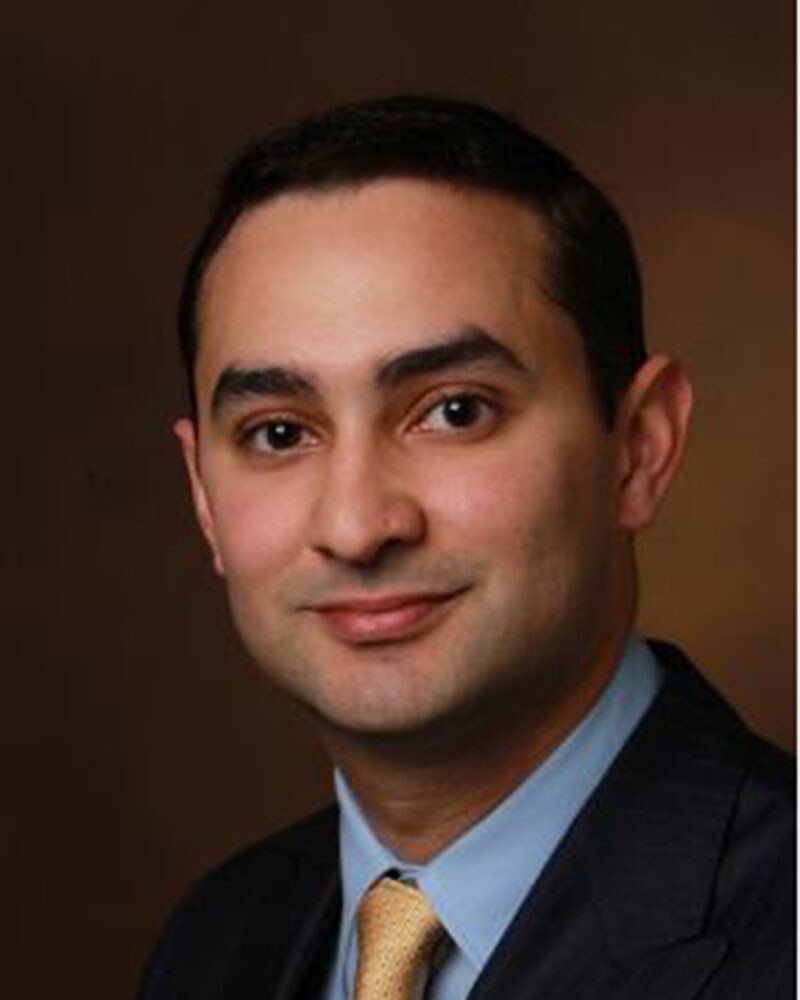
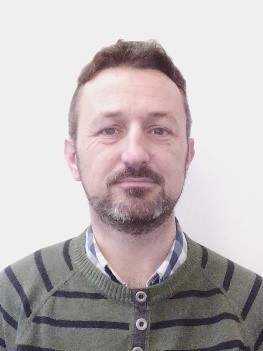
Deian Stefan is an Associate Professor at the University of California San Diego (UCSD) in the Department of Computer Science and Engineering . His research spans security , programming languages , and systems , with a focus on building principled and practical secure systems. He has served as a co-founder and Chief Scientist at Intrinsic (acquired by VMWare) and contributed to standards bodies like the W3C WebAppSec and Node.js Security Working Groups . His research interests include: Secure Systems : Web frameworks, browser designs, sandboxing, runtime systems Language-Based Security : Constant-time programming, memory safety, information flow control Verification : Security verification, static/symbolic analysis tools WebAssembly and JavaScript JITs security Deian Stefan has received multiple scientific awards , including several Distinguished Paper Awards at venues like POPL, ICFP, and USENIX Security, as well as the IEEE Cybersecurity Award for Practice (2022) and CSAW 2020 First Place for Applied Research. He has taught courses on Computer Security (CSE 127, CSE 227) and advanced topics in Building Secure Systems (CSE 291) using Rust, WebAssembly, and blockchain security. His work has been supported by collaborations with industry and academia, including projects like RLBox and COWL .
Debjit Pal is a Post-Doctoral Associate at the School of Electrical and Computer Engineering, Cornell University, and a member of the Computer Systems Laboratory. His research focuses on machine learning techniques for hardware verification, SoC validation, and FPGA optimization. Education: Ph.D. in Computer Engineering (University of Illinois at Urbana-Champaign, 2019) M.S. in Computer Science (IIT Kharagpur, 2012) B.E. in Electronics Engineering (Jadavpur University, 2008) Research Interests: Machine Learning for Electronic Design Automation (EDA) System-on-Chip (SoC) Verification Edge Intelligence as a Service Compiler Optimizations for Reconfigurable and High-Performance Computing Scientific Awards: IEEE CEDA Student Research Award (2016) Best Paper Nomination (ICCAD 2015, DAC 2018, ASP-DAC 2019) E. J. McCluskey Best Doctoral Thesis Competition Semi-Finalist (2020) Travel Grants for ICCAD/DAC/ASPDAC (2018-2019) Professional Roles: Technical Program Committee Member (DAC, VLSID), Reviewer (IEEE TVLSI, DATE, ICCAD). Collaborates with researchers like Zhiru Zhang and Shobha Vasudevan.
Caroline Lemieux is an Assistant Professor at the Department of Computer Science, University of British Columbia (UBC), with research focused on advancing software correctness, security, and performance through innovative testing and synthesis techniques. Her work bridges Programming Languages and Software Engineering , particularly in fuzz testing, specification mining, and program synthesis. PhD from University of California, Berkeley (2021), advised by Koushik Sen Postdoctoral researcher at Microsoft Research, NYC (2021-2022) Key contributions: FuzzFactory , CodaMOSA , Arvada , and Gauss Her research integrates machine learning with traditional testing methods, exemplified by projects like RLCheck (reinforcement learning for test generation) and AutoPandas (neural synthesis for dataframes). Recent publications analyze generator-based fuzzing challenges and propose hybrid strategies combining coverage feedback with AI-driven insights. Scientific Awards : ACM/SIGSOFT Best Paper Award (ESEC/FSE 2019) ACM/SIGSOFT Tool Demonstration Award (ISSTA 2019) ACM/SIGSOFT Distinguished Artifact Award (ISSTA 2019) NSERC Postgraduate Scholarship-Doctoral (PGS D) UBC Governor General's Silver Medal (2016) Teaching roles include: 2025W2: CPSC 539L - Topics in Programming Languages 2024W2: CPSC 410 - Advanced Software Engineering 2023W2: CPSC 410 (with Alex Summers) She supervises graduate and undergraduate researchers working on projects like ExploTest (automated unit test generation) and GRIMOIRE (grammar extraction from pseudo-rules). Her research team collaborates with institutions including Microsoft Research, Google, and academic partners in systems security and AI-driven testing.
Daniel Balasubramanian is an Adjunct Associate Professor of Computer Science and Research Scientist at Vanderbilt University's School of Engineering. His research focuses on cybersecurity, software verification, and cyber-physical systems, with expertise in symbolic execution, code analysis, and formal methods. He contributes to advancing secure systems through frameworks like RAMPART for adversarial defense and Syntheto for formal verification. His work intersects edge computing, hardware security, and autonomous systems resilience. Research Interests: Cybersecurity (including ethical hacking, network defense), formal methods (verification, theorem proving), edge computing (tinyML, cloud integration), and cyber-physical systems (emulation, testbeds). His recent work emphasizes assurance provenance in software documentation and adversarially robust autonomous systems. Publications since 2019 highlight contributions to cybersecurity testbeds, reinforcement learning for penetration resistance, and hardware security against rowhammer attacks. He has explored domain-specific languages (Syntheto), incremental modeling techniques (differential-formula), and cloud-edge service resilience against adversarial perturbations. Labs/Teams: Affiliated with the Institute for Software-Integrated Systems (ISIS), focusing on integrating software with physical systems through model-driven approaches and cybersecurity innovations.
Stefania Dumbrava is an Associate Professor of Computer Science at ENSIIE (École Nationale Supérieure d'Informatique pour l'Industrie et l'Entreprise) and a permanent member of the ACMES team in the SAMOVAR laboratory at Télécom SudParis, Institut Polytechnique de Paris. She is also actively involved in the Property Graph Schema Working Group and the European Research Network on Formal Proofs (EuroProofNet). Education PhD in Computer Science, Université Paris-Sud (2016) MSc in Computer Science, Jacobs University Bremen (2012) BSc in Mathematics, Jacobs University Bremen (2010) Research Interests Dumbrava's research lies at the intersection of formal methods and data management . She designs and verifies algorithms and systems for graph databases , with emphasis on property graphs , schema discovery , query optimization , and distributed graph processing . Recently, her work focuses on certifying large-scale distributed graph systems under the ANR JCJC VERDI project (2025–2029). Awards & Honors SIGMOD Best Paper Award 2023 – “PG-Schema: Schemas for Property Graphs” SIGMOD Research Highlight Award 2023 – “Threshold Queries” VLDB 2022 Best Regular Research Paper Runner-Up – “Threshold Queries in Theory and in the Wild” SIGMOD 2025 Distinguished Reviewer Award ICDE 2025 Best Program Committee Member Award EASST Best Software Science Paper Award, ICGT 2025 Students & Grants Dumbrava has supervised numerous research interns and is actively recruiting PhD students for her ANR VERDI project on verified foundations of large-scale distributed graph systems. She has also served on six PhD thesis committees as examiner since 2021. Labs & Teams She leads the ACMES research group within the SAMOVAR laboratory (Télécom SudParis, Institut Polytechnique de Paris), where her team develops formally verified graph-database engines and tools such as GRASP, VerDILog, and DatalogCert.
Andrew Rice is a Professor of Computer Science at the University of Cambridge's Department of Computer Science and Technology, and holds the Hassabis Fellowship in Computer Science. He is also the Director of Studies in Computer Science at Queens' College. His research focuses on programming languages, software engineering, and machine learning applications in software development. He leads projects like Isaac Computer Science and ALTA (Automated Language Teaching and Assessment), advancing adaptive learning technologies. His work includes static analysis tools such as Error Prone at Google, energy efficiency studies in computing infrastructure, and contributions to the Computing for the Future of the Planet initiative. His teaching emphasizes practical skill development through flipped classrooms and video lectures, earning him the 2014 Pilkington Prize for teaching excellence. He has held visiting roles at Google and collaborated on energy consumption research for mobile devices and data centers. His research spans systems, networking, and natural language processing, with a strong focus on applying computational methods to real-world challenges. Key Projects: Isaac Physics/Computer Science, ALTA, Error Prone Static Analysis Research Themes: Programming Languages, Machine Learning, Energy Efficiency Awards: Pilkington Prize (2014)
Haryadi S. Gunawi is a Professor in the Department of Computer Science at the University of Chicago where he leads the UCARE research group (UChicago systems research on Availability, Reliability, and Efficiency). His work focuses on improving the dependability of storage and cloud computing systems, with a particular emphasis on addressing performance stability, reliability, and scalability challenges in modern computing environments. Dr. Gunawi received his Ph.D. in Computer Science from the University of Wisconsin, Madison in 2009. Following his doctoral studies, he was a postdoctoral fellow at the University of California, Berkeley from 2010 to 2012 before joining the University of Chicago faculty. His research focuses on three main areas: (1) performance stability, where he builds storage and distributed systems robust to latency tails and "limping" hardware; (2) reliability and scalability, where he addresses concurrency and scalability bugs in cloud-scale distributed systems; and (3) the intersection of machine learning and systems, exploring how machine learning techniques can solve operating and storage system problems. His work often combines theoretical insights with practical system implementations that address real-world challenges in cloud and storage infrastructure. Dr. Gunawi's publication record shows a consistent focus on storage and cloud system reliability, with recent work increasingly incorporating machine learning techniques to address traditional systems challenges. His research spans the full stack from hardware interfaces to distributed system design, with a strong emphasis on practical solutions that can be deployed in production environments. His work often involves close collaboration with industry partners to ensure real-world relevance and impact. Dr. Gunawi has received numerous prestigious awards including the NSF CAREER award, NSF Computing Innovation Fellowship, Google Faculty Research Award, multiple NetApp Faculty Fellowships, and an Honorable Mention for the 2009 ACM Doctoral Dissertation Award. He has also received the Provost's Global Faculty Award and Facebook Faculty Research Award, highlighting the broad recognition of his contributions to the field. As an advisor, Dr. Gunawi has mentored several PhD students including Ruidan Li, Ray Andrew, Rani Ayu Putri, and William Nixon. His research has been supported by major grants from NSF, Google, Facebook, and NetApp, enabling his team to pursue ambitious research projects at the intersection of systems, storage, and machine learning. Dr. Gunawi leads the UCARE research group at UChicago, which focuses on improving the dependability of storage and cloud-scale distributed systems. He is also involved with the Chameleon cloud research infrastructure project and the broader Systems Group at UChicago, contributing to a vibrant research community focused on systems, programming languages, and software engineering.
Prof. Alexander Pretschner is a Professor of Software & Systems Engineering at the Technical University of Munich (TUM) and Founding Director of the Bavarian Research Institute for Digital Transformation (bidt). He also serves as Scientific Director of fortiss, a Bavarian research institute for software-intensive systems. His research focuses on software engineering, testing, information security, and ethical software development. Pretschner holds a PhD from TUM and has held academic positions at Karlsruhe Institute of Technology (KIT) and TU Kaiserslautern. He is a co-editor of several prestigious journals, including IEEE Transactions on Reliability and the Journal of Software Testing, Verification and Reliability. Education: PhD in Computer Science, Technical University of Munich MSc in Computer Science, University of Kansas (on Fulbright Scholarship) Diplom in Computer Science, RWTH Aachen University Research Interests: His work spans testing methodologies, secure software design, and ethical considerations in agile development. Notable contributions include frameworks for metamorphic testing, distributed data usage control, and accountability mechanisms for cyber-physical systems. Awards: IBM Faculty Award (2012, 2013) Google Focused Research Award (2011, 2012) EARTO Innovation Prize (2014) 2nd Platz Supervisory Award (2020) Advising & Grants: Pretschner has supervised numerous PhD and Master’s students, contributing to over 200 publications. He leads projects like EDAP (Ethical Deliberation in Agile Processes) and collaborates with industry partners on cybersecurity and AI ethics initiatives. Labs & Teams: His work is anchored in bidt, fortiss, and TUM’s Chair of Software & Systems Engineering, focusing on societal impacts of digitalization and trustworthy AI systems.
Dr. Steven H. H. Ding is an Assistant Professor at McGill University's School of Information Studies, specializing in cybersecurity, machine learning, and data mining. His research focuses on AI-driven solutions for malware detection, software vulnerability analysis, and reverse engineering. He holds a PhD from McGill University and has been supported by BlackBerry Cylance and DRDC. His work bridges theoretical advancements with practical applications in military systems and avionics cybersecurity. Dr. Ding earned his PhD in 2019 with notable awards including the FRQNT Doctoral Research Scholarship and McGill's Dean’s Graduate Award. His educational background includes degrees from McGill, Concordia University, and the University of Shanghai for Science and Technology. His research interests span cybersecurity domains such as zero-day malware identification, code obfuscation countermeasures, authorship verification for digital forensics, and AI applications in avionics anomaly detection. He actively contributes to open-source tools like the Kam1n0 MapReduce-based assembly clone search system. Recent work emphasizes adversarial machine learning for evasive malware generation, transformer-based anomaly detection in avionics, and automated SBOM generation for firmware analysis. His publications reflect a focus on real-world cybersecurity challenges in both civilian and defense sectors. Dr. Ding leads the L1NNA Lab and collaborates with industry partners on cutting-edge projects. His contributions include novel techniques for phishing detection leveraging large language models and innovative approaches to reverse engineering software composition in JavaScript applications.
Chanchal K. Roy is Professor of Software Engineering/Computer Science at the University of Saskatchewan and Co-Director of the Software Research Lab. He leads an NSERC CREATE graduate program on Software Analytics Research and co-leads the Data Management group for an NSERC CFREF project on Food Security, with over 170 publications cited 6,000+ times. His research centers on software clone detection using the widely adopted NICAD system, software evolution, empirical studies, and AI-driven software analytics. Recent work integrates large language models for code generation, clone detection in the AI era, and developer interactions with tools like ChatGPT, emphasizing practical applications in maintenance and analytics. Analysis of his 15 most recent publications reveals a strong trend toward AI/ML integration in software engineering: 12 of 15 articles (2025) explore LLMs, quantum computing, or deep learning for tasks like bug localization, code snippet generation, and feature-toggle analysis. Key themes include empirical validation of AI tools, Stack Overflow data mining, and cross-domain frameworks for Society 5.0. His scientific awards include: Most Influential Paper Awards (SANER 2018, ICPC 2018) Outstanding Young Computer Science Researcher Award (CS-Can/Info-Can, 2018) New Researcher Award (University of Saskatchewan, 2019) New Scientist Research Award (College of Arts and Science, 2019) As lead of the NSERC CREATE program and CFREF data group, he mentors graduate students in software analytics while securing major grants. He actively serves on program committees for ASE, ICSE, and FSE, reviewing journals and organizing workshops on clone detection and empirical methods. His lab focuses on real-world applications in food security data management and software evolution. The Software Research Lab, co-directed by Roy, drives projects like NICAD and the NSERC CREATE initiative, emphasizing open-source contributions and industry collaboration. Current efforts include quantum-SE integration and AI-augmented maintenance tools under the CFREF food security mandate.
Zohreh Sharafi is an Assistant Professor of Software Engineering in the Department of Computer and Software Engineering (GIGL) at Polytechnique Montréal. Previously, she served as a Senior Research Fellow in the Department of Electrical and Computer Engineering at the University of Michigan, Ann Arbor, where she worked with Dr. Westley Weimer and was awarded the prestigious NSERC Postdoctoral Fellowship. Prior to her academic career, she worked as a software engineer at Morgan Stanley, contributing to the firm's electronic trading platform and serving as principal architect of SURF, a market data simulator. Her educational background includes a Ph.D. in Computer Engineering from École polytechnique de Montréal under the supervision of Dr. Giuliano Antoniol and Dr. Yann-Gaël Guéhéneuc, a Master of Applied Science in Software Engineering from Concordia University, and a Bachelor of Computer Engineering from the University of Tehran. Dr. Sharafi leads the SENSE Lab, a multidisciplinary software engineering research laboratory focused on understanding problem-solving strategies developers use during software development, with particular attention to human factors such as gender and native language. Her research combines human-centric design with experimental methodologies, investigating cognitive processes involved in software development using biometric measures including eye tracking and neuroimaging. Current active projects include evaluating trustworthiness perceptions of software artifacts and studying the role of creativity in software engineering tasks. She has made significant contributions to understanding how gender influences program comprehension and code review processes. Her publication record demonstrates a strong focus on empirical methods in software engineering, particularly eye tracking and neuroimaging techniques to study developer cognition. Her work spans program comprehension, code review, requirements engineering, and the impact of human factors on software development processes. She has developed methodological frameworks for conducting eye tracking studies in software engineering and has made notable contributions to understanding how visualization techniques affect software development tasks. NSERC Postdoctoral Fellowship NSERC Discovery Grant Program and Launch Supplements (Sep 2024-Sep 2029) IVADO Startup & Operation Fund (Jan 2022-Jan 2023) Scholarship for Doctoral Studies from Fonds de Recherche du Quebec Distinguished Reviewer Awards from IEEE ICPC 2020 and ACM FSE 2024 Dr. Sharafi actively mentors students including Mahta Amini (PhD Candidate, IVADO Scientifique en résidence 2024 Laureate), Cameron Cherif (PhD Candidate), Sara Yabesi (Master's Student), and Anthonia Njoku (Graduate research intern). She serves on numerous conference organizing committees including as Local Arrangement Chair for SANER 2025, Program Co-chair for SEMLA 2024, and as a reviewer for top-tier journals including IEEE Transactions on Software Engineering and ACM Computing Surveys. Her research is supported by multiple grants focused on understanding human factors in software engineering through empirical methods. At Polytechnique Montréal, Dr. Sharafi directs the SENSE Lab which brings together computer scientists, cognitive scientists, and software engineering researchers to investigate the cognitive aspects of software development. The lab employs advanced methodologies including eye tracking, functional near-infrared spectroscopy (fNIRS), and functional magnetic resonance imaging (fMRI) to study how developers comprehend, navigate, and modify software systems. Current projects examine trustworthiness perceptions in code review, the role of creativity in software engineering tasks, and gender differences in software development processes.
Professor Eric Morgan at Queen's University Belfast leads parasitology research in the School of Biological Sciences , focusing on climate-driven epidemiology of parasitic infections in animals. His work integrates predictive modeling, parasite transmission dynamics at the wild-domestic interface, and sustainable livestock health solutions. Veterinary parasitology and climate change impact Anthelmintic resistance mitigation strategies AI-enhanced diagnostic systems for animal health Current research students include Anthony George, who investigates Combining alternative approaches for helminth control in grazing livestock . Public engagement initiatives like the BUG Consortium and Poo Patrol translate findings into practical parasite management. His recent publications in 2025 address topics like flood reactors, zoonotic toxocariasis, and precision agriculture tools for parasite risk assessment.