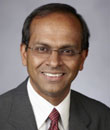
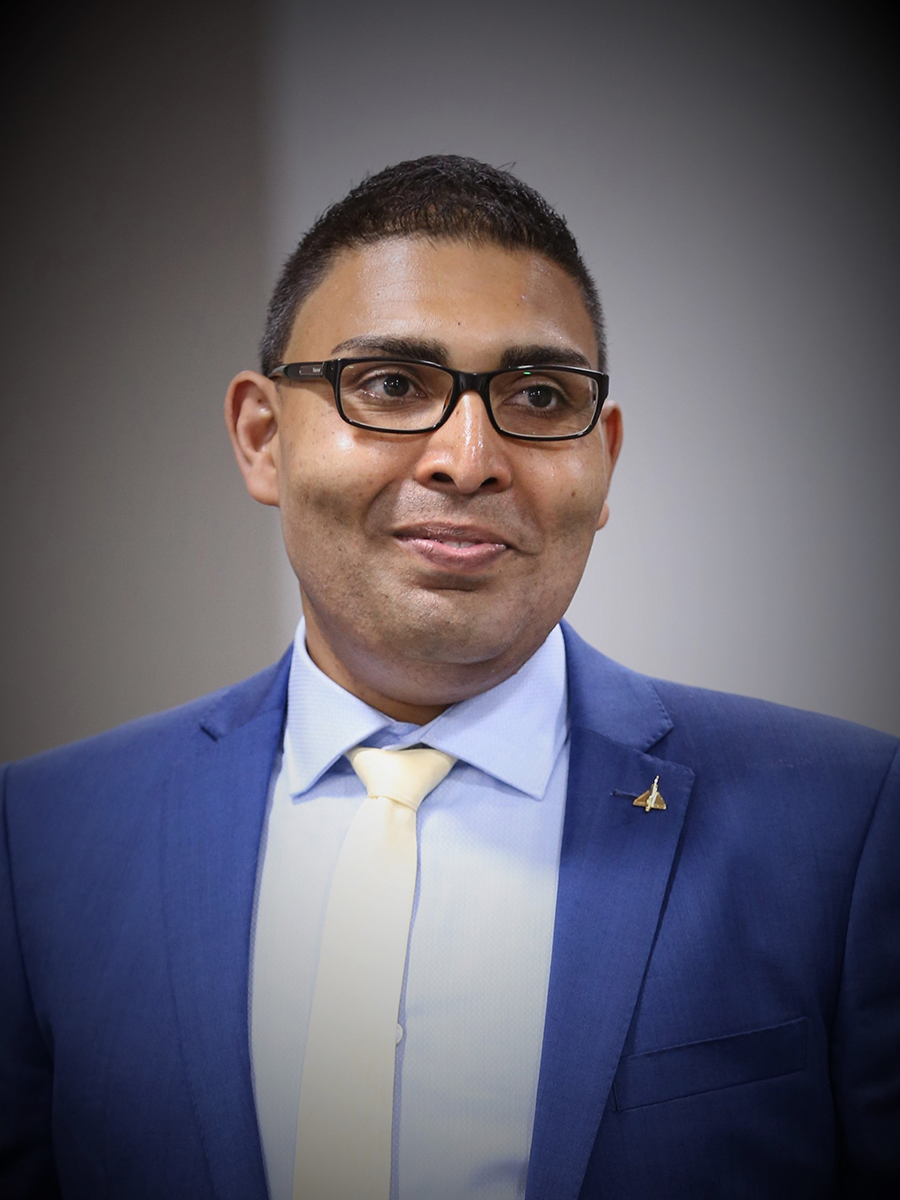
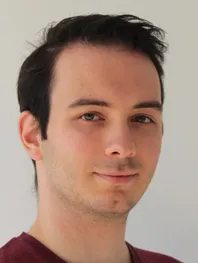
Prof. Gunther Cornelissen is a Professor of Fundamental Mathematics and Academic Director at the Mathematical Institute of Utrecht University's Faculty of Science. His research focuses on algebraic and arithmetic geometry, automorphic forms, number theory, noncommutative geometry, and mathematical physics, with a thematic emphasis on Foundations of Complex Systems. He led the Utrecht Geometry Centre (2014–2020), a graduate program funded by NWO to support four PhD candidates in geometry. Cornelissen teaches advanced courses like Fields and Galois theory and serves as editor for Indagationes Mathematicae (Dutch Royal Mathematical Society). His professional roles include membership in the Royal Holland Society of Sciences (KHMW) and the ESF College of Expert Reviewers. His research integrates algebraic methods with dynamical systems, spectral geometry, and quantum statistical mechanics. Recent work explores isospectrality, endomorphisms of algebraic groups, and applications of automata theory to group structures. Cornelissen’s projects often bridge pure mathematics with computational methods, such as polynomial-time graph recognition algorithms and stable gonality analysis.
Dr. Denis Kleyko is a Visiting Research Fellow at La Trobe University's Business Analytics department. His work focuses on neuromorphic computing, hyperdimensional computing, and neuro-inspired algorithms. He has contributed to frameworks like NeuroBench for benchmarking neuromorphic systems and authored comprehensive surveys on vector symbolic architectures. Key research interests include neuromorphic reservoir computing, sparse randomized embeddings, and cognitive mapping through neural circuits. His publications span journals such as Nature Communications and IEEE Transactions, emphasizing interdisciplinary approaches in machine learning and neuroscience. Collaborations include international teams addressing challenges in seizure prediction, compositional learning, and high-dimensional data processing. Notable outputs include foundational work on HyperSEED and efficient optimization using Ising machines.
Dr Daniel Loughran is an Associate Professor (Reader) in the Department of Mathematical Sciences at the University of Bath. His research focuses on the interface of number theory and algebraic geometry, with a particular emphasis on rational points, Hasse principles, abelian varieties, and arithmetic statistics. He leads several funded projects, including the FLF Geometric Analytic Number Theory (UK Research & Innovation, 2021–2025) and the Great Western Number Theory Seminar (London Mathematical Society, 2022–2024). He has supervised doctoral students and actively engages in academic activities, including conference presentations and school governance roles. Key research areas include the distribution of rational points on algebraic varieties, arithmetic properties of moduli spaces, and the application of sieve methods. Notable recent contributions include studies on bad reduction distributions, cyclic covers, and genus numbers of abelian extensions. Loughran received the University of Bath Doctoral Recognition Award 2024 for his academic contributions. His work spans collaborations across multiple countries and involves interdisciplinary approaches combining algebraic geometry, number theory, and probabilistic methods. Projects like the Arithmetic Statistics and Local-Global Principles conference (2021) highlight his role in fostering international research networks.
Cangxiong Chen is a Researcher at the Institute for Mathematical Innovation (IMI), University of Bath. Prior to this, he worked in startups in Cambridge, UK, and Beijing, China, applying machine learning and statistical methods to consumer behavior modeling, pricing strategies, and recommendation systems. He holds a PhD in Number Theory from the University of Cambridge (2017), an MPhil in Mathematics from the University of Hong Kong (2011), and a Bachelor’s degree from the same institution. His research focuses on advancing the mathematics of machine learning, particularly in designing algorithms with privacy, fairness, robustness, and generalisability. He explores topics like differential privacy in image/video processing, training data leakage prevention, and collective intelligence systems. Education: • Doctor of Philosophy in Mathematics, University of Cambridge (2011–2016) • Master of Philosophy in Mathematics, University of Hong Kong (2009–2011) • Bachelor’s degree in Mathematics, University of Hong Kong His research interests span the theoretical foundations of machine learning, with a focus on privacy-preserving techniques such as differential privacy. He investigates robust algorithms for image and video processing, leveraging compressed sensing and dynamical systems. Additionally, he contributes to collective intelligence research, exploring how AI can enhance large-scale problem-solving and interdisciplinary collaboration. His work bridges pure mathematics (e.g., number theory) with applied domains like cybersecurity and social computing. In his recent projects, he has analyzed vulnerabilities in models like CLIP, studied leakage via gradients in neural networks, and developed strategies for AI-driven collective intelligence. These studies highlight his commitment to advancing both ML theory and its practical applications in diverse fields. Grants and Collaborations: Chen has contributed to seven research projects, including those funded by UKRI, EPSRC, and the Advanced Research and Inventions Agency. Notable roles include Researcher Co-Investigator (CoI) in projects like 'A New Analytical Framework for Dexterous Soft Robotic Manipulators' and 'AI for Collective Intelligence (AI4CI)’. He collaborates with interdisciplinary teams on topics ranging from soft robotics to policy strategy, emphasizing real-world impact through UK and international partnerships. Labs and Teams: Affiliated with the Institute for Mathematical Innovation at the University of Bath, he engages with collaborative teams across multiple disciplines, including artificial intelligence, data science, and mathematical modeling. His work often intersects with industry needs, as evidenced by his startup experience and ongoing projects in applied ML.
C Giuffrida is an Associate Professor at the Faculty of Science, Vrije Universiteit Amsterdam, with affiliations to the Network Institute and the Systems and Network Security group. His research focuses on computer systems security, hardware vulnerabilities, and software reliability. Giuffrida holds a PhD in Computer Systems from Vrije Universiteit Amsterdam (2014). His academic contributions span multiple areas including transient execution attacks, fuzzing techniques, and hardware-software co-design for security. Research Interests: Hardware Security: Investigating vulnerabilities like Spectre, Rowhammer, and speculative execution risks. Software Security: Focusing on memory safety, compiler optimizations, and exploit mitigation strategies. Systems Research: Developing tools like BinRec for binary analysis and VPS for C++ vulnerability protection. His work has been recognized with awards such as the Distinguished Paper Award in 2021. Giuffrida supervises advanced courses in operating systems and hardware security, and has guided 16 PhD theses to completion.
Rama Venkat is a Professor in the Department of Engineering at the University of Nevada, Las Vegas. He holds a B.Tech. from the Indian Institute of Technology, Madras, and an M.S. & Ph.D. from Purdue University. His expertise spans electronic materials, sensors and devices, process and device modeling, and microelectronics. His research focuses on semiconductor materials, thermoelectric properties, and nanotechnology applications. Education: B.Tech., Indian Institute of Technology, Madras M.S. & Ph.D., Purdue University Research interests include molecular beam epitaxy (MBE) growth modeling, thin film materials, and energy-efficient optoelectronic devices. His work bridges theoretical modeling with experimental validation in semiconductor fabrication and device physics. Notable contributions address structural stability under high pressure, thermoelectric material optimization, and nanocrystal memory cell dynamics. Publications span topics from number theory algorithms to semiconductor device engineering, reflecting interdisciplinary strengths. His recent work emphasizes algorithmic solutions for mathematical conjectures alongside materials science advancements. No scientific awards are explicitly listed, but his extensive publication record indicates sustained research impact. He has advised no students listed here, and no grants are detailed in the provided information. Labs/teams: While not explicitly named, his affiliations suggest involvement with UNLV's engineering laboratories focused on nanomaterials and device fabrication.
Dr. Ajit Panesar is an Associate Professor (Reader) in Computational Design for Advanced Manufacturing at Imperial College London's Department of Aeronautics, leading the IDEA Lab. His work focuses on leveraging machine learning, optimization, and additive manufacturing (AM) to address challenges in aerospace, automotive, biomedical, and energy sectors. He has authored over 40 publications, including a book chapter in the ASM Handbook Vol 24B, with an h-index of 17. He holds a key role in the EPSRC-funded DfAM network as leader of the 'Computational Tools' research theme. His research includes collaborations with industry and academic partners, securing funding from both sectors. His group explores topics such as topology optimization for battery electrodes, ML-driven design frameworks, and multifunctional composites. Research interests span computational design of metamaterials, ML integration in AM processes, structural power composites, and topology optimization for biomedical implants. His team has pioneered methods like physics-informed neural networks for thermal simulation in AM and latent-space arithmetic for transitioning lattice structures. Collaborations include TWI Ltd, Shell, and institutions like the University of Birmingham and Hamburg University of Applied Sciences. Dr. Panesar’s work emphasizes practical impact, with applications in sustainable energy storage, lightweight aerospace components, and additive manufacturing advancements. Scientific contributions include advancements in structural supercapacitors, functionally graded materials (FGMs), and cold spray systems for in-space manufacturing. His group’s experimental and computational work bridges gaps between design and manufacturing, aiming to enhance material performance and reduce environmental impact. Recent efforts focus on multi-objective optimization frameworks and scaling structural power composites for real-world applications. Advising and grants: Dr. Panesar has mentored numerous PhD students and postdoctoral researchers in projects ranging from battery electrode design to AM process optimization. His grants include EPSRC funding and industry partnerships. The IDEA Lab collaborates with Imperial’s Composite Centre and Space Engineering Lab, fostering interdisciplinary innovation. Labs/Teams: The IDEA Lab is a hub for cutting-edge research in design and advanced manufacturing, emphasizing collaborations and industry-relevant outcomes. Current initiatives include structural power composites, topology-optimized biomedical implants, and ML-driven AM design tools.
Alessandro Favero is a Researcher and Doctoral Assistant at the École Polytechnique Fédérale de Lausanne (EPFL), affiliated with the Physics of Complex Systems Laboratory (PCSL) and the Signal Processing Laboratory 4 (LTS4). He is pursuing a Doctoral Program in Physics within the School of Basic Sciences (SB). His research focuses on the theoretical foundations of machine learning, particularly in diffusion models, neural network architectures, and computational complexity. Key research interests include the study of hierarchical data structures, compositional generalization in models, and the interplay between model architecture and learning dynamics. His work bridges machine learning and statistical physics, analyzing phenomena such as phase transitions in diffusion models and the behavior of infinitely-wide networks. Recent contributions explore topics like overparameterization effects, layer scaling techniques, and multimodal hallucination control. His publications emphasize understanding fundamental limitations and empirical phenomena in deep learning systems, with applications ranging from natural language processing to image analysis. While no awards or grants are explicitly listed, his active involvement in multiple EPFL labs highlights collaborative research efforts. He maintains an academic presence through his GitHub profile and the PCSL lab website.
Marc Marot-Lassauzaie is a Research Associate at the Chair of Scientific Computing in Computer Science (SCCS), Technical University of Munich (TUM). He holds an M.Sc. in Computational Science and Engineering (2020) and a B.Sc. in Engineering Sciences (2018), both from TUM. His research focuses on HPC software engineering, algorithm efficiency optimization, and large-scale simulations. He currently contributes to the Exahype software project and explores mixed-precision algorithmics for high-order methods like the ADER-DG algorithm. His work emphasizes improving computational performance and numerical stability in scientific simulations. Teaching activities include leading the Master-Praktikum on Scientific Computing and High-Performance Computing in Winter 2021. He has presented research at conferences such as PASC24, focusing on the impact of numerical precision in high-order methods. His technical expertise includes software development for large-scale simulations and collaboration on exascale computing initiatives.
Justin Tatch Moore is a Professor in the Department of Mathematics at Cornell University's College of Arts and Sciences. He holds his office in Malott Hall and has been an active member of the mathematics faculty since completing his Ph.D. at the University of Toronto in 2000. Moore's research spans several areas of mathematical logic and its applications: Set theory and infinite combinatorics Applications to topology, functional analysis, and algebra Groups related to piecewise linear homeomorphisms Forcing axioms and the continuum hypothesis Ramsey theory of infinite sets His work has significantly contributed to solving long-standing problems in set theory, including the basis problem for uncountable linear orders and the L space problem from general topology. Moore's research often explores the connections between set theory and other mathematical disciplines, revealing deep structural relationships. Moore serves as an editor for the Archive of Mathematical Logic, handling papers specifically in set theory. His publications demonstrate a consistent focus on foundational questions in mathematics, with recent work exploring connections between large cardinals, Ramsey theory, and geometric group theory. As an educator, Moore teaches courses including Multivariable Calculus, Supervised Research, and a Seminar in Logic. He has supervised numerous graduate students through research and reading courses, contributing to the next generation of mathematical researchers.
Ser Peow Tan is a Professor at the Department of Mathematics, National University of Singapore, specializing in low-dimensional topology and geometric structures. His research explores representation varieties, hyperbolic geometry, and dynamics of group actions. Education: BA from Oxford University (1982), PhD from University of California, Los Angeles (1988) under Bill Goldman and John Millson. Current Affiliation: Department of Mathematics, National University of Singapore (since 1990). His work focuses on hyperbolic surfaces, geometric identities, and group representations, with significant contributions to understanding character varieties and Anosov dynamics. The 15 most recent publications highlight trends in congruence subgroups, orthogeodesic identities, and hyperbolic 3/4-manifold structures.
Professor Mariano Kulish is a Professor of Macroeconomics at the School of Economics, University of Sydney. He holds a PhD in Economics from Boston College (2005) and previously worked at the Reserve Bank of Australia's Economic Research Department. His research focuses on macroeconomics, monetary policy, structural changes, and applied econometrics, with notable contributions to DSGE modeling, zero interest rate policies, and commodity price impacts. Key research themes include analyzing economies undergoing structural shifts, fiscal policy in open economies, and the implications of unconventional monetary policies like yield curve control. His work frequently addresses policy-relevant issues such as disinflation strategies, terms of trade volatility, and the stability of inflation-unemployment relationships. He has secured grants including the Australian Research Council's 2019 Discovery Project on fiscal policy in open economies. His publications span top journals like the Journal of Monetary Economics , Journal of Applied Econometrics , and European Economic Review . Recent work explores fiscal arithmetic in growth slowdowns, international spillovers of monetary policy, and the Dutch Disease hypothesis in commodity-rich economies. Professor Kulish’s research combines theoretical modeling with empirical analysis, emphasizing policy relevance. He maintains an active presence in academic collaborations and policy discussions, reflecting his dual role as a researcher and former central bank economist.
Junpeng Zhan is an Assistant Professor in the Department of Renewable Energy Engineering at the Inamori School of Engineering, Alfred University. He earned his B.S. and Ph.D. in Electrical Engineering from Zhejiang University (2009, 2014). His research focuses on quantum computing, smart grid technologies, and optimization methods, with a particular interest in solving NP-complete problems using hybrid quantum-classical algorithms like the Variational Quantum Search. He has held positions at Brookhaven National Laboratory and the University of Saskatchewan. Education: B.S. (Electrical Engineering, Zhejiang University, 2009), Ph.D. (Electrical Engineering, Zhejiang University, 2014). Research interests include quantum algorithms, machine learning applications in power systems, and renewable energy integration. Current grants include NSF-funded work on variational quantum algorithms for power system simulation and ISO-New England-funded projects on quantum computing for unit commitment. Teaching includes courses like Power System Operation and Python for Power Systems Research. He is an Associate Editor of IET Generation, Transmission & Distribution and has authored over 50 publications.
Dr. Michael Bossé is a Distinguished Professor of Mathematics Education and Director of the Mathematics Education Leadership Training (MELT) program at Appalachian State University's Department of Mathematical Sciences. His work focuses on enhancing K-12 teacher professional development through innovative investigations in mathematics content, pedagogy, and epistemology. He holds a Ph.D. from the University of Connecticut and B.S./M.S. degrees from Southern Connecticut State University. His research emphasizes connections between algebraic and graphical representations, teacher education, and quantitative literacy. Over 100 peer-reviewed publications and 8 authored books reflect his contributions to mathematics education and related fields. Notable works include Sentient Conspiracy (2022) and influential articles addressing student misconceptions in fractions, spatial reasoning in calculus, and technology integration in teacher training. Dr. Bossé has led projects like the MELT program, which provides continuing education credits and professional development to K-12 teachers. His scholarship bridges theoretical frameworks with practical classroom applications, emphasizing dynamic learning environments and cross-disciplinary connections.
Adriana J. Salerno is a Professor of Mathematics at Bates College, currently on leave. She holds a PhD from the University of Texas and a bachelor's degree from Universidad Simón Bolívar in Venezuela. Her research focuses on number theory, particularly intersections with geometry, physics, and cryptography. She is dedicated to fostering inclusivity in STEM through teaching and communication. Salerno has participated in leadership initiatives like the Linton-Poodry SACNAS Summer Leadership Institute and the SACNAS-HHMI Advanced Leadership Institute. She served as a visiting mathematician at the Mathematical Association of America (MAA) in Washington, D.C. (2016) and is a 2023–2024 Program Director at the National Science Foundation (NSF), Algebra and Number Theory Program. She advocates for minority and women representation in mathematics, affiliated with AWM, SACNAS, MAA, and AMS. Education: Bachelor’s: Mathematics, Universidad Simón Bolívar (2001) PhD: Mathematics, University of Texas Research Interests: Her work spans arithmetic dynamical systems, zeta functions, and experimental number theory. She integrates computational methods and explores applications in cryptography. She emphasizes equitable STEM education through outreach and pedagogical innovation. Professional Leadership: Committed to diversity initiatives, she has led programs to increase underrepresented groups in mathematical sciences. Her NSF role (2023–2024) focuses on funding research in algebra and number theory. Contact: Office: Hathorn Hall 206 | Phone: (207) 786-6145 | Twitter: @mathyadriana