- Representation Theory
- Lie Groups
- p-adic Groups
- +۵ مورد دیگر
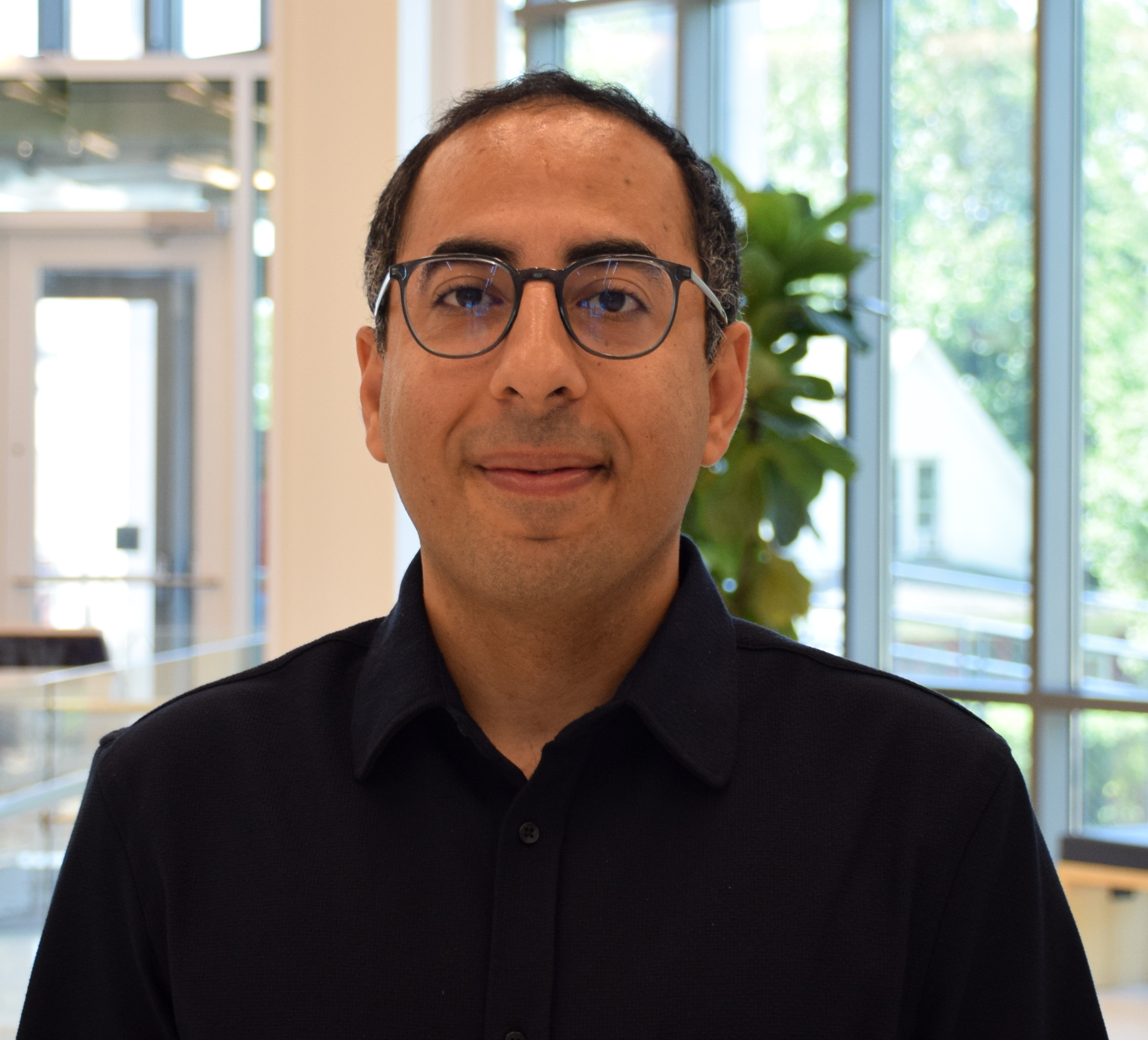
Dan Ciubotaru is Professor of Mathematics at the University of Oxford's Mathematical Institute and Diana Brown Fellow and Tutor in Pure Mathematics at Somerville College. He completed his PhD at Cornell University in 2004 and maintains active research and teaching roles within the university's Mathematical, Physical and Life Sciences Division. His educational background includes: PhD in Mathematics, Cornell University (2004) Ciubotaru specializes in representation theory of reductive Lie groups and p-adic groups, with core focus areas including the unitary dual, local Langlands correspondence, affine Hecke algebras, Coxeter groups, and Dirac operators. His work bridges algebraic structures with harmonic analysis and number theory, particularly through the study of wavefront sets and unipotent representations. This research contributes significantly to understanding automorphic forms and geometric aspects of the Langlands program. Analysis of his 2022-2025 publications reveals concentrated advancement in wavefront set theory for p-adic groups, with recurring themes in unipotent representations, Langlands parameters, and symplectic Dirac operators. His work consistently connects representation-theoretic structures with geometric and arithmetic properties, demonstrating strong collaboration networks across international mathematics communities. His scientific recognition includes: Diana Brown Fellowship (Somerville College) MPLS Teaching Award (2017) Ciubotaru has secured significant research funding as Principal Investigator for EPSRC grants including "New Horizons" EP/V046713/1 (2021-2023) and EP/N033922/1 (2016-2020). He serves on editorial boards for Documenta Mathematica (2015-2024) and Quarterly Journal of Mathematics (2017-present), and teaches advanced courses including "Representations of semisimple Lie algebras" (C2.3). While no dedicated research labs are specified, his extensive co-authorship with scholars like Mason-Brown, Okada, and Barbasch indicates active participation in global representation theory networks, particularly through collaborations on p-adic group representations and Langlands program applications.