Professor Yahya Fathi specializes in optimization and operations research at North Carolina State University. His research includes mathematical programming, production systems, and quality engineering, with applications in manufacturing and data analytics. Awarded multiple teaching excellence honors.
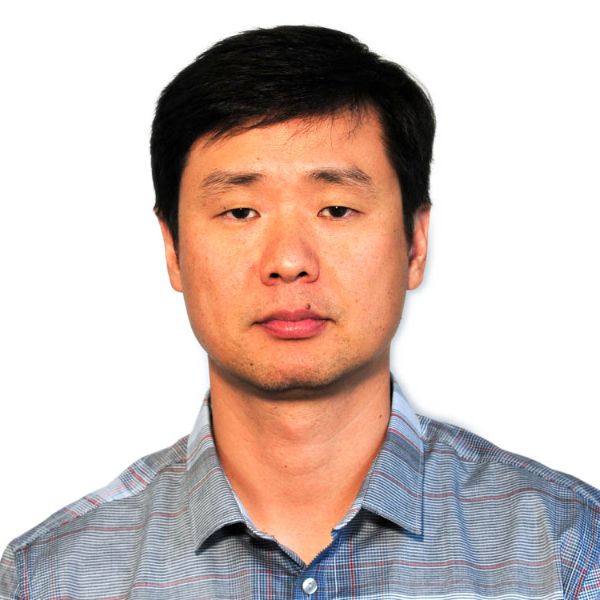
Do Young Eun is a Professor in the Department of Electrical and Computer Engineering at North Carolina State University (NC State), with affiliations in Computer Science and Operations Research. He holds a Ph.D. from Purdue University and M.S./B.S. degrees from KAIST, Korea. His research focuses on distributed optimization for machine learning, network modeling, and algorithms for social/wireless networks, with applications in epidemic analysis and graph analytics. Education: Ph.D. in Electrical and Computer Engineering, Purdue University (2003) M.S. in Electrical Engineering, KAIST (1997) B.S. in Electrical Engineering, KAIST (1995) Research Interests: Distributed optimization and machine learning Network modeling and performance analysis Epidemic modeling and control Graph analytics and social network analysis Stochastic processes and algorithms Highlighted Awards: NSF CAREER Award (2006) Outstanding Paper Award, ICML 2023 Best Paper Awards at IEEE ICCCN (2005), IPCCC (2006), NetSciCom (2015) Best Student Paper Award, ACM MobiCom 2007 Advising & Grants: Current advisees include Jie Hu, Yi-Ting Ma, and Feiya Xiang NSF Grant (2024–2027): 'Toward Maximally Efficient Sampling and Optimization for Decentralized Learning' Supervised over 10 Ph.D. students, many in academic or industry leadership roles Labs/Teams: His research group focuses on interdisciplinary projects at the intersection of networking, machine learning, and stochastic systems, with collaborations in academia and industry.
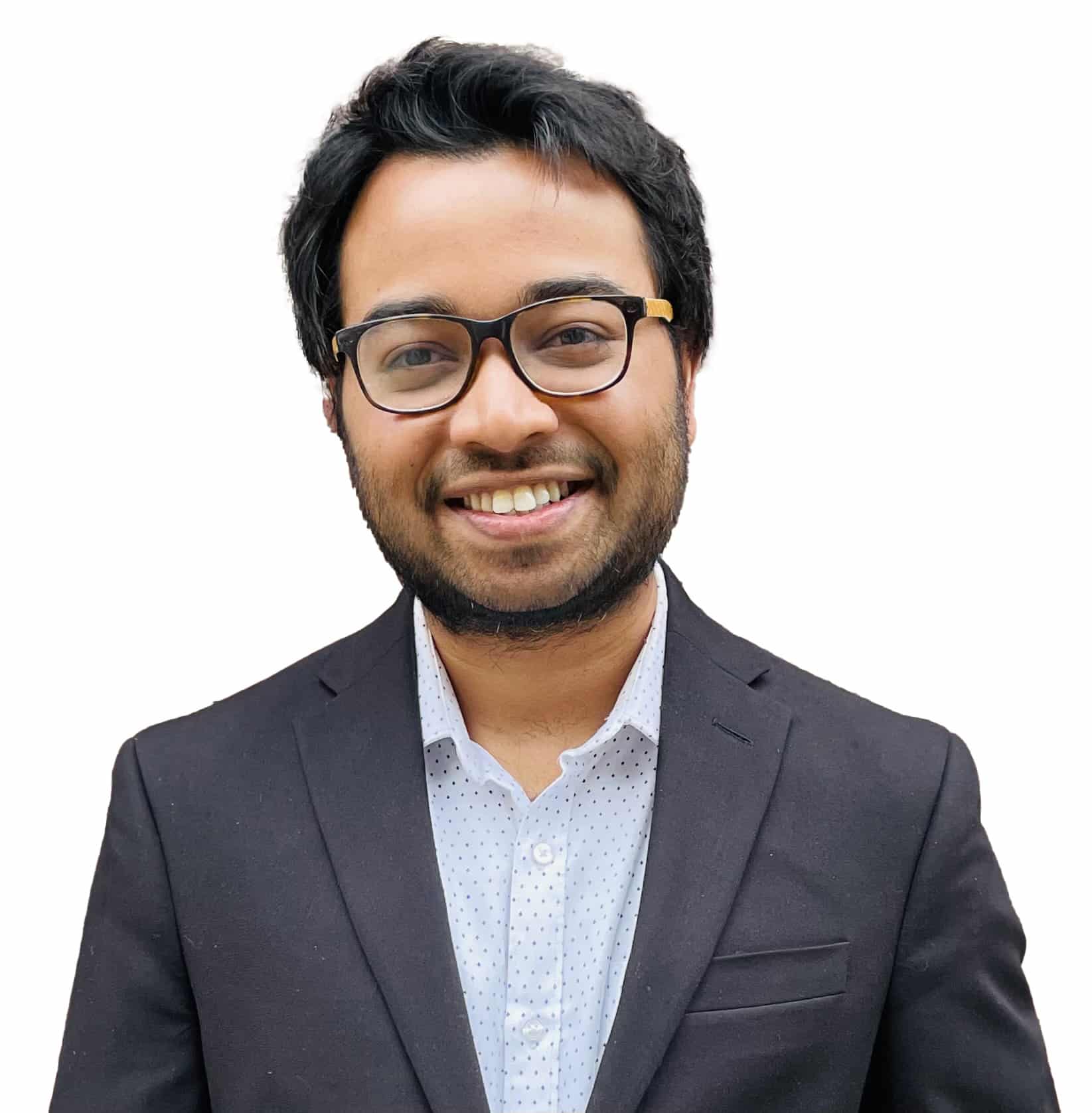
Aritra Mitra is an Assistant Professor in the Department of Electrical and Computer Engineering at North Carolina State University. He holds a Ph.D. from Purdue University (2020), an M.Tech. from IIT Kanpur (2015), and a B.E. from Jadavpur University (2013). Before joining NC State, he was a postdoctoral researcher at the University of Pennsylvania. His research focuses on enabling reliable, efficient learning and decision-making in large-scale distributed systems, addressing challenges like computation, communication constraints, and adversarial robustness. Key areas include control theory, machine learning, signal processing, and network science. Education: Ph.D., Electrical and Computer Engineering, Purdue University (2020) M.Tech., Electrical Engineering, Indian Institute of Technology Kanpur (2015) B.E., Electrical Engineering, Jadavpur University (2013) Research Interests: Dr. Mitra’s work bridges theoretical foundations with practical applications in distributed systems. He designs algorithms for federated learning, reinforcement learning, and adversarial robustness, with applications in control systems and networked environments. Recent efforts emphasize finite-time analysis of TD learning, heterogeneous federated systems, and resilient control under communication constraints. His contributions often integrate tools from stochastic approximation, optimization, and signal processing. Publications: His articles explore cutting-edge topics like federated TD learning, robust system identification under heavy-tailed noise, and distributed multi-agent optimization. Recent trends highlight advancements in asynchronous algorithms, delay-adaptive systems, and model-free control under communication bottlenecks. Grants & Labs: While specific grants are not detailed, his research aligns with themes in distributed computing and control, suggesting potential involvement in NSF or industry-funded projects. No lab-specific details are provided in the text.
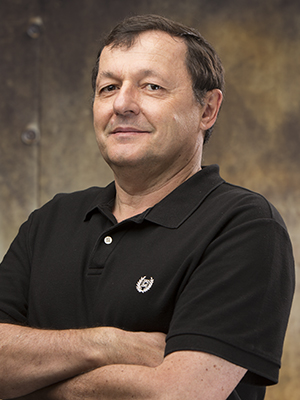
Professor Theofanis Strouboulis is a faculty member in the Department of Aerospace Engineering at Texas A&M University. His research focuses on numerical methods in solid and fluid mechanics, computational fluid mechanics, and finite element methods. He has contributed to foundational texts such as The Finite Element Method and its Reliability (2001) and Finite Elements: An Introduction to the Method and Error Estimation (2010). His work advances the generalized finite element method (GFEM) and explores superconvergence in parabolic problems. He holds a professorship at Texas A&M University’s College of Engineering, with an office in HRBB 736B. His affiliations include the Harvey R. Bright Building, where he collaborates on cutting-edge computational mechanics research. While no advising details are provided, his publications highlight contributions to error estimation, meshfree methods, and reliability analysis in engineering systems.
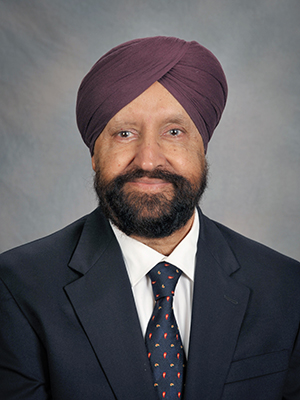
Chanan Singh is a distinguished academic serving as a Professor in the Department of Electrical and Computer Engineering at Texas A&M University. He holds the Irma Runyon Chair and is a Regents Professor. His affiliations include the College of Engineering and a Guest Professorship at Tsinghua University's Department of Electrical Engineering (2010–2015). Dr. Singh earned his Ph.D. in Electrical Engineering from the University of Saskatchewan, alongside M.S. and B.S. degrees from the same institution and Punjab Engineering College, respectively. His research focuses on reliability and security of electric power systems , including renewable energy integration and cyber-physical systems resilience. He pioneered methodologies for hurricane impact analysis, cyber-malfunction modeling, and wind farm optimization. Key achievements include the IEEE-PES Roy Billinton Award (2010), PMAPS Merit Award (2008), and Fellow of IEEE (1991). His work has been recognized globally, including through over 20 major awards and fellowships. Dr. Singh advises students like Hangtian Lei and leads funded projects on power system resilience. He is affiliated with the Electric Power System Group , advancing interdisciplinary research in energy systems and reliability engineering.
Dr. Chao Tian is an Associate Professor in the Department of Electrical and Computer Engineering at Texas A&M University, part of the College of Engineering. He holds a Ph.D. from Cornell University (2005) and a B.E. from Tsinghua University (2000). His research focuses on information theory, distributed storage systems, coding theory, and machine learning applications, including large language models (LLMs) and privacy-preserving techniques like steganography and private information retrieval (PIR). He has received notable awards, including the 2017 IEEE Jack Wolf ISIT Best Student Paper Award and the 2014 IEEE ComSoc DSTC Best Paper Award. Dr. Tian’s work bridges theoretical foundations and practical applications, such as optimizing storage codes for distributed systems, developing secure PIR protocols, and exploring LLMs in energy and steganographic contexts. His group has pioneered methods for variable-order Markov chain modeling with transformers and designed quantization techniques for perceptual quality. Recent activities include a faculty development leave at MIT/Harvard and delivering distinguished lectures globally on AI and information theory. He advises students on cutting-edge topics like LLM-based steganography and diffusion models. His publications span journals like IEEE Transactions on Information Theory and conferences such as NeurIPS and ISIT, with a focus on coding theory, privacy, and machine learning. He has also contributed to open-source tools like the CAI toolbox for investigating information-theoretic limits. Current projects include optimizing cryptocurrency mining in energy markets and advancing federated learning with adversarial robustness.
Professor Tommy Chan is Chair in Civil Engineering at Queensland University of Technology's School of Civil and Environmental Engineering. With over $10M in research funding, his work focuses on structural health monitoring of bridges and infrastructure systems. His research group develops cutting-edge methods for assessing structural integrity using vibration analysis, optical sensors, and machine learning. Professor Chan leads major projects including the ARC-funded 'Next Generation Bridge Monitoring' initiative developing real-time monitoring systems for prestressed concrete bridges. His team's innovations include GNSS-based settlement monitoring and synergic identification methods for prestress force evaluation. Current research explores vehicle-bridge interactions, damage detection algorithms, and novel materials for impact protection. He has received numerous honors including the Vice Chancellors' Leadership Award and Top Supervisor Award. Professor Chan founded the Australian Network of Structural Health Monitoring and serves on editorial boards for multiple journals in structural engineering.
Chen Xu is an Associate Professor in the Department of Mathematics and Statistics at the University of Ottawa. He holds an M.A. from York University and a PhD from the University of British Columbia. His research focuses on sparse modeling, statistical learning, and big data processing, with an emphasis on both theoretical and computational advancements. Dr. Xu is affiliated with the Faculty of Science and contributes to editorial roles for journals such as the Journal of the American Statistical Association and Electronic Journal of Statistics. Education: M.A., York University PhD, University of British Columbia Research interests include feature selection, regularization methods, kernel methods, and high-dimensional regression. His work addresses computational challenges in big data, proposing efficient algorithms for tasks like singular value decomposition, clustering, and distributed feature screening. Recent publications highlight advancements in multiview PCA, low-tubal-rank tensor recovery, and model-free regression techniques. Publications span prestigious journals like the Journal of the American Statistical Association and IEEE Transactions series, focusing on statistical methodology, machine learning applications, and scalable computational solutions for complex data problems. Editorial Service: Associate Editor, Journal of American Statistical Association-T&M (2023–present) Associate Editor, Electronic Journal of Statistics (2023–present) Former Associate Editor, The Canadian Journal of Statistics (2019–2021) His research groups are Statistics and Biostatistics, and Data Science, Machine Learning, and Artificial Intelligence. He has no listed awards but maintains active editorial and academic collaborations in computational statistics and machine learning.
Holden Lee is an Assistant Professor in the Department of Applied Mathematics and Statistics at Johns Hopkins University, where he joined in 2022. His research focuses on the theoretical foundations of machine learning, probability, and their intersections with theoretical computer science. He explores probabilistic methods in modern machine learning, including deep learning-based generative models and convergence guarantees for sampling algorithms like Markov Chain Monte Carlo. Prior to JHU, he was a postdoc at Duke University and a Simons Fellow at UC Berkeley. He holds a PhD in Mathematics from Princeton University and degrees from MIT and the University of Cambridge. Education: PhD in Mathematics, Princeton University, 2019 MASt in Pure Mathematics, University of Cambridge, 2014 BSc in Mathematics, MIT, 2013 Research Interests: Machine Learning Theory Probabilistic Sampling Methods Generative Models Statistical Learning Theory His work emphasizes theoretical rigor, particularly in understanding the success and limitations of deep learning algorithms and designing efficient sampling techniques beyond classical log-concave settings. Articles Trends: Lee’s recent publications (2022–2024) focus on advancing sampling algorithms for complex distributions, analyzing generative models, and improving convergence guarantees for methods like MCMC and score-based diffusion. His work bridges theory and practice, with applications in multimodal data, text generation, and dynamical systems. Awards: Simons Fellow at UC Berkeley (2021) Advising & Grants: Lee has contributed to projects at NeurIPS and collaborates on research in AI efficiency and theoretical guarantees. He teaches courses on probability and applied mathematics at JHU and Duke. Labs/Teams: His research group focuses on theoretical machine learning and probabilistic methods, with ongoing projects on scalable sampling algorithms and generative model analysis.
Soledad Villar is an Assistant Professor in the Department of Applied Mathematics and Statistics and a member of the Mathematical Institute for Data Science at Johns Hopkins University. She also contributes to the Data Science and AI Institute . Her research focuses on computational methods for extracting information from data, emphasizing optimization for data science, machine learning, equivariant representation learning, and graph neural networks. Dr. Villar holds a PhD in Mathematics from the University of Texas at Austin and has been a research fellow at New York University and the Simons Institute at UC Berkeley. Her work bridges theoretical foundations with practical applications in fields like scientific computing and political analysis. Awards include the National Science Foundation CAREER Award (2024). Her research has addressed topics such as gerrymandering detection, fluid dynamics modeling, and graph representation learning. She collaborates on interdisciplinary projects and organizes academic events like the One World MINDS Seminar and the Cibercoloquio Latinoamericano de Matemáticas . Her research interests span computational methods, equivariant machine learning frameworks, and graph neural networks, with applications in physics, engineering, and data-driven decision-making. She actively engages in advancing machine learning techniques for scientific and engineering challenges.
Assoc Prof Xiaohui Bei is an Associate Professor at Nanyang Technological University (NTU), holding dual appointments in the School of Physical & Mathematical Sciences (Division of Mathematical Sciences) and the College of Computing & Data Science. His research focuses on algorithmic game theory, fair division, auction design, and computational economics. He earned his Ph.D. from Tsinghua University in 2012 under Prof. Andrew Yao and held postdoctoral positions at NTU and the Max Planck Institute for Informatics. His work bridges theoretical computer science and economics, addressing challenges in fair resource allocation, truthful mechanisms, and market design. Key interests include cake-cutting protocols, auction optimization, and voting systems with mixed goods. He has contributed to foundational studies on Nash welfare, submodular valuations, and connectivity constraints in fair division. Prof. Bei’s research is supported by grants exploring topics such as optimal auction mechanisms and dynamic resource allocation. His publications often emphasize practical algorithmic solutions to complex economic challenges, ensuring both efficiency and fairness.
Dr. Jianqiang Cheng is an Associate Professor in the Department of Systems and Industrial Engineering at the University of Arizona, College of Engineering. He is also a member of the Graduate Faculty and affiliated with the Applied Mathematics and Statistics Graduate Interdisciplinary Programs. His research is centered on optimization under uncertainty with applications in energy systems and logistics. Research Interests: His primary research areas include stochastic programming, robust optimization, distributionally robust optimization, semidefinite programming, and chance-constrained optimization. He applies these methodologies to challenges in power systems, renewable energy integration, microgrid design, and resilient supply chains. The recent publications (2020–2022) reflect a strong trend toward data-driven and computationally efficient methods in optimization. Key themes include distributionally robust optimization under moment and Wasserstein ambiguity, chance-constrained AC optimal power flow, and resilient supply chain modeling under disruptions such as the COVID-19 pandemic. His work frequently appears in top journals like INFORMS Journal on Computing , IEEE Transactions on Power Systems , and European Journal of Operational Research . Scientific Awards: Best Short Paper Award, INFORMS Workshop on Data Science (Fall 2022) NSF CAREER Award, National Science Foundation (Spring 2022) Science Foundation Arizona's 2017 Bisgrove Scholar (Spring 2017) Dr. Cheng has secured significant research funding, including the NSF CAREER Award, supporting his work in data-driven optimization. He collaborates extensively with researchers in energy systems and operations research, including K. Pan, M. Cheramin, A. M. Fathabad, and A. Lisser. While specific advisees are not listed, his role as a member of the Graduate Faculty indicates active supervision of graduate students in systems engineering, applied mathematics, and statistics. His research contributes to the development of advanced optimization models for real-world systems affected by uncertainty, particularly in energy and logistics. Though no specific lab is mentioned, his work implies involvement in computational optimization and energy systems modeling research groups within the College of Engineering.
Xiucai Ding is a tenured Associate Professor in the Department of Statistics at the University of California, Davis, starting in 2025. He is also affiliated with the Graduate Group in Applied Mathematics (GGAM) at UC Davis. Previously, he was an Assistant Professor in the same department from 2020 to 2025 and a Research Associate at Duke University from 2018 to 2020. PhD in Statistics, University of Toronto (2014–2018), advised by Jeremy Quastel Research Associate, Duke University (2018–2020), with Hau-Tieng Wu Assistant Professor, UC Davis (2020–2025) Associate Professor (tenured), UC Davis (starting 2025) His research focuses on mathematical statistics and statistical learning theory, particularly applied random matrix theory, high-dimensional statistics, non-stationary and functional time series analysis, statistical optimal transport, and the statistical foundations of machine learning algorithms. His methodological work emphasizes nonparametric and sieve-based estimation, inference under complex dependencies, and applications to noisy, high-dimensional data. The recent publications and software tools (such as RMT4DS, Sie2nts, SIMle) reflect a consistent trend in developing theoretically grounded, computationally feasible tools for analyzing complex time series and high-dimensional covariance structures. His work bridges theoretical statistics with practical data science. His research has been supported by the National Science Foundation (NSF). Estimation and inference for precision matrices of nonstationary time series (2020) Auto-regressive approximations to non-stationary time series (2021) On the partial autocorrelation function for locally stationary time series (2022) He advises students and researchers through his role in the Department of Statistics and GGAM. He has taught courses such as STA 108 (Regression Analysis), STA 137 (Applied Time Series Analysis), STA 135 (Multivariate Data Analysis), STA 221 (Big Data & High Performance Statistical Computing), and STA 250 (Topics in Applied and Computational Statistics) at UC Davis. He previously taught at Duke University and the University of Toronto. He has developed several open-source R packages for statistical methodology: RMT4DS : Random matrix tools for data scientists (CRAN/GitHub) Sie2nts : Sieve methods for non-stationary time series (CRAN/GitHub) SIMle : Estimation and inference for nonlinear and non-stationary regression (CRAN/GitHub) UHDtst : Two-sample tests for high-dimensional covariance matrices (GitHub)
Dietmar Maringer is Professor of Computational Economics and Finance at the University of Basel's Faculty of Business and Economics (WWZ), where he leads research at the intersection of finance, computational methods, and artificial intelligence. His work focuses on risk management, portfolio optimization, algorithmic trading, and financial simulations. His research interests span computational finance, artificial intelligence in finance, data analysis, risk management, portfolio optimization, algorithmic and high-frequency trading, financial networks, complex adaptive systems, and market simulations. He applies advanced computational and heuristic optimization techniques to solve real-world financial problems, contributing significantly to quantitative finance and financial engineering. His recent publications demonstrate a consistent focus on applying evolutionary algorithms, reinforcement learning, and numerical optimization to portfolio management, market impact modeling, and financial forecasting. The research integrates econometrics, machine learning, and financial theory, emphasizing practical implementation and robust risk-aware decision-making. Several best-paper awards Maringer has served as Chair of the Portfolio Optimization Section of the IEEE Computational Economics and Finance Technical Committee from 2008 to 2018 and is frequently involved in organizing and program committees of international conferences. He has advised or collaborated with numerous researchers, though specific student names are not listed. His research has been supported through academic affiliations and likely institutional or conference-based grants, though explicit funding sources are not detailed. He is affiliated with several research groups, including IEEE Computational Economics and Finance TC, COMISEF, ERCIM, Centre for Innovative Finance, and the European Financial Management Association, reflecting a broad collaborative network in computational finance and economics.
Ameya Jagtap is an Assistant Professor (Tenure-Track) in the Department of Aerospace Engineering at Worcester Polytechnic Institute (WPI), USA. Prior to this, he served as an Assistant Professor of Applied Mathematics (Research) at Brown University from 2021 to 2024. He holds a Ph.D. and M.E. in Aerospace Engineering from the Indian Institute of Science (IISc), and completed postdoctoral research at TIFR-CAM (India) and Brown University's Division of Applied Mathematics. His research bridges mechanical/aerospace engineering, applied mathematics, and computation, focusing on scientific machine learning algorithms that integrate data and physics. Key areas include physics-driven deep learning, uncertainty quantification, multi-scale simulations, and novel neural network architectures like quantum and graph networks. He serves on editorial boards for Neural Networks , Neurocomputing , and others. His work emphasizes interpretable neural operators for PDE solutions, domain decomposition methods, and adaptive activation functions to enhance PINN convergence. Notable contributions include XPINNs (extended physics-informed neural networks) and causal sweeping frameworks for PDEs. His research has been widely cited, particularly for PINN applications in supersonic flows and high-dimensional PDEs. Jagtap has delivered invited talks at institutions like Los Alamos National Laboratory, Tsinghua University, and the Alan Turing Institute. He is also recognized as a Top 2% World Scientist by Stanford University.