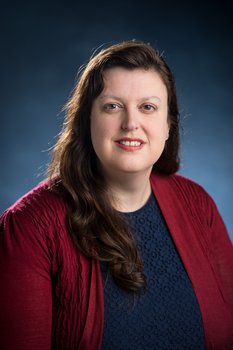
Andriy Prymak is a Professor of Mathematics at the University of Manitoba's Faculty of Science. His research focuses on Discrete and Convex Geometry, Approximation Theory, Combinatorics, Analysis, and Numerical Analysis. He actively supervises graduate and undergraduate students on projects related to geometric covering problems, convex body properties, and polynomial approximation. Recent work includes groundbreaking contributions to Hadwiger's covering conjecture, illumination problems, and minimal volume constant-width bodies. He holds an NSERC Discovery Grant for Multivariate Approximation studies. Prymak collaborates internationally, including with researchers like A. Arman and F. Dai, and has developed computational tools for geometric problems (e.g., GitHub repositories for chromatic number bounds). His advising spans M.Sc., Ph.D., and postdoctoral training, with notable student projects on cap bodies, hyperbolic cross polynomials, and Christoffel function estimates.
Igor Shinkar is an Associate Professor in the School of Computing Science at Simon Fraser University (SFU). His research focuses on theoretical computer science, discrete mathematics, and probability theory, with particular interests in computational complexity, property testing, and local-to-global phenomena in combinatorial objects. He holds a PhD in Mathematics and Computer Science from the Weizmann Institute of Science (2014), an MSc from the same institution (2009), and a BSc in Mathematics and Computer Science from Tel Aviv University (2005). Shinkar has taught numerous courses at SFU, including CMPT 125 (Introduction to Computing Science and Programming II), CMPT 225 (Data Structures and Programming), CMPT 405/705 (Design and Analysis of Algorithms), and CMPT 706 (Design and Analysis of Algorithms for Big Data). He has also co-taught courses at UC Berkeley and NYU, focusing on topics like coding theory and approximation algorithms. His research explores the interplay between theoretical computer science and mathematics, with contributions to areas such as randomized algorithms, approximation algorithms, and probabilistically checkable proofs. He actively seeks MSc and PhD students interested in theoretical computer science.
Laura Sanità is an Associate Professor in the Department of Computing Sciences at Bocconi University, Milan, Italy. Previously, she held positions at TU Eindhoven (2020–2022) and the University of Waterloo, Canada, where she was an Assistant Professor (2012–2017) and later Associate Professor (2017–2020). She earned a Bachelor’s and Master’s in Management Engineering from Università di Roma Tor Vergata (2003–2005), followed by a PhD in Operations Research from Università Sapienza di Roma (2009). Her postdoctoral work (2009–2011) was at EPFL’s Discrete Optimization Group. Her research focuses on Combinatorial Optimization , Approximation Algorithms , Network Design , and Algorithmic Game Theory . Key contributions include advancements in node connectivity augmentation, graph stabilization, and polytope diameter analysis. She has received prestigious awards such as the NWO-VIDI Award (Netherlands), NSERC Discovery Accelerator Supplements, and the Early Researcher Award (Ontario). Laura co-organizes the Bocconi Theory Day (May 2024) and serves on program committees for conferences like SODA, ESA, and IPCO. She is an Associate Editor for Mathematical Programming , Mathematics of Operations Research , and Operations Research Letters . Current advisees include PhD students Sean Kafer, Dylan Hyatt-Denesik, and Lucy Verbeck. Her work bridges theoretical foundations and practical applications, with notable publications in Mathematical Programming , SIAM Journal on Optimization , and Operations Research . Recent projects explore stabilization of capacitated matching games and iterative randomized rounding techniques for combinatorial problems.
Yves Lucet is a Professor in the Department of Computer Science, Mathematics, Physics and Statistics at the University of British Columbia Okanagan. He holds a PhD from the University of Toulouse. His research spans computational mathematics, optimization, and convex analysis, with a focus on algorithm development for computer-aided convex analysis and road design optimization. He leads the development of the CCA (Computational Convex Analysis) toolbox under Scilab, emphasizing hybrid symbolic-numerical algorithms. His work includes visualizing set-valued operators using Virtual Reality (VR) and collaborating on large-scale road design projects funded by NSERC, aiming to minimize construction costs while meeting safety and environmental constraints. Lucet advises graduate students and contributes to interdisciplinary teams involving mathematics, statistics, and engineering. His research also explores applications in computational geometry, image processing, and network communication. Education: PhD in Mathematics from the University of Toulouse. Research Interests: Computational Convex Analysis Algorithm Design for Optimization VR Visualization of Mathematical Operators Multi-objective Road Design Optimization Data-Driven Process Monitoring Key Projects: Development of the CCA toolbox, road design optimization funded by NSERC, and reinforcement learning approaches for prescriptive process monitoring. His work bridges mathematics and computer science, with applications in engineering and transportation.
Dr. Anne Condon is a Professor in the Department of Computer Science at the University of British Columbia (UBC), affiliated with the Faculty of Science. Her research focuses on computational complexity, algorithms, and molecular programming, particularly in nucleic acid structure prediction and bioinformatics. She is an ACM Fellow and a Fellow of the Royal Society of Canada. Education: Bachelor's degree in Computer Science from University College Cork, Ireland (1982) Ph.D. in Computer Science from the University of Washington (1987) Research Interests: Dr. Condon's work bridges computer science and molecular biology, addressing challenges in algorithm design for nucleic acid systems, RNA secondary structure prediction, and energy parameter estimation. She explores computational models such as Chemical Reaction Networks (CRNs) and DNA strand displacement systems for molecular programming. Her research emphasizes practical applications in synthetic biology and biotechnology. Publications: Her recent work includes studies on chemical reaction networks for approximate majority consensus, efficient DNA kinetics modeling, and interpretable dimensionality reduction of single-cell transcriptome data. Key contributions span algorithm design, computational biology, and interdisciplinary collaborations. Awards & Affiliations: ACM Fellow Fellow of the Royal Society of Canada Member of the Institute for Computing, Information and Cognitive Systems (ICICS) and the Institute of Applied Mathematics at UBC Supervision & Grants: She actively supervises doctoral and master's students in areas like nucleic acid kinetics, bioinformatics, and molecular programming. Her grants and funding support interdisciplinary research at the intersection of computer science and molecular biology. Labs & Teams: Condon's affiliations with UBC's ICICS and Institute of Applied Mathematics facilitate collaborative research in computational methods for systems biology and molecular computing.
Professor Peter D. Lawrence holds a faculty position at the University of British Columbia (UBC) within the Department of Electrical & Computer Engineering, part of the Faculty of Applied Science. He has been a Professor since 1974 and has held visiting research roles at Chalmers University of Technology (1970-1972) and MIT (1972-1974). His educational background includes a B.A.Sc. from the University of Toronto (1965), M.Sc. from the University of Saskatchewan (1967), and Ph.D. from Case Western Reserve University (1970). He is a Professional Engineer (P.Eng.) and Fellow of the Canadian Academy of Engineering (FCAE). Research interests focus on improving human-machine interfaces, sensor technologies for control systems, and medical robotics. Key areas include teleoperation of heavy machinery, vision-based control, EEG-based brain interfaces, and functional approximation methods for complex systems. Collaborations span multiple disciplines at UBC, including Mechanical Engineering, Computer Science, Mining Engineering, and Forestry, with funding from NSERC and PRECARN/IRIS. Medical Robotics: Brain-computer interfaces and ultrasound-guided surgery. Autonomous Systems: Path planning and vision-based tracking for excavators and haul trucks. Sensing Technologies: Eye-tracking, joint-angle sensors, and slip detection for mobile robots. His teaching contributions include coordinating the Project Integrated Program (PIP) for ECE students and co-developing the interdisciplinary New Venture Design course with the Sauder School of Business. He leads the RCL Lab and has authored books on real-time microcomputer systems and contributed to IEEE publications. Awards include recognition as a Fellow of the Canadian Academy of Engineering.
Susanne Bradley is a Teaching Professor in the Department of Computer Science at the University of British Columbia (UBC). She specializes in algorithm design, parallel computation, and numerical analysis. Her teaching responsibilities include courses such as CPSC 320 (Intermediate Algorithm Design and Analysis) and CPSC 418 (Parallel Computation). Her research focuses on preconditioners for saddle-point systems, eigenvalue analysis, and innovative educational methodologies like inverted two-stage exams. Bradley’s academic contributions span numerical linear algebra, computational methods, and biomechanical simulation. She has published extensively on topics such as eigenvalue bounds for saddle-point systems and the application of machine learning in sensorimotor control. Her work emphasizes practical solutions for complex computational challenges and pedagogical innovations to enhance learning outcomes. Her office is located in ICCS 241, and she can be reached at smbrad@cs.ubc.ca .
Margarida Carvalho is an Associate Professor in the Department of Computer Science and Operations Research at Université de Montréal, where she holds the FRQ-IVADO Research Chair in Data Science for Combinatorial Game Theory. She is also an Associate Academic Member at Mila (Quebec AI Institute), contributing to their research in AI for Humanity. Her academic journey spans from Portugal to Canada, where she has established herself as a leading researcher at the intersection of operations research and game theory. Carvalho earned her bachelor's and master's degrees in mathematics from the Faculty of Sciences of the University of Porto (FCUP), followed by a PhD in Computer Science from the same institution in 2016. Her doctoral work, which focused on game theory applications for kidney exchange programs, earned her the prestigious 2018 EURO Doctoral Dissertation Award, making her the first Portuguese woman to receive this honor. After completing her PhD, she worked as an IVADO Postdoctoral Fellow at Polytechnique Montréal before joining Université de Montréal as an Assistant Professor in 2018. Her research focuses on combinatorial optimization and algorithmic game theory, with applications spanning healthcare (kidney exchange programs, hospital operations), sustainable development (electric vehicle infrastructure, urban planning), and education (school choice systems). She develops novel mathematical programming approaches to model and solve problems involving multiple decision-makers with potentially conflicting objectives. Her work bridges theoretical advances in optimization with practical implementations that address real-world challenges in resource allocation and decision-making under uncertainty. Notably, her research on fairness in kidney exchange programs has contributed to more equitable organ allocation policies. Her 15 most recent publications reveal a strong trend toward integrating game-theoretic concepts with practical optimization challenges, particularly in healthcare and sustainable infrastructure. She has pioneered approaches that balance utilitarian objectives with fairness considerations, developed novel formulations for bilevel and multilevel optimization problems, and created learning-based frameworks for complex decision environments. Her work consistently demonstrates how mathematical rigor can inform practical policy decisions in critical domains. 2018 EURO Doctoral Dissertation Award for her PhD thesis on game theory applications for kidney exchange programs Mathematical Programming 2024 Meritorious Service Award Teaching Excellence Award from Université de Montréal Supervised student Maria Bazotte receiving the Dupačová-Prékopa Best Student Paper Prize in Stochastic Programming Carvalho actively advises graduate students, with Marylou Fauchard (Master's) and William St-Arnaud (PhD) among her current advisees. Her research is supported by grants from Hydro-Québec, the Natural Sciences and Engineering Research Council of Canada (Discovery grant 2017-06054 and Collaborative Research and Development Grant CRDPJ 536757–19), and FRQ-IVADO. She serves as an associate editor for INFORMS Journal on Computing, OR Spectrum, and Dynamic Games and Applications, and is a founding board member and treasurer of the Bilevel Optimization Society. She teaches courses in Mathematical Programming, Operational Research Models, and Discrete Mathematics at Université de Montréal. Carvalho is affiliated with Mila (Quebec AI Institute), where she contributes to research initiatives focused on AI for Humanity, particularly in the areas of algorithmic fairness and sustainable development. Her FRQ-IVADO Research Chair supports her work on combinatorial game theory applications, and she collaborates with researchers across disciplines through the IVADO research community. She has been instrumental in establishing the Bilevel Optimization Society, creating a dedicated forum for researchers working on hierarchical decision-making problems.
Deeksha Adil is a Junior Fellow at the Institute for Theoretical Studies in ETH Zurich since January 2023. Her research focuses on designing fast algorithms with provable guarantees for problems in optimization, machine learning, and theoretical computer science. In August 2026, she will transition to an Assistant Professor (Reader) position in the School of Technology and Computer Science at the Tata Institute of Fundamental Research in Mumbai. Ph.D. in Computer Science from University of Toronto (2022), supervised by Prof. Sushant Sachdeva BS-MS in Mathematics from Indian Institute of Science Education and Research, Pune (2017) Visiting Researcher at Simons Institute for Theory of Computation (2023) Research Associate at University of Michigan (2022) Visiting Student at Institute for Advanced Study, Princeton (2019) Dr. Adil's research program centers on algorithm design for optimization problems, particularly lp-norm regression and related challenges. She develops methods that leverage optimization theory and continuous analysis to create efficient algorithms with theoretical guarantees. Her work spans theoretical computer science, machine learning, and numerical analysis, with applications in network optimization and statistical learning. Her publication record shows consistent progress in developing faster algorithms for fundamental optimization problems. Recent work extends into non-convex optimization, covariate shift adaptation, and dynamic algorithms for linear algebra problems. She publishes regularly in top-tier venues including Journal of ACM, NeurIPS, ICALP, and SODA. At the University of Toronto, she served as Teaching Assistant for multiple advanced courses including Algorithm Design, Algorithmic Game Theory, Theory of Computation, and Numerical Analysis, demonstrating strong pedagogical skills alongside her research excellence.
Joseph Cheriyan is a Professor in the Department of Combinatorics and Optimization at the University of Waterloo. His research focuses on combinatorial optimization and approximation algorithms, with recent work on topics such as the Traveling Tournament Problem and spectral graph theory. He has taught courses such as CO 351 (Network Flow Theory), CO 327 (Deterministic OR Models), and graduate-level courses like CO 754 (Approximation Algorithms) and CO 759 (Algorithms and Spectral Graph Theory). His research interests include algorithmic approaches to NP-hard problems, graph partitioning, and spectral methods. Cheriyan's work has been published in venues like DBLP and arXiv, though specific article details are not listed here. He has also organized events like the Fulkerson 100 workshop in 2024. His teaching history includes both undergraduate and graduate courses, spanning topics from network flow theory to advanced spectral graph techniques. Course materials and lecture notes reflect his engagement with cutting-edge topics such as Cheeger’s inequality, electric networks in graphs, and maximum flow algorithms. Cheriyan’s affiliations include active participation in the Combinatorics & Optimization Department, where he contributes to both research and educational initiatives.
Patricia Evans is a Professor and Associate Dean at the Faculty of Computer Science , University of New Brunswick. She holds a B.Sc. from the University of Alberta and M.Sc./Ph.D. from the University of Victoria. Research Focus : Computational Biology, Bioinformatics, Algorithm Design and Analysis, Graph Theory, Parameterized Complexity Current Projects : RNA structure comparison, haplotype inference, biological network analysis, parallelization of dynamic programming Collaborations : Eric Aubanel (UNB), Todd Wareham (Memorial University), Ken Kent (UNB), Jackie Rice (University of Lethbridge) Grants : NSERC, Genome Atlantic, AIF, NBIF Her research applies computer science theory to molecular biology problems, including RNA structure analysis and phylogenetic network modeling. Past work includes FPGA implementations for bioinformatics algorithms and parameterized complexity analysis for motif finding. Publications span 1999-2008, with key topics in RNA pseudoknot detection, haplotyping, and computational complexity. Her lab has mentored 13 graduate students, including 2 Ph.D. graduates.
Przemyslaw Pochec is an Associate Professor at the Faculty of Computer Science , University of New Brunswick, where he has held a faculty position for approximately 27 years. He holds a Master of Science in Computer Science and a Ph.D. from the University of New Brunswick. Research Interests: Data Communication, Image Processing, Three-dimensional Computer Vision His recent research focuses on queueing models for parallel computer systems , data communication system modeling, and stereo vision matching algorithms . While specific grants, awards, or student advisement records are not detailed in the provided text, his work bridges theoretical and applied aspects of computer science, particularly in communication systems and computer vision.
Richard S. Sutton is a pioneering researcher and Professor of Computing Science at the University of Alberta, where he serves as Chief Scientific Advisor for the Alberta Machine Intelligence Institute (Amii). He is also a Canada CIFAR AI Chair, Senior Fellow at CIFAR, and Research Scientist at Keen Technologies. Sutton is widely recognized as one of the founders of reinforcement learning, a field in which he continues to lead globally. His work has profoundly shaped modern AI research and applications. Education: B.A., Psychology, Stanford University (1978) M.S., Computer Science, University of Massachusetts (1980) Ph.D., Computer Science, University of Massachusetts (1984) Sutton's research focuses on identifying computational principles underlying intelligence and goal-directed behavior. He emphasizes learning from experience and extending reinforcement learning to create empirically grounded approaches to knowledge representation based on prediction. His work bridges artificial and natural intelligence, exploring how systems can predict and influence the world through learning, perception, action, and cognition. Sutton's research has produced foundational contributions including temporal-difference learning theory, actor-critic algorithms, the Dyna architecture, and Horde architecture. His recent publications reveal a continued focus on reinforcement learning fundamentals while expanding into broader AI applications. The articles show strong emphasis on theoretical foundations, convergence analysis, and practical implementations of reinforcement learning algorithms. There's also evidence of applying these techniques to real-world problems like pandemic forecasting, suggesting growing interest in practical societal applications of his theoretical work. Scientific Awards: 2024 Turing Award (with Andrew Barto) Fellow of the Royal Society (2021) Fellow of the Royal Society of Canada (2016) CAIAC Lifetime Achievement Award (2018) Outstanding Achievement in Research Award, UMass Amherst (2013) Sutton has mentored approximately 60 early-career researchers, including notable figures like David Silver (lead researcher behind AlphaGo), Doina Precup (DeepMind Montreal), Adam White (Amii Fellow), and Cam Linke (CEO of Amii). His Reinforcement Learning & Artificial Intelligence Lab at the University of Alberta has become a global hub for RL research. Sutton is currently collaborating with John Carmack through Keen Technologies to accelerate AGI development, documented in part through 'The Alberta Plan' which outlines his vision for creating long-lived computational agents. Sutton founded the Reinforcement Learning & Artificial Intelligence (RLAI) Lab at the University of Alberta and co-authored the seminal textbook 'Reinforcement Learning: An Introduction' with Andrew Barto. His work has been cited over 130,000 times and featured in major publications including Science, The Economist, New York Times, and Wall Street Journal. He is also known for his 'Tea Time Talks' tradition at Amii, fostering new ideas among researchers and students.
Nikolas Provatas serves as an Adjunct Professor in the Department of Materials Science and Engineering within the Faculty of Engineering at McMaster University. His academic career spans over three decades with extensive contributions to computational materials science, particularly in phase-field modeling techniques. Provatas' research focuses on phase-field modeling, solidification phenomena, microstructure evolution, and computational materials engineering. His work bridges theoretical modeling with practical applications in additive manufacturing, metallurgy, and materials processing. He has developed advanced computational frameworks for simulating solidification processes, phase transformations, and microstructural development in various materials systems including metals, alloys, and nanomaterials. His research has significant implications for understanding fundamental materials phenomena and improving industrial manufacturing processes. Analysis of Provatas' extensive publication record reveals a strong trend toward increasingly sophisticated computational modeling approaches, particularly the phase-field crystal method. His work spans fundamental theoretical developments to practical applications in additive manufacturing, welding, and casting processes. The research shows particular emphasis on understanding microstructure evolution during solidification, phase transformations, and the relationship between processing conditions and final material properties. Provatas has mentored numerous students and collaborated extensively across the materials science community, though specific details of his advising record are not provided in the available information. His research has attracted significant attention, as evidenced by the substantial readership metrics across multiple platforms. His laboratory work centers on computational materials science, developing advanced simulation frameworks to model solidification phenomena, phase transformations, and microstructure evolution across multiple length and time scales. These computational approaches enable detailed investigation of materials behavior that would be challenging to observe experimentally.
Claude Frasson is an Associate Professor in the Department of Computer Science and Operational Research at the Faculty of Arts and Sciences, University of Montreal. He serves as Director of the HERON laboratory (Higher Educational Research ON Emotional Intelligence and Privacy Protection) and was formerly Director of GRITI (Inter-university Research Group in Intelligent Tutors), which grouped seven universities in Quebec. Dr. Frasson earned his Doctorat d'État in Computer Science from the University of Nice, France in 1981. His academic journey spans over three decades with significant contributions to the field of intelligent systems for education and cognitive support. His primary research interests focus on the intersection of emotional intelligence, brain-computer interfaces, and virtual reality applications for education and healthcare. He investigates how emotional states affect learning processes and develops intelligent systems that can adapt to users' cognitive and emotional states. His work particularly emphasizes applications for Alzheimer's disease treatment, cognitive rehabilitation, and educational technology. His recent publications (2020) demonstrate a strong focus on virtual reality applications for Alzheimer's disease treatment, cognitive rehabilitation, and emotional regulation. These works combine intelligent tutoring systems with neuroscience principles to create therapeutic environments that respond to users' cognitive states in real-time. Throughout his career, Dr. Frasson has been actively involved in numerous international conferences, serving as keynote speaker at events such as GENEDIS, World Brain Disorder and Neuroscience Summit, and International Conference on Intelligent Tutoring Systems. Dr. Frasson has supervised over 80 graduate students since 1989, spanning both Master's and PhD programs. His students have conducted research in areas including emotional intelligence in learning systems, brain-computer interfaces, virtual reality applications, and intelligent tutoring systems. He has received substantial research funding from organizations including CRSNG, FRQSC, CRIAQ, and FCI. He directs the HERON laboratory, which focuses on emotional intelligence, privacy protection, and cognitive state monitoring in educational contexts. Previously, he led GRITI, an inter-university research group that produced approximately 70 graduate students and established international recognition in the field of intelligent tutoring systems.