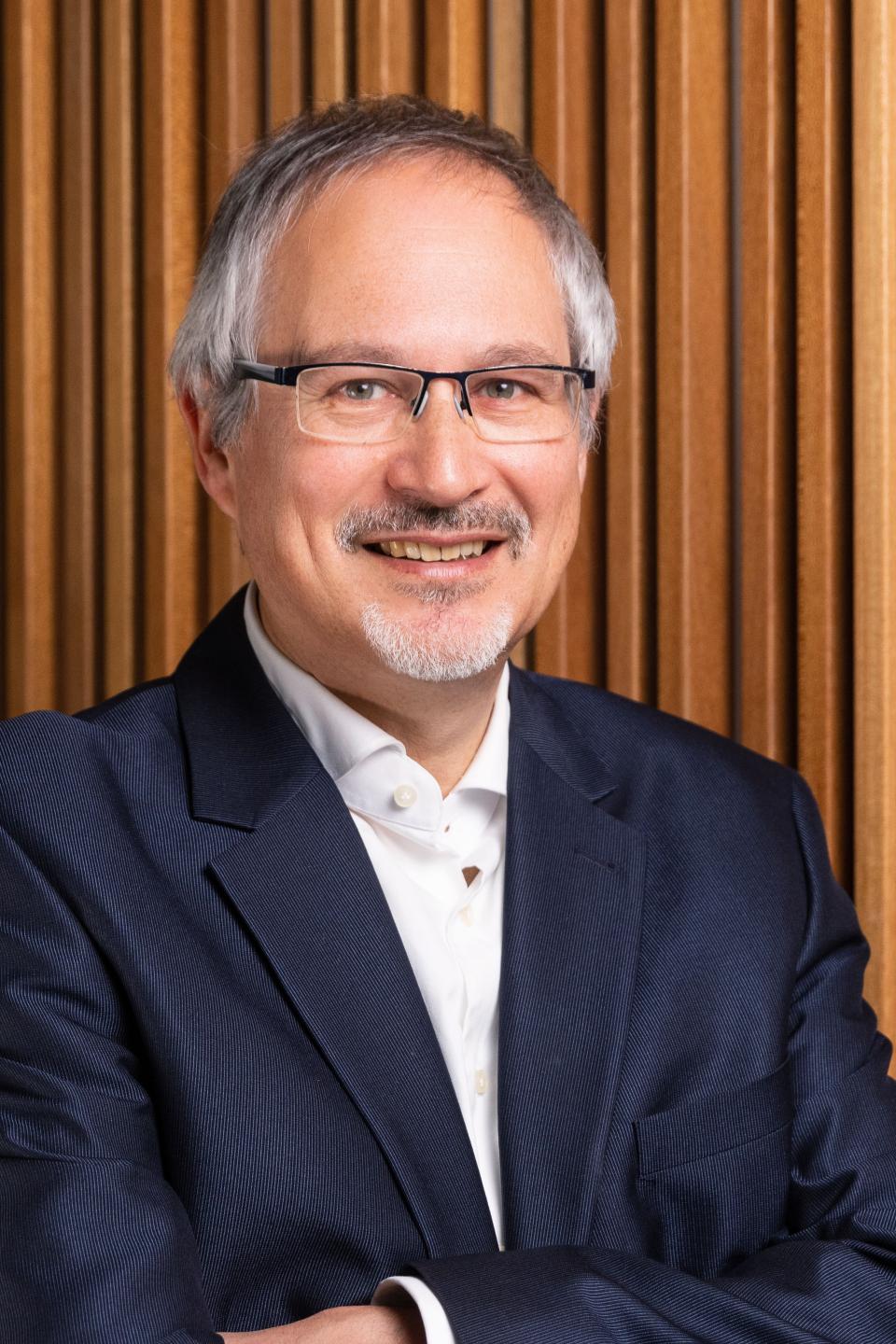
Rocco Servedio is a Professor in the Department of Computer Science at Columbia University, where he leads research in theoretical computer science with a focus on computational complexity theory, learning theory, and the role of randomness in computation. He previously served as Chair of the Computer Science Department from 2018 to 2021. He holds a Ph.D., MS, and AB in Mathematics from Harvard University. His research interests include property testing, computational learning theory, and algorithmic lower bounds. He has contributed to foundational work in areas like junta testing, trace reconstruction, and convexity testing. Servedio has held leadership roles in major conferences such as STOC, CCC, and COLT, and has mentored students through courses like Unconditional Lower Bounds and Derandomization . Education: Ph.D. in Computer Science, Harvard University MS in Computer Science, Harvard University AB in Mathematics, Harvard University His research bridges theoretical computer science and applied mathematics, with recent work exploring the intersection of Gaussian processes, convex geometry, and algorithmic efficiency. Servedio's contributions to the field are exemplified through his involvement in high-impact conferences and his leadership in advancing fundamental computational theories.
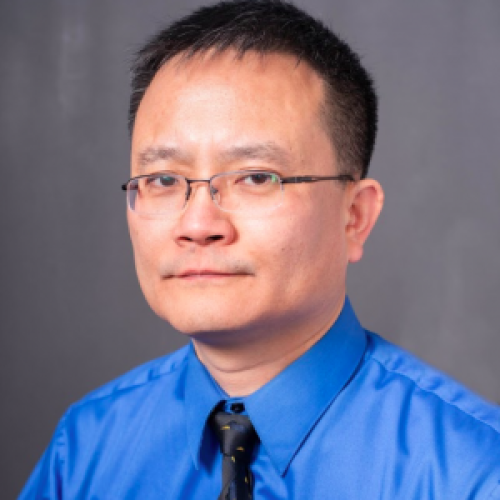
Xiang Wang is an Associate Professor in the Department of Pharmaceutical Sciences at Howard University College of Pharmacy, where he also directs the Artificial Intelligence and Drug Discovery Core Laboratory for the District of Columbia Center for AIDS Research (DC CFAR). With approximately 20 years of experience, his work bridges computational methods and pharmaceutical innovation. Dr. Wang's research focuses on advancing drug discovery through cutting-edge technologies. His expertise includes computer-aided drug design (CADD) , machine learning , structure-based drug design (SBDD) , high-throughput screening (HTS) , and biomolecular simulation . He has been actively integrating virtual reality (VR) , augmented reality (AR) , and artificial intelligence (AI) into both pharmacy education and research, reflecting a forward-looking interdisciplinary approach. He has secured over 20 grants from federal, state, university, and international funding bodies and has published around 50 peer-reviewed articles, reviews, book chapters, and patents, along with 190 conference abstracts and invited lectures. His scholarly impact is further amplified by his service as a reviewer for more than 45 major journals, including the Journal of Medicinal Chemistry and Journal of Chemical Information and Modeling . National Institutes of Health (NIH) National Aeronautics and Space Administration (NASA) American Association of Colleges of Pharmacy (AACP) Alzheimer’s Drug Discovery Foundation (ADDF) Dr. Wang has served on review panels for prominent funding agencies such as the NIH, NASA, AACP, and ADDF, contributing to the evaluation and advancement of scientific research in his fields. His leadership in the AI and Drug Discovery Core underscores his role in building research infrastructure and mentoring in a high-impact domain. While specific advisees are not listed, his extensive grant activity and lab direction suggest active student and postdoctoral involvement. His work in developing immersive technologies for professional pharmacy education highlights a commitment to innovation in teaching. The convergence of AI, VR, and AR in his research program points to a vision of next-generation drug discovery and pedagogy.
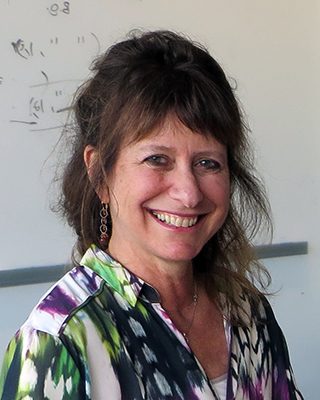
Anna R. Karlin is a Professor and the Bill & Melinda Gates Chair in Computer Science & Engineering at the University of Washington's Paul G. Allen School of Computer Science & Engineering. She serves as Associate Director of Graduate Studies and leads research in theoretical computer science within the Theory & Models of Computation focus area. Ph.D. from Stanford University (1987) Former researcher at Digital Equipment Corporation's Systems Research Center (5 years) Professor Karlin's research centers on theoretical computer science, with specific expertise in algorithm design and analysis, particularly probabilistic and online algorithms. Her work spans multiple interdisciplinary domains including algorithmic game theory, economics and computation, data mining, operating systems, networks, and distributed systems. Her research has evolved from foundational algorithmic work to impactful applications in market design, auction theory, and pricing mechanisms. Karlin's publication record demonstrates a consistent trajectory from classical theoretical computer science toward algorithmic game theory and mechanism design. Her recent work focuses on approximation algorithms for NP-hard problems, auction design, revenue maximization, and stable matching problems, with applications in online advertising, network economics, and resource allocation. She has developed influential algorithms for the Traveling Salesman Problem and made significant contributions to understanding interdependent valuations in combinatorial auctions. Bill & Melinda Gates Chair in Computer Science & Engineering Professor Karlin has advised numerous doctoral students throughout her career, with former students including prominent researchers like Jason Hartline, Frank McSherry, and Kira Goldner. Her collaborative research has been supported by various grants, including NSF funding (CCF-1813135 mentioned in her publications). She co-authored the influential textbook Game Theory, Alive with Yuval Peres, which serves as a rigorous introduction to game theory with applications across multiple disciplines. As a leader in theoretical computer science, Professor Karlin maintains active involvement in the Theory of Computation research group at the Allen School, fostering collaboration between theoretical foundations and practical applications in computer science.
James R. Lee is a Professor in the Department of Computer Science at the University of Washington. His research spans theoretical computer science, probability, and geometry. He has held visiting scientist roles at Microsoft Research (2023, 2018, 2017) and participated in programs at the Simons Institute (2023, 2020, 2018, 2017, 2014). Research Interests: Algorithms, complexity theory, convex optimization, metric embeddings, spectral graph theory, probability, stochastic processes, and the interplay between discrete and continuous analysis. Teaching: Courses on modern algorithms, quantum computing, optimization theory, and spectral methods in theoretical computer science. Scientific Contributions: Developed sparsification algorithms for generalized linear models and norms with near-linear size guarantees (STOC'24, FOCS'23). Extended Cheeger-type inequalities to higher eigenvalues (STOC'12, STOC'18). Proved super-polynomial lower bounds for LP/SDP relaxations in constraint satisfaction (STOC'15, FOCS'13). Disproved Benjamini-Papasoglou conjectures on annular separators (Discrete Comp. Geom. 2024). Advanced understanding of random walks in geometric and unimodular graphs (Israel J. Math. 2023, GAFA 2023). Scientific Awards: Best Paper Award, STOC 2015
Jia-Jie Zhu is a machine learner and applied mathematician currently serving as head of an independent research group at the Weierstrass Institute for Applied Analysis and Stochastics in Berlin, with an upcoming appointment as tenured associate professor at KTH Royal Institute of Technology in Stockholm. Previously, he conducted postdoctoral research in machine learning at the Max Planck Institute for Intelligent Systems in Tübingen, Germany, following doctoral studies in optimization and numerical analysis at the University of Florida. His research focuses on the mathematical foundations of machine learning and optimization, particularly at the intersection of computational algorithms, dynamical systems, and probability theory. Key areas include: Robust probabilistic machine learning algorithms Kernel methods for distribution manipulation Variational methods for optimization over probability distributions Gradient flows and optimal transport theory Wasserstein and Fisher-Rao geometry Applications in generative modeling and causal inference Dr. Zhu's recent work reveals deep connections between partial differential equations, kernel methods, and machine learning, resulting in theoretically grounded algorithms for handling distribution shifts. His publications demonstrate a consistent trajectory from foundational optimization theory to cutting-edge applications in robust learning and generative modeling, with increasing emphasis on the mathematical structures underlying modern ML systems. He has secured significant research funding, including a DFG Project on 'Optimal Transport and Measure Optimization Foundation for Robust and Causal Machine Learning' within the Priority Program 'Theoretical Foundations of Deep Learning' (SPP 2298), and actively organizes academic events such as the Workshop on Optimal Transport from Theory to Applications (OT-DOM) and upcoming sessions at ICSP 2025 and SwissMAP. As an educator, Dr. Zhu teaches nonparametric statistics at Humboldt University of Berlin and serves as area chair for major conferences including AISTATS 2025. He maintains an active research group with opportunities for master's students, PhD candidates, and postdoctoral researchers interested in the mathematical frontiers of machine learning.
Standa Živný is a Professor of Computer Science at the University of Oxford and a Fellow and Tutor at Merton College. He has been a faculty member at Oxford since 2013 and was promoted to full professor in 2021. His research spans theoretical computer science and discrete mathematics, with a focus on algorithms, computational complexity, and constraint satisfaction problems (CSPs) in various forms, including optimisation, counting, and approximation. His research interests include the power and limitations of convex relaxations, sparsification, submodularity, and the algebraic and logical foundations of tractability in combinatorial problems. He has made significant contributions to understanding when and why certain problems can or cannot be efficiently solved using linear programming and other algorithmic paradigms. The recent trends in his publications show a deep engagement with approximation algorithms, hardness results, sparsification techniques, and the complexity of counting and promise problems. His work often lies at the intersection of algebra, logic, and optimisation, demonstrating the power of interdisciplinary approaches in theoretical computer science. ERC Consolidator Grant (NAASP, 2022–2027) ERC Starting Grant (PowAlgDO, 2017–2022) Royal Society University Research Fellowship (2013–2021) He actively supervises a large cohort of postdoctoral researchers and students, including PhD candidates, master’s, and undergraduate students. His leadership extends to academic service, where he serves as Editor-in-Chief of the SIAM Journal on Discrete Mathematics and holds editorial and committee positions in major journals and funding bodies. He has organised numerous workshops and research programmes at institutions such as Dagstuhl, the Isaac Newton Institute, and AIM. He is involved in major research initiatives, including a Simons Programme on symmetry in computation and an American Institute of Mathematics SQuARE on relaxations for promise CSPs.
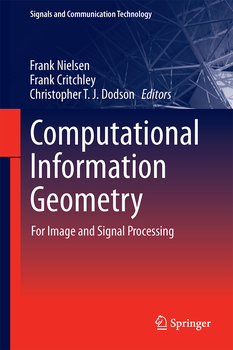
Frank NIELSEN is a Professor at École Polytechnique with expertise in information geometry, data science, and machine learning. He holds a PhD (1996) and HDR (2006) in computer science and has established himself as a leading researcher in geometric approaches to information science. His educational background includes a PhD in computer science (1996) followed by a Habilitation à Diriger des Recherches (HDR) in 2006, the highest academic qualification in France that qualifies one to supervise doctoral candidates. Dr. NIELSEN's research focuses on the Geometric Science of Information , where he develops theoretical frameworks for understanding data through geometric and information-theoretic lenses. His work bridges Computational information geometry Statistical manifold theory Bregman divergences and their applications Machine learning with geometric foundations High-dimensional data analysis He aims to address the challenge of inappropriate data representation in current Data Science by building a theory of Computational Information Geometry to enable Intrinsic Data Science with principled distances. His extensive publication record shows a clear trend toward developing geometric frameworks for understanding statistical divergences, with recent work focusing on Bregman geometry, Fisher-Rao metrics, and their applications in machine learning. His research spans theoretical developments in information geometry to practical implementations like the pyBregMan Python library, demonstrating both theoretical depth and practical relevance. Dr. NIELSEN has made significant contributions through his teaching and publications. He has taught courses at École Polytechnique including INF442, INF517, and INF591. His authored textbooks include Introduction to HPC with MPI for Data Science (2016), A Concise and Practical Introduction to Programming Algorithms in Java (2009), and Visual Computing: Geometry, Graphics, and Vision (2005). He has also edited influential volumes such as Computational Information Geometry for Image and Signal Processing (2016) and Geometric Theory of Information (2014). He actively organizes and participates in academic events, serving on program committees for major conferences including GSI (Geometric Science of Information), CVPR, and ICCV. His work has established him as a key figure in the growing field of geometric approaches to information science.
Ralf Peeters is a Full Professor in Mathematics of Knowledge Engineering at Maastricht University's Faculty of Science and Engineering , Department of Advanced Computing Sciences. He serves as Vice-Dean of Research and Director of the STEM Graduate School, while leading the university's team at the inter-university research school DISC and co-chairing the Mathematics Centre Maastricht. Education: PhD in Mathematics (Free University, Amsterdam, 1994) Technical Mathematics (Delft University of Technology, 1988) Research Interests span applied mathematics, systems and control theory, signal/image processing, artificial intelligence, and biomedical engineering applications. His work bridges mathematical techniques with real-world challenges in healthcare and industrial systems. Recent Publications highlight advancements in deep learning for cardiac signal reconstruction, tensor-based signal decomposition, and recurrence plot analysis. These works integrate machine learning with clinical diagnostics, particularly in electrocardiographic imaging and arrhythmia characterization. Key Collaborations: Mathematics Centre Maastricht Dutch Mathematics Platform Dutch Institute of Systems and Control Leadership Roles: Vice-Dean of Research (FSE), Director of STEM Graduate School, Head of DISC-affiliated team, and Co-Chair of Mathematics Centre Maastricht. He has supervised over 25 PhD projects, emphasizing applied research across health and industrial domains.
James B. Orlin is the E. Pennell Brooks (1917) Professor in Management and a Professor of Operations Research at the MIT Sloan School of Management. He specializes in network and combinatorial optimization with applications spanning transportation, computer science, operations, and marketing. BA in Mathematics, University of Pennsylvania MA in Mathematics, California Institute of Technology MMath, University of Waterloo PhD in Operations Research, Stanford University His research focuses on designing efficient algorithms for network optimization problems, including shortest path, max flow, and min cost flow. He has contributed to algorithmic theory in logistics, telecommunications, and inventory management, with work on stochastic demand models and data-driven inventory policies. Recent publications include advancements in directed shortest path algorithms, robust submodular function maximization, and energy storage problem complexity. His seminal textbook Network Flows: Theory, Algorithms, and Applications (1993) remains a foundational reference. Leonard G. Abraham Prize Khachiyan Prize Test of Time Award As a mentor, he has advised numerous researchers through collaborative publications and teaching. His work addresses both theoretical algorithm development and practical implementation across diverse domains including airline scheduling, logistics, and network design.
Samuel Herrmann is a Professor of Applied Mathematics at the University of Burgundy, France. He is a member of the Statistics, Probability, Optimization and Control team and an external member of the TOSCA project team at INRIA. His research focuses on stochastic processes, particularly asymptotic analysis of non-linear stochastic processes, large deviations, and stochastic resonance phenomena, with applications in climatology, biology, and financial modeling. Education: PhD in Mathematics (2001) - University of Burgundy Habilitation (2009) - Asymptotic analysis related to stochastic processes Research Interests: Stochastic differential equations and their numerical simulation Large deviation phenomena in stochastic processes Self-stabilizing diffusions and stochastic resonance First-passage and exit time problems for diffusions Applications in climatology, biology, and finance Scientific Contributions: Professor Herrmann has published extensively on stochastic processes, with over 50 peer-reviewed articles and a monograph on stochastic resonance. His work includes exact simulation methods for diffusion processes, studies on self-stabilizing systems, and theoretical contributions to large deviations theory. He has collaborated with leading researchers such as Peter Imkeller and David Peithmann. Awards and Recognition: Contributed to the encyclopedia of mathematical physics Co-authored the book "Stochastic Resonance: A Mathematical Approach in the Small Noise Limit" (2014) Teaching and Supervision: He teaches courses on stochastic processes and their simulation at both undergraduate and master's levels, including the Master in Turin program. He has supervised numerous PhD and master's students in stochastic processes and related fields.
Professor Stuart C. Althorpe is a Professor of Theoretical Chemistry at the Department of Chemistry, University of Cambridge, where he leads the Althorpe Research Group. His work focuses on quantum dynamics and the application of quantum mechanics to chemical reactions, particularly examining how quantum effects influence atomic and molecular motion in systems ranging from isolated reactions to liquid water and ice. Professor Althorpe's research interests center on quantum dynamics , with specific focus on quantum tunneling , conical intersections , and path-integral methods . His group develops computational techniques that bridge quantum statistics and classical dynamics, creating methods like Matsubara dynamics to model quantum effects in complex systems. Key research areas include visualizing complete wave functions of chemical reactions, calculating tunneling splittings in water clusters, and investigating quantum interference effects at electronic degeneracies. The group employs both pen-and-paper theoretical derivations and high-performance computational algorithms for parallel CPUs and GPUs to tackle these challenging problems. The trends in Professor Althorpe's recent publications (2018-2024) reveal an evolution from foundational quantum dynamics methods toward increasingly sophisticated applications in complex, dissipative environments. His work consistently bridges computational chemistry and quantum physics, with growing emphasis on connections between quantum dynamics, chaos theory, and quantum information concepts. The publications demonstrate methodological innovation in path-integral approaches, particularly in handling quantum effects in condensed-phase systems like water and ice, while maintaining strong connections to experimental observations. Professor Althorpe has mentored over two dozen PhD students and postdoctoral researchers who have secured positions at leading institutions including ETH Zürich, UCL, EPFL, and various industry roles. His research group maintains active international collaborations, most notably with Professor D.J. Wales at Cambridge (on water clusters) and Professor Richard N. Zare at Stanford University, where theoretical calculations interpret detailed experimental measurements of reaction dynamics. The Althorpe Group operates within the Department of Chemistry at the University of Cambridge as part of the Theoretical Research Interest Group. The group's work contributes significantly to understanding quantum mechanical phenomena in chemical processes, with implications for fields ranging from atmospheric chemistry to biochemistry. Professor Althorpe organized the 2019 Faraday Discussion on "Quantum effects in complex systems," demonstrating his leadership in advancing theoretical frameworks for quantum phenomena in chemistry.
Prof. Dr. Alexander Meyer-Gohde is a Professor of Financial Markets and Macroeconomics at Goethe University Frankfurt’s Faculty of Economics and Business, and a key figure at the Institute for Monetary and Financial Stability (IMFS). His research spans macroeconomic theory, macro-finance, numerical methods, and econometrics, focusing on DSGE models, nonlinear dynamics, and the impact of risk and uncertainty on monetary policy. Education : PhD in Economics (Technische Universität Berlin), MA in Economics and Management (Humboldt-Universität zu Berlin), BA in Language, Literature & Culture (Colorado State University). Research Interests : Macroeconomics, macro-finance, numerical methods, recursive preferences, stochastic volatility, and model uncertainty. Grants : DFG Individual Research Grant (2021-2024) and MatlabMakro DigiTeLL Grant (2022-2023). Publications : Focus on DSGE model solution methods, numerical stability, term premia, and nonlinear dynamics in macroeconomics. Students : Supervises job market candidates Johanna Saecker and Mary Tzaawa-Krenzler. Leadership : Chair of Financial Markets and Macroeconomics at Goethe University (2018–present) and coimplementation of the IMFS “Project Monetary and Financial Stability”.
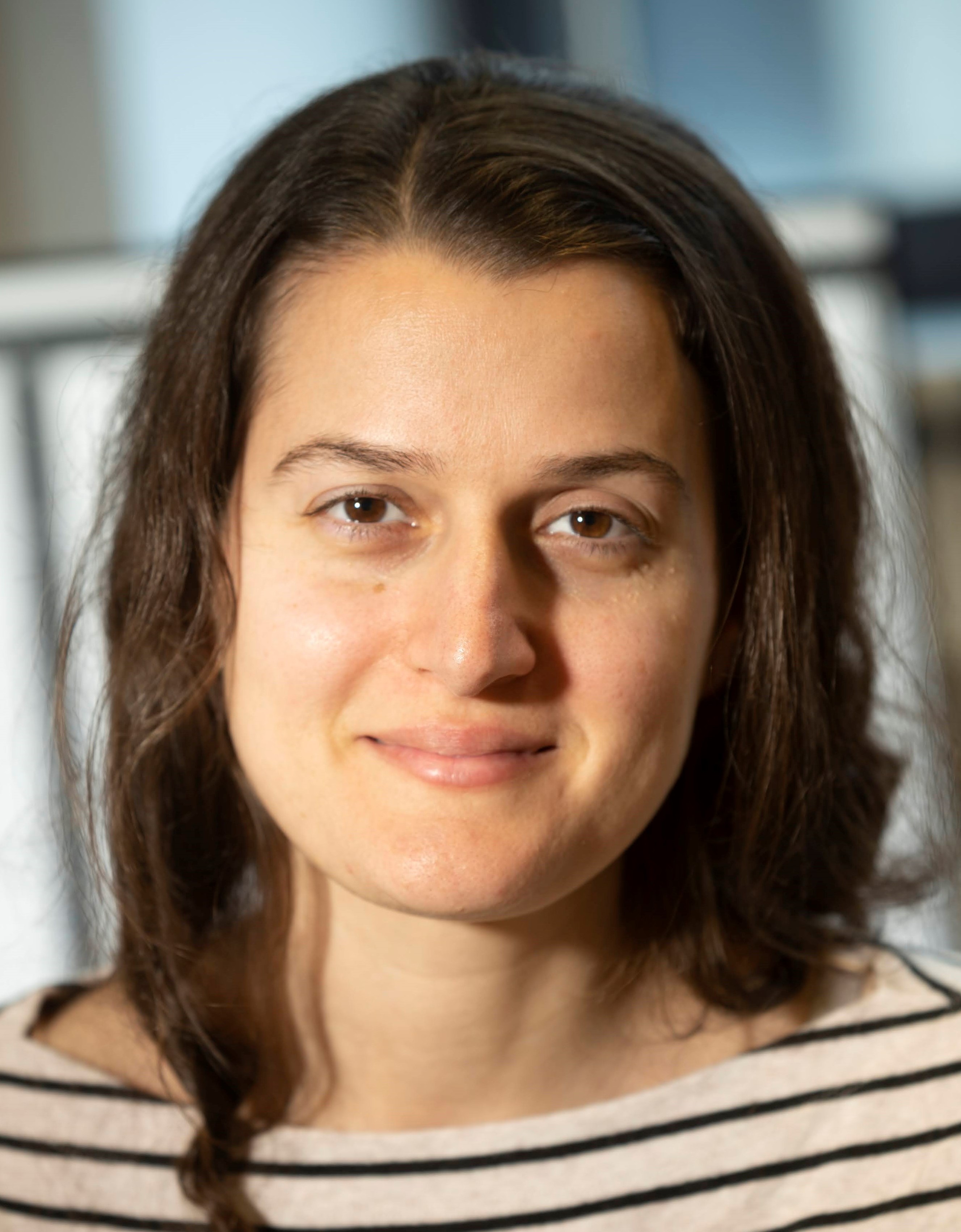
Nofar Carmeli is a researcher at Inria , affiliated with the Boreal joint project-team (LIRMM, Inria, University of Montpellier, CNRS) in Montpellier, France. Her work focuses on theoretical aspects of database query optimization, particularly through the lenses of fine-grained complexity and enumeration complexity. PhD from Technion (2015-2020), advised by Prof. Benny Kimelfeld Postdoctoral Researcher at ENS Paris (2021-2022) and Inria's Valda project-team Holds the Schmidt Postdoctoral Award (2021-2022) Her research explores optimal algorithms for database query answering, including direct access to ranked answers, quantile computation, and handling of conjunctive queries with self-joins or negation. She investigates how structural properties of queries and data constraints like functional dependencies affect computational complexity. Key contributions include: Establishing tractability boundaries for direct access to conjunctive queries Developing efficient algorithms for minimal triangulation enumeration Advancing probabilistic database representations for infinite domains Creating explainable opinion graph frameworks for review summarization Scientific awards: Google PhD Fellowship (2019) Schmidt Postdoctoral Award (2021-2022) PODS Best Student Paper (2019) She has served on program committees for STACS (2025), PODS (2023-2025), and ICDT (2022-2024), and contributed to open-access research dissemination through Arxiv and dblp.
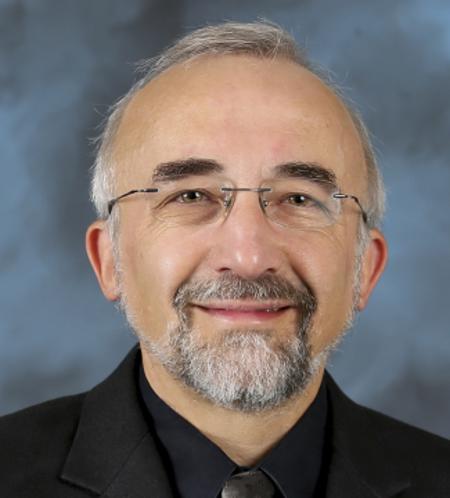
David Mount is a Professor in the Department of Computer Science at the University of Maryland, with an additional appointment at the University of Maryland Institute for Advanced Computer Studies (UMIACS). His primary research focus is Computational Geometry, particularly in designing, analyzing, and implementing data structures and algorithms for geometric problems. Applications of his work span image processing , pattern recognition , information retrieval , and computer graphics . He is a Fellow of the ACM and has received the ACM Recognition of Service Award twice. A member of the Algorithms and Theory Group, Mount has authored over 200 publications, many of which are available on Google Scholar, DBLP, and ArXiV. Research Focus Computational Geometry Algorithm Design and Analysis Geometric Data Structures Nearest Neighbor and Range Searching Clustering Algorithms Recent Publications Mount's recent publications (2023-2025) emphasize non-Euclidean geometry (e.g., Hilbert metric), dynamic geometric structures , and approximation algorithms for polytopes, Voronoi diagrams, and Delaunay triangulations. Collaborative works with students and researchers address challenges in kinetic data compression , label tracking , and geometric software development (e.g., Ipelets for polygonal geometry). Professional Activities Editorial Board Member, TheoretiCS (2021-present) Senior Associate Editor, ACM Trans. on Spatial Algorithms and Systems (2013-2020) Program Committee Member, FOCS , ESA , SODA , and other major conferences Awards ACM Fellow ACM Recognition of Service Award (twice)
Witold "Witek" Nazarewicz is a John A. Hannah Distinguished Professor in the Department of Physics & Astronomy at Michigan State University and serves as the Chief Scientist at the Facility for Rare Isotope Beams (FRIB). He is also a Corporate Fellow Emeritus at Oak Ridge National Laboratory (ORNL) and maintains a professorship at Warsaw University, Poland. Nazarewicz previously held positions as James McConnell Distinguished Professor at the University of Tennessee and served as Scientific Director of ORNL's Holifield Radioactive Ion Beam Facility from 1999-2012. His academic career spans multiple international institutions including Lund University, University of Cologne, Kyoto University, University of Liverpool, and Peking University. Nazarewicz's research focuses on theoretical nuclear physics with particular emphasis on exotic nuclei at the limits of nuclear existence. His work spans quantum many-body problems, physics of open quantum systems, superheavy elements, and nuclear fission. He has pioneered approaches to unify structure and reaction aspects of nuclei based on open quantum system many-body formalism, including the Gamow Shell Model. His research connects nuclear physics with high-performance computing, developing comprehensive descriptions of all nuclei through theoretical and experimental investigations of rare atomic nuclei. An analysis of Nazarewicz's recent publications reveals a strong focus on cutting-edge nuclear structure research, particularly concerning exotic nuclei near the driplines, charge radii measurements, superheavy elements, and the development of advanced computational methods. His work increasingly incorporates machine learning and Bayesian analysis techniques to address nuclear physics challenges. The publications demonstrate his leadership in connecting fundamental nuclear physics with applications in nuclear astrophysics, while also addressing foundational questions about the limits of nuclear existence and the nature of nuclear forces. Fellow of the American Physical Society Fellow of the U.K. Institute of Physics Fellow of the American Association for the Advancement of Science 2008 Carnegie Centenary Professor Honorary Doctorates from University of the West of Scotland (2009) and University of York (2019) 2012 Tom W. Bonner Prize in Nuclear Physics 2012 ORNL Distinguished Scientist 2013 UT-Battelle Corporate Fellow 2017 G.N. Flerov Prize 2025 Marian Smoluchowski Medal Nazarewicz has authored approximately 500 peer-reviewed publications with over 37,000 citations and an h-index of 103 (Web of Science). He has delivered over 220 invited talks at major international conferences and organized approximately 70 scientific meetings. His research has been supported by numerous grants from the Department of Energy, National Science Foundation, and international funding agencies. Nazarewicz plays a leadership role in major nuclear physics initiatives including the UNEDF, NUCLEI, and BAND collaborations, and has contributed to several National Academies reports on nuclear physics. As FRIB Chief Scientist, Nazarewicz leads theoretical efforts at one of the world's premier facilities for rare isotope research. His research group at MSU collaborates extensively with experimentalists worldwide, bridging theoretical predictions with cutting-edge measurements. He directs the FRIB Theory Alliance, fostering international collaboration in nuclear theory, and has established strong connections between nuclear physics and other disciplines including quantum information science and machine learning.