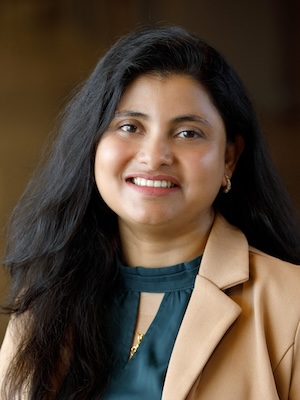
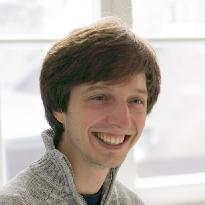
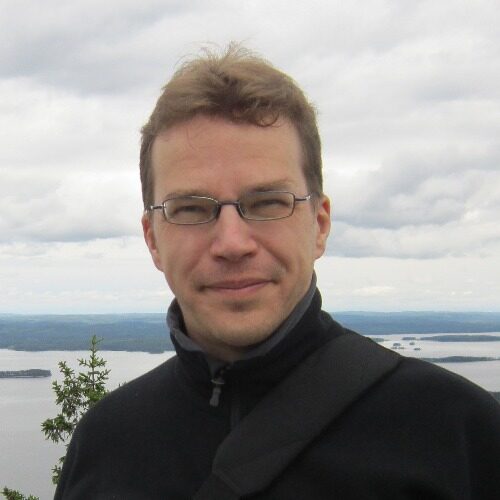
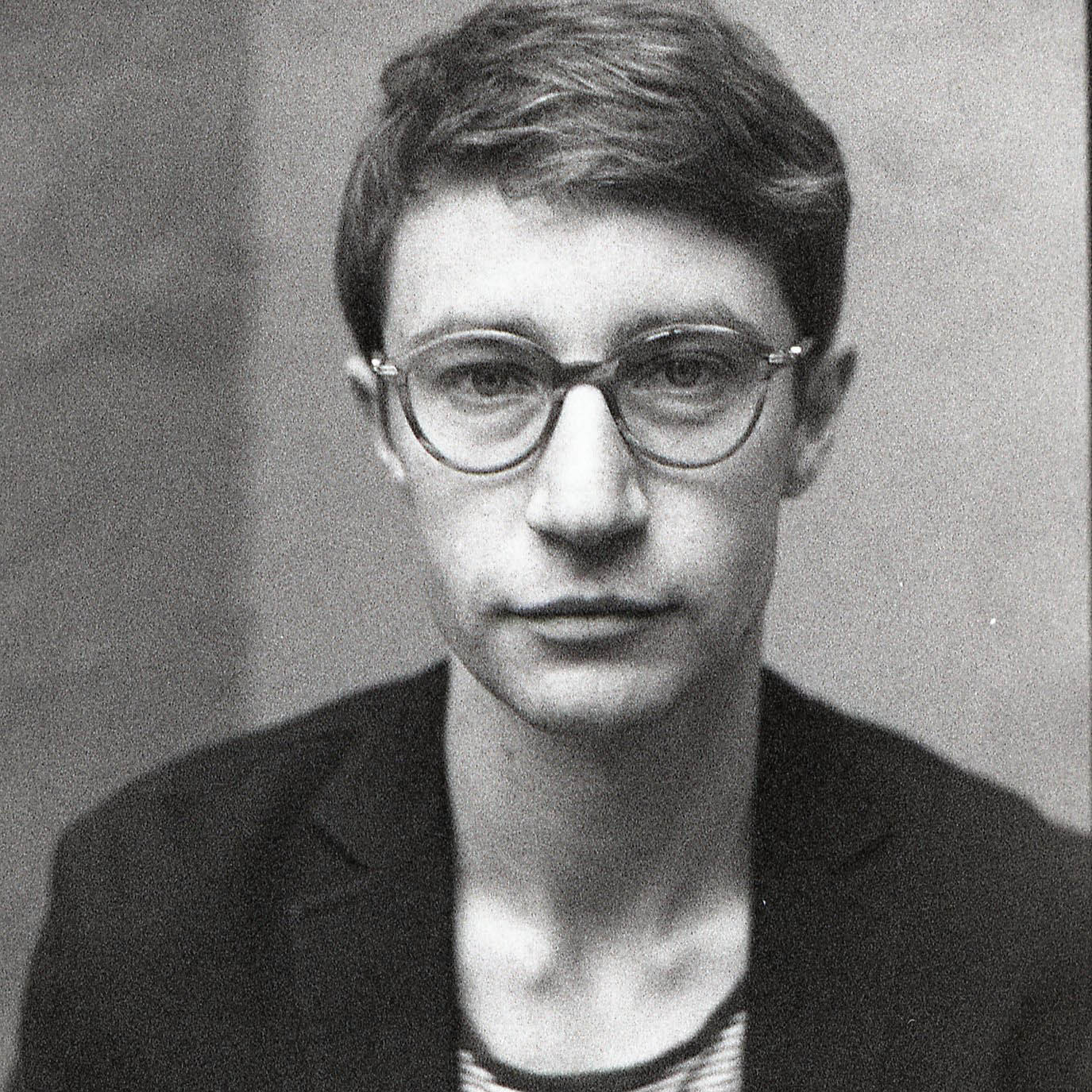
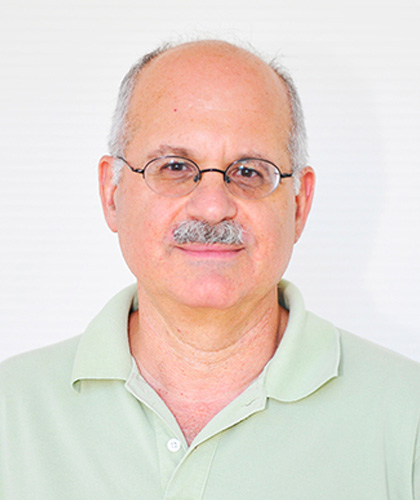
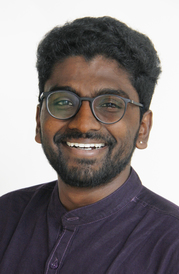
Levent Arslan is a full-time Professor at Boğaziçi University, focusing on speech processing, machine learning, and artificial intelligence. His research interests include speaker recognition, voice conversion, robust speech recognition, and natural language processing. He has contributed extensively to the development of systems for spoken language identification, automated training, and customer experience analytics. His work bridges technical innovations with business applications, such as analyzing corporate strategies in industries like steel manufacturing. Research Highlights: Speaker verification, deep learning for intent detection, cross-cultural business ethics, and automated error correction in NLP. Key Contributions: Over 50 publications since 2001, spanning speech enhancement, voice conversion systems, and educational technology. His recent studies emphasize leveraging transformer models for domain adaptation and addressing data imbalance in NLP tasks. Arslan’s analytical frameworks are applied in call center operations, fraud detection, and enterprise success metrics analysis. While no explicit awards or grants are cited, his work reflects a strong focus on practical solutions for real-world challenges.
Souvika Sarkar is an Assistant Professor at the School of Computing within the College of Engineering at Wichita State University. Her research focuses on enhancing AI and data science accessibility through interdisciplinary work at the intersection of Natural Language Processing (NLP), Information Retrieval (IR), and AI. She aims to develop context-aware and scalable AI systems capable of semantic understanding of natural language, particularly for broader societal benefit. Dr. Sarkar holds a Ph.D. from Auburn University, where she was honored with prestigious awards including the 100+ Women Strong Outstanding Departmental Annual Graduate Award and Auburn University’s Outstanding Doctoral Student Award. She also earned a master’s in software engineering from Jadavpur University. Prior to academia, she worked as an IT Analyst at Tata Consultancy Services, managing Microsoft SharePoint migrations and enterprise process workflows. Her research interests span NLP applications in education, multilingual AI systems, and ethical AI practices. Notable projects include developing conversational frameworks for K-12 physics education and analyzing annotator bias in hate speech detection systems. She has also explored deploying NLP models on embedded devices to address computational constraints. Publications highlight her work on digital twin security, LLM-driven meta-review systems, and Bangla language processing. Her industry experience bridges academic research with real-world enterprise solutions, reflecting a commitment to practical AI applications.
Christian Freude is a PreDoc Researcher at the Department of Computer Graphics , Faculty of Informatics , Vienna University of Technology (TU Wien) , focusing on Visual Computing and Human-Centered Technology . His work bridges photorealistic rendering , Monte Carlo methods , and real-time simulation . Active in projects: Toward Optimal Path Guiding (2023–2027, WWTF-funded), ACD (2020–2028) Supervised PhD/Master's students : Lukas Lipp, Christian Jauernik, Johannes Lurf Research spans Monte Carlo denoising , radiative thermal transport , subsurface scattering , and point cloud rendering . His 2025 work on Inverse Simulation of Radiative Thermal Transport introduces novel methods for efficient heat distribution modeling. Key scientific awards include the OCG Förderpreis 2016 . Publications from 2015–2025 highlight advancements in rendering algorithms , stereoscopic film , and uncertainty visualization .
Shuai Shao is a Researcher in the Department of Internal Medicine at Yale School of Medicine. His work focuses on control systems, robotics, and machine learning with applications in distributed optimization, autonomous systems, and resilient networks. He has contributed to advancements in multi-agent coordination, inverse optimal control, and energy management systems. His email is s.shao@yale.edu . Research interests span distributed algorithms, nonlinear control, and deep learning for complex systems. Notable work includes developing resilient consensus protocols, spacecraft trajectory planning, and battery thermal management solutions. Recent publications emphasize integration of control theory with machine learning frameworks. His article trends highlight innovation in edge agreement algorithms, multi-drone cooperative systems, and Koopman-based learning for nonlinear dynamics. These contributions address challenges in safety-critical autonomous systems and energy optimization. No scientific awards are explicitly mentioned. Advising activity and grant details are currently unavailable. His research aligns with Yale’s focus on interdisciplinary solutions for healthcare and engineering problems.
Dr. Xiaoqing Guo is a Research Fellow at the Department of Engineering Science, University of Oxford. She holds a PhD from City University of Hong Kong (2022) and a B.Eng from Beihang University (2018). Her research focuses on medical image analysis, computer vision, and machine learning, with an emphasis on multimodal learning, human-machine interaction, and robust AI systems. She is affiliated with the Institute of Biomedical Engineering and the Noble Group, contributing to projects like the Turing AI WLR Fellowship. Her educational background includes: B.Eng in Biological Science & Medical Engineering (Beihang University, 2018) PhD in Electrical Engineering (City University of Hong Kong, 2022) Research interests span medical imaging , multimodal systems , and domain adaptation . Recent work includes MMSummary for fetal ultrasound video summarization, Pose-GuideNet for fetal head ultrasound guidance, and IterMask2 for brain lesion segmentation. She explores challenges like noisy labels, open-set generalization, and few-shot learning for rare diseases. Her publications reflect a trend toward medical AI applications , cross-modal systems , and domain adaptation . Notable contributions include novel frameworks for segmentation, anomaly detection, and adaptive learning. Awards include the 2024 Asian Deans’ Forum Rising Star and 2023 Global Top 80 Chinese Young Female AI Scholars. She was also a CVPR Outstanding Reviewer (2023) and recipient of the Chow Yei Ching Doctoral Research Award (2022). Dr. Guo’s work bridges theory and clinical practice, with projects in collaboration with institutions like the University of Oxford’s Visual AI Research Group. She is involved in initiatives like the Turing AI Fellowship and contributes to advancing medical imaging technologies.
Antonio Jose Jimeno Yepes is an Honorary Associate Professor at RMIT University's School of Computing Technologies, specializing in AI-driven healthcare solutions. His research focuses on applying machine learning and natural language processing to medical informatics, including areas like chest X-ray classification, clinical data analysis, and biomedical literature mining. He collaborates on projects such as AI in remote healthcare communication and has contributed to datasets like M3 for medical document summarization. With an extensive publication record spanning 2020-2025, his work bridges computational methods with real-world healthcare challenges. Key research interests include: Zero-shot learning for medical imaging NLP applications in clinical text analysis Predictive modeling in aged care Integration of AI with radiology diagnostics Document layout analysis for scientific literature He is actively supervising PhD and Masters students in AI for healthcare, with a current focus on 'AI in communications for remote healthcare.' His work has been published in high-impact journals like BMC Geriatrics , IEEE Transactions on Medical Imaging , and Drug Safety . Antonio holds an ORCID identifier (0000-0002-6581-094X) and collaborates internationally on projects involving healthcare data science, biomedical informatics, and AI-driven medical technologies.
Daniel Ortiz Arroyo is an Associate Professor at Aalborg University's Faculty of Engineering and Science, affiliated with the Intelligent Energy Systems and Flexible Markets department. His research focuses on AI-driven solutions for energy systems, wastewater treatment optimization, robotics, and deep learning applications in industrial systems. He leads and collaborates on projects such as AITEKS (AI for Tech Support), OPTIMIZE (Deep Reinforcement Learning in Fermentation), and amphibious drone development for infrastructure inspection. Key research areas include reinforcement learning for environmental control systems, synthetic data generation for defect detection, and predictive modeling in wastewater treatment. His work integrates machine learning with physical systems to enhance efficiency and sustainability. Notable contributions include grey-box models for N₂O dynamics and amphibious quad-rotor designs for pipeline inspection. Dr. Arroyo has contributed to over 97 publications, including peer-reviewed journal articles and conference proceedings, focusing on AI applications in energy, environment, and robotics. He actively participates in editorial peer review for journals like Evolutionary Intelligence and CRC Press . His projects involve collaborations with industry partners like Novo Nordisk Foundation and Innovation Fund Denmark, addressing challenges in microbial fermentation, fiber rope inspection, and wind turbine maintenance. He maintains a strong emphasis on data-driven innovation and interdisciplinary research.
Delphine Bernhard is a Lecturer in Computer Science at the Faculty of Languages, University of Strasbourg, since September 2011. She serves as head of the computer science department at the Faculty of Languages and co-head of the Master's degree in Language Technologies since 2016. Her research focuses on natural language processing, text mining, and lexical resource creation for under-resourced languages like Alsatian dialects. Institution: University of Strasbourg Academic Unit: Faculty of Languages Department: Computer Science Role: Lecturer & Department Head Teaching: Databases for CAWEB Master's program Her research explores natural language processing for under-resourced languages , particularly focusing on Alsatian dialects . Key areas include POS tagging , syntactic annotation , lexical resource development , and language revitalization through digital tools. She works on corpus creation , parallel corpora , and machine learning adaptation for regional language processing . Delphine Bernhard's publications demonstrate expertise in computational dialectology , low-resource language processing , linguistic annotation , and regional language preservation . Her work spans POS tagging , dependency parsing , emotion analysis in theater , and metadata management for regional languages of France . She contributes to the RESTAURE and DIVITAL projects, focusing on computational processing for regional languages . Her work includes FAIR corpus creation , spelling normalization , and lexicon development for Alsatian dialects . She explores cohesive features for text readability and develops crowdsourcing solutions for language resource bottlenecks .
Ville Hautamäki is an Associate Professor at the University of Eastern Finland's School of Computing, Department of Computer Science. His research focuses on data science, statistical inference, and deep learning with applications in autonomous agents, bioinformatics, and speech technology. He teaches courses such as Probabilistic Inference for Data Science and Bayesian Inference, and regularly contributes to summer schools on machine learning. His research group, Applied Statistics and Statistical Machine Learning, addresses challenges in speaker verification, speech processing, and biomedical data analysis. Recent works include advancements in robust speaker recognition under noisy conditions, deepfake detection, and end-to-end autonomous driving systems. Collaborations span diverse domains including healthcare, cybersecurity, and robotics. Publications highlight contributions to multi-task learning frameworks, imitation learning policies, and generative models for single-cell data. His work emphasizes cross-disciplinary approaches, blending theoretical machine learning with practical applications in real-world scenarios.
Ilia Markov is an Assistant Professor at the Vrije Universiteit Amsterdam, affiliated with both the Faculty of Social Sciences and Humanities and the Network Institute. His research focuses on computational linguistics, natural language processing, and artificial intelligence, with particular emphasis on hate speech detection and counterspeech strategies. Education: PhD in Computer Science (with honors) from the National Polytechnic Institute, Mexico (2018) Dr. Markov's research aims to foster more inclusive and respectful online communication by mitigating online hate speech and developing context-aware, personalized counterspeech strategies tailored to authors' sociodemographic profiles. He also investigates cross-domain scalability and the reasoning capabilities of AI models. His work bridges computational linguistics with social computing, focusing on practical applications for creating safer online environments. His research demonstrates technical sophistication in developing novel computational methods while maintaining awareness of social implications. His publication record shows a clear trajectory from foundational work in authorship analysis and native language identification to current research on hate speech detection and counterspeech generation. Recent publications emphasize multimodal approaches that integrate text and image analysis, cross-lingual transfer learning techniques, and ethical considerations in deploying AI systems for social media moderation. His work increasingly addresses low-resource language scenarios and the challenges of adapting models across different social contexts. Scientific Awards and Recognition: Outstanding Academic Performance Award for PhD students at the National Polytechnic Institute Senior Area Chair for LREC-COLING 2024 Area Chair for LREC 2026 Dr. Markov has co-organized several international competitions on automatic authorship identification and serves in editorial roles for major conferences in computational linguistics. His collaborative work spans multiple institutions across Europe and Latin America, reflecting the international nature of his research community. He has published over 65 peer-reviewed papers in journals and conference proceedings, demonstrating consistent productivity and impact in his field. As part of the Network Institute at VU Amsterdam, Dr. Markov contributes to interdisciplinary research that combines computational methods with social science perspectives to address contemporary challenges in digital communication. His affiliation with this institute provides a rich environment for exploring the societal implications of his technical work while maintaining rigorous methodological standards.
Roles and Affiliations: Duc V. Le is an Assistant Professor at the Digital Society Institute and Pervasive Systems department. His work focuses on pervasive computing, sensor networks, and machine learning applications in smart environments. Research Interests: Dr. Le's research spans activity recognition, indoor localization, underground communication, and IoT systems. He explores innovative solutions like inertial navigation using Transformers and anchor-free localization techniques. His work integrates machine learning with sensor data to address challenges in smart infrastructure monitoring and human activity analysis. Awards: Best Paper Nominee (2023) - Pervasive Computing Key Contributions: Notable contributions include patents on fluid parameter detection and publications on subsoil communication, Wi-Fi CSI activity recognition, and self-diagnostic water pipelines. His research bridges theoretical advancements with practical applications in smart cities and environmental monitoring.
Ethan Goan is a Research Fellow at Queensland University of Technology (QUT) within the Faculty of Engineering, specifically affiliated with the School of Electrical Engineering & Robotics. He is actively involved with the Centre for Data Science and specializes in Signal Processing, Artificial Intelligence, and Vision Technologies research areas. His educational background includes: PhD pending conferral (as of February 27, 2024) from Queensland University of Technology Bachelor of Engineering (Electrical) from Queensland University of Technology Dr. Goan's research focuses on the intersection of artificial intelligence and signal processing, with particular expertise in Bayesian neural networks and their applications. His work spans multiple domains including medical imaging, radar signal processing, computer vision, and digital health. His recent publications demonstrate strong emphasis on uncertainty quantification in deep learning models, particularly for real-time applications on embedded systems. His research combines theoretical advances in probabilistic modeling with practical applications across healthcare, robotics, and signal processing domains. His publication record shows consistent output since 2016, with increasing focus on deep learning approaches to solve complex problems in signal processing and computer vision. Recent work demonstrates expertise in zero-shot learning frameworks, semantic segmentation, and the application of AI to medical diagnostics and digital health monitoring. Dr. Goan collaborates extensively with researchers across multiple institutions, as evidenced by his co-authorship on large-scale collaborative projects such as the Parkinson's Disease Digital Biomarker DREAM Challenge. His work appears in prestigious venues including IEEE conferences, Nature partner journals, and specialized machine learning publications. He is affiliated with the Centre for Data Science at QUT and works within the Signal Processing, Artificial Intelligence and Vision Technologies research group, contributing to QUT's growing reputation in AI and robotics research.
Larry Davis is a Professor in the Department of Computer Science and the Institute for Advanced Computer Studies (UMIACS) at the University of Maryland. He is affiliated with the Computer Vision Laboratory of the Center for Automation Research, where he previously served as head from 1981-1986. His research focuses on visual surveillance, human movement analysis, and advanced computer vision systems such as the Keck Laboratory for the Analysis of Visual Movement. Established in 1998, the Keck Lab uses a 64-camera array to study 3D human motion tracking and shape recognition. His work spans projects like codebook-based background subtraction for surveillance and clothing appearance models for persistent tracking. He leads interdisciplinary research on laser beam propagation through atmospheric turbulence and has secured significant grants, including a $4M Multidisciplinary Research Initiative contract. His recent publications emphasize AI-driven solutions for media forensics, generative models, and adversarial attacks on vision systems. Research contributions include innovations in neural rendering (FlexNeRF), personalized clothing compatibility frameworks, and systems for detecting deepfakes and video tampering. His work bridges theoretical advancements with real-world applications in security, healthcare, and retail technology.
Anjany Sekuboyina is a Postdoctoral Researcher at ETH Zurich's Department of Quantitative Biomedicine, focusing on medical image analysis using machine learning. Her work emphasizes deployable solutions for hospitals, including probabilistic ML, generative models, and relational ML/graph-based approaches. She co-developed the VerSe dataset, a large-scale CT spine segmentation benchmark, and contributed to projects like MedShapeNet and GenerateCT. Research Interests: Medical Image Segmentation (e.g., vertebrae, spine, and vascular structures) Generative Models for Medical Imaging Synthesis Relational Machine Learning and Graph Neural Networks Automated Clinical Workflow Integration Labs/Teams: Bjoern Menze Team at ETH Zurich. Active contributor to open-source repositories like VerSe (234 stars) , focusing on medical imaging challenges and datasets.
Antonio Orvieto is a Lecturer at the University of Tübingen, Principal Investigator at the ELLIS Institute Tübingen, and independent group leader at the Max Planck Institute for Intelligent Systems. He leads the Deep Models and Optimization research group and serves as faculty for the CLS, ELLIS, and IMPRS-IS PhD Programs. Orvieto holds a PhD from ETH Zürich and has conducted research at DeepMind London, Meta (FAIR) Seattle, MILA, and Inria Paris. Orvieto's research focuses on improving the efficiency and accessibility of deep learning technologies through theoretical advancements in optimization and architecture design. His work spans two main areas: understanding large-scale optimization dynamics and designing innovative neural network architectures capable of reasoning with complex sequential data. His research has significant implications across multiple domains including biology, neuroscience, natural language processing, and music generation. His approach combines rigorous theoretical analysis with practical applications to address fundamental challenges in deep learning. His recent publications reveal a strong emphasis on understanding optimization landscapes, developing efficient recurrent architectures, analyzing transformer behavior, and exploring the theoretical foundations of state-space models. The work shows a consistent pattern of bridging theoretical insights with practical implementations, particularly in handling sequential data and improving training efficiency. Schmidt Sciences AI2050 Early Career Fellow Orvieto actively mentors PhD students and researchers in his Deep Models and Optimization group, which includes PhD candidates working on various aspects of deep learning theory and applications. His research is supported through his positions at the University of Tübingen, ELLIS Institute, and Max Planck Institute for Intelligent Systems. He has collaborated with leading researchers across multiple institutions including ETH Zürich, DeepMind, Meta, MILA, and Inria. His research group focuses on investigating the interplay between optimizers and architectures in deep learning, with particular emphasis on developing new networks for long-range reasoning. The group strongly believes that deep learning will revolutionize science and technology, and they aim to provide theoretical foundations that will enable scientists and engineers with limited resources to leverage powerful deep learning solutions.