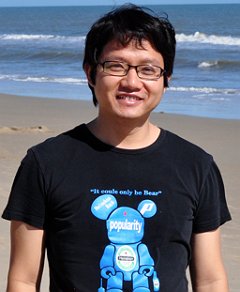
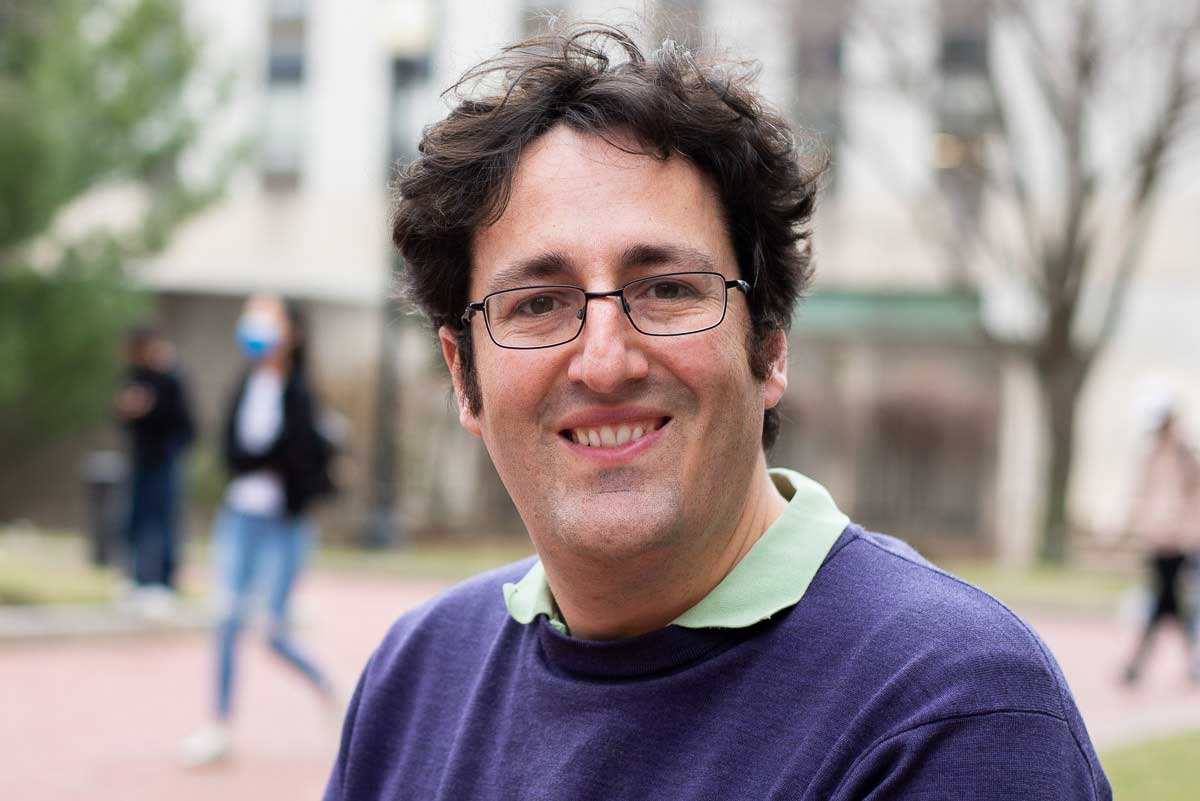
Thomas Dreibholz is a Chief Research Engineer at Simula Metropolitan's Center for Resilient Networks and Applications. He specializes in cyber sovereignty, network security, and internet testbeds, with extensive work on distributed systems, cloud computing, and 5G networks. Affiliation: Simula Metropolitan, Oslo, Norway Research Focus: Multi-path transport protocols, network resilience, and privacy-preserving frameworks His research explores the intersection of network security, cloud/fog computing, and next-generation communication protocols. Recent work includes HiPerConTracer for network analysis, privacy-aware fog platforms , and multi-layered federated learning security . He contributes to testbed development, including the NorNet infrastructure for real-world multi-path transport research. Publications reflect expertise in multi-path TCP , 5G network optimization , and cloud/fog security . He has delivered invited talks at institutions like Hainan University and Princeton University, emphasizing open-source testbed deployment and educational outreach.
Morten Øygarden is a Postdoctoral Fellow in the Department of Cryptography at Simula UiB, a joint research initiative between Simula Research Laboratory and the University of Bergen. His work bridges theoretical cryptography and practical security analysis within Norway's premier cryptographic research environment. His educational background culminates in a 2021 PhD from the University of Bergen with the thesis "Algebraic Cryptanalysis of Cryptographic Schemes with Extension Field Structure", establishing his expertise in algebraic methods for cryptanalysis. Øygarden's research focuses on Algebraic Cryptanalysis , Post-Quantum Cryptography , and Symmetric Cryptography , specializing in vulnerabilities of multivariate systems, code-based schemes, and ring-based primitives. He develops novel Gröbner basis techniques to break cryptographic assumptions underlying quantum-resistant candidates, with direct implications for NIST standardization processes. Analysis of his 2020-2024 publications reveals consistent innovation in algebraic attack methodologies, particularly against arithmetization-oriented primitives for zero-knowledge proofs and MPC-friendly ciphers. His work demonstrates exceptional depth in exploiting mathematical structures of symmetric primitives while advancing post-quantum security evaluations of multivariate and code-based systems. His publication record in top venues including CRYPTO, EUROCRYPT, and the Journal of Cryptology reflects significant contributions to cryptographic science, though specific awards or grant details are not documented in available sources.
Håvard Raddum serves as Chief Research Scientist in the Department of Cryptography at Simula UiB, a joint research entity of Simula Research Laboratory and the University of Bergen. His primary focus involves advancing cryptographic security through algorithm analysis, Fully Homomorphic Encryption applications, and hardware-level attack mitigation. Raddum's research spans cryptography with specialization in security analysis of cryptographic algorithms, practical deployment of Fully Homomorphic Encryption, and physical attacks on hardware implementations. His work addresses vulnerabilities in symmetric ciphers, multivariate schemes, and lattice-based systems through algebraic cryptanalysis, side-channel techniques, and theoretical security proofs. Analysis of his 2019-2025 publications reveals concentrated expertise in cryptanalysis across diverse primitives. Key trends include algebraic attacks on arithmetization-oriented cryptography, side-channel analysis of lightweight ciphers, error detection in lattice computations, and security evaluations of Fully Homomorphic Encryption. His research consistently bridges theoretical frameworks with practical implementation vulnerabilities.
Dipti Kapoor Sarmah is a Lecturer specializing in cybersecurity, steganography, and cryptography. Her work bridges theoretical and applied aspects of secure data transmission, digital forensics, and cyber threat mitigation. Current role: Lecturer in Semantics, Cybersecurity & Services Key research areas: Cryptography, Steganography, Phishing analysis, IoT security Her research explores hybrid cryptographic-steganographic systems, gamified cybersecurity education, and innovative approaches to combat MageCart e-skimming attacks using reverse proxy architectures. She has systematically analyzed zero-knowledge protocols (zk-SNARK, zk-STARK, Bulletproofs) for privacy-preserving authentication. Recent publications address pandemic-era phishing trends, consumer IoT security standards, and data mining applications in insurance fraud detection. Her work frequently intersects with artificial intelligence and machine learning techniques for secure image processing. Notable recognition includes the EMMSAD 2025 Best Paper Award for collaborative research on phishing attack ontologies. Her activity spans diverse formats including peer-reviewed journal articles, conference contributions, and systematic literature reviews. With a Scopus h-index of 5 and over 128 citations, her research output spans 2008-2025, showing consistent contributions to cybersecurity, particularly in steganography optimization algorithms and digital forensics.
Scott J Aaronson is the David J. Bruton Jr. Centennial Professor of Computer Science at the University of Texas at Austin , where he explores the theoretical foundations of quantum computing and computational complexity theory . A pioneer in the field, he has bridged quantum physics, computer science, and mathematics to clarify the capabilities and limitations of quantum computers. A summa cum laude graduate of Cornell University and holder of a PhD from UC Berkeley , Aaronson has shaped public understanding through his popular blog Shtetl-Optimized , his book Quantum Computing Since Democritus , and TED Talks. His research has established critical insights into: Quantum Supremacy : Theoretical frameworks for experimental validation without full fault tolerance Cryptographic Security : Demonstrating quantum lower bounds for collision problems Classical Complexity : The invention of algebrization as a tool for complexity class analysis Awarded the ACM Prize in Computing (2020) , ACM Fellow (2019) , and the Simons Investigator Award , his work has been recognized as foundational to the digital age. He has also mentored graduate students in quantum complexity theory, with projects advancing topics like Boson Sampling , Forrelation , and Quantum Zero-Knowledge Protocols . Scientific Awards: ACM Prize in Computing (2020) ACM Fellow (2019) Tomassoni-Chisesi Prize in Physics (2018) Simons Investigator Award (2017) Alan T. Waterman Award (2012) Aaronson’s advocacy for Deep Zionism and reflections on AI’s existential implications reflect his broader engagement with ethics and societal impact in technology.
Prof. Dr. Kerstin Lemke-Rust is a Professor at the Department of Computer Science at Bonn-Rhein-Sieg University of Applied Sciences (H-BRS) and a key member of the Institute for Cyber Security and Privacy (ICSP). Her affiliations include leadership roles in the Gesellschaft für Informatik (GI) and the International Organisation for Cryptologic Research (IACR). Her research spans: Cryptographic algorithm security (side-channel/fault analysis) Blockchain and IoT security Automotive cybersecurity Hardware vulnerability detection She teaches courses in IT Security, Applied Cryptography, and Embedded Systems across bachelor’s and master’s programs. Recent publications (2021-2025) focus on blockchain privacy, side-channel attacks, and hardware security, reflecting her emphasis on real-world cryptographic vulnerabilities. She leads research initiatives at ICSP and collaborates internationally on cybersecurity projects.
Işıl Dillig is an Associate Professor of Computer Science at the University of Texas at Austin, where she leads the UToPiA research group. Her academic career spans over a decade of significant contributions to programming languages research, particularly in program analysis, verification, and synthesis. Dr. Dillig received all her academic degrees (BS, MS, and PhD) from Stanford University before joining the faculty at UT Austin. Her educational background established the foundation for her innovative research approach that bridges theoretical computer science with practical applications. Her research focuses on developing techniques to make software systems more reliable, secure, and easier to build through advanced program analysis, verification, and synthesis methods. She has pioneered approaches that combine symbolic reasoning with machine learning to tackle complex software engineering challenges across multiple domains including security, databases, and programming language theory. Her work demonstrates exceptional depth in creating practical tools that address real-world software development problems while maintaining strong theoretical foundations. Analysis of Dr. Dillig's publication record reveals a consistent trajectory of innovation in program synthesis, with recent work expanding into neurosymbolic approaches that bridge neural networks with formal methods. Her research shows strong connections between theoretical foundations and practical applications, particularly in security-critical systems, database technologies, and blockchain applications. The evolution of her work demonstrates increasing sophistication in handling complex program structures while maintaining practical usability. Dr. Dillig has received prestigious recognition for her research contributions: Sloan Fellowship NSF CAREER award As a dedicated educator and research leader, Dr. Dillig has served in significant roles including Program Chair for PLDI 2022 and Steering Committee member for PLDI. She has mentored numerous students through her UToPiA research group, guiding research in program synthesis, verification, and analysis. Her work has been supported by substantial research grants that have enabled innovative projects at the intersection of programming languages and security. Dr. Dillig leads the UToPiA (UT Austin Programming, Languages, and Analysis) research group, which focuses on developing novel techniques for program analysis, verification, and synthesis. The group maintains strong collaborations with industry partners and academic institutions worldwide, translating theoretical advances into practical tools that address real software engineering challenges.
Bryan Parno is the Kavčić-Moura Professor of Electrical & Computer Engineering and Computer Science at Carnegie Mellon University, where he leads the Secure Foundations Lab within CyLab, CMU's Security & Privacy Institute. His research combines theory and practice to provide formal, rigorous security guarantees about concrete systems, with emphasis on creating solid foundations for practical solutions. His research spans secure systems , formal software verification , applied cryptography , data privacy , and usable security . Current work focuses on protocols for verifiable computation and zero-knowledge proofs, building practical formally verified secure systems, and developing next-generation application models. His lab maintains a strong commitment to reproducibility, open-sourcing code under permissive licenses, and avoiding patenting results to maximize public benefit. His recent publications demonstrate a clear trend toward practical verification of real-world systems, particularly through the Verus project for verifying Rust code, Everest for building verified HTTPS stacks, and Ironclad for provably secure systems. These works bridge the gap between theoretical security guarantees and practical implementation, with applications ranging from blockchain protocols to verified cryptographic libraries deployed in the Linux kernel. His scientific achievements include multiple Distinguished Paper/Artifact Awards (USENIX Security, SOSP, PLDI), the IEEE Cybersecurity Award for Practice , the Sloan Fellowship , and the ACM Doctoral Dissertation Award . His work on verifiable computation protocols has influenced blockchain systems, while his research on secure code execution environments contributed to Intel's SGX and TDX technologies. As an advisor, Parno has mentored numerous PhD students including Aymeric Fromherz (recipient of the ACM SIGSAC Doctoral Dissertation Award) and Jay Bosamiya. His lab receives funding from diverse sources including NSF, industry partners, and security foundations. Notably, his work has been incorporated into Windows 8+, iOS 13+, and the Linux kernel. He also serves in leadership roles including Chair of IEEE Computer Society's Technical Committee on Security & Privacy. The Secure Foundations Lab maintains strong industry connections, with alumni joining Microsoft Research, Inria, Northeastern University, and other leading institutions. Recent projects like Verus, Everest, and Ironclad represent the lab's commitment to building end-to-end verified systems that provide rigorous security guarantees while maintaining practical performance.
J.A. Pouwelse is a Professor at the Data-Intensive Systems department within the Electrical Engineering, Mathematics and Computer Science school at Delft University of Technology . With 125 research outputs and 4 supervised works, his work focuses on Blockchain , Decentralized Systems , Federated Learning , and Peer-to-Peer Networks , particularly for Web3 applications. His recent publications analyze topics such as: Decentralized adaptive ranking Serverless federated learning Green smart contracts Search index optimization Zero-trust frameworks Notable recognition includes the LCN Best Paper Award 2021 . Research spans decentralized infrastructure design, privacy preservation, and scalable system implementation.
Yu Feng is an Associate Professor in the Computer Science Department at the University of California, Santa Barbara. He received his Ph.D. in Computer Science from the University of Texas at Austin in 2018 and his MS in Computer Science from Beihang University in 2008. His research focuses on programming languages, program analysis and verification, program synthesis, and security. Specifically, he aims to build automated tools that guarantee the desired behavior of systems in a sound, precise, and scalable way. He is particularly interested in applying program synthesis and analysis to tackle security and performance problems in mobile devices and blockchain applications. Professor Feng's recent publications demonstrate a strong focus on program synthesis for security applications, particularly in blockchain and zero-knowledge proofs. His work spans multiple top-tier conferences including PLDI, POPL, ASE, and CCS, showing consistent contributions to both programming languages and security communities. His research often combines logical reasoning with machine learning techniques to develop innovative solutions for complex problems in program analysis and synthesis. Ethereum Academic Award (2025, 2024, 2023) ACM SIGPLAN Distinguished Paper Award, PLDI 2022 ACM SIGCHI Best Paper Award, CHI 2021 Google Faculty Research Award (Security), 2021 ACM SIGSOFT Distinguished Paper Award, ASE 2020 DARPA HARDEN grant (2022-2025) NSF-SaTC grant (2019-2022) ACM SIGPLAN Distinguished Paper Award, PLDI 2018 Professor Feng actively mentors students in his research group, currently advising several PhD students including Yanju Chen, Junrui Liu, Hongbo Wen, and Hanzhi Liu. He has served on program committees for numerous top conferences including CCS, PLDI, OOPSLA, ICSE, ASPLOS, and POPL. His research is supported by prestigious grants including DARPA HARDEN and NSF-SaTC. His laboratory focuses on developing cutting-edge program synthesis and analysis frameworks that combine logical reasoning with machine learning. The team works on applications in blockchain security, zero-knowledge proofs, and secure protocol implementation.
Jerome Lacan is a Professor at the Higher Institute of Aeronautics and Space (ISAE), where he serves as Head of the Department of Complex Systems Engineering (DISC) and is a member of the Sysco research team. He holds a PhD in Computer Science from Paul Sabatier University, Toulouse, France, and has accreditation to supervise research since December 2008. His research interests focus on security and cryptography with several specific areas of contribution: Blockchains for embedded systems through the BLEND group (BLockchains for aEronautical and space systems), addressing blockchain implementation in resource-constrained networks (drones, satellites, vehicles) including oracles, zero-knowledge proofs, and smart contracts Specialized cryptographic mechanisms including threshold cryptography and post-quantum cryptography Secure satellite communications, particularly implementation of cryptographic mechanisms on nano-satellites Erasure codes and network integration, notably the TETRYS protocol which combines coding and networking Professor Lacan has supervised numerous PhD students across various topics related to satellite communications, network coding, and security. His teaching spans multiple levels of the engineering program, from first-year courses on Information Theory to advanced Master's level courses in algorithms and video compression. He has taught across the Engineering program, including first-year elective modules on Information Theory, second-year Cryptography modules, third-year error-correcting coding and satellite communications standards, and Master's courses including Algorithm and Computing and video compression. Professor Lacan plays a significant role in both research and education at ISAE, contributing to the advancement of secure communications technologies for aerospace applications while mentoring the next generation of engineers and researchers.
Daniel Wichs is a tenured Professor at the Khoury College of Computer Sciences at Northeastern University in Boston. He is a prominent researcher in the field of cryptography and serves as a Senior Scientist at NTT Research. His academic journey includes a PhD from New York University under Yevgeniy Dodis, a postdoctoral fellowship at IBM Research T.J. Watson, and degrees from Stanford University. Current Position: Professor at Northeastern University Prior Positions: IBM Josef Raviv Memorial Postdoctoral Fellow (2011-2013) Education: PhD NYU (2011), BS/MS Stanford (2005) Professor Wichs specializes in cryptography with research interests spanning computing on encrypted data, program obfuscation, lattice-based cryptography, information-theoretic cryptography, and foundational aspects of cryptography. He also maintains broad interests in computer security, algorithms, complexity theory, coding theory, and information theory. His research group includes current PhD students Manu Kondapaneni, LaKyah Tyner, and Ethan Mook, along with numerous successful alumni who have become professors at institutions worldwide. His recent publications demonstrate a strong focus on advanced cryptographic primitives including homomorphic encryption, zero-knowledge proofs, private information retrieval, and functional encryption. These works frequently appear at top-tier conferences like STOC, FOCS, CRYPTO, and EUROCRYPT, with several receiving best paper awards. His research often bridges theoretical foundations with practical applications in privacy-preserving computation. Best Paper at STOC 2023 Alfred P. Sloan Research Fellowship (2018) NSF CAREER Award (2018) J.P. Morgan Faculty Research Award (2022) IBM Postdoctoral Fellowship (2011-2013) Professor Wichs actively contributes to the academic community through service as Area Chair for CRYPTO 2025 and EUROCRYPT 2024, Program Chair for ITC 2020, General Chair for STOC 2016, and membership on numerous program committees. He teaches advanced courses including Foundations of Cryptography (CS 7810) and Theory of Computation (CS 3800), and has organized events like the Charles River Crypto Day and the Simons Summer Program in Cryptography 2025. His research group operates at the forefront of cryptographic theory, addressing fundamental questions about secure computation on encrypted data while developing practical cryptographic tools for real-world applications.
陳恭 is a Professor at the Department of Information Management, College of Business, National Chengchi University. With expertise spanning blockchain technology, information security, and software engineering, he has established himself as a leading academic in Taiwan's fintech research community. His work bridges theoretical computer science with practical business applications, particularly in digital finance and secure information systems. Dr. 陳恭 earned his PhD in Computer Science from Yale University (1989-1994), following Bachelor's and Master's degrees from National Taiwan University. His academic journey at National Chengchi University spans over two decades, progressing from Associate Professor to his current position as Professor, with significant administrative roles including Department Chair and Director of the Computer Center. Professor 陳恭's research primarily focuses on blockchain and smart contracts, Open API technology and security, social big data analysis, and programming languages. His work demonstrates a clear evolution from foundational programming language research to cutting-edge blockchain applications. He has made significant contributions to secure multi-party computation, aspect-oriented programming, and blockchain-based systems, with publications in top journals and conferences across computer science, public administration, and business innovation. An analysis of Professor 陳恭's recent publications (2016-2024) reveals a strong concentration on blockchain technology and its financial applications, particularly in smart contracts, consensus algorithms, and secure data dissemination. His research increasingly integrates with IoT systems and demonstrates practical applications in financial technology, showing a clear trajectory from theoretical foundations to real-world business solutions. His notable achievements include: Senior Excellent Teacher (20 years) from National Chengchi University Multiple Distinguished Professor appointments Special Outstanding Talent Award from the National Science Council Multiple Internationalization Excellent Research Awards Professor 陳恭 has secured numerous research grants from both governmental agencies like the Ministry of Science and Technology and private sector organizations including financial institutions and technology companies. His projects often focus on blockchain applications, fintech innovation, and information security, demonstrating strong industry-academia collaboration. He is actively involved in establishing National Chengchi University as a leading center for blockchain research in Taiwan, contributing to research centers focused on fintech innovation and digital transformation. His work has fostered significant collaborations between academia and industry in the rapidly evolving field of digital finance.