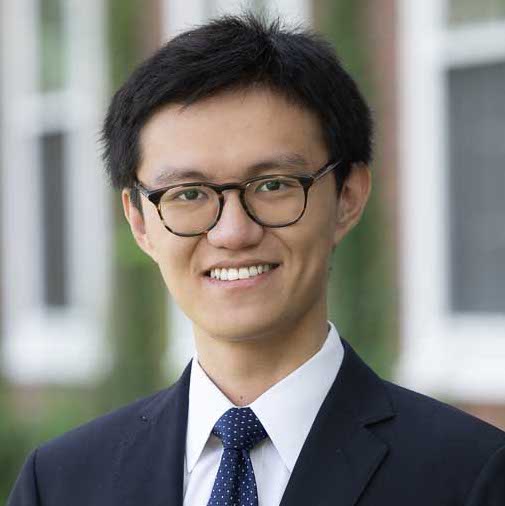
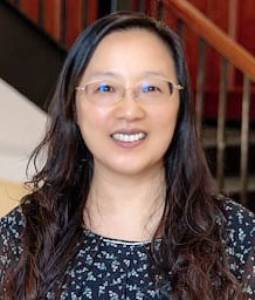
Jiafeng (Kevin) Chen is a Postdoctoral Fellow at the Stanford Institute for Economic Policy Research (SIEPR) and incoming Assistant Professor of Economics at Stanford. His research develops econometric methods for causal inference and decision-making. Research focuses on: Causal inference in structural models Empirical Bayes methods Statistical decision theory His publications address demand estimation reinterpretations, measurement error correction, and transformation methods for zero-inflated data. Chen received his PhD from Harvard University where he researched school choice mechanisms and market design.
Dr. Justin Silverman is an Assistant Professor of Information Science & Technology, Statistics, and Medicine at Pennsylvania State University, with affiliations in the Department of Statistics and the Institute for Computational and Data Science. He holds an MD from Duke University School of Medicine (2020), a PhD in Computational Biology and Bioinformatics from Duke (2019), and a BS in Physics and Biophysics from Johns Hopkins University (2011). His research integrates Bayesian statistics, machine learning, and genomics to address impactful biomedical questions. Key focuses include microbiome analysis, gene expression studies, and scale-reliant inference methodologies. His work emphasizes methodological rigor and clinical relevance, with applications in personalized medicine, agriculture, and epidemiology. The Silverman Lab develops cutting-edge tools like the fido and philr packages for compositional data analysis. Collaborations span academia and industry, addressing challenges in livestock health, viral surveillance, and precision medicine. He also leads Anarres Analytics LLC, translating statistical methods into practical solutions for clients. His advising includes PhD and MS students working on topics like scalable Bayesian models, microbial co-occurrence networks, and topological data analysis in oncology. Notable projects include studies on ancient microbiomes, dairy cow treatments, and pandemic modeling. Labs and teams: Silverman Lab (PSU), Anarres Analytics. Current positions: PI, startup founder, and collaborator in multi-institutional projects.
Yen-Yi Ho is an Associate Professor in the Department of Statistics at the University of South Carolina, with a joint appointment in Biological Sciences. She holds a Ph.D. in Biostatistics from Johns Hopkins University. Her research focuses on computational biology, statistical genetics, and the development of methods for analyzing high-throughput genetic data. Key interests include gene pathway enrichment analysis and applications in cancer, frailty mechanisms, and Hirschsprung disease genetics. Her work bridges statistical methodology and biological discovery, with notable contributions to liquid association modeling and modular network construction using eQTL data. She has collaborated on studies involving chemopreventive cancer strategies, frailty biomarkers, and genomic analyses of pancreatic adenocarcinoma. Dr. Ho has pioneered software tools like the LiquidAssociation R package and contributed to the fastLiquidAssociation package. Her publications span topics from Bayesian hierarchical modeling in medical research to single-cell RNA-seq analysis of cellular heterogeneity. Beyond academia, she has applied statistical methods to public health challenges, such as optimizing disability applicant prioritization systems.
Dr. Preety Pratima Srivastava is a Senior Lecturer in the School of Economics, Finance and Marketing at RMIT University, Melbourne. She holds a PhD in Econometrics from Monash University and previously served as a Senior Research Fellow at Monash University (2011–2012) and Research Fellow at the Central Bank of Mauritius (1995–2002). Her research focuses on applied microeconomics, health economics, and econometrics, particularly addressing topics like recreational drug consumption, labor market dynamics, and educational policy. She has secured two ARC/NHMRC grants and publishes in journals such as Journal of Health Economics and Health Economics . Currently, she serves as an Associate Editor for the Bulletin of Economic Research . Her work has been featured in media outlets like The Conversation, discussing topics such as alcohol taxation and the impact of parental smoking on children's health. Education: PhD in Econometrics (Monash University). Research Interests: Health Economics, Labour Economics, Economics of Education, Recreational Drug Consumption, Econometric Modeling. Grants & Awards: Two ARC/NHMRC grants. Media Contributions: Recent articles on tobacco-cannabis consumption dynamics and alcohol tax policies. Teaching: Extensive experience in statistics and econometrics courses at undergraduate and postgraduate levels. Service: Committee roles in workload allocation and research initiatives at RMIT School of Economics, Finance & Marketing.
Louis Pape is an Assistant Professor of Economics at Télécom Paris, affiliated with the Center for Research in Economics and Statistics (CREST). He holds a PhD from École Polytechnique, focusing on digital economics, competition, and labor markets. His research examines the intersection of technology, labor markets, and regulatory frameworks in digital sectors. Education includes economics at the University of Cambridge and philosophy at the London School of Economics (LSE). His work explores how technological advancements impact labor dynamics, competition policies, and digital market regulations. Recent studies include analyzing the Digital Markets Act's effects on Google Maps user behavior, leveraging difference-in-differences methodologies. He actively publishes in top journals and engages with policy discussions through media platforms like The Conversation and Forbes. His research interests span industrial organization, applied econometrics, and digital platform governance.
Thomas Nagler is a Professor at the Department of Statistics, Faculty of Mathematics, Computer Science and Statistics at Ludwig Maximilian University of Munich (LMU Munich). He also serves as a principal investigator at the Munich Center for Machine Learning (MCML), where he leads research at the intersection of mathematical statistics and machine learning. Nagler received his academic training at Technical University of Munich (TU Munich), earning a BSc in Mathematics (2009-2012), followed by an MSc in Mathematical Finance (2012-2014), and ultimately a PhD in Mathematical Statistics (2014-2018). Prior to his current position at LMU Munich, he held assistant professor positions at TU Delft (2021-2022) and Leiden University (2019-2021). Professor Nagler's research focuses on developing novel statistical methods with theoretical guarantees and scalable algorithms. His work spans high-dimensional dependence modeling, particularly using vine copulas, statistical machine learning, time series and functional data analysis, and statistical computing. He emphasizes creating methods that can be practically implemented and applied to solve real-world problems across diverse domains. An analysis of Nagler's recent publications reveals a strong emphasis on vine copula methodology, uncertainty quantification in machine learning, and applications to climate science and epidemiology. His work bridges theoretical statistics with practical implementation, often resulting in open-source software tools that make advanced statistical methods accessible to practitioners. The interdisciplinary nature of his research is evident in collaborations spanning climate modeling, healthcare, and finance. While specific awards are not detailed in the available information, Nagler's research impact is evident through his significant contributions to statistical methodology and his active engagement with the research community through open-source software development. As a principal investigator at MCML and Professor at LMU Munich, Nagler leads a research group focused on advancing statistical methodology for complex data analysis. His GitHub profile indicates active collaboration with students and researchers, with several followers from LMU Munich and other institutions. His research program appears to be well-funded through the MCML and university resources, supporting both methodological development and application-focused projects. Nagler maintains strong ties with the computational statistics community through his leadership of the VineCopula and pyvinecopulib projects, which provide essential tools for dependence modeling. His work with the Munich Center for Machine Learning positions him at the forefront of interdisciplinary research combining statistical theory with practical machine learning applications.
Martin Wolf is an Assistant Professor of Monetary Economics at the University of St. Gallen, affiliated with the Swiss Institute for International Economics and Applied Economic Research (SIAW). Since 2019, he has served as a Research Affiliate at the Centre for Economic Policy Research (CEPR). His research focuses on international economics , monetary economics , and economic growth , with recent work addressing fiscal policy, debt crises, automation, and supply shocks. His publications span top journals such as the American Economic Review and Journal of Monetary Economics , often analyzing macroeconomic dynamics in currency unions, secular stagnation, and financial crises. Key trends in his articles include: 2025 : Fiscal Stagnation (CEPR Discussion Paper), The Global Financial Resource Curse (AER). 2024 : Fear of Hiking? Rising Interest Rates in Times of High Public Debt (CEPR), Delayed Overshooting (AEJ Macroeconomics). 2022-2023 : Reserve Accumulation, Growth, and Financial Crises (JIE), The Scars of Supply Shocks (JME). Scientific Awards: 2024: SNSF Starting Grant for the DEBTANDGROWTH project. 2025: University of St. Gallen’s Latsis Prize for outstanding early-career economic research. He teaches Monetary Economics and International Economics at the undergraduate level, and Advanced Macroeconomics III and International Economics at the Master’s level. His work integrates theoretical and empirical approaches to address pressing global economic challenges.
Christian Kleiber is a Professor of Econometrics and Statistics at the University of Basel (Faculty of Business and Economics) since 2006. Trained as a statistician in Germany and the UK, he obtained his PhD from the Technical University of Dortmund. Research Interests: Heavy-tailed phenomena, income distribution, inequality measurement, statistical distributions, stochastic orders, data science foundations, count data regression, time series analysis, econometric computing, and the history of statistics. Methodological Focus: Specializes in statistical modeling of economic data, reproducibility in research, and computational methods. Recent Publications span count data regression, structural change detection, reproducible research frameworks, and statistical distribution theory. Key contributions include software packages like countreg , strucchange , and plm for R programming.
Rafael Gerke is a Research Professor at the Deutsche Bundesbank's Research Centre, affiliated with the Directorate General Economics. His work focuses on monetary macroeconomics, monetary policy design, and financial frictions within dynamic stochastic general equilibrium (DSGE) frameworks. He contributes to central bank policy analysis, including studies on interest rate pegs, forward guidance, and model comparisons across Eurosystem institutions. Gerke's research emphasizes robust monetary policy under uncertainty, particularly in contexts involving imperfect interest rate pass-through and bounded rationality. His publications span topics like price-level targeting, macro-financial linkages, and the effects of unconventional monetary policies at the zero lower bound. Key contributions include analyzing the transmission mechanisms in the euro area and exploring the implications of financial frictions in policy models. His work often collaborates with institutions like the ECB and Bundesbank, addressing challenges in price stability frameworks and policy projections.
Hassan Doosti is a Senior Lecturer at the School of Mathematical and Physical Sciences, Macquarie University. His research focuses on statistical methodologies, particularly in flexible modeling techniques for complex datasets, with applications in medical studies and business analytics. He has authored or edited books such as Flexible Nonparametric Curve Estimation and Ethics in Statistics: Opportunities and Challenges . Research Interests Nonparametric estimation including wavelet methods and density estimation Statistical modeling of health-related data (e.g., colorectal cancer, stroke) Development of novel statistical algorithms (e.g., censored regression, numerical dependency analysis) Ethical considerations in data analysis for medical sciences Recent Projects Outside Studies Program (2025) APRIntern: Disease Risk Modelling (2019) Key Contributions His work bridges theoretical statistics with practical applications, including: Development of adaptive wavelet quantile density estimation techniques Statistical analysis of neurological and oncological data Advancing methods for handling censored and zero-inflated datasets Awards Recipient of the Faculty of Science and Engineering Award for Inter-School Collaboration (2023) for collaborative research excellence. Professional Activities Editor of multiple peer-reviewed books and active contributor to interdisciplinary projects involving healthcare, data science, and biostatistics.
Charmaine Dean is the Vice-President, Research and Professor in the Department of Statistics and Actuarial Science at the University of Waterloo. She holds leadership roles in research administration and academic governance, including previous service as Dean of Science at Western University and Associate Dean at Simon Fraser University. Dr. Dean earned her Ph.D. in Statistics from the University of Waterloo in 1988. Her research focuses on biostatistics, environmental science, and spatio-temporal analysis, with applications to public health, wildfire management, and ecological modeling. Notable contributions include disease mapping, clinical trial design, and statistical methods for analyzing wildfire risk and forest ecology. She has received prestigious awards such as the CRM-SSC Prize, Fellowships from leading statistical societies, and the L’Ordre des Palmes Académiques from France. Her service includes roles on advisory boards for institutions like the Pacific Institute for the Mathematical Sciences and the Banff International Research Station. Dr. Dean’s work bridges academic research and policy, with impactful contributions to environmental and public health policy through interdisciplinary collaborations. Her research group’s activities include developing statistical tools for environmental risk assessment and pandemic response.
Erich J Greene is a Research Scientist in the Department of Biostatistics at the Yale School of Public Health , where he contributes to clinical trial methodology and statistical analysis. Yale Center for Analytical Sciences (YCAS) Yale Data Coordinating Center (YDCC) Education: PhD in Psychology (2003), Princeton University MA in Psychology (1997), Princeton University MS in Physics (1995), Cornell University AB in Physics (1991), Princeton University Research Interests span Biostatistics , Clinical Trial Design , Survival Analysis , and Public Health Data Science . His work focuses on: Competing risks and clustering in time-to-event data Electronic health record data validation Sex/gender disparities in cardiovascular outcomes Pragmatic trial methodologies Bayesian approaches for complex biomedical data Publication Trends reveal expertise in: Cluster-randomized trial statistical methods Fall injury prevention modeling Dementia care comparative effectiveness ICD-10 coding algorithms Non-proportional hazard scenarios Zero-inflated recurrent event modeling Collaborations include frequent partnerships with: James Dziura (9 co-publications) Can Meng (8 co-publications) David Ganz and Denise Esserman (6 each) Additional Activities: Served on the Board of Directors for the New Haven Theater Company (2011-2022).
Reka Howard is an Associate Professor in the Department of Statistics at the University of Nebraska-Lincoln's Institute of Agriculture and Natural Resources (IANR), where she bridges advanced statistical methodology with agricultural innovation through genomic prediction research and graduate education. Education: PhD in Statistics and Plant Breeding, Iowa State University (2016) Research Focus: Dr. Howard pioneers statistical methods for genomic prediction in plant breeding, with emphasis on optimizing prediction accuracy and modeling genotype by environment interactions. Her work integrates environmental data with genomic information to develop robust models for crop improvement across soybean, wheat, and sorghum systems, directly addressing challenges in climate-resilient agriculture through computational innovation and field application. Publication Trends: Recent publications (2023-2025) reveal three dominant themes: (1) Methodological advances in genomic prediction including lambda optimization for ridge regression and sparse testing protocols; (2) Integration of environmental features with genomic data for transferable prediction models; and (3) Physiological investigations into nitrogen dynamics and canopy architecture in soybean production systems. Her work increasingly employs artificial intelligence techniques while maintaining rigorous statistical foundations. Teaching & Service: Dr. Howard instructs graduate statistical methods courses for agronomy, animal science, and engineering students, developing curriculum that translates complex methodologies into practical research tools for the next generation of agricultural scientists.
Bruna G. Palm is a Lecturer at the Department of Mathematics and Natural Sciences, Blekinge Institute of Technology (BTH), Sweden. She holds a BA (2014) and PhD (2020) in Statistics from Brazilian institutions and has held visiting and research fellow positions at BTH and the Aeronautics Institute of Technology (ITA). Education: BA in Statistics (2014), PhD in Statistics (2020) Current Role: Lecturer at BTH Collaborations: Saab AB, Sweden Her research bridges statistical modeling with remote sensing and signal processing , focusing on SAR image analysis , change detection , and machine learning applications. She has also contributed to environmental data forecasting and educational pedagogy in STEM. Key trends include Bayesian inference , autoregressive models , and Rayleigh distribution techniques for SAR imagery. Her work on resin composite masking extends into dentistry , highlighting interdisciplinary reach. She has no listed scientific awards but maintains active profiles on LinkedIn , Google Scholar , and ORCID .
Christoph Bertram is an Associate Research Professor at the Center for Global Sustainability (CGS), University of Maryland School of Public Policy. His research focuses on climate change mitigation strategies, energy policies, and the interplay between mid-term climate actions and long-term goals. He holds a PhD in Economics from Technische Universität Berlin and master's degrees in Physics and Political Science from Universität Tübingen. Key areas of expertise include carbon lock-in analysis, nationally determined contributions (NDCs), net-zero targets, and the application of integrated assessment models. Bertram has contributed to major international projects such as the Network for Greening the Financial System (NGFS) scenarios and IPCC's Sixth Assessment Report. His recent work evaluates high-ambition decarbonization pathways for countries like South Korea and Indonesia, emphasizing policy design, institutional constraints, and transition risks. He co-authored analyses on methane emissions, land-sector climate strategies, and the impacts of U.S. legislation like the Inflation Reduction Act. Bertram remains affiliated with the Potsdam Institute for Climate Impact Research (PIK) as a guest researcher, where he previously led the International Climate Policy team. His research consistently bridges technical modeling with policy-relevant insights, addressing both global and national climate challenges.