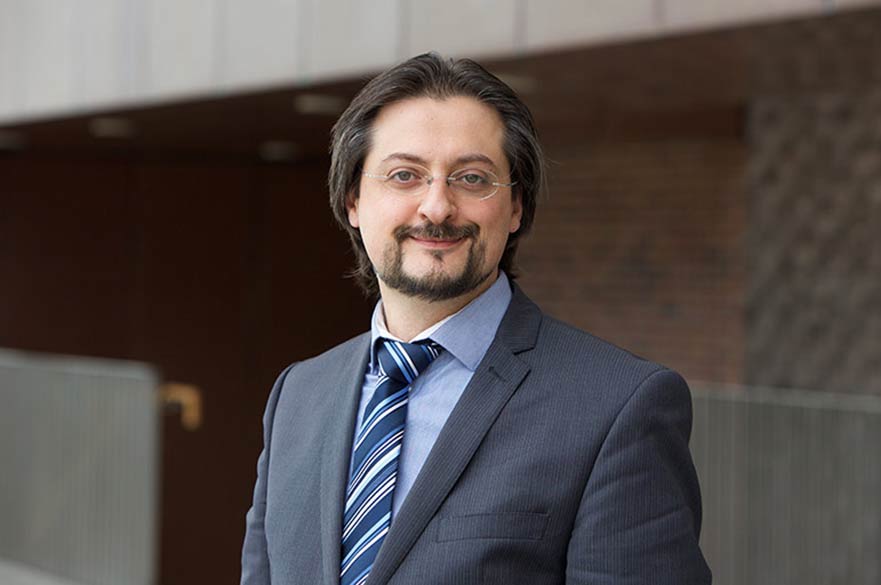
Dr. Sönke Knoch is a researcher affiliated with the Ubiquitous Media Technology Lab (UMTL) at the Saarland Informatics Campus and the German Research Center for Artificial Intelligence (DFKI) GmbH . His work focuses on Human-Computer Interaction , Activity Recognition , Process Mining , and Industry 4.0 technologies. Current Affiliation: DFKI GmbH (Saarland Informatics Campus) Academic Role: Researcher Research Interests span digital twins, augmented reality in manufacturing, and safety-critical systems. He leads projects like RZzKI (AI and Digital Transformation) and BaSySafe (risk assessment via management shells). His work addresses zero-defect manufacturing and cognitive support for impaired workers . Recent Publications focus on digital twins for industrial safety, AR-based task adaptation , and AI quality management in smart factories. Key themes include human-centric AI , real-time process conformance , and context-aware systems . Leadership includes contributing to the WALL-ET project for autonomous logistics and co-developing the PARTAS system for cognitively impaired workers.
Dr. Demosthenes Koutsogeorgis is an Associate Professor of Photonic Technologies in the Department of Physics & Mathematics at Nottingham Trent University's School of Science & Technology. He serves as a Module Leader, Placement Tutor, Project Supervisor, Director of Studies for PhD programmes, IMEC Research Centre PGR coordinator, and NTU Laser Safety Adviser. He leads the iSMaRT Research Group (Innovations in Surfaces Materials And Related Technologies) based at MTIF Clifton, and was one of the founding members of industry-facing initiatives "Thin Film Services" and "Scientific Services To Industry" at NTU. Dr. Koutsogeorgis received his education at: BSc in Physics from the University of Ioannina, Greece (1997) PhD in "Investigation of laser annealing of phosphor thin films for potential luminescent devices" from Nottingham Trent University (2003) His research focuses on Material Science, with specific expertise in thin film technology, laser processing, luminescent devices, plasmonics, electronic devices, and smart coatings. His work spans numerous applications in nanotechnology across industries including photovoltaics, data storage, security and authentication, optoelectronics, flexible electronics, displays, optical coatings, and biomedical technologies. He has developed unique technologies for subsurface modification of nanoparticles and laser processing of phosphor thin films for enhanced light output and longevity. His recent publications demonstrate strong focus on laser processing techniques for transparent conductive oxides, plasmonic nanostructures, and thin film materials. The research spans from fundamental materials characterization to practical applications in electronics, photonics, and biomedical devices. Key trends include reactive laser annealing, plasmonic nanoparticle engineering, thin film transistor development, and applications of these technologies in both industrial and medical contexts. Dr. Koutsogeorgis has collaborated with numerous institutions including: University of Ioannina (Greece) Aristotle University of Thessaloniki (Greece) OpSec Group (UK) University of Southampton (UK) The University of Nottingham (UK) Sheffield Hallam University (UK) University of Milano (Italy) KAUST (Saudi Arabia) He has supervised multiple PhD students including WEST, J.M. (2023) on "Laser induced nitrogen doping of zinc oxide" and KOUTSIAKI, C. (2023) on "Photonic conversion of sol-gel organometallic precursors into inorganic thin films." His research has been supported by various sponsors including Innovate UK, EU FP7 programme, Engineering and Physical Sciences Research Council EPSRC, and numerous industrial partners. Dr. Koutsogeorgis leads the iSMaRT Research Group, which benefits from long-standing expertise in thin film technology and laser processing. The group works extensively with the MTIF (Manufacturing Technology Innovation Facility) at NTU and maintains strong industry connections through the SS2i initiative. The research environment includes advanced capabilities in deposition, processing, and characterization of thin film materials for various applications.
Simon Parkinson is a Professor at the University of Huddersfield specializing in cybersecurity and machine learning applications in security systems. His research focuses on empirical analysis of access-control systems, threat prediction, and defensive AI strategies. Parkinson's work combines data mining, behavioral analysis, and computational methods to address real-world security challenges. Recent publications demonstrate strong emphasis on biometric security, IoT protection, and forensic investigation techniques. His 2023-2025 research explores LLM-based event log analysis, wearable biometric cryptosystems, and zero-day DDoS detection in IoT networks. Collaborative projects include international case studies in Bahrain and innovative applications of computer vision in security diagnostics. Parkinson contributes to cybersecurity education initiatives and stakeholder engagement for security standardization.
Dr. Zihan Song is a Postdoctoral Researcher at the University of Oxford's Department of Engineering Science, collaborating with Prof. Paul Shearing. His research focuses on electrochemistry and materials science for energy storage, particularly high-energy anode materials and multiscale characterizations (e.g., X-ray imaging) in solid-state batteries. He holds a BEng in chemical engineering from Tianjin University (2015) and a PhD from the University of Chinese Academy of Sciences (2020), specializing in anode materials for lithium-ion batteries. From 2021 to 2023, he researched carbon nitride and carbonaceous materials for rechargeable batteries at the Max Planck Institute of Colloids and Interfaces under Prof. Markus Antonietti. His current projects include multiscale characterizations for solid-state batteries. He is affiliated with the ZERO Institute and contributes to the field of sustainable energy storage.
Eugenio Brusa is Full Professor of Mechanical and Aerospace Engineering at the Polytechnic University of Turin (Politecnico di Torino), where he also serves as Director of the Doctoral School (2018-2024) and Scientific Advisor for the strategic partnership with Danieli & C. Officine Meccaniche. Since obtaining his PhD in 1997, he has held academic roles in both Turin and the University of Udine, progressing from researcher to Associate Professor (2002) and then Full Professor (2013). Education PhD, Polytechnic University of Turin (1997) Degree in Aeronautical Engineering (Laurea), Polytechnic University of Turin (year not specified) Research Interests Professor Brusa’s expertise lies at the intersection of mechanical design , mechatronics , and systems engineering . His work encompasses: Structural mechatronics and smart materials, including MEMS-scale systems Rotor dynamics and bearing systems for aerospace, steel, and automotive applications Life-cycle assessment (LCA) and circular design methodologies Model-Based Systems Engineering (MBSE) for sustainable industrial products Digital-twin-driven design and predictive maintenance Recent Publications at a Glance Over the past five years Professor Brusa has co-authored more than 20 peer-reviewed articles and conference papers. The research trajectory shows a clear emphasis on sustainable aviation (fuel-cell aircraft thermal management), energy harvesting (piezoelectric and vibration-based systems), digital twins for ice-prediction and rotor monitoring, and circular-economy-oriented design through LCA integration. These works collectively advance greener industrial products and smarter mechatronic systems. Scientific Awards & Distinctions Premio Nazionale “A. Capocaccia” (1999) – awarded by AIAS (Italian Association for Stress Analysis) Member/Associate Editor, journals Energies (2020-2024) and Proceedings of the IMechE Part C (2020-2022) Scientific-committee roles in INCOSE Italy, ASME Italy Section (President 2014-2015), UNITE! European Alliance, ESCP Business School, and several IEEE/ECCOMAS conferences Doctoral Advising & Research Funding Currently supervising seven PhD candidates in Mechanical Engineering and Materials for Sustainability. Since 2018, as Director of the Doctoral School, he oversaw more than 200 doctoral students across disciplines. Active research contracts include: EU and regional projects on predictive maintenance (PRIME 2021-2022) Industrial contracts with Danieli & C. (2025-2028) on scrap-metal crushing & shearing machinery Ongoing partnerships on oil-film bearings for rolling mills, fatigue-life assessment of hydraulic-turbine shafts, and additive-manufacturing quality control Laboratories & Teams Founder or co-founder of four research laboratories: Mechatronics Laboratory (1993) Testing and Characterization of Rotating Systems Laboratory (1997) Industrial Systems Engineering & Design (ISED) Laboratory (2020) – current leader Ubiquitous and Pervasive Technologies Laboratory, University of Udine (2005)
Ann Charlott Pedersen is a Professor at the Department of Industrial Economics and Technology Management, Norwegian University of Science and Technology (NTNU), within the Faculty of Economics and Management. Her work focuses on supply chain management, lean strategies, and inter-organizational networks. She holds a doctoral degree from NTNU (1996). Her research explores business network dynamics, strategic supplier development, and the integration of digital technologies with lean practices. Key themes include resource heterogeneity management, network foresighting, and triadic relationship analysis in manufacturing contexts. Over 30 years of academic contributions span journals like Industrial Marketing Management and Journal of Business Research . Pedersen collaborates widely, with frequent co-authorship on topics such as supplier network initiatives, lean implementation, and start-up customer relationship strategies. Her teaching includes advanced courses on strategic supply chain management and business network leadership at the master’s level.
Salil Bapat is a Research Scientist at Purdue University's Department of Mechanical Engineering, located at the West Lafayette campus. His research focuses on bio-inspired design, additive manufacturing, in-space manufacturing systems, and frugal engineering strategies for resilient supply chains. He explores applications in robotics, materials science, and socially conscious technologies to address challenges in space exploration and resource-limited environments. His work includes developing bio-inspired end effectors for in-space servicing, advancing lightweight materials through biomimicry, and creating innovative solutions for food insecurity via 3D printing. He also investigates the intersection of biology and engineering for sustainable product innovations, such as adaptive supply chains and resource-efficient manufacturing processes. Key themes in his recent articles include ISAM (In-Space Servicing, Assembly, and Manufacturing) robotic systems, digital twins for space applications, and the use of AI in additive manufacturing quality control. His research bridges biological principles with engineering to create resilient, cost-effective, and socially impactful technologies.
Professor Yuerui Lu is a distinguished academic at the Australian National University (ANU), holding a position in the School of Engineering. He serves as a Program Manager and Chief Investigator in the ARC Centre of Excellence for Quantum Computation and Communication Technology, demonstrating leadership in quantum research and technology development. Professor Lu received his Ph.D. degree from Cornell University in 2012 and his B.S. degree from the University of Science and Technology of China. His educational background has provided a strong foundation for his interdisciplinary research spanning quantum technologies, nanomaterials, and biomedical devices. Professor Lu's research focuses on cutting-edge areas at the intersection of quantum physics, materials science, and engineering. His work explores 2D quantum materials and optoelectronic devices, MEMS sensors and actuators, quantum sensors, and novel biomedical devices. With a particular emphasis on translating fundamental discoveries into practical applications, his research bridges the gap between theoretical concepts and real-world implementations. His team has made significant breakthroughs in understanding and manipulating the properties of atomically thin materials for next-generation electronic and photonic devices. Analysis of his recent publications reveals a strong trend toward quantum communication technologies, nonlinear optical phenomena in 2D materials, and the development of practical applications for quantum sensors and biomedical devices. Professor Lu's exceptional contributions to science have been recognized with numerous prestigious awards: Walter Boas Medal from the Australian Institute of Physics (2025) Fellow of Optica (2025) Fellow of Australian Institute of Physics (2024) Prime Minister's Prizes for Science - Malcolm McIntosh Prize for Physical Scientist of the Year (2023) Pawsey Medal from Australian Academy of Science (2023) NHMRC Investigator Award (2022) Professor Lu has demonstrated exceptional mentorship, guiding numerous PhD and honors students to success. Several of his students have received prestigious awards, including Dean's Awards for Excellent PhD Theses and winners of the 3MT (3 Minute Thesis) Competition. His former students have gone on to positions at leading institutions including University of Cambridge, Harvard, and MIT. His research is supported by multiple competitive grants, including ARC Research Hubs focused on quantum technologies, energy efficiency, and zero-emission power generation. Professor Lu leads a dynamic research group at ANU that combines expertise in nanofabrication, optical characterization, and quantum device engineering. His team collaborates extensively with international partners and industry stakeholders to advance quantum technologies and develop innovative solutions for healthcare, communications, and energy applications.
Assoc Prof Seah Kar Heng is an Associate Professor in the Department of Mechanical Engineering at the National University of Singapore (NUS). He holds a B.Sc. (First Class Honours) from the University of Southampton (UK), and M.Sc. and PhD from Queen’s University, Canada. His research focuses on materials engineering, manufacturing processes, and advanced composites, with notable contributions to metal matrix composites and corrosion science. Education: B.Sc. Mechanical Engineering (First Class Honours), University of Southampton, UK (Colombo Plan and President’s Scholarship) M.Sc. Mechanical Engineering, Queen’s University, Canada PhD Mechanical Engineering, Queen’s University, Canada Research Interests: Materials and manufacturing, with emphasis on composite materials fabrication, mechanical properties analysis, and corrosion characteristics. His work bridges fundamental material science with industrial applications in machining, cutting tools, and material substitution strategies. Publications Trends: Prof Seah’s articles span composites development (e.g., aluminum/silicon carbide), metallurgical processes (cast iron properties), and manufacturing optimization (tool coatings, chip formation). Recent work (2004) expanded into biomedical applications via wavelet-based monitoring systems for fall detection. Lab and Teams: His research group likely focuses on materials testing laboratories and collaborative projects in NUS’ mechanical engineering facilities, though specific lab names are not mentioned.
Sebastian Hönel is a postdoctoral researcher at Linnaeus University, affiliated with the Faculty of Technology and the Department of Computer Science and Media Technology. He is an active member of the Data Intensive Software Technologies and Applications (DISTA) research group and currently serves as a co-Principal Investigator in the project "In-line visual inspection using unsupervised learning" focused on manufacturing defect detection using machine learning techniques. Hönel completed his Doctoral Thesis in 2023 titled "Quantifying Process Quality: The Role of Effective Organizational Learning in Software Evolution" and earned his Licentiate Thesis in 2020 on "Efficient Automatic Change Detection in Software Maintenance and Evolutionary Processes," both from Linnaeus University. His educational background demonstrates a strong foundation in software engineering and data analysis. Hönel's research spans software engineering, machine learning, and data science. Initially focusing on applying Machine Learning and Deep Learning to software evolutionary processes and organizational learning, his current work emphasizes unsupervised and zero/few-shot learning techniques for industrial anomaly detection. He has particular expertise in Deep Density Estimation (especially Normalizing Flows) and Representation Learning, with applications in manufacturing quality assessment and software maintenance. His research interests include anomaly detection methodologies, architectural innovations in autoencoders, and methodological considerations for evaluation metrics in machine learning applications. An analysis of his publication record reveals a consistent focus on bridging software engineering with advanced machine learning techniques. His most recent work shows a strategic shift toward industrial applications of unsupervised learning, particularly in manufacturing defect detection, while maintaining his foundational work in software metrics and quality assessment. The publications demonstrate progression from theoretical software metrics to practical applications of deep learning in quality inspection systems. Hönel actively contributes to academic education by teaching (Deep) Machine Learning courses (4DV652, 4DV660, 4DV661) and previously served as a teaching assistant for agile product development courses (1DV508, 4DV611). His role as co-PI on the visual inspection project indicates successful research funding and leadership capabilities. While specific grant details aren't provided in the available information, his position suggests ongoing research support. As part of the DISTA research group, Hönel collaborates extensively with colleagues including Ericsson, Löwe, and Wingkvist on projects that combine software engineering with advanced data analysis techniques. His work environment supports interdisciplinary research at the intersection of computer science, software engineering, and machine learning applications, with particular emphasis on practical implementations in both software development contexts and manufacturing quality control systems.
Konstantinos A. Tsintotas is an Assistant Professor at the Department of Information and Electronic Engineering, International Hellenic University. His research focuses on artificial intelligence, robotics, computer vision, and their applications in smart cities, healthcare, and manufacturing. He is actively involved in advancing AI-driven systems for critical infrastructure management, robotic vision, and embedded device technologies. His work spans theoretical advancements and practical implementations, including projects like SLAM algorithms for autonomous navigation, deep learning models for medical diagnosis, and IoT-integrated smart supply chains. Tsintotas also explores ethical implications of AI in human action recognition and contributes to neuromorphic computing through spiking neural networks. Key technical contributions include ReJSHand (real-time hand pose estimation), fall detection systems for embedded devices, and visual place recognition frameworks. His interdisciplinary approach bridges computer science, electrical engineering, and biomedical applications, reflecting a strong commitment to innovation at the hardware-software interface. Notable trends in his publications emphasize AI ethics, multimodal perception for robotics, and low-power embedded solutions. Ongoing work includes advancing digital twin technologies for supply chains and refining bio-inspired neural architectures for robotics applications.
Dr. Peter Petrov is a Principal Research Scientist at Imperial College London's Department of Materials (Faculty of Engineering), serving as the Royce Technology Platform Lead for Diverse Thin Film Device Materials and Director of the Thin Film Device Manufacture facility. His expertise spans functional oxide thin films, microwave tunable devices, and energy harvesting technologies. He holds degrees from St. Petersburg State Electrotechnical University and Chalmers University of Technology. Petrov leads EPSRC/EU-funded projects focused on nano-scale thin films for solar energy and plasmonic devices. His research group has pioneered innovations like tunable thin film resonators and antimicrobial plasmonic materials. Education: PhD (Technical Sciences) and MSc (Physics and Engineering), St. Petersburg State Electrotechnical University Affiliations: Institute for Molecular Science and Engineering, Nanoscience and Nanotechnology Group Roles: Health & Safety Officer (Department of Materials), Laser Safety Advisor, Editorial Board Member of Scientific Reports Research interests include functional oxides, plasmonics, energy materials, and biomedical nanotechnology . Notable achievements include developing the first tunable thin film BAW resonators, demonstrating room-temperature negative capacitance in ferroelectric multilayers, and creating plasmonic biosensors for rapid disease detection. Collaborations with King's College Hospital led to novel bone resorption analysis methods. Publications focus on plasmonic materials, thin film fabrication, and energy conversion , with a 2023-2025 emphasis on thermoelectric converters, graphene-based devices, and nanostructured sensors. His work bridges fundamental physics with industrial applications, addressing challenges in renewable energy, medical diagnostics, and nanomanufacturing. Awards: 2024 Henry Royce Institute Innovation Award Grants/Projects: EPSRC/EU grants, Royce Institute collaborations, and industrial partnerships with Ericsson AB and Murata Manufacturing Labs/Teams: Leads Imperial's Thin Film Device Manufacture facility, managing a lab with 2 PDRAs and 5 graduate students. Active in the Royal School of Mines nanotechnology cluster.
Jonathan Colton is a Professor at the Georgia Institute of Technology, holding joint appointments in Mechanical Engineering, Industrial Design, and International Affairs. He leads Georgia Tech's U.S. Department of State Diplomacy Lab and focuses on multidisciplinary design for global development challenges. His research integrates manufacturing innovation with humanitarian applications, particularly in sub-Saharan Africa's agricultural mechanization and sustainable energy systems. Colton has directed projects such as the Net-Zero Energy Warehouse for Tunisia’s healthcare infrastructure and USAID agricultural technology scaling initiatives. His composites research emphasizes next-generation aircraft materials and recycling post-industrial prepreg waste. He previously served on the WHO Immunization Practices Advisory Committee and the Board of the Global Soap Project, demonstrating a commitment to global health and sustainability. His work bridges technical innovation with socio-economic impact, including participatory design methods for developing countries and techno-economic analyses of renewable energy systems. Key areas of focus include wind turbine optimization for low-wind regions, agricultural machinery design for Bangladesh, and cost-effective composite material processing techniques. Leadership: Diplomacy Lab Director, USAID Jefferson Science Fellow Key Projects: Net-Zero Energy Warehouse, Feed the Future Program Support Awards: Not explicitly listed but includes notable policy and technical contributions Colton’s teaching emphasizes hands-on, interdisciplinary approaches to engineering problems, reflecting his belief in practical solutions for global challenges.
Shivam Shukla is a PhD researcher at KU Leuven within the Additive Manufacturing group . His current research focuses on multi-sensor fusion in Laser Powder Bed Fusion (LPBF) for process monitoring and control to achieve zero-defect manufacturing . Previously, he worked as a Research Fellow at IIT Hyderabad , gaining expertise in laser surface engineering and real-time monitoring of laser material processing. Current institution: KU Leuven Research unit: Manufacturing Processes and Systems (MaPS) Previous affiliation: IIT Hyderabad His research interests include: Multi-sensor fusion techniques Laser powder bed fusion optimization Acoustic emission analysis Temperature gradient monitoring Process-structure-property relationships Zero-defect manufacturing systems Recent publications focus on acoustic signal distortion analysis, bending mechanism studies in laser forming, and thermal history modeling in LPBF. His work emphasizes data-driven approaches to enhance manufacturing precision and reliability. Scientific contributions include: Held a doctoral scholarship at KU Leuven Presented at top conferences like Solid Freeform Fabrication Symposium and Flanders Make Scientific Conference He aims to become an independent researcher in Additive Manufacturing, bridging academic innovation with industrial implementation.
Dr Nic Fair is a Senior Lecturer in the Digital Health and Biomedical Engineering group at the University of Southampton's School of Electronics and Computer Science. He holds a PhD in Digital Education and Web Science, with expertise spanning Personal Learning Networks, Virtual Reality/XR in education, ontology development, and networked learning. His research integrates health informatics, digital manufacturing, and educational technology, supported by EU Horizon 2020 and UK National Institute of Health Research grants. Current projects include MELD-B (multimorbidity research), BRIDGES (digital pedagogy), and Zero-defect Manufacturing. He supervises three PhD students in VR/MR and data visualization. External roles include membership of the University Senate and the British Educational Research Association. His teaching spans 18 years across Further and Higher Education, including leading innovation modules at Southampton. Notable collaborations include UNESCO Bahrain, the Web Science Institute's SleepeR project, and a UK Cabinet Office Open Innovation secondment.