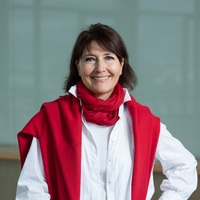
İbrahim Dağılma is a Lecturer in Zaza Language and Literature at Bingöl University's Faculty of Arts and Sciences since 2013. He holds a Master's (2017) and PhD (2021) in Zaza Language and Literature from Bingöl University's Living Languages Institute. He previously served as a Turkish Language teacher in the Ministry of National Education and authored/co-authored Zazaki textbooks for grades 5-8 published by MEB between 2018-2019. He currently chairs the Zaza Language and Literature department and teaches courses like Modern Zaza Literature and Comparative Literary Analysis. Education: Bachelor's in Turkish Education, Dicle University (1997) Uncompleted Journalism studies at Istanbul University (2010) Master's and PhD in Zaza Studies (2017-2021) Research focuses on Zaza language preservation, modern literary movements, folklore documentation, and comparative studies between Zaza and other languages. He has published 11 books including 'Edebiyato Modern ê Zazaki' and 'Süleyman Hilmi Tunahan', and frequently presents at international conferences on topics like Zaza cultural identity and migration narratives. His recent academic work explores linguistic comparisons between Zaza and Farsi, analysis of traditional Zaza texts, and the role of folklore in educational materials. He has advised 18 undergraduate theses and participated in numerous thesis juries. His research has been published in refereed journals like Bingöl Araştırmalar Dergisi and The Journal of Mesopotamian Studies.
Dr. Mehmet Aslanoğlullari is a Lecturer in the Department of Eastern Languages and Literatures at Bingöl University's Faculty of Arts and Sciences. He holds a Doctorate in Zaza Language and Literature. His work focuses on linguistics, grammar, translation, and Zazaca literary analysis. He has served as an English teacher in Istanbul and Libya before joining academia. Currently teaches courses like Zazaca Grammar, Civilization History, and Translation Methods. Education: Bachelor's in English Language & Literature from Dicle University (1995-1999) Master's in Zaza Language & Literature at Bingöl University (2012-2014) Doctorate in Zaza Language & Literature at Bingöl University (2018-2023) Research interests emphasize Zazaca language structure, cultural memory in novels, and sociolinguistic aspects of minority languages. Published extensively in journals like Bingöl Üniversitesi Yaşayan Diller Enstitüsü Dergisi , focusing on topics like language policy in Zazaki literature and morphological patterns in Bingöl dialect. Authored books Seçilmiş Zazaca Romanlarda Ortak Bellek (2023) and Hêgaê Heywonu (2024). Actively reviews for university publications and participates in national academic conferences addressing language education challenges.
Dr. Ahmet Kesmez is an Assistant Professor at Bingöl University's Faculty of Arts and Sciences, Department of English Language and Literature. He holds a PhD in English Language Teaching from Atatürk University's Institute of Educational Sciences (2020), preceded by an MA in English Linguistics (Atatürk University, 2013) and a BA in English Language and Literature (Yüzüncü Yıl University, 2010). His academic career includes roles as a Research Assistant at Bingöl and Atatürk Universities (2010-2012), Lecturer at Bingöl University (2014-2023), and his current position since 2023. His research focuses on sociolinguistics, language revitalization, bilingualism, and applied linguistics, with emphasis on endangered languages like Zazaki. He investigates technology's role in language preservation, EFL pedagogy, and L1 interference in second language acquisition. Recently, he has explored AI-driven solutions for revitalizing endangered languages and EFL learners' perceptions of digital tools. He teaches courses such as Linguistics I, Semantics I, and Speech I. Despite no listed awards, his work bridges theoretical linguistics with practical educational challenges, particularly in multilingual contexts. No specific grants, labs, or teams are mentioned in the provided data.
Professor Saloumeh Gholami is the British Academy Global Professor in Zoroastrian Studies at the University of Cambridge, leading the project 'Persisting Through Change' on Zoroastrian oral literature and cultural interaction. Previously, she held a professorship in Minority Languages in the Middle East at Goethe University Frankfurt and directed the research cluster 'Minority Studies: Language and Identity' funded by the Hessian Ministry. Her expertise spans endangered languages documentation, Iranian linguistics, and minority cultural studies. Education: PhD in Iranian Studies (Georg-August-Universität Göttingen, 2014), Habilitation in Comparative Linguistics (Goethe University Frankfurt, 2022). Research Focus: Zoroastrian oral and written heritage, perceptual dialectology, language and identity intersections, and cultural preservation. Projects include digitizing Avestan manuscripts, analyzing Zoroastrian Dari dialects, and documenting minority languages in Iran. Key Projects: British Academy-funded 'Persisting Through Change' (2024–2028) Soudavar Memorial Foundation-supported study of Zoroastrian Dari manuscripts (2023–2026) Endangered Archives Programme project on Zoroastrian historical documents (2017–2018) Awards: 2023 Oxford School of Rare Jewish Languages Fellowship. Recognized internationally for safeguarding linguistic diversity in minority communities. Publications: Author of books like The Afterlife of Avestan Manuscripts (2024) and Endangered Iranian Languages (2018), with over 20 peer-reviewed articles on minority languages and cultural heritage.
Prof. Dr. Hasan Çiftçi is a Professor at Bingöl University’s Faculty of Arts and Sciences, Department of Eastern Languages and Literatures. He has held significant academic roles including Director of the Living Languages Institute at Bingöl University (2014–present), former Acting Dean of Muş Alparslan University’s Faculty of Communication (2011–2014), and Head of the Persian Language and Literature Department at Atatürk University (2010). He has served on multiple university boards and committees. His education includes a B.A. (1986), M.A. (1992), and Ph.D. (1996) in Persian Language and Literature from Atatürk University. He has taught courses on classical Turkish literature, Persian language, Kurdish syntax, and Zazaki grammar in recent years. Research interests focus on classical Persian literature, Sufi studies, Kurdish/Zazaki languages, and Ottoman cultural history. His publications span 20+ peer-reviewed articles in journals like Nüsha Şarkiyat Araştırmaları Dergisi and Türkiyat Araştırmaları Enstitüsü Dergisi , exploring topics like medieval satire, Sufi dialogues, and cross-cultural proverbs. He has authored books on Persian satire, Sufi figure Ebû’l-Hasan Harakânî, and Farsi grammar. He has advised 12 graduate theses and actively participated in international conferences on Iranian-Turkish cultural relations, Ottoman studies, and Sufism. His recent work examines shared proverbs across Farsi, Kurdish, and Zazaki languages, emphasizing linguistic and cultural preservation.
Joseph A Sabbagh is an Associate Professor in the Department of Linguistics and TESOL at The University of Texas at Arlington's College of Liberal Arts. He has been at UT Arlington since 2009, teaching courses in syntax, morphology, and typology. Previously, he held positions as Visiting Assistant Professor at Reed College (2008-2009) and Visiting Lecturer at UC Berkeley (2007-2008), and was a Richard H. Tomlinson Postdoctoral Fellow at McGill University (2005-2007). Dr. Sabbagh received his PhD in Linguistics from MIT in 2005, where his dissertation focused on "Non-verbal argument structure: Evidence from Tagalog." He earned his BA in Linguistics from the University of California, Santa Cruz in 2000, where he received Highest Honors in the Major and the Steck Family Award for Most Worth Undergraduate Senior Thesis. Dr. Sabbagh's research focuses on theoretical syntax with particular interest in Austronesian languages, especially Tagalog. His work explores the interfaces between syntax and phonology/semantics, clause structure and word order, argument structure, existential constructions, and Right Node Raising. He takes a cross-linguistic perspective to understand universal principles of human language, with fieldwork experience in Austronesian languages of Southeast Asia and the Pacific. His publication record shows a consistent focus on syntactic theory informed by data from understudied languages, particularly Tagalog. Over time, his work has evolved from detailed analyses of specific constructions (existentials, copular clauses) to broader theoretical questions about movement operations, interfaces, and the architecture of grammar. His recent work continues to investigate Tagalog syntax while expanding to more general theoretical questions about agreement, case, and syntactic movement. Dr. Sabbagh has received several honors including the Wright Accolades Endowment in the College of Liberal Arts (2019), and has been nominated for the College of Liberal Arts Outstanding Teaching Award (2017) and the Academy of Distinguished Teachers (2015). Earlier in his career, he received the University of California Regents Scholarship (1999) and the Steck Family Award for Most Worth Undergraduate Senior Thesis (2000). Wright Accolades Endowment in the College of Liberal Arts, UT Arlington, CoLA (March 3, 2019) Nominee, College of Liberal Arts Outstanding Teaching Award, UT Arlington (January 2017) Nominee, Academy of Distinguished Teachers, UT Arlington (January 2015) Recognized Professor, The Honor Society of Phi Kapa Phi, UT Arlington Chapter (2011) Highest Honors in the Major, Department Linguistics, UC Santa Cruz (2000) Steck Family Award for Most Worth Undergraduate Senior Thesis, UC Santa Cruz (2000) University of California Regents Scholarship, UC California Regents, Santa Cruz (1999) As an advisor, Dr. Sabbagh has supervised 5 PhD students to completion and is currently supervising 3 more. He serves on numerous dissertation committees across the Linguistics and TESOL program. His federally-funded research includes an NSF grant for "Doctoral Dissertation Research: Clauses and clause types in Jarai" ($10,618, 2011-2013). He is active in professional service as a reviewer for major linguistics journals and the National Science Foundation, and has organized conferences including the Austronesian Formal Linguistics Association meetings.
Arsalan Kahnemuyipour is a Professor of Linguistics at the Department of Language Studies, University of Toronto Mississauga (UTM), and also affiliated with the Department of Linguistics at the University of Toronto St. George (UTSG). He earned his PhD in Linguistics from the University of Toronto in 2004 and worked at Syracuse University before joining UTM in 2010. Research Interests: Syntax of Iranian languages (especially Persian) Nominal linkers (e.g., Ezafe construction) Copular clauses Agreement systems Wh-questions Syntax-prosody interface Grants & Awards: SSHRC Insight Development Grant (Co-investigator, 2021–present) SSHRC Insight Grant (Principal Investigator, 2018–present) SSHRC Insight Grant (Co-investigator, 2013–2022) SSHRC Insight Grant (Collaborator, 2017–2022) Additional Roles: Chair of Language Studies at UTM Coordinating graduate studies in Linguistics
Assoc. Prof. Dr. Osman Özer holds the position of Associate Professor and Head of the Department of Old Turkish Language at Bingöl University's Faculty of Arts and Sciences. He has been affiliated with Bingöl University since 2011, previously serving at Fırat University's Bingöl Vocational School from 1995 to 2011. His academic journey includes a doctorate from Fırat University's Institute of Social Sciences (1995) and a master's thesis on Karlıova dialects (1990). Education: Bachelor's in Turkish Language and Literature, Fırat University (1977-1982) Master's in Turkish Language and Literature, Fırat University (1988-1990) PhD in Turkish Language and Literature, Fırat University (1990-1995) Research focuses on historical Turkic dialects, Ottoman manuscripts, and linguistic documentation. His work bridges Anatolian Turkic dialectology with comparative Altaic studies, emphasizing endangered languages like Zazaki and medieval texts such as Tervihü'l-Ervah. He has advised over 7 graduate theses on topics ranging from plant nomenclature in Ottoman texts to Bektashi mysticism. Publications highlight interdisciplinary approaches: recent work (2023) explores phytonyms in medieval texts, while earlier studies (2011-2014) analyze dialects in Ağrı and Basel University's Turkic manuscript collections. His 2021 book Tercüman-ı Bektaşiye contributes to Sufi literary studies. Teaching includes courses on Ottoman Turkish, Old Anatolian Turkish, and Orkhon inscriptions. Fluent in English (KPDS 76), he serves as a referee for linguistic journals and conferences.
Ayetullah Karabeyser is a Lecturer at Bingöl University's Faculty of Arts and Sciences, Department of Eastern Languages and Literatures. He has been affiliated with the university since 2016, focusing on Zazaki language and grammar research. Education: PhD, Institute of Living Languages, Department of Zaza Language and Literature, Bingöl University (2021) Master's Degree, Institute of Living Languages, Department of Zaza Language and Literature, Bingöl University (2017) Bachelor's Degree, Marmara University Faculty of Communication, Radio, Television, and Cinema (2003) Research Interests: His work centers on Zazaki language structure, grammar, and its preservation. He also explores the role of media in language dissemination, particularly through television. His courses include Zazaki Reading/Writing Techniques, Zazaki Grammar, and Classical Persian Poetry. Publications: Focused on linguistic analysis of Zazaki, including a 2016 study on past-tense declension. He co-authored textbooks for MEB (Zazaki-5 to Zazaki-8) and edited works on Zaza literature. Experience: Prior to academia, he worked at TRT Zazaki News Center (2010–2015) and Anadolu Agency Persian News (2015–2016). He holds a Persian YDS score of 70.
Busra Gokalp is an Assistant Professor in the Department of Eastern Languages and Literatures at Bingöl University. She holds a PhD in Zaza Language and Literature (2018-2024) from Bingöl University, following a Master's (2013-2018) and undergraduate degree in German Language Teaching from Gazi University. Education: Bachelor's: Gazi University, German Language Teaching (2005-2010) Master's: Bingöl University, Zaza Language and Literature (2013-2018) PhD: Bingöl University, Zaza Language and Literature (2018-2024) Her research focuses on Zaza language structure (e.g., reduplication patterns) and folk literature. She contributed to the textbook Zazaki-5 published by the Turkish Ministry of Education in 2017. Courses taught include Zaza Folk Literature series, Zazaki Grammar, and Language History. No scientific awards or grants are explicitly listed. She collaborates with the Bingöl University Living Languages Institute.
Charlotte Gooskens is an Associate Professor with ius promovendi at the University of Groningen's Faculty of Arts, Department of Applied Linguistics. Her research focuses on multilingualism, sociolinguistics, dialectology, and the mutual intelligibility of closely related languages. She holds a PhD from the University of Nijmegen (1997) and has held academic positions since 1999, progressing from Assistant to Associate Professor in Scandinavian and European linguistics. Her key projects include a Netherlands Organization for Scientific Research (NWO)-funded study on mutual intelligibility across Germanic, Romance, and Slavic languages (2011–2016), and earlier work on Scandinavian language comprehension asymmetries (2006–2011). She explores linguistic and extra-linguistic factors like prosody, syntax, and socio-cultural attitudes influencing language comprehension. Research highlights include studies on Finland-Swedish bilingualism, articulation rates in Scandinavian languages, and computational models of linguistic distances. She advises on language policy, particularly regarding receptive multilingualism in Europe, and collaborates internationally on projects like ELF (English as a Lingua Franca) comprehension compared to native language pairs. Her work spans experimental methods (e.g., web-based intelligibility tests), dialectometry, and psycholinguistic approaches. She has published extensively in journals like Linguistics , Nordic Journal of Linguistics , and Language Variation and Change , and authored a monograph on mutual intelligibility in 2024.
Mahir Dogan is a researcher at the Department of General Linguistics, Faculty of Humanities and Cultural Studies, University of Bamberg. He is actively engaged in teaching and research related to Iranian languages, particularly Zazakî, with a focus on morphosyntactic analysis and sociolinguistic challenges such as language documentation, revitalization, and planning. His research integrates linguistic fieldwork and corpus linguistics to analyze Zazakî's verb system, while also exploring digital platforms' role in promoting underrepresented languages. He has contributed to notable projects including the Multi-CAST corpus and the WOWA database on word order in Western Asia. He teaches courses like Phonology (SS 2023) and Morphophonology (WS 24/25) and maintains a comprehensive bibliography of Kurdish linguistics at Bibliographia Kurdica .
Murat Varol serves as a Lecturer at Bingöl University's Bingöl Social Sciences Vocational School, a position he has held since 2011. His academic journey includes a Licence in Turkish Language and Literature from Cyprus International University (2008), followed by Master's (2016) and Doctorate (2025) degrees in Zaza Language and Literature from Bingöl University's Living Languages Institute. Prior to academia, he worked for three years at the Bingöl Directorate of National Education and TRT General Directorate. His educational background includes: Licence in Turkish Language and Literature, Cyprus International University, 2008 Master's in Zaza Language and Literature, Bingöl University Living Languages Institute, 2016 Doctorate in Zaza Language and Literature, Bingöl University Living Languages Institute, 2025 Varol's research centers on documenting the endangered Zaza language through three interconnected strands: linguistic analysis of classical literature (especially Diwan poetry), bibliographic cataloging of Zaza resources, and sociolinguistic assessments of language endangerment. His work critically engages with UNESCO's language vitality frameworks while examining cultural manifestations like Mevlid traditions. This tripartite approach bridges textual scholarship with urgent preservation efforts. His publication record (2013-2018) reveals consistent thematic focus: 40% dedicated to Zaza linguistic resources (dictionaries/bibliographies), 30% to classical literature analysis, and 30% to language endangerment/education policy. Key contributions include critical editions of Diwan manuscripts and analyses of how Turkish education policies impact Zaza's survival. His MEB-published Zazaki teaching materials (2017-2019) represent practical language revitalization efforts. No scientific awards are documented in available records. Though specific grant details are absent, Varol maintains active scholarly engagement through editorial roles (Bingöl University Journal of Living Languages) and conference participation. His supervision of graduate students isn't explicitly documented, but his lecturer position implies teaching responsibilities. The MEB Zazaki textbooks he co-authored suggest curriculum development contributions. While no formal lab affiliation exists, Varol operates within Bingöl University's Living Languages Institute ecosystem. His editorial work for 'Vir - Mecmuaya Edebiyat u Folklorê Zazaki' fosters academic networks focused on Zaza studies. Future research directions likely include expanding digital archives of classical Zaza texts and deeper policy analyses of minority language rights in Turkish education.
Prof. Dr. Katharina Brizić is a Professor of Multilingualism Research at Albert-Ludwigs-University Freiburg, affiliated with the German Linguistics department. Her research examines sociolinguistic aspects of migration, educational inequality, and forced displacement, with particular focus on Kurdish, Romani, and multilingual communities. She leads research on language diversity in educational contexts and trauma narratives of displaced populations. Her core research interests include: Sociolinguistics of migration and multilingual societies Educational inequality in multilingual contexts Language acquisition in forced migration contexts Kurdish and Romani language studies Teacher education for multilingual classrooms Trauma narratives and voice in displaced communities Brizić's extensive publication record demonstrates consistent focus on multilingualism, social justice, and educational equity. Her recent works explore ethical research methodologies with displaced populations, multilingual pedagogies for marginalized communities, and institutional responses to linguistic diversity. Publications consistently integrate interdisciplinary approaches combining linguistics, education, and migration studies.