Dr. Rene Ferdinands is a Lecturer at the University of Sydney's School of Health Sciences, specializing in sports biomechanics, particularly in cricket and golf. He leads research programs focused on optimizing techniques and minimizing injury risks, such as lumbar load analysis in fast bowlers and spin bowling biomechanics. His work includes developing 3D models for analyzing bowling actions and spin delivery mechanics. Education: MSc and PhD from the University of Waikato. Research Themes: Cricket biomechanics, golf swing dynamics, equine biomechanics, and injury prevention. Professional Roles: Editor of the Cricket Coaching Information service for the International Society of Biomechanics in Sports, Honours Committee Member. His research interests span biomechanical analyses of sports techniques, including the development of smart cricket balls for performance assessment and injury mitigation. Key contributions include refining bowling action legality criteria and advancing understanding of lumbar kinetics in elite athletes. He actively supervises Honours and PhD students in biomechanics research across cricket, golf, and other sports. Notable grants include studies on hydration status in cricket performance (2008), lumbar injury prevention (2013), and biomechanical modeling of fast bowling (2009). His work bridges applied research with practical applications in sports technology and athlete development. Dr. Ferdinands collaborates with the Biomechanics Research Team at the University of Sydney, focusing on innovative tools like smart balls and advanced motion analysis techniques to improve sports performance and safety.
Prof. Albert Postma is a full professor in Experimental Psychology (Clinical Neuropsychology) at Utrecht University. He holds the chair in Clinical Neuropsychology and has served as department head of Experimental Psychology (2010–2017) and later as head of the Psychology Department (FSW, UU). His research focuses on spatial cognition, memory disorders, and sensory impairments, with notable contributions to understanding spatial navigation in neurological patients and the neurocognitive basis of spatial memory. Education: PhD in Psychology (1991, University of Nijmegen). Affiliations: Director of the Memory & Space Lab; Head of Research Committee at Korsakov Centrum Slingedael; Editorial roles in Cognitive Processing and Acta Psychologica . Research Interests: Spatial cognition, neuropsychology of memory (episodic, prospective), sensory deprivation effects (blindness/deafness), and neuroimaging studies of spatial processing. Key projects include EU-funded studies on spatial memory and the NWO Pioneer grant on spatial cognition development. Grants & Awards: Multiple EU Marie Curie grants, NWO Pioneer Grant (2000–2007), and coordination of the EU NEST Fp6 program on spatial orientation. His work emphasizes translational research in clinical settings, such as Korsakoff syndrome interventions. Labs & Teams: Leads the Memory & Space Lab, collaborating internationally on spatial cognition and neurological rehabilitation. Active in multidisciplinary initiatives like the Dynamics of Youth (DoY) research theme.
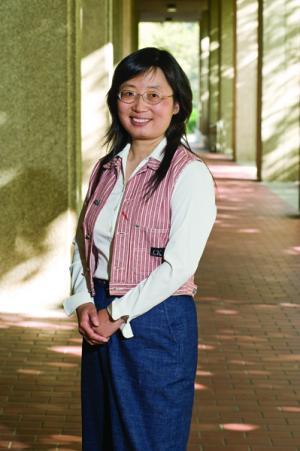
Dr. Farha Sattar is a Lecturer in Education (Mathematics) at the Faculty of Arts and Society, Charles Darwin University. With over thirty years of teaching experience in Mathematics, Science education, GIS, Remote Sensing, and e-Learning technologies at undergraduate and postgraduate levels, Dr. Sattar brings extensive expertise to her academic role. She holds a PhD in Geospatial Science from Charles Darwin University, focusing on Spatial Mathematical Modelling for 3D Gully Mapping and Erosion Quantification. Her educational background includes: PhD in Geospatial Science (Three Dimensional Gully Mapping and Erosion Quantification within a Geoinformatics Framework), Charles Darwin University (2012) Prior academic experience at several Asian and European universities Dr. Sattar's research spans multiple interdisciplinary fields with a strong focus on the intersection of education and technology. Her primary research interests include Mathematics Education, STEM Education, Geoscience Education, Spatial Mathematical Modelling, Drone Technology, Remote Sensing, Geographic Information Systems, and Innovative Pedagogies such as experiential learning and inquiry-based approaches. She has developed expertise in cognitive development, particularly in fostering critical and creative thinking skills through iSTEM approaches. An analysis of Dr. Sattar's recent publications reveals a consistent trajectory toward integrating emerging technologies like drones, augmented reality, and geospatial artificial intelligence into educational contexts. Her work demonstrates a progression from foundational geospatial research on erosion mapping to innovative applications in STEM education. Recent publications increasingly focus on drone technology for educational purposes, spatial data infrastructure for policy development, and computational thinking development through technology-enhanced learning. Dr. Sattar has received numerous accolades for her contributions to education and research: NT Science Week Awards – Inspired NT STEM Hero of the Year award (2021) Long Service Recognition Award (2023) Finalist, CDU Alumni Award (2023) Multiple Best Presentation Awards (2008, 2010, 2017) Australian College of Educators - 2021 College Medal Nominee As a supervisor, Dr. Sattar mentors postgraduate research students including Ayesha Farhan, who is working on "A Framework for Cognitive Development: Fostering Critical and Creative Thinking Skills, Using iSTEM Approach." She actively secures research funding through various projects such as "DBELaSTEM: Drone-Based Experiential Learning and STEM Education," "STEM_D & VR: Youth STEM Learning and Empowerment with Drones and VR," and "CodProg Drone Lab." Her research is supported by grants from NT Government projects and other external funding sources. Dr. Sattar leads the CodProg Drone Lab, an innovative research space exploring drone technology applications in education. She is a certified drone pilot and aeronautical radio operator, which enables her to bridge theoretical knowledge with practical applications. Her work with the "Flying Forward: Drones, STEM Equity, and Indigenous Empowerment" initiative demonstrates her commitment to community engagement and addressing educational disparities through technology.
Heewon Chang, Ph.D., is a Professor and Chair in the PhD in Organizational Leadership Department at Eastern University's College of Business and Leadership. She specializes in autoethnography and qualitative research methods, with notable works including Autoethnography as Method (2008). Her research focuses on multicultural education, leadership development, and collaborative learning within marginalized communities. Dr. Chang has contributed to advancing methodologies like Collaborative Autoethnography (CAE) and the Transformative Autoethnography Model (TAM). Her academic journey includes an MA in Education and Anthropology from the University of Oregon (1984) and Pennsylvania Elementary Teaching Certification (2000). She has served in leadership roles, emphasizing equity and inclusion in higher education. Her work bridges personal narratives with sociocultural analysis, impacting fields like organizational behavior and pedagogy. Key research themes include BIPOC doctoral student experiences, online leadership program efficacy, and systems thinking in education. Dr. Chang’s publications span journals and edited volumes, reflecting her commitment to democratizing knowledge through participatory research. She has also contributed to journal editing and community service, advocating for educational equity and mentorship for underrepresented scholars.
Ricardo Sabates is a Professor of Education and International Development at the University of Cambridge, affiliated with the Faculty of Education and the Research for Equitable Access and Learning (REAL) Centre . He is a Fellow at Hughes Hall and serves as Deputy Director of Research at the Faculty of Education. His career spans institutions including the University of Sussex, Institute of Education London, and Hughes Hall, Cambridge. PhD in Development (University of Wisconsin-Madison, USA) MSc in Economics (University of Wisconsin-Madison, USA) BA Honours (ITAM, Mexico) Ricardo is a development economist with expertise in educational inequalities , particularly in low-income countries. His work focuses on quantitative methods , maternal education impacts , and equity in educational access and learning . He collaborates with international agencies such as the OECD , UNICEF , UNESCO UIS , DFID , and the World Bank . His recent research trends include large-scale educational reform in Ethiopia , community-school participation in India , disability and learning outcomes , and teacher effectiveness in Africa . Projects often involve experimental/quasi-experimental designs and policy evaluation in Ethiopia, Ghana, India, Pakistan, Rwanda, and Tanzania. Ricardo also supervises postgraduate doctoral and masters students and contributes to core research training courses at Cambridge. He is actively involved in multiproject collaborations funded by the DFID-ESRC , MasterCard Foundation , and CAMFED , addressing topics like girls' secondary education , teacher effectiveness , and equity in educational interventions .
Jill Newton is a Professor in the Department of Curriculum and Instruction at Purdue University’s College of Education. Her work focuses on mathematics education curriculum development, teacher training, and equity in education, with additional contributions to international and study abroad programs. Ph.D. in Curriculum, Teaching, and Educational Policy (Mathematics Education), Michigan State University (2008) M.A. in International Education, George Washington University (1995) B.S. in Mathematics and Secondary Teaching Certification, Michigan State University (1987) Newton’s research spans algebra teaching, curriculum coherence, and social justice in education. She has led national studies on mathematics teacher preparation and explored how teachers use curricular resources post-COVID. Her work also emphasizes international education, including virtual communities of practice for global social justice. Recent publications highlight her focus on algebraic reasoning, curricular alignment, and equity. She has co-authored studies on elementary teachers’ curriculum use, preservice teacher development, and virtual intercultural collaborations. Terry L. Wood Mathematics Teacher Educator Award (2024-25) Book of Great Teachers Inductee (2023) Outstanding Leadership in Globalization Award (2022-23) Charles B. Murphy Outstanding Undergraduate Teaching Award (2017) Newton has coordinated undergraduate research at Purdue since 2018 and has taught mathematics education courses since 2004. Her teaching experience spans secondary schools in Venezuela, Tanzania, Bulgaria, and Papua New Guinea, enriching her global perspective.
Lana Wells is an Associate Professor at the University of Calgary's Faculty of Social Work and holds the Brenda Strafford Chair in the Prevention of Domestic Violence. As Founder/Director of Shift: Primary Prevention Research Hub and Research Fellow at the School of Public Policy, she specializes in preventing gender-based violence through systems change, policy innovation, and community engagement. Key research areas: Gender equity, Indigenous sovereignty, AI ethics for social work, and male allyship in violence prevention Led over $11M in research funding and 22.5M+ in prevention initiatives 2023 Killam Professor Award recipient Recent publications focus on AI applications for violence prevention, gamification in male engagement, and rural/small-town violence reduction strategies. Her work spans interdisciplinary collaborations with public health agencies, Indigenous communities, and international organizations. Major projects: Alberta's Primary Prevention Playbook, Strong Women's Circle with Indigenous communities, ConnectED Parents virtual intervention Active in policy advisory roles for governments and NGOs Scientific awards include: 2023 Killam Annual Professor Award 2022 Queen Elizabeth II Platinum Jubilee Medal 2019 Alberta Inspiration Award 2015 & 2013 Carthy Foundation Leadership Awards 2012 School of Public Policy Fellowship As a graduate supervisor in Social Work and Public Policy, she develops prevention workforce capacity through Shifttolearn.com. Current initiatives include data-driven dashboards for real-time violence prevention and cultural transformation in male-dominated institutions.
Dr. Shufang Sun is an Assistant Professor in the Departments of Behavioral and Social Sciences and Psychiatry and Human Behavior at Brown University’s School of Public Health, and Associate Director of the Mindfulness Center. Her work focuses on understanding how stress, trauma, and systemic inequities contribute to health disparities, particularly among marginalized populations like LGBTQ+ individuals, youth, and communities affected by HIV. She develops mindfulness-based, technology-mediated interventions to promote mental health and reduce stigma, with a global focus including China, the Philippines, and Ukraine. Education: PhD in Counseling Psychology from the University of Wisconsin-Madison (2018). Research interests include mindfulness interventions, mHealth (mobile health), global mental health, HIV prevention, minority stress, and stigma reduction. Her work emphasizes community-engaged research and rigorous evidence synthesis through meta-analyses and systematic reviews. Current projects include interventions for displaced Ukrainians, suicide prevention in rural China, and HIV prevention among transgender women in the Philippines. Her interventions address topics like queer resilience, pandemic mental health, and health equity for vulnerable groups. Awards include the APA’s Barbara Smith Early Career Award and Brown University’s Early Career Research Achievement Award. Grants: Principal investigator on NIH-funded projects totaling over $7.5M, including a $3M R24 grant for mindfulness evidence synthesis and a $621K NIMH grant for school-based suicide prevention in China. Labs/Teams: Director of the Mindfulness for Health Equity Lab, collaborating with global researchers on stigma reduction and digital health innovations.
Klaus Hurrelmann is a Senior Professor of Public Health and Education at the Hertie School. Previously, he served as the founding dean of the first Faculty of Health Sciences in Germany at Bielefeld University and directed the SFB 227 research center for twelve years. His research emphasizes health and education policy, prevention strategies in childhood and adolescence, and the governance of healthcare systems. He has coordinated major studies such as the HBSC for the WHO and leads ongoing national studies on family and youth development. He studied at the University of Münster and the University of California, Berkeley, where he earned a doctorate focusing on educational systems and society. His work spans multidisciplinary collaborations, including leadership roles in longitudinal studies like the COPSY project analyzing youth mental health during the pandemic. Research interests include health literacy, systemic crisis response in education, and the interplay between societal trends and youth development. His recent publications highlight generational shifts in responsibility, pandemic impacts on mental health, and policy reforms in healthcare governance. He advises government agencies on youth policy and health system reforms, leveraging his expertise in evidence-based strategies. His current focus includes digital health literacy and the role of schools in addressing societal polarization.
Dr. Brady D. Lund is an Assistant Professor at the University of North Texas, focusing on interdisciplinary research at the intersection of information science, artificial intelligence, and ethics. His work addresses AI adoption in libraries, data privacy, academic integrity, and international development. He holds a Ph.D., M.S., and B.S. from Emporia State University and Wichita State University. Education: Ph.D., Emporia State University M.S., Emporia State University B.S., Wichita State University Research Interests: Dr. Lund explores how AI impacts information seeking behaviors, data privacy literacy, and library services. His work emphasizes ethical AI deployment in academic and clinical settings, with a focus on marginalized communities. Key areas include AI-driven library systems, blockchain applications for academic integrity, and the societal implications of generative AI. Research Trends: Recent publications analyze AI's role in health information, cybersecurity threat intelligence, and library leadership in minority-serving institutions. He critiques AI authorship policies, evaluates large language models, and advocates for equitable AI access in developing countries. Labs & Teams: Leads the Computational Humanities and Information Literacy Lab and the CyberCrews initiative, focusing on AI ethics, digital literacy, and interdisciplinary collaboration.
Kristia Wantchekon is an Assistant Professor in the Department of Psychology at Georgetown University's College. She holds a Ph.D. from Harvard University and a B.A. from Yale University. Her research focuses on ethnic-racial identity development, particularly among adolescents, and its intersection with academic adjustment, discrimination experiences, and intergroup contact. She explores how identity processes and contextual factors influence youth mental health and educational outcomes, with a special emphasis on designing school-based interventions to foster inclusive environments. Her work analyzes how teachers and educators navigate race-related conversations, curriculum design, and professional development to address systemic inequities. Recent studies investigate Colombian adolescents' academic adjustment through an ethnic-racial lens and contextual moderators of identity interventions, including family socialization and ethnic background. Key themes in her publications include the role of ethnic-racial identity in mitigating discrimination impacts, the psychometric validation of identity measures for marginalized groups, and the moderating effects of identity centrality on intervention efficacy. Her research consistently bridges developmental, social, and educational psychology to promote equity in academic settings. No scientific awards or grant details are listed in the provided materials. She has not yet disclosed advising relationships or lab affiliations.
Mel Ainscow is a Professor in Education at the University of Glasgow and holds adjunct and emeritus roles at Queensland University of Technology and the University of Manchester. He is recognized globally for his work on inclusion and equity in education, particularly through systemic reforms and collaborative research with schools. His career includes roles as a head teacher, adviser, and researcher, emphasizing strategies to make schools effective for all students. Key projects include leading the Greater Manchester Challenge (a £50M initiative for school improvement) and Schools Challenge Cymru (a Welsh Government program focusing on disadvantaged students). He advises UNESCO and the Organization of American States on equity in education. His research focuses on systemic change, policy analysis, and inclusive practices, with over 90 publications including books like Struggles for Equity in Education and articles in journals like Journal of Educational Change and Prospects . Dr. Ainscow's awards include a CBE for services to education (2012). His work bridges theory and practice, advocating for equity through collaboration, ethical leadership, and evidence-based strategies. He has collaborated with international networks in Australia, Portugal, Spain, and Latin America, emphasizing global approaches to educational challenges.
Tim Woodman is a Professor in Sport & Exercise at the School of Psychology and Sport Science , Bangor University. He is a leading expert in Performance Psychology , focusing on personality, stress, anxiety, and risk-taking in elite sports. His groundbreaking theory positions risk as central to human development and performance. Research Interests : Narcissism, anxiety-performance relationships, risk-taking behavior, athlete mental health, agentic emotion regulation. Scientific Contributions : Over 150 peer-reviewed publications, including 2025 studies on cricket mental health, coach support dynamics, and pressure training methodologies in elite sports. Projects : Leads the North West Air Ambulance performance psychology initiative and collaborates with Manchester City Football Club on personality-climate change research. Teaching & Supervision : Accepts PhD students interested in risk-taking, personality, and performance psychology topics.
Guanglei Hong is a Professor at the University of Chicago, holding tenure in the Comparative Human Development Department and the Committee on Education. She chairs the University-wide Committee on Quantitative Methods in Social, Behavioral, and Health Sciences and the Committee on Education. Her research focuses on causal inference methodologies for evaluating educational and social policies, particularly mediation and moderation effects in multi-level longitudinal studies. She developed the RMPW and MMWS methods, widely used in causal mediation analysis. Hong holds a Master’s in Applied Statistics and a Ph.D. in Education from the University of Michigan. Education: Ph.D. in Education, University of Michigan, 2004 Master's in Applied Statistics, University of Michigan, 2002 Research Interests: Hong’s work centers on causal moderation and mediation, spillover effects, and sensitivity analysis in policy evaluation. She applies these methods to assess impacts of educational programs, contextual changes, and socioeconomic factors on child/youth development. Her monograph *Causality in a Social World* (2015) is a foundational text in the field. Awards: John Simon Guggenheim Fellowship (2021–2022) William T. Grant Scholar Award (2009–2014) NAE/Spencer Postdoctoral Fellowship (2006–2007) AERA Mary Catherine Ellwein Dissertation Award (2005) Teaching & Training: Hong teaches advanced quantitative methods courses, including causal inference and mediation analysis. She leads the NSF-funded SIARM for STEM institute, training researchers in computational methods for education research. Notable courses include *Advanced Topics in Causal Inference* and *Mediation, Moderation, and Spillover Effects*. Grants & Leadership: Hong leads major grants from NSF, IES, and private foundations. Her current projects include methodological advancements for multisite trials and sensitivity analysis in mediation. She has co-authored over 60 peer-reviewed articles and edited volumes, and serves on editorial boards of leading journals. Labs/Teams: Hong directs the Quantitative Methods Group at the University of Chicago, fostering interdisciplinary collaborations in causal inference and policy evaluation. Her work integrates statistical innovation with real-world applications in education and health sciences.
Swati Aggarwal is a Professor in Artificial Intelligence at the Faculty of Logistics, Molde University College (HiMolde). Her research focuses on AI applications in healthcare, ethics, cognitive development, and neural networks. She holds a PhD in Neutrosophic Neural Networks, a Master's in Information Technology, and a Bachelor's in Computer Science and Engineering. Previously, she was a Marie Curie Postdoc Fellow at NTNU, working on AI models for cognitive assessment in infants (AIM_COACH project). Research Interests - AI in Health/Medicine - Ethics in AI and Societal Impact - EEG/BCI for Cognitive Assessment - Machine Learning and Deep Learning Publications Her recent work spans AI ethics, BCI applications, adversarial attacks, and healthcare diagnostics. Notable contributions include EEG-based infant perceptual monitoring (2025) and malaria detection via EfficientNet (2023). She also explores cross-lingual adversarial robustness and blockchain in hospitality systems. Labs/Teams - ABC-AI: Applied, Basic, and Conscientious AI Group - Virtual Technologies and Learning Research Group