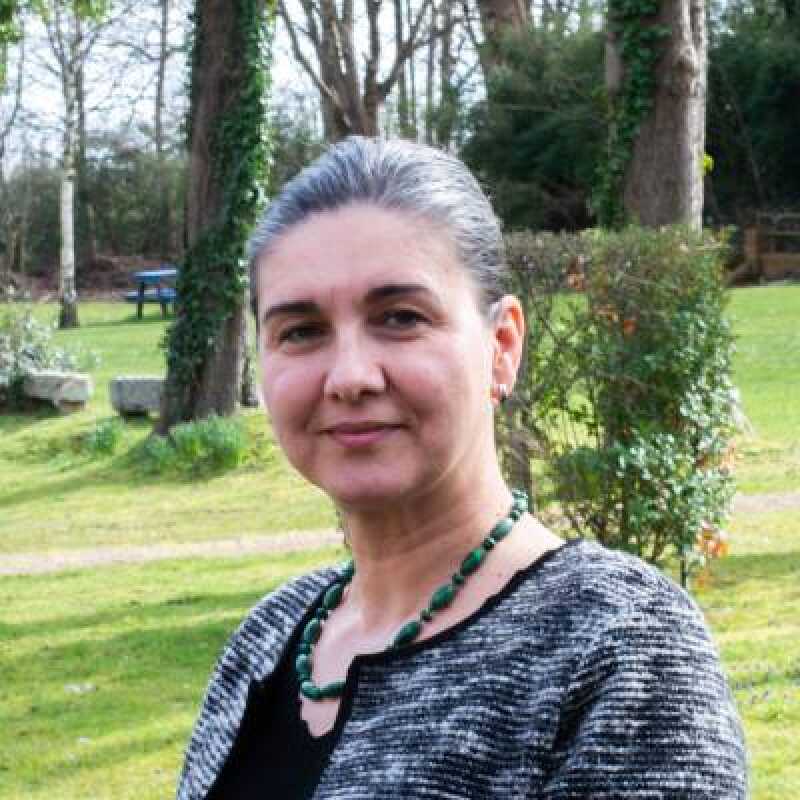
Nikolai Roussanov is the Moise Y. Safra Associate Professor of Finance at the Wharton School, University of Pennsylvania, and a Faculty Research Fellow at the National Bureau of Economic Research. His research spans asset pricing, econometrics, household finance, and macroeconomics, with a focus on market dynamics and behavioral economic factors. His research interests include: Asset pricing anomalies and risk factor modeling Household financial decision-making under uncertainty Macroeconomic impacts on commodity and currency markets Behavioral finance and mental accounting mechanisms Recent publications analyze inflation risks across asset classes, corporate bond valuation, behavioral retirement strategies, and the role of leisure economics in declining work hours. His work frequently integrates empirical finance and econometric methodologies. Scientific contributions include: Faculty Research Fellow, National Bureau of Economic Research His scholarship bridges technical financial modeling with real-world economic phenomena, covering topics like oil price shocks, mortgage liquidity, and systemic market failures.
Ricardo Caballero is the Ford International Professor of Economics at the Massachusetts Institute of Technology's School of Humanities, Arts, and Social Sciences, where he previously served as Chairman of the Economics Department from 2008 to 2011. A leading scholar in macroeconomics and financial economics, his research focuses on safe assets, monetary policy, financial crises, and international economics. His research interests center on the macroeconomic implications of financial frictions, with particular emphasis on safe asset shortages, risk premium dynamics, and monetary policy transmission mechanisms. Caballero's work has pioneered the risk-centric approach to macroeconomics, explaining phenomena such as the Wall Street/Main Street disconnect, global imbalances, and the collapse of interest rates through the lens of safe asset scarcity and risk intolerance. His research bridges theoretical modeling with empirical analysis of financial crises and policy interventions. Caballero's recent publications demonstrate a consistent focus on financial conditions indexing, monetary policy frameworks, and the interaction between financial markets and the real economy. His work increasingly examines how central banks can target financial conditions directly and how risk premia evolve during crises, with applications to pandemic-era economic policy and zero lower bound environments. 2002 Frisch Medal of the Econometric Society Smith Breeden Prize by the American Finance Association Journal of Finance 2014 Brattle Group Prize 2022 Banque de France-TSE Senior Prize in Monetary Economics and Finance Elected Fellow of the Econometric Society (1998) Elected Fellow of the American Academy of Arts and Sciences (2010) As an NBER Research Associate and frequent policy advisor, Caballero has influenced central bank thinking globally through his work on financial stability, monetary policy frameworks, and global imbalances. His research has informed policy discussions at the Federal Reserve, IMF, and multiple central banks regarding crisis management, safe asset creation, and the appropriate monetary response to financial shocks. Caballero maintains active collaborations with major financial institutions and central banks worldwide, translating theoretical insights into practical policy frameworks.
Philippe Mueller is a Professor of Finance at Warwick Business School (University of Warwick) and a leading researcher in macro-finance, international finance, and asset pricing. He previously held positions at the London School of Economics (2008–2017) and earned his PhD from Columbia University. His research focuses on factors driving asset prices, foreign exchange markets, corporate credit, and central bank policies. Mueller has published in top journals such as the Journal of Finance and Journal of Financial Economics , and his work on corporate bond pricing won the Fama-DFA Prize (2023). Education: PhD in Finance and Economics, Columbia University, 2008 MBF, Master of Science in Banking and Finance, Université de Lausanne, 2002 lic. rer. pol., Universität Bern, 1999 Research Interests: His primary research areas include asset pricing, financial econometrics, and international finance with a focus on fixed income markets, corporate credit provision, and monetary policy impacts. Recent work examines intraday foreign exchange patterns, central bank swap lines, and volatility dynamics in fixed income and currency markets. Teaching & Grants: Mueller teaches advanced courses in asset pricing and fixed income at Warwick. He has secured grants from the BA/Leverhulme Trust, BIS Research Fellowship, and INQUIRE Europe. His work is supported by collaborations with institutions like the Swiss National Bank and ECB. Awards & Recognition: Fama-DFA Prize for best asset pricing paper (2023) BIS Research Fellowship (2025–2027) Walter Wasserfallen Prize (2000) Professional Activities: He serves on programme committees for major finance conferences (EFA, WFA) and referees for top journals including Journal of Political Economy and Econometrica .
Francisco Barillas Bedoya is an Associate Professor at the School of Banking and Finance within the UNSW Business School, University of New South Wales. His research focuses on theoretical and empirical asset pricing, particularly portfolio choice, asset pricing tests, macrofinance, and term structure of interest rates. He has published extensively in top-tier journals like the Journal of Finance and Management Science. PhD from New York University MA from University of British Columbia BSc from Trent University His recent publications analyze Sharpe ratios for model comparison, speculative behavior in bond markets, and risk premia in fixed income markets. While no formal awards are listed, his work intersects financial economics, econometrics, and computational methods. Office: Level 3, Room 333C, Ref E12 Email: f.barillas@unsw.edu.au
W. Brent Lindquist is a Professor in the Department of Mathematics and Statistics at Texas Tech University, affiliated with the TTU Mathematical Finance Program. His contact details include office location in the Mathematics & Statistics building (Room 104), phone (+1 806 834 2348), and email brent.lindquist@ttu.edu. His research spans computational financial mathematics, porous media flow, neuroscience applications, and quantum electrodynamics. Key contributions include dynamic asset pricing with market microstructure integration, pore-scale flow modeling using 3D micro-tomography, automated neuron morphology identification, and QED computations for electron magnetic moments. Recent work emphasizes ESG factor incorporation into financial models. Analysis of 2023–2025 publications reveals a dominant focus on sustainable finance, particularly ESG-integrated option pricing and portfolio optimization. Methodologies include random forests for market microstructure analysis, skew random walks for volatility modeling, and Lévy processes for Bitcoin dynamics. Cross-cutting themes involve hedonic real estate models with ESG factors and unified asset pricing frameworks bridging classical finance theories.
Dong Lou is a Professor of Finance at the Hong Kong University of Science and Technology (HKUST), where he serves as Associate Dean of Business and Management (Strategic Planning and Research) and Acting Head and Chair Professor of the Department of Finance. He is also a CEPR Research Fellow at the London School of Economics (LSE). His research focuses on asset pricing, investment management, and behavioral finance, with a particular emphasis on market inefficiencies, trading dynamics, and macrofinancial linkages. PhD in Finance, Yale University, 2009 His scholarly work explores liquidity provision, arbitrage activity, investor behavior, and the impact of information dissemination on financial markets. Recent studies include the effects of dollar asset holdings on global yields, retail margin trading dynamics, and the relationship between communication rates and security prices. His publications appear in top journals like Management Science , Journal of Financial Economics , and Review of Financial Studies . His research has been recognized with numerous awards, including the Crowell Memorial Award, NASDAQ OMX Award, and multiple INQUIRE and CRSP Forum grants. He mentors PhD students in finance and co-directs the HKUST-DXM AI for Finance Joint Laboratory, advancing AI applications in financial research and practice.
Lawrence C. Washington is a Professor of Mathematics at the University of Maryland, College Park . His office is located in Mathematics Building 1105, and he can be reached at lcw@math.umd.edu . Teaching & Courses: In Spring 2023 he is teaching Cryptography 456 (TuTh 11:00–12:15) and co-organising the Algebra Seminar (MW 2–3). Office hours are held Tuesdays 1:30–2:30 and Thursdays 10:00–10:50. Research Interests: His work centres on number theory , with particular emphasis on cyclotomic fields , elliptic curves , cryptology , and Iwasawa theory . He has made extensive contributions to the study of p-adic L-functions , class groups , heuristics for class numbers , and the arithmetic of elliptic curves, often bridging deep theoretical questions with computational investigations. Textbooks & Scholarly Output: Washington is the author of several widely-used textbooks: Introduction to Cryptography with Coding Theory (3rd ed.) Introduction to Cyclotomic Fields Elliptic Curves: Number Theory and Cryptography An Introduction to Number Theory with Cryptography (2nd ed.) Elementary Number Theory Recent Publication Trends: Over the past five years his papers have focused on heuristics for Iwasawa invariants , anti-cyclotomic extensions , class groups of real cyclotomic fields , and analytic estimates for sums of prime powers . The work is characterised by a synthesis of algebraic, analytic, and computational techniques, frequently yielding explicit examples and numerical data that inform broader conjectures in algebraic number theory. Extracurricular Interests: Outside mathematics, Washington enjoys running and playing the bassoon , and he maintains a light-hearted page devoted to his favourite intersection in Chevy Chase, MD. Advising & Grants: While the provided text does not enumerate individual students or specific grants, his extensive publication record and long-standing professorship indicate ongoing supervision of graduate research and participation in funded projects in number theory and cryptography.
Academic Profile: Damir Filipovic is a Full Professor and the Swissquote Chair in Quantitative Finance at the College of Management of Technology (CDM) of École Polytechnique Fédérale de Lausanne (EPFL), Switzerland. He previously held academic positions at the University of Vienna, University of Munich, and Princeton University, and served as Head of the Vienna Institute of Finance. Research Focus: Quantitative finance, risk management, stochastic processes, term structure modeling, volatility risk, and machine learning applications in financial markets. Industry Collaboration: Co-developed the Swiss Solvency Test for insurance capital requirements while consulting for the Swiss Federal Office of Private Insurance. Publications: Contributed extensively to journals like Journal of Financial Economics, Mathematical Finance, and Annals of Applied Probability, with a textbook on Term-Structure Models. Academic Service: Editorial board member of multiple journals and organizer of advanced workshops on systemic risk and financial technology. Recent Research: His work emphasizes machine learning for portfolio risk management, kernel-based yield curve estimation, and robust stochastic modeling. Keynote speaker at international conferences on finance and insurance mathematics, with over 15 recent publications in 2023-2025 addressing high-dimensional financial problems, neural control systems, and causal inference in market data. Education: Ph.D. in Mathematics from ETH Zurich (2000). Graduate of ETH Zurich and University of Vienna. Teaching & Mentorship: Supervises current and former EPFL Ph.D. students in quantitative finance, including Nicolas Camenzind, Joshua Hayes, Andrea Ruglioni, and ten others. Former students like Damien Ackerer and Lotfi Boudabsa now lead research in risk management. Labs & Programs: Directs EPFL's Finance and Technology Programme, leads the Computational Finance Group (CSF) at EPFL, and contributes to Swiss Finance Institute initiatives. Scientific Leadership: Served on EPFL Committee of Academic Evaluation and Doctoral Program Finance committee.
Jan Dijkstra is an Associate Professor at Wageningen University specializing in Animal Nutrition . His research focuses on dairy cattle nutrition, methane emissions, and nutrient efficiency. Academic Rank: Associate Professor Department: Animal Nutrition His work emphasizes: Mathematical modelling of methane production Phosphorus and nitrogen balance optimization Feed supplementation strategies for reduced emissions Genotype-environment interactions in dairy systems Recent publications highlight advancements in methane mitigation , nutrient cycling , and rumen microbiome dynamics . He serves as a promotor for multiple PhD projects and contributes to datasets on equine microbiomes and rumen metabolites. Scientific Awards American Feed Industry Association Award (2015) Publicatieprijs ASG (2013) Supervision PhD candidates: Kozorezov, Henry, Koning, Vivares Martinez EngD candidate: Holshof
Fangzhou LU is an Assistant Professor of Finance at the HKU Business School, The University of Hong Kong, since 2020. His research focuses on fintech, cryptocurrency, behavioral finance, and China's economic development. He received his academic training at prestigious institutions: PhD and MS in Financial Economics from Massachusetts Institute of Technology (MIT), 2020 BS in Business from New York University, Stern School of Business, 2014 Dr. Lu's research interests encompass Fintech, Cryptocurrency, Behavioral Finance, Entrepreneurial Finance, Household Finance, Emerging Markets, consumption, fiscal stimulus, bond markets, and China's economic development. His work often leverages large datasets from China to examine how technological innovations and government policies impact financial markets and firm behavior, particularly during crises like the COVID-19 pandemic. His recent publications demonstrate a strong trend toward applied research in emerging markets, with significant contributions on SPAC IPOs, government subsidy effectiveness for failing firms, and stock market informativeness in China. These works appear in top finance journals including the Journal of Financial Economics and Journal of Financial and Quantitative Analysis, highlighting his expertise at the intersection of finance, technology, and policy analysis.
Andrea Vedolin is a Professor of Finance at the Questrom School of Business, Boston University. He is also a Research Associate at the National Bureau of Economic Research (NBER) and a Research Affiliate at the Centre for Economic Policy Research (CEPR). His research focuses on international finance, asset pricing, and macroeconomic uncertainty, with particular emphasis on exchange rate dynamics, risk premia, and monetary policy effects. Vedolin holds a Ph.D. in Economics from the University of Lugano (2010). His work spans topics such as bond risk premia, variance risk across assets, and the impact of central bank communication on financial markets. Key contributions include analyses of global factor structures in exchange rates, the role of uncertainty in shaping asset prices, and the modeling of systemic risk in international contexts. His research often integrates theoretical frameworks with empirical evidence to address questions in macro-finance and financial economics. Vedolin’s articles explore themes like interest rate risk management, liquidity in international markets, and the interplay between economic uncertainty and credit markets. His studies frequently employ advanced econometric techniques and model-free approaches to derive insights about market behavior and policy implications. Despite his prolific output, no specific scientific awards or grants are mentioned in the provided texts. His advising record and lab affiliations remain unspecified, though his work suggests involvement in collaborative projects with institutions like NBER and CEPR. The summary highlights his role as a leading scholar in understanding how uncertainty and policy regimes influence financial markets globally.
John Y. Campbell is the Morton L. and Carole S. Olshan Professor of Economics at Harvard University, affiliated with the Department of Economics within the Faculty of Arts and Sciences. He is on leave during Fall 2024 and Spring 2025. His research focuses on financial economics and macroeconomics, including asset pricing, household finance, and portfolio choice. Campbell has authored influential books such as Fixed: Why Personal Finance is Broken (2025) and Financial Decisions and Markets (2018). He served as President of the American Finance Association (2005), delivered the American Economic Association’s Ely Lecture (2016), and holds honorary doctorates from multiple institutions. His roles include Research Associate (former Director) at NBER’s Program in Asset Pricing, and board member of Arrowstreet Capital, a quantitative asset management firm. Education: Honorary doctorates from BI Norwegian Business School, Maastricht University, University of Paris Dauphine, and Copenhagen Business School. Professional affiliations include Fellowships with the Econometric Society, American Academy of Arts and Sciences, British Academy, and honorary fellowships at Oxford’s Corpus Christi College. Research interests emphasize asset pricing dynamics, macroeconomic influences on financial markets, and household financial decision-making. His work integrates empirical methods to address policy-relevant questions in consumer finance and institutional investing. Recent trends in his publications focus on systemic risk, mortgage market design, and sustainable long-term investment strategies. Key contributions include analyzing fiscal policy impacts, equity valuation frameworks, and behavioral biases in household finance. Scientific awards highlight his academic leadership: multiple honorary degrees, prestigious fellowships, and recognition in global economic institutions. His advisory roles extend to policy-making via the Squam Lake Report (2010) and co-founding Arrowstreet Capital, applying academic insights to practical asset management challenges. Grants and advising: Campbell’s research has been supported by NBER and institutional partnerships. He advises on macroeconomic stability, financial regulation, and university endowment management strategies. His work often bridges theory and practice, influencing both academic discourse and real-world financial systems.
Cody Hyndman is a Full Professor and Acting Department Chair at the Department of Mathematics and Statistics, Concordia University, with a focus on Mathematical Finance, Machine Learning, and Stochastic Analysis. He has held significant administrative roles including Department Chair (2017–2023) and Acting Graduate Programs Director (2025–2025). Education: PhD, University of Waterloo (2005) MSc, University of Alberta BCom, University of Alberta His research spans Mathematical Finance , Stochastic Differential Equations , and Machine Learning , with notable contributions to arbitrage-free modeling, neural networks, and computational methods. Recent publications emphasize geometric deep learning and regularization techniques in finance. Scientific Awards: 2023: Concordia Academic Leadership Award Hyndman supervises graduate students in Mathematics and Statistics and co-founded the NSERC CREATE Program on Machine Learning in Quantitative Finance and Business Analytics (FIN-ML) , fostering industrial internships and interdisciplinary training.
Seung Joo Lee is an Associate Professor of Finance at the Saïd Business School, University of Oxford. He holds a Ph.D. in Economics from UC Berkeley and prior degrees in Physics and Economics from Seoul National University. His research focuses on monetary economics, macro-finance, and behavioral finance, addressing topics like unconventional monetary policies, financial stability, and wage-price dynamics. He also explores contract theory and policy design in risk management contexts. Education: Ph.D. in Economics, UC Berkeley (2022) MA in Economics, Seoul National University BS in Physics, Seoul National University Research Interests: Monetary Policy: Stabilization frameworks, unconventional tools Behavioral Finance: Crisis dynamics, optimism biases Contract Theory: Risk-management incentives, mathematical models His recent work includes studies on net-worth traps in financial crises and optimal communication strategies in banking supervision. Teaching: Financial Economics (MPhil/DPhil) Empirical Finance (DPhil) MBA Macroeconomics He also serves as a Visiting Fellow at Princeton University's Bendheim Center.
Dr. Diana Tunaru is a Lecturer in Finance at Kent Business School , University of Kent, with expertise in empirical finance and quantitative methods. Her research focuses on dynamic financial modeling and forecasting, particularly in interest rate structures and volatility spillover effects. Education: Diploma in Mathematics (University of Craiova), Master in Banking and Finance (Middlesex University), PhD in Finance (University of Westminster) Research Interests include multi-factor continuous-time models, Gaussian estimation techniques, and the analysis of financial variables like interest rates, equities, and derivatives during economic distress. She applies her industry experience in investment banking to bridge theoretical and practical finance. In publications , Diana has explored topics ranging from agricultural commodity forecasting to green finance, with recent work emphasizing sustainability-driven portfolio performance and market interconnectedness. Her methodological focus on statistical accuracy tests and spillover effects reflects her commitment to advancing financial modeling. Teaching: Quantitative Methods for Finance, Introduction to Econometrics, Financial Investments, Economics of Financial Markets Diana serves as Senior Tutor at Kent Business School (Medway campus) and contributes to postgraduate education through her supervision of undergraduate dissertations on empirical finance and financial time series analysis.